The Best All-Weather Windshield Wipers
Wipers are one of the easiest safety upgrades on your car, and most people ignore them until a downpour turns the windshield into frosted glass. Bad blades don't fail all at once. They start chattering on a light drizzle, then leave a smear right at eye level, then skip over a patch of the sweep entirely. NHTSA attributes roughly 21% of U.S. crashes — about 1.2 million a year — to rain, snow, sleet and fog. Clear glass isn't a comfort feature. It's the difference between seeing the brake lights ahead and guessing.
But no wiper is permanent, and every brand's marketing quietly skips that part. Rubber blades harden and crack from UV and ozone whether you drive on them or not, which is why AAA says to swap them every 6 to 12 months. In Phoenix or Houston, you'll hit that window faster than someone in Minnesota. Silicone stretches the interval to a couple of years but costs more up front. And any blade will streak on a windshield caked in road film, no matter what you paid for it.
Fit is the other trap. Driver and passenger blades are usually different lengths, and a blade that's a great performer in a review is useless if the adapter won't clip onto your arm. Check your owner's manual or an in-store fitment guide before you order. We think that the Bosch ICON is the best all-weather wiper for most people, and that the Rain-X Latitude Water Repellency is the one to buy if you drive through heavy rain often enough that beading water between passes actually matters to you.
Everything we recommend

Quiet, streak-free, and it holds up through a whole winter

Water beads off the glass between passes in heavy rain

A shielded hybrid that shrugs off snow packing

Silicone that lasts years and beads water on its own

Beam performance that stays planted at highway speed
At a glance
| Product | Blade Length | Fit Type | Price | |
|---|---|---|---|---|
| BOSCH 26A ICON Premium Beam Wiper Blade;Top pick | 26" | — | $31.67 |
| Rain-X 5079279-2-5PK Latitude 2-IN-1 Water Repellency WiperRunner-up | 22" (Pack of 5) | Universal | $93.99 |
| Michelin 19-2419SUBA Stealth Ultra Twin Pack 24Also great | 24" + 19" Pair | — | $23.86 |
| Piaa 95055 Super Silicone Wiper Blade -Upgrade pick | 22" | Vehicle Specific | $32.17 |
| TRICO Force Wiper Blade 20 inch FitsBudget pick | 20" | — | $25.13 |
 | Valeo 900221B Frameless ULTIMATE 22" All-Season OEAlso consider | 22" | Vehicle Specific | $18.99 |
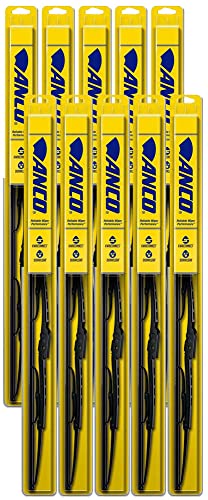 | Anco 31-Series 31-20 Wiper Blade -20"Also consider | 20" (Pack of 10) | — | $42.31 |
How we picked
Independent test results. We looked for blades that placed well in published comparisons from Car and Driver, Popular Mechanics, The Drive and AutoGuide rather than relying on any single outlet. Blades that won repeatedly, across different testers and different vehicles, moved to the top.
Cold-weather design. Consumer Reports identifies the frameless beam design as the main reason some blades outperform others in icing conditions, because there's no bracket skeleton to pack with ice. We weighted beam and shielded-hybrid designs accordingly.
Blade material and life. We compared graphite-coated rubber, synthetic blends and silicone against manufacturer service-life claims and AAA's 6-to-12-month replacement guidance. Blades that credibly beat that window earned extra credit.
Wind-lift resistance. We checked published wind-lift specifications and any road testing that corroborated them, since a blade that floats off the glass at 70 mph fails exactly when visibility matters most.
Fit and installation. We read owner feedback for recurring adapter and fitment complaints. Pre-installed universal adapters and accurate size listings mattered, because the best-wiping blade in the world is useless if it won't clip on.
Top pick
Quiet, streak-free, and it holds up through a whole winter
BOSCH 26A ICON Premium Beam Wiper Blade;
The ICON is a beam blade with a dual-compound rubber edge and a powder-coated shell, and it's been the consensus winner across independent wiper comparisons for years running. It stays quiet on damp glass, doesn't ice up, and lasts noticeably longer than a typical premium blade.
$31.67fromAmazonThe ICON wins because it does the boring things right, season after season. Car and Driver ranked it first for streak-free performance on both wet and dry glass across several vehicles in their most recent wiper comparison. Popular Mechanics put it at the top of their all-weather list too, calling out how evenly it keeps pressure on the glass in near-freezing weather. That's not one outlet's opinion. That's the same result showing up independently.
Beam blades have no metal skeleton, so there's nothing for slush to pack into and freeze solid. Consumer Reports points to this as the main reason beam designs beat bracket frames in icing conditions — a bracket frame flexes unevenly once ice builds in the joints, and you get gaps. The ICON's one-piece spring steel body presses down along its whole length instead. If you scrape your windshield most mornings from November to March, that matters more than anything else on the spec sheet.
Squeaking is the flaw that drives people to buy new wipers, and graphite coating largely solves it. Wirecutter's long-term wiper testing found that graphite-coated rubber — the formulation Bosch uses here — cuts down sharply on the squeal and chatter you get from bare rubber during light drizzle. That's the exact condition where cheap blades are worst: not enough water to lubricate, enough to need a wipe. The ICON just sweeps.
Bosch builds the edge from two rubber compounds, a harder outer layer for structure and a softer inner lip that contacts the glass, and says this is why the blade holds its performance through hot summers and hard freezes. Bosch also claims up to 40% longer life than other premium blades. Owners back that up — the recurring theme in feedback is zero skipping, zero streaking, and blades still soft and pliable a year or two in.
One practical note: the ICON is sold as a single blade, not a pair. You'll need to order two, and probably in two different sizes. Check your manual first.
Flaws but not dealbreakers
It's one of the pricier blades here, and you're buying one at a time. Fitting out a car costs roughly double what the listing suggests at a glance, and a three-wiper vehicle costs more still.
Owner feedback occasionally mentions the rubber edge separating after a hard winter, usually on cars parked outside through ice storms. That's rare, but no beam blade is invincible against an ice scraper catching the edge.
Beam blades sit low and sleek, which some drivers dislike on older cars with deeply curved glass. If your factory bracket wipers have always worked fine, the ICON is an upgrade, not a rescue.
Runner-up
Water beads off the glass between passes in heavy rain
Rain-X 5079279-2-5PK Latitude 2-IN-1 Water Repellency Wiper
The Latitude is a beam blade that transfers Rain-X's water-repellent compound onto your windshield with every sweep, so rain beads and rolls off instead of sheeting. It's the pick if your commute involves real downpours rather than the occasional shower.
$93.99fromAmazonIf you drive through hard rain regularly, the repellent coating is a genuine visibility gain, not a gimmick. Rain-X builds the hydrophobic compound into the rubber itself, and it transfers to the glass as you wipe. The beading effect is strongest above 30 mph, which is exactly when you need it — highway spray from the truck ahead sheets off instead of pooling. You get clearer glass in the gaps between wiper passes, which is where most of the visibility problem actually lives.
It also saves you a step. Rain-X sells a spray-on treatment that does the same job, and if you've ever tried to keep up with reapplying it, you know it's a chore you forget. The blade handles it for you, and the coating persists for months according to Rain-X.
The Latitude uses a synthetic-blend squeegee and an aerodynamic spoiler that fights wind lift. Owners who've run other beam blades report it sits flat and stays quiet. Installation is the other selling point: the universal adapter comes pre-installed and Rain-X says it fits 96% of vehicles, so for most people it's a two-minute swap with no fiddling.
Here's the honest comparison against the ICON. The Latitude doesn't have the same track record for longevity in independent testing, and owner feedback is more mixed. Some drivers report a full season of clear wiping. Others report smearing within a few months. Buy it for the water repellency, and be prepared to replace it more often than the Bosch.
This one ships as a multi-pack of same-size blades, which is a good deal if your car takes two of the same length or you're stocking a household with several vehicles. It's less useful if you need two different sizes.
Flaws but not dealbreakers
Durability is the weak spot. A recurring complaint from owners is that the blades smear badly after a few months of regular use, and The Drive's durability testing found budget beam blades generally showing measurable streaking within three months while premium models held up past a year.
A few owners report a greasy-looking film left on the glass in the wiper's path, especially early on. Cleaning the blade edge with a damp cloth usually helps, but it's a real annoyance.
Because it's a five-pack of one size, you're stuck if your car needs mismatched lengths on the driver and passenger sides.
Also great
A shielded hybrid that shrugs off snow packing
Michelin 19-2419SUBA Stealth Ultra Twin Pack 24
The Stealth Ultra pairs a memory-curved steel beam with a protective shell, so snow and slush can't pack into the structure. It ships as a matched 24-inch and 19-inch pair, which covers a lot of common sedans and crossovers in one box.
$23.86fromAmazonPopular Mechanics named the Stealth Ultra one of its top two all-weather picks alongside the Bosch ICON, specifically for how consistently it holds glass pressure when temperatures hover around freezing. The hybrid design is the reason. You get the even contact of a beam blade, but a shaped shell covers the assembly so wet snow slides off rather than building into a frozen lump on top of the arm.
The pair packaging is a bigger deal than it sounds. Most premium blades are sold singly, so a full replacement means two orders and two sizes to get right. This one arrives as a 24 and a 19, which fits a long list of common cars — Camrys, Jettas, Fusions, Accords, 3-series. If your car is on that list, you're done in one purchase.
Michelin uses its own rubber compound here, and the pitch is UV crack resistance. That's aimed at drivers in the Southeast and Southwest, where AAA notes blades degrade measurably faster from heat and ozone than identical blades up north. Owner feedback leans hard on quietness — the recurring note is that these just don't make noise.
The catch is fitment. Amazon's fit checker has been wrong for at least some vehicles, and several owners describe the pinch-tab adapter as finicky plastic that takes trial and error to seat. The included instructions are small and hard to read. Budget fifteen minutes the first time, and verify your arm type before ordering.
Flaws but not dealbreakers
Adapter installation is the common gripe. The plastic feels cheap to some owners, and the printed instructions are too small to follow easily. It works, but it isn't the foolproof snap-on some competitors offer.
Fitment data for this pair has been wrong for certain vehicles, notably some newer BMWs. Don't trust the automatic fit check alone — confirm your blade sizes and arm connector yourself.
The shell adds bulk compared to a pure beam blade, which slightly reduces the clean look if that matters to you.
Upgrade pick
Silicone that lasts years and beads water on its own
Piaa 95055 Super Silicone Wiper Blade -
PIAA's Super Silicone uses a silicone edge instead of rubber, which resists UV and heat cracking far better and leaves a water-repellent film on the glass with every pass. It costs more up front but you'll replace it far less often.
$32.17fromAmazonSilicone changes the replacement math. PIAA states these last two to three times longer than conventional rubber under the same UV exposure and heat cycling, and owner feedback bears that out — people describe running a single set for tens of thousands of miles with the wipe still clean. If you're in Arizona or Florida where rubber blades cook and crack in a single summer, the longer service life more than offsets the higher price.
The water repellency works like Rain-X's, but through silicone rather than a rubber additive. Each pass deposits a thin repellent film, and you get beading between wipes without spraying anything on. PIAA includes a windshield prep kit in the box so the coating takes properly on first use. Clean your glass thoroughly before install — this is the one blade here where skipping that step will hurt you.
Owners consistently single these out as the quietest blades they've used, and several who'd cycled through cheap blades every year or two describe this as the one that ended the cycle. The frame is a conventional aerodynamic design with even pressure points rather than a modern beam, which some drivers actually prefer for streak elimination on flatter glass.
Two things temper the recommendation. It's the most expensive blade in this guide per unit, and it's sold singly. And the frame design means it's less snow-proof than a true beam — owners in heavy snow country report it's not the blade they'd pick for a Buffalo winter.
Flaws but not dealbreakers
The frame can pack with snow and ice the way any non-beam design does. If your winter is genuinely severe, the ICON or the Stealth Ultra is the better choice.
Installation takes more prep than a typical blade because you should clean and treat the glass first for the silicone coating to bond well. It's ten extra minutes, but skip it and you'll be disappointed.
Some owners find the frame noisy at certain speeds and think it looks dated next to a sleek beam blade. Neither is a performance issue, but both come up.
Budget pick
Beam performance that stays planted at highway speed
TRICO Force Wiper Blade 20 inch Fits
The Trico Force is a beam blade with an airfoil that uses wind pressure to push the blade down instead of lifting it. AutoGuide's road testing confirmed it keeps glass contact at sustained highway speeds, matching Trico's 90 mph wind-lift spec.
$25.13fromAmazonIf you spend your commute at 70 mph, wind lift is the failure mode you'll notice first — the blade floats off the glass at speed and leaves an unwiped arc right where you're looking. The Force's Vortec airfoil converts that same airflow into downforce. AutoGuide's real-world testing corroborated Trico's published 90 mph rating, which is a higher bar than most blades in this price range clear.
For a blade this affordable, the build is unusually serious. Trico calls the internal structure a robust superstructure, and the rubber gets a HighGlide friction-reducing treatment. Owners who'd been running pricier name-brand beam blades for years report switching and finding these work better, which is not the usual story with a budget upgrade.
This is also the pick for larger vehicles. The Force comes in a wide range of lengths, and Trico's fitment list runs from F-150s and Grand Caravans to X5s and Traverses. If you drive a full-size truck or a three-row SUV and need something in the 22-to-28-inch range, this line covers it without pushing you into premium pricing.
The trade-off is longevity and consistency. Owner reports cluster around roughly a year of good service before chattering starts, which is normal for rubber but short of what the ICON manages. And a handful of owners describe a vibration and buzzing noise on dry glass at highway speed, usually on the passenger side.
Flaws but not dealbreakers
Dry-glass buzzing at highway speed shows up repeatedly in owner feedback, particularly on the passenger blade. If you often run wipers on a barely damp windshield, it can be irritating.
Expect roughly a year of clean wiping in a hot climate before chatter sets in. That's respectable but not exceptional, and it means more frequent replacement than a silicone blade.
Fitment listings for rear-wiper applications have misled some buyers. Confirm the connector type for your specific arm rather than relying on the compatibility checker.
Who this is for
Buy new wipers if yours chatter, streak, or skip a section of the sweep — those are the three warning signs, and all of them mean the edge is done. This guide is aimed at drivers who want one blade that handles rain, snow, ice and summer heat rather than swapping to dedicated winter blades every fall. If you live where it snows hard, a good beam blade genuinely can serve year-round; that's what the design is for. If you're in the Southeast or Southwest, plan on shorter intervals regardless of what you buy, since UV and ozone do the damage whether it rains or not.
We're covering front windshield blades for passenger cars, trucks and SUVs, in sizes from about 19 to 28 inches. We're not covering dedicated snow blades with rubber boots, rear-window-specific wipers, or wiper arms and motors. And this guide can't tell you your blade size — that comes from your owner's manual or a fitment lookup, and the driver and passenger sides are usually different lengths. Get that wrong and nothing else here helps.
How we picked
We built the shortlist around a handful of things that actually decide whether a blade is worth buying. Test results: we favored blades that placed well across multiple independent comparisons, not just one. Cold-weather design: beam and shielded-hybrid blades got priority, because a bracket frame packs with ice and loses contact where it matters. Material and life: we compared graphite-coated rubber, synthetic blends and silicone against manufacturer service claims and AAA's replacement guidance. Wind lift: published lift ratings and any road testing behind them, since a floating blade at highway speed is a safety problem. Fit: recurring adapter complaints in owner feedback counted against a blade, and pre-installed universal adapters counted for it.
Other all-weather windshield wipers worth considering
If you want OEM-grade quality with a European pedigree: The Valeo 900221B Frameless ULTIMATE 22" All-Season OE ($18.99) — Valeo supplies wiper blades to Mercedes-Benz, Renault and several Stellantis brands, and the aftermarket 900 Series Ultimate uses the same abrasion-resistant coating as the factory-installed units. That coating is aimed squarely at winter road salt, which chews through cheaper blades. Owners report unusually long service — a year and a half to two years is a common report, well past the standard replacement window — and several specifically mention it fixing chatter that other premium blades couldn't. It's a frameless beam design at a mid-range price. What you give up is the deep bench of independent test results the Bosch has, and the listing information is thinner than we'd like.
If you need blades in volume at the lowest cost per unit: The Anco 31-Series 31-20 Wiper Blade -20" ($42.31) — The ANCO 31-Series is a traditional bracket blade sold in a ten-pack, and it's the pick for anyone maintaining a fleet or a household full of vehicles. The KwikConnect system snaps on without tools, and the DuraKlear rubber wipes cleanly enough for everyday driving. Fleet buyers and semi drivers report solid value and dependable fit. But it's a bracket design, so it's the wrong choice if ice is your main problem — the frame is exactly what packs and freezes. Buy it for cost per blade across many vehicles, not for winter performance.
The competition
This is what our research surfaced, not a survey of every wiper blade sold. Wiper lineups are enormous — most brands offer several tiers in a dozen lengths each — so we focused on the models that showed up repeatedly in published comparisons and that a typical driver would actually find in stock.
Installation and upkeep
Before you install anything, clean the glass properly — not a quick wipe, but a real scrub with glass cleaner to strip road film and old wax. Most streaking blamed on new blades is actually a dirty windshield. Then wipe the new blade's rubber edge with a damp cloth; blades pick up mold-release residue in packaging, and that's the source of the greasy smear people notice on day one. Between changes, lift the blades off the glass before an ice storm so they don't freeze down, and never run wipers to clear heavy ice — use a scraper first. If a blade starts chattering, try cleaning the edge with isopropyl alcohol before you replace it. That fixes it more often than you'd expect.
Questions we get
How often should I replace my windshield wipers?
AAA recommends every 6 to 12 months for conventional rubber blades. Heat and UV are what kill them, so if you're in the southern U.S. and park outside, you'll be at the short end of that range regardless of how much it rains. Silicone blades stretch the interval to two or three years. Don't wait for a calendar reminder — chattering, streaking or a skipped section of the sweep means it's time.
Are beam wipers really better than traditional bracket wipers for snow and ice?
Yes, and the reason is structural. Consumer Reports points to even pressure along the full blade length as why beam designs outperform bracket frames in icing conditions. A bracket frame has joints that pack with slush and freeze, which lifts sections of the blade off the glass and leaves unwiped bands. A beam blade has no skeleton to clog.
What's the difference between silicone and rubber wiper blades?
Silicone resists UV, ozone and heat cycling far better than rubber, so it lasts roughly two to three times as long. It also deposits a water-repellent film on the glass with every pass, which keeps water beading between wipes. Rubber costs less up front and, in graphite-coated form, wipes very quietly. Over a two-to-three-year horizon, silicone usually works out better despite the higher sticker.
Do water-repellent wiper blades actually coat the glass?
They do. Rain-X builds a hydrophobic compound into the rubber that transfers to the windshield as you wipe, with the beading effect strongest above 30 mph. PIAA's silicone blades do the same thing through the silicone itself. It's not as strong as a fresh application of spray-on treatment, but it renews itself every time the wipers run, which spray coatings don't.
Why do my brand-new wipers still streak?
Almost always the windshield, not the blade. Road film, old wax and bug residue build an invisible layer that a new edge just smears around. Scrub the glass with a dedicated cleaner and, if needed, a clay bar. Also wipe the new blade's rubber edge with isopropyl alcohol — packaging residue on a fresh blade causes exactly this.
How do I find the right wiper size for my car?
Check your owner's manual first, or use a fitment lookup at an auto parts store. Driver and passenger blades are usually different lengths, sometimes by several inches, so don't assume you need two of the same. Also confirm your arm's connector type — hook, pinch tab, bayonet — because a blade with the right length and the wrong adapter won't attach.
Why you should trust us
For this guide:
- We read published wiper comparisons from Car and Driver, Popular Mechanics, The Drive and AutoGuide, plus Consumer Reports on beam versus bracket design and AAA on replacement intervals.
- We compared manufacturer specifications and stated service-life claims from Bosch, Rain-X, PIAA, Michelin, Trico, Valeo and ANCO against each other.
- We read through owner feedback for each blade to find the recurring themes — which ones chatter, which adapters fight back, and how long people actually get out of them.
- We read owner reviews on every listing, weighted toward the critical ones, because that is where the recurring failures show up.
- We have a systematic way of automatically fetching the latest prices, so the numbers on this page stay current.
- This is a research-focused guide, so the team may not own every product listed — though we often do own the top winners, which gives us extra context for the recommendations.
- We don't accept free products, and the retailer commission never changes which product we recommend.
Sources
Best Windshield Wipers — Consumer Reports Testing, Consumer Reports
Best Windshield Wipers: Tested by Car and Driver Editors, Car and Driver
The Best Windshield Wipers for 2026 — Popular Mechanics, Popular Mechanics
Best Windshield Wipers — The Drive, The Drive
Best Windshield Wipers — Wirecutter (New York Times), Wirecutter
Bosch ICON Wiper Blade — Official Product Specifications, Bosch Aftermarket
PIAA Super Silicone Wiper Blade — Technical Overview, PIAA
Rain-X Latitude Water Repellency — Product Engineering, Rain-X
Valeo Wiping Systems — OEM Supplier Overview, Valeo
Weather-Related Vehicle Crashes — NHTSA Data, National Highway Traffic Safety Administration (NHTSA)
AAA — Windshield Wiper Replacement Guidance, AAA
Best Windshield Wipers 2026 — AutoGuide, AutoGuide
Amazon product listings and owner reviews for all 7 products
Manufacturer specification pages for each product
Some passages in this guide may be paraphrased with AI help. Prices are refreshed automatically.
More like this.
Continue exploring electronics reviews and recommendations.

The Best All-Weather Car Floor Mats
Winter doesn't stay outside. Salt, slush, sand and gravel ride in on your boots and grind into the carpet every time you get in. A good all-weather mat…

The Best All-Weather Family Camping Tents
The tent that matters is the one you're stuck inside at 2 a.m. when the rain starts. That's when you find out whether the fly reaches the ground, whether…

The Best All-Season Tires
Your tires are the only thing connecting a two-ton car to the road, and most of us think about them once every few years, in a hurry, after a nail or a…

The Best Emergency Weather Radios
Severe weather doesn't wait for you to check your phone. A NOAA weather radio sits in the corner of a room and does one job: it makes noise when the…

The Best Windshield De-Icer Sprays
Scraping a frozen windshield is a miserable way to start a day. A de-icer spray shortcuts it: you soak the glass, wait a few seconds, and push the slush…

The Best Windshield Snow Covers
Scraping ice off a windshield is the worst five minutes of a winter morning. Your hands go numb, your coffee gets cold in the cup holder, and you're late…