The Best Dash Cams
Most days your dash cam does nothing at all. It sits on the glass, loops over yesterday's commute, and asks nothing of you. Then someone drifts into your door, swears you were the one who moved, and a two-minute clip becomes the difference between a claim you win and one you argue about for months. Consumer Reports survey data puts it plainly: 43% of dash cam owners say footage helped them settle an insurance dispute or establish fault. That's the whole job.
No dash cam does everything well, though. Parking mode — the part most people actually want — only works if you hardwire the camera or run an OBD-II cable, so a plug-into-the-lighter install quietly gives it up. 4K eats storage, too; Viofo's documentation puts a 256GB card at roughly 12 to 16 hours of recording before the oldest clips get overwritten. And cloud access, the thing that lets you pull footage after a hit-and-run you weren't present for, means a data plan and a recurring fee. You're choosing which compromise you can live with.
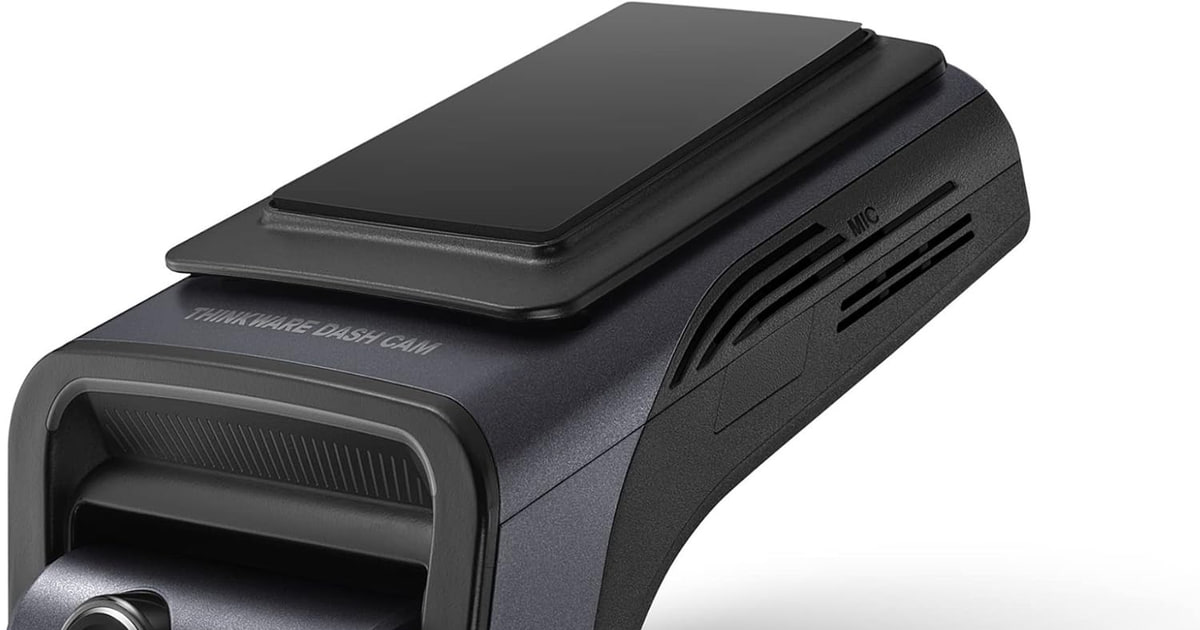
So start with where your car sits and how you drive. If you park on the street overnight, a capacitor instead of a lithium battery matters more than pixel count, because Thinkware rates capacitor cameras to keep working to 158°F while battery models tend to throttle above 140°F. If you leave the car at a trailhead all day, remote alerts beat a sharper lens. If it lives in a garage, a small front-only camera covers you. We think that the VIOFO A229 Pro is the best dash cam for most people, and that the THINKWARE U3000 PRO is the one to buy if you want radar-triggered parking surveillance and driver-assist alerts.
Everything we recommend
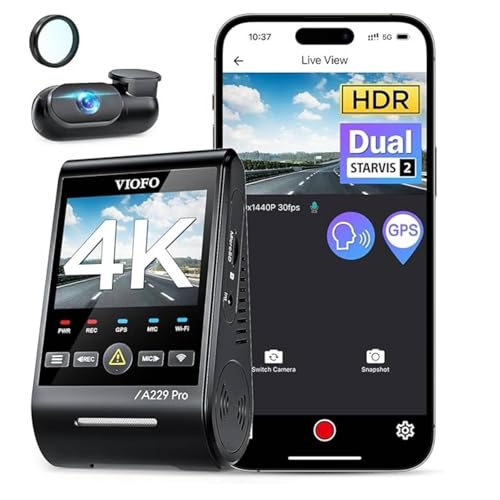
Sharp 4K front and 2K rear video, without the fuss

Radar-based parking watch and lane alerts, in a tidy case

Real 4K and a heat-tolerant capacitor, for a lot less

Live view and cloud backup from anywhere, at a premium

Nearly invisible on the glass, if 1080p is enough
At a glance
| Product | Resolution | Night Vision | Price | |
|---|---|---|---|---|
| VIOFO A229 Pro 4K HDR Dash CamTop pick | 4K Front/2K Rear | Night Vision 2.0 | $259.99On sale |
| BlackVue DR970X LTE Plus IIUpgrade pick | 4K Front/Full HD Rear | STARVIS 2 HDR | $540.99 |
 | Nextbase 622GW Dash Cam Full 4K/30fps UHDAlso in lineup | 4K/30fps | Enhanced Night Vision | $249.99On sale |
 | Vantrue E1 Lite 1080P Mini Dash CamAlso consider | 1080p@30fps | HDR Night Vision | $95.99 |
| 70mai A810 Lite 4K Dash Cam FrontBudget pick | 4K Front/1080P Rear | HDR Night Vision | $89.99 |
| Garmin Dash Cam™ Mini 3Also great | 1080p HD | — | $99.99On sale |
| THINKWARE U3000 PRO Dash Cam 4K FrontRunner-up | 4K Front/2K Rear | — | $579.99 |
How we picked
Night and low light. We weighted sensor generation over headline resolution, since Sony rates STARVIS 2 at about twice the low-light sensitivity of the original. Cameras that could hold detail below 0.1 lux, per published reviews and spec sheets, moved to the front.
Plate legibility. Tom's Guide reports 4K resolving plates at up to roughly 60 feet versus about 40 feet for 1080p, so we treated 4K as the default for a main camera. We accepted 1080p only where discretion or size was the whole point.
Heat survival. Thinkware's specifications rate capacitor cameras to 158°F while lithium models typically throttle above 140°F, which a parked car clears on a summer afternoon. Capacitor-based designs got preference for anything that runs parking mode.
GPS and parking mode. Every camera here stamps speed, location and heading onto clips, because that's what insurers and courts actually use. We also checked that parking mode captures pre-event footage, not just the impact itself.
App and transfers. We looked for 5GHz Wi-Fi and owner feedback about app stability, since a camera you can't pull footage from at the scene isn't much help. Recurring complaints about pairing and transfer speed counted against a camera.
Top pickOn sale
Sharp 4K front and 2K rear video, without the fuss
VIOFO A229 Pro 4K HDR Dash Cam
The A229 Pro records 4K up front and 2K out back using two Sony STARVIS 2 sensors, the current benchmark for low-light dash cam footage. It logs GPS speed and location on every clip, and it doesn't ask you to pay a monthly fee to use any of it.
$259.99fromAmazonList priceThe two STARVIS 2 sensors are the reason to buy this one. Sony rates STARVIS 2 at roughly twice the low-light sensitivity of the original, with usable images below 0.1 lux — the kind of light you get on an unlit county road. That's the part of dash cam performance you can't fix later. PCMag's head-to-head comparison ranked the A229 Pro best overall in its price class, and singled out its nighttime footage.
Resolution still matters when it's the plate you need. Tom's Guide reports that 4K cameras resolved license plates at up to about 60 feet on real roads, versus roughly 40 feet for 1080p. Forty feet is a car length or two in traffic. If the car that clipped you keeps driving, those extra seconds of legible plate are the entire clip.
Parking coverage here is genuinely usable, not a checkbox. There are three parking modes, and the buffering one keeps the 15 seconds before an event and 30 seconds after, so you see the door open and the person walk away, not just the thump. You do need a hardwire kit for any of it. That's true of every camera in this guide.
The rest is quietly well-sorted. The GPS module pulls from four satellite systems, so speed and heading stamps hold up in a claim. Wi-Fi runs on 5GHz, which means pulling a 4K clip to your phone at the scene doesn't turn into a ten-minute wait. Twelve voice commands let you lock a file with your hands still on the wheel.
Flaws but not dealbreakers
There's no LTE and no cloud, so you can't check on the car from your desk or grab footage remotely. If that's what you're after, you want the BlackVue instead.
4K fills cards fast, and the A229 Pro will happily overwrite a clip you meant to keep if you forget to lock it. Buy a high-endurance card at 256GB or larger and get in the habit of saving anything important the same day.
Runner-up
Radar-based parking watch and lane alerts, in a tidy case
THINKWARE U3000 PRO Dash Cam 4K Front
The U3000 PRO pairs the same 4K-front, 2K-rear STARVIS 2 setup with radar parking detection and a real ADAS package. It's the pick if your car sits in a lot all day and you want the camera to warn you about drifting lanes and speed cameras while you drive.
$579.99fromAmazonRadar is the interesting part. Instead of running the sensor constantly or waiting for a bump, the U3000 PRO uses radar to notice motion near the car, wake up, and record a 20-second clip. That's easier on your battery than continuous parking recording, and it catches the shopping cart before it hits you rather than after. For a car that spends eight hours a day in a garage, it's the right approach.
The driver-assist alerts are the other reason to choose this over our top pick. You get lane departure and forward collision warnings plus speed camera notifications tied to GPS. None of it replaces paying attention. But on a long interstate stretch at the end of a workday, a chime when you wander over the line is worth having, and it's why fleet operators tend to gravitate here.
Image quality is a wash with the A229 Pro, which is a compliment. Both run dual STARVIS 2 sensors at 4K and 2K; Thinkware pairs them with an Ambarella processor and wide dynamic range tuning for backlit situations, like coming out of a tunnel into afternoon sun. Event files capture 10 seconds before and after an impact, so you get context on both ends.
A 64GB card comes in the box, which means you can install it on a Saturday morning without a second trip to the store. Wi-Fi is dual-band, so setup and clip transfers over the Dash Cam Link app go quickly. Plan on a bigger card eventually — 64GB doesn't hold much 4K.
Flaws but not dealbreakers
Radar parking mode only does anything if you hardwire the camera to the fuse box or use a dedicated power cable. Budget for the kit, and for an hour of your time or a shop visit.
The ADAS alerts can nag, especially on roads with faded lane paint or a lot of merges. Most owners end up dialing the sensitivity down rather than living with the chimes.
There's no screen on the camera itself, so every setting change and every clip review runs through your phone. That's fine at home and annoying on the shoulder of a highway.
Budget pick
Real 4K and a heat-tolerant capacitor, for a lot less
70mai A810 Lite 4K Dash Cam Front
The A810 Lite records genuine 4K up front with 1080p behind, and it uses a supercapacitor rather than a lithium battery. It's about the size of a credit card, hides behind the mirror, and covers most of what a commuter actually needs.
$89.99fromAmazonSkipping the lithium battery is the smartest thing about this camera. Thinkware's specs put capacitor cameras at reliable operation up to 158°F, while battery-based units typically throttle or shut off above 140°F. A closed car in a July parking lot clears that easily. If your camera quits on the exact afternoon someone backs into you, none of the other specs matter.
4K used to be a premium-tier thing, and it isn't anymore. You get 3840×2160 up front, which is what buys you legible plates at distance, plus an F1.55 aperture and HDR to handle headlight glare and rain. The rear camera stays at 1080p. That's the right corner to cut — the rear camera mostly documents that someone hit you, not who was driving three lanes over.
The Wi-Fi 6 radio is a small thing you'll appreciate often. Transfers run to about 25MB/s, so pulling a 4K clip off the camera takes a minute instead of a coffee break, and you never have to pry the microSD card out. GPS logs speed, route and location across three satellite systems for the timestamp an adjuster will ask about.
Parking coverage comes in two flavors: G-sensor triggered clips that lock automatically, and low-power time-lapse for continuous watch. Both need constant power from a hardwire kit, same as everything else here. Voice control handles the basics so you're not poking at a camera in traffic.
Flaws but not dealbreakers
The night footage is good for what this costs, but it isn't STARVIS 2 good. Compared side by side with our top pick on a dark road, you'll see more noise and less shadow detail.
The 4G LTE remote access is the headline on the box, and it's the part that carries ongoing cost — you need service for it, and the useful cloud behavior lives behind that. Treat it as a bonus rather than the reason you're buying.
70mai lists an 18-month warranty on the A810 Lite.
Upgrade pick
Live view and cloud backup from anywhere, at a premium
BlackVue DR970X LTE Plus II
The DR970X LTE Plus II has cellular built in, so you can watch a live feed of your parked car, get push alerts, and pull clips without walking outside. It records 4K up front on a STARVIS 2 sensor with HDR.
$540.99fromAmazonCellular changes what a dash cam is for. CNET's evaluation of cloud-connected cameras found that LTE models let a driver retrieve clips within about three minutes of a staged hit-and-run, with no physical access to the car. That's the scenario people describe most often — you come back to a scraped bumper and a parking lot with no witnesses. Here, the footage is already off the camera.
The LTE modem is built in, which matters more than it sounds. Rival cloud cameras bolt on a separate module and a second power run. This one just needs a SIM. You get live view, remote playback, automatic backup of event files, GPS tracking and push alerts through one app, and if you're checking on a teenager's car, that's the whole feature set in one place.
The imaging holds up its end. The front camera shoots 4K UHD on a STARVIS 2 sensor with HDR, and H.265 compression keeps file sizes manageable so your card holds more hours. BlackboxMyCar notes that a 4K frame from this generation of BlackVue works out to a roughly 7.3-megapixel still, which is enough to pull a usable frame grab for a claim.
Impact detection saves footage starting 10 seconds before the event, and a backup power system finishes writing the file if power drops mid-crash. That's the failure mode nobody thinks about: the collision that cuts the fuse before the clip closes. Parking surveillance runs with pre-buffering and time-lapse, and it needs hardwiring.
Flaws but not dealbreakers
The SIM isn't included, and the LTE hardware is tuned for the United States and Canada only. Between a data plan and BlackVue's cloud tiers, this is the camera with the highest ongoing cost in the guide, and you're paying it every month whether or not anything happens.
The rear camera records at 1080p, not the 2K you get from our top pick and runner-up. It's the compromise that comes with putting the money into connectivity instead.
Also greatOn sale
Nearly invisible on the glass, if 1080p is enough
Garmin Dash Cam™ Mini 3
The Dash Cam Mini 3 is about the size of a car key and disappears behind the rearview mirror. It records 1080p with a polarizer built into the lens, and it backs up saved clips to Garmin's online Vault so you're not digging for a card.
$99.99fromAmazonList priceSize is the entire argument, and it's a better argument than it sounds. A camera nobody notices doesn't invite a smashed window, doesn't block your view of the road, and doesn't start a conversation every time a passenger gets in. At roughly two inches long, this one tucks behind the mirror and stays there.
The built-in polarizer is a real advantage on a sunny commute. Windshield glare and dashboard reflections wash out more footage than low light does, and most cameras make you buy a CPL filter separately and remember to rotate it. Garmin builds the polarizing lens in. On a bright morning heading east, that's the difference between a readable plate and a white smear.
The Vault handles the part everyone skips. Saved incident clips upload automatically, so you can pull them up in the Garmin Drive app days later without touching the camera. Parking guard sends a notification to your phone when it detects an incident, and voice commands let you lock a clip without reaching up.
Flaws but not dealbreakers
It records 1080p and only looks forward. Going by the Tom's Guide plate-legibility figures, you're giving up roughly a third of the distance at which a plate stays readable, and you have no record of anyone hitting you from behind.
The features that make this camera interesting — Vault backup, live view, parking notifications — need a paid subscription, constant power and a Wi-Fi connection. Without them, it's a small camera that writes to a card. There's no screen either, so everything runs through your phone.
Who this is for
Buy one if you commute in traffic, park on the street, drive for a living, or share a car with a new driver. Those are the situations where a clip settles something that would otherwise come down to two people's memories. Allied Market Research put North American dash cam sales growth at 18% year over year across the most recent full cycle, largely on rising insurance costs and hit-and-run awareness — a lot of people are reaching the same conclusion. If your car lives in a locked garage and you drive ten quiet miles a day, this is a nice-to-have, not urgent.
This guide covers front-facing and front-plus-rear cameras that mount on your windshield. It doesn't cover 3-channel systems with an interior cabin lens, which is what you want if you drive for Uber or Lyft and need a record of what happens in the back seat. It also doesn't cover fleet telematics platforms or rearview-mirror replacement units. And it's worth checking your state's rules before you buy: some jurisdictions restrict windshield-mounted devices, and a few require you to tell passengers they're being recorded.
How we picked
Night performance: we favored Sony STARVIS 2 sensors, rated at roughly double the low-light sensitivity of the original and usable below 0.1 lux, because that's the spec you can't compensate for later. Plate legibility: Tom's Guide found 4K held plates readable to about 60 feet against roughly 40 feet for 1080p, so 4K became the default for a front camera. Heat: capacitor-powered cameras are rated to 158°F where lithium units typically quit above 140°F, which matters every summer. Parking and GPS: we required pre-event buffering and satellite speed and location stamping on every clip. Everyday use: fast Wi-Fi, a stable app and clean cable routing decided the close calls.
Other dash cams worth considering
If you want a small front-only camera with GPS built in: The Vantrue E1 Lite 1080P Mini Dash Cam ($95.99) — The Vantrue E1 Lite is a compact 1080p camera with a 160° lens, an F1.8 aperture and HDR, and it logs speed, route and heading without a subscription. That combination is unusual at this size — plenty of tiny cameras skip GPS entirely. It also does voice commands and a parking guard mode with a hardwire kit. What you give up is resolution and any rear coverage, and Car and Driver's road evaluations found that lenses past 160° start showing barrel distortion that hurts plate legibility toward the frame edges. It's a sensible choice for a second car.
The competition
This is what our research surfaced, not a census of every dash cam sold. Cameras land here when something specific kept them out of the picks, not because they're bad.
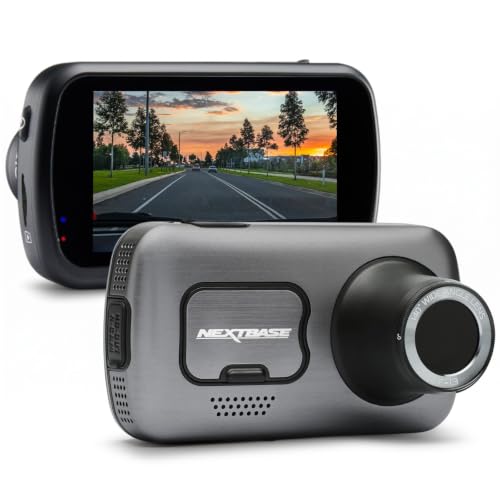
The Nextbase 622GW Dash Cam Full 4K/30fps UHD ($249.99) — The Nextbase 622GW is a genuinely capable 4K camera with a few tricks nobody else has. what3words gives emergency services a three-word location even with no data connection, and Nextbase says its Emergency SOS triggers within 30 seconds of a detected collision and texts your GPS coordinates to contacts you set up in advance. Image stabilization and a 1080p/120fps slow-motion mode are useful extras, and Alexa is built in. It lost to our picks on the sensor: this generation predates STARVIS 2, which is the biggest single factor in night footage. The rear camera is also a separate module you buy on top. If the SOS feature is what you're after, though, it's the only camera here that does it.
Installation notes
Plan the cable run before you stick anything to the glass. Tuck the wire into the headliner, down the passenger A-pillar and under the trim to the footwell — a plastic trim tool and twenty minutes gets you a install with no visible wire. Don't route it over an airbag. If you want parking mode, you need a hardwire kit tapped into the fuse box or an OBD-II cable, and you want one with low-voltage cutoff so the camera stops before it kills your battery. Use a high-endurance microSD card rated for continuous writing, at 256GB or larger for 4K, and reformat it in the camera every month or two. Cards are the most common failure point. Mount the camera behind the rearview mirror where it doesn't block your view, and check your state's rules on windshield-mounted devices first.
Questions we get
Do I need a front and rear dash cam, or is front-only enough?
Front-only covers the majority of at-fault disputes, since most collisions you'll need to prove happen ahead of you. But rear-end hits and parking lot scrapes are exactly the incidents where the other driver drives off, and a front camera sees none of it. If you park on the street or sit in stop-and-go traffic, get the rear channel.
What resolution should I look for — 1080p, 2K, or 4K?
Go 4K for the front camera. Tom's Guide found 4K kept license plates readable at up to roughly 60 feet on real roads, versus about 40 feet for 1080p, and that gap is often the whole point. 1080p is fine for a rear camera or a discreet second-car setup. Sensor quality still matters more than resolution after dark.
Do dash cams work while the car is turned off?
Only if you give them power. A cable plugged into the cigarette lighter usually cuts out with the ignition, which means no parking mode at all. You need a hardwire kit into the fuse box or an OBD-II power cable, ideally with a low-voltage cutoff so the camera shuts down before it drains your starting battery.
Can dash cams overheat in a parked car in summer?
Lithium battery models can. Thinkware's specifications rate capacitor-based cameras for reliable operation from -4°F to 158°F, while battery units typically throttle or shut down above 140°F — a temperature a closed car hits easily on a hot afternoon. If parking mode matters to you, buy a capacitor camera and park in shade when you can.
How long before a dash cam overwrites its own footage?
Viofo's documentation puts a 256GB card at roughly 12 to 16 hours of continuous 4K loop recording before the oldest files get overwritten. Adding a rear channel cuts that. Any clip the G-sensor flags gets locked into a protected folder, but if something happens that the sensor doesn't catch, save it manually the same day.
Is cloud storage worth a monthly subscription?
It depends on whether you're usually near your car. CNET's evaluation found LTE cameras let owners retrieve clips within about three minutes of a simulated hit-and-run without physical access to the vehicle. If you park in a city lot or want alerts about a teenager's driving, that's worth paying for. If your car is in your driveway, it isn't.
Why you should trust us
For this guide:
- We read published evaluations from Tom's Guide, PCMag, Car and Driver and CNET, and compared their conclusions against each manufacturer's own specifications for sensors, temperature ratings and parking modes.
- We reviewed owner feedback themes across these cameras — heat shutdowns, memory card failures and app reliability came up most often — and let those recurring complaints shape the flaws in every entry.
- We compared channel counts, power sources, GPS support and connectivity across the full lineup rather than relying on any single review's ranking.
- We read owner reviews on every listing, weighted toward the critical ones, because that is where the recurring failures show up.
- We have a systematic way of automatically fetching the latest prices, so the numbers on this page stay current.
- This is a research-focused guide, so the team may not own every product listed — though we often do own the top winners, which gives us extra context for the recommendations.
- We don't accept free products, and the retailer commission never changes which product we recommend.
Sources
Best Dash Cams of 2026 — Wirecutter (NYT), Wirecutter
The Best Dash Cams for 2026 — PCMag, PCMag
Best Dash Cams 2026 — Tom's Guide, Tom's Guide
Best Dash Cams 2026 — TechRadar, TechRadar
Best Dash Cams — Car and Driver, Car and Driver
Best Dash Cams — CNET, CNET
Best Dash Cams 2026 — Consumer Reports, Consumer Reports
Best Dash Cam Reviews — Roadshow by CNET, Roadshow / CNET
Dash Cam Market Report 2025–2026 — Allied Market Research, Allied Market Research
Sony STARVIS 2 IMX678 Sensor Overview — Sony Semiconductor, Sony Semiconductor Solutions
Amazon product listings and owner reviews for all 7 products
Manufacturer specification pages for each product
Some passages in this guide may be paraphrased with AI help. Prices are refreshed automatically.
More like this.
Continue exploring electronics reviews and recommendations.

The Best Dash Mini Appliances
A mini appliance earns its keep by being easy to grab. If it lives in a cabinet behind the stockpot, you'll stop using it by the second week. Dash builds…

The Best Camera Lens Attachments for iPhone
Your iPhone already has three cameras, so the question isn't whether you need more glass - it's whether an add-on lens gets you something the phone…

The Best Camera Drones
A camera drone earns its keep in the ten minutes after you park the car. You unfold it, it finds satellites, and you get a shot of the coastline that no…

The Best Blink Security Cameras
Most home security cameras want a monthly fee before they'll do much of anything. Blink's pitch is different: buy the camera, skip the contract, and get…

The Best Wireless Backup Camera Kits
Backing up is where most parking-lot damage happens, and mirrors alone won't show you the toddler's scooter lying behind your bumper. A wireless backup…

The Best Backup Cameras for Car Safety
Backing out of a driveway is one of the few things you do in a car with almost no information. Mirrors miss the ground directly behind your bumper, and…