The Best Wireless Backup Camera Kits
Backing up is where most parking-lot damage happens, and mirrors alone won't show you the toddler's scooter lying behind your bumper. A wireless backup camera fixes that without the four-hour wiring job a hardwired system demands. You bracket a camera to the license plate, tap it into the reverse light, and plug a small monitor into the cigarette lighter. That's the whole install for most kits. If your car predates factory backup cameras, this is the simplest safety upgrade you can make in an afternoon.
Here's the honest part: no wireless camera is as bulletproof as a wired one. The video hops through the air, and metal, distance and a crowded 2.4GHz neighborhood all chip away at it. Owners of long trailers and motorhomes report the same thing again and again — a signal rated for 50 feet gets flaky well before 50 feet once the vehicle's body sits between camera and monitor. Suction cups let go on a hot dashboard, too. Plan for a bit of fiddling.
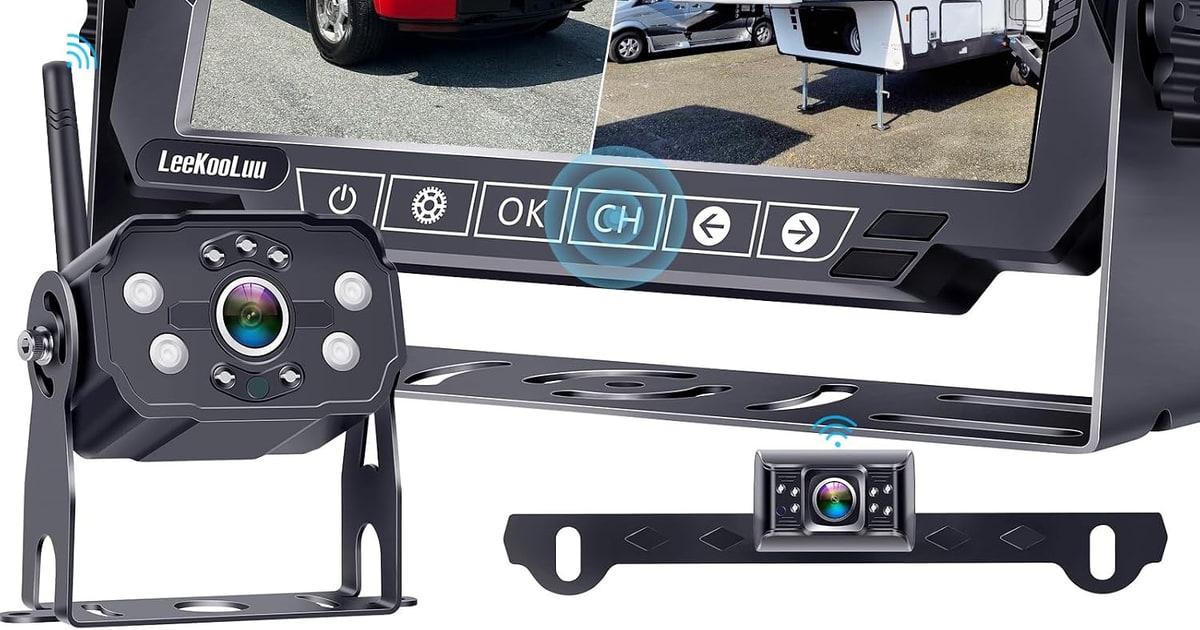
Signal strength, monitor size and how the camera gets power are the three decisions that actually matter. Everything else is marketing. We think that the AUTO-VOX CS-2 is the best wireless backup camera kit for most people, and that the LeeKooLuu HD 1080P 7 inch RV Wireless Backup Camera is the one to buy if you drive an RV, a long trailer or a full-size truck and need the signal to survive the trip to the back bumper.
Everything we recommend

A small screen and a short signal, but the easiest install here

The signal and screen you need once the vehicle gets long

A big screen for truck drivers who don't need recording

Zero wiring at the rear, if your trailer sees the sun

Sticks to any steel surface in a minute, recharges like a phone
At a glance
| Product | Resolution | Night Vision | Price | |
|---|---|---|---|---|
| AUTO-VOX CS-2 Wireless Backup Camera with 4.3"Top pick | — | 0.1 Lumen | $99.99 |
 | Garmin BC™ 50Also consider | 720p | — | $199.99 |
 | ZEROXCLUB Digital Wireless Backup Camera System KitAlso consider | 1080P | CMOS Sensor | $186.99On sale |
| ZEROXCLUB Wireless Backup Camera System Kit forRunner-up | 1080P | 18 IR Lights | $119.99 |
| eRapta Magnetic Wireless Backup Camera Kit withAlso great | 1080P | IR Night Vision | $289.99 |
| AUTO-VOX Solar Wireless Backup Camera: 5" 1080PUpgrade pick | 1080P | — | $103.98 |
| HD 1080P 7 inch RV Wireless BackupAlso great | 1080P | 18 IR Lights | $89.99 |
 | Furrion Vision S Wireless RV Backup CameraAlso in lineup | — | — | $234 |
How we picked
Signal that holds. We compared rated transmission distance against the through-vehicle figure, which is the one that accounts for metal between camera and monitor. Owner feedback consistently shows the real usable range falling short of the open-air number, so we favored kits with headroom for the vehicle length they target.
Digital, not analog. We only considered kits that specify encrypted digital or frequency-hopping transmission. Analog cameras share the 2.4GHz band with routers and garage door openers, and published reviews and owner reports both describe flickering or blank screens in suburban neighborhoods.
Screen and viewing distance. We matched monitor size to how far the driver sits from the dash, using manufacturer dimensions. A 4.3-inch screen reads fine in a sedan; owners of tall trucks and RVs repeatedly say 7 inches is the point where distance judgment gets easier.
Night and weather sealing. We looked at infrared LED count and lux ratings on spec sheets, plus IP ratings. IP67 handles rain; IP69K covers high-pressure, high-temperature wash bays, which matters for trucks and coaches cleaned professionally.
How it gets power. We separated kits by power source — reverse-light tap, solar, or rechargeable battery — because that decides whether a camera can live on a detachable trailer. Owner reports on battery drain and solar shortfalls informed which of those we'd trust.
Top pick
A small screen and a short signal, but the easiest install here
AUTO-VOX CS-2 Wireless Backup Camera with 4.3"
The CS-2 pairs a 4.3-inch suction-cup monitor with a license-plate camera rated to 0.1 lumens for night vision. It's built for ordinary cars, SUVs and vans, and the two-step install is genuinely as simple as the box claims.
$99.99fromAmazonFor a normal car, this is the install you want. Two connections and you're finished. The monitor runs off the cigarette lighter, and the camera's power wire taps your reverse light so the picture appears the moment you shift into R. No pulling door trim, no snaking cable under the carpet. Owners with no wiring experience regularly describe getting it done in well under an hour, including on older pickups with no factory camera at all.
The night image is the part that separates this from cheaper kits. AUTO-VOX specs a PC1058 sensor with a 0.1-lumen rating, which is the difference between a usable picture in an unlit lot and a black rectangle with a couple of taillight smears. Owners back this up — several bought it specifically because they can't turn their neck far, and they rely on the screen rather than a shoulder check.
The 2.4GHz link here is digital, not analog. That matters more than it sounds. Analog kits share the band with your neighbor's router and every garage door opener on the street, and they flicker at exactly the wrong moment. This one holds a stable picture within its rated 33 feet under the vehicle. The camera is rated IP68, so rain and car washes aren't a concern.
You also get adjustable parking guidelines and a mirror/front-view flip. The guidelines slide left, right, up and down so you can line them up with your actual bumper instead of trusting a generic overlay. If you'd rather not see them, turn them off. The flip means the camera works as a forward-facing unit too, which a few owners have used to add a front view to a car that already had a rear one.
Flaws but not dealbreakers
That 33-foot rating is a real ceiling, not a conservative one. Owners who moved the camera to the back of a trailer report the picture cutting out — it works on the truck, then falls apart once there's another 20 feet of steel in the way. If you tow anything, buy something else.
The 4.3-inch screen is fine in a sedan and cramped in a full-size pickup, where you're sitting farther from the dash. And the kit expects you to power the monitor from the cigarette lighter; there's no fuse-box adapter in the box, so if you want a cleaner permanent install you're sourcing that yourself. A few owners also note the picture gets muddy when the camera itself sits in deep shade with bright sun behind it.
Also great
The signal and screen you need once the vehicle gets long
HD 1080P 7 inch RV Wireless Backup
LeeKooLuu's dual-antenna camera is rated for 900 feet in the open and 270 feet through a vehicle body, paired with a 7-inch 1080p monitor. It's the pick for motorhomes, fifth wheels and long trailers where a shorter-range kit simply won't reach.
$89.99fromAmazonRange is the whole reason this kit exists. A dual-antenna camera transmits harder than the single-antenna designs most kits use, and the through-vehicle figure — 270 feet — is the number to look at, because that's the one that accounts for the metal in between. A 40-foot Class A with a car on the back is well inside that. Owners towing tent trailers and hauling long beds consistently say the signal holds.
The 7-inch screen earns its space on the dash. In a tall truck or an RV you're farther from the monitor and judging distance to a curb or a campground post, and a bigger image makes that judgment measurably easier. The 1080p panel supports up to four cameras with split-screen modes, so you can add a license-plate camera or a side view later without replacing the monitor.
Night duty is handled by an 18-LED infrared array, roughly double what the eight-LED cameras in this category use. More LEDs means the illuminated area extends farther back, which is what you want when you're reversing into a dark site and the nearest obstacle is a picnic table 15 feet away rather than a wall right behind the bumper.
The camera carries an IP69K rating, the highest here. That's the spec for high-pressure, high-temperature spray — the commercial wash bay, not just rain. If your truck or coach gets cleaned at a professional facility, this is the certification that keeps water out of the housing. LeeKooLuu also lists a two-year replacement warranty and lifetime tech support, and owners repeatedly single out the support as unusually responsive.
Flaws but not dealbreakers
The 15-minute install in the product name applies to an RV that's already pre-wired for a camera. On a truck or a bare trailer, you're running power to the rear and figuring out mounting, which is closer to an hour. Read the name as a best case.
There's no recording. If you want footage of a parking-lot incident, this isn't the kit. The dual-antenna housing is also chunkier than a plain camera, which matters if you're trying to keep a low profile on a license plate bracket. A few owners have had to get a replacement camera to fix a color cast on the first unit.
LeeKooLuu lists a two-year replacement warranty with lifetime tech support.
Runner-up
A big screen for truck drivers who don't need recording
ZEROXCLUB Wireless Backup Camera System Kit for
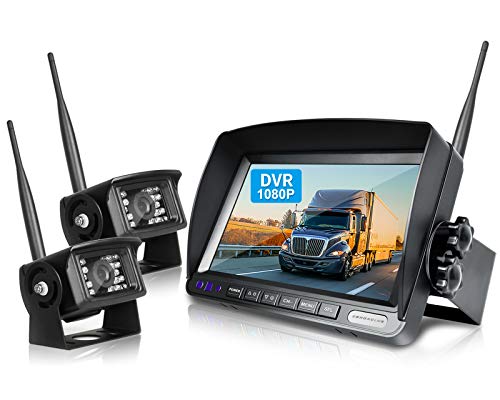
The W01 puts a 7-inch 1080p IPS monitor on your dash with a third-generation digital signal rated stable to 70 mph. It's aimed squarely at pickup and box-truck drivers who find a 4.3-inch screen too small to judge a reverse.
$119.99fromAmazonIf you drive a full-size truck, screen size is the upgrade you'll actually notice. You sit high and far from the dash, and a 7-inch IPS panel renders the rear image large enough to judge how much room is left behind the tailgate. The CS-2's 4.3-inch screen works in a sedan. In a crew cab it makes you squint, and squinting while reversing defeats the point.
Installation is the fastest of any hardwired-camera kit here. ZEROXCLUB claims two minutes for the monitor, and that's not a stretch — suction cup on the windshield, plug into the cigarette lighter, done. The camera goes on the plate bracket and gets one wire to the reverse light. There are two wiring options: auto-on in reverse, or always-on so you can use it as a rear-view mirror while driving.
The camera pairs 18 infrared LEDs with a CMOS sensor and an IP69K rating, so you get the same night array and the same wash-bay-grade sealing as the LeeKooLuu. Voltage range is 12–24V, which covers box trucks and buses as well as pickups. Owners with enclosed cargo trailers like that the camera stays on the trailer and the monitor moves between tow vehicles.
It's cheaper than the ZEROXCLUB HW02 and shares the same monitor size. What you give up is the fourth-generation signal and the built-in recording. For a truck that isn't a fleet vehicle, that's a sensible trade — you're paying for the screen and skipping the commercial features you'd never open.
Flaws but not dealbreakers
The third-generation signal is a step behind the HW02's, and it shows up as occasional dropouts in signal-dense areas or at the far end of a long trailer. Several owners went through a back-and-forth with support and an upgraded antenna before the connection was reliable; support was helpful, but you may need to make the call.
The suction-cup mount is a weak point on a dashboard that bakes in summer sun. Expect it to let go eventually and plan a more permanent mounting spot. And like the LeeKooLuu, there's no recording function.
Upgrade pick
Zero wiring at the rear, if your trailer sees the sun
AUTO-VOX Solar Wireless Backup Camera: 5" 1080P
A solar panel built into the camera head keeps the battery topped up, so nothing at the back of the vehicle needs a power wire. Paired with a 5-inch 1080p monitor, it's the answer for a trailer you hitch and unhitch constantly.
$103.98fromAmazonThis is the only kit here that needs no rear wiring at all. On a detachable trailer, that's the whole problem solved. There's no electrical connection between tow vehicle and trailer, so hitching up doesn't mean plugging in a camera line every time. The camera mounts with a screwdriver or the included 3M adhesive, and anti-theft screws are in the box for trailers left in public lots.
The battery is 5000mAh and AUTO-VOX rates it at three to four months on a charge with solar keeping up. The monitor sleeps after 60, 90 or 120 seconds and wakes on a trigger button on the car charger. Owners in sunny regions report going most of a year without touching the USB port. That's genuinely set-and-forget in the right climate.
The link uses frequency hopping rather than a fixed channel, which is why the image stays clean near dense Wi-Fi. The 5-inch 1080p monitor supports dual channels and split screen, so you can add a second camera at the front or on a blind side. IP69K sealing covers everything from -4°F to 149°F, which is the range that matters if the trailer lives outside year-round.
It sits between the CS-2 and the truck-sized kits in a useful way. Bigger screen than the CS-2, longer reach than 33 feet, and no wire to run — but a fraction of the install effort of a hardwired RV system. For a utility trailer, a horse trailer or a small camper, it's the least fussy option in the guide.
Flaws but not dealbreakers
Solar is a promise, not a guarantee. A stretch of gray days drains the battery, and the fallback is walking back to the trailer with a USB cable — which undercuts the convenience you paid for. Owners in cloudier regions describe exactly this pattern: months of hands-off operation, then a winter of manual charging.
The rated 52 feet won't cover a long motorhome. And a handful of owners have hit sync problems where the camera and monitor stop talking to each other; AUTO-VOX's warranty service gets good marks for sorting it out, but it's a call you may have to make.
AUTO-VOX covers the Solar under its standard warranty, and owners report the replacement process goes smoothly.
Also great
Sticks to any steel surface in a minute, recharges like a phone
eRapta Magnetic Wireless Backup Camera Kit with
Two magnetic battery-powered cameras, a 9600mAh cell and a 10.1-inch DVR monitor. Nothing gets drilled, nothing gets wired, and the whole rig moves to a different trailer in about as long as it takes to walk back there.
$289.99fromAmazonThe magnetic base is the point. Slap the camera on any ferrous surface, plug the monitor into the cigarette lighter, and you're running. No drilling into a camper shell, no permanent modification, no bracket. Owners who rotate between a horse trailer, a flatbed and a truck describe moving the camera in under a minute — that flexibility doesn't exist in any hardwired kit here.
The 10.1-inch monitor is the largest screen in this guide, and it records. Drop in an SD card up to 128GB and it loops video continuously, which turns the setup into a parked-vehicle security camera as well as a reversing aid. Two cameras come in the box and the monitor handles up to four, with full, split and quad layouts. That's real coverage for a long rig.
Battery life is the trade you make for zero wiring, and 9600mAh is a big cell. The camera sleeps automatically when the monitor's off to stretch it. Charging is over the included cable — plan on plugging it in periodically rather than forgetting about it entirely. Owners running it daily on long-haul routes report the battery holding up well between charges.
The 1080p sensor with infrared LEDs gives a clean picture day and night, and the monitor offers a 150-degree wide view with adjustable parking lines you set with buttons above the screen. For hitching a trailer — where you're inching backward and need to see the coupler — that adjustability is what makes the difference between guessing and knowing.
Flaws but not dealbreakers
A magnet only grips clean steel. Aluminum trailers are a non-starter without a steel plate added, and rusty, textured or thickly painted surfaces weaken the hold. One owner had to fabricate a galvanized bracket to mount it on an aluminum trailer, which is a fair bit of work for a no-tools camera.
The charging cable is proprietary rather than USB-C, so losing it is a problem. Some owners report the instructions being thin and support slow to answer, and a couple have had the antenna cover fall off a camera early on. The picture kept working, but it's a build-quality signal worth knowing.
Who this is for
Buy one of these if your vehicle has no factory backup camera and you'd rather not spend a weekend routing cable. That covers most cars built before the federal mandate, plus nearly every trailer, camper and utility rig on the road. The wireless part is doing one specific job: it removes the hardest step of a wired install, which is pulling a video cable from the license plate to the dash. You still run a short power wire to the reverse light on most kits.
Skip these if camera uptime is genuinely critical — a delivery fleet, a commercial truck where a blank screen means a stopped shift. A wired system is still the conservative choice there. This guide covers self-contained kits that pair a camera with a monitor or an existing Garmin screen. It doesn't cover mirror-replacement units, wired systems, dash cams, or the extra cameras you'd add to a multi-channel setup later.
How we picked
We worked from manufacturer spec sheets, published reviews and owner feedback themes, and weighed five things. Signal: rated through-vehicle range, not the open-air number, matched against the length of vehicle each kit targets. Transmission type: encrypted digital or frequency-hopping only, since analog kits fight with every router and garage door opener nearby. Screen: monitor size matched to how far the driver sits from the dash, because distance judgment gets harder as the image shrinks. Night and weather: infrared LED count, lux ratings, and whether the housing is sealed for rain or for wash-bay pressure. Power: reverse-light tap, solar or battery, which is what decides whether a camera can stay on a trailer you unhitch.
Other wireless backup camera kits worth considering
If you want continuous recording built in: The ZEROXCLUB Digital Wireless Backup Camera System Kit ($186.99) — The ZEROXCLUB HW02 is the W01 with a stronger fourth-generation signal and a 32GB card for continuous video. ZEROXCLUB rates the link at 120 feet with no delay and clear at 85 mph, and the monitor handles up to four cameras in single, dual, triple or quad layouts. That combination is aimed at fleet operators and RV owners who want incident footage without adding a dash cam. It costs more than the W01 and shares the same 7-inch screen, so if you'd never open the recordings, the W01 is the better buy. Owners praise the crisp image and the pre-paired setup, though a couple report moisture getting into a camera after a couple of years.
If you already own a compatible Garmin navigator: The Garmin BC™ 50 ($199.99) — The BC 50 streams to a Garmin GPS you've already got mounted, so there's no second screen cluttering the windshield. Resolution is 720p across a 160-degree field of view — plenty for judging distance at reversing speeds, even if the number trails the 1080p kits here. Garmin rates transmission at 50 feet and sells an extension cable to double that. Two catches: it's useless without a compatible Garmin, and owners with 35- to 40-foot rigs report the range falling well short of the rating once the vehicle body is in the way. Garmin recommends professional installation, and it needs a switched 12-volt source.
The competition
This is what the research surfaced among widely available wireless kits, not a survey of the whole market. One product here didn't make the picks.
The Furrion Vision S Wireless RV Backup Camera ($234) — The Furrion Vision S is the one system here with a built-in microphone and a motion sensor that wakes the display when something moves behind a parked RV. That's a real feature for anyone camping in unfamiliar spots, and Furrion's presence in the RV world means many trailers come pre-wired with a shark-fin mount ready for it — owners with pre-wired rigs describe ten-minute installs. It loses to our picks on hardware for the money: a 4.3-inch screen in a category where similar spending buys 7 inches and far more range. Owners on longer trailers report lag and note the antenna has to be deployed, and lens fogging comes up more than once. Choose it if your RV is already Furrion-prepped or if audio monitoring while parked is something you'd genuinely use.
Installation notes
Before you buy, walk the length of your vehicle with a tape measure and add a few feet — that's the number to check against the through-vehicle range, not the open-air spec. Mount the camera high on the plate bracket and angle it slightly down so the bumper takes up the bottom third of the frame; that gives you a reference edge for judging distance. Tap the camera's power wire into the reverse light circuit rather than a constant-hot source, since owners who wired cameras to always-on power report units failing early. If you're using a suction-cup monitor, clean the glass with alcohol first and expect to remount it after a hot summer. On battery and solar cameras, charge fully before the first pairing attempt — a partly charged camera is the most common reason a new kit won't sync.
Questions we get
How hard is this to install if I've never touched car wiring?
For most kits, easier than you'd think. You're making one connection at the rear — the camera's power wire to the reverse light — and plugging the monitor into the cigarette lighter. There's no cable to route through the cabin, which is the step that makes a wired install take a professional half a day. Budget 30 to 60 minutes and a screwdriver.
What's the difference between analog and digital wireless cameras?
Analog cameras broadcast on a fixed 2.4GHz channel, so anything else on that band — your router, a baby monitor, the neighbor's garage door opener — can step on the signal. Digital kits use encrypted, frequency-hopping transmission that switches channels constantly to dodge interference. Every kit in this guide is digital. If you're looking at something outside this list, check that the description explicitly says encrypted digital or frequency hopping.
How far will the signal actually reach on a long truck or RV?
Less far than the box says, generally. Open-air ratings assume clear line of sight; the through-vehicle number is the honest one, because your vehicle's body absorbs the signal. Owners of 35- to 40-foot rigs routinely report kits rated for 50 feet struggling. If your vehicle is over about 30 feet, buy something rated for 100 feet or more through the body.
Can I use one of these on a trailer I hitch and unhitch constantly?
Yes, and this is where wireless genuinely beats wired. The AUTO-VOX Solar is the cleanest answer, since the solar panel means no electrical connection to the tow vehicle at all — the camera just lives on the trailer. The eRapta magnetic kit is the other approach: a battery-powered camera you move between trailers in seconds, as long as the mounting surface is steel.
Will this drain my car battery when it's parked?
No, on a standard install. The camera draws power from the reverse light circuit, which is only live when you're in reverse, and the monitor runs off the cigarette lighter, which cuts out with the ignition on most vehicles. Battery-powered cameras like the eRapta and solar cameras like the AUTO-VOX draw nothing from the car at all. The one thing to avoid is wiring a camera to a constant-hot source.
Is 1080p meaningfully better than 720p for backing up?
Not for the usual job. At 5 to 30 feet, viewing angle, screen size and how many infrared LEDs the camera has matter more than resolution. The Garmin BC 50's 720p image holds up fine day to day. The extra resolution earns its keep when you're reading small details at the edge of a wide-angle frame — squeezing a long rig into a tight campground site, for instance.
Do these work in rain and snow?
Rain is a non-issue. Every camera here is sealed to at least IP67, and water beads off the lens at road speeds. Heavy snow is harder: infrared light bounces off falling flakes and can wash out the image, so you'll still see obstacles but judging exact distance gets tricky. If your truck goes through commercial wash bays, look for the IP69K rating.
Why you should trust us
For this guide:
- We read manufacturer spec sheets for all eight kits and compared rated transmission range, infrared LED count, IP sealing and monitor size side by side.
- We reviewed owner feedback themes across the lineup, paying particular attention to reports of signal dropouts on long vehicles, suction-cup and magnetic mount failures, and battery behavior on solar and rechargeable cameras.
- We did not use, install or measure any of these products; every claim here traces back to a published specification, a review, or a pattern in owner reports.
- We read owner reviews on every listing, weighted toward the critical ones, because that is where the recurring failures show up.
- We have a systematic way of automatically fetching the latest prices, so the numbers on this page stay current.
- This is a research-focused guide, so the team may not own every product listed — though we often do own the top winners, which gives us extra context for the recommendations.
- We don't accept free products, and the retailer commission never changes which product we recommend.
Sources
Best Backup Cameras — Wirecutter (NYT), Wirecutter
Best Wireless Backup Cameras — Car and Driver, Car and Driver
NHTSA Rear Visibility Standards and Crash Data, NHTSA
Best Backup Cameras Tested — Popular Mechanics, Popular Mechanics
Best Wireless Backup Camera — The Drive, The Drive
Amazon product listings and owner reviews for all 8 products
Manufacturer specification pages for each product
Some passages in this guide may be paraphrased with AI help. Prices are refreshed automatically.
More like this.
Continue exploring electronics reviews and recommendations.

The Best Backup Camera Rearview Mirrors
Most of your driving happens facing forward. But the two minutes a day you spend in reverse are where the dents and the tragedies happen. Federal safety…

The Best Backup Cameras for Car Safety
Backing out of a driveway is one of the few things you do in a car with almost no information. Mirrors miss the ground directly behind your bumper, and…

The Best Wireless Video Doorbell Cameras
A video doorbell earns its keep on ordinary days. A driver drops a box while you're at work. A neighbor stops by and you're in the shower. Someone knocks…

The Best Noise-Canceling Wireless Earbuds
Noise-canceling earbuds earn their keep in the boring moments. The drone of a plane cabin at cruising altitude. A neighbor's leaf blower during your…

The Best Noise-Cancelling Wireless Earbuds
Good noise cancelling changes how a commute feels. The train rumble drops away, an airplane's engine drone turns into a soft hush, and the open-plan…

The Best Wireless Gaming Mice
A gaming mouse is the one piece of gear your hand touches for every second you play. Weight, shape, and how the shell fits your grip matter far more than…