The Best Backup Cameras for Car Safety
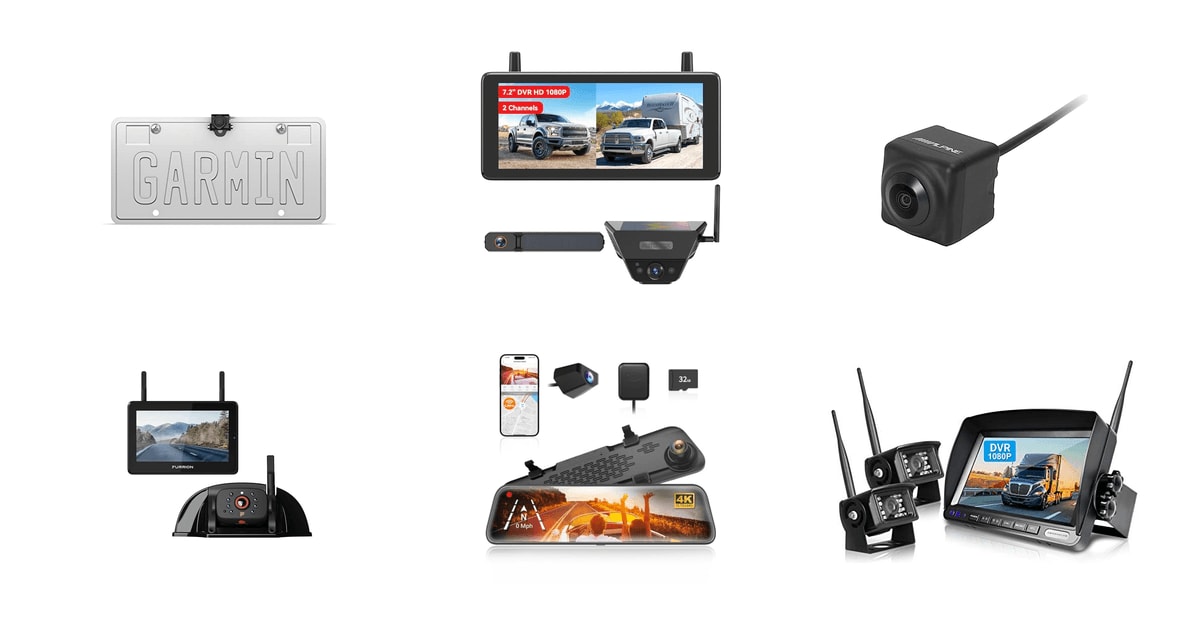
Backing out of a driveway is one of the few things you do in a car with almost no information. Mirrors miss the ground directly behind your bumper, and that blind zone is exactly where a tricycle, a mailbox post, or a small child ends up. The IIHS found that a backup camera alone cuts the risk of a backing crash by 42 percent. If your car was built before May 2018, there's a good chance it never came with one, and a hundred million-plus vehicles on US roads are in that group.
Here's the honest part: no aftermarket camera feels as clean as a factory system. Wireless kits are easy to install but can stutter or drop out around Wi-Fi routers and metal trailers. Wired kits hold a rock-solid signal but mean pulling a cable from your tailgate to your dash, which is a weekend job or a shop visit. Waterproofing claims are inconsistent across the category, and owners across nearly every brand report cameras that fog up or die after a couple of winters.
So the right pick depends less on specs than on your vehicle and your patience with wiring. A commuter sedan needs something different than a 38-foot fifth wheel. We think that the Garmin BC 50 is the best backup camera for most people, and that the ZEROXCLUB HW02 is the one to buy if you're covering a truck, trailer, or RV and want a monitor included.
Everything we recommend

A clean wireless view if you already own a Garmin navigator
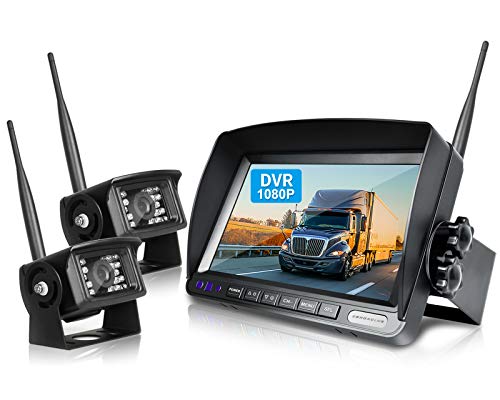
A full wireless kit built for long rigs, monitor included

A mirror that records the road and shows you what's behind

The easiest install here — no drilling, no wiring, no shop visit
At a glance
| Product | Resolution | Night Vision | Price | |
|---|---|---|---|---|
| Garmin BC™ 50Top pick | 720p HD | — | $199.99 |
| AUTO-VOX 2 Solar Wireless Backup Camera System:Budget pick | 1080P HD | Infrared Night Vision | $189.99On sale |
 | Alpine HCE-C2100RD Multi-View Rear HDR Camera SystemAlso in lineup | — | — | $399.95 |
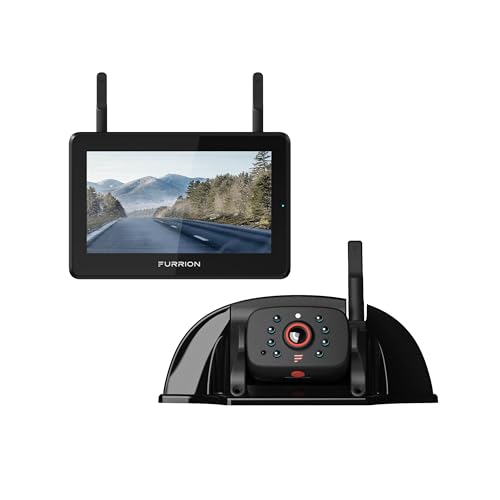 | Furrion 2021124370 Vision S+ RV Backup CameraAlso consider | 1080p | Day or Night | $449 |
| WOLFBOX G840S 12" 4K Mirror Dash CamAlso great | 4K Front/1080p Rear | Superior Night Vision | $169.99On sale |
| ZEROXCLUB Digital Wireless Backup Camera System KitRunner-up | 1080p | Night Vision | $186.99On sale |
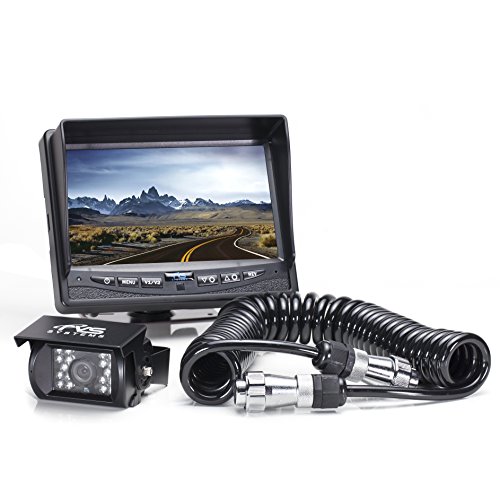 | Rear View Safety RVS-770613-213 Backup Camera SystemAlso consider | — | Excellent Night Vision | $599.99 |
How we picked
Image and night vision. We compared published resolution and sensor specs alongside owner feedback about real low-light performance, since infrared LED count and lens quality matter more after dark than the headline megapixel number. Cameras that owners described as fogging, blurring, or washing out in mixed light lost ground.
Signal reliability. For wireless models we weighed manufacturer range ratings against what owners actually report, particularly on metal-bodied trailers and in dense RF environments. Published reviews document dropouts on budget 2.4 GHz systems, so we favored kits with credible long-range performance.
Weather sealing. We checked each camera's stated ingress rating against where it's meant to mount. IP69K is the top classification under IEC 60529 and the only appropriate one for a camera that gets pressure-washed in a truck bed or on a trailer.
Install effort. We looked at whether a kit needs a cable pulled through the cabin, a tap into the reverse light circuit, or nothing at all. Owner feedback about vague instructions and awkward pairing counted here, since a confusing manual turns a one-hour job into a lost afternoon.
Display and fit. We separated kits that include a monitor from cameras that need a compatible head unit, because buying the wrong one means buying twice. Field of view mattered too: around 170 degrees covers the full width of most vehicles without heavy barrel distortion.
Top pick
A clean wireless view if you already own a Garmin navigator
Garmin BC™ 50
The BC 50 sends a 720p wireless picture straight to a compatible Garmin GPS, so you don't add a second screen to your windshield. It's small, weather-resistant, and pairs without tools once the wiring to your reverse lights is done.
$199.99fromAmazonIf you already have a Garmin navigator on your dash, this is the tidiest upgrade you can make. The camera talks directly to the head unit you're already looking at. No extra monitor, no suction cup, no second power cable snaking across the windshield. When you shift into reverse, the navigation screen switches to the camera view on its own. That kind of integration is normally something you pay an installer to fake.
The picture is 720p across a 160-degree field of view, which is enough to see the full width of a passenger car and most light trucks at a reasonable distance behind you. The housing is compact and IPX7-rated, so rain, road spray, and snow aren't a concern. It's rugged in the way a small sealed puck usually is — there's not much surface for water to find.
Garmin rates the wireless link at 50 feet, and an optional extension cable pushes that to 100 feet for a truck-and-trailer setup. Owners with short vehicles report a rock-steady connection. If you're bridging a long gap, read the flaws below carefully, because the real-world number is softer than the spec sheet.
Installation is the one part that isn't wireless. The camera needs a switched 12-volt source — usually your reverse light circuit — so somebody has to get behind the tailgate trim. Owners who are comfortable with a screwdriver describe the mechanical part as straightforward. The written instructions are thin, and pairing requires the car to actually be in reverse, which trips up a lot of first-timers.
Flaws but not dealbreakers
The advertised 50-foot range is optimistic. Owners towing anything longer than a small utility trailer report the signal getting flaky well before that, especially with metal between the camera and the navigator. A 38-foot motorhome puts the camera at the edge of what this system reliably handles, and an aluminum trailer body makes it worse.
It's the priciest way to solve a fairly simple problem, and you're paying partly for the Garmin ecosystem. If you don't already own a compatible navigator, the math stops working — you'd be buying two devices to get one camera view. Some owners have also reported units failing early, particularly when wired to constant ignition power rather than the reverse circuit.
Garmin does not publish a warranty term in this listing.
Runner-upOn sale
A full wireless kit built for long rigs, monitor included
ZEROXCLUB Digital Wireless Backup Camera System Kit
The ZEROXCLUB HW02 bundles a 7-inch monitor with 1080p wireless cameras rated to 120 feet, and it can run up to four cameras at once. It's the pick for trucks, trailers, and RVs where a 50-foot link won't reach.
$186.99fromAmazonList priceLong vehicles are where most wireless backup cameras fall apart, and this is the kit built for that problem. ZEROXCLUB rates the digital link at 120 feet with no delay, which covers a fifth wheel or a box truck with room to spare. The system supports up to four cameras on one monitor, so you can watch the rear, the hitch, and both blind spots and switch between single, dual, triple, or quad layouts.
You get everything in the box, which matters more than it sounds. The 7-inch LCD, the cameras, and a 32GB card for recording all ship together, pre-paired. There's no shopping for a compatible head unit and no hoping a monitor you bought separately speaks the same protocol. Owners consistently describe the setup as simple once the cameras are physically mounted.
The cameras use a CMOS sensor with infrared night vision and carry an IP69 waterproof rating with a metal housing and gel seal. That's the tier you want for a camera bolted to the back of a trailer that gets pressure-washed. The 12–24V input range also means it works on commercial trucks and buses, not just 12-volt passenger vehicles.
Owner feedback on picture quality is unusually consistent for a wireless system at this price. People running it on semis, campers, and boat trailers describe a crisp, stable image at highway speed. That's the specific failure mode budget 2.4 GHz kits are known for, and this one seems to avoid it.
Flaws but not dealbreakers
Water intrusion shows up in longer-term owner feedback. Multiple people report a camera fogging or going dead after a couple of seasons outdoors, despite the IP69 claim. Warranty support after the Amazon return window is thin, so buy it knowing the cameras may be a consumable over a long enough horizon.
The printed instructions have lagged behind product revisions — some owners received a pamphlet describing an older pairing method than the hardware actually uses. It's solvable, but expect to search for the current procedure rather than trusting the paper in the box.
You still have to drill. Mounting a camera on the back of a camper means making holes and sealing them, and the monitor needs a power run to the dash. It's easier than routing video cable through a whole rig, but it isn't a five-minute job.
Also greatOn sale
A mirror that records the road and shows you what's behind
WOLFBOX G840S 12" 4K Mirror Dash Cam
The WOLFBOX G840S replaces your rearview mirror with a 12-inch display, recording 4K in front and 1080p behind. If you want a dash cam and a backup camera in one device, this is the most popular way to get both.
$169.99fromAmazonList priceThis is two products in one, and that's the whole argument for it. The G840S clamps over your existing rearview mirror and gives you a 12-inch screen with about 1.5 times the viewing area of a standard mirror. The front camera records in 4K, the rear in 1080p, and both run continuously with loop recording. When you shift into reverse, the rear feed takes over. For anyone who wants crash footage and a backing view without cluttering the windshield with two gadgets, it's a clean answer.
The rear lens covers 140 degrees and the front covers 170. WDR and HDR processing help with the classic problem of pulling out of a dark garage into bright sun, and owners report the night image is a real step up from a plain mirror. The screen uses a low-reflectivity LCD, which cuts the daytime glare that makes cheaper mirror cams unreadable at noon.
It also does things a backup camera can't. There's GPS logging via an included external antenna, a phone app over 5.8 GHz Wi-Fi for pulling clips off the device, and a 24-hour parking monitor that time-lapses while you're away. The parking mode needs a hardwire kit, which isn't included.
This is the most widely bought product in this guide by a wide margin, and the volume of owner feedback makes its behavior unusually well documented. That cuts both ways — see the flaws — but it means you're not gambling on a product nobody has lived with.
Flaws but not dealbreakers
Reliability is the recurring theme. Owners describe units burning out after a few years and needing replacement, memory cards going unrecognized, and clocks that reset every time the car shuts off. Enough people replace it with the same model that it reads as a wear item rather than a lifetime purchase.
The rear camera cable is short for some vehicles. If you're mounting at the license plate on a longer car or a truck, owners report having to reroute creatively to make it reach. Check your run before you commit to a mounting spot.
A 12-inch mirror is a lot of mirror. It blocks more of your upper windshield than the stock piece, and some drivers never get comfortable with a screen where a mirror used to be.
WOLFBOX includes a 12-month guarantee.
Budget pickOn sale
The easiest install here — no drilling, no wiring, no shop visit
AUTO-VOX 2 Solar Wireless Backup Camera System:
The AUTO-VOX 2 Solar system charges its cameras with sunlight and plugs the monitor into your cigarette lighter. You get a 7.2-inch split-screen display and two 1080p cameras with no cable to run anywhere.
$189.99fromAmazonList priceEvery other camera here requires you, or someone you pay, to get behind trim panels. This one doesn't. The cameras carry their own solar-charged batteries, and the monitor runs off the 12-volt socket. Mount the cameras with screws for a permanent setup or just slap them on with the magnetic base. Owners routinely describe getting it running in minutes, and several push back on calling it an installation at all.
The two-camera setup is more useful than it first appears. One camera stays on your truck's license plate area, the other moves wherever you need it — a trailer, a camper, a truck bed. Drop the trailer at the campsite and your truck still has a working rear view for errands. The 7.2-inch monitor shows both feeds side by side, which helps when you're merging or checking a hitch.
Both cameras shoot 1080p with infrared night vision, and AUTO-VOX rates the wireless link at up to 500 feet. Owners hauling gooseneck trailers and long campers report a stable picture at that kind of distance, which is the main reason to consider this over a shorter-range wireless kit.
This is the pick for a car that lives outside. Solar charging only works if the panel sees regular daylight, so a vehicle parked in a garage every night is the wrong fit. But for a truck in a driveway or an RV at a campsite, the panel does what it's supposed to and you never think about power again.
Flaws but not dealbreakers
The solar charging isn't universally reliable. Some owners report panels that never bring the battery up, leaving them pulling the camera off every couple of days to charge it by cable — which defeats the entire premise. Northern winters and long stretches of overcast weather make this worse.
On this configuration, the second flexible camera lacks infrared, so it goes effectively blind at night while the fixed camera sees fine. If night vision on both feeds matters to you, this specific bundle isn't the one to buy.
It's still a battery-powered wireless system, with all the maintenance that implies. There's no hardwired power to fall back on if the cells degrade.
Who this is for
This guide is for anyone driving a vehicle without a factory backup camera — which, if your car predates May 2018, is likely. FMVSS No. 111 has required rearview visibility systems on new light vehicles since then, but that still leaves an enormous number of older cars, trucks, and vans with nothing behind the bumper. Truck, SUV, and minivan drivers have the largest blind zones, and parents have the most at stake: children under five account for roughly 31 percent of backing fatalities, largely because their height puts them entirely inside that zone.
It's also for RV and trailer owners, who face a different problem — not a blind spot but a wall. If you tow anything over 25 feet, a standard camera's wireless range won't bridge the gap, and you need a system rated for the distance. What this guide doesn't cover is factory camera replacement parts, vehicle-specific OEM modules, or accessory cameras that only work with one manufacturer's existing monitor. If your car already has a working backup camera, none of this is an upgrade worth making.
How we picked
We weighed five things. Image and night vision: resolution specs and infrared capability, checked against owner reports of how each camera actually behaves at dusk and in the rain. Signal reliability: manufacturer range claims measured against what people towing real trailers say happens at distance, since published reviews document dropouts on budget 2.4 GHz gear. Weather sealing: stated IP rating matched to the mounting location, with IP69K reserved for anything that gets pressure-washed. Install effort: whether you'll be pulling cable through the cabin, tapping a reverse light, or doing nothing at all. Display and fit: whether a monitor comes in the box, and whether the roughly 170-degree field of view most vehicles need is there without heavy distortion.
Other backup cameras for car safety worth considering
If you want the most durable wired system for a trailer or fleet vehicle: The Rear View Safety RVS-770613-213 Backup Camera System ($599.99) — The Rear View Safety RVS-770613 is the commercial-grade option here. Everything is heavier than it needs to be — the camera has real metal weight to it, the cabling is IP69K-rated end to end, and the quick-connect kit is designed to let you unhook a trailer without unwiring anything. It runs 26 feet of cable through the tow vehicle and 66 through the trailer, with 18 infrared lights that switch on automatically after dark. The 7-inch monitor takes two additional cameras. What you give up is a weekend: this is a genuinely time-consuming install, the manual is widely described as unhelpful, and the 130-degree view is narrower than most of the picks. Owners who got through the wiring are consistently happy with the hardware quality.
If you want a purpose-built RV camera that records: The Furrion 2021124370 Vision S+ RV Backup Camera ($449) — The Furrion Vision S+ is designed around the RV market, with a 1080p sharkfin camera, a compact 5-inch touchscreen monitor sized to stay out of your windshield view, and four simultaneous camera views. It records to an SD card, so you have footage of recent trips. Many RVs come prewired for Furrion, which makes this close to plug-and-play on those rigs — owners with prewired trailers describe pairing that just works. But owner reports on this generation are the shakiest in the guide: several describe cameras failing within weeks, image sharpness that doesn't match the 1080p claim, and a polarized screen that goes black if you wear polarized sunglasses. That last one is a genuine dealbreaker for some drivers.
The competition
These are the other products our research surfaced in this category, not a survey of everything on the market. Each lost to a pick for a specific reason, but a couple make sense for narrow situations.
The Alpine HCE-C2100RD Multi-View Rear HDR Camera System ($399.95) — The Alpine HCE-C2100RD is an OEM-grade camera aimed at people building a factory-look install around an Alpine head unit. The HDR CMOS sensor handles big swings in light without blowing out, and four selectable viewing angles cover up to 180 degrees, which helps when you're nosing out of a blind alley. It's the natural choice with an Alpine receiver, particularly the Jeep Wrangler restyle units it's designed around. Two things keep it out of the picks: it's a bare camera, so you need a compatible display already, and owners report the plastic lens housing hazing over after a few years the way old headlights do. The bundled mount is also inflexible enough that some owners fabricate their own.
Installation notes
Whatever you buy, tap your reverse light circuit rather than a constant-on ignition source. Wiring a camera to run all the time shortens its life, and owners across several brands report early failures from exactly that. If you're running a wired kit, pull the cable along an existing harness path and use grommets where it passes through sheet metal — a chafed video cable is the most common cause of a picture that flickers a year later. Seal every hole you drill in a camper or trailer with a proper lap sealant, not silicone. For wireless systems on aluminum-bodied trailers, mount the camera as high as practical; metal between the camera and receiver is what kills range, not distance alone. Finally, aim the camera so your bumper sits at the bottom edge of the frame. Without that reference point, the guideline overlay means nothing.
Questions we get
Can I install a backup camera myself, or do I need a professional?
It depends entirely on the type. A solar or battery-powered wireless kit like the AUTO-VOX takes minutes and needs no tools beyond a screwdriver. Anything that taps your reverse lights means removing tailgate or trim panels, and a fully wired system means pulling cable the length of the vehicle — that's the one most people hand to a shop. Garmin itself recommends professional installation for the BC 50.
Do backup cameras work at night?
The good ones do. Night performance comes down to infrared LED count and lens quality, not resolution — a camera with eight or more IR LEDs sees meaningfully better in a dark driveway than a four-LED budget unit. The Rear View Safety system uses 18 IR lights that switch on automatically. Just be aware that on some multi-camera bundles, only the primary camera has infrared.
What's the difference between a wired and wireless backup camera?
A wired camera sends video down a physical cable, which means the signal never drops but you have to route that cable from your bumper to your dash. Wireless kits transmit over radio, so installation is far easier, but they can stutter near Wi-Fi routers and other 2.4 GHz sources — published reviews have documented dropouts on budget wireless models in dense urban areas. Digital and 5 GHz systems largely solve the interference problem at higher cost.
What's the best backup camera for an RV or fifth-wheel trailer?
You need range first and everything else second. A camera rated for 10 meters won't reach from the back of a 40-foot rig to your dash, so look for systems rated well beyond that — the ZEROXCLUB is rated to 120 feet and the AUTO-VOX solar system to 500. If your rig is prewired for Furrion, that system saves you a lot of work. For all-aluminum trailers where wireless struggles, a wired system like the Rear View Safety kit is the safer bet.
How wide a viewing angle do I actually need?
Around 170 degrees is the sweet spot for most vehicles. At that angle a camera covers roughly 16 feet of lateral width when an obstacle is 10 feet behind you, which spans the full width of most cars and light trucks with no gaps at the corners. Push past 180 degrees and you start getting noticeable barrel distortion that makes it harder to judge distance. Narrower views around 130 degrees work but leave more at the corners.
What IP rating does a camera need for a truck bed or trailer?
IP69K if it's going anywhere that gets pressure-washed. That's the top classification under IEC 60529, requiring resistance to jets at up to about 1,450 psi and water as hot as 176°F. IP67 is fine for a camera tucked under a rear bumper on a passenger car. Be skeptical of ratings on inexpensive cameras — moisture getting inside the housing after a couple of seasons is the single most common long-term complaint in this whole category.
How much do backup cameras actually reduce accidents?
The IIHS found that a backup camera alone reduces the risk of a backing crash by 42 percent, and pairing one with rear cross-traffic alert brings that to 47 percent. When NHTSA analyzed the rule that made cameras mandatory, it estimated they would prevent 58 to 69 deaths and roughly 8,000 injuries a year in the US. The benefit is concentrated where the blind zone is worst — behind large vehicles, and at the height of a small child.
Why you should trust us
For this guide:
- We read manufacturer specifications for every camera here, including stated resolution, field of view, transmission range and ingress protection rating.
- We compared those claims against published buying guides and reviews from outlets including Car and Driver, The Drive and Popular Mechanics, plus safety data from NHTSA and the IIHS.
- We read through owner feedback for each product to find the failure patterns that show up months after purchase — moisture intrusion, range shortfalls and vague instructions being the most common.
- We read owner reviews on every listing, weighted toward the critical ones, because that is where the recurring failures show up.
- We have a systematic way of automatically fetching the latest prices, so the numbers on this page stay current.
- This is a research-focused guide, so the team may not own every product listed — though we often do own the top winners, which gives us extra context for the recommendations.
- We don't accept free products, and the retailer commission never changes which product we recommend.
Sources
Best Backup Cameras — Wirecutter (The New York Times), Wirecutter
Rearview Video Systems and Backup Camera Safety — NHTSA, NHTSA
FMVSS No. 111 Final Rule: Rearview Visibility — Federal Register / NHTSA, NHTSA
Backup Cameras — Topic Page and Research — IIHS, Insurance Institute for Highway Safety (IIHS)
Best Backup Cameras Reviewed and Ranked — Car and Driver, Car and Driver
The Best Backup Cameras to Make Reversing Safer — Popular Mechanics, Popular Mechanics
Best Backup Cameras of 2026 — The Drive, The Drive
Best Backup Cameras for Trucks and Cars — AutoGuide, AutoGuide
Garmin BC 50 Wireless Backup Camera — Official Product Specs, Garmin
IEC 60529 IP Rating Standard — Ingress Protection Explained, International Electrotechnical Commission (IEC)
Amazon product listings and owner reviews for all 7 products
Manufacturer specification pages for each product
Some passages in this guide may be paraphrased with AI help. Prices are refreshed automatically.
More like this.
Continue exploring electronics reviews and recommendations.

The Best Wireless Backup Camera Kits
Backing up is where most parking-lot damage happens, and mirrors alone won't show you the toddler's scooter lying behind your bumper. A wireless backup…

The Best Backup Camera Rearview Mirrors
Most of your driving happens facing forward. But the two minutes a day you spend in reverse are where the dents and the tragedies happen. Federal safety…

The Best Double Edge Safety Razors
Switching to a double edge razor is one of those changes that sounds fussy and turns out to be simple. You load one blade, you let the weight of the…

The Best Toilet Safety Rails and Grab Bars
Getting on and off the toilet is one of the most repeated movements in anyone's day, and it's also one of the riskiest. AARP identifies the toilet…

The Best Indoor Security Cameras
An indoor camera earns its keep in small moments. You're at work and the dog has gone quiet. A package gets dropped inside the door and you want to know…

The Best Camera Lens Attachments for iPhone
Your iPhone already has three cameras, so the question isn't whether you need more glass - it's whether an add-on lens gets you something the phone…