The Best Double Edge Safety Razors
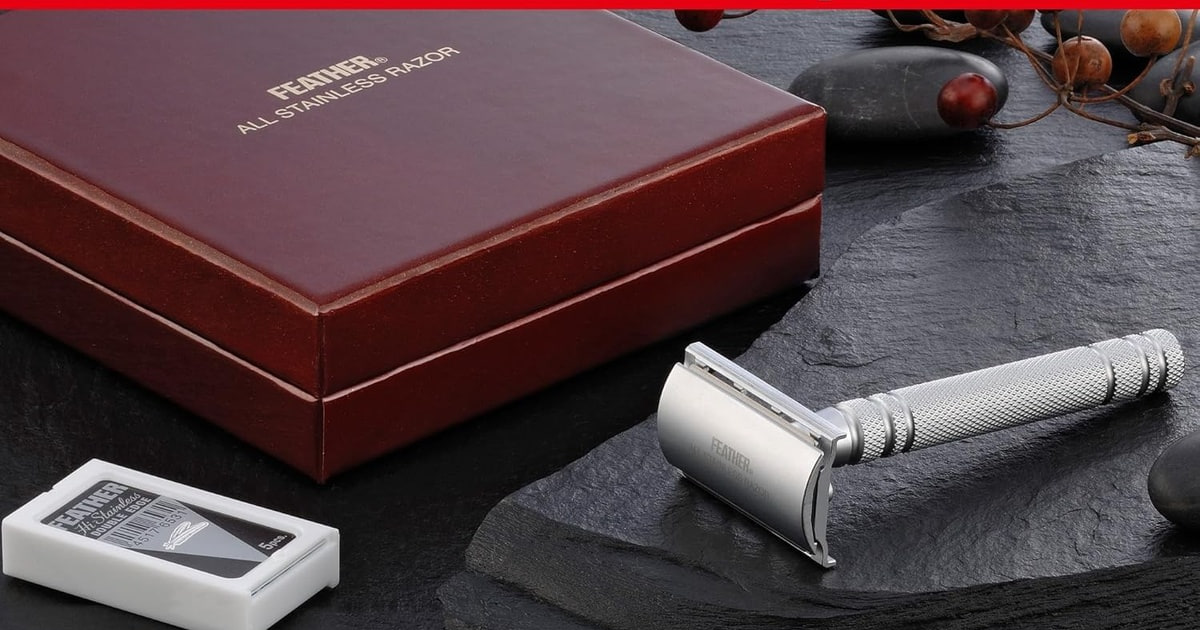
Switching to a double edge razor is one of those changes that sounds fussy and turns out to be simple. You load one blade, you let the weight of the handle do the work, and you stop pressing. That single blade cuts hair at the surface instead of yanking it up and slicing it below the skin, which is why people prone to razor bumps and ingrown hairs often see the difference within a week. The blades cost pennies. The razor itself, if it's built well, outlives your bathroom.
Here's the honest part: no double edge razor is idiot-proof, and the first two weeks can be rough. You'll nick yourself learning the angle. A razor that feels perfect on your cheeks may bite at your neck, and the same blade can feel silky in one head and harsh in another. None of these razors solve that for you. Adjustable models give you more room to experiment, but they don't shorten the learning curve — they just move the guesswork from the store to your bathroom counter.
We looked at seven razors covering the range you'd actually consider: forgiving fixed heads for beginners, a long handle for bigger hands, adjustable systems, and solid stainless pieces meant to last decades. Most people don't need the expensive end. What most people need is a mild head, a decent handle, and a blade sampler. We think that the Edwin Jagger DE89BL is the best double edge safety razor for most people, and that the Rockwell 6C is the one to buy if you want to dial in your own aggression level over time.
Everything we recommend

The forgiving one that teaches you the technique
Six aggression settings for the price of one fixed head

Short, heavy, and ready to shave out of the box
Surgical-grade stainless, if you shave every day and care
At a glance
| Product | Weight | Adjustable | Price | |
|---|---|---|---|---|
| Edwin Jagger DE89BL Chrome Reusable Classic DoubleTop pick | 0.165 lbs | — | $36.42 |
 | MERKUR 23C Double Edge Safety Razor -Also consider | 0.15 lbs | — | $42 |
| MERKUR 34C Short Handle Heavy Duty ClassicAlso great | 0.171 lbs | — | $60 |
| ROCKWELL RAZORS 6C Gunmetal Chrome Safety RazorRunner-up | 0.4 lbs | 6 Settings | $60 |
 | Henson AL13 Safety Razor Shave SetAlso consider | — | — | $109.99 |
| Feather - All Stainless Steel Double EdgeUpgrade pick | 0.25 lbs | — | $164.95 |
 | Rex Supply Co. Ambassador ADJUSTABLE Stainless SteelAlso in lineup | 0.2625 lbs | Adjustable 1-6+ | $295 |
How we picked
Head geometry. We compared published blade gap and exposure figures alongside review-site assessments of aggression, and we favored mild-to-medium closed combs because they suit the widest range of skin types and skill levels. Anything aggressive enough to require refined technique had to earn its place on other merits.
Materials and build. We read spec sheets for base material — solid brass and stainless outrank chrome-plated zinc for multi-decade durability — and checked owner feedback for reports of plating wear, pitting or thread stripping. Razors that owners describe as still looking new after years scored highest.
Handle and grip. We looked at handle length, weight and knurling, since a razor that slips in a lathered hand is a razor that cuts you. We treated weight as a feature, because heavier razors make the zero-pressure technique easier to learn.
What's in the box. Blade compatibility had to be universal — no proprietary systems — and we noted which razors ship with blades. For beginners, a shave-ready package removes a real friction point on day one.
Owner-reported irritation. We read through owner feedback themes looking for consistent reports of nicks, weepers and post-shave burn, and we weighted those heavily for razors marketed at sensitive skin. A razor that owners with sensitive skin keep returning to matters more than a spec figure.
Top pick
The forgiving one that teaches you the technique
Edwin Jagger DE89BL Chrome Reusable Classic Double
The DE89BL is a mild, three-piece brass razor built in Sheffield, England, with a closed-comb head that guides you toward the right angle almost on its own. It's the razor wet-shaving forums point beginners toward, and it stays good long after you're no longer a beginner.
$36.42fromAmazonThe head is engineered to forgive bad technique, which is exactly what you need at first. The DE8 head uses a mild blade gap and neutral exposure, so a slightly wrong angle produces a mediocre shave instead of a bleeding chin. Published reviews and shaving-community consensus put it at the gentle end of closed-comb designs. If you're coming off a five-blade cartridge and have never thought about angle in your life, this is the softest landing available.
Solid brass, triple-chrome-plated, and hand-polished — this isn't a razor you replace. The body is machined from brass rather than the zinc alloy common at this end of the market, and the chrome plating is finished by hand in Sheffield. Owners who've had theirs for years report the finish holding up through daily wet use. The whole thing weighs about 2.6 ounces, which is enough heft to glide without feeling like a hammer.
The wet grip is better than the price suggests. The knurled chrome handle stays put when your hands are covered in lather, which matters more than it sounds — a razor that slips is a razor that cuts you. The three-piece design comes apart in seconds for rinsing, so soap scum and stubble don't build up under the cap. That's the kind of small thing you appreciate every single morning.
Blade cost drops to almost nothing, and that's the real payoff. It takes any standard double edge blade, so you're not locked into a proprietary cartridge or a subscription. A pack of Astra Platinum or Wilkinson Sword blades lasts most people the better part of a year. Over a decade of daily shaving, the savings against cartridge refills are substantial — the razor stops being a purchase and starts being infrastructure.
Flaws but not dealbreakers
No blade in the box, which is a genuinely annoying first-day surprise. You'll open it, admire the packaging, and realize you can't shave. Order a blade sampler at the same time you order the razor. It's a small thing, but a fair number of owners get caught out by it.
One aggression level, forever. As your technique sharpens over months, you may want more blade for a single-pass close shave, and the DE89BL simply won't go there. That's the trade you make for forgiveness. If you already know you like an assertive shave, start with the Rockwell 6C instead.
The chrome wants to be dried. Leave it wet on a hard-water bathroom counter and you'll see spotting on the finish. A quick wipe with a towel after each shave prevents it. Stainless razors don't care, but they also cost several times as much.
Runner-up
Six aggression settings for the price of one fixed head
ROCKWELL RAZORS 6C Gunmetal Chrome Safety Razor
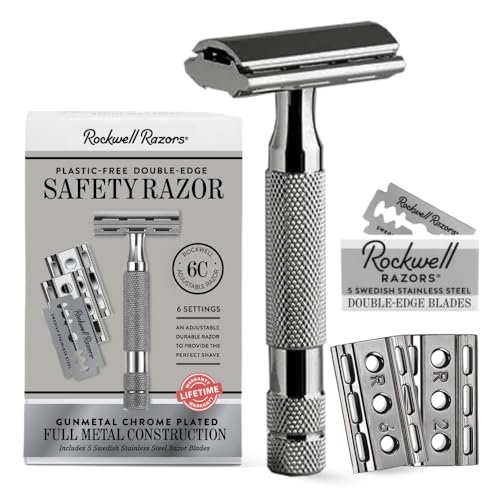
The Rockwell 6C swaps between three dual-sided baseplates to give you six distinct blade gaps, from very mild to moderately aggressive. At roughly 200 grams it's heavy enough to shave under its own weight, and it ships with five blades so you can start immediately.
$60fromAmazonYou get to find your preferred aggression instead of guessing at it. Three dual-sided baseplates yield six settings. Start at 2, which feels close to the Edwin Jagger in forgiveness, and work up as your angle control improves. Settings 4 and 5 give the more assertive result experienced shavers chase. Buying one razor that covers that whole spectrum beats buying two or three and selling the losers.
At about 200 grams, it's roughly three times the weight of a cartridge razor, and that weight does the shaving. Zero downward pressure is the single most important rule in double edge shaving, and a heavy razor makes it easy to obey — you just rest it against your face and move. Lighter aluminum razors like the Henson require more conscious restraint. The 6C teaches you the right habit almost by accident.
It's genuinely one razor for a whole household. Rockwell markets it for men and women, and the low settings work well for legs, underarms and head shaving where a mild gap over a large surface is what you want. The gunmetal chrome finish is neutral enough that nobody's claiming it. Five recyclable blades come in the box.
Rockwell backs it with a lifetime warranty, which is unusual at this level. That's a meaningful signal for a chrome-plated alloy razor, where plating wear is the realistic long-term failure mode. It doesn't make the alloy into stainless, but it does mean you're not on your own if the finish gives out.
Flaws but not dealbreakers
Changing settings means taking the razor apart. You unscrew the handle, swap the baseplate, and reassemble. It works fine, but it's not something you'll do mid-shave the way you'd turn the Rex's dial. In practice most people settle on one setting and leave it.
Alloy isn't stainless, and over decades that shows. The chrome-plated body will hold up for many years of normal use, but it won't match a solid stainless razor for multi-decade durability. If you want the Rockwell adjustment system in stainless, the 6S exists at a higher price.
Six settings can paralyze a true beginner. If you don't yet know what a mild shave feels like, having six options invites you to fiddle instead of practice. Pick setting 2, run thirty shaves on it, then start moving up.
Also great
Short, heavy, and ready to shave out of the box
MERKUR 34C Short Handle Heavy Duty Classic
The Merkur 34C pairs a short heavy handle with mild-medium closed-comb geometry, so your hand sits close to the head for precise work around your chin and mustache. It comes with ten Solingen blades, which means you can shave the day it arrives.
$60fromAmazonThe short handle buys you precision where you need it most. Your hand sits closer to the head, which makes lining up a mustache, working around a chin dimple, or squaring off sideburns noticeably easier than with a long-handled razor. If you have fussy facial contours or keep facial hair with defined edges, this is the shape you want.
Ten Solingen blades in the box removes the first hurdle. Instead of ordering blades separately and waiting, you shave the day it arrives — and you get a long run on a good German blade before you start experimenting with a sampler. That's a real convenience advantage over the Edwin Jagger.
The mild-medium geometry covers more shavers than either extreme. It's efficient enough to handle a two-day beard without three passes, but it doesn't punish you for an imperfect angle the way an aggressive head does. Wirecutter has kept it near the top of its rankings for years, and the reason is that it works acceptably for almost everyone rather than perfectly for a narrow group.
Merkur has been making these in Solingen since 1906, and the consistency shows. The chrome-over-brass handle and zinc head are a known quantity — thousands of owners, decades of the same design, very few surprises. You're not betting on a new manufacturer's tolerances.
Flaws but not dealbreakers
The short handle frustrates people with big hands. If you're used to a long cartridge handle, this one feels stubby. Reaching your neck can feel awkward at first. The Merkur 23C is the same idea with a longer grip.
The head is zamak zinc alloy, not solid brass. It's plenty durable for normal use, but over multi-decade ownership it's a step below the Edwin Jagger's brass or a stainless razor. Drop it on tile and zinc is less forgiving.
It sits at the same price as the six-setting Rockwell 6C, which makes the choice awkward. If adjustability appeals to you at all, the 6C is the more flexible buy. Choose the 34C when you want a proven fixed head with blades included and zero decisions to make.
Upgrade pick
Surgical-grade stainless, if you shave every day and care
Feather - All Stainless Steel Double Edge
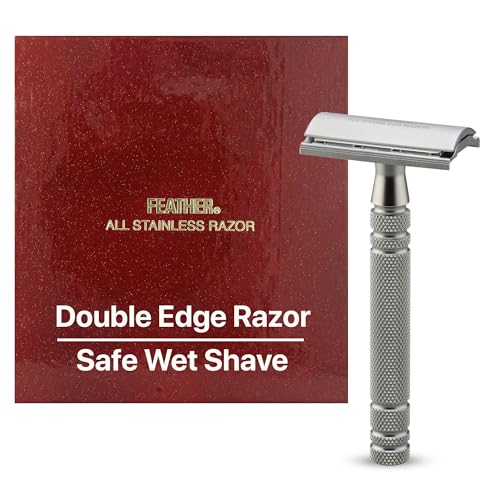
The Feather AS-D2 is machined from all-stainless steel in Japan to tolerances usually reserved for medical instruments. The 3.2-ounce handle is the heaviest here, and the payoff is a smooth, quiet shave that plated-zinc razors don't quite reproduce.
$164.95fromAmazonBlade alignment is where precision manufacturing actually pays off. A double edge blade is a thin, flexible strip, and how rigidly the head holds it determines how the shave feels. Feather machines every component from stainless to very tight tolerances, and experienced wet shavers consistently describe the result as unusually smooth and quiet. That character is the entire argument for the price.
The 3.2-ounce handle is the densest in this group, and it changes how you shave. The mass is distributed so the razor sits against your face and moves with almost no input from you. You guide it at about 30 degrees and let gravity work. If you've been fighting a lightweight razor, this feels like the tool finally cooperating.
All-stainless means no plating to wear through and nothing to corrode. Chrome-plated razors eventually show plate wear at the edges after years of daily wet exposure. Stainless doesn't have that failure mode. Rinse it, shake it dry, and it looks the same in twenty years — this is a razor you can genuinely hand down.
The three-piece design keeps it simple to clean. Cap, plate, handle. It comes apart in seconds, rinses completely, and reassembles with the blade seated correctly. There are no hinges, springs or pivots to gum up with soap or wear out, which is part of why it lasts.
Flaws but not dealbreakers
It's mild, and that disappoints some people who paid a lot. The AS-D2's geometry is smooth rather than efficient. If you have a coarse, dense beard and want one aggressive pass, this isn't that razor — you'll be doing two or three passes. Owners with heavy stubble are the ones most likely to be let down.
A beginner won't get the value out of it. The difference between this and a mild chrome razor is real but subtle, and you can only perceive it once your angle and pressure are consistent. Spend a few months on something cheaper first.
Only five blades are included, so you're reordering within weeks. Not a serious complaint, but it's a little thin for the most expensive fixed-head razor here.
Who this is for
This guide is for anyone tired of paying cartridge prices, and especially for people whose skin reacts badly to multi-blade razors. If you get razor bumps or ingrown hairs — common with curly or coarse facial hair — a single blade cutting at the skin surface usually helps within a week or two. It's also for people who like owning a good tool. A well-made double edge razor is a small, cheap piece of daily equipment that works better the longer you own it.
It's not for everyone. If you shave twice a week in the shower with no mirror and want to be done in ninety seconds, a cartridge is genuinely more convenient and you should keep using one. If you can't tolerate a two-week learning period with a few nicks, skip this. We're covering standard three-piece and adjustable double edge razors here — not open combs, slant bars, straight razors, or single-edge injector systems, all of which ask more of your technique than most people want to give.
How we picked
We built the shortlist around five things. Head geometry: we compared blade gap and exposure data with published aggression assessments, favoring mild-to-medium closed combs that forgive an imperfect angle. Materials: spec sheets told us what each razor is actually made of, and solid brass or stainless earned more credit than chrome-plated zinc for decade-scale durability. Handle: length, weight and knurling all matter, and we treated heft as an advantage because it teaches the zero-pressure technique that double edge shaving demands. What's in the box: universal blade compatibility was mandatory, and included blades were a real plus for beginners. Owner-reported irritation: we read feedback themes for consistent complaints about nicks and post-shave burn, weighting them hardest on razors sold for sensitive skin.
Other double edge safety razors worth considering
If you want the gentlest possible shave and a full setup in one box: The Henson AL13 Safety Razor Shave Set ($109.99) — The Henson AL13 set is built around an ultra-low 0.68 mm blade gap — the mildest geometry in this group — and it's machined from aerospace-grade aluminum on equipment meant to hold very tight tolerances. Less blade flex means less micro-irritation, which is why it's the one to try if acne-prone or reactive skin has defeated every razor you've owned. The set includes a machined aluminum stand and 100 blades, roughly two to three years of daily shaving. What you give up is efficiency: with a coarse, dense beard you may need three passes to get where a medium razor gets in one. The aluminum body also feels light and a bit insubstantial next to stainless at a similar price, though that lightness makes it excellent for travel and for shaving legs.
If you have large hands or find standard handles cramped: The MERKUR 23C Double Edge Safety Razor - ($42) — The Merkur 23C is essentially a mild German closed-comb razor on a long, deeply knurled brass handle. That extra length gives you a more natural wrist angle on your neck and jawline. That's where most beginner cuts happen. The extra leverage helps you hold the blade angle steady. It's also a good choice for shaving legs, where longer strokes suit a longer grip. The trade-offs are straightforward: it's fixed at one mild aggression level with no room to grow, it costs more than comparable fixed heads, and some owners find the knurling coarse against the palm. If your hands are average-sized, the extra length just gets in the way around your nose and chin.
The competition
This is what our research turned up as the most-discussed and most-recommended double edge razors, not a survey of everything for sale. The category is deep — dozens of small manufacturers make excellent razors in limited runs — and a razor's absence here isn't a verdict against it. The one below is a very good razor that lost on fit for a general audience rather than on quality.
The Rex Supply Co. Ambassador ADJUSTABLE Stainless Steel ($295) — The Rex Ambassador is the most capable razor in this guide and the wrong first purchase for almost everyone reading it. It's CNC-machined in the USA from solid marine-grade 316L stainless — the alloy used for surgical implants and marine hardware — so corrosion is simply not a concern, ever. Its precision dial runs from a whisper-mild 1 to an aggressive 6+ in half steps, which is finer control than the Rockwell's baseplate swaps and adjustable mid-shave. It lost to the Rockwell 6C because it costs several times as much for adjustment granularity that only helps once you can already tell settings apart, and it lost to the Feather as an upgrade pick because a dial adds complexity that a lifetime fixed-head buyer may not want. Availability is also inconsistent. Buy it if you've already shaved with a double edge for a year or two, know your preferences, and want one razor to outlast the rest of your bathroom.
Care and technique
Three habits prevent almost every beginner cut. Use zero pressure — the handle's weight is the whole mechanism, and pushing is how you get weepers. Set your angle by resting the top cap flat against your cheek with the handle pointing away, then lowering it slowly until the blade just grazes skin, around 30 degrees. And shave with the grain for the first two weeks before you try anything against it. For upkeep, take the razor apart after every shave, rinse the pieces under hot water, and shake them dry. Once a week, soak the disassembled parts in diluted white vinegar for five to ten minutes to clear mineral and soap deposits. Dry chrome-plated razors with a towel to prevent spotting; stainless ones tolerate neglect.
Questions we get
Which double edge razor should a complete beginner buy?
The Edwin Jagger DE89BL. Its mild closed-comb head is the most forgiving of a wrong angle among the razors here, and the brass body means you won't outgrow the build quality even if you eventually want a more aggressive head. It's the razor wet-shaving communities point newcomers toward more than any other. The Merkur 34C is a strong alternative if you'd rather have blades included so you can shave immediately.
Are safety razors actually better for sensitive skin than cartridges?
For most people, yes. Multi-blade cartridges lift the hair with one blade and cut it with the next, severing it below the skin surface, which is what lets regrowing hair get trapped and turn into a bump. A single blade cuts at the surface instead. Cartridges also carry lubricating strips that trigger contact dermatitis in some people, and a double edge razor has none of that. The Henson AL13 is the most extreme example of sensitive-skin design here, with a 0.68 mm blade gap.
How do I avoid cutting myself?
Apply no pressure at all — let the razor's weight do the work and never push it into your skin. Get the angle right by resting the top cap against your face with the handle sticking straight out, then lowering the handle until the blade just contacts skin. Shave only with the grain for your first couple of weeks. Starting on a mild razor with a medium-sharpness blade like Astra Platinum rather than a Feather makes those weeks much less eventful.
How many shaves does a blade last?
Usually five to seven, though it varies with your beard, your water, and the blade brand. Very sharp blades like Feather Hi-Stainless often run four to six; Astra Platinum and Gillette Silver Blue commonly stretch to six or eight. Don't count — go by feel. The moment a blade starts tugging instead of gliding, swap it, because blades cost so little that pushing a dull one is pointless.
What's the difference between an open comb and a closed comb?
A closed comb has a solid safety bar across the bottom that limits how much blade meets your skin, and it's the more forgiving design. An open comb replaces that bar with teeth, exposing more blade and letting longer or coarser hair feed into the edge — better for dense beards, much less forgiving of sloppy technique. Every razor in this guide uses a closed comb, or defaults to one at low settings. Start closed.
Can women use these for legs and underarms?
Yes, and plenty do. The Rockwell 6C is explicitly made for men and women, and its lower settings suit large surfaces well. The Henson AL13's lightness and very mild gap also make it popular for body shaving. The main adjustment is stroke length — use long, fluid strokes on legs rather than the short controlled ones you'd use around your chin, and expect to change blades a bit more often given the area you're covering.
Why you should trust us
For this guide:
- We compared manufacturer specifications for every razor here, including base material, handle weight and published blade gap figures where the maker discloses them.
- We read published reviews and long-running rankings from grooming publications alongside the consensus recommendations that circulate in wet-shaving communities.
- We reviewed owner feedback themes for each model, paying particular attention to reports of irritation, plating wear and handle grip when wet.
- We read owner reviews on every listing, weighted toward the critical ones, because that is where the recurring failures show up.
- We have a systematic way of automatically fetching the latest prices, so the numbers on this page stay current.
- This is a research-focused guide, so the team may not own every product listed — though we often do own the top winners, which gives us extra context for the recommendations.
- We don't accept free products, and the retailer commission never changes which product we recommend.
Sources
Best Safety Razors – Wirecutter (The New York Times), Wirecutter / The New York Times
The Best Safety Razors, According to Experts – The Strategist, The Strategist / New York Magazine
The Best Safety Razors for a Clean, Close Shave – GQ, GQ
Safety Razor Reviews & Comparisons – Sharpologist, Sharpologist
Double Edge Razor Forum – Badger & Blade Community, Badger & Blade Forum
Amazon product listings and owner reviews for all 7 products
Manufacturer specification pages for each product
Some passages in this guide may be paraphrased with AI help. Prices are refreshed automatically.
More like this.
Continue exploring beauty reviews and recommendations.

The Best Double-Tier Countertop Dish Drying Racks
If you don't have a dishwasher - or you have one and still hand-wash the cast iron, the good knives and the wine glasses - the dish rack is the…

The Best Car Door Edge Guards
Paint chips on a door edge almost never come from anything dramatic. They come from a concrete pillar in a parking garage, a shopping cart, a kid swinging…

The Best Toilet Safety Rails and Grab Bars
Getting on and off the toilet is one of the most repeated movements in anyone's day, and it's also one of the riskiest. AARP identifies the toilet…

The Best Backup Cameras for Car Safety
Backing out of a driveway is one of the few things you do in a car with almost no information. Mirrors miss the ground directly behind your bumper, and…

The Best Face Cleansers
Washing your face is the one skincare step almost everyone does, and it's the easiest one to get wrong. A cleanser that's too aggressive strips the oils…

The Best Plumping and Hydrating Lip Glosses
A good plumping gloss has to do two jobs at once. It should make your lips look fuller, and it should keep them comfortable for the hours you're actually…