The Best Car Door Edge Guards
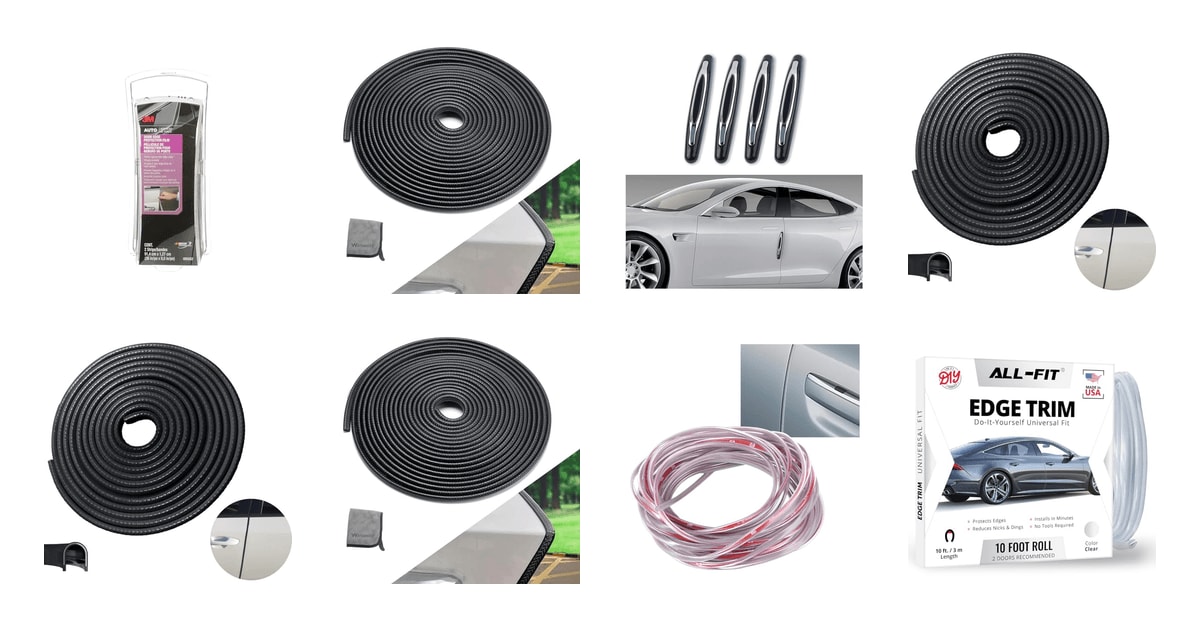
Paint chips on a door edge almost never come from anything dramatic. They come from a concrete pillar in a parking garage, a shopping cart, a kid swinging the door open into the car next to you. The damage is small, it's in a spot you see every time you get in, and body shops charge real money to fix it. A door edge guard is a strip of rubber or film that takes that hit instead of your clear coat. It costs very little and takes about as long to install as it does to unpack.
None of these products is magic, though. Adhesive strips look invisible but depend entirely on a clean, dry surface and a climate that doesn't cook them; clip-on guards never peel but only come in black unless you go clear, and they need your door edge to fall inside a narrow thickness range. Neither type stops a real dent from a hard slam. And every guard here is universal, which means you measure, cut and hope, rather than dropping in a part made for your car.
So the choice comes down to how visible you're willing to let the guard be, how hot your parking spot gets, and how many doors you're covering. We looked at clear adhesive film, clear clip-on trim and black rubber U-channel, and the differences are mostly about those three things. We think that the All-Fit Automotive Car Door Edge Protector is the best car door edge guard for most people, and that the Winunite 32.8ft No Glue Car Door Edge Guards are the ones to buy if you want all four doors covered without any adhesive at all.
Everything we recommend

Nearly invisible, quick to apply, but you don't get much
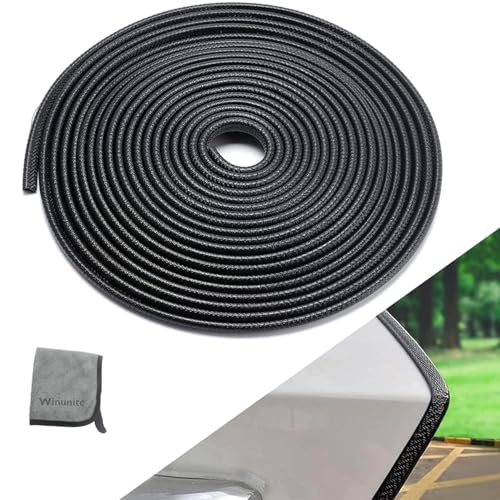
No glue at all, enough for four doors, but it's black

Metal clips and heat-tolerant rubber, enough for two doors

Dealership-grade film that won't yellow, in a short roll

Clear trim for the whole car, if your door edges match
At a glance
| Product | Length | Installation | Price | |
|---|---|---|---|---|
| 3M Door Edge Protection FilmUpgrade pick | 36 Inch | No Tools | $9.99On sale |
| Winunite 16.4ftAlso in lineup | 16.4 ft | No Glue | $9.96 |
 | 4PCS Car Door Edge GuardsAlso in lineup | 4.44 in | Self-Adhesive | $5.88 |
| Car Door Edge GuardsBudget pick | 16.4 ft | No Adhesive | $6.99 |
| ecocstm Car Door Edge GuardsAlso consider | 32.8 ft | No Adhesive | $13.59 |
| Winunite 32.8ftRunner-up | 32.8 ft | No Glue | $16.96 |
| UHANBUT 32FtAlso great | 32.8 ft | — | $7.41 |
| All-Fit Automotive Car Door Edge ProtectorTop pick | 10 Ft | Self-Adhesive | $19.96On sale |
How we picked
Retention method. We separated adhesive-backed guards from clip-on U-channel guards, because they fail in completely different ways. Anything relying on generic pressure-sensitive backing had to show owner feedback of holding through heat and car washes to stay in contention.
Material and heat rating. We favored TPO rubber and urethane film over generic PVC, based on manufacturer specs for UV, heat and abrasion resistance. Guards that soften or warp in a hot parking lot aren't protecting anything.
Coverage per pack. We compared stated roll length against what a real four-door install needs, since short packs quietly turn into multiple purchases. Rolls of 30 feet or more cover a whole vehicle in one order.
How visible it is. Clear guards work on any paint color; black rubber only looks right on a black car. We checked listing photos and owner comments for how obvious each guard reads once installed.
Clean removal. For leased and newer cars, a guard that lifts clear coat or leaves gum is a liability. We looked for stated residue-free removal on adhesive products and no adhesive at all on clip-ons.
Top pickOn sale
Nearly invisible, quick to apply, but you don't get much
All-Fit Automotive Car Door Edge Protector
This is a clear, flexible adhesive trim that you cut with scissors and press onto the door edge. It works on any paint color, holds through car washes and summer heat, and asks nothing of you beyond a clean surface — but a roll covers only about two doors.
$19.96fromAmazonList priceIt disappears on every paint color. That's the whole reason to pay more for a clear adhesive strip instead of black rubber. On a white car, a silver car or a black car, nobody notices this thing is there — including you, three weeks later. If you bought your car new, lease it, or just care how it looks in the driveway, that matters more than an extra few feet of coverage you weren't going to use anyway.
Installation is genuinely tool-free. There's no separate glue, no primer, no heat gun. You wipe the edge down, measure, cut the trim to length with household scissors, and press it on. Per door it's a ten-minute job on a Saturday morning. Owners who've never installed a car accessory in their life report finishing all the doors they planned in one sitting, which is not something you can say about every product in this category.
The trim bends around curves without kinking. Door edges aren't straight. They curve at the top and bottom, and cheap rigid strips either bubble away from the metal there or crease into an ugly ripple. All-Fit's molding is flexible enough to follow the contour and stay flat against it. That's where guards usually start lifting, so a strip that seats properly at the ends tends to stay put everywhere else.
It handles the stuff that kills cheaper adhesive. The material is rated for temperature swings and repeated washing, and owner feedback backs that up — this isn't a strip that curls off the edge after the first hot week or peels at the corner in an automatic wash. Compare that to generic pressure-sensitive backing, which softens in the heat and lets go from the ends inward. Surface prep still does most of the work, but the adhesive itself is the good kind.
Flaws but not dealbreakers
Ten feet goes faster than you'd guess. Two front doors on a mid-size sedan eat most of the roll. If you drive an SUV or a truck and want all four doors done, you're buying two, and at that point this becomes the most expensive way to cover a whole car in this guide. For a sedan owner protecting the two doors that actually hit things, it's fine. For everyone else, do the math first.
You get one shot at placement. The adhesive grabs on first contact, and it isn't designed to be peeled up and repositioned. Measure the edge, cut, then dry-fit before you commit. If you rush it and land the strip crooked, your options are living with it or pulling it off and starting over with a fresh piece.
Runner-up
No glue at all, enough for four doors, but it's black
Winunite 32.8ft
This is a 32.8-foot roll of U-channel trim with aluminum clips inside the rubber, so it grips the door edge mechanically instead of sticking to your paint. It covers a whole car with material left over and comes off without residue — but only in black.
$16.96fromAmazonNothing about it can un-stick, because nothing is stuck. Two rubber fingers pinch the door edge and U-shaped aluminum pieces inside keep them clamped. There's no adhesive to soften in July, no residue to scrub off at lease return, and no permanent commitment if you decide you hate the look. If you park outside in Phoenix or Houston, that's the single most useful thing a door edge guard can offer.
One roll covers the entire car. You get 32.8 feet, which is enough for four doors on most vehicles with slack left for the hatch or hood edge. Nobody's running out mid-install and ordering a second pack. It also means you can protect the rear doors, which is where kids do their damage, instead of rationing the roll to the two front ones.
The aluminum core does something rubber alone can't. A pure rubber strip compresses flat when you tap a pillar and passes most of that energy through to the paint. The metal inside this one gives it rigidity, so it deflects light contact rather than folding. That's why it's the better pick if your daily parking involves a tight garage, a narrow stall or a concrete post you've already met.
Installation is scissors-and-fingers simple. You snip the top to expose the clips, seat one end, and work along the edge pressing it down in short sections. A microfiber cloth comes in the box for wiping the edge first, which is a small thing that keeps grit from getting trapped against the paint. No timing pressure, no bubbles, and you can pull a section off and re-seat it if it wanders.
Flaws but not dealbreakers
Black is the only color, and it shows. On a black car this passes for trim. On white, silver or red it reads as an obvious aftermarket add-on running the length of every door. If invisibility is why you're here, buy one of the clear options instead — this is a protection-first choice, not a looks-first one.
Your door edges have to fit. Winunite says it isn't suitable for edges 5mm or thicker, or for cars that already have a factory sealing strip on the door. That rules out a fair number of European models and anything with unusually thick doors. Check your edge with a fingernail and a ruler before you order, because a clip that doesn't seat flush will work loose and can trap debris against the paint.
Budget pick
Metal clips and heat-tolerant rubber, enough for two doors
Car Door Edge Guards
A 16.4-foot roll of TPO rubber with metal clips built into it. You get the same no-adhesive design and heat tolerance as the pricier clip-on rolls, in half the length — enough for the two front doors that take most of the abuse.
$6.99fromAmazonYou're not giving up the material to save money. This uses TPO rubber, which the manufacturer rates as heat resistant, UV resistant, waterproof and abrasion resistant. That's meaningfully better than the generic PVC in no-name strips, which softens and warps once your car's been baking in a lot all afternoon. It's the same formulation as the longer ecocstm roll, just less of it.
The metal clips mean it isn't going anywhere. Clips are molded into the soft rubber with U-shaped aluminum inside for rigidity. That's mechanical retention, so direct sun, storms and repeated automatic washes don't have a failure mode to exploit. Owners of cheap adhesive strips complain about corners lifting within months; that complaint doesn't really exist for clip-on guards that fit properly in the first place.
Sixteen feet is the right amount for most people. The front doors are the ones that hit pillars, shopping carts and neighbors' fenders. If you're covering those two and skipping the rears, this roll does it with material to spare. It also works on a hatch edge, a hood edge, or anything else with a sharp lip — a trailer, a toolbox, a boat.
Install is measure, cut, push. No adhesive means no surface chemistry to get wrong. Wipe the edge clean, cut the length you need, and press the channel on — a rubber mallet makes the last bit easier if the fit is snug. If a section sits crooked you pull it and try again, which is the part that makes this a good first guard for someone who's never done one.
Flaws but not dealbreakers
Black only, same as the other clip-ons. On a light-colored car you'll see it from across the parking lot. There's no clear version of this particular guard, so if a factory look matters, spend up for clear film or clear clip-on trim.
There's no soft inner lining. Nothing sits between the rubber and your paint, so if the guard shifts or grit gets trapped underneath it, you can end up with fine scratches under the very thing you bought to prevent scratches. Clean the edge properly before installing and check the fit is snug along the whole length.
It may not stretch to four doors. On a full-size SUV or a crew-cab truck, 16.4 feet runs short. Measure your doors before you order, or buy the longer roll and stop worrying about it.
Upgrade pickOn sale
Dealership-grade film that won't yellow, in a short roll
3M Door Edge Protection Film
3M's 08582 is a clear urethane film that dealerships use on new cars before delivery. It's virtually invisible, resists yellowing and staining, and peels off cleanly — but each pack is 36 inches, so covering a car takes several of them.
$9.99fromAmazonList priceYellowing is the thing clear guards usually get wrong, and this one doesn't. Clear PVC trim can go faintly amber after a few summers of direct sun, which looks worse than no guard at all. 3M specifies this film as yellowing- and staining-resistant, and it's the same material science behind their automotive films generally. If your car lives outside and you want a clear guard you won't have to think about, this is the safest bet here.
Clean removal is the reason to buy it for a lease. The film is designed to come off without leaving adhesive behind on the clear coat. That's exactly what you want when the inspector is walking around your car at lease return — protected paint underneath, no residue, no evidence. Adhesive guards without that promise can lift clear coat or leave gum that takes solvent and patience to remove.
It's flat film, not molding, so it disappears against the paint. There's no raised profile, no visible edge line, no texture mismatch against the paint. Clip-on guards always sit proud of the door; this one doesn't. On a luxury car or anything where the shape of the door edge is part of the design, that's a real difference and not just a small one.
Application is hand-only and forgiving if you prep. No tools, no heat. Clean and dry the edge, lay the strip down, and press it flat. The adhesive sets in minutes and reaches full strength over the next day, so avoid washing the car right after. Each pack includes two strips sized for a sedan door edge.
Flaws but not dealbreakers
Thirty-six inches per pack is the whole problem. That covers roughly one door edge with a few inches to spare. Doing four doors means buying four packs, which makes this the most expensive route to a fully protected car in this guide by a wide margin. It's justifiable on a car with high resale value; it's hard to argue for on a commuter.
It protects paint, not sheet metal. Film adds no cushioning. It stops chips, scratches and scuffs, and that's it — a firm contact with a concrete pillar will still leave a mark in the door. If deflecting physical contact is your goal, a clip-on guard with a metal core does more.
Also great
Clear trim for the whole car, if your door edges match
UHANBUT 32Ft
UHANBUT's 32-foot roll is clear PVC that snaps onto the door edge, so you get near-invisible coverage for all four doors in one purchase. Fit is fussier than adhesive, and clear PVC can amber slightly after years in strong sun.
$7.41fromAmazonIt's the one guard here that's both clear and long. Every other invisible option in this guide comes in short lengths. This roll covers four doors and still leaves material for a hatch edge, without putting a black stripe down the side of a white car. If you want the whole vehicle protected and you want it to look stock, this is the practical answer.
Snapping it on beats sticking it on for reversibility. You cut a length, work the channel over the edge, and tap it home with a rubber mallet if it's tight. Nothing bonds to your paint, so a section that sits wrong comes off and goes back on. That also makes it a reasonable choice for a car you plan to sell or hand back.
The PVC is tougher than the price suggests. UHANBUT rates the material as wear- and corrosion-resistant and says it holds up to high temperatures without melting. Owners generally report it staying put through washes and daily use. It's also usable well beyond car doors — boat edges, sheet metal, workshop shelving — if you've got leftovers.
Once it's on, you have to look for it. The profile is slim and the clear material picks up whatever's underneath it, so on dark paint especially it reads as nothing at all. That's the entire pitch, and it holds up better than the black clip-ons ever could on a non-black car.
Flaws but not dealbreakers
Clear PVC is the material most likely to yellow. Give it several years of hard sun and you may see a faint tint that a urethane film wouldn't develop. If you park outdoors in a high-UV state and you're picky, 3M's film is the more durable clear option — you'll just be covering fewer doors with it.
Fit depends on your exact door edge thickness. UHANBUT tells you to check the edge before buying, and that's not boilerplate. Too thin and it rattles loose; too thick and it won't seat. Cars with factory sealing strips on the door edge are a poor match for any clip-on guard, this one included.
Who this is for
Buy a door edge guard if you park somewhere tight — a garage with pillars, a narrow apartment stall, a grocery lot where cart traffic is heavy. Buy one if you have kids who fling doors open, or if you're driving a lease and know the inspector will be looking at every edge. The whole point is that a chip you can't undo costs far more to fix than a strip of rubber costs to install. If you park in a wide-open driveway and nobody rides in the back, you can probably skip it.
This guide covers universal-fit guards that go on the door edge itself — adhesive film, adhesive molding and clip-on U-channel. It doesn't cover full-body paint protection film, side-panel bumper strips that stick to the middle of the door, or vehicle-specific OEM parts ordered through a dealer. If you want an exact factory color match, that's a dealer part, not something you'll find here; clear guards are the practical DIY substitute.
How we picked
Retention: We split the field into adhesive-backed and clip-on guards, because peeling and poor fit are different problems with different fixes. Material: TPO rubber and urethane film beat generic PVC on the manufacturers' own heat, UV and abrasion ratings, and that gap shows up in owner complaints about warping. Coverage: We compared roll length to what four doors actually take, so nobody's surprised by a second order. Visibility: Clear works on any color; black rubber is a black-car product, and we said so wherever it applies. Removal: For leases and newer cars, we favored guards that come off without residue or clear-coat damage, which means either a stated clean-removal adhesive or no adhesive at all.
Other car door edge guards worth considering
If you want the budget clip-on in a full-car length: The ecocstm Car Door Edge Guards ($13.59) — This is the same TPO rubber and metal-clip design as our budget pick, just in a 32.8-foot roll instead of 16.4. That's enough to do four doors plus a hatch edge, and per foot it's the least you'll spend on real clip-on protection in this guide. It's a close call against the Winunite roll — the ecocstm rubber feels denser and holds its shape well after contact, while Winunite includes a microfiber cloth and has a longer track record with owners. Either way you're getting black, and neither has an inner lining, so clean the edge properly before it goes on.
The competition
These are the guards our research turned up alongside the picks, not a survey of everything sold. Door edge trim is a category full of near-identical rolls under different brand names, and most of them differ only in length, color and how honest the listing is about fitment. The two below are worth knowing about because each one is the right answer for a specific person, even though neither beat a pick outright.
The Winunite 16.4ft ($9.96) — The Winunite 16.4ft is the shorter version of our runner-up, with the same aluminum-reinforced clips, the same universal fitment claims and the same included microfiber cloth. It covers two doors comfortably. The trouble is that the 32.8-foot roll costs only a little more and gives you twice the material, so unless you're deliberately trying the clip-on format on one car before committing, the longer roll is the easier call. Buy this one if you're protecting just the front doors and want the Winunite build specifically.
The 4PCS Car Door Edge Guards ($5.88) — The carleef 4PCS set is a pre-cut, self-adhesive four-piece kit in ABS and PVC, with a styled profile the brand calls a dolphin streamline design. It's the least you can spend to cover a whole car, and the pre-cut pieces mean no measuring or trimming. But the adhesive is ordinary backing, and owners in hot states report it letting go — above roughly 120°F it's a real risk, and ABS/PVC tolerates heat far worse than TPO rubber or urethane film. The raised profile also reads clearly aftermarket. It's fine for a mild climate and a garage-kept car, not for a summer in Arizona.
Installation notes
Surface prep decides whether your guard lasts three years or three months. Wipe the door edge with 70% or stronger isopropyl alcohol and let it dry completely — wax, detailing spray and road film are the top reason adhesive lets go early and the reason clips slip. Then run a fingernail along the edge feeling for paint drips or burrs that would stop a clip from seating flush and trap grit against the paint. For adhesive strips, apply one end first and work along in short sections, pressing from the center outward; don't strip all the backing at once. For clip-ons, seat one end and press in two-to-three-inch sections, checking contact as you go. Skip the car wash for a day after any adhesive install.
Questions we get
Are clip-on guards better than adhesive strips?
It depends on what you're optimizing for. Clip-ons need no adhesive, leave no residue and don't care how hot your parking spot gets, which makes them the safer choice for leases and desert climates. Adhesive strips look invisible on any paint color and fit any door edge, since there's no thickness to match. For appearance, adhesive wins; for security and easy removal, clip-on wins.
Will a door edge guard scratch my paint?
Not if the edge is clean and the guard fits snugly. Problems start when grit gets trapped between the guard and the door, or when a loose clip-on shifts back and forth over time. Clean and dry the edge before installing, and never drag a clip-on along painted metal while repositioning it. Guards with a microfiber or felt inner lining are the safest, though most rolls in this price range don't have one.
How long before an adhesive guard starts peeling?
Professional-grade adhesives like 3M's film and the All-Fit molding are rated for multi-year adhesion under normal use. Generic low-tack backing usually starts lifting at the corners within six to twelve months, sooner in heat or on a frequently washed car. Surface prep matters more than brand — alcohol on the edge before application does more for retention than anything else you can control.
Which guard holds up in extreme heat or cold?
TPO rubber and urethane film are the two materials that hold their properties across a wide range; generic PVC softens above about 140°F and can crack in hard cold. In desert states, skip anything with plain pressure-sensitive backing and no UV stabilizer, because interior and surface temperatures there routinely blow past what that adhesive tolerates. A clip-on guard sidesteps the question entirely, since there's no adhesive to fail.
Do guards prevent dents, or only paint chips?
Film guards prevent chips, scratches and scuffs, and nothing more — they add no cushioning at all. Clip-on guards with aluminum inside give you a physical barrier that can deflect light contact, so a neighboring car door bumping yours may leave no mark. Neither type saves you from a hard, forceful slam into a pillar.
How do I get adhesive residue off without hurting the paint?
Isopropyl alcohol at 90% or higher on a microfiber cloth handles most of it. For stubborn spots, a dedicated automotive adhesive remover is formulated to dissolve pressure-sensitive adhesive without attacking clear coat. Never use acetone, nail polish remover or abrasive compounds — they strip clear coat permanently. Apply any remover to the cloth rather than the paint, and try an inconspicuous spot first.
Why you should trust us
For this guide:
- We read the manufacturer spec sheets and listing details for all eight guards, comparing stated materials, roll lengths, temperature ratings and fitment limits side by side.
- We reviewed owner feedback themes for each product, paying particular attention to reports of adhesive lifting in heat and clip-on guards working loose on thicker door edges.
- We compared the three retention approaches — urethane film, self-adhesive molding and clip-on U-channel — against what published coverage of paint protection says about how each one tends to fail.
- We read owner reviews on every listing, weighted toward the critical ones, because that is where the recurring failures show up.
- We have a systematic way of automatically fetching the latest prices, so the numbers on this page stay current.
- This is a research-focused guide, so the team may not own every product listed — though we often do own the top winners, which gives us extra context for the recommendations.
- We don't accept free products, and the retailer commission never changes which product we recommend.
Sources
Best Car Door Edge Guards – Consumer Reports Buyer Checklist 2025, Consumer Reports
Car Door Ding Prevention: Do Edge Guards Work? – Popular Mechanics, Popular Mechanics
Best Car Door Edge Guards 2026 – Car and Driver, Car and Driver
Door Edge Guard Reviews & Ratings – AutoAnything, AutoAnything
3M Door Edge Guard Product Specifications – 3M Automotive, 3M Automotive
Amazon product listings and owner reviews for all 8 products
Manufacturer specification pages for each product
Some passages in this guide may be paraphrased with AI help. Prices are refreshed automatically.
More like this.
Continue exploring undefined reviews and recommendations.

The Best Car Window Rain Guards and Vent Visors
Cracking a window is the simplest air conditioning there is. The problem shows up the moment it rains, or the moment you park in a lot and don't want an…

The Best Double Edge Safety Razors
Switching to a double edge razor is one of those changes that sounds fussy and turns out to be simple. You load one blade, you let the weight of the…

The Best Gutter Guards
Cleaning gutters is a lousy job. You haul a ladder around the house, scoop out a season's worth of wet leaves by hand, and then do it again a few months…

The Best Door Draft Stoppers
Cold air doesn't need much of an opening. A 1/8-inch gap under a standard 36-inch door moves about as much air as a 2.4-square-inch hole punched in your…

The Best Door Threshold Seals and Weatherstripping
You can feel a bad door seal before you can see it. Stand near the front door on a cold morning and there's a cool ribbon of air across your ankles. In…

The Best Automatic Chicken Coop Doors
The riskiest twenty minutes of your chickens' day happen right at dusk. That's the gap between when your hens have settled onto the roost and when you…