The Best Car Window Rain Guards and Vent Visors
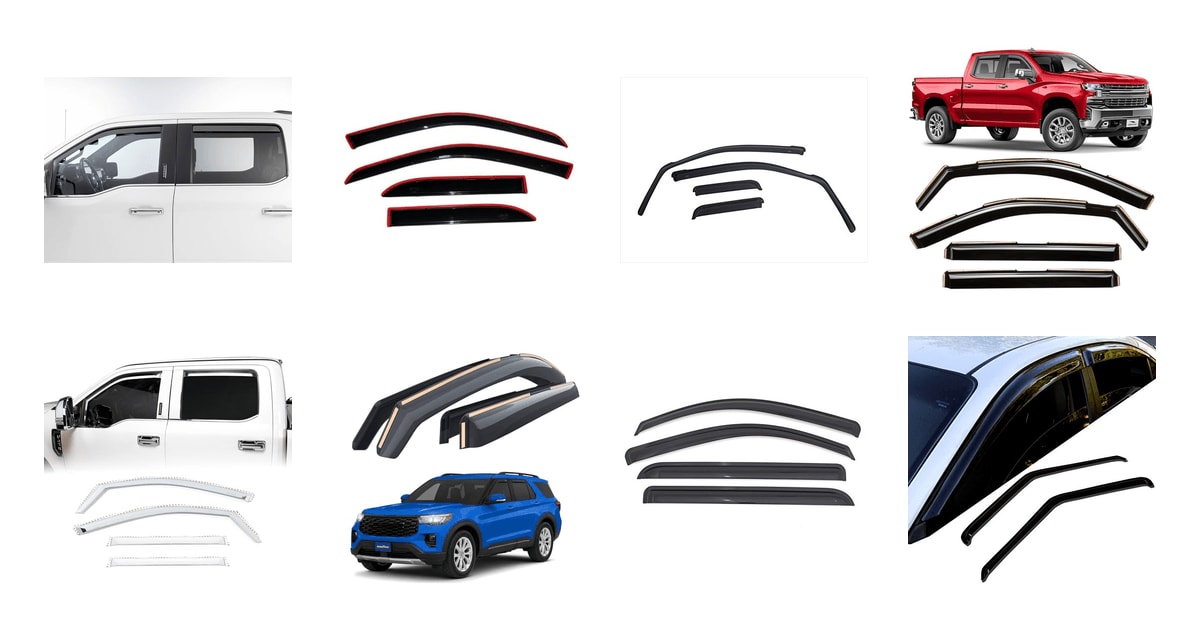
Cracking a window is the simplest air conditioning there is. The problem shows up the moment it rains, or the moment you park in a lot and don't want an inch of open glass advertising itself. Window deflectors solve both. They're a strip of tinted acrylic or polycarbonate that sits above the glass, letting you leave the window down an inch or two while rain runs off the edge instead of into your lap. If you commute with a dog, smoke, haul gym bags, or just hate getting into a car that's been baking, they earn their keep fast.
Here's the honest part: no deflector makes a cracked window waterproof. Highway rain at speed will still find its way in past an inch of opening, and a hard sideways downpour beats every design in this category. They also don't do much for a window that's more than about two inches down. Vehicle-specific in-channel sets hold a seal to roughly an inch and a half of drop, per Car and Driver; universal-fit models start leaking above about an inch. Treat these as a parking-lot and light-rain tool, not a rain roof.
The bigger fork in the road is how they attach. In-channel sets wedge into the window frame with no adhesive, which keeps tape off your paint and weatherstripping. Tape-on visors mount outside the frame and go on in minutes, but adhesion depends on how well you prep the surface. We think that the WeatherTech Side Window Deflectors are the best car window rain guards for most people, and that the AVS Ventvisor in-channel set is the one to buy if your vehicle is an Escalade, Tahoe, or Yukon and you'd rather not pay WeatherTech money.
Everything we recommend

The tightest fit and the longest warranty, if you can pay for it

Nearly the same seal from the brand that invented the category

Sits almost flush with the door, for people who hate the visor look

Polycarbonate toughness for a lot less, if it fits your truck

Shatterproof material and a tape-on install that takes ten minutes
At a glance
| Product | Vehicle Fit | Material/Finish | Price | |
|---|---|---|---|---|
| WeatherTech Custom Fit Side Window Deflectors forTop pick | Ford F-150 | Dark Tint | $113.95 |
| Auto Ventshade [AVS] in-Channel Rain Guards forRunner-up | — | Smoke | $69.99 |
| EGR 573391 Slimline in-Channel Window VisorsAlso great | — | — | $84.51 |
| Voron Glass in-Channel Extra Durable Rain GuardsBudget pick | Silverado/Sierra 1500 | Polycarbonate | $59.99 |
 | Putco 480065 Element Chrome Window Visor inAlso consider | Ford F150-F550 | Chrome | $196.99 |
| Goodyear Shatterproof in-Channel Window Deflectors for FordUpgrade pick | Ford Explorer 2020-2026 | Shatterproof | $99.99 |
 | Auto Ventshade [AVS] Outside Mount Rain GuardsAlso consider | — | Smoke | $69.99 |
 | TuningPros WD-233 Tinted Smoke Out-Channel Window VisorAlso in lineup | Honda Fit 2006-2008 | Smoke Tint | $26.26 |
How we picked
Fit strategy. We prioritized vehicle-specific molds over universal profiles, because published guides and owner feedback consistently tie wind whistle and leaks to averaged fitment. Custom-fit in-channel sets hold a seal to about 1.5 to 2 inches of window drop, versus roughly an inch for universal models.
Paint safety. We favored designs that touch only the rigid window channel. Tape-on visors can leave adhesive residue on the weatherstrip sealing surface, and some automakers use that damage to deny door-seal warranty claims.
Material and UV. We compared acrylic against polycarbonate on spec sheets, weighing scratch resistance against impact toughness. We also looked for stated fade and discoloration resistance, since a hazed smoke-tinted visor looks worse than none at all.
Profile height. Lower-profile deflectors break less air at the window edge, which is what causes highway buffeting. We noted stated stand-off heights where manufacturers publish them, and weighed that against how much of the opening a shorter lip actually covers.
Warranty coverage. Coverage in this category runs from a limited lifetime warranty down to nothing at all. We treated a stated warranty term as evidence of a brand's own confidence in how the material ages.
Top pick
The tightest fit and the longest warranty, if you can pay for it
WeatherTech Custom Fit Side Window Deflectors for
WeatherTech laser-measures each deflector to a specific year, make, and trim, then molds it to sit low in the window channel with no tape anywhere near your paint. The F-150 set covers front and rear in dark tint and carries a limited lifetime warranty.
$113.95fromAmazonNothing else in this category matches WeatherTech on fit. The company measures each vehicle's window channel with laser scanning and builds fitment data per model year, make, and trim, rather than sharing one mold across a body style. That's why the F-150 set lists a specific span of F-150, Lightning, Raptor, and Super Duty years instead of a vague "fits most trucks." You'll want to run your truck through Amazon's fit check before you buy, because the coverage is narrow on purpose.
Installation is in-channel, so nothing touches your paint. The deflector wedges into the rigid window frame channel and stays there under pressure from the glass and the seal. The Drive notes that in-channel designs carry none of the adhesive-residue risk of tape-on visors, which matters more than it sounds — some automakers will push back on a weatherstrip warranty claim if tape damaged the sealing surface. Removal leaves nothing behind, which is worth thinking about on a leased truck.
The profile is low. WeatherTech describes these as low-profile and aerodynamic, and that's not just styling talk — a shorter lip means less turbulent air breaking at the window edge, which is the source of the drone you get from cracking a window on the highway. Owners of tall-profile visors on pickups often complain about exactly that noise. If you drive long stretches at 70 with a window cracked, the flatter shape is the version you want.
The warranty is the real differentiator over cheaper in-channel sets. WeatherTech covers these against defects in materials and workmanship for the life of the product, which is the longest coverage in the accessory visor category. Most competitors here offer a year or nothing at all. Acrylic and polycarbonate deflectors fail by cracking at a mounting point or hazing from UV, and both of those are years out — which is exactly the window where every other brand has stopped caring.
Flaws but not dealbreakers
You'll pay two to three times what an equally functional budget in-channel set costs, and for a lot of drivers that gap buys fit and finish rather than a meaningful difference in how much rain stays out. Wade's smoke acrylic keeps you about as dry.
The narrow fitment list is a double-edged thing. If your truck is a year outside the range, or an unusual cab configuration, there's simply no set for you, and WeatherTech won't sell you a close-enough universal option. In-channel installation also takes more patience than tape-on — you're seating a stiff piece of plastic into a channel without scratching anything, and rushing it is how people crack a corner.
WeatherTech backs its Side Window Deflectors with a limited lifetime warranty against defects in materials and workmanship.
Runner-up
Nearly the same seal from the brand that invented the category
Auto Ventshade [AVS] in-Channel Rain Guards for
Auto Ventshade has been making window ventilation products since 1935, and this in-channel set is engineered per year, make, and model for the Escalade, Tahoe, and Yukon. It's impact-modified acrylic in smoke tint, car-wash safe, and installs without drilling.
$69.99fromAmazonAVS has been doing this longer than anyone — the company has produced automotive ventilation products continuously since 1935. That history shows up as catalog depth. If you drive something common, AVS almost certainly has a vehicle-specific set for it, which is not true of every brand here. This particular listing is the full-size GM SUV fitment: Escalade, Tahoe, and Yukon across a recent generation, four pieces for front and rear.
The material choice is the quiet reason to pick these. Impact-modified acrylic resists the chips and scratches that a car wash brush or a stray branch inflicts, and AVS says it won't fade or discolor in the sun. That matters more on a smoke-tinted part than a clear one — when tinted acrylic goes, it goes chalky and uneven, and it looks worse on a nice SUV than no visor at all. These are made in the USA with global materials.
The fit is contoured to the door line rather than sitting square across it, so on a Tahoe the deflector follows the shoulder of the door instead of interrupting it. That's mostly a looks question, and looks are a legitimate reason to spend money on this kind of part. You're bolting something visible to a vehicle you presumably like.
One wrinkle worth knowing: AVS calls this an in-channel deflector but the listing specifies mounting with included 3M automotive-grade tape. That's a hybrid approach some brands use for extra retention. If a fully tape-free install is your priority — say, on a lease — WeatherTech or the Lund snap-in system is the cleaner answer.
Flaws but not dealbreakers
The tape in the install is the catch. 3M's automotive adhesive holds across a punishing temperature range, from roughly minus forty to 250 degrees Fahrenheit, but that rating assumes a clean, properly prepped surface. Install these on a dusty door frame in the cold and you'll be re-doing it.
This listing covers one vehicle family. AVS makes sets for a huge range of vehicles, but if you don't drive a recent Escalade, Tahoe, or Yukon, this exact part isn't for you.
Also great
Sits almost flush with the door, for people who hate the visor look
EGR 573391 Slimline in-Channel Window Visors
EGR's SlimLine profile stands roughly 6 to 8mm proud of the door frame, against 15 to 25mm for a traditional tape-on visor. You get rain protection without the add-on silhouette, and the flatter edge means less air breaking at the window line.
$84.51fromAmazonIf you've avoided window visors because they look tacked on, this is the design that fixes that. EGR specifies the SlimLine profile at about 6 to 8mm of stand-off from the door frame. Traditional tape-on designs sit 15 to 25mm proud. That's the difference between something a stranger notices and something that reads as factory equipment. On a clean truck or a newer SUV, it's the whole argument.
The slim profile isn't only cosmetic. A shorter lip disturbs less air at the window edge, and turbulent break at that edge is what produces buffeting noise at highway speed. EGR points to reduced turbulence as the functional payoff of the geometry. Automotive editors have generally found that any deflector cuts interior buffeting compared with cracking a window bare at 65 to 75 mph; a flatter one gives the air less to trip over.
It's an in-channel design, four pieces, so it covers front and rear windows and needs no tape. That keeps adhesive off your paint and off the weatherstrip sealing surface, which is the practical reason in-channel sets now outsell tape-on models by roughly 60 to 40 in the accessory market.
There's a trade-off buried in the geometry, and it's worth being upfront about. A shorter lip covers less of the opening. If your priority is keeping the seat dry in a downpour rather than looking sharp, a taller deflector does more work. This is a styling-forward choice that happens to also deflect rain, not the other way around.
Flaws but not dealbreakers
The lower profile gives up some rain coverage compared with a taller visor. In a hard, wind-driven rain you'll notice the difference, especially with the window down closer to two inches.
EGR's Amazon listing is thin on detail — no feature bullets, no stated tint or material specifics. You'll need to check EGR's own fitment tool for your vehicle rather than relying on the product page, and there's no stated warranty term to go on.
Budget pick
Polycarbonate toughness for a lot less, if it fits your truck
Voron Glass in-Channel Extra Durable Rain Guards
Voron Glass builds this four-piece in-channel set from reinforced polycarbonate rather than acrylic, which handles impact better in cold weather. It's a crew-cab-only fitment for recent Silverado 1500 and Sierra 1500 trucks, and it installs with no tape.
$59.99fromAmazonPolycarbonate is the interesting part here. Most visors in this category are acrylic, which is hard and scratch-resistant but brittle — it chips and cracks. Polycarbonate trades a little scratch resistance for much better impact toughness. If you park under trees, run a truck through winter, or have kids who slam doors, that's a real advantage, and it's unusual at this price.
Fitment is genuinely vehicle-specific, not a universal profile with a truck name attached. The listing is explicit that it fits only Silverado 1500 and Sierra 1500 crew cabs across a defined year span — no double cab, no regular cab. Narrow fitment is a good sign. It means the mold was cut for one window shape rather than averaged across three, and averaged molds are where wind whistle and gaps come from.
Installation is in-channel with the necessary hardware included, so nothing adheres to your paint. On a work truck that's more than a cosmetic point. Tape residue on a door frame is a hassle to clean off at trade-in time, and adhesive damage to a weatherstrip sealing surface is the kind of thing an automaker will point at when denying a seal claim.
The stated benefit that actually shows up daily is fog. Leaving a window cracked an inch on a cold, wet morning moves enough air to keep the glass and mirrors from misting over, and a deflector is what makes that survivable in the rain. If your commute starts with two minutes of wiping the inside of the windshield, this is the fix.
Flaws but not dealbreakers
Voron Glass doesn't carry the track record of WeatherTech or AVS, and there's no stated warranty term on the listing. If a piece hazes or cracks in year three, you're probably buying another set.
The fitment is unusually tight even by vehicle-specific standards — crew cab only, one truck family, one generation. Confirm your cab configuration carefully, because a double cab set won't seat correctly.
Upgrade pick
Shatterproof material and a tape-on install that takes ten minutes
Goodyear Shatterproof in-Channel Window Deflectors for Ford
Goodyear's Explorer set uses a shatterproof material that resists cracking, and it goes on with peel-and-stick tape plus included degreasing wipes. It's the least fussy install here, and the set ships with two license plate frames.
$99.99fromAmazonMost bad tape-on installs fail for one reason: nobody cleaned the door frame properly. Goodyear puts degreasing wipes in the box, which sounds trivial and isn't. 3M's automotive adhesive holds from about minus forty to 250 degrees Fahrenheit, but only on a surface free of wax, road film, and dust. Prep is the whole ballgame, and this is the only set here that hands you the means to do it right.
The material claim is the reason to consider this over a cheaper acrylic set. Goodyear specifies a shatterproof construction that resists cracking, which is the failure mode that ends most visors. Acrylic cracks at a stress point — a corner, a mounting tab — and once it starts, the crack walks. A tougher material buys you years, particularly on a vehicle that lives outside through freeze-thaw cycles.
The tint is chosen for sun protection, and that's a modest but real benefit. Smoke-tinted acrylic and polycarbonate cut UV-A transmission through a cracked window by something like 10 to 20 percent versus an open gap. It won't replace sunscreen or window film. But if you park in the sun and crack the windows to bleed off heat, less UV hits your dash and your arm.
Fitment is Explorer-only across a recent span, four pieces, front and rear. Like the other vehicle-specific sets here, that narrowness is the point — a mold cut for one door shape seals better and whistles less than a compromise profile. Check your model year against the listing before ordering.
Flaws but not dealbreakers
It's tape-on, with all the caveats that carries. Do the install in warm weather on a clean, dry frame, and give the adhesive a day before running it through a car wash. Removal down the road can leave residue, and residue on a sealing surface is the scenario automakers point to when denying weatherstrip claims.
The included license plate frames are marketing filler, not a reason to buy. And there's no stated warranty term, which is a gap at this price point.
Peel-and-stick means you get one shot at placement. Set it crooked and you'll be fighting adhesive to correct it.
Who this is for
Buy a set if you regularly want fresh air without rain, or if you leave a dog in a cracked car and want the gap to be weather-tolerant and less obvious from outside. They're most useful in wet climates — the Pacific Northwest, the Southeast, the rainy Midwest — and in hot ones, where cracking a window in a parking lot is the difference between a tolerable cabin and a scorching one. Truck and SUV owners also buy these for looks, which is fine. A chrome-edged or slim-profile visor changes a vehicle's face more than you'd think.
Skip them if you almost never drive with a window down, or if you want something that actually keeps water out at speed with the glass two inches low. Nothing here does that. This guide covers exterior side-window deflectors that mount above the glass, so it doesn't cover sunroof deflectors, bug deflectors for the hood, or window tint film. And every set here is cut for a specific vehicle or vehicle family. Confirm fitment against your exact year, cab configuration, and trim before you order — that's the single most common reason these get returned.
How we picked
We built the shortlist around what actually separates a good deflector from a frustrating one. Fit strategy: vehicle-specific molds beat universal profiles for seal quality and quiet, and they hold that seal to roughly twice the window drop. Paint safety: in-channel designs touch only the rigid frame channel, so there's no adhesive on your weatherstrip and no residue argument at trade-in. Material and UV: acrylic resists scratches, polycarbonate resists impact, and both should be rated against fading if they're tinted. Profile height: a lower lip breaks less air at the window edge and cuts buffeting, at the cost of a little rain coverage. Warranty coverage: a stated term tells you what the brand expects from its own plastic in year five.
Other car window rain guards and vent visors worth considering
If you want chrome trim and a factory-accessory look: The Putco 480065 Element Chrome Window Visor in ($196.99) — Putco's Element Chrome set is the styling play. It's injection-molded polycarbonate with color running all the way through the part rather than sprayed on, over high-impact ABS, with a chrome finish along the edge. Putco calls the fit fully in-channel and includes vehicle-specific spacers so your window still seats properly. The construction is rated UV-resilient against fading and cracking, and there's a one-year limited warranty behind it. It's designed and shipped from Des Moines. The catch is that chrome is a commitment — it either flatters your truck or fights it, and on a dark vehicle it can read as loud. Fitment covers a specific range of F-150, Raptor, and Super Duty SuperCrew and Crew Cab trucks.
If your window channels are too tight for an in-channel set: The Auto Ventshade [AVS] Outside Mount Rain Guards ($69.99) — AVS's outside-mount Ventvisor is the original tape-on design, and it's still the right answer for vehicles where an in-channel deflector won't seat cleanly or interferes with the glass. Because it mounts outside the frame, it clears the widest airflow channel of anything here and never touches the window's travel path. The acrylic is impact-resistant, car-wash safe, and rated not to fade, and the 3M tape comes pre-applied. This particular listing is a narrow one — an older Toyota Tundra Double Cab, and explicitly not the Access Cab — so check your cab size against the listing images. You give up the paint-safe advantage of in-channel mounting, and the taller profile is more visible on the door.
The competition
This is what the research surfaced across the major deflector brands, not a survey of everything sold. Vent visors are a fitment-driven category — most brands make dozens or hundreds of vehicle-specific sets, so the right question is usually which brand makes a set for your exact vehicle, not which single listing wins outright. The product below didn't make the picks, but it solves a problem none of them do.
The TuningPros WD-233 Tinted Smoke Out-Channel Window Visor ($26.26) — The TuningPros WD-233 is smoke-tinted reinforced acrylic in an out-channel, tape-on design, and its appeal is catalog breadth. This listing is cut for an older Honda Fit — exactly the kind of discontinued, less-common vehicle that WeatherTech and EGR don't bother tooling for. TuningPros covers a much wider compatibility matrix, and if you drive something out of production, it may be the only vehicle-specific option you can find. It lost to our picks on the fundamentals: out-channel tape-on mounting means adhesive on your door frame, and the brand publishes no warranty term or profile height to evaluate. The listing does claim full color fade resistance. If your car isn't on anyone else's fitment list, this is a reasonable buy — otherwise, a vehicle-specific in-channel set from an established brand seals better and comes off cleaner.
Installation notes
For tape-on visors, prep is everything. Clean the door frame with a degreaser, not just soap — wax and road film are what kill adhesion. Work in warm weather if you can, press firmly along the whole strip, and give the tape a full day before a car wash or a rainstorm. For in-channel sets, take your time seating the deflector into the channel and don't force a corner; that's how they crack. Run the window up and down a few times afterward to confirm nothing binds. Most modern power windows have an auto-reverse feature that may trip if the deflector sits proud, so check that the glass closes fully on the first try. Wash these with the same soap you use on paint, and skip abrasive pads — acrylic scratches easily and the marks don't buff out.
Questions we get
Do window rain guards actually keep rain out when the windows are cracked?
Mostly, within limits. A vehicle-specific in-channel deflector keeps rain out with the window down about an inch and a half to two inches, per published testing summaries; universal-fit models start letting water past above roughly an inch. Hard sideways rain at highway speed will still get in. Think of them as parking-lot and light-rain protection, not a seal.
What's the difference between in-channel and tape-on visors?
In-channel deflectors wedge into the existing window frame channel and use no adhesive on your vehicle, so there's no residue and no risk of pulling paint when you remove them. Tape-on visors mount outside the frame with automotive-grade double-sided tape and install in minutes. In-channel outsells tape-on by roughly 60 to 40, largely on the paint-safety argument. Tape-on is still the better answer for vehicles with tight window tolerances.
Do in-channel deflectors interfere with power windows?
They shouldn't, but it's worth checking after installation. A properly fitted in-channel deflector sits in the frame channel outside the glass path, and better sets include vehicle-specific spacers to keep the window seating correctly. Run the window all the way up and down a few times before you drive off. If the auto-reverse trips, the deflector isn't seated right.
Will tape-on visors damage my paint when I remove them?
The bigger risk isn't paint — it's the weatherstrip sealing surface. Adhesive residue there can be difficult to remove, and some automakers will deny a door seal or weatherstrip warranty claim if tape damaged the surface. In-channel designs avoid this entirely since they contact only the rigid window frame channel. If you're leasing, go in-channel.
Are window visors legal in all 50 states?
Yes, when installed as designed and not blocking the driver's sightlines. State vehicle codes regulate tinted glass, but window deflectors sit outside the glass plane and aren't covered by those rules. That's the practical distinction — a smoke-tinted deflector isn't the same thing as smoke-tinted glass in the eyes of the law.
Do smoke-tinted visors actually block UV when the windows are cracked?
A little. Acrylic materials data suggests smoke-tinted visors cut UV-A transmission through the opening by roughly 10 to 20 percent compared with an untinted gap. That's a modest benefit, not sun protection. The more noticeable effect is less direct glare on your arm and dash when you're driving with the window down.
Are the expensive brands worth it over budget sets?
It depends on what you're buying. A well-fitted budget in-channel set from a vehicle-specific mold keeps you about as dry as a premium one. What you get for more money is tighter fit and finish, better-documented material specs, and warranty coverage that can run to a limited lifetime term instead of one year or none. If you plan to keep the vehicle a long time, the coverage matters.
Why you should trust us
For this guide:
- We compared manufacturer fitment documentation, material specifications, and stated warranty terms across every brand in this lineup.
- We read published buying guides and category coverage from automotive outlets on in-channel versus tape-on mounting, profile height, and highway buffeting.
- We reviewed recurring themes in owner feedback about adhesive failure, fitment gaps, and how tinted acrylic ages in sun.
- We read owner reviews on every listing, weighted toward the critical ones, because that is where the recurring failures show up.
- We have a systematic way of automatically fetching the latest prices, so the numbers on this page stay current.
- This is a research-focused guide, so the team may not own every product listed — though we often do own the top winners, which gives us extra context for the recommendations.
- We don't accept free products, and the retailer commission never changes which product we recommend.
Sources
Best Window Deflectors 2026 — The Drive, The Drive
Best Vent Visors for Your Car — Car and Driver, Car and Driver
Best Window Deflectors — Popular Mechanics, Popular Mechanics
Best Car Window Visors — Motor Trend, Motor Trend
WeatherTech Side Window Deflectors — Official Product Page, WeatherTech (Manufacturer)
WeatherTech Warranty Policy, WeatherTech (Manufacturer)
AVS Ventvisor Product Line — Auto Ventshade, Auto Ventshade (Manufacturer)
EGR SlimLine Window Visors — EGR USA, EGR USA (Manufacturer)
Window Deflector & Visor Buying Guide — AutoAnything, AutoAnything
How to Install Window Visors — AutoZone DIY Guide, AutoZone
Lund Genesis Elite Window Visor — Lund International, Lund International (Manufacturer)
Best Window Visors Tested — Bob Vila, Bob Vila
Amazon product listings and owner reviews for all 8 products
Manufacturer specification pages for each product
Some passages in this guide may be paraphrased with AI help. Prices are refreshed automatically.
More like this.
Continue exploring electronics reviews and recommendations.

The Best Car Door Edge Guards
Paint chips on a door edge almost never come from anything dramatic. They come from a concrete pillar in a parking garage, a shopping cart, a kid swinging…

The Best DIY Car Window Tint Film
Window tint is one of the few car upgrades you notice every single day. A black interior parked in July stops being an oven. Glare off wet pavement at…

The Best Tire Pressure Monitoring Systems
Your tires are losing air right now. Nothing dramatic - just the ordinary seep of one to two pounds a month, according to the Tire Industry Association,…

The Best Blink Security Cameras
Most home security cameras want a monthly fee before they'll do much of anything. Blink's pitch is different: buy the camera, skip the contract, and get…

The Best Collapsible Trunk Organizers
Your trunk is where order goes to die. A bag of groceries tips over on the first left turn, a jug of washer fluid rolls into the spare tire well, and the…

The Best Car Battery Jump Starters
A dead battery almost never happens at a convenient time. It's the school run, the grocery-store parking lot at dusk, or a driveway on the first genuinely…