The Best Smart Home Security Cameras
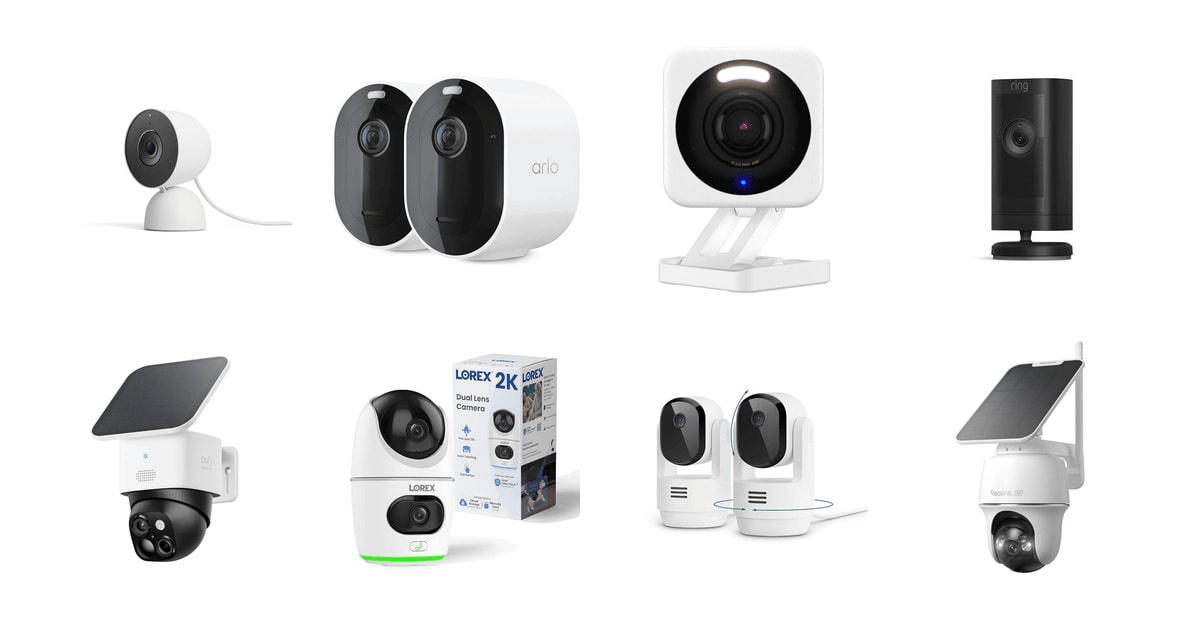
A security camera earns its keep on ordinary days, not dramatic ones. You want to know the dog walker showed up, the package landed, the kid got home. So the things that matter are boring ones: does the alert arrive fast, is the clip clear enough to recognize a face, and can you find that clip again a week later? Night footage counts double, since most of what worries you happens after dark. FBI data cited by Forbes Home suggests homes without visible security measures are far likelier to be burglarized.
Here's the honest part. No camera in this category is a set-and-forget device. They all lean on your Wi-Fi, and owners of every brand here describe the same headache: a camera drops offline, and you go reset it. The features you actually want usually sit behind a subscription, and CNET has noted those fees can add a quarter to three-quarters of a camera's cost in the first year. Motion detection still misses the delivery driver sometimes, and it still trips on a cat.
So buy for your situation rather than for a spec sheet. If you rent and can't drill, start with something wire-free. If your house already runs on Google Home or Alexa, staying inside that ecosystem will save you real aggravation. And if monthly fees bother you, get a camera that records to a card and forget the cloud. We think that the Google Nest Cam Indoor is the best smart home security camera for most people, and that the eufy SoloCam S340 is the one to buy if you need outdoor coverage without wiring or a monthly bill.
Everything we recommend
Great picture and smart alerts, if you live in Google Home

Solar power and local storage — no wiring, no monthly bill

Nearly all the features, for a small fraction of the cost

Pan-tilt indoor coverage, with a lens that flips down at home
At a glance
| Product | Resolution | Night Vision | Price | |
|---|---|---|---|---|
| Google Nest Cam IndoorTop pick | 2K HDR | Night Vision | $129 |
 | Arlo Pro 5S 2K Spotlight Camera -Also in lineup | 2K | Color Night Vision | $79.99On sale |
| WYZE Cam v4Budget pick | 2.5K QHD | Color Night Vision | $39.99On sale |
 | Like-New Ring Stick Up Cam Pro BatteryAlso consider | 1080p HDR | Color Night Vision | $89.99 |
| eufy Security SoloCam S340Runner-up | 3K | — | $159.99On sale |
 | Lorex Classic AppAlso in lineup | 2K | Infrared Night Vision | $99.99 |
| Arlo Essential Indoor Pan Tilt Zoom SecurityAlso great | 2K | — | $57.99On sale |
 | REOLINK Argus PT Ultra First 4K SolarAlso consider | 4K 8MP | — | $159.99On sale |
How we picked
Useful night footage. We weighted color night vision heavily, because RTINGS' lab work shows spotlight-assisted color footage produces identifiable faces at distances where infrared-only cameras produce a gray blur. A camera that can't identify anyone at night solves half the problem.
Alerts you'll keep on. We looked for on-device or AI-based detection that separates people from animals and headlights, using published testing from SafeWise and Wirecutter as the benchmark. Basic pixel-motion detection didn't make the cut.
Total cost over time. We read the subscription terms for every camera here and gave credit for local storage on a microSD card or a recorder. CNET's reporting puts typical cloud fees at a quarter to three-quarters of a camera's cost in year one.
Power and placement. We considered how each camera gets electricity — outlet, battery, or solar — because that decides where you can put it and whether renters can install it at all. Outdoor picks needed a weather rating that survives rain and snow.
Privacy handling. We favored brands with encrypted video, two-step verification, and physical shutters, drawing on Mozilla Foundation's privacy ratings. Only a handful of major camera brands offer end-to-end encryption by default.
Top pick
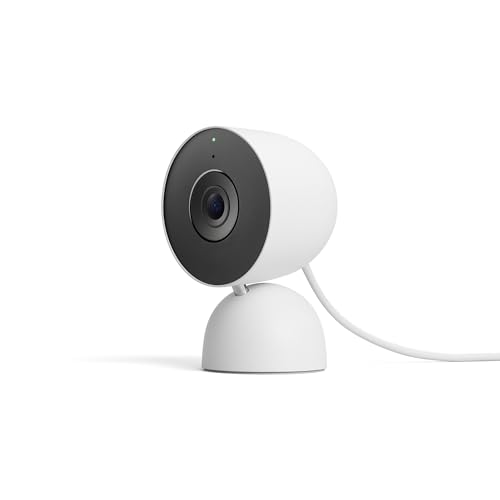
Great picture and smart alerts, if you live in Google Home
Google Nest Cam Indoor
This wired 2K camera plugs into an outlet, joins Google Home in a couple of minutes, and sorts people from passing shadows well enough that you'll actually leave notifications turned on. It's pricier than most indoor cameras, and the richest history features need a subscription.
$129fromAmazonThe alerts are the real reason to buy this one. A camera that pings you every time a shadow moves is a camera you mute, and a muted camera is useless. Wirecutter's field work with Google's wired Nest Cams found they correctly separated people from other motion more than 90 percent of the time. That's the difference between checking your phone and ignoring it.
The picture holds up in the situations that matter. You get 2K HDR with a wide, tall view, which is what you want pointed down a hallway or across an open living room. Owners consistently describe the image as sharp enough to make out faces in a dim room, and several note it stays usable shooting through a window screen. Zooming into a clip after the fact still leaves you something readable.
Setup is genuinely a few minutes of work. You plug it in, open the Google Home app, and you're watching. If you already have a Nest speaker or a Chromecast, the camera slots into routines and casts to a display without extra hardware. There's no hub to buy and no bridge to keep alive, which is one fewer thing to troubleshoot when something stops working.
Privacy is handled better here than in most of the category. Video is encrypted, your account supports two-step verification, and a green LED tells you when the camera is streaming or processing. The Mozilla Foundation has given Google Nest among its stronger privacy marks, and only a handful of major camera brands offer end-to-end encryption by default. If you're putting a camera in a room your family lives in, that matters.
Flaws but not dealbreakers
The good stuff costs extra. Video history, the Gemini-powered summaries and search, and the more descriptive notifications all require a Google Home Premium plan after the trial ends. Live view and basic alerts keep working without one, but you're buying a fairly expensive camera and then paying again for the part that makes it clever.
It's wired and indoor-only, so every placement needs an outlet nearby. If you want to cover a driveway or a side gate, this isn't the camera for that job, and you'll be shopping a second time.
Runner-upOn sale
Solar power and local storage — no wiring, no monthly bill
eufy Security SoloCam S340
A 3K dual-lens outdoor camera that pans a full 360 degrees, zooms in 8x, and keeps itself charged off a small attached solar panel. Footage saves locally, so there's nothing to pay each month and nothing to cancel later.
$159.99fromAmazonList priceSolar is the feature that changes how you live with a camera. Battery cameras are fine until the third time you drag out a ladder to charge one. With four or so hours of daily sun, this one tops itself up and you stop thinking about it. Owners who moved over from other battery brands keep coming back to that point: they mounted it once and haven't touched it since.
The dual-lens setup covers a lot of ground from a single spot. One lens gives you the wide picture, the other pulls in detail up to about 40 feet, and 8x zoom lets you check a face or a plate. Mount it vertically and you get full 360-degree pan and tilt, so one camera can watch a porch, a driveway, and the side yard instead of three.
Nothing here pushes you toward a subscription. Recordings live on the camera, which means no monthly fee, no upload delay, and no footage sitting on someone else's server. That's the strongest argument for it over the Nest Cam and the Ring. If cloud fees are what has kept you from buying a camera at all, this is the straightforward way around them.
Installation is about as easy as outdoor mounting gets. It's compact, wire-free, and the mount goes up with a few screws, so most people are done in well under an hour. Renters with a fence post or a permitted exterior spot can put it up and take it down without patching anything.
Flaws but not dealbreakers
Aim matters more than the marketing suggests. Several owners found the camera missed people or vehicles until they flattened the angle and dialed back sensitivity, which took a few rounds of trial and error. Plan on tuning it over a week rather than mounting it once and walking away.
Eufy's broader track record is uneven. Buyers who run several of the company's cameras and doorbells report connectivity and app frustrations across the fleet, not just with this model. And in a cloudy northern winter, a solar panel that keeps up in July may need a manual charge.
Budget pickOn sale
Nearly all the features, for a small fraction of the cost
WYZE Cam v4
For a fraction of what the Nest Cam costs, you get 2.5K video, color night vision from a built-in spotlight, a 100 dB siren, an IP65 rating, and a microSD slot. It's the camera to buy when you want four of them rather than one.
$39.99fromAmazonList priceNo other camera here gets this close for this little. You get 2560×1440 video, a 120-degree view, on-device AI that separates people, pets, packages, and vehicles, and a weatherproof body rated from -4°F to 113°F. Put it on a porch, in a garage, or over the cat's food bowl. When you're covering a whole house, buying four of these instead of one premium camera is a defensible call.
Color night vision is the underrated feature, and this camera has a good version of it. A starlight sensor plus a 72-lumen spotlight gives you full-color footage in a dark yard. RTINGS' lab work found cameras with spotlights produced identifiable facial detail at 20 feet where infrared-only cameras couldn't. Black-and-white footage tells you someone was there. Color footage tells you who.
The smart alerts do their job. SafeWise's controlled testing found Wyze's AI person detection cut false motion alerts by roughly three-quarters compared with basic pixel-based motion sensing. In practice that means swaying branches and passing headlights stop waking your phone at 2 a.m. You can also fire the spotlight and siren from the app when you want to scare someone off the porch.
Storage is yours if you want it. A microSD card up to 512 GB records weeks of footage with no monthly fee, and cloud backup is optional rather than assumed. That's an unusual amount of freedom at this end of the market.
Flaws but not dealbreakers
Wyze keeps moving features behind its paid plan, and longtime owners have noticed. Casting to a display, for instance, now requires a subscription that used to be optional. The free tier is real, but it's narrower than it once was, and there's no guarantee it stays put.
Long-run reliability is the weak spot. Owners running a dozen or more of these over a couple of years report the most frustration, usually around app behavior and how insistently the setup nudges you toward a plan. Buy it as an inexpensive, replaceable camera, not as a ten-year investment.
If you're privacy-first, this brand will give you pause. It isn't among the companies Mozilla singles out for strong default encryption, and that's a fair reason to spend more elsewhere for a bedroom or nursery.
Also greatOn sale
Pan-tilt indoor coverage, with a lens that flips down at home
Arlo Essential Indoor Pan Tilt Zoom Security
A plug-in 2K indoor camera that pans 360 degrees, tilts 180, and follows movement automatically, sold as a two-pack. When you're home, the lens physically rotates down and out of view, which is the honest way to solve the camera-in-the-living-room problem.
$57.99fromAmazonList priceThe privacy shutter is the feature you'll appreciate most. Plenty of cameras let you switch off the feed in software. This one physically turns the lens away, so you can see it's not looking at you. Set it to flip down when you get home and back up when you leave, and an indoor camera stops feeling like a compromise.
For watching pets, the pan and tilt earns its keep. A fixed camera covers one corner of a room; this one sweeps 360 degrees and tracks a dog as it moves, so you're not staring at an empty rug. Owners who foster animals or leave a nervous dog alone all day tend to be the happiest with it. Two cameras in the box covers two rooms.
Custom alerts go further than the usual person-or-not choice. You can ask for a notification when the dog gets on the couch or the cat lands on the counter, and audio detection can flag barking or a crying baby. Uninterrupted plug-in power means it's always awake, which matters more indoors than most people expect.
It runs on dual-band Wi-Fi and needs no hub, so setup is short. Live streaming and basic alerts work without paying anything.
Flaws but not dealbreakers
It leans on your network harder than a fixed 1080p camera. At least one owner had to upgrade their internet plan before it worked properly, and offline complaints show up regularly in owner feedback — sometimes with both cameras dropping at once.
AI detection and the 60-day video history require an Arlo Secure plan once the trial ends. And because it's plug-in only, every spot you want to cover needs an outlet within reach.
Who this is for
This guide is for anyone buying their first camera or filling a gap in a setup they already own — a porch that goes dark, a back gate nobody watches, a puppy that gets into things. Renters will find wire-free and solar options here that mount without permanent damage. Homeowners building out a full system will find cameras that play nicely with Google Home, Alexa, and Arlo's app. And if you refuse to pay a monthly fee, at least three of these record locally and cost you nothing after purchase.
It's not for everyone. If you want continuous 24/7 recording across a dozen angles with the footage staying entirely in your house, you want a wired NVR system with PoE cameras, and that's a different guide. We also stuck to consumer Wi-Fi cameras — no doorbells, no floodlight cams, no professionally monitored alarm packages. Anyone with a genuinely weak or overloaded Wi-Fi network should fix that first; nearly every complaint pattern in this category traces back to connectivity, not to the camera.
How we picked
Night vision: color footage from a spotlight or starlight sensor beats infrared black-and-white, and RTINGS' lab work shows it's the difference between identifying someone and just knowing they were there. Smart detection: we wanted AI that tells a person from a cat, since SafeWise found that cuts false alerts dramatically. Ongoing cost: we read every subscription's terms and gave real credit to cameras that record to a card or recorder for free. Power: outlet, battery, or solar decides where a camera can live and whether a renter can install it. Privacy: encrypted video, two-step verification, and physical shutters, weighed against Mozilla Foundation's brand ratings.
Other smart home security cameras worth considering
If you want true 4K on a wire-free camera: The REOLINK Argus PT Ultra First 4K Solar ($159.99) — The Reolink Argus PT Ultra records 4K, sweeps 355 degrees with 140 degrees of tilt, runs off an included solar panel, and works on both 2.4 and 5 GHz Wi-Fi. Smart detection handles person, vehicle, and pet, with adjustable zones and a spotlight-plus-siren deterrent. Footage goes to a microSD card with no mandatory plan. What you give up is polish: owner feedback skews rougher than the rest of this lineup, with recurring reports about connectivity in metal-heavy mounting spots and about the cloud service supporting only limited configuration. Buyers who want maximum resolution per dollar and don't mind fiddling still get a lot here.
If your house already runs on Alexa: The Like-New Ring Stick Up Cam Pro Battery ($89.99) — The Ring Stick Up Cam Pro drops straight into a Ring setup and onto an Echo Show, which is worth a lot if that's where you already live. It brings 3D motion detection with Bird's Eye View aerial tracking, color pre-roll that captures a few seconds before each event, two-way talk with Audio+, and a quick-release battery pack you can swap without unmounting. Note that this is a Like-New refurbished listing, which Ring says carries the same limited warranty as a new device. Video tops out at 1080p, though, and Tom's Guide measured Arlo's dual-band wireless cameras detecting motion about three seconds sooner than Ring's spotlight cam. Some owners also describe inconsistent motion triggering.
The competition
This is what our research surfaced, not a survey of everything for sale. Cameras land here when they're competent but lost to a pick on cost, on evidence, or on how the specific listing is sold.
The Arlo Pro 5S 2K Spotlight Camera - ($79.99) — The Arlo Pro 5S 2K has the strongest paper case in this whole lineup: 2K with 12x zoom, color night vision, an integrated spotlight, dual-band Wi-Fi, and battery life PCMag measured at up to six months — roughly 40 percent longer than competing wire-free cameras. It's a genuinely excellent camera. This particular listing is a Renewed two-pack with almost no owner history behind it, which is why we didn't make it a pick, and Arlo gates its better detection and history features behind a plan. If you want two capable spotlight cameras and you're comfortable buying refurbished, it's a reasonable buy.
The Lorex Classic App ($99.99) — The Lorex 2K Dual Lens Indoor Pan-Tilt camera covers similar ground to our Arlo indoor pick: 360-degree pan with auto motion tracking, person and pet alerts, two-way audio with a call button, and a privacy mode that hides the lens. Storage is flexible — microSD, optional cloud, or a Lorex Fusion recorder — which appeals if you're avoiding subscriptions. It lost to the Arlo on software. Owner feedback includes a recurring pattern of units going offline after a couple of months and firmware that resets itself. If you already own Lorex recorders and want everything under one app, it still makes sense.
Placement and setup notes
Most camera complaints are really Wi-Fi complaints, so check signal at the mounting spot before you drill anything. Metal roofs, gutters, and downspouts will block a signal that seems fine ten feet away. Mount outdoor cameras seven to ten feet up, angled slightly down and across a walkway rather than straight at it — cameras catch side-to-side motion faster than motion coming toward the lens. Point solar panels south with a clear line to the sky, and expect to top up the battery by hand during a long cloudy stretch. Then spend a week tuning sensitivity and activity zones. Nearly every owner who was frustrated at first and happy later says the same thing: they changed the angle and dialed the sensitivity down.
Questions we get
Do security cameras work without a subscription?
Yes, but what you keep varies a lot. Every camera here streams live and sends basic motion alerts for free. The Wyze Cam v4, eufy SoloCam S340, Reolink Argus PT Ultra, and Lorex all record to a microSD card or a local recorder at no ongoing cost, while the Nest Cam, Ring, and Arlo cameras hold back video history and their better AI detection for paying subscribers.
What's the best security camera for renters who can't drill holes?
Start with a wire-free camera and a mount you can remove. The eufy SoloCam S340 goes up with a few screws into a fence post or an approved exterior spot and needs no wiring at all, since the solar panel handles power. Indoors, the Nest Cam and the Arlo Essential just need an outlet and a shelf. Skip anything requiring a hardwired power run.
Is 4K worth it for a home security camera?
Usually not as much as better night vision. Resolution helps when you're zooming into a license plate at distance, which is why the 4K Reolink appeals for driveways. But most footage that fails you fails because it was dark, not because it was 1440p. A 2K camera with a spotlight and color night vision beats a 4K camera stuck in infrared. Higher resolution also eats more storage and upload bandwidth.
How long do battery-powered security cameras last on a charge?
It depends almost entirely on how much traffic the camera sees. PCMag found Arlo's Pro 5S reached up to six months in real-world use, while owners of busier cameras pointed at a sidewalk report far shorter runs — sometimes a week or two. Cutting sensitivity and narrowing activity zones extends life a lot. Solar models sidestep the question when they get four or more hours of daily sun.
What's the difference between local and cloud storage?
Local storage puts footage on a microSD card or a recorder in your house, with no monthly fee and no upload delay. Cloud storage keeps clips on the company's servers, which survives someone stealing the camera and makes sharing a clip easy. Local costs nothing after the card, but you manage the hardware yourself. CNET has noted cloud fees can add a quarter to three-quarters of a camera's cost in the first year.
Can I use a security camera as a baby monitor?
You can, and plenty of people do. The Arlo Essential Indoor is the best fit here because it pans to follow movement, flags crying through audio detection, and physically rotates the lens away when you're home. If you go this route, pick a camera with encryption and two-factor authentication turned on, and change the default account password. A dedicated baby monitor on a closed network is still the more private option.
Why you should trust us
For this guide:
- We read the full listing specifications and feature documentation for all eight cameras, then compared them against published testing and reporting from RTINGS, SafeWise, PCMag, Tom's Guide, Wirecutter, CNET, and The Verge.
- We reviewed the subscription terms for each brand to work out what actually stops working when you don't pay, and checked Mozilla Foundation's privacy ratings on encryption defaults.
- We read through owner feedback for each model looking for repeated patterns — offline drops, motion-detection misses, solar charging in winter — rather than isolated complaints.
- We read owner reviews on every listing, weighted toward the critical ones, because that is where the recurring failures show up.
- We have a systematic way of automatically fetching the latest prices, so the numbers on this page stay current.
- This is a research-focused guide, so the team may not own every product listed — though we often do own the top winners, which gives us extra context for the recommendations.
- We don't accept free products, and the retailer commission never changes which product we recommend.
Sources
Best Security Cameras of 2026 — Wirecutter/NYT, Wirecutter
Best Home Security Cameras 2026 — PCMag, PCMag
Home Security Camera Reviews — RTINGS.com, RTINGS.com
Best Home Security Cameras — Consumer Reports, Consumer Reports
Smart Home Security Camera Buying Guide — CNET, CNET
Best Outdoor Security Cameras — Tom's Guide, Tom's Guide
Security Camera Smart Detection Accuracy Review — SafeWise, SafeWise
Matter Smart Home Standard Compatibility Tracker — The Verge, The Verge
Home Security Statistics 2025 — Forbes Home, Forbes Home
Security Camera Privacy and Encryption Study — Mozilla Foundation, Mozilla Foundation
Amazon product listings and owner reviews for all 8 products
Manufacturer specification pages for each product
Some passages in this guide may be paraphrased with AI help. Prices are refreshed automatically.
More like this.
Continue exploring electronics reviews and recommendations.

The Best Outdoor Smart Home Security Cameras
An outdoor camera earns its keep in small moments. A package shows up while you're at work. Something knocks over the recycling bin at 2 a.m. A contractor…

The Best Outdoor Security Cameras Without a Subscription
An outdoor camera earns its keep on ordinary days, not dramatic ones. You check who rang the bell. You find out whether the package actually landed on the…

The Best Blink Security Cameras
Most home security cameras want a monthly fee before they'll do much of anything. Blink's pitch is different: buy the camera, skip the contract, and get…

The Best Indoor Security Cameras
An indoor camera earns its keep in small moments. You're at work and the dog has gone quiet. A package gets dropped inside the door and you want to know…

The Best DIY Smart Home Security Systems
A home security system earns its keep on the days nothing happens. You leave for a long weekend, glance at your phone in an airport line, and see every…

The Best Smart Bird Feeders With Cameras
A smart bird feeder turns a window chore into something you actually look forward to. Instead of catching a blur of wings while you refill the coffee, you…