The Best Surf Fishing Rods
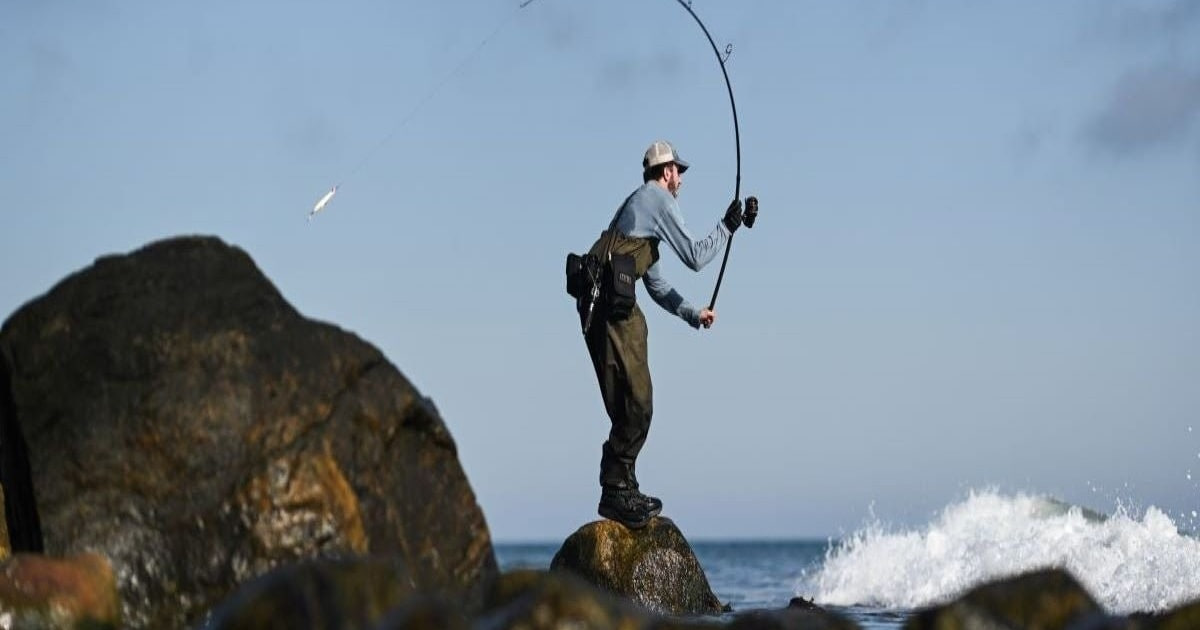
Surf fishing asks a lot of a rod. You're standing in moving water, throwing a weighted rig as far as you can, then holding that rod for hours. Length does most of the work: a longer blank launches bait farther and keeps your line above the breakers so the surf doesn't drag it sideways. Power and the lure rating do the rest. Match them to what you're actually throwing and the rod loads properly instead of folding over or feeling like a broomstick.
No surf rod does everything. The 11- and 12-foot sticks that reach the outer bar are heavy and awkward to cast all day, and they're miserable in a crowd on a jetty. Short rods are easy to handle and useless for distance with a 4-ounce pyramid. Graphite gives you the sensitivity to feel a pompano tap; fiberglass and composite take the abuse but go numb. Every choice here gives up something, so start with the water you fish.
We also had to work with what's actually listed. A couple of rods on our shortlist turned out to be inshore or offshore boat models wearing a surf-sounding name, so they're out. What's left covers the useful range: a 9-foot all-rounder, a 10-foot heavy hitter, a plain starter stick, and two lighter rods for walking the sand. We think that the PENN Battalion II 9' Surf Spinning Rod is the best surf fishing rod for most people, and that the Tsunami Trophy II 10' spinning surf rod is the one to buy if you're throwing heavy sinkers into big breakers.
Everything we recommend
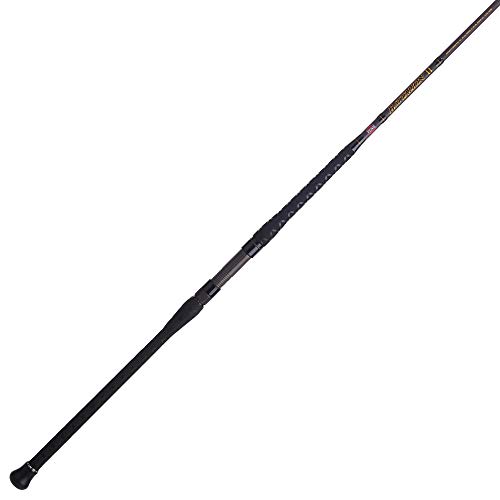
Light enough for all-day casting, tough enough for the beach

More length and backbone for heavier sinkers and bigger surf

A plain starter stick, if you accept the durability risk

Far more sensitivity and warranty, if you can pay for it
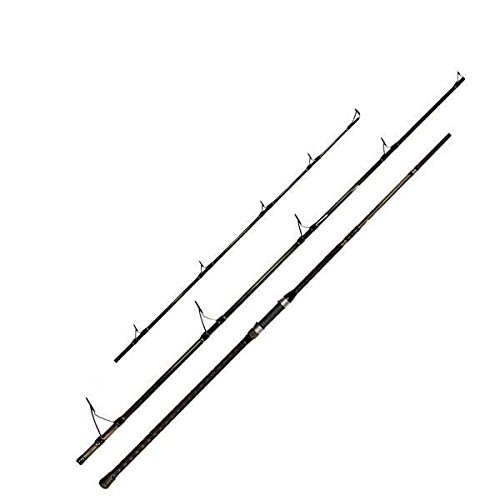
A light two-piece for anglers who walk the beach all day
At a glance
| Product | Length | Rod power | Price | |
|---|---|---|---|---|
| PENN Battalion II 9’ Surf Spinning Rod;Top pick | — | Medium | $135.96On sale |
| Okuma Longitude Surf Graphite RodsBudget pick | — | — | $80.99 |
| Tsunami Trophy II TSTIISS-1002MH Spinning Surf RodRunner-up | 10' | Medium Heavy | $134.98 |
| Tsunami Airwave Elite 2pc Saltwater Striper SurfAlso great | 8'8" | — | $199.99On sale |
 | DAIWA BEEFSTICK Boat RodAlso in lineup | — | — | $39.83 |
| St. Croix Rods Avid Series Surf SpinningUpgrade pick | 8'0" | — | $275 |
How we picked
Length and reach. We treated length as the first filter, since published guidance and manufacturer sheets both point to longer blanks for casting distance and for holding line above breaking waves. We looked for a spread from short jetty rods up to 10 feet rather than one ideal number.
Lure and sinker rating. Manufacturer spec pages list a recommended lure and sinker range for every surf rod, and that's the number that decides whether a rod suits your beach. We favored rods that publish it and flagged the listings that don't.
Blank and feel. Graphite reads a light bite; composite and fiberglass take more abuse and tell you less. We read spec sheets for blank material and construction, then checked whether owner feedback described the rod as sensitive, stiff, or numb.
Guides and hardware. Salt ruins cheap guides and braid grooves soft rings, so we looked for alconite or aluminum oxide inserts in stainless or corrosion-treated frames. Reel seat and lock-nut quality mattered too, since a reel that creeps loose ruins a session.
Durability and support. We read owner feedback for repeat themes — snapped tips, ferrules that won't seat, blanks failing on an early fish — rather than one-off complaints. A stated warranty term counted in a rod's favor.
Top pickOn sale
Light enough for all-day casting, tough enough for the beach
PENN Battalion II 9’ Surf Spinning Rod;
This 9-footer handles the lures and sinkers most beach anglers throw, from three-quarters of an ounce up to 3 ounces, and the carbon blank keeps it light in your hands after hours of casting. The Fuji guides and cork-and-shrink-tube grip are hardware you usually have to pay up for.
$135.96fromAmazonList priceNine feet is the length that fits the most days. You can cast it one-handed off a jetty, load it two-handed from the sand, and still fit it in a car without a roof rack. Medium power with a moderate-fast tip means it bends enough to throw a 1-ounce bucktail and still has the spine for a 3-ounce sinker. For most beaches, that's the whole job.
The blank is PENN's SLC2 carbon, built as a single piece, which keeps the weight down and the feel direct. Listed rod weight is well under a pound. That matters more than it sounds. The difference between a light rod and a heavy one shows up somewhere around cast two hundred, when your shoulders start voting.
It won't out-cast a 12-footer. If your beach has a long trough and you need to reach past the second bar, you want more length, and the Tsunami below is the better buy. Nine feet also sits low, so in heavy shore break you'll fight the wave pull on your line more than you would with a taller rod.
The hardware is the part you'd normally pay up for. Fuji alconite guides and a Fuji graphite reel seat are what you find on pricier rods, and alconite rings hold up to braid without grooving. The grip is cork up front with rubber shrink tube where your hands actually land, plus an EVA butt that won't snag your jacket when you tuck the rod into your hip.
Flaws but not dealbreakers
Nine feet is a compromise, and you'll feel it on a steep beach with a strong sweep. If you mostly chuck bait and let it sit, the extra reach of a 10- or 11-footer keeps your line cleaner and your rig where you put it.
The listing is sloppy about itself, too. The title calls this a one-piece rod and the size field says two-piece. The bullets describe a one-piece blank, so that's what we'd expect — but confirm the configuration with the seller if it has to fit a specific tube or trunk.
Owner feedback on this generation is thin, so we're leaning on the spec sheet and PENN's long record on East Coast beaches rather than a deep pool of reports.
Runner-up
More length and backbone for heavier sinkers and bigger surf
Tsunami Trophy II TSTIISS-1002MH Spinning Surf Rod
A 10-foot medium-heavy spinning rod with a staggered ferrule, so it breaks down for the car without feeling like two rods bolted together. It's the pick if you're throwing heavy bait rigs for stripers or reds and need to keep your line above the breakers.
$134.98fromAmazonAt 10 feet and medium-heavy, this is the rod for the days the PENN starts to feel small. You get two more feet of leverage to hold line over a breaking wave, and enough backbone to push a heavy bait rig into wind. If you fish stripers from the sand or work redfish in a cut, that's the combination you want.
The ferrule is the interesting part. Tsunami staggers the joint so the blank bends through the connection instead of hinging at it. Two-piece surf rods often feel like two rods taped together. This one is built to avoid that, which means you can break it down for the car or a flight without giving up all the smoothness of a single blank.
Where it loses to the PENN is finesse. Medium-heavy is more rod than you need for pompano, whiting, or small blues, and you'll feel less of the light stuff through it. It's longer, too, so there's more work in every cast and more rod to swing around other people on a crowded jetty.
The listing is sparse. The bullets mostly repeat the model name, and no lure or sinker rating appears anywhere in it. That's the single most important number on a surf rod, so pull it from Tsunami's spec page before you commit. A medium-heavy blank covers a wide range, but you still want the published window.
Flaws but not dealbreakers
Ten feet of medium-heavy rod is a lot of rod if you're new. The casting stroke is slower and the swing weight is higher, and a beginner will often cast a 9-footer farther simply because it's easier to time.
The listing gives you almost nothing to work with — no stated lure rating, no blank material, no warranty term. Everything useful has to come from Tsunami directly, which is a nuisance when you're trying to match a reel and a sinker to it.
Budget pick
A plain starter stick, if you accept the durability risk
Okuma Longitude Surf Graphite Rods
This is a plain graphite composite rod with decent guides and cork grips, sold in five lengths so you can pick the one your beach needs. It's a sensible first surf rod — as long as you go in knowing that owners report more breakage here than with anything else we looked at.
$80.99fromAmazonBuy this one when you're not sure surf fishing is going to stick. It's a graphite composite blank with cork fore and rear grips and a stainless hooded reel seat, in a series that runs through five lengths, so you can start at 9 feet for jetty work or go long for open beach. Nothing about it is special. Most of it works.
The guides are better than budget rods usually get. Aluminum oxide inserts in double-footed stainless frames are braid-compatible, which matters because nearly everyone spools braid for surf now. Cheap single-foot guides are the first thing to pop off an inexpensive rod. These are the right build for a stick that's going to get dropped on sand and knocked against rock.
Owners are consistent about two things: it casts well for what it is, and it breaks. Snapped tips, rods arriving damaged in the box, and blanks letting go on an early fish all come up as recurring themes rather than isolated gripes. Composite blanks in this class are forgiving right up until they aren't.
Go in with that expectation and it's still a reasonable first rod. Inspect it the day it lands, flex it before you fish it, and don't try to lift a fish up the beach with the tip. If it survives a season, you'll know exactly what you want next — and you'll have spent a fraction of what the St. Croix costs to find out.
Flaws but not dealbreakers
Durability is the obvious problem. Between shipping damage and blanks failing under load, this rod has a thinner margin than anything else here, and the listing states no warranty term to fall back on.
It's also a plain rod. The action is middling and the finish is basic, and next to the Tsunamis or the St. Croix it feels numb — you won't feel a crab picking at your bait through it. No lure or line rating appears in the listing either, so matching sinkers to your exact length means a trip to Okuma's spec page.
Upgrade pick
Far more sensitivity and warranty, if you can pay for it
St. Croix Rods Avid Series Surf Spinning
A high-modulus SCIII carbon blank with Fuji K-series guides, a cork tape handle, and a 15-year transferable warranty. At 8 feet and medium power, it's a sensitivity rod for plugs, metal, and light bait close in — not a heavy-lead distance stick.
$275fromAmazonThis is the rod you buy when you want to feel everything. The SCIII carbon blank is high-modulus and built on St. Croix's IPC mandrel, which is a long way of saying the taper is smooth and the tip stays alive. At 8 feet, medium power, moderate-fast, rated for three-quarters to 3 ounces, it's a plug-and-light-bait rod for close work where bite detection beats distance.
The components match the blank. Fuji K-series KW guides are shaped so a wind knot slides off instead of catching, with alconite rings and corrosion-control frames for salt. The reel seat is a Fuji DPS with a back-stop lock nut, so your reel doesn't work loose halfway through a session. The handle is cork tape rather than rings, and it stays grippy wet.
Eight feet is the catch. This is the shortest of our picks, and it isn't built to throw heavy lead a long way over big surf. Think metal, plugs, and light sinkers from a flat beach, an inlet, or a jetty — not 5 ounces of pyramid into a northeast blow. The 8-to-17-pound line rating tells you the same thing.
Besides the blank, what you're paying for is the 15-year transferable warranty and St. Croix's service reputation. Spread across a life that long, a premium surf rod is easier to justify than it first looks, especially since surf rods usually die of accidents rather than wear. The one-piece build also means there's no ferrule to loosen or seize.
Flaws but not dealbreakers
It's a one-piece 8-footer, which makes it awkward to move around. You'll want a rod rack, a roof box, or a long trunk, and you can't fly with it without a hard tube. If you travel to fish, the two-piece Tsunamis solve a problem this rod doesn't.
It's also the most expensive rod here by a wide margin, and that premium buys sensitivity and finish rather than raw lifting power. If you're after sharks, big rays, or anything that needs 6 ounces of lead to hold bottom, look at a heavier stick.
St. Croix backs the Avid Series Surf with a 15-year transferable warranty.
Also greatOn sale
A light two-piece for anglers who walk the beach all day
Tsunami Airwave Elite 2pc Saltwater Striper Surf
An 8-foot-8 two-piece that's light enough to carry all day and still has the spine for schoolie stripers. Owners who cover ground throwing bucktails love it, while anglers with large hands often find the handle far too thin for comfort.
$199.99fromAmazonList priceSome people fish the surf by parking a rod in a sand spike and waiting. This one's for the other kind. At 8 feet 8 inches and genuinely light in the hand, it's built for walking a beach with a small pack, throwing bucktails and plugs into the wash, and covering a mile of sand before dark.
Owners describe it the same way over and over: light, with backbone. It loads on smaller lures without going mushy, then holds up to schoolies and mid-size bass without bending into a noodle. If you fish Northeast striper beaches and your arms give out before the fish stop, that combination is worth more to you than two extra feet of rod.
It breaks into two pieces, which makes it the easiest of our picks to travel with. The joint generally seats well, though a few owners have hit a ferrule that wouldn't fit properly and had to send the rod back. Check the fit the day it arrives, not the morning of your trip.
The handle is where opinions split. It's noticeably thin, which is part of why the rod feels so light, but anglers with big hands call it uncomfortable over a long casting session. If you wear XL gloves, hold one first or plan on building it up with shrink tube.
Flaws but not dealbreakers
The thin handle is a real issue for some people, and so is ferrule fit. Neither turns up in every report, but both turn up often enough that we'd unbox this rod carefully and work the joint well before the return window closes.
At 8 feet 8 inches with a medium action, it's not a heavy-sinker rod. Driving 4 ounces of lead into a stiff onshore wind isn't its job, and the listing is bare enough that you'll need Tsunami's spec sheet for the exact lure window.
Who this is for
This guide is for anyone who fishes from the sand, a jetty, or an inlet and casts a weighted rig out through the surf. If you're buying your first setup, a 9- or 10-foot spinning rod matched to a 5000- to 8000-size reel will cover almost everything you'll do, and that's where most of our picks sit. If you already own a surf rod and you're after something specific — a lighter stick for walking the beach, or a more sensitive blank for pompano and whiting — the Airwave Elite and the St. Croix are the two worth a look.
It's not for everyone, though. If you're chasing sharks or big rays and need to hold 6 to 8 ounces of lead on the bottom, every rod here is too light, and you want a dedicated heavy stick with a conventional reel. We also stuck to surf rods: a couple of listings that came up in this search are inshore or offshore boat rods, and they're in the excluded list rather than being compared as if they belonged here.
How we picked
We started with manufacturer spec sheets and published guidance, then narrowed on five things. Length: enough reach to keep line above the breakers, which generally means 9 feet and up. Lure and sinker rating: a published window that matches real surf conditions, and a mark against listings that hide it. Blank: graphite for sensitivity, composite for abuse, and a clear sense of which you're getting. Hardware: alconite or aluminum oxide guide rings in corrosion-resistant frames, plus a reel seat that holds under load. Durability: recurring owner themes about breakage, ferrule fit, and handle comfort, weighed alongside whatever warranty the maker states.
The competition
This is what our research turned up for this category, not a map of everything on the market. Surf rod lineups run deep, and plenty of good blanks from these same brands never surfaced in our search. One rod made it this far without earning a pick.
The DAIWA BEEFSTICK Boat Rod ($39.83) — The Daiwa Beefstick is a well-known name among people who throw heavy bait, and the family does include surf models — the listing itself says the line covers spin, cast, surf, and boat rods. The trouble is this particular listing. It's sold as an 8-foot boat rod, and the bullets state no power, action, line rating, or lure rating; the specs are mostly shipping-box dimensions and a country of origin. Owner feedback is generally positive, and a stout, inexpensive 8-footer earns its keep for short-range bait work off a pier. But we can't recommend a surf rod when we can't see the ratings that make it one.
Care and maintenance
Salt kills surf gear slowly, so rinse the whole rod with fresh water after every trip — not just a splash down the blank, but the guides, the reel seat threads, and the butt cap where sand piles up. Run a cloth through each guide ring and look for a chip or a loose insert, because a cracked ring will saw through braid on your next long cast. If the rod is two-piece, separate the ferrule, dry it, and store it apart so it can't seize. A little paraffin on the male ferrule keeps the joint snug. Store the rod hanging or in a rack rather than leaning against a wall under its own weight, and check the reel seat lock nut before you fish.
Questions we get
What's the best length for a surf fishing rod?
Surf rods generally run from about 9 to 14 feet, and longer blanks add casting distance while keeping line above breaking waves. For most people a 9- to 11-foot rod is the sweet spot: long enough to reach a trough, short enough to cast all day and fit in a car. Go longer only if you're fishing big open beaches with heavy sinkers.
What's the best surf fishing rod for beginners?
Start with a 9- or 10-foot spinning rod in medium power. Spinning gear is far easier to cast without backlash, and a medium blank loads on a wide range of lure and sinker weights while you figure out your beach. The PENN Battalion II is our pick if you want one rod to learn on and keep; the Okuma Longitude is the cheaper way to find out whether you like the sport.
Spinning or conventional reel for surf fishing?
Spinning, for almost everyone. It casts cleanly with less practice, handles braid well, and doesn't punish you for a bad release. Conventional setups can throw heavier lead farther in skilled hands, but they demand real casting technique and careful thumb control. Learn on spinning gear and move to conventional only if distance becomes your main goal.
What power and action should you look for?
Match the rod's published lure and sinker rating to what you plan to throw — that's more useful than the power label on its own. Medium power with a moderate-fast action suits most beach work, from 1-ounce metal up to 3 ounces of lead. Step up to medium-heavy if you fish big surf or heavier sinkers, and stay lighter for pompano and whiting.
What's the best surf rod for striped bass?
It depends on how you fish them. If you park a bait rig and wait, the 10-foot medium-heavy Tsunami Trophy II gives you the length and backbone to hold line over the waves. If you walk the beach throwing bucktails and plugs, the lighter Airwave Elite is far more pleasant to carry and still has enough spine for schoolies and mid-size fish.
Are two-piece surf rods as good as one-piece rods?
They're close now. A one-piece blank still has a slight edge in smoothness and has no joint to loosen or seize, which is part of why the St. Croix is built that way. But a well-designed ferrule — like the staggered joint on the Tsunami Trophy II — bends through the connection rather than hinging at it. If you need to travel or fit a rod in a sedan, take the two-piece.
Why you should trust us
For this guide:
- We read the manufacturer spec sheets and Amazon listing facts for every rod here, and compared published length, power, action, line rating, and lure rating side by side.
- We worked through owner feedback looking for themes that repeat — ferrule fit, handle thickness, blank failures, shipping damage — rather than treating single complaints as verdicts.
- We set aside listings that turned out to be inshore or offshore boat rods rather than surf rods, and we say so instead of comparing them as if they belonged.
- We read owner reviews on every listing, weighted toward the critical ones, because that is where the recurring failures show up.
- We have a systematic way of automatically fetching the latest prices, so the numbers on this page stay current.
- This is a research-focused guide, so the team may not own every product listed — though we often do own the top winners, which gives us extra context for the recommendations.
- We don't accept free products, and the retailer commission never changes which product we recommend.
Sources
Surf fishing rod guides and reviews - Salt Water Sportsman, Salt Water Sportsman
In-Fisherman / Sport Fishing gear coverage, Sport Fishing Magazine
Penn Fishing official product specifications, Penn Fishing
St. Croix Rods official product specifications, St. Croix Rods
Shimano Fish official product specifications, Shimano
Daiwa official product specifications, Daiwa
Okuma Fishing official product specifications, Okuma
Tsunami Fishing official product specifications, Tsunami
NOAA Fisheries recreational fishing information, NOAA Fisheries
Amazon product listings and owner reviews for all 6 products
Manufacturer specification pages for each product
Some passages in this guide may be paraphrased with AI help. Prices are refreshed automatically.
More like this.
Continue exploring lifestyle reviews and recommendations.

The Best Fishing Rod and Reel Combos for Beginners
Your first fishing combo has one job: get you to the water without a fight. That means a reel that doesn't tangle when your cast goes sideways, a rod that…

The Best Fly Fishing Rod Combos for Trout
Most trout fishing happens closer than you'd think. Trout Unlimited points out that the majority of American trout water is a stream under 30 feet wide,…

The Best Cold Water Surfing Wetsuits
Cold water finds every gap. A suit that feels fine in September can turn a February session into ten shivering minutes and a long walk back to the car.…

The Best Gifts For Surfers
Surfing looks simple from the beach, but the gear around it isn't. A surfer's setup is a pile of small, personal decisions: how thick the wetsuit needs to…

The Best Fishing Gear for Beginners
Fishing asks less of you than almost any other outdoor hobby. You need something to cast with, something to tie on the end, and a place to stand. But the…

The Best Breathable Fly Fishing Waders
Waders are the difference between fishing the good water and standing on the bank wishing you could. Breathable ones fixed the old problem: a shell that…