The Best Cold and Flu Home Care Kits
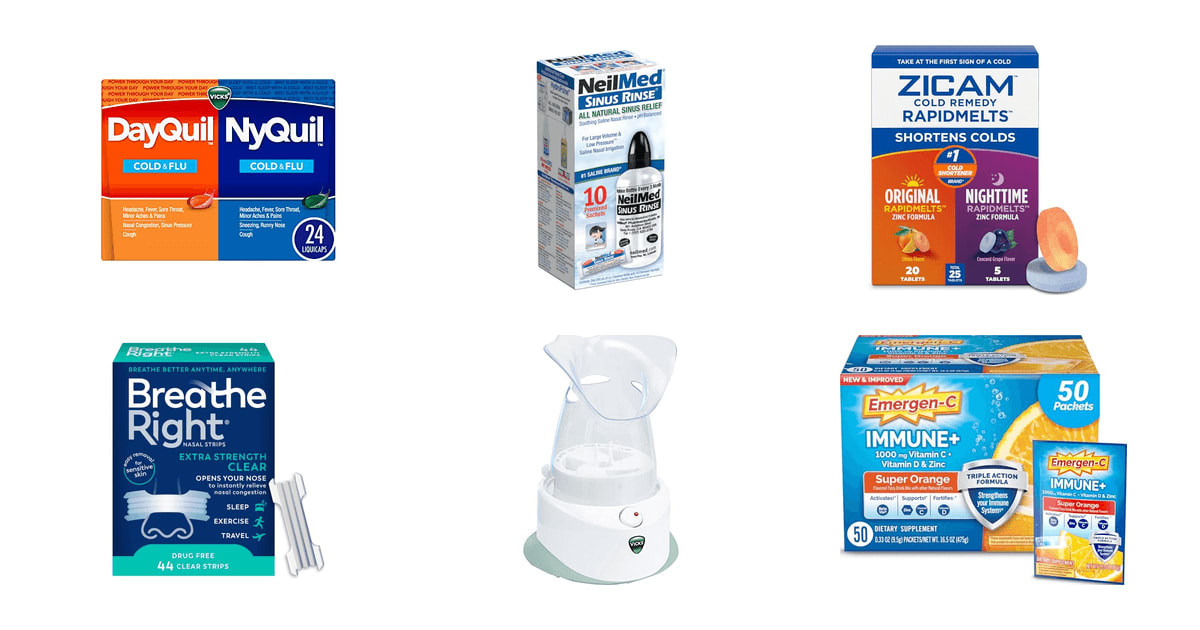
A cold never schedules itself. It shows up on a Sunday night, and by Monday you're deciding whether you can get through a call without sounding like you're underwater. That's why the right time to think about this stuff is when you feel fine. A good home kit covers the five things that actually make you miserable — fever, congestion, cough, sore throat and body aches — and it splits them into something you can take at your desk and something that puts you out at night.
Here's the honest part. None of this cures anything. These products buy you comfort and sleep while your immune system does the real work. Zinc has the strongest evidence for shortening a cold, and even then you're talking about a couple of days, and only if you start within a day or two of the first tickle in your throat. Most of it is also off-limits for little kids: the American Academy of Pediatrics advises against over-the-counter cough and cold medicine for children under 4.
So think about your kit in layers. One multi-symptom medicine for the worst days. One drug-free tool you can reach for as often as you want. And one thing you take the moment you feel it coming on. Stock all three before cold season starts, because the midnight drugstore run never goes well. We think that the Vicks DayQuil and NyQuil Combo Pack is the best cold and flu home care kit for most people, and that the NeilMed Sinus Rinse Starter Kit is the one to buy if you can't take decongestants.
Everything we recommend

Full symptom coverage day and night, if your label allows it

Drug-free congestion relief that plays nice with everything

Reusable steam relief that pays off over a few sick weeks

Worth keeping around for the first hour of a cold
At a glance
| Product | Symptom Relief | Units Included | Price | |
|---|---|---|---|---|
| Vicks DayQuil and NyQuil Combo PackTop pick | Multi-Symptom Relief | 24 Count | $10.97 |
| NeilMed Sinus Rinse Starter Kit with 5Budget pick | Nasal Irrigation | 5 Packets | $6.99 |
| Zicam Cold Remedy Original + Nighttime RapidMeltsAlso great | Two Forms Of Zinc | 25 Count | $7.13On sale |
 | Breathe Right Nasal StripsAlso consider | Nasal Congestion | 44 Count | $15.83On sale |
| KAZV12006VV1EA - Vicks Personal Electric Steam InhalerUpgrade pick | Personal Steam Inhaler | 1 EA | $59.98 |
 | Emergen-C Immune+ Triple Action Immune Support PowderAlso in lineup | Immune Support | 50 Packets | $26.99 |
 | Boiron Oscillococcinum 36 Doses Homeopathic Medicine forAlso consider | Flu-Like Symptoms | 36 Count | $35.99 |
How we picked
Symptom coverage. We looked at whether a product addresses the full cluster people actually get — fever, congestion, cough, sore throat and aches — or just one piece of it. Single-symptom products had to be clearly better at their job than a combination formula to earn a spot.
Day and night doses. Nighttime formulas rely on sedating ingredients, which is useless at work and essential at bedtime. We favored kits that separate the two rather than making you take one formula around the clock.
Interactions and age limits. We checked stated age minimums against American Academy of Pediatrics guidance, which advises against over-the-counter cough and cold medicine for children under 4. We also weighted options with no drug interactions, since blood pressure medications, MAOIs and anticoagulants rule out a lot of shelf.
Evidence, not marketing. We leaned on Cochrane reviews for zinc, vitamin C, steam inhalation and homeopathic flu remedies, plus American Academy of Family Physicians guidance on saline irrigation. Where the evidence is thin, we say so in the write-up instead of ignoring it.
Cost across a season. Adults get two to three colds a year and kids six to eight, per CDC figures, so we compared what a product costs to use repeatedly rather than once. Reusable tools earned credit that single-use packets didn't.
Top pick
Full symptom coverage day and night, if your label allows it
Vicks DayQuil and NyQuil Combo Pack
Sixteen daytime LiquiCaps and eight nighttime ones cover fever, aches, cough, sore throat and congestion. The day-night split matters more than it sounds: you get something you can take before a meeting, and something else built to put you down for the night.
$10.97fromAmazonOne box handles the whole miserable arc of a cold. Most people don't have one symptom. You have a headache and a cough and a throat that feels like sandpaper, all at once, and you don't want to stand in an aisle assembling four boxes. This pairing covers the common cluster in two formulas, and it's the combination pharmacists point to first when someone asks what to keep at home.
The split between day and night isn't packaging. Nighttime cold formulas lean on sedating ingredients to get you to sleep, and that's exactly what you don't want at 10 a.m. Taking a non-drowsy dose during the day and a sedating one at bedtime is the single easiest way to avoid spending your workday foggy. It's also the reason people who buy only NyQuil end up napping through their obligations.
The count skews toward daytime doses, and that's the right call for most households. You need more coverage across a workday than you do overnight, when one dose usually carries you through. If you work from home and can't take three days off, or you're the parent still making lunches while sick, that ratio is the one you actually burn through.
It's also the hardest kit to use wrong. The doses are pre-portioned in capsules, so there's no measuring cup to squint at and no syrup to over-pour. That matters more than it sounds when you're taking medicine at 3 a.m. in a dark kitchen. It's compact enough to live in a cabinet or a suitcase, and there's nothing to clean afterward.
Flaws but not dealbreakers
Combination medicines give you drugs you may not need. If your worst symptom is a cough and nothing else, you're still taking a fever reducer and a decongestant along with it. That's fine occasionally, but it makes it easy to double up on the same active ingredient if you're also taking a separate pain reliever. Read both labels before you stack anything.
This is the kit to think twice about if you have high blood pressure, take an MAOI or a blood thinner, or you're pregnant. Decongestants are the usual culprit, and a pharmacist can tell you in thirty seconds whether the version on the shelf is a problem for you. It's also not for young children — check the age minimum on the carton, not this page.
Twenty-four doses sound like a lot until two people in the house get sick in the same week. Owners regularly note that a box covers roughly one adult through one bad cold, and not much more. If you've got a full household, buy accordingly.
Budget pick
Drug-free congestion relief that plays nice with everything
NeilMed Sinus Rinse Starter Kit with 5
A squeeze bottle, five premixed saline packets, and nothing you can overdose on. Saline irrigation is the rare cold remedy with real clinical support behind it, it's safe for nearly every age, and it doesn't interact with anything else in your medicine cabinet.
$6.99fromAmazonRinsing your sinuses with saltwater sounds like folk medicine, and it isn't. Clinical work summarized by the American Academy of Family Physicians found saline nasal irrigation improved composite upper respiratory symptom scores by 27 to 64 percent compared with controls. Family doctors and ENTs recommend it as a first-line move for congestion, and it's probably the most underused tool in home cold care.
The real selling point is that there's no ceiling on how often you can use it. Decongestant sprays cap out after a few days before rebound congestion sets in. Pills come with dosing windows and interaction warnings. Saline has none of that. If your head is packed and it's four hours until your next dose of anything, this is the thing you can do right now, and again an hour later.
It's also the option that works for the people the rest of this guide leaves out. If you're pregnant, managing blood pressure, taking a blood thinner, or juggling a long list of prescriptions for an older parent, the interaction question is the whole question — and here the answer is none. The formula is drug-, preservative- and iodine-free, and it's the recommended way to clear your nose before a prescribed nasal steroid.
The mechanics are simple on purpose. It's a large-volume, low-pressure bottle with a single-piece cap and no push-pull parts to trap gunk, and the premixed packets take the guesswork out of the salt-to-water ratio. Mix one packet for a standard isotonic rinse, or two or more for the stronger hypertonic version on a badly blocked-up day.
Flaws but not dealbreakers
It is, frankly, a chore. You're standing over a sink pouring saltwater through your head, and it's not something most people look forward to. Owners who stick with it tend to describe the first two or three attempts as awkward before it clicks.
You have to be careful with the water. Use distilled, sterile, or previously boiled and cooled water — never straight from the tap — because of the rare but serious risk of waterborne organisms reaching the sinuses. That's a real requirement, not a suggestion, and it adds a step.
Five packets won't get you far. A bad week of congestion can burn through the starter supply quickly, so plan on buying refill packets separately if you intend to use it the way it works best.
Upgrade pick
Reusable steam relief that pays off over a few sick weeks
KAZV12006VV1EA - Vicks Personal Electric Steam Inhaler
A small plug-in unit that turns water into warm steam you breathe in, with no medication involved. Buy it once and it covers every cold in the house, which is the whole argument for spending more up front on something you keep.
$59.98fromAmazonThis is the piece of the kit you buy once instead of every season. Adults average two to three colds a year and kids get six to eight, so a household with school-age children is dealing with something roughly every six to ten weeks from fall through spring. Disposable packets and boxes reset that cost each time. A device doesn't. Over two or three illnesses, the math turns in its favor.
Warm steam is best understood as comfort, not treatment. Reviewed studies collected by Cochrane found steam inhalation gave subjective relief to somewhere between 35 and 52 percent of upper respiratory infection patients, with the benefit concentrated in sinus pressure and throat comfort. That's a coin flip, and we'd rather say so than oversell it. But it's a coin flip with no drug interactions attached.
The practical appeal is that it slots in around everything else. You can use it when you're between doses, when you're already at your limit on medication, or when you'd rather not take anything at all. Sitting with it for ten minutes before bed is a plausible way to get your nose open enough to fall asleep, and that's often the whole goal on night three.
It's compact enough to store in a cabinet or throw in a bag, which is more than you can say for a full-size humidifier. And unlike a humidifier, it points the steam at you rather than the room, so you're not waiting an hour for the air to change.
Flaws but not dealbreakers
The evidence here is softer than for zinc or saline. People report feeling better; the effect is subjective, and roughly half of patients in reviewed studies didn't get meaningful relief. Go in expecting comfort rather than a shortened cold.
It's also the least convenient option in this guide. You have to fill it, wait for it, sit still with it, then empty and clean it so it doesn't grow anything between colds. Anything involving hot water and steam needs supervision around kids, too.
It does one job. Steam won't touch a fever, body aches, or a sore throat that's keeping you up, so this is an addition to a kit rather than the kit itself.
The V1200 comes with a one-year warranty.
Also greatOn sale
Worth keeping around for the first hour of a cold
Zicam Cold Remedy Original + Nighttime RapidMelts
Twenty citrus daytime melts and five grape nighttime ones, all of which dissolve on your tongue without water. Zinc is the only over-the-counter ingredient with solid meta-analytic support for shortening a cold, and these are built for the moment you first notice one.
$7.13fromAmazonList priceThe evidence for zinc is unusually good for a drugstore product. A Cochrane meta-analysis of 28 randomized controlled trials found that zinc lozenges started within 24 hours of cold onset cut average duration by about a third, from 7.1 days to 4.8. That's more than two days of your life back, which is the kind of result nothing else on this page can claim.
Timing is the entire product. These work in the window where you're not really sick yet — the scratchy throat on the drive home, the odd tiredness after lunch. That's when you start, then continue every two to three hours. Wait until you're properly congested on day three and you've missed it. Keeping a box in a drawer before you need it is the only way to actually hit that window.
The format is built around that urgency. The tablets melt in your mouth with no water, no chewing and nothing to swallow, so you can take one at a desk, in a car, or in a meeting. The daytime melts are non-drowsy and citrus-flavored; the nighttime ones are grape and include chamomilla for occasional sleeplessness.
The 20-to-5 split tells you how to think about it. This is mostly a daytime product with a few night doses tacked on, not a full day-and-night system like the Vicks combo. Use it alongside your main multi-symptom medicine rather than instead of it.
Flaws but not dealbreakers
The window is unforgiving. If you're already two days in, the meta-analytic benefit largely evaporates, and you've bought something you can't use until next time. That's not a flaw in the product so much as a limit on when it helps.
Zinc is famously hard on some stomachs. Owner feedback keeps returning to a lingering metallic aftertaste and nausea when the tablets are taken without food, and a portion of buyers simply can't get past the taste.
The label sets a minimum of 12 years old, so this does nothing for the younger kids in the house. And the chamomilla in the nighttime tablets is a homeopathic ingredient — the zinc evidence doesn't extend to it.
Who this is for
This guide is for adults building a medicine cabinet for a household — the person who wants the right things already in the drawer when someone wakes up sick at 2 a.m. If you're managing blood pressure, taking a blood thinner or an MAOI, pregnant, breastfeeding, or coordinating a long prescription list for an older parent, start with the drug-free options here and treat the multi-symptom medicine as something to clear with a pharmacist first. It takes one conversation and it settles the question permanently.
We don't cover prescription antivirals, children's formulations, or at-home rapid tests, and that last one is a real gap you should fill yourself. Flu antivirals like oseltamivir have to start within 48 hours of symptom onset to do their best work, so knowing early whether you have flu or a cold changes what you do next. Combo tests reviewed by the FDA hit 86 to 96 percent sensitivity for influenza A and 82 to 93 percent for SARS-CoV-2 — good enough to guide that decision. Add a couple of them to whatever you buy here.
How we picked
We built the shortlist around five things. Symptom coverage: whether one product handles fever, congestion, cough, sore throat and aches, or leaves you assembling three boxes. Day and night doses: sedating formulas belong at bedtime, not at your desk, so we favored kits that split them. Interactions and age limits: we checked stated minimum ages against American Academy of Pediatrics guidance and gave extra weight to options that don't interact with blood pressure or clotting medications. Evidence, not marketing: Cochrane reviews and American Academy of Family Physicians guidance decided which claims we repeat and which we flag as thin. Cost across a season: with colds hitting a family household every six to ten weeks in winter, we counted what a product costs to use again and again, not just once.
Other cold and flu home care kits worth considering
If you want to breathe through your nose at night without taking anything: The Breathe Right Nasal Strips ($15.83) — Breathe Right Extra Strength strips are a mechanical fix — a flexible band that pulls your nostrils open, rated by the manufacturer to increase nasal airflow by up to 31 percent. They're the drug-free answer to the specific problem of lying down and immediately not being able to breathe, and they help with congestion-related snoring too, which your partner will appreciate. The extra strength version uses springs 50 percent stronger than the original, and the clear strips are hypoallergenic and barely visible. What you give up is everything else: they do nothing for a cough, a fever or a sore throat, and adhesive strips don't stick well to oily or moisturized skin. Think of them as a sleep aid, not a cold treatment.
If you want a homeopathic option with no interactions to worry about: The Boiron Oscillococcinum 36 Doses Homeopathic Medicine for ($35.99) — Boiron's Oscillococcinum is the best-selling natural flu remedy in the country, and it's aimed at the fatigue, headache, body aches, chills and fever of flu-like illness. The pellets dissolve under the tongue, they're non-drowsy, and they're labeled for ages 2 and up with no known drug interactions — which is why some people take it alongside conventional medicine rather than instead of it. We'll be straight about the evidence: a Cochrane review of six double-blind randomized trials found it shortened flu-like illness by 0.28 days versus placebo, which works out to roughly seven hours. If you're avoiding pharmaceutical actives on principle, that's the honest trade you're making.
The competition
This is what our research turned up on the shelf, not a survey of everything sold. Plenty of good products exist that we didn't have listings for, and drugstore lineups change constantly. Here's the one that didn't make the picks, and why.
The Emergen-C Immune+ Triple Action Immune Support Powder ($26.99) — Emergen-C Immune+ Triple Action is a powder you stir into water, with 1,000 mg of vitamin C, plus vitamin D, zinc, manganese, B vitamins and BetaVia per serving, in a 50-packet box meant for daily use. It lost to our picks because the evidence points the wrong direction for how most people use it. Cochrane's review found that regular vitamin C supplementation at 200 mg a day or more did not prevent colds in the general population — it shortened them by about 8 percent in adults and 14 percent in children. That's a modest recovery benefit that requires taking it every day before you get sick, not a shield you can grab when your throat starts hurting. If you already take a daily supplement and like the format, it's a reasonable one, and the zinc content doesn't hurt. But for a kit you open when illness starts, the zinc melts do more.
Stocking and storing your kit
Buy this stuff before cold season, not during it. The whole point is that everything's already in the drawer at 2 a.m. when nothing's open. Check expiration dates once a year — pick a date you'll remember, like the day you change smoke alarm batteries — because a box that's been sitting since two winters ago may not be doing much. Keep it all in one place, ideally not the bathroom, where heat and humidity shorten shelf life; a bedroom closet or kitchen cabinet is better. Keep saline packets sealed and dry, rinse and fully air-dry the bottle after every use, and never use tap water in it. Tape a short list of your household's prescriptions inside the cabinet door. It makes the interaction question a five-second check instead of a phone call.
Questions we get
What should every cold and flu home care kit include?
Four things, roughly. A multi-symptom medicine with separate day and night formulas, a drug-free congestion tool like a saline rinse you can use as often as you want, zinc to take the moment symptoms start, and a rapid COVID-flu combo test. Add a thermometer and, for anyone over a year old, honey for nighttime cough.
What should I use if I have high blood pressure and can't take decongestants?
Build around the drug-free options. The NeilMed saline rinse has no drug interactions and is the strongest evidence-backed thing you can do for congestion without medication. Breathe Right strips and a steam inhaler cover the same problem mechanically. For fever and aches, ask a pharmacist which single-ingredient pain reliever is right for you rather than reaching for a combination product.
Are these kits safe for children under 6?
Mostly no. The American Academy of Pediatrics advises against over-the-counter cough and cold medicines for children under 4, citing serious adverse events including seizures and at least 123 deaths in the decade before the FDA's safety review. Saline rinsing is safe at nearly any age when used as directed, and a BMJ meta-analysis of 14 trials found honey beat both placebo and diphenhydramine for nighttime cough in kids — buckwheat honey most of all, and safe for anyone over 1. For younger children, call your pediatrician instead of guessing.
Does zinc actually shorten a cold?
Yes, if you start fast. A Cochrane meta-analysis of 28 randomized controlled trials found zinc lozenges taken within 24 hours of onset cut average cold duration from 7.1 days to 4.8. Oral lozenges and melts are the form with that evidence behind them. Start at the first scratchy throat, not on day three, and take them with a little food if zinc upsets your stomach.
How do I tell whether it's COVID, the flu, or just a cold?
You can't reliably tell by symptoms alone, and it matters, so test. At-home rapid combo tests reviewed by the FDA showed 86 to 96 percent sensitivity for influenza A and 82 to 93 percent for SARS-CoV-2, which is enough to guide what you do next. The reason to know quickly is that flu antivirals like oseltamivir need to start within 48 hours of symptom onset to shorten illness by a day or two and cut serious complication risk in high-risk people. If a test comes back positive for flu and you're older or immunocompromised, call a doctor or telehealth service that day.
Is it safe to alternate DayQuil and NyQuil?
Alternating them is exactly how the combo pack is designed to be used — non-drowsy doses through the day, the sedating formula at bedtime. What you shouldn't do is take both at once or add a separate pain reliever without checking, since combination medicines often share active ingredients and it's easy to double up. Follow the dosing intervals on the carton and don't exceed the daily maximum. If you're on other prescriptions, run it by a pharmacist first.
Why you should trust us
For this guide:
- We read the Cochrane reviews covering zinc lozenges, vitamin C supplementation, steam inhalation and homeopathic flu remedies, along with American Academy of Family Physicians guidance on saline irrigation and American Academy of Pediatrics guidance on over-the-counter cold medicine for young children.
- We compared the stated formats, dose counts, age minimums and ingredients for every product here against what that research supports.
- We also tracked recurring themes in published reviews and owner feedback — aftertaste, stomach upset, next-morning grogginess, and how fast a box runs out in a full household.
- We read owner reviews on every listing, weighted toward the critical ones, because that is where the recurring failures show up.
- We have a systematic way of automatically fetching the latest prices, so the numbers on this page stay current.
- This is a research-focused guide, so the team may not own every product listed — though we often do own the top winners, which gives us extra context for the recommendations.
- We don't accept free products, and the retailer commission never changes which product we recommend.
Sources
Zinc for the Common Cold — Cochrane Systematic Review, Cochrane Library
Vitamin C for Preventing and Treating the Common Cold — Cochrane, Cochrane Library
Common Colds: Protect Yourself and Others, Centers for Disease Control and Prevention (CDC)
Influenza Antiviral Medications: Summary for Clinicians, CDC
Influenza Disease Burden — United States 2023–2024 Season, CDC
Saline Nasal Irrigation for Upper Respiratory Conditions, American Academy of Family Physicians (AAFP)
Over-the-Counter Medications for Children with Cold and Flu, American Academy of Pediatrics (AAP)
Honey for Acute Cough in Children — Meta-Analysis, BMJ Evidence-Based Medicine
Steam Inhalation for Acute and Chronic Sinusitis, Cochrane Library
Guaifenesin as an Expectorant — Clinical Evidence Review, CHEST Journal (American College of Chest Physicians)
Oscillococcinum for Prevention and Treatment of Influenza, Cochrane Library
OTC Self-Care in the United States — Consumer Survey, Consumer Healthcare Products Association (CHPA)
Amazon product listings and owner reviews for all 7 products
Manufacturer specification pages for each product
Some passages in this guide may be paraphrased with AI help. Prices are refreshed automatically.
More like this.
Continue exploring health reviews and recommendations.

The Best Nail Care Kits for Home Manicures
A home manicure kit earns its keep in small, boring ways. You get twenty minutes on a Sunday night, you shape your nails, you paint them, and they still…

The Best Books on Building a Career in the Age of AI
Your job is changing whether or not you've done anything about it. Tools that write, summarize, code and forecast are moving into work that used to be…

The Best Cold Plunge Tubs
Cold plunging is simple in theory and annoying in practice. You want water somewhere in the 50s, you want it there when you finally have ten free minutes,…

The Best Cold Therapy Knee Wraps
A knee that's just been operated on, twisted on a trail run, or flared up after a long day swells fast. Cold slows that down. But how you deliver the cold…

The Best Cold Air Intakes
A cold air intake is usually the first thing people bolt onto a truck or a commuter car, and it's easy to see why. It trades the factory airbox for a…

The Best Cold Water Surfing Wetsuits
Cold water finds every gap. A suit that feels fine in September can turn a February session into ten shivering minutes and a long walk back to the car.…