The Best Cold Press Juicers
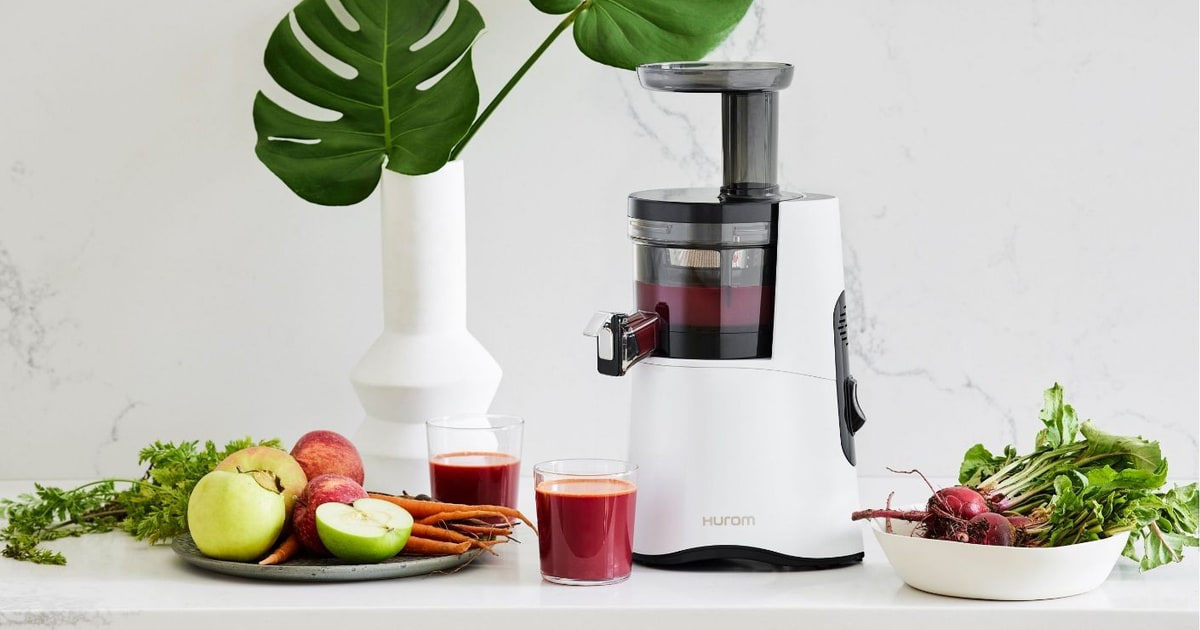
A cold press juicer crushes produce slowly instead of shredding it at high speed. That means less foam, less heat, and juice that holds its color and flavor longer in the fridge. But the thing that decides whether you keep using one isn't the auger. It's the fifteen minutes around the juicing — quartering apples so they fit a narrow chute, then rinsing a mesh strainer before the pulp dries into cement. A good machine shrinks that fifteen minutes to five. A bad one ends up in a cabinet.
Here's the honest part. None of these machines is genuinely low-effort. Every one has a fine mesh strainer that traps pulp, and every one needs a rinse the moment you're done or you'll be scrubbing later. Slow juicers also take longer per glass than a centrifugal machine, and most of them struggle a little with very soft, very ripe fruit. Wide chutes cut your prep but add bulk to the machine. You're choosing which compromise you can live with, not escaping them.
So start with the friction that already stops you. If it's noise at six in the morning, buy for quiet. If it's the pile of chopping, buy for chute width. If you want the thing to earn its counter space, buy for attachments. Every juicer here presses slowly, so the nutritional gap between them is small next to the gap between juicing and not juicing. We think that the Hurom H-AA is the best cold press juicer for most people, and that the Omega Cold Press Juicer Machine is the one to buy if you want one machine that also makes nut butter, sorbet and pasta.
Everything we recommend
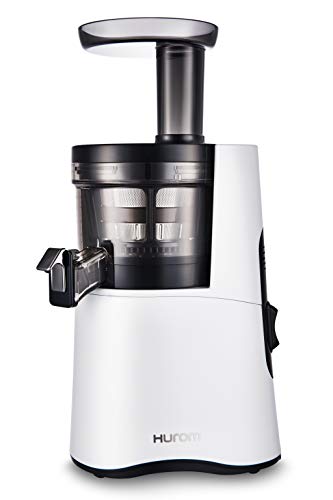
Quiet and quick to clean, if you don't mind chopping first
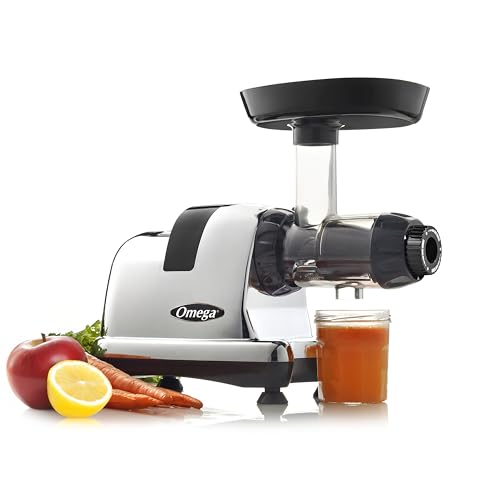
More jobs and a longer warranty, at the cost of counter length

Two feed chutes and barely any chopping, for near-daily juicing

Load a whole recipe, walk away, come back to juice
At a glance
| Product | Wattage | Weight | Price | |
|---|---|---|---|---|
| Hurom H-AA Slow JuicerTop pick | 150 Watts | 10.8 lbs | $399 |
| Omega Cold Press Juicer MachineRunner-up | 200 Watts | 14.08 lbs | $199.87 |
| Nama J2 Cold Press JuicerAlso great | 200 Watts | 12.1 lbs | $599 |
 | Breville the Juice Fountain Cold Centrifugal JuicerAlso in lineup | — | 11.1 lbs | $129.95On sale |
| Kuvings Whole Slow Juicer REVO830 Cold PressUpgrade pick | — | 18 lbs | $699.99 |
How we picked
Auger speed. We compared published rpm figures across every machine, because slow crushing is the whole point of the category. Anything at or below 80 rpm stayed in; the fast-spinning centrifugal design got treated as a different kind of product.
Cleanup effort. We counted juice-contact parts on each spec sheet and read what reviewers and owners said about the strainer screen specifically. A machine with a mesh basket that needs five minutes of brushing loses to one that rinses in two.
Chute width and prep. We looked at feed opening dimensions to estimate how much chopping each machine forces on you. Anything at 3 inches or wider gets credit for taking whole or halved fruit.
Noise. We compared manufacturer decibel figures against reviewer descriptions to sort quiet machines from loud ones. Under 60 decibels is the threshold that makes a juicer usable while someone else is still asleep.
Warranty and support. We compared stated motor warranty terms and how easy replacement parts are to find. A long term signals a manufacturer that expects the machine to last, which matters on an appliance you buy once a decade.
Top pick
Quiet and quick to clean, if you don't mind chopping first
Hurom H-AA Slow Juicer
This is the one to buy if juicing has to fit inside a normal morning. It's quiet enough not to wake anyone, the juice pathway breaks down into a handful of parts that rinse fast, and the machine takes up about as much counter as a tall water bottle.
$399fromAmazonIt's the quietest machine in this guide, and that matters more than you'd think. The 150-watt motor runs around 40 to 45 decibels according to Hurom's own figures and the reviews we read — roughly the level of a quiet conversation. A centrifugal juicer is closer to 75. If you juice at six in the morning in an apartment, or with a toddler asleep down the hall, that gap is the difference between a daily habit and a machine you stop reaching for.
Cleanup is the real reason people stick with it. Hurom built the H-AA around a two-part strainer basket that rinses under the tap in a couple of minutes, usually without much brush work. That's quick for a masticating juicer, where a fine mesh screen is normally the worst chore in the kitchen. Reviewers who've spent time with older Hurom machines flag the simpler basket as the biggest improvement. Rinse right after you pour and the pulp never dries on.
Slow squeezing gives you juice you can make ahead. Hurom rates juice from the H-AA as good for up to 72 hours, because the low-speed auger presses rather than shreds and pulls in far less air. Published reviews consistently note less foam on top and deeper color out of kale and spinach. A control lever plus fine and coarse strainers let you dial the pulp up or down, so you aren't stuck with one texture.
It's small, solid, and does a little more than juice. At about 10.8 pounds and under nine inches wide, it fits beside the coffee maker instead of displacing it. The auger and strainer are made from Ultem, which Hurom says is eight times stronger than the plastics normally used here. You can also run frozen fruit through the chamber for a soft-serve-style dessert, and it handles nuts and soybeans if you want to make your own milk or tofu.
Flaws but not dealbreakers
You'll do knife work every time. The chute is narrow, so apples get quartered, cucumbers get halved lengthwise and celery gets cut into stubs. Budget an extra five minutes per session compared with a wide-mouth machine. If prep is the thing that already keeps you from juicing, that's a real problem — and the Nama J2 below exists specifically to solve it.
It's not a batch machine. The chamber holds about 500 ml, so filling a family-size pitcher means stopping to pour, and the pulp bin fills fast on fibrous vegetables like celery and beet greens. It's also among the more expensive juicers here for something that only juices, while the Omega grinds coffee and extrudes pasta for less.
Hurom covers the H-AA's motor with a 10-year warranty.
Runner-up
More jobs and a longer warranty, at the cost of counter length
Omega Cold Press Juicer Machine
Buy this one if you want the juicer to justify its footprint by doing other work. It presses at 80 rpm, then swaps nozzles to turn out almond butter, sorbet, baby food and fresh pasta, and Omega stands behind the motor for fifteen years.
$199.87fromAmazonOne machine covers half a dozen jobs. Swap the nozzle and the Omega grinds nuts into butter, extrudes pasta, minces herbs and garlic, grinds coffee and spices, whips up soy milk and makes frozen desserts. If you currently own a juicer and a food processor and a nut milk setup, this replaces most of that. For a small kitchen, consolidating three appliances into one is worth more than a few extra milliliters of yield.
It's a proper slow juicer, not a compromise. The auger turns at 80 rpm — faster than the Hurom but still nowhere near the ten thousand-plus rpm of a centrifugal machine, so you keep the low-heat, low-foam advantage. Omega uses a triple-stage masticating design that crushes and then presses the pulp again. An adjustable end cap gives you three pressure settings, so you can tune it for watery cucumber or dense carrot.
The horizontal design is the one to want for greens. Vertical augers sometimes can't grab fine, stringy produce well enough to compress it. Published comparisons have long favored horizontal single-auger machines like this one for wheatgrass, spinach, kale and herbs, and the original research behind this guide put the Omega ahead of the vertical models on wheatgrass specifically. If green juice is most of what you drink, start here.
Automatic pulp ejection keeps a long session going. Pulp pushes out the end cap continuously instead of collecting in a basket you have to stop and empty. Combined with the extra-large feed tray, that makes batch juicing far less annoying than it is on machines with a fixed pulp bin. Omega also gives the motor a gear reduction it rates as equivalent to 2 horsepower, so hard beets and carrots don't bog it down.
Flaws but not dealbreakers
It eats counter length. At nearly 20 inches long and just over 14 pounds, this is a horizontal machine that wants a dedicated stretch of counter. Vertical juicers like the Hurom go up instead of out. Measure before you buy, and be realistic about whether you'll haul 14 pounds out of a low cabinet every morning.
There are more parts, and more chopping. Multi-function means multiple screens, nozzles and an end cap to assemble, rinse and keep track of. The feed tray is also narrow, so you're back to cutting produce into small pieces. Soft fruit is its weakest category — expect a wetter pulp and slightly less juice from ripe berries and peaches than a vertical auger would give you.
Omega backs the motor with a 15-year warranty, the longest term in this guide.
Upgrade pick
Two feed chutes and barely any chopping, for near-daily juicing
Kuvings Whole Slow Juicer REVO830 Cold Press
The REVO830 has two chutes — an extra-wide 88 mm one that swallows whole apples and a narrow 48 mm one for celery and greens — plus an auto-cutting auger that chops as it presses. It's the biggest machine here, and it's built for people who juice most days.
$699.99fromAmazonTwo chutes fix a problem single-chute juicers can't. Hard produce and leafy greens want different treatment: the pressure that wrings out a carrot tends to over-compress spinach and leave juice in the leaf. The REVO830 gives each its own channel, and the two streams combine on the way out. You can feed apples and kale at the same time instead of alternating handfuls and hoping the auger sorts it out.
Whole fruit goes straight in. The 88 mm chute takes whole apples, carrots, celery stalks and beets, and a bladeless auto-cutting screw chops them on the way down. That does two things: it kills most of your prep, and it reduces the clogging that happens when you force oversized produce into a slow auger. For anyone who quit juicing over the chopping, this is the same relief the Nama offers, with more control over what goes where.
Yield is the headline claim. Kuvings says the REVO auger geometry pulls up to 20 percent more juice than its previous generation, and published reviews of the machine single out how dry the ejected pulp is — the practical sign that little is left behind. At 60 rpm it stays firmly in slow-juicer territory, so you're not trading oxidation for output. Over a lot of produce, a yield edge like that adds up.
It does dessert and nut milk too. The included smoothie and sorbet attachments let you push frozen fruit through for a thick, spoonable result, and the machine handles nut milk with the standard strainer. The wide juice outlet is easier to rinse than a narrow spout, and Kuvings covers the machine with a 15-year assurance, which is the kind of term you only offer on a motor you expect to outlive the kitchen.
Flaws but not dealbreakers
It's big and it's heavy. Nineteen inches tall and 18 pounds means it probably won't clear an upper cabinet, and you won't be stowing it between uses. This machine lives on the counter permanently or it doesn't get used. Check your clearance with a tape measure before you commit.
It's overkill unless you juice constantly. This is the most expensive machine here, and if you juice twice a week the yield advantage never pays you back. The fine-mesh sorbet and smoothie strainers also want careful hand-washing rather than a rough scrub, which is one more small chore in a category that already has plenty.
Kuvings includes a 15-year assurance on the REVO830.
Also great
Load a whole recipe, walk away, come back to juice
Nama J2 Cold Press Juicer
The J2's hopper holds an entire recipe at once and feeds itself, so you're not standing over the machine pushing produce down a chute. If the reason you stopped juicing is that it demanded ten uninterrupted minutes of your attention, this is the fix.
$599fromAmazonThe self-feeding hopper changes the whole routine. You load your produce, close the lid and go do something else — pack a lunch, make coffee, get someone's shoes on. The J2 takes it from there. Every other juicer here asks you to stand and feed it piece by piece, and that stretch of undivided attention is exactly what people cite when they explain why the juicer stopped coming out of the cabinet.
It's still a genuine slow juicer. The 200-watt motor turns the auger at 50 rpm, well inside cold press territory, so you get the low-foam, slow-oxidation juice the category is known for. Nama designs the auger for minimal waste, and the machine handles leafy greens along with the usual apples and carrots. Quiet operation is part of the pitch, which suits early mornings.
Cleanup was clearly designed in, not bolted on. Quick-release parts come apart without wrestling, a cleaning brush is included for the strainer, and reassembly is straightforward enough that you won't dread it on day three. That matters more on this machine than most, because the wide hopper means you're likely running bigger batches and dealing with more pulp per session.
It's the right shape for batch prep. Because you can load a full recipe and the pulp keeps moving, you can work through several pounds of produce without babysitting the chute. If you make a few days of juice at once on a Sunday, that's a fundamentally different experience from feeding a narrow chute one cucumber spear at a time. Nama backs the machine with a 15-year warranty.
Flaws but not dealbreakers
Hands-free isn't the same as trouble-free. Published feedback points to very soft produce — grapes, overripe berries, ripe peaches — bogging the auger down or turning to mush in the hopper instead of feeding cleanly. The fix is to mix soft fruit with something firm like apple or cucumber, but it does mean you can't load absolutely anything and walk away.
It's tall, and parts are harder to come by. Nearly 18 inches of height rules out most under-cabinet spots. Nama is also a smaller brand than Omega or Breville, so replacement strainers and spare parts aren't as easy to find on short notice. Plan on ordering direct and waiting.
Nama backs the J2 with a 15-year warranty.
Who this is for
This guide is for people who want fresh juice at home often enough to justify a dedicated machine — a few times a week or more. Cold press juicers reward that kind of use. They give you denser, less foamy juice that keeps for a day or two in a sealed glass jar, which makes weekend batch prep realistic. If you drink juice once a month, none of this is worth your money or your counter space. Buy fruit and a knife.
We stuck to countertop juicers you'd use in a home kitchen. That means no commercial hydraulic presses, no citrus-only reamers, and no blenders, which pulverize fruit rather than separating juice from pulp. We also didn't weigh nutrition claims very heavily. Slow juicers do retain more heat-sensitive vitamins than fast ones, but the difference between any of these machines is small next to the difference between juicing regularly and not juicing at all. Pick the one whose daily routine you'll actually tolerate.
How we picked
We sorted these by the things that determine whether a juicer stays on the counter. Auger speed: every pick presses at 80 rpm or below, so you get low-foam juice that doesn't turn brown by lunch. Cleanup effort: we counted juice-contact parts and read closely on how the strainer screen behaves, because a screen you have to scrub is how juicing habits die. Chute width: a 3-inch or wider opening takes whole or halved produce and saves you real knife time. Noise: under 60 decibels means you can juice while the house sleeps. Warranty and support: long motor terms and available spare parts are what make a machine a ten-year purchase instead of a three-year one.
The competition
This is what our research surfaced, not a survey of every juicer on the market. New models arrive constantly, and plenty of solid machines from smaller brands never reach a comparison round-up. The one below didn't make the picks, but it's worth understanding why — it may still be the right call for you.
The Breville the Juice Fountain Cold Centrifugal Juicer ($129.95) — The Breville Juice Fountain Cold isn't actually a cold press juicer, despite the name. It's a centrifugal machine that spins produce against a micro-mesh filter, and Breville's cold spin marketing refers to limiting heat transfer, not to slow crushing. That distinction shows up in the glass: more foam, faster browning, and juice you should drink within hours rather than days. It also won't do much with wheatgrass or fine greens. What it does offer is speed, a 3-inch chute, a 70-ounce jug, variable speed control and smooth rounded parts that rinse easily. This particular listing is a certified remanufactured unit with a six-month Breville warranty, which is short next to the decade-plus terms above. If you want to find out whether juicing sticks before spending real money on a masticating machine, it's a reasonable place to start.
Care and maintenance
Rinse everything the moment you finish pouring. That's the single habit that separates a two-minute cleanup from a ten-minute one, because carrot and beet pulp sets like glue as it dries. Pull the strainer out first and run water through it from the outside in, which pushes the fine pulp back out of the mesh instead of driving it deeper. Use the included brush on the screen once a week even if it looks clean. If citrus or beets stain the plastic, a soak in warm water with a little baking soda usually lifts it. Check the silicone spout plug and any gaskets every few months and reseat them properly after washing, since a misaligned gasket is the most common cause of a juicer that suddenly leaks.
Questions we get
What's the difference between a cold press juicer and a regular one?
A cold press juicer, also called masticating or slow, crushes produce against a screen at roughly 43 to 80 rpm. A regular centrifugal juicer shreds it with a blade spinning at ten thousand rpm or more, which whips in air and generates friction heat. The slow method gives you less foam, more juice per pound and a drink that holds up in the fridge. The fast method gives you a glass in under a minute and usually a wider chute.
How long does cold press juice keep in the fridge?
Roughly 24 to 72 hours in a sealed glass container, and Hurom rates juice from the H-AA at the top of that range. Fill the jar to the brim so there's almost no air above the juice, and use glass rather than plastic. Juice from a centrifugal machine is a different story — drink that within a few hours, because it starts separating and browning quickly.
Which juicer is best for leafy greens and wheatgrass?
The Omega. Its horizontal single auger grips stringy, fine-leafed produce better than a vertical auger does, and published comparisons have favored that layout for wheatgrass for years. The Kuvings REVO830 is the other strong option here, because its narrow second chute presses greens at a pressure that suits them rather than crushing them alongside carrots. If green juice is most of what you drink, either beats a standard vertical machine.
Is a cold press juicer worth it if I only juice once a week?
It can be, if you keep it for years and care about juice quality. These machines are built to last a decade or more under light use, so the per-use cost falls as long as you don't abandon it. The Omega makes the strongest case for occasional juicers because it also handles nut butter, pasta and baby food, so it earns its counter space between juicing days. If you're genuinely unsure, start with something cheap and inconvenient and upgrade once the habit sticks.
Which is easiest to clean?
Among the true slow juicers, the Hurom H-AA. Its two-part strainer basket rinses under the tap in about two minutes and usually doesn't need the brush. The Nama J2 is close behind thanks to quick-release parts, though bigger batches mean more pulp to deal with. The Breville is the least work of all in raw effort terms, since its parts go straight into a dishwasher — but it isn't a cold press machine.
Does a wide feed chute make worse juice?
No. Chute width and juice quality are separate things. What matters is how fast the auger turns and how gently it presses, and the wide-chute machines here still run at slow speeds — 50 rpm for the Nama, 60 for the Kuvings. A wide chute just saves you chopping. The real trade-off is size: wide-mouth machines are bulkier and taller than narrow-chute vertical juicers.
Why you should trust us
For this guide:
- We read the full specifications for all five machines and compared auger speed, motor wattage, chute dimensions, footprint and stated warranty terms side by side.
- We reviewed published evaluations from kitchen-testing outlets along with recurring themes in owner feedback about cleanup time, clogging on soft fruit and long-term motor reliability.
- We treated marketing language such as cold spin and slow squeeze as claims to check against the underlying rpm figures rather than as evidence on their own.
- We read owner reviews on every listing, weighted toward the critical ones, because that is where the recurring failures show up.
- We have a systematic way of automatically fetching the latest prices, so the numbers on this page stay current.
- This is a research-focused guide, so the team may not own every product listed — though we often do own the top winners, which gives us extra context for the recommendations.
- We don't accept free products, and the retailer commission never changes which product we recommend.
Sources
Best Juicers of 2026 — Wirecutter, Wirecutter / New York Times
Best Cold Press Juicers, Tested by Food Network Kitchen, Food Network
Best Juicers 2026 — Good Housekeeping Lab Tested, Good Housekeeping
Best Juicers 2026 — Tom's Guide, Tom's Guide
Cold Press vs. Centrifugal Juicers: Nutrient Retention Study — Journal of Food Science, Journal of Food Science / IFT
Best Masticating Juicers, Tested — Serious Eats, Serious Eats
Best Juicers — Consumer Reports Ratings & Reviews, Consumer Reports
Omega NC900HDC Juicer Review — America's Test Kitchen, America's Test Kitchen
Amazon product listings and owner reviews for all 5 products
Manufacturer specification pages for each product
Some passages in this guide may be paraphrased with AI help. Prices are refreshed automatically.
More like this.
Continue exploring appliances reviews and recommendations.

The Best Cold-Weather Dog Coats
Cold hits some dogs much harder than others. A husky can nap in the snow. A whippet starts shivering on a 40-degree sidewalk, and a 12-year-old terrier…

The Best Cold Plunge Tubs
Cold plunging is simple in theory and annoying in practice. You want water somewhere in the 50s, you want it there when you finally have ten free minutes,…

The Best Cold Therapy Knee Wraps
A knee that's just been operated on, twisted on a trail run, or flared up after a long day swells fast. Cold slows that down. But how you deliver the cold…

The Best Cold and Flu Home Care Kits
A cold never schedules itself. It shows up on a Sunday night, and by Monday you're deciding whether you can get through a call without sounding like…

The Best Cold Water Surfing Wetsuits
Cold water finds every gap. A suit that feels fine in September can turn a February session into ten shivering minutes and a long walk back to the car.…

The Best Cold Air Intakes
A cold air intake is usually the first thing people bolt onto a truck or a commuter car, and it's easy to see why. It trades the factory airbox for a…