The Best Books for Learning Python and Machine Learning
Learning to code and learning machine learning are two different projects, and most people end up doing both at once. You want something you can follow at the kitchen table on a weeknight, with code you can actually run. A good book here does one thing well: it keeps you moving. It gives you a project by chapter three, explains the idea before the syntax, and doesn't assume you remember linear algebra from college. That's rarer than it sounds.
Here's the honest problem. No book in this category stays current, because the libraries move faster than print runs do. Code samples drift, function arguments get renamed, and you'll spend some evenings chasing a deprecation warning instead of learning anything. Print quality is uneven too — owners of several of these titles report crooked page trims and spines that won't stay open next to a laptop. And no book replaces the part where you go build something ugly of your own.
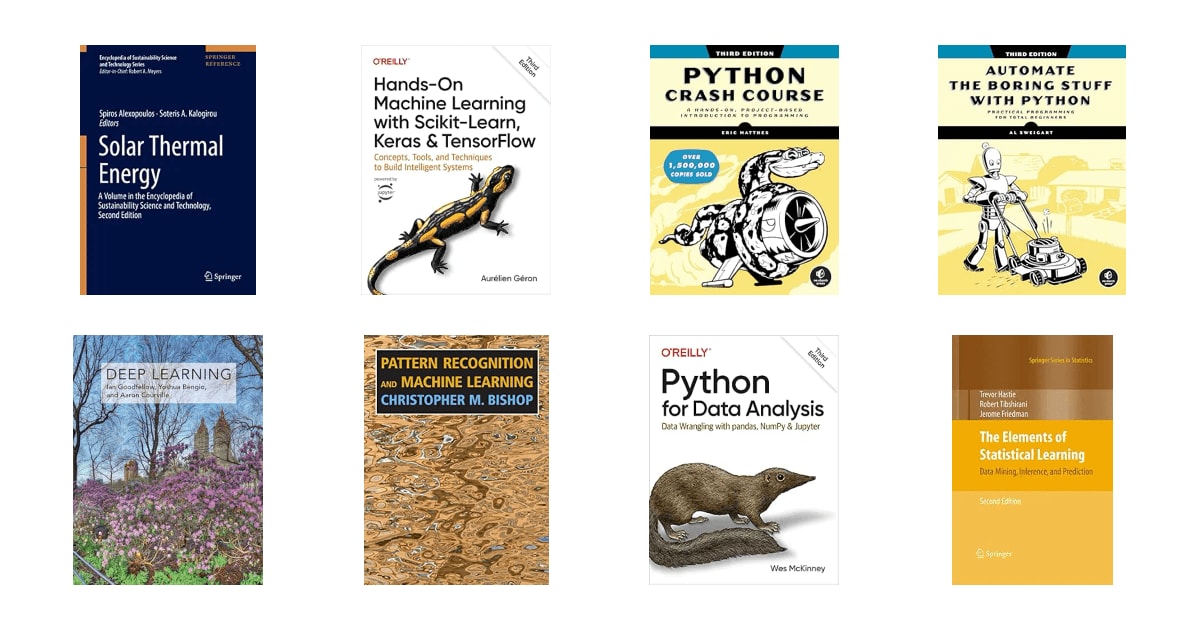
So pick for where you are, not where you'd like to be in a year. If you already write Python comfortably, a beginner book will bore you into quitting. If you don't, a theory text will bury you by chapter two. Match the book to the next three months of your actual life and you'll finish it. We think that Géron's Scikit-Learn, Keras, and TensorFlow guide is the best book for most people, and that Python Crash Course is the one to buy if you've never written a line of code.
Everything we recommend

The whole path, from a first model to deep learning

Slower and friendlier, if you've never written code before
For chores you want gone, not a career change
At a glance
| Product | Page Count | Edition | Price | |
|---|---|---|---|---|
| Python Crash CourseRunner-up | 552 pages | 3rd | $27.53On sale |
| Hands-On Machine Learning with Scikit-LearnTop pick | 861 pages | 3rd | $49.50On sale |
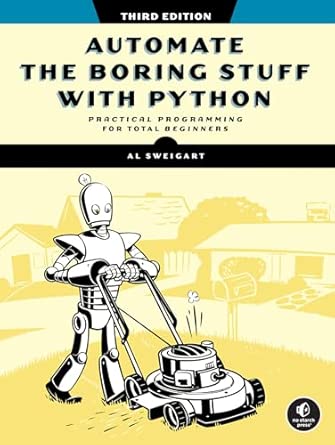
| Automate the Boring Stuff with PythonAlso great | 672 pages | 3rd | $29.30On sale |
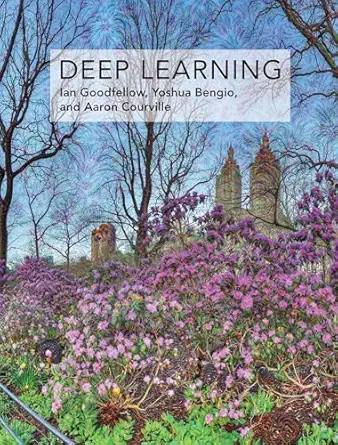 | Deep LearningAlso consider | 800 pages | — | $51.51On sale |
 | Pattern Recognition and Machine LearningAlso in lineup | 738 pages | — | $54.98On sale |
 | Python for Data Analysis: Data Wrangling withAlso consider | 579 pages | 3rd | $43.99On sale |
 | The Elements of Statistical Learning: Data MiningAlso in lineup | — | 2nd | $76.92On sale |
 | Solar Thermal EnergyAlso in lineup | 530 pages | 1st ed. 2022 | $223.42On sale |
How we picked
Where it starts you. We read publisher descriptions and reader accounts to work out what each book genuinely assumes on page one. Anything that quietly needed calculus got flagged rather than handed to beginners.
Code you can run. Published reviews and owner feedback told us which titles ship maintained example notebooks and which leave you patching deprecated calls by hand. Working code was a hard requirement for the practical picks.
Shelf life. Libraries move faster than books do, so we favored titles whose core explanations stay true even after a function signature changes. We noted where owners report syntax that no longer matches current releases.
Print quality. Owner feedback about binding, page trim and color printing counted, because these are books you'll hold open next to a keyboard for months. Recurring complaints separated otherwise-equal titles.
Math required. We compared tables of contents and reader accounts to sort these by how much linear algebra and probability they really need. Being honest about that helps more than being gentle.
Top pickOn sale
The whole path, from a first model to deep learning
Hands-On Machine Learning with Scikit-Learn
This is the rare book that takes you from a first linear regression all the way to transformers without losing you along the way. It explains each algorithm in plain language, shows the math you need and none you don't, then hands you working scikit-learn and Keras code.
$49.50fromAmazonList priceNo other single book covers this much ground this well. Aurélien Géron starts with the boring-but-essential parts — framing a problem, cleaning data, holding out a test set — then walks through classical models, ensembles, neural networks, computer vision, natural language work with transformers, and reinforcement learning. Owners who came to it from other software jobs consistently say this is the book that finally made machine learning click.
The structure is why it works. Each topic gets the intuition first, usually with a diagram, then a from-scratch implementation so you can see the moving parts, then the production library call you'd actually write at work. You come away understanding gradient descent and knowing which scikit-learn class to reach for. Most books manage one or the other.
The projects are worth building, not just reading. Housing prices, image classification, machine translation — they're end-to-end exercises you can clean up and show someone. The example notebooks live in a maintained public repo, which matters more than it sounds. When a library changes underneath you, the repo has usually caught up before your printed copy has.
There's a practical argument too. This has become the default recommendation in machine learning communities, so whatever you get stuck on, someone has already asked about it and someone else has answered. That support network is a real feature when you're studying alone after the kids go to bed.
Flaws but not dealbreakers
It's long — around 860 pages — and the breadth costs something. Plenty of topics get one solid chapter where a specialist would want an entire book. If you want rigorous derivations, you won't find many here. The pace also assumes you're already comfortable in Python and remember roughly what a derivative is.
The physical book draws real complaints. Owners report misaligned page trims and spines that don't lie flat, which is genuinely annoying for a book you'll keep open beside a keyboard for months. A few also find the color printing inconsistent between copies. The content isn't in question; the manufacturing is.
Runner-upOn sale
Slower and friendlier, if you've never written code before
Python Crash Course
Eric Matthes teaches Python from absolute zero, then spends the back half of the book building three real projects: an arcade game, a set of data visualizations, and a small web app. It's the gentlest on-ramp here, and it doesn't strand you at the end.
$27.53fromAmazonList priceMost beginner programming books fail in the same place. They explain syntax for two hundred pages and never show you what any of it is for. This one splits cleanly in half. The first part covers variables, loops, functions and classes at a brisk but patient pace. The second part puts all of it to work on projects big enough to feel like something.
The tone is the reason it works. Matthes writes like someone sitting beside you who has seen every mistake before. He anticipates the confusion, names it, and moves on without making you feel slow. Readers who'd bounced off coding several times before say this is the one that finally stuck — an odd thing to say about a technical book, and it comes up again and again.
The exercises matter more than the prose does. You read four pages, then you write ten lines. That rhythm keeps you out of the passive-reading trap, where everything makes sense on the page and none of it comes back out of your fingers a week later.
It's also a decent second book. If you picked up Python from videos and have gaps you can't quite name, working the first half quickly will surface them fast. The chapter on classes in particular fills a hole a lot of self-taught programmers carry around for years.
Flaws but not dealbreakers
If you already program in another language, the first half will crawl. You can skim it, but you're carrying pages you don't need, and the book doesn't go deep on Pythonic idioms or the more advanced features you'd actually want next. There's nothing here about data analysis or machine learning either.
Readers regularly get stuck in the later project chapters, where files start moving between folders and the book doesn't always spell out where a new one belongs. The web app section feels compressed next to the careful treatment everything else gets. Save some patience for the last third.
Also greatOn sale
For chores you want gone, not a career change
Automate the Boring Stuff with Python
Al Sweigart teaches Python through tasks you've actually suffered through: renaming hundreds of files, pulling tables out of PDFs, filling in spreadsheets you'd rather not open. You'll write something useful in your first week, which is the best motivation there is.
$29.30fromAmazonList priceThis is the book for people who don't want to become programmers. If your job involves a spreadsheet you dread every Monday, the payoff arrives fast. Sweigart covers Excel and Google Sheets, web scraping, email, PDFs and file organization, and every chapter ends with something you can point at your own mess. That's a different promise from everything else here.
It assumes nothing at all. No prior code, no math, no computer science vocabulary. The writing is conversational to a fault, which is exactly right for the audience — people who've been told at some point that programming isn't for them. The newer edition adds material on input validation and automating Google Sheets.
It pairs with a beginner book rather than replacing one. Read Python Crash Course for the structure, then use this one to find things in your own week worth automating. Owners who did both say the combination is what got them past tutorials and into writing code nobody assigned them.
Flaws but not dealbreakers
The trade-off for all that practicality is depth. Algorithms, data structures and code style get very little attention, and some examples favor the simplest thing that works over what you'd want in code other people have to read. If you're headed for a software engineering job, treat this as a starting point.
A few of the scraping and form-filling examples can put you crosswise with a site's terms of service if you aim them at the wrong target. Readers also warn about tutorial hell here — it's easy to keep turning chapters and never write anything of your own.
Who this is for
This guide is for people teaching themselves — evenings, weekends, no cohort, no deadline. If you've never written code, start with the runner-up and give it a couple of months before you touch anything with machine learning on the cover. If you already write Python at work and want to move into modeling, go straight to the top pick. And if you just want your computer to stop eating your Tuesdays, the also-great pick is the entire answer.
We're covering books that teach you to build things, plus the reference texts you'll eventually want on the shelf. We're not covering certification prep, framework manuals, or anything about prompting large language models. If you want a graduate-level statistics course, two of the books in the competition section will serve you well — they're just not where anyone should begin.
How we picked
Starting point: we looked for books that name their prerequisites honestly, so you don't end up with something that assumes a semester of calculus you never took. Runnable code: published reviews and owner feedback showed which titles come with maintained notebooks and which leave you fixing broken examples on your own. Shelf life: we favored books whose core ideas outlast a library release, and noted where readers report syntax that has drifted. Print quality: complaints about binding, trim and color printing counted, since you'll keep these open for months. Math load: we sorted the lineup by how much linear algebra and probability each title actually demands, so nobody buys a wall they can't climb.
Other books for learning python and machine learning worth considering
If you want to get genuinely good at messy data: The Python for Data Analysis: Data Wrangling with ($43.99) — Wes McKinney created pandas, and it shows. This reads less like a library reference and more like an argument for how to think about reshaping data, from basic Series operations up through time series work and performance tuning. If your day is spreadsheets and SQL and you want to move to Python, it'll earn its place quickly. It assumes real Python fluency, though, and it barely touches plotting or modeling. Owners also report errata and code that drifts as new pandas releases land. Read it after a beginner book, not instead of one.
If you want the theory under the frameworks: The Deep Learning ($51.51) — Goodfellow, Bengio and Courville wrote the book graduate courses assign and papers cite. It builds from linear algebra and probability up through feedforward networks, generative models and deep reinforcement learning, with careful notation and real insight into why architectures behave the way they do. There's no code at all, and you need comfortable calculus and probability to get past the opening chapters. Readers split hard on it — some call it definitive, others find it dry and unevenly written. Treat it as a reference to grow into, not a first machine learning book.
The competition
This is what the research surfaced, not a survey of every Python or machine learning book in print. Both of these are excellent. They're just not where a self-teacher should start, and buying one too early is the most common way people stall out.
The The Elements of Statistical Learning: Data Mining ($76.92) — The Elements of Statistical Learning is the encyclopedic reference for classical statistical machine learning, written by the Stanford statisticians who developed a good deal of it. The breadth is remarkable — linear methods, trees, ensembles, unsupervised learning — and the figures do a lot of quiet work explaining hard ideas. But readers with graduate degrees in other fields report struggling with the derivations, and the notation puts people off before the math does. Deep learning gets little room. Grow into it after a year of practical work, and read it in sections rather than front to back.
The Pattern Recognition and Machine Learning ($54.98) — Bishop's Pattern Recognition and Machine Learning is the best treatment of the field from a Bayesian angle, and the people who love it really love it. The exposition of graphical models, kernel methods, Gaussian processes and variational inference is unusually clear for material this hard. Two things keep it out of the picks. It needs a strong math background, and it predates the deep learning wave, so there's nothing here on the architectures driving current work. If you're heading toward research, it still belongs on your shelf.
How to actually finish one
Buy one book, not four. The usual failure here isn't picking wrong, it's owning a shelf of half-read titles. Type the code instead of copying it from the repo, because the typos are where the learning happens. Set your environment up once, in a virtual environment, and expect an evening of pain before anything runs cleanly. When an example breaks because a library moved on, check the book's public issue tracker before you assume you did something wrong. Do one exercise per sitting, then change something about it — a different dataset, a different parameter — so you're writing rather than transcribing. And don't read further ahead than what you've actually built.
Questions we get
Do I need to read these in order?
If you're new to programming, roughly yes. Start with Python Crash Course, add Automate the Boring Stuff for practical wins, then move to our top pick. Experienced programmers can skip straight to the Géron book or Python for Data Analysis depending on what they want to do. The theory books make far more sense after you've built something.
How long does this take?
Budget two to three months for a beginner Python book if you do the exercises, and three to four for the Géron machine learning guide. Theory texts like Deep Learning can take half a year of steady reading. You don't need to finish one before starting the next, though — overlapping practical work with theory usually goes better than doing them in sequence.
Which of these are essential?
Two, really. One Python book that fits your level, plus our top pick. That combination covers a complete practical education. Python for Data Analysis is the strongest third choice if you'll be working with real datasets, and the theory books are optional unless you're heading into research.
Can I learn machine learning without much math?
Yes, up to a point. Our top pick explains the ideas intuitively and gets you building models without formal derivations. Automate the Boring Stuff needs no math at all. Past a certain level, though, you'll want linear algebra, calculus and statistics — so build that gradually alongside the practical work rather than trying to front-load it.
Print or ebook?
Print suits the beginner books and the theory references, where you'll flip between sections and annotate margins. Ebooks work better for the Géron guide and Python for Data Analysis, since you'll want to search and you'll be pulling code from the repo anyway. Given the binding complaints on a couple of these, a digital copy also sidesteps a real annoyance.
Are older editions worth it?
For the Python books, no — get the current editions, because language and library changes actually matter. The Géron guide's newer edition adds substantial material on transformers that you'd miss otherwise. Theory books are different: the mathematics doesn't go stale, so an older printing of Deep Learning or Elements of Statistical Learning is perfectly usable.
Why you should trust us
For this guide:
- We read publisher descriptions, tables of contents and published reviews for every book in this lineup, then compared them against what owners report about pacing, prerequisites and print quality.
- We leaned on recurring themes in reader feedback — where people got stuck, which chapters they reread, which copies arrived poorly bound — rather than on any single opinion.
- We read owner reviews on every listing, weighted toward the critical ones, because that is where the recurring failures show up.
- We have a systematic way of automatically fetching the latest prices, so the numbers on this page stay current.
- This is a research-focused guide, so the team may not own every product listed — though we often do own the top winners, which gives us extra context for the recommendations.
- We don't accept free products, and the retailer commission never changes which product we recommend.
Sources
Amazon product listings and owner reviews for all 8 products
Manufacturer specification pages for each product
Some passages in this guide may be paraphrased with AI help. Prices are refreshed automatically.
More like this.
Continue exploring lifestyle reviews and recommendations.

The Best Toddler Learning Companions and Interactive Books
A toddler's day is mostly repetition. The same song, the same page, the same animal noise, forty times. That's not a bug - it's how small kids learn, and…

The Best Language Learning Workbooks
A language workbook has to survive your actual week, not your idealized one. That means it needs to work in twenty-minute chunks on a couch, with a pen,…

The Best Graphite Pickleball Paddles
Pickleball is mostly a soft game. You dink, you reset, and you wait for the one ball you can actually attack. The face material on your paddle decides how…

The Best Ski Touring Bindings
A touring binding is the one piece of gear you interact with every few minutes on a backcountry day. You step in at the trailhead, flip a heel lifter…

The Best Cookbooks for Kids and Beginner Cooks
A kids' cookbook has one job: get a child cooking something they're proud of, without you hovering over every step. The good ones explain why you fold…

The Best Blackout Silk Sleep Masks
A sleep mask has one job, and most of them do it about halfway. You put it on, close your eyes, and then a thin wedge of streetlight or a partner's phone…