The Best Lithium Jump Starter Power Banks
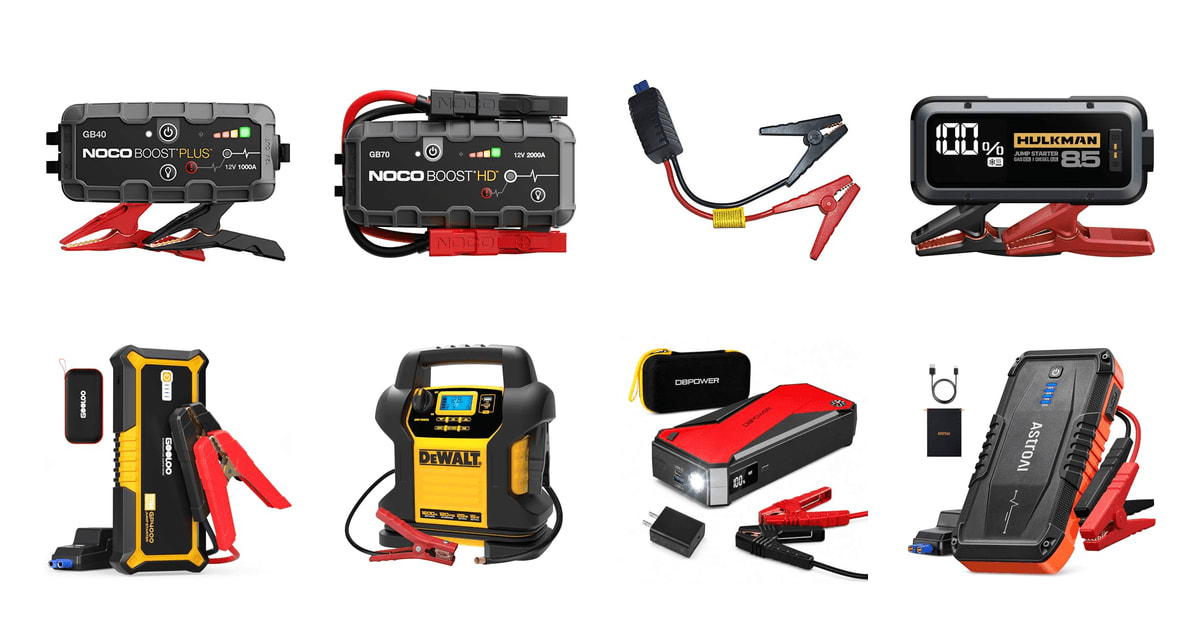
A dead battery almost never happens at a convenient moment. It happens in a parking garage at 11 p.m., or on the first genuinely cold morning of the year, or after a car sat untouched for three weeks. A lithium jump starter fixes that without a second car, a stranger's goodwill, or a set of cables you don't know how to use. Most weigh a couple of pounds, fit in a glove box, and charge your phone while you wait. You'll use it once a year, maybe less. That's the point.
Here's the part the packaging won't tell you: the enormous amp number on the front is close to meaningless. Peak amps describe a momentary surge, not the sustained cranking current that actually turns an engine over. Published testing has found budget units delivering roughly 60 percent of their rated cranking amps at freezing, versus 90 percent or better from premium packs. Every lithium cell also loses 30 to 40 percent of its output below about 14°F. So a unit advertising 4000 amps and one advertising 1000 can land closer together than you'd guess.
We looked at what the reviews, the spec sheets and owner reports agree on, and the answer is boringly consistent: buy for your engine size, then buy for safety hardware. Nearly everything else is packaging. We think that the NOCO Boost GB40 is the best lithium jump starter for most people, and that the NOCO Boost GB70 is the one to buy if you drive a truck, a big V8, or a diesel.
Everything we recommend
The one to leave in the glove box and forget about

Twice the power, for trucks and diesels that need it

Big-engine coverage without the big-engine price

Pre-heating cells for starts where other packs quit
At a glance
| Product | Peak Amps | Weight | Price | |
|---|---|---|---|---|
| NOCO Boost GB40 12V 1000A UltraSafe PortableTop pick | 1000A | 2.4 lbs | $92.57 |
| NOCO Boost GB70: 2000A UltraSafe Jump StarterUpgrade pick | 2000A | 5 lbs | $189.95 |
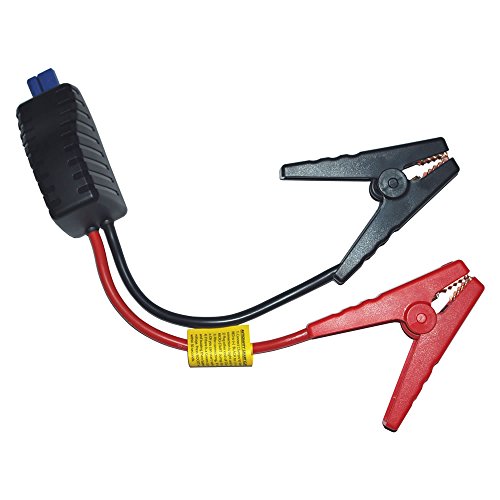 | Antigravity Batteries MICRO-START Replacment SMART CLAMPSAlso in lineup | — | — | $26.99 |
| Hulkman Alpha85SAlso great | 2000A | 3.67 lbs | $299.99On sale |
 | GOOLOO GP4000 Jump Starter - 4000A 12VAlso consider | 4000A | 3.94 lbs | $79.96On sale |
 | DEWALT DXAEJ14 1600 Amp Jump Starter withAlso consider | 1600A | 17.3 lbs | $169 |
| DBPOWER Peak 3000A 18000mAh Portable Car JumpBudget pick | 3000A | 1.1 lbs | $49.99On sale |
 | AstroAI S8 Car Battery Jump Starter 1500AAlso consider | 1500A | — | $58.47 |
How we picked
Real starting power. We treated peak amps as marketing and looked instead at rated engine displacement, cell capacity and starts per charge. Published testing indicating budget units deliver around 60 percent of rated cranking amps at freezing shaped how much we discounted every headline number.
Connection safety. We gave clear preference to hardware-enforced reverse-polarity blocking over electronic-only protection circuits, since a wrong connection can damage a vehicle's ECU. Spark-proof clamp behavior was a requirement, not a bonus.
Cold-weather behavior. Lithium cells lose 30 to 40 percent of output below 14°F, so we noted which units address that actively and which need a cabin warm-up. Published evaluation puts the practical floor for diesel coverage at roughly 1600 peak amps, and we treated that as the minimum.
Shelf life. A jump starter that's flat when you need it has failed. We weighed documented storage results and owner reports of units holding charge across months or years of glove-box life, plus how often each brand's cells need topping up.
Size and extras. We favored packs that actually fit a glove box, since a unit stored at home is useless on the road. USB output, lights and compressors counted only where owner feedback suggested people genuinely use them.
Top pick
The one to leave in the glove box and forget about
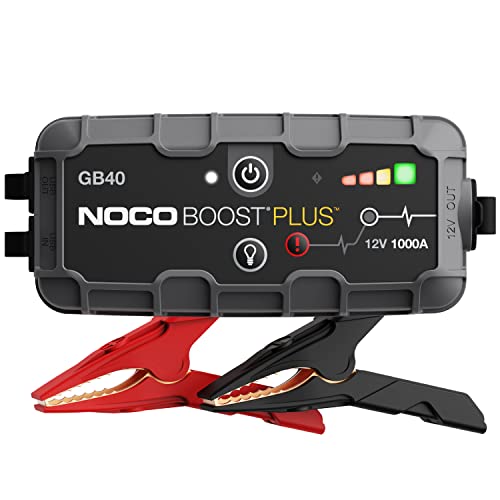
NOCO Boost GB40 12V 1000A UltraSafe Portable
The GB40 delivers 1000 peak amps for engines up to 6.0L gas and 3.0L diesel, which covers nearly every car and small SUV on the road. Its spark-proof clamps block current until you've connected correctly, and it holds a charge for months without babysitting.
$92.57fromAmazonThe safety hardware is what you're actually paying for. NOCO's UltraSafe clamps don't just warn you about a reverse-polarity connection — they physically refuse to pass current until the positive and ground connections check out. Most competitors handle this with electronic protection circuits instead. Those work, usually. But a wrong connection on a modern car can cook an ECU, and hardware that won't let you make the mistake beats software that catches it.
It's small. Roughly the size of a hardcover book at about 2.5 pounds, it lies flat in a glove box and stays there. That matters more than it sounds like it should, because a jump starter living in your basement helps nobody at 6 a.m. in a cold driveway. Published long-term evaluation found the GB40 still had usable charge after nine straight months of glove-box storage with no maintenance recharging.
The rated numbers are modest and honest. Up to 20 starts per charge, a three-hour full recharge, and an engine ceiling of 6.0L gas. Owners describe starting V6 sedans and Jeeps that had been sitting for months, often on the first try and often with the pack well short of full. That gap between the rating and the real-world margin is the useful signal here — the GB40 doesn't seem to need everything it has.
You also get a 100-lumen LED with seven modes including SOS and strobe, an IP65-rated housing with rubber over-molding, and USB power-bank output for a phone. None of that is why you'd buy it. But when you're kneeling next to a bumper in the dark and it's raining, all three earn their place.
Flaws but not dealbreakers
The engine ceiling is real. At 6.0L gas and 3.0L diesel, the GB40 is out of its depth on a full-size pickup or any diesel truck, and you should step up to the GB70 rather than hope. There's also no screen — you read a strip of LEDs, which tells you roughly how much charge is left and nothing else.
The most common owner complaint isn't about starting power at all. It's the flashlight. There's no lockout, so the light can get bumped on in a bag or a glove box and quietly drain the pack over weeks. The nine-month shelf life assumes nothing switched itself on. Check the charge level a couple of times a year and this stops being a problem.
Upgrade pick
Twice the power, for trucks and diesels that need it
NOCO Boost GB70: 2000A UltraSafe Jump Starter
The GB70 doubles the GB40's output to 2000 peak amps and extends coverage to 8.0L gas and 6.0L diesel, which is essentially every consumer vehicle sold here. It's bigger and heavier, so it lives in a truck cab or cargo area rather than a glove box.
$189.95fromAmazonIf you drive a diesel, this is the floor, not the luxury option. Published evaluation puts the practical minimum for reliably starting a diesel below freezing at around 1600 peak amps. The GB70's 2000 gives you real margin above that, on a category where margin is the whole product. A pack that starts your truck in October and shrugs in January isn't a jump starter, it's a paperweight.
The clamp system is identical to the GB40's — same patented spark-proof, reverse-polarity hardware blocking. That consistency matters when you're wearing heavy winter gloves and can't feel what you're doing. You get the same foolproof connection behavior, just with enough current behind it for an 8.0L engine.
Capacity scales too. NOCO rates it for up to 40 starts per charge, double the GB40, and the 400-lumen light is four times brighter. Professional techs and people running multiple vehicles are the natural buyers here — owners in that group describe it as the pack they stop thinking about, jumping cars, farm equipment and coworkers' vehicles over years without a recharge routine.
It's also just built heavier. Five pounds, IP65 housing, thick over-molding. It feels less like a gadget than the compact packs do, which is roughly the right instinct for something that lives in a truck bed toolbox and gets handled with dirty gloves.
Flaws but not dealbreakers
It's the most expensive NOCO here and the size shows it. At five pounds with a taller body, glove-box storage is off the table in most vehicles — plan on a cab, cargo area or trunk. Recharging also stretches to six hours versus three for the GB40, so a mid-trip top-up isn't quick.
Below about -10°C, expect the same 30-to-40-percent output drop every lithium pack takes. Bringing it into the cabin for three to five minutes before you connect recovers most of that. And if you'd rather the pack handled the cold for you, that's what the Hulkman does.
One theme in owner feedback worth knowing: the battery isn't user-replaceable and NOCO doesn't sell replacements, so when the cells eventually fade, you're buying a new unit.
Budget pickOn sale
Big-engine coverage without the big-engine price
DBPOWER Peak 3000A 18000mAh Portable Car Jump
The DBPOWER Peak 3000A covers up to 8.0L gas and 6.0L diesel, claims up to 30 starts per charge, and still fits a glove box at just over a pound. You trade NOCO's hardware-enforced clamp safety for electronic protection circuits.
$49.99fromAmazonList priceNothing else here gives you this much engine coverage for this little money. On paper the DBPOWER matches the GB70's 8.0L gas and 6.0L diesel ratings from an 18000mAh pack that weighs about a pound. Discount the peak figure the way you should discount all of them, and what's left is still a lot of headroom for a budget unit — enough that a V8 owner on a tight budget has a real option.
It's genuinely tiny. At roughly seven inches long and an inch and a half thick, it slides into a glove box more easily than the GB40 does, which is unusual for something rated this high. If you want big-engine capability without giving up trunk space, this is the shape that does it.
There's an LCD screen showing remaining charge — more information than the GB40's LED strip gives you — plus an LED light, a compass, and a smart USB port for phones and tablets. The protection stack covers over-current, short circuit, overload, over-voltage and overcharge.
The longevity reports are the most persuasive thing about it. Owners describe units still working after five, six, even eight years of glove-box storage with a charge once or twice a year. For a product whose entire job is to work on a day you didn't plan for, that track record counts for more than a headline amp rating.
Flaws but not dealbreakers
The clamps rely on electronic protection rather than the hardware-enforced polarity blocking NOCO uses. That's a meaningful step down, not a rounding error — follow the connection sequence carefully and don't improvise. Red to positive first, black to bare metal on the engine block or frame, never the negative terminal.
Budget lithium cells also tend to self-discharge faster than premium ones, so plan on topping it up every few months rather than trusting a nine-month interval. And the 3000A number is a momentary surge; real cold-cranking output sits well below it, which is exactly why the 8.0L rating deserves a mental discount in genuine winter.
Also greatOn sale
Pre-heating cells for starts where other packs quit
Hulkman Alpha85S
The Hulkman Alpha85S warms its own cells before delivering current, which is rated to keep it working down to -40°F. A 3.3-inch display shows voltage, charge and error codes instead of making you interpret a row of LEDs.
$299.99fromAmazonList priceThis is the only pack here that does something about the cold instead of just surviving it. Every lithium jump starter loses a big chunk of output below 14°F. The Alpha85S's Pre-Heat sequence brings the cells up to a working temperature before it passes current, no cabin warm-up step, no waiting in the driver's seat with a jump pack under your coat. If you park outdoors in Minnesota or Alberta, that's not a gimmick.
The screen is the other real difference. Three and a third inches, showing charge percentage, operational state and error codes in a three-step flow. Compared with reading a strip of indicator lights and guessing, it removes a category of roadside uncertainty — you can tell whether the pack is the problem or the car is.
It recharges fast. Hulkman rates 0 to 80 percent in an hour and a full charge in 90 minutes on 65W, with five minutes of charging enough for a single jump. Against the GB70's six hours, that's a different relationship with the device: you can use it as an everyday power bank and still trust it to start a car.
Coverage runs to 8.5L gas and 6.0L diesel with up to 60 starts from a 74Wh cell, and the outputs include 15V DC for tire pumps and car fridges alongside USB-A QC3.0 and USB-C PD.
Flaws but not dealbreakers
It's the most expensive unit in this guide by a wide margin, and if you live somewhere warm you'll never touch the feature you paid for. In Phoenix or Miami, the GB40 does the same fundamental job with less to go wrong.
More electronics means more potential failure points. Owner feedback on this model is still thin, and among the reports that exist, at least one buyer found cold-weather behavior fell short of the marketing while another received the unit without its charging adapter. If you're buying it specifically for extreme cold, verify the box contents and test it once before you rely on it in January.
At 3.67 pounds and nine inches long, it isn't a glove-box pack for most cars.
Who this is for
Buy one if you own a car that sits for stretches, if you drive an older vehicle, if you park outdoors in a cold climate, or if you'd rather not depend on a stranger with cables in a dark lot. It's also a sensible gift for a new driver — it turns a stressful, negotiation-heavy roadside problem into a two-minute solo task. If your car is new, garage-kept, driven daily and under warranty with roadside assistance, you can skip this and be fine.
This guide covers portable lithium jump packs for 12V passenger vehicles, light trucks and powersports engines. It doesn't cover lead-acid booster boxes, plug-in trickle chargers, or full battery maintainers, and it isn't a substitute for replacing a battery that's genuinely dying. If you're jumping the same car every week, the jump starter is treating a symptom — get the battery and charging system tested.
How we picked
We compared spec sheets, published reviews and owner feedback against a handful of things that actually predict whether a pack works on a cold morning. Real starting power: we discounted peak-amp claims and looked at rated engine displacement, capacity and starts per charge, since budget units have been measured delivering only about 60 percent of rated cranking amps at freezing. Connection safety: hardware that physically blocks a reverse-polarity connection beats an electronic circuit that catches one, because the failure mode is a damaged ECU. Cold-weather behavior: every lithium cell loses 30 to 40 percent of output below 14°F, so we noted which packs manage that themselves and which need a warm-up step, and we treated roughly 1600 peak amps as the working floor for diesels. Shelf life: a pack that's dead in the glove box has failed at its only job, so documented storage results and long-term owner reports carried real weight. Size and extras: we favored units that fit where you'll actually keep them, and counted lights, USB ports and compressors only where owners use them.
Other lithium jump starter power banks worth considering
If you want a tire inflator in the same box: The DEWALT DXAEJ14 1600 Amp Jump Starter with ($169) — The DEWALT DXAEJ14 pairs a 1600-amp jump starter with a 120 PSI air compressor that has AUTOSTOP pressure control, so it fills a tire and stops on its own instead of over-inflating it. That's one tool covering the two most common roadside problems, and owners who bought it mostly talk about the compressor — topping up tires without dragging a cord out to the driveway. You give up a lot in return: it weighs 17 pounds and is roughly the size of a small toolbox, so it lives in a garage or a truck bed, not a glove box. It also has less peak output than the GB70 for more money. Worth noting that the AC charging cube needs your own extension cord, and some buyers have been caught out by that.
If you want maximum headroom for the money: The GOOLOO GP4000 Jump Starter - 4000A 12V ($79.96) — The GOOLOO GP4000 claims 4000 peak amps, all gas engines and diesels up to 10.0L, and up to 60 starts per charge — the broadest coverage here. A dedicated BOOST button forces a restart on a battery too flat to register at all, which is the exact scenario where cheaper packs give up. Owners report it working after two years of Florida and Texas trunk storage, and the smart chip is rated from -4°F to 140°F. The catch is the same one that applies to every big number in this category: 4000A is a surge, not sustained cranking current, and the clamps use SUPERSAFE electronic protection rather than NOCO's hardware blocking. Some owners have found it needs the BOOST button more often than they expected.
If you're equipping a second or third car cheaply: The AstroAI S8 Car Battery Jump Starter 1500A ($58.47) — The AstroAI S8 puts 1500 peak amps behind a 6.0L gas and 3.0L diesel rating, which covers any mainstream car, crossover or half-ton pickup. Its smart boost mode reads battery voltage and unlocks a manual override below 9V, so it'll attempt a fully drained battery that a stricter pack refuses to touch. Owners describe jumping cars left in storage for months, in Phoenix summer heat, on the first go. It's the least capable unit here on paper and there's no published shelf-life data behind it, so treat it as a backup rather than your only pack — and check its charge more often than you would a GB40. For a teenager's first car or a rarely driven third vehicle, that's a reasonable trade.
The competition
This is what our research turned up, not a census of the category. New jump starters appear constantly, many from brands that won't exist in two years, and a lot of them are the same reference design behind different logos. The units below are ones we looked at closely and didn't recommend as picks.
Storage and cold-weather use
Charge it fully before it goes in the car, then check it twice a year — more often with a budget pack, whose cells drain faster. Watch the flashlight: a light bumped on in a bag will empty a pack over a few weeks, and that's the most common reason these fail when you need them. In real cold, bring the unit into the cabin for three to five minutes before you connect anything, unless it pre-heats its own cells. Heat is the quieter enemy: a parked car can pass 140°F in summer sun, which permanently shortens cell life, so keep it out of direct sun or bring it inside during long parking stretches. When you jump, red clamp to the positive terminal first, black to bare metal on the engine block or frame — not the negative terminal. Wait 30 seconds between attempts.
Questions we get
What's the difference between peak amps and cranking amps?
Peak amps measure a momentary burst lasting a fraction of a second, and it's mostly a marketing number. Cranking amps and cold cranking amps measure sustained output over 30 seconds at a set temperature, which is what actually turns an engine over. Published testing found budget packs delivering around 60 percent of rated cranking amps at freezing, versus 90 percent or better from premium units. Most passenger cars need only 150 to 400 cranking amps to start.
How many amps do I need for a V8 or a diesel?
A V8 gas engine typically needs 200 to 400 cranking amps for a cold start, which nearly any pack here can supply. Diesels are the harder case — published evaluation puts the practical minimum at roughly 1600 peak amps to start reliably below freezing. The GB70 and the Hulkman Alpha85S both clear that with meaningful headroom. The GB40's 3.0L diesel ceiling rules it out for most diesel trucks.
Do these work in cold weather?
Yes, but with a caveat you should plan around. Lithium cells lose 30 to 40 percent of their output below 14°F, so a pack that's been in a trunk overnight in a cold snap won't deliver its rated performance. Bring it into the cabin for three to five minutes before connecting the clamps and you'll recover most of that. The Hulkman Alpha85S pre-heats its own cells and is rated to -40°F, which is the reason to buy it.
How long does one hold a charge in a glove box?
Good lithium cells self-discharge at roughly 1 percent a month, and published long-term evaluation found the GB40 still usable after nine months of untouched storage. Budget packs are less predictable — plan on a top-up every three or four months. In practice the bigger risk isn't self-discharge at all, it's the flashlight getting bumped on in storage. Check the charge level a couple of times a year regardless of which one you buy.
Can a jump starter damage my car's electronics?
A reverse-polarity connection or voltage spike can damage an ECU, which is why clamp design matters more than amp ratings. NOCO's UltraSafe system blocks current at the hardware level until the connections are confirmed correct. Budget units use electronic protection circuits instead — safer than bare jumper cables, but not equivalent. Connect red to the positive terminal first, then black to unpainted metal on the engine block or frame rather than the negative terminal.
Can one of these charge a laptop?
Only if it has a USB-C port delivering 45W or more of Power Delivery, and most packs here don't. The DEWALT's USB-C tops out at 25W and the Hulkman's at 18W — fine for phones and tablets, not enough for sustained laptop charging. Treat the power-bank function as a phone backup rather than a laptop solution. Check the current listing spec before you count on it either way.
Why you should trust us
For this guide:
- We read published evaluations from automotive outlets covering cold-start reliability, peak-versus-cranking-amp behavior and long-term shelf life, and compared their conclusions against each manufacturer's own spec sheet.
- We went through owner feedback for every listing here, looking for repeated failure modes — flashlight drain, cells fading after a few years, missing charging cables — rather than isolated complaints.
- We did not use, install or measure any of these units ourselves.
- We read owner reviews on every listing, weighted toward the critical ones, because that is where the recurring failures show up.
- We have a systematic way of automatically fetching the latest prices, so the numbers on this page stay current.
- This is a research-focused guide, so the team may not own every product listed — though we often do own the top winners, which gives us extra context for the recommendations.
- We don't accept free products, and the retailer commission never changes which product we recommend.
Sources
Amazon product listings and owner reviews for all 8 products
Manufacturer specification pages for each product
Some passages in this guide may be paraphrased with AI help. Prices are refreshed automatically.
More like this.
Continue exploring electronics reviews and recommendations.

The Best Travel Power Banks
A power bank earns its place in your bag on the day everything goes wrong. The gate agent announces a three-hour delay, every outlet along the wall is…

The Best Solar Power Banks and Portable Chargers
A charger you carry outside has one job: keep your phone alive when there's no outlet for days. That sounds simple until you're three nights into a trip…

The Best Car Battery Jump Starters
A dead battery almost never happens at a convenient time. It's the school run, the grocery-store parking lot at dusk, or a driveway on the first genuinely…

The Best Portable Jump Starters
A dead battery never picks a good moment. It's the grocery store parking lot with melting ice cream in the trunk, or a work morning when you're already…

The Best Heavy Duty Jumper Cables
A dead battery almost never picks a good moment. It's the grocery store lot at closing time, or your driveway on the coldest morning of the winter. Jumper…

The Best Noise-Cancelling Wireless Earbuds
Good noise cancelling changes how a commute feels. The train rumble drops away, an airplane's engine drone turns into a soft hush, and the open-plan…