The Best Snake Bite First Aid Kits
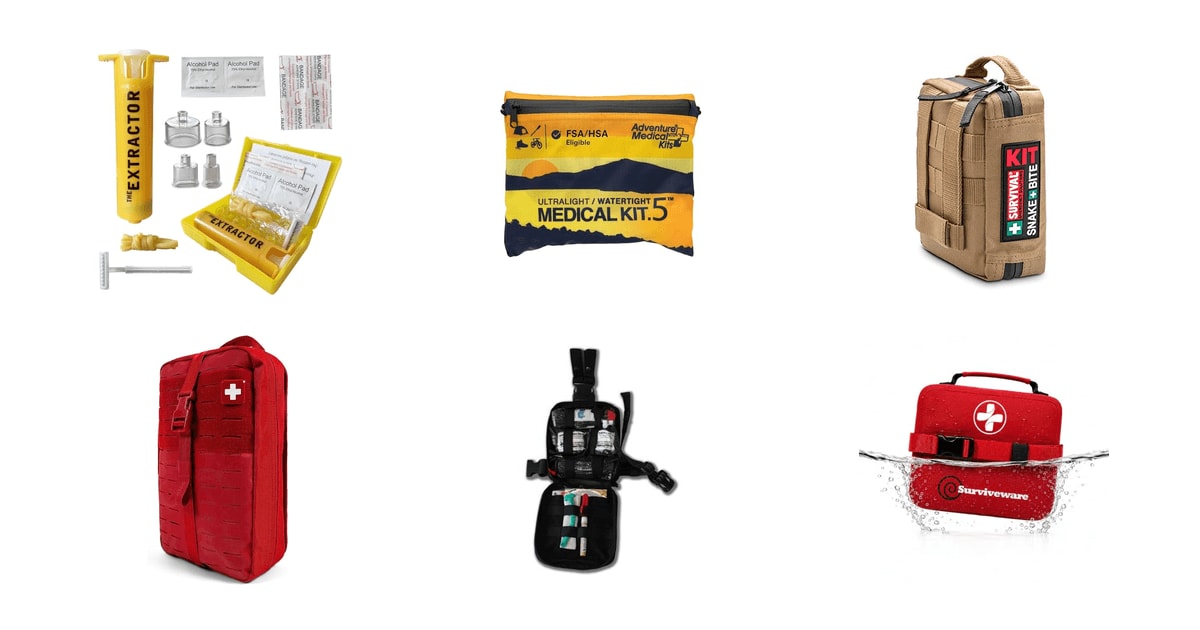
Snakes bite about 7,000 to 8,000 people in the US every year, according to the CDC, and fewer than 10 of those people die — almost entirely because antivenom is widely available in hospitals. That number tells you what a snakebite kit is actually for. It's not a cure. It's the pouch you open in the ten minutes between the strike and the moment you start walking or calling for help. What matters is that you can get a bandage on a limb one-handed, mark the swelling, and keep the person calm while someone dials 911.
Here's the honest part: no kit sold for snakebite does the thing most buyers think it does. Suction extractors don't pull venom out. A study in the Annals of Emergency Medicine found mechanical suction removed less than 1% of injected venom in swine, even applied within three minutes. The Wilderness Medical Society no longer recommends suction as first-line treatment for North American pit viper bites. The American College of Emergency Physicians is blunt about it — antivenom is the only evidence-based treatment. So we judged these kits on everything else they do.
That reframing changes what's worth buying. The best kit for a snakebite is usually a good general wilderness first aid kit with elastic wrap, a marker, and a readable guide — plus the discipline to head for a hospital. We think that the Adventure Medical Kits Ultralight/Watertight .5 is the best snake bite first aid kit for most people, and that the Surviveware Comprehensive Waterproof Premium Survival First Aid Kit is the one to buy if you're outfitting a family, a boat, or a vehicle rather than a daypack.
Everything we recommend

Light enough that you'll actually carry it, every hike

The one for a truck, a boat, or a family with kids
Trauma-grade organization, if you lead trips or go remote

A cheap extractor with a compact kit around it
At a glance
| Product | Weight | Waterproof Rating | Price | |
|---|---|---|---|---|
| Snake Bite KitBudget pick | 0.22 lbs | — | $14.74 |
| Adventure Medical Kits Ultralight/Watertight Medical Kit .5Top pick | 0.22 lbs | Water-resistant | $31.95 |
 | Survival Snake Bite Kits Emergency Survival BagAlso in lineup | — | — | $126.99 |
| My Medic MYFAK Large Standard - HSAUpgrade pick | — | — | $269.95 |
 | NAR COMBAT CASUALTY RESPONSE KIT - INDIVIDUALAlso consider | — | Sand & Water Resist | $244.99 |
| Surviveware Comprehensive Waterproof Premium Survival First AidAlso great | 2.25 lbs | IPX7 Waterproof | $79.99 |
How we picked
Current medical guidance. We weighted kits against Wilderness Medical Society and American College of Emergency Physicians positions, which no longer endorse suction as first-line pit viper treatment. Kits whose value rested entirely on an extractor pump lost ground.
Immobilization and marking. Pressure-immobilization delays elapid venom absorption by up to two hours per the Australian Resuscitation Council, and NOLS recommends marking swelling margins every 15 minutes. We looked for wide elastic wrap, a splint, and a marker.
Weight and packability. Roughly 70% of US bites hit hands and feet, per Backpacker Magazine, meaning most happen away from a vehicle. We favored kits light enough that owner feedback showed people actually carrying them.
Waterproofing and durability. Wet gauze isn't sterile gauze. We compared sealed inner bags and IPX-rated shells against owner reports of contents surviving rain, boats and river crossings.
Restocking and organization. We read spec sheets and owner feedback for labeled compartments, refill availability, and whether the layout stays findable when someone's panicking. A kit you can't navigate fast is a kit that failed.
Top pick
Light enough that you'll actually carry it, every hike
Adventure Medical Kits Ultralight/Watertight Medical Kit .5
This two-person kit weighs about 3.5 ounces and slips into a pack's side pocket. It won't extract venom — nothing does — but it gives you clean gauze, bandages, and a waterproof shell for the walk or wait that follows a bite.
$31.95fromAmazonThe kit you carry beats the kit you left in the truck. At roughly 3.5 ounces and the footprint of a paperback, this one disappears into a side pocket. That matters more than it sounds. Backpacker Magazine reports around 70% of US venomous snakebites land on hands or feet, which means you're usually far from your car when it happens. A kit that stays home is worth nothing.
The DryFlex inner bag is the quiet reason we like it. Gauze that's been sloshing in a wet pack for two days isn't sterile anymore, and you won't know until you open it. Owners who've stashed this in kayaks and rainy mountain trips consistently report the contents come out dry. The outer bag sheds water too, so the whole thing survives a river crossing or an afternoon of Texas thunderstorms.
You get bandages, gauze, antiseptic wipes, antibiotic ointment, alcohol swabs, insect sting relief, moleskin, a splinter picker and a safety pin. That's the honest inventory of a snakebite response for most people: clean the site, cover it loosely, don't cut, don't ice, don't tourniquet. REI's wilderness medicine advisors recommend keeping the bitten limb immobilized at or below heart level — you can do that with a shirt sleeve and this kit's supplies.
It's the most broadly useful pick here, and that's deliberate. The overwhelming majority of your hikes will involve a blister, a scraped shin, or a splinter — not a rattlesnake. This kit handles all of that well, which is why it earns its spot in your pack week after week. When the snake day finally comes, you're not fumbling with a kit you've never opened.
Flaws but not dealbreakers
There's no elastic wrap in here, and that's a real gap if you hike where coral snakes live — the Southeast, parts of Texas and Arizona. Pressure-immobilization bandaging is the standard of care for elapid bites, and the Australian Resuscitation Council credits it with delaying systemic venom absorption by up to two hours. You'll want to add a wide elastic bandage yourself. It's a few ounces and worth it.
It's also missing a permanent marker. NOLS Wilderness Medicine recommends marking the leading edge of swelling every 15 minutes, since progression beyond about 6 cm per hour signals systemic envenomation and an urgent evacuation. Toss a Sharpie in the bag. Several owners note the kit feels expensive for what's inside, and it's a fair complaint — you're paying for the weight savings and the waterproofing.
Two-person sizing means it runs thin fast. If you're guiding a group or camping with kids who find every sharp rock in the county, you'll burn through the bandages in a weekend.
Also great
The one for a truck, a boat, or a family with kids
Surviveware Comprehensive Waterproof Premium Survival First Aid
Surviveware's large waterproof kit is labeled by compartment, sealed to an IPX7 rating, and stocked deep enough to handle a group. At 2.25 pounds it's too heavy for a summit push, but it's the right kit for base camp.
$79.99fromAmazonLabeled compartments matter more than component count when you're scared. Somebody's been bitten, everyone's talking at once, and you're digging through a bag. Surviveware sorts supplies into marked sections so you're not dumping everything on the dirt to find gauze. Owners repeatedly single this out as the feature that separates it from the pile of unorganized kits they'd tried before.
The waterproofing is real, not marketing. Surviveware rates the kit IPX7 with watertight zippers, and owners who've deliberately left it out in storms or on boat decks report the contents stay dry. If you fish, paddle, or overland through creek crossings, this is the difference between usable gauze and a soggy brick.
At 2.25 pounds with MOLLE straps, it lives well on a headrest, an ATV rack, or a hunting pack. The North American Rescue Venom Response Kit's cold-storage rating is a reminder that gear left in a vehicle takes abuse; Surviveware's sealed shell handles the humidity side of that problem. It's the kit we'd put in the rig you drive to the trailhead.
For families, the depth of supplies is the point. Kids get bitten on hands and feet at the same rates adults do, and a bee sting on a five-year-old will drain a minimalist kit before a snake ever shows up. This one has enough to handle a scraped weekend and still have clean material left if something serious happens.
Flaws but not dealbreakers
It's a hair over two pounds, which is a lot to carry on a long day hike. Owners who've bought both the large and small versions consistently end up using the small one on trail and reserving this for the car or the boat. Plan on that split rather than fighting the weight.
The waterproof zipper is stiff. That's the trade-off for a watertight seal, but more than one owner has flagged it as annoying, and a stiff zipper is worse with adrenaline in your hands. Work it a few times before it lives in your gear so it loosens up.
Like every kit here, it doesn't include a snakebite-specific pressure bandage or a marker. You'll add those.
Upgrade pick
Trauma-grade organization, if you lead trips or go remote
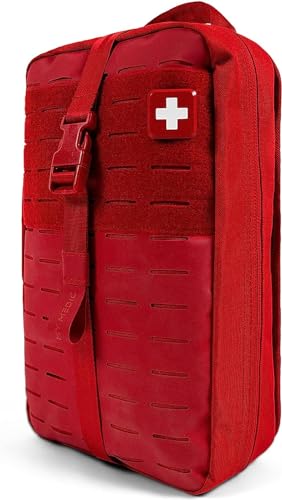
My Medic MYFAK Large Standard - HSA
The MyFAK Large packs 150 items into a folding, tear-away MOLLE panel with a splint, EMT shears, and gauze. It's built for people who might have to manage a real injury hours from a road, not just a bad blister.
$269.95fromAmazonIf you're the person others look to when something goes wrong, buy this one. Trip leaders, SAR volunteers, hunting party organizers — you need supplies for someone else's emergency, not just your own. The folding page layout opens flat so you can see everything at once. That's a meaningful advantage over rummaging through a zippered sack while someone's asking you what to do.
The included splint is the piece that connects to snakebite care specifically. Immobilizing a bitten limb is genuinely useful — it's the mechanism behind pressure-immobilization bandaging, and it's what REI's advisors recommend alongside keeping the limb at or below heart level. A rigid splint plus a wrap does more for a bite than any suction cup ever will.
You also get EMT shears, gloves, gauze, a space blanket, burn gel, a CPR shield and tape. That's a spread built for the worst day of a trip, not the average one. My Medic offers refill packs, which solves the problem every kit owner eventually hits — you use three things, forget to replace them, and discover the gap a year later.
Owners describe the build as unusually sturdy for the category, with a hidden shoulder strap and MOLLE panel that mounts to a car headrest or an ATV. My Medic backs the kit with a lifetime guarantee on the bag, and it's HSA and FSA eligible, which quietly takes some of the sting out of the price.
Flaws but not dealbreakers
At 14.5 by 9 by 4.75 inches, this isn't a backpacking kit. It's a base camp, vehicle, or basecamp-to-trailhead kit, and treating it otherwise will just leave it at home. If you want something for your daypack, buy the Adventure Medical kit instead and keep this in the truck.
There's no tourniquet included, which surprises people who expect trauma-level completeness — and several owners add one immediately. For snakebite specifically that's fine, since tourniquets are contraindicated for envenomation and can worsen tissue damage. But if you bought this for gunshot or chainsaw scenarios, budget for the add-on.
It's the most expensive kit here by a wide margin, and much of what you're paying for has nothing to do with snakes.
Budget pick
A cheap extractor with a compact kit around it
Snake Bite Kit
This pump kit bundles a suction extractor, four cups, alcohol pads, bandages and a case into something that costs very little and weighs about 3.5 ounces. Just understand that the suction part almost certainly won't remove meaningful venom.
$14.74fromAmazonWe're including this one with a caveat rather than an endorsement. The extractor pump is the thing most people picture when they hear "snake bite kit," and the research is clear that it doesn't do what the box implies — under 1% of injected venom removed in controlled swine work published in the Annals of Emergency Medicine. Buy it for the case, the alcohol pads, and the bandages, not the pump.
As a compact multipurpose pouch, though, it's genuinely handy. The suction cups work well on bee and wasp stings, and owners who live in yellowjacket country report real relief from using it that way. One owner has used a version of this design for two decades, mostly for stings and tick bites. That's a fair use for it. It's a bug kit that happens to say snake on the label.
The reverse-plunger design means you can operate it with one hand, which matters if your dominant hand is the bitten one — Outdoor Life's field testers rated one-handed operability as the deciding factor among extractors for exactly that reason. At roughly 3.5 ounces with a hard case, it rides in a hip belt pocket without complaint.
The kit includes a small tourniquet and a razor. Don't use either one for a snakebite. Cutting the wound and sucking is discredited and causes infection and nerve damage; tourniquets concentrate venom and cost people fingers and limbs. We'd pull both out of the case before it goes in your pack so nobody reaches for them under stress.
Flaws but not dealbreakers
Quality control is inconsistent. A meaningful slice of owners report the pump arrives with weak or nonexistent suction, and one caught the failure only because they were practicing with their kids — which is exactly the argument for testing yours the day it arrives rather than the day you need it.
The instruction manual is thin and generic, and it doesn't reflect current wilderness medicine guidance. You won't find pressure-immobilization technique, swelling-margin marking, or the pit-viper-versus-coral-snake distinction in there. Learn the protocol elsewhere.
Owners also describe the pump as bulky and awkward to seat properly on curved surfaces like an ankle or a knuckle — the two places snakes actually bite.
Who this is for
You should buy one of these if you hike, hunt, fish, climb or camp where venomous snakes live — the desert Southwest, the Southeast, Texas hill country, rural anywhere. That's a broad group, and it includes people who'll never see a snake. The kit earns its place handling blisters and cuts, and it happens to be the right bag to open on the rare bad day. If your outdoor time is on paved paths near a trailhead, you can skip the dedicated snakebite marketing entirely and carry a basic first aid kit.
This guide covers general and snakebite-labeled first aid kits sold for outdoor use. It doesn't cover antivenom, which is hospital-only, or prevention gear like snake gaiters and thick boots — and honestly, those prevent more injuries than any kit treats. It also doesn't fully solve for travel outside North America. The WHO estimates 5.4 million snakebites worldwide each year and up to 138,000 deaths, overwhelmingly in places where antivenom is scarce. If you're heading to Australia, Africa or rural Asia, you need elapid-specific pressure-immobilization training and a wide crepe bandage, not a suction cup.
How we picked
Current medical guidance: We weighed every kit against Wilderness Medical Society and ACEP positions, which no longer support suction extraction as primary pit viper care. Immobilization and marking: Wide elastic wrap, a splint and a permanent marker do more real work than any pump, given that pressure-immobilization can delay elapid venom absorption by up to two hours and swelling progression tells you when to evacuate. Weight and packability: With most bites landing on hands and feet far from a vehicle, we favored kits light enough to carry habitually. Waterproofing and durability: Sealed bags and rated shells, checked against owner reports from boats and storms. Restocking and organization: Labeled compartments and available refills, because a kit you can't navigate or replenish quietly stops being a kit.
Other snake bite first aid kits worth considering
If you want tactical-grade construction for a vehicle or a duty belt: The NAR COMBAT CASUALTY RESPONSE KIT - INDIVIDUAL ($244.99) — North American Rescue's individual combat casualty response kit is built to a different standard than anything else here — 500D Cordura with a sand-and-water-resistant self-repairing zipper, MOLLE attachment, and removable belt and leg straps. It's designed for trauma, not envenomation, so nothing in it is snake-specific. But if you're a SAR volunteer or you overland into places where the nearest road is a rumor, the pouch quality and mounting options are a real step up. You'll add a wide elastic wrap and a marker yourself, same as with every kit on this page.
The competition
These are the kits our research surfaced, not a census of everything sold. Snakebite is a category with a lot of near-identical white-label pouches, and we focused on the ones with enough published information or owner feedback to say something useful about.
The Survival Snake Bite Kits Emergency Survival Bag ($126.99) — This generic survival snakebite bag has almost no published information behind it — no listed contents, no weight, no dimensions we could verify. The little owner feedback that exists centers on the contents not matching what buyers expected to get. In a category where you need to know exactly what's in the bag before an emergency, an unspecified inventory is disqualifying. Skip it and buy something with a published parts list.
How to use a snake bite kit
Open your kit at home first and use it once. Most extractor failures happen because the owner had never worked the pump. If a bite happens, call 911 and start moving toward care — the CDC's low fatality numbers exist because of antivenom, not first aid. Get rings, watches and tight clothing off the limb immediately, before swelling starts. Keep the bitten limb still and at or below heart level, per REI's advisors; elevating it speeds venom into the lymphatics. Draw a line at the edge of the swelling with a marker and note the time, then re-mark every 15 minutes. NOLS flags progression over about 6 cm per hour as systemic envenomation. Don't cut, don't ice, don't apply a tourniquet, and don't drink alcohol. If you can photograph the snake from a safe distance, do it — species ID helps the ER choose antivenom.
Questions we get
Do snake bite kits actually work, and do doctors recommend them?
Suction extractors don't work as advertised. An Annals of Emergency Medicine study found mechanical suction removed less than 1% of injected venom in swine models, even within three minutes, and the Wilderness Medical Society reversed its earlier support for extractors as first-line pit viper treatment. What does help is a clean dressing, limb immobilization, swelling tracking, and fast transport. ACEP is direct about it: antivenom is the only evidence-based treatment for systemic envenomation.
Should I use a suction extractor or a pressure bandage?
It depends on the snake. For North American pit vipers — rattlesnakes, copperheads, cottonmouths — skip both the extractor and tight wrapping, and just immobilize the limb at or below heart level while you head for a hospital. For elapids like coral snakes, cobras and mambas, pressure-immobilization bandaging is the standard of care and buys up to two hours per the Australian Resuscitation Council. That difference is why a wide elastic wrap belongs in your kit and a suction cup doesn't.
Should I cut the bite and suck out the venom?
No. Cutting introduces infection, damages tendons and nerves, and removes essentially no venom. Several kits still ship with a razor or lancet — including the budget pick here — and our advice is to remove those pieces before the kit goes in your pack, so nobody reaches for them under pressure. Mouth suction is equally useless and adds oral bacteria to an open wound.
Can a snake bite kit save my life without antivenom?
Not by itself. What a kit does is manage the wound, keep the limb still, help you document swelling progression for the ER, and keep you organized while help comes. Most US snakebite deaths involve delays reaching care rather than bad field technique. Treat the kit as a bridge to the hospital, never a substitute for it.
What should I carry for a trip to Texas or Arizona?
Pit viper country calls for a light kit you'll carry every time, plus a permanent marker and a wide elastic bandage for limb immobilization. The Adventure Medical Kits Ultralight/Watertight .5 covers the base, and you add the marker and wrap. Also carry a charged phone and know where the nearest hospital with antivenom is before you start walking.
Do I need a different kit for Australia or Central America?
Yes, and more importantly you need different training. Those regions have elapids, where pressure-immobilization bandaging is the primary field intervention — that means a long, wide crepe or elastic bandage and the technique to apply it correctly over the whole limb. None of the kits here ship with a bandage long enough for that. Buy one separately and learn the wrap before you travel.
Why you should trust us
For this guide:
- We read current guidance from the Wilderness Medical Society, the American College of Emergency Physicians, the CDC, NOLS Wilderness Medicine and the Australian Resuscitation Council to establish what snakebite first aid should actually accomplish.
- We compared manufacturer specifications and published component lists for every kit here, including weights, dimensions, waterproofing ratings and inventory.
- We read owner feedback across these listings for recurring themes — pump failures, zipper stiffness, whether contents stayed dry, and which kits people ended up leaving behind.
- We read owner reviews on every listing, weighted toward the critical ones, because that is where the recurring failures show up.
- We have a systematic way of automatically fetching the latest prices, so the numbers on this page stay current.
- This is a research-focused guide, so the team may not own every product listed — though we often do own the top winners, which gives us extra context for the recommendations.
- We don't accept free products, and the retailer commission never changes which product we recommend.
Sources
Wilderness Medical Society Practice Guidelines for the Treatment of Pitviper Envenomations in the United States and Canada, Wilderness Medical Society
Snakebite – CDC First Aid Information, CDC
REI Expert Advice: Snake Bite Treatment, REI
NOLS Wilderness Medicine – Envenomation Chapter, NOLS Wilderness Medicine
Sawyer Extractor Pump – Manufacturer Product Page, Sawyer Products
Adventure Medical Kits Snakebite & Sting Kit – Product Specs, Adventure Medical Kits
Annals of Emergency Medicine: Efficacy of Mechanical Suction Devices for Snakebite, Annals of Emergency Medicine
Backpacker Magazine – Best Snakebite Kits for the Backcountry, Backpacker Magazine
Outdoor Life – Snake Safety Gear Guide 2025, Outdoor Life
American College of Emergency Physicians – Snakebite Statement, American College of Emergency Physicians
Australian Resuscitation Council – Pressure Immobilization Bandaging Guideline, Australian Resuscitation Council
North American Rescue – Venom Response Kit Specs, North American Rescue
Amazon product listings and owner reviews for all 6 products
Manufacturer specification pages for each product
Some passages in this guide may be paraphrased with AI help. Prices are refreshed automatically.
More like this.
Continue exploring lifestyle reviews and recommendations.

The Best Snake Repellents for Your Yard
If you've ever found a snake coiled under the deck stairs, you know the feeling. Most yard snakes are harmless, but in copperhead, rattlesnake and…

The Best Archery Release Aids for Compound Bows
A release aid is the only thing standing between your hand and the bowstring, and it shapes every arrow you shoot. Get the fit and the trigger feel right,…

The Best Rechargeable Heated Vests
A heated vest earns its keep in the hours when you stop moving. Waiting on a sideline, sitting in a hunting blind, standing on a job site while someone…

The Best Football Tailgate Coolers
A tailgate cooler has one job: keep everything cold from the moment you back into your spot until the fourth quarter. That sounds simple. But a stadium…

The Best Bird Feeders for Beginners
A bird feeder is one of the few purchases that pays you back within days. Hang one near a shrub in a suburban yard and you'll often see your first…

The Best Electric Fence Chargers for Livestock
A fence charger has one job: make the wire unpleasant enough that your animals quit testing it. Get that right and you'll barely think about the fence…