The Best Bird Feeders for Beginners
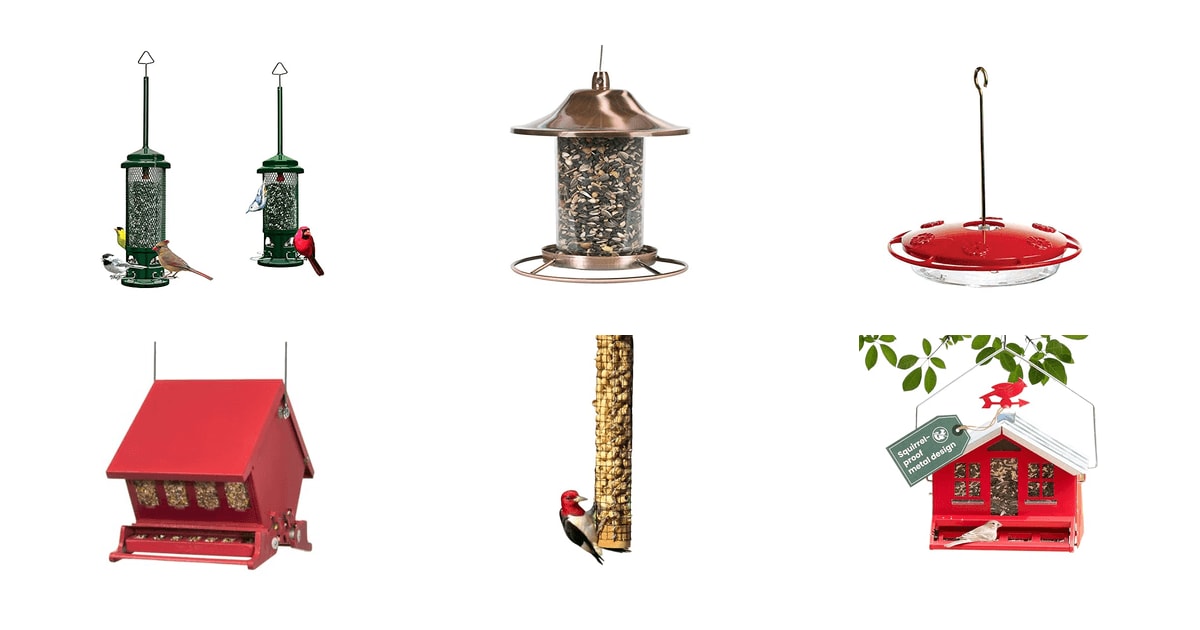
A bird feeder is one of the few purchases that pays you back within days. Hang one near a shrub in a suburban yard and you'll often see your first chickadee or cardinal within a day or two, according to the National Audubon Society. Roughly 59 million Americans feed wild birds, and it's the second most popular outdoor activity in the country after gardening. The appeal is simple. You fill a container with seed, and wildlife shows up outside your kitchen window on its own schedule.
Here's the part nobody mentions at the garden center: every feeder is a chore. You have to clean it every week or two with a diluted bleach solution, because dirty feeders spread salmonella and avian conjunctivitis that kill songbirds. Squirrels will find it. Seed gets wet and clumps. And no feeder attracts every bird — a tube of sunflower seed won't bring in woodpeckers, and a suet cage won't interest a goldfinch. Feeders are a small, ongoing commitment, not a one-time purchase.
We looked at manufacturer specs, published reviews from Cornell Lab and Wirecutter, and owner feedback across every feeder here, weighing how easy each one is to fill and scrub, how well it holds up outdoors, and how honestly it handles squirrels. We think that the Brome Squirrel Buster is the best bird feeder for most beginners, and that the Perky-Pet Panorama is the one to buy if you want a good-looking feeder that costs a fraction as much and you're willing to share some seed with the squirrels.
Everything we recommend

Squirrels genuinely can't get in, and cleanup is quick

A pretty, easy-to-fill feeder if you'll tolerate squirrels

Holds a week of seed and looks good doing it

The easiest hummingbird feeder to keep clean
At a glance
| Product | Seed Capacity | Squirrel Resistance | Price | |
|---|---|---|---|---|
| Brome Squirrel Buster Legacy & Standard Squirrel-ProofTop pick | 2.6 & 1.3 lb | Truly squirrel-proof | $126.15On sale |
| Perky-Pet 517282 Copper Panorama Bird Feeder 312CBudget pick | Up to 2 lb | Sure-Lock cap | $23.57On sale |
| Aspects ASP143 HummZinger Excel 16 oz HangingAlso great | 16 oz nectar | — | $34.99On sale |
 | Audubon "Mini" Absolute Squirrel Resistant Bird FeederAlso consider | 4 lb | Roof locks securely | $44.73 |
 | Backyard Birds Unlimited Cedar Whole in-Shell PeanutAlso consider | 0.5 lb peanuts | — | $29.95 |
| Perky-Pet Squirrel-Be-Gone II Country Style Bird FeederAlso great | 8 lb | Weight-activated perch | $45.99 |
 | Stokes Select Double Suet Feeder - 1Also in lineup | — | — | $18.78 |
How we picked
Beginner-proof cleaning. We looked for feeders that fully disassemble without tools, because Cornell Lab's Project FeederWatch recommends a bleach-solution scrub every one to two weeks. Anything with sealed crevices or a fixed base got marked down.
Honest squirrel resistance. We compared manufacturer mechanism specs against published reviews and owner reports, favoring weight-activated designs over cages. Wirecutter found that cage-style feeders sometimes exclude blue jays and red-bellied woodpeckers along with squirrels.
Refill frequency. We weighed seed capacity against how often a beginner realistically wants to walk outside with a bag of seed. Anything under two pounds needs refilling every few days in an active yard.
Weather and durability. We favored powder-coated metal, UV-stable polycarbonate and chew-proof parts over bare plastic and untreated wood, based on manufacturer material specs and multi-season owner feedback.
Birds it actually attracts. We prioritized feeders that work with black-oil sunflower or mixed seed, which Cornell Lab calls the best all-purpose choice for beginners because it draws more than 40 North American species.
Top pickOn sale
Squirrels genuinely can't get in, and cleanup is quick
Brome Squirrel Buster Legacy & Standard Squirrel-Proof
The Squirrel Buster's shroud slides down under a squirrel's weight and covers the seed ports — no motors, no batteries, nothing to break. It takes mixed seed or sunflower, comes apart in seconds for washing, and Brome will service it free for life.
$126.15fromAmazonList priceThis is the feeder that actually solves the squirrel problem. The mechanism is a spring and a metal shroud. When something heavy grabs the perch, the shroud drops and seals the ports. Brome's specs say the spring can be tuned to close between 30 and 130 grams — enough to lock out an Eastern Gray Squirrel at 400 to 600 grams while a cardinal at 45 grams or a blue jay at 90 grams still eats. Wirecutter's multi-year testing found the Squirrel Buster line consistently kept squirrels out without turning away songbirds.
Cage-style squirrel-proof feeders solve the same problem in a cruder way, and they cost you birds. Wirecutter noted that cages sometimes shut out blue jays and red-bellied woodpeckers along with the squirrels. The Squirrel Buster works by weight instead of by geometry, so a big native bird gets in and a rodent doesn't. If you want to see the full range of birds in your neighborhood, that distinction matters more than it sounds.
Cleaning is where most beginners quietly give up, and this feeder makes it easy. The tube separates into a handful of pieces with no tools, so you can get a brush into every part of it. That matters because Cornell Lab's Project FeederWatch recommends scrubbing feeders with a 10% bleach solution every one to two weeks, and immediately if you spot a sick bird. A feeder that's annoying to take apart is a feeder you'll clean twice and then stop cleaning.
Every part a squirrel can reach is chew-proof, which is why these last. Owners who've run them for months report the squirrels keep trying and keep failing. And Brome's lifetime care policy is unusual — they'll service the feeder free for as long as you own it, which softens the sting of buying the most expensive feeder here. Over a few seasons of not donating seed to rodents, it tends to pay for itself.
Flaws but not dealbreakers
It needs room. Brome specifies 18 inches of clearance on all sides, because a squirrel that can reach the feeder from a branch or a railing can sometimes lean in without putting weight on the perch. In a tight balcony or under a low deck overhang, you may not be able to hang it correctly, and a badly placed Squirrel Buster is just an expensive tube of seed.
The seed capacity is modest — 1.3 pounds on the Standard, 2.6 on the Legacy. In a busy yard you'll be refilling every couple of days, which is more often than a big hopper feeder. Some owners also find the metal perches a little short for larger birds.
Brome offers lifetime care and will service the feeder for free for as long as you own it.
Budget pickOn sale
A pretty, easy-to-fill feeder if you'll tolerate squirrels
Perky-Pet 517282 Copper Panorama Bird Feeder 312C
The Panorama's circular tray and 360-degree perch let birds feed from any angle, so more of them can eat at once than at a flat-sided tube. The wide-mouth opening makes filling and scrubbing simple, and the clear reservoir shows you the seed level from indoors.
$23.57fromAmazonList priceThe design is the whole argument here. Instead of a few ports on one face, the Panorama has a continuous circular tray with a perch ring around it, so birds land wherever there's space. Owners describe cardinals, chickadees, blue jays and finches feeding side by side. If your goal is watching a lot of activity rather than defeating a specific squirrel, this shape gets you there for a fraction of the Squirrel Buster's cost.
Filling and cleaning are genuinely easy, which matters more than beginners expect. The lid lifts off to expose a wide mouth, so you can pour seed in from a bag without a funnel and get a brush all the way down inside. The reservoir is clear shatter-resistant plastic, so you can see when it's low from your kitchen window instead of walking out to check. One owner has bought this same feeder repeatedly, largely because refilling is so painless.
The powder-coated finish resists rust, and the Sure-Lock cap keeps the lid clamped down so a squirrel can't just flip the top off and help itself. That's a real feature — a lot of budget hopper feeders lose their entire contents in one night to a squirrel that figures out the lid. Two pounds of seed is a reasonable capacity for a small yard, generally a few days between refills.
One honest note on the finish: the copper look is a coating, not solid copper, and at least one owner was disappointed to discover that. It doesn't affect how the feeder works. But if you're buying partly for the look, know that you're getting powder-coated steel with a copper-toned finish.
Flaws but not dealbreakers
The Sure-Lock cap protects the lid, not the seed. Squirrels can still climb the hanger and eat from the tray, and plenty of owners report exactly that. If your yard has an active squirrel population, plan on adding a baffle above the feeder or hanging it well away from anything a squirrel can jump from.
Birds don't always take to it immediately. A few owners report their local birds ignoring it for weeks, which usually comes down to placement rather than the feeder — Audubon notes that new feeders in quieter areas can take two to four weeks to attract visitors.
Also great
Holds a week of seed and looks good doing it
Perky-Pet Squirrel-Be-Gone II Country Style Bird Feeder
The Squirrel-Be-Gone II holds 8 pounds of seed in an all-metal country-style house, so you're refilling roughly once a week instead of every few days. Spring-loaded perches close the ports when something heavy lands, and you can adjust the tension.
$45.99fromAmazonCapacity is the reason to buy this one. Eight pounds of sunflower, mixed seed or safflower is four to six times what a starter tube holds. If you travel, or you just don't want a daily chore, that's the difference between a hobby and an obligation. The roof lifts off in one piece and the lid locks down, so filling takes about a minute and squirrels can't pry the top open.
The squirrel mechanism works like the Brome's but with a lighter touch. A weight-activated perch bar closes the feeding ports, and a lever on the side lets you dial in the sensitivity for the birds you actually want. Owners generally find it stops squirrels on the perch. All-metal powder-coated construction means a frustrated squirrel can't chew its way in either.
It's a good-looking object, and that counts for something on a deck you look at every day. The red house shape, galvanized roof and cardinal weathervane read as decor rather than hardware. There's also a pole mount built into the bottom, so you can put it on a shepherd's hook instead of hanging it — useful if you don't have a branch in a good spot.
The trade-off against our top pick is honesty about edge cases. This feeder stops squirrels that stand on the perch. It doesn't stop a determined squirrel that reaches the clear seed windows from above or from a nearby branch, and several owners report exactly that outcome. Hang it on a baffled pole, six feet up and well clear of jumping-off points, and it holds up.
Flaws but not dealbreakers
The seed windows are the weak spot. Owners who've mounted it against a house wall or close to a tree describe squirrels bypassing the perch entirely and working at the windows. This feeder needs proper placement more than the Squirrel Buster does.
It only feeds a few birds at a time despite its size — the perch bar is short relative to the hopper. And at over four pounds empty, plus eight pounds of seed, you need a sturdy hook or pole to hang it safely.
Also greatOn sale
The easiest hummingbird feeder to keep clean
Aspects ASP143 HummZinger Excel 16 oz Hanging
The HummZinger Excel is a shallow saucer rather than an upside-down bottle, so it doesn't drip and it comes apart into three pieces you can rinse in a minute. Six ports, a built-in ant moat, and red plastic that means you never need dye in your nectar.
$34.99fromAmazonList priceNectar feeders live or die by cleaning, and this is where the saucer design wins. Bottle-style feeders trap sugar water in narrow tubes you can't reach. The HummZinger is a dish with a lid — three parts, no crevices, and owners routinely run theirs through the dishwasher. Aspects also notes the low profile keeps nectar cooler by limiting sun exposure, which slows fermentation and mold that can sicken hummingbirds.
The built-in ant moat removes the single most common hummingbird-feeder frustration. You fill the center cup with water and ants can't cross it. Anyone who's watched a new nectar feeder turn into an ant highway within two days will understand why this matters. Bees are handled too — the raised petals around each port make it harder for them to reach the nectar while also shedding rain.
The bright red lid does the work that red dye is sold to do, so skip the dye entirely. Plain sugar water, one part sugar to four parts water, is what hummingbirds need. The recipe is printed under the lid, which is a nice touch for a first-time buyer who'd otherwise be guessing. Sixteen ounces with a visible fill line is plenty for a typical yard.
It doesn't leak, which sounds minor until you've owned a bottle feeder. Because gravity isn't pushing nectar down through a tube, there's nothing to drip onto your deck or draw wasps to a sticky puddle. Six ports and a rim wide enough to perch on mean several birds can feed at once instead of chasing each other off.
Flaws but not dealbreakers
The brass hanging rod sometimes arrives looking tarnished or rusty out of the box. It doesn't affect the feeder, but it's a strange first impression on a new purchase.
Hummingbirds are territorial, and a single feeder often gets claimed by one aggressive bird that chases everyone else away. That's biology, not a design flaw, but the fix is buying a second feeder and hanging it out of sight of the first.
Who this is for
This guide is for people who have never owned a bird feeder and want one that works without much fuss — first-time backyard birders, apartment dwellers with a balcony hook, grandparents setting something up for the grandkids, and anyone shopping for a gift. If you're already losing seed to squirrels with a cheap feeder, our top pick is the fix. Start with one seed feeder and black-oil sunflower, which Cornell Lab recommends as the single best all-purpose seed. Add a second type later — a suet cage is the usual next step, and it brings in woodpeckers and nuthatches that seed feeders rarely draw.
We're covering feeders you hang or pole-mount for common backyard birds, plus one hummingbird feeder. We're not covering window-mounted suction feeders, ground trays, purpose-built platform feeders, or specialty setups for orioles and bluebirds. If you live somewhere with bears, check your local wildlife guidance before hanging anything — several owners have lost feeders that way. And if you're not prepared to clean a feeder every week or two, honestly, don't hang one. A dirty feeder spreads salmonella and does more harm than no feeder at all.
How we picked
We weighed five things. Cleaning: the feeder has to come apart without tools, since Project FeederWatch calls for a 10% bleach scrub every one to two weeks and a fiddly feeder is one you'll stop cleaning. Squirrels: we favored weight-activated ports over cages, because Wirecutter found cage designs sometimes shut out blue jays and red-bellied woodpeckers too. Capacity: enough seed that refilling is a weekly errand, not a daily one. Durability: powder-coated metal, chew-proof parts and UV-stable plastic that survives a full year outdoors. Bird appeal: compatibility with black-oil sunflower and mixed seed, which Cornell Lab says attracts more than 40 species.
Other bird feeders for beginners worth considering
If you want a smaller squirrel-resistant hopper: The Audubon "Mini" Absolute Squirrel Resistant Bird Feeder ($44.73) — The Audubon Mini Absolute is a compact double-sided hopper with a locking roof and a 4-pound capacity — a reasonable middle ground between our budget pick and the big Perky-Pet. Owners who pair it with a domed baffle report their seed lasting dramatically longer, and its heavy build feels like it'll outlast the price. But the perch bar is narrow and the roof overhangs it, and a fair number of owners say their birds simply won't land on it. Buy it if space is tight and you're willing to experiment with placement.
If you want to attract woodpeckers and jays specifically: The Backyard Birds Unlimited Cedar Whole in-Shell Peanut ($29.95) — This cedar-and-mesh tube holds whole in-shell peanuts, which is a different offering than any seed feeder here. Owners report red-bellied woodpeckers using it daily while grackles — which can strip a seed feeder in an afternoon — can't get the shells open. It's made in the USA and the galvanized mesh is sturdy. The catch is the half-inch mesh: whole peanuts don't pass through it, so birds have to break shells in place, and some blue jays never bother. This is a fun second feeder, not a first one.
The competition
These are the feeders our research surfaced alongside the picks, not a survey of everything sold. Bird feeders are a crowded category with dozens of near-identical hoppers and tubes, and we focused on models with enough published coverage and owner feedback to say something useful about.
The Stokes Select Double Suet Feeder - 1 ($18.78) — The Stokes Select Double Suet Feeder is a vinyl-coated wire cage that holds two standard suet cakes, and suet is genuinely worth adding — it brings in woodpeckers, nuthatches and chickadees that seed feeders miss. It costs very little, so it's a low-risk way to expand what shows up in your yard. We didn't make it a pick because the build quality is inconsistent: several owners report the cage doors popping open and having to wire them shut, and the listing's color options are misleading since you get whatever the seller ships. If you want to try suet cheaply and don't mind a zip tie, it still does the job.
Placement and cleaning
Where you hang the feeder matters as much as which one you buy. Put it within 3 feet of a window or more than 30 feet away — those are the two safe distances the American Bird Conservancy identifies, since up to a billion birds die in U.S. window collisions each year and anything in between gives birds room to build up speed. Hang it near a shrub or tree so birds have cover to retreat to; Audubon says feeders placed this way often draw visitors within one to three days. For cleaning, take the feeder apart every one to two weeks, scrub it in a 10% bleach solution — one part bleach to nine parts water — rinse thoroughly, and let it dry completely before refilling. Clean it immediately if you see a sick bird.
Questions we get
What's the best bird feeder for a complete beginner?
A tube or hopper feeder filled with black-oil sunflower seed. Both hold a decent amount of seed, handle rain and wind, and attract the widest range of common backyard birds. Our top pick, the Brome Squirrel Buster, is a tube feeder that also solves the squirrel problem you'd otherwise discover in week two.
What's the best bird seed to start with?
Black-oil sunflower, without much competition. Cornell Lab of Ornithology calls it the single best all-purpose choice, and it attracts more than 40 North American species. Cheap mixed seed is often padded with milo and cracked corn that most birds kick to the ground, so you end up paying for seed nobody eats.
How do I keep squirrels out without spending a lot?
Add a baffle. A dome baffle hung above the feeder or a cone baffle on a pole below it costs a small fraction of a squirrel-proof feeder and works on almost any model. Hang the feeder at least 6 feet up and 10 feet from anything a squirrel can leap from — they're better jumpers than you'd think.
How often do I need to clean it, and with what?
Every one to two weeks, and immediately if you see a sick bird. Cornell Lab's Project FeederWatch recommends a 10% bleach solution — one part bleach to nine parts water. Dirty feeders spread salmonellosis and avian conjunctivitis, both of which kill songbirds, so this isn't optional maintenance.
How long until birds find a new feeder?
In an established suburban neighborhood with existing bird activity, usually one to three days if you hang it near shrubs or trees, according to the National Audubon Society. In quieter areas it can take two to four weeks. If nothing shows up after a month, try moving the feeder closer to cover before assuming it's the feeder's fault.
Should I leave the feeder up in winter?
Yes. Most feeder birds — cardinals, juncos, chickadees — don't migrate, and winter is when a feeder helps most. A 2023 study in Frontiers in Ecology and Evolution found that consistent supplemental feeding raised local songbird survival during extreme cold, when natural food is frozen or buried. Just keep the seed dry and the feeder clean.
Why you should trust us
For this guide:
- We read manufacturer specifications for every feeder here, including Brome's published weight-calibration range and Woodlink's material and capacity ratings.
- We compared published guidance from Cornell Lab of Ornithology, Project FeederWatch, the National Audubon Society and the American Bird Conservancy on seed choice, cleaning intervals and safe feeder placement, along with Wirecutter's reporting on squirrel-resistant designs.
- We reviewed recurring themes in owner feedback for each model — what breaks, what squirrels defeat, and which feeders birds ignore.
- We read owner reviews on every listing, weighted toward the critical ones, because that is where the recurring failures show up.
- We have a systematic way of automatically fetching the latest prices, so the numbers on this page stay current.
- This is a research-focused guide, so the team may not own every product listed — though we often do own the top winners, which gives us extra context for the recommendations.
- We don't accept free products, and the retailer commission never changes which product we recommend.
Sources
Bird Feeder Basics — Cornell Lab of Ornithology / All About Birds, Cornell Lab of Ornithology
Glass Collisions — American Bird Conservancy, American Bird Conservancy
The Best Bird Feeders — Wirecutter (NYT), Wirecutter
Feeding Birds FAQs — National Audubon Society, National Audubon Society
Diseases at Feeders — Cornell Lab Project FeederWatch, Cornell Lab / Project FeederWatch
FeederWatch Annual Data — Top Feeder Birds by Region, Cornell Lab / Project FeederWatch
Best Bird Feeders, Tested — Good Housekeeping, Good Housekeeping
Best Bird Feeders — The Spruce, The Spruce
Best Squirrel-Proof Bird Feeders — Bob Vila, Bob Vila
Wild Bird Feeding Industry Market Research — WBFI, Wild Bird Feeding Industry (WBFI)
Amazon product listings and owner reviews for all 7 products
Manufacturer specification pages for each product
Some passages in this guide may be paraphrased with AI help. Prices are refreshed automatically.
More like this.
Continue exploring lifestyle reviews and recommendations.

The Best Smart Bird Feeders With Cameras
A smart bird feeder turns a window chore into something you actually look forward to. Instead of catching a blur of wings while you refill the coffee, you…

The Best Squirrel-Proof Bird Feeders
Squirrels aren't casual about this. A gray squirrel can jump roughly ten feet sideways, walk down a metal pole head first, and empty a tube feeder in an…

The Best Heated Bird Baths
Winter birds can find seeds almost anywhere. Water is the harder problem. Once puddles, creeks and standing water lock up in ice, a chickadee burns real…

The Best Bird Cages for Parakeets and Cockatiels
A cage isn't furniture. It's the room your bird lives in, sleeps in, and eats in, and for most parakeets and cockatiels it's where they spend the majority…

The Best Deer Feeders With Timers
A deer feeder does one job: put corn on the ground at the same time every day so deer learn to show up then. That sounds simple, and the hopper part…

The Best Elevated Dog Bowls and Feeding Stations
Feeding a dog is a floor-level job, and for plenty of dogs that's fine. But if your dog is tall, stiff in the shoulders, or simply old, dropping the head…