The Best Kayaks for Beginners
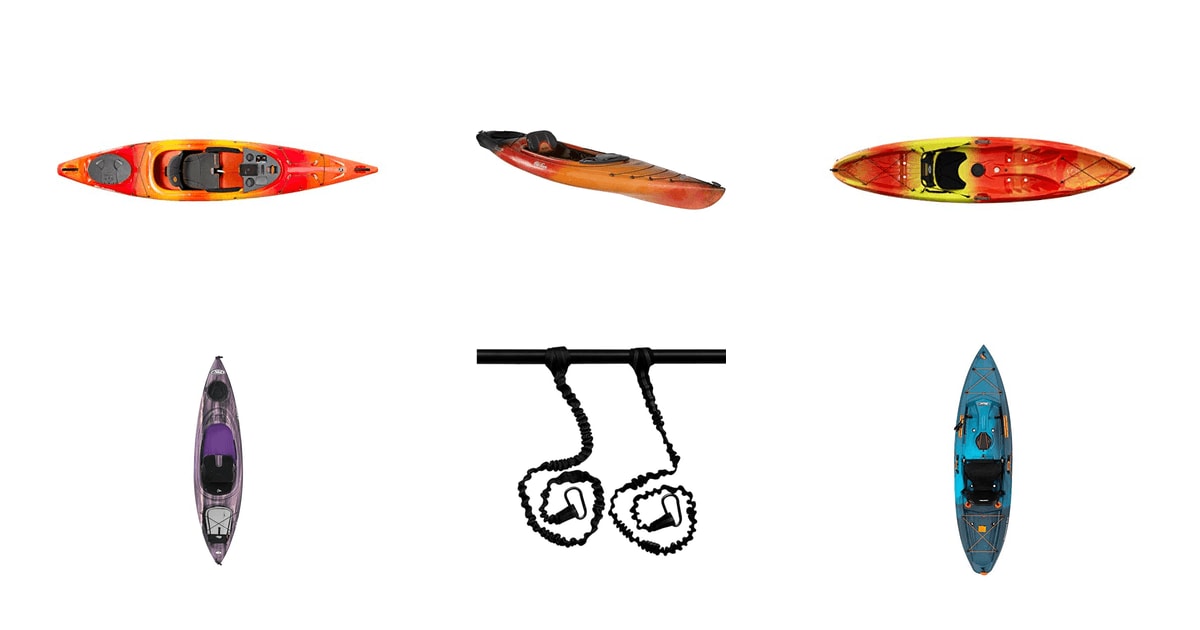
The first hour in a kayak decides whether you'll go back. If the boat wobbles under you every time you shift your hips, you'll spend the whole paddle bracing instead of looking around. A wide, stable hull fixes that. So does a seat that doesn't leave your lower back aching after 45 minutes, and a boat light enough that you'll actually bother to load it on the car. Beginners don't need speed. You need a boat that feels boring in the best way — predictable, forgiving, and hard to tip.
Here's the honest part: no kayak in this range does everything. The boats that feel rock-solid when you climb in are wide, and wide boats are slow and push back on every stroke once you're out past a half mile. The light ones cost more or give up capacity. The affordable ones are heavy, because cheap plastic is thick plastic. And almost none of them include a paddle worth keeping — you'll want to budget separately for a decent fiberglass-shaft one, which cuts arm fatigue more than any hull upgrade will. A PFD isn't optional either.
We looked at recreational kayaks for flat water: lakes, ponds, and slow rivers. Not whitewater, not sea touring, not fishing rigs. Most first-time paddlers are buying exactly this kind of boat, and the Outdoor Industry Association counts roughly 11 million Americans kayaking each year, most of them casually. We think that the Wilderness Systems Pungo 120 is the best kayak for beginners for most people, and that the Perception Tribe 11.5 is the one to buy if you're nervous about tipping over.
Everything we recommend

Stable enough to relax in, quick enough to cover water

The safest choice if capsizing is what worries you

More capacity and a better hatch, with more weight to lift

Light, steady, and cheap enough to try the sport on
A thicker seat pad for long days in a Skylark
At a glance
| Product | Length | Sit-In vs Sit-On-Top | Price | |
|---|---|---|---|---|
| Wilderness Systems Pungo 120 Recreational Kayak -Top pick | 12.2 ft | Sit-In | $975.20 |
| Old Town Loon 120 Solo Sit-Inside RecreationalRunner-up | 12 ft | Sit-Inside | $1,199.95 |
| Perception Tribe 11.5Also great | 11' 5" | Sit on Top | $849 |
| Pelican Argo 100X EXO - Recreational SitBudget pick | 10 ft | Sit In | $620.62 |
 | 2PCS Kayak Paddle Leash for Dagger ZydecoAlso in lineup | — | — | $21.99 |
 | Lifetime Tamarack Pro 103 Sit-On-Top KayakAlso consider | 10 ft. 3 in. | Sit-On-Top | $699.99 |
| TrimSports Thick TPE Kayak Seat Cushion forUpgrade pick | — | — | $34.99 |
How we picked
Stability first. We prioritized hulls between 28 and 32 inches wide, the range paddling instructors and the American Canoe Association point to as the flat-water sweet spot for beginners. Tunnel, pontoon, and multi-chine hull designs got preference over V-shaped touring hulls.
Length and tracking. Published reviews consistently find that 10-to-12-foot recreational kayaks hold a straight line better than nine-footers without becoming unwieldy. We favored boats in that range and noted where a shorter hull costs you course-keeping.
Weight you can lift. We compared manufacturer weights against what solo car-topping realistically demands, treating anything over about 55 pounds as a two-person job. Outside Magazine's gear lab found thermoformed ABS hulls run roughly 28 percent lighter than comparable polyethylene, which shaped how we weighed the premium options.
Capacity headroom. Following REI's guidance, we looked for a stated capacity at least 25 to 50 percent above a typical paddler's weight plus gear. An overloaded hull sits low and loses both the stability and the tracking you bought it for.
Seat and cockpit. Owner feedback across every price tier converges on the seat as the thing that decides whether a paddle is enjoyable. We looked for independently adjustable backrests, real padding, and adjustable foot braces rather than molded plastic.
Top pick
Stable enough to relax in, quick enough to cover water
Wilderness Systems Pungo 120 Recreational Kayak -
The Pungo 120 sits at 29.5 inches wide and 12 feet long, which lands right in the range paddling instructors point beginners toward. It's stable when you shift around, it holds a straight line without constant correction, and the seat is good enough for a three-hour afternoon.
$975.20fromAmazonThis is the boat that stops feeling scary fastest. At 29.5 inches across, the Pungo puts you in the middle of the 28-to-32-inch beam range that instructors and reviewers cite as the beginner sweet spot. You can lean to grab a water bottle. You can turn to look behind you. Owners routinely describe getting in and out at a dock without drama, and a few mention standing to exit — not something you'd try in a narrower boat.
Twelve feet is the other half of the equation. Paddling Magazine notes that 10-to-12-foot recreational kayaks hold a line noticeably better than nine-footers in open water, and that's exactly what you feel here. A shorter boat wanders, so you correct, so you get tired. The Pungo mostly goes where you point it. If your lake is big enough that you can see the far shore and want to reach it, that difference stops being theoretical about ten minutes in.
The seat deserves its own paragraph. The Phase 3 Air Pro system adjusts the back and the bottom separately, and the foam is vented so your back doesn't turn into a swamp in July. Foot braces slide to fit different leg lengths, and there are thigh pads where your knees actually land. Cheap kayak seats are a strap and a piece of molded plastic. This one is the reason people finish a long paddle without complaining about their lower back.
The cockpit is big and open, which matters more than it sounds. You can drop a dry bag between your knees, reach your gear mid-paddle, and get out fast if you flip. The dashboard adds a removable dry box, two cup holders, and accessory tracks. Worth knowing: the dry box has a clear lid and owners say it cooks in direct sun, so don't store anything that melts.
Flaws but not dealbreakers
It weighs 49 pounds, which is a real number when you're lifting it over your head onto a roof rack alone. Most people manage. Some don't, and if you're one of them, look at the Eddyline or the Pelican below instead.
This is the most expensive polyethylene boat here by a wide margin, and you're paying for the seat and hull design rather than anything exotic. Owners have also reported that customer support on small parts — a missing dashboard piece, a cracked dry box — can be slow to respond. And kayaks this size ship awkwardly; scuffs and gouges from transit come up regularly in owner feedback, so inspect the hull before you sign for it.
Also great
The safest choice if capsizing is what worries you
Perception Tribe 11.5
The Tribe 11.5 is a sit-on-top, so scupper holes drain water automatically and you can climb back aboard from deep water without any training. At 30.25 inches wide with a 350-pound capacity, it fits bigger paddlers and stays steady when kids fidget.
$849fromAmazonIf the fear of flipping is what's stopping you, buy a sit-on-top. REI's guidance is blunt about the difference: a sit-inside cockpit swamps when it takes on water, and getting back in requires a bilge pump and a wet-exit skill you probably don't have yet. The Tribe drains itself through scupper holes. Flip it, right it, haul yourself back over the side. That's the whole recovery, and it works the first time you try it.
You sit on top of the deck rather than down inside a hull, which raises your center of gravity — so the boat has to be wide to compensate. At 30.25 inches, it is. Parents buying for teenagers keep landing on this style for exactly that reason, and owners in the 5'11" range and heavier report room to stretch out instead of wedging their legs into a cockpit. The 350-pound capacity gives most adults the margin REI recommends over their own weight plus gear.
The seat is framed with a padded pan, not the molded plastic dip you get on budget sit-on-tops, and it's a genuine step up for anything past an hour. Storage is generous too: bungee tank wells front and back, a center hatch for keys and a phone, and toggle handles at bow and stern so two people can carry it easily. It's the practical layout for a beach day.
The trade-off is that you get wet. Water comes up through the scuppers and sits under you, and spray finds your legs because there's no deck over them. That's fine in August on a warm lake. It's miserable in October. If you paddle in cool weather or want to stay dry, the Pungo is the better boat for you.
Flaws but not dealbreakers
You will be sitting in water. Scupper plugs help on calm days, but a self-bailing hull works by letting water in and out, and that's the design working as intended.
The footrests are molded into the hull rather than adjustable, so if your legs fall between positions you're stuck with a compromise. At 52 pounds it's no lighter than the Pungo, either, despite being shorter.
Runner-up
More capacity and a better hatch, with more weight to lift
Old Town Loon 120 Solo Sit-Inside Recreational
The Loon 120 matches the Pungo's 12-foot length and adds a 375-pound capacity, a waterproof bulkhead hatch, and a triple-layer hull. It's the sit-inside to get if you carry gear or you're a heavier paddler, as long as 54 pounds doesn't scare you.
$1,199.95fromAmazonOld Town builds the Loon around capacity. The 375-pound rating is the highest of any sit-inside here, and that number matters more than beginners expect. REI advises picking a boat rated 25 to 50 percent above your weight plus gear, because an overloaded hull sits low, tracks badly, and loses the stability you bought it for. If you're a larger paddler, or you bring a cooler and a dog, this is the boat that keeps its manners.
The waterproof bulkhead hatch is the real upgrade over the Pungo. A Click Seal compartment sealed behind a bulkhead keeps your phone, keys, and a dry layer genuinely dry, and the bulkhead adds flotation if you go over. The Pungo's dashboard dry box is convenient but small and sun-exposed. If you paddle somewhere you can't just swim your gear to shore, that sealed compartment changes what you're willing to bring.
Thirty inches wide with a triple-arched multi-chine hull means it feels planted at rest, and the sharp keel line keeps it tracking straight once you're moving. The Active Comfort System 2.0 seat adjusts for back support and leg position, with thigh pads and a sliding foot brace track. On paper it's a near-match for the Pungo's seating, which is high praise at this size.
The removable work deck with a USB port is more useful than gimmicky. You get a flat surface for a phone or a chart, mounting points for accessories, and a way to keep a device charged on a long day. Pull it off when you'd rather have open cockpit space. Old Town also backs the hull with a limited lifetime warranty, which is unusual in this category.
Flaws but not dealbreakers
At 54 pounds it's the heaviest sit-inside here, and five pounds over the Pungo is noticeable at the end of a paddle when you're wet, tired, and lifting the boat onto a car by yourself.
It's also a newer listing with thin owner feedback so far, so there's less accumulated real-world reporting on how the seat and hatch hold up over several seasons than there is for the Pungo.
The Loon 120 comes with a limited lifetime warranty.
Budget pick
Light, steady, and cheap enough to try the sport on
Pelican Argo 100X EXO - Recreational Sit
The Argo 100X EXO weighs 36 pounds — lighter than every other hard-shell here — and its twin-arched hull is stable enough for a calm lake. At 10 feet it wanders more than the longer boats, but it's the easiest one to get on a car alone.
$620.62fromAmazonThirty-six pounds changes how often you actually go paddling. That's 13 pounds under the Pungo and 18 under the Loon, and it's the difference between a boat you load solo in two minutes and one you talk yourself out of. Pelican gets there with Ram-X, a lightweight multi-layer plastic. Owners consistently mention being able to pop it onto an SUV roof without help, which is the whole argument for this boat.
The twin-arched multi-chine hull spreads contact across the water and gives you solid primary stability — the kind you feel sitting still. Paddling.com's hull guide describes exactly this trade: broad, flat-ish hulls maximize the steadiness beginners want, at the cost of speed. Owners report cruising around 3.5 to 4 mph and describe it as easy to steer and slow rather than sluggish. On a pond or a cove, that's plenty.
Ten feet is the compromise. It turns easily and stores in a garage corner or the back of a small apartment building's shed, but it doesn't hold a line the way a 12-foot boat does. You'll correct your course more often, and in a crosswind you'll notice. If your trips are short and near shore, it hardly matters. If you want to cross a big lake, buy longer.
The Ergobreeze seat has an adjustable backrest and a wide cushion, which is more than most boats at this price bother with. The ExoChill compartment lifts out and doubles as a soft cooler bag. It's splash-resistant rather than waterproof, so treat it accordingly and keep your phone in a dry bag.
Flaws but not dealbreakers
The cockpit fits average and smaller adults best — owners around 5'10" say the seat is sized right for them or shorter, so tall paddlers should look elsewhere.
Lighter plastic is also thinner plastic. It won't shrug off a rocky launch the way thicker polyethylene does, so drag it less and carry it more.
Upgrade pick
A thicker seat pad for long days in a Skylark
TrimSports Thick TPE Kayak Seat Cushion for
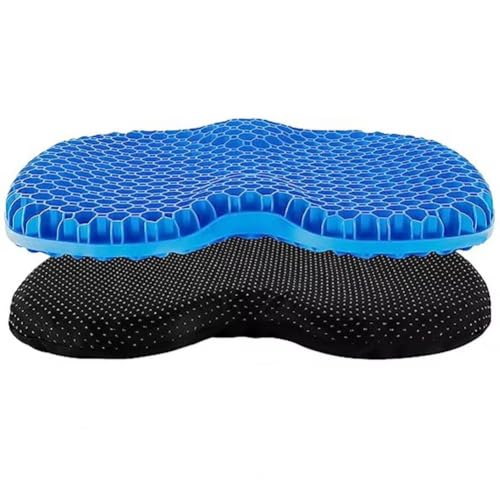
This TPE gel cushion is sized for the Eddyline Skylark 12 and adds real padding where the stock foam compresses flat. If your hips go numb after an hour, it's a cheap fix that doesn't change anything else about the boat.
$34.99fromAmazonSeat comfort is the thing that ends most long paddles, not fatigue in your arms. Thermoformed ABS boats like the Skylark are light — around 36 pounds versus 47 to 55 for comparable 10-foot polyethylene hulls, per Eddyline's specs — but the hull is stiff and the stock padding is thin. A double-layer TPE gel pad puts real cushion between you and that hull, which is why owners of light composite-style boats reach for one.
The pad measures roughly 16 by 13 inches with a U-shaped relief groove down the middle, which keeps pressure off your tailbone and lets a little air move. That matters on a hot day when you're sitting in one position for two hours. A silicone-particle backing keeps it from sliding forward every time you push off the foot braces.
This is the only accessory we'd call a genuine upgrade rather than a nice-to-have, and only if you already own or plan to buy a Skylark. It's fitted for that cockpit. If you're paddling something else, measure your seat pan first — a pad that doesn't sit flat is worse than no pad at all.
Flaws but not dealbreakers
It's a new listing with almost no accumulated owner feedback, so there's little to go on for how the gel holds up after a full season of sun and salt.
It also raises you slightly, which very marginally reduces stability. On a wide recreational hull that's a non-issue, but it's worth knowing.
Who this is for
Buy one of these if you're getting your first kayak for flat water — a local lake, a reservoir, a slow river, a protected bay on a calm day. These are recreational boats. They're built to be forgiving, and every one here will hold you steady while you figure out what a forward stroke feels like. If you're a family shopping for a teenager or a nervous adult, the sit-on-top is the one to look at first, because the recovery after a flip is something you can figure out in the water without a lesson.
Skip this guide if you want whitewater, multi-day sea touring, or a dedicated fishing platform — those boats are narrower, longer, or rigged differently, and a recreational hull will frustrate you fast. We also stuck to hard-shells rather than inflatables. And whatever you buy, get a Coast Guard-approved PFD and wear it. The USCG's 2023 boating statistics are unambiguous: the vast majority of fatal kayaking accidents involved paddlers who weren't wearing one. The American Canoe Association also recommends a short introductory flat-water course before you paddle alone, which typically runs two to four hours.
How we picked
We built the shortlist around what actually keeps a beginner upright and coming back. Stability: a beam of 28 to 32 inches, with tunnel or multi-chine hulls preferred over V-shaped touring designs. Tracking: 10 to 12 feet of length, since shorter boats wander and make you work to hold a line. Weight: manufacturer figures checked against what one person can realistically lift onto a roof, with lighter thermoformed hulls noted where they justify the premium. Capacity: a rating at least 25 to 50 percent above paddler plus gear, per REI's guidance. Comfort: adjustable seats and foot braces, because owner feedback at every price makes clear the seat decides how long you last.
Other kayaks for beginners worth considering
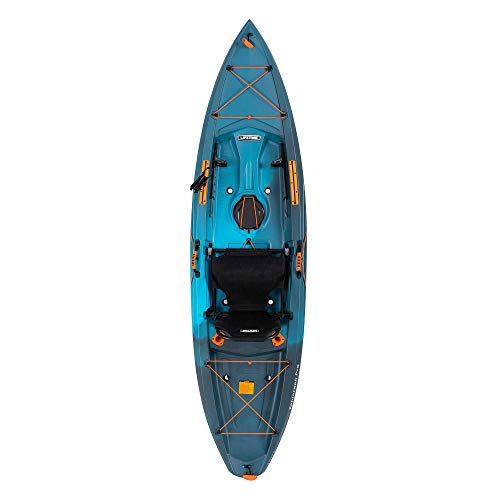
If you want the widest, steadiest platform for the money: The Lifetime Tamarack Pro 103 Sit-On-Top Kayak ($699.99) — The Lifetime Tamarack Pro 103 is 31 inches across — the widest boat here — with deep hull channels and chine rails that make it feel genuinely hard to tip. It's set up for casual fishing too, with three rod holders, a center hatch with a bucket, and a ruler molded into the deck. The catch is weight: 57.5 pounds makes it the heaviest boat in this guide, and owners note that the heft that steadies it on the water is a problem on the walk from the car. Some also report inconsistent finish quality out of the box. If you're launching from a spot you can drive to and stability is your top concern, it's a lot of boat.
The competition
Here's what else the research turned up. This isn't every beginner kayak on the market — it's the set of listings we were able to confirm and compare against the picks. A boat landing here usually means it lost on one specific axis, not that it's bad.
The 2PCS Kayak Paddle Leash for Dagger Zydeco ($21.99) — This two-pack of coiled paddle leashes is marketed as fitting the Dagger Zydeco 9.0, and a leash is a reasonable thing to own — losing a paddle a quarter mile from shore is a genuinely bad afternoon. But it's an accessory, not a kayak, and the listing's own description references vehicle fitment in a way that suggests a generic template rather than boat-specific engineering. Buy a leash if you want one, just don't shop for it here.
Care and transport
Polyethylene hulls are tough but they hate two things: sun and pressure. UV makes plastic chalky and brittle over years, so store your boat out of direct sunlight or throw a cover on it, and never leave it strapped tight to a rack all season — sustained pressure will dent the hull into a permanent flat spot. Store it on its side or upside down on padded bars, not resting on the hull bottom. Rinse it after salt water and let it dry before it goes away. For transport without a truck, foam blocks and cam straps on a bare car roof work fine for a 10-foot boat; add bow and stern lines so the hull can't pivot at highway speed. Carry it rather than dragging it, and check the drain plug is seated before every launch.
Questions we get
Should a beginner get a sit-on-top or a sit-inside kayak?
Get a sit-on-top if capsizing worries you or you're paddling in warm water. Scupper holes drain it automatically and you can climb back on from deep water without any training, which is why it's the safer default for someone paddling alone. Sit-insides keep you drier and warmer and are generally faster, but recovering from a flip requires a bilge pump and a wet-exit skill you'd need to learn first.
What size kayak do I need for my height and weight?
Pick a boat rated for at least 25 to 50 percent more than your body weight plus your gear — REI's guidance, and it exists because an overloaded hull sits low, tracks poorly, and loses stability. For length, 10 to 12 feet covers most beginners on lakes and slow rivers. Taller paddlers should check cockpit dimensions specifically, since a roomy boat on paper can still cramp long legs.
What's the safest kayak for someone nervous about tipping over?
A wide sit-on-top with a multi-chine or tunnel hull. Width in the 30-inch range gives you the primary stability you feel when sitting still, and the self-bailing deck means a flip is recoverable without help. The Perception Tribe 11.5 is our pick for this. Wear a Coast Guard-approved PFD regardless — the USCG's 2023 statistics show most fatal kayaking accidents involved paddlers who weren't wearing one.
Do beginner kayaks come with a paddle?
Usually not, and when one is included it's typically a heavy aluminum-shaft paddle you'll want to replace. None of the boats in this guide ship with a paddle worth keeping. A fiberglass-shaft paddle sized to your height and the boat's width cuts arm fatigue noticeably, and it's the single best upgrade you can make after the hull itself.
Can a 250-pound person use a recreational beginner kayak comfortably?
Yes, but check capacity and cockpit size, not just the headline number. The Old Town Loon 120 is rated to 375 pounds and the Perception Tribe 11.5 to 350, both of which leave real headroom over 250 pounds plus gear. Larger paddlers often prefer sit-on-tops because you're not fitting yourself into a fixed cockpit opening.
How do I transport a kayak without a truck or roof rack?
Foam blocks and cam straps on a bare car roof handle a 10-foot recreational boat fine, and they cost very little. Add bow and stern tie-down lines so the hull can't rotate at speed. If lifting is the problem, weight matters more than length — the 36-pound Pelican Argo 100X EXO is far easier to get overhead alone than a 54-pound 12-footer.
Why you should trust us
For this guide:
- We compared manufacturer specifications for hull length, beam, weight, and capacity across every boat in this guide.
- We read published buying guidance from REI, Paddling Magazine, Paddling.com, and the American Canoe Association on hull types, sizing, and beginner instruction, along with U.S. Coast Guard boating statistics on PFD use.
- We reviewed recurring themes in owner feedback — seat comfort, solo loading, shipping damage, and how each hull behaves on flat water — to identify flaws that specifications don't reveal.
- We read owner reviews on every listing, weighted toward the critical ones, because that is where the recurring failures show up.
- We have a systematic way of automatically fetching the latest prices, so the numbers on this page stay current.
- This is a research-focused guide, so the team may not own every product listed — though we often do own the top winners, which gives us extra context for the recommendations.
- We don't accept free products, and the retailer commission never changes which product we recommend.
Sources
How to Choose a Kayak — REI Expert Advice, REI
Sit-Inside vs. Sit-On-Top Kayaks — REI Expert Advice, REI
Best Beginner Kayaks — Paddling Magazine, Paddling Magazine
Best Kayaks — Wirecutter (New York Times), Wirecutter
Best Kayaks — Outside Magazine, Outside Magazine
Best Recreational Kayaks — Outdoor Life, Outdoor Life
Best Kayaks for Beginners — GearJunkie, GearJunkie
Kayak Hull Types Explained — Paddling.com, Paddling.com
Paddle Safety — American Canoe Association, American Canoe Association
Recreational Boating Statistics 2023 — U.S. Coast Guard, U.S. Coast Guard
Outdoor Participation Trends Report 2024 — Outdoor Industry Association, Outdoor Industry Association
Amazon product listings and owner reviews for all 7 products
Manufacturer specification pages for each product
Some passages in this guide may be paraphrased with AI help. Prices are refreshed automatically.
More like this.
Continue exploring lifestyle reviews and recommendations.

The Best Inflatable Kayaks
An inflatable kayak solves the problem that keeps most people off the water: where to put the boat. A hardshell wants a garage, a roof rack, and a friend…

The Best Inflatable Kayaks and River Craft
An inflatable kayak solves the problem that keeps most people off the water: storage and hauling. You don't need a garage bay or a roof rack. You need a…

The Best Portable Kayak Fish Finders
A fish finder changes how you fish from a kayak. You stop guessing at depth and start reading the bottom - the drop-off, the weed edge, the brush pile…

The Best Compound Bows for Beginners
A first compound bow has one job: let you shoot enough arrows to find out whether you like archery. That means it has to fit you right now and still fit…

The Best Cookbooks for Beginner Home Cooks
A beginner cookbook earns its shelf space in the first month. You're standing there with chicken thighs, a hot pan and no plan, and you need one clear…

The Best Bird Feeders for Beginners
A bird feeder is one of the few purchases that pays you back within days. Hang one near a shrub in a suburban yard and you'll often see your first…