The Best Chocolate Tempering Machines
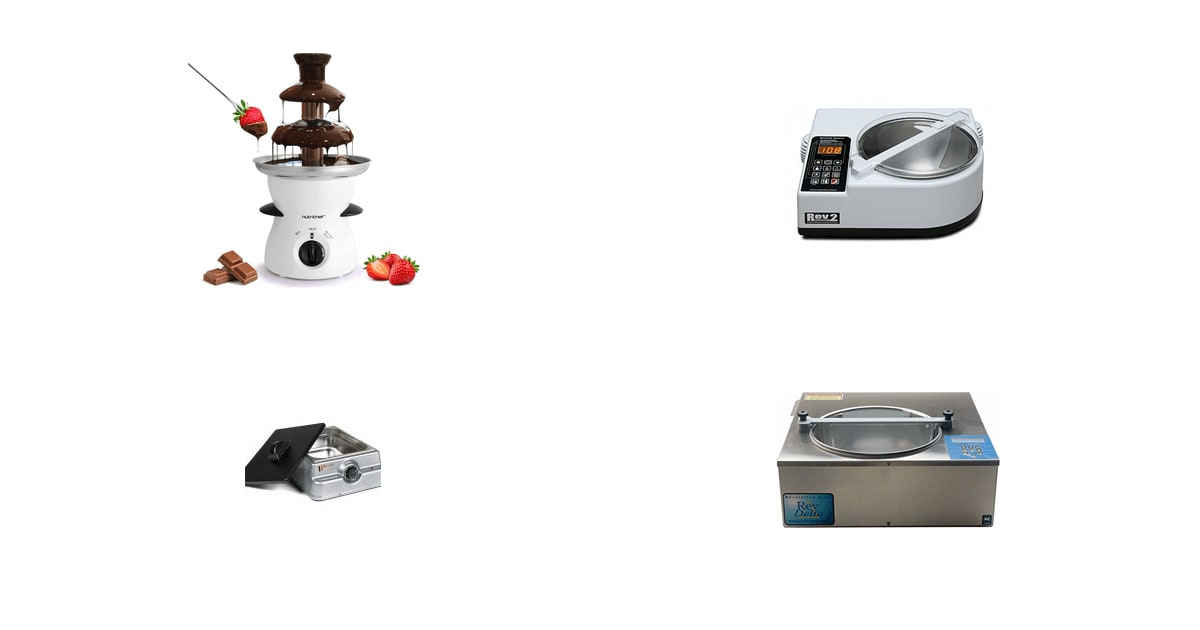
Tempered chocolate is the difference between a truffle that snaps when you bite it and one that smears on your fingers. That snap comes from getting cocoa butter to set in one particular crystal form, which means melting the chocolate, cooling it, then bringing it back into a narrow working range. You can do all of that by hand on a stone slab. It works, but it's fussy, it takes over your counter, and one stray drop of water ruins the batch. A machine runs the cycle for you and holds the chocolate there while you dip.
No machine makes tempering foolproof, though. You still have to weigh your chocolate, keep moisture away from the bowl, and learn to read a test smear before you commit a tray of molds. These machines are loud, too, since a motor turns the bowl while a fan pushes warm air across it for most of an hour. Cleanup is the complaint that comes up most in owner feedback: chocolate works its way into seams, and you can't just put the parts in the dishwasher. Give yourself a few practice batches.
Most appliances sold for chocolate aren't tempering machines at all. They're warmers that hold chocolate at one temperature, which is fine for candy melts but won't give real couverture the gloss or the shelf life you want. So the question is how much chocolate you go through in a session, and whether you want the machine to run the cycle or just hold steady heat while you seed by hand. We think that the ChocoVision Revolation Delta is the best chocolate tempering machine for most people, and that the ChocoVision Revolation 2 is the one to buy if you work in small batches.
Everything we recommend

Hands-off tempering with room for a full holiday batch

Real automatic tempering in a much smaller footprint

Precise, quiet heat if you'd rather seed by hand
At a glance
| Product | Capacity | Daily Output | Price | |
|---|---|---|---|---|
 | Nutrichef 3 Tier Chocolate Fondue Fountain -Also in lineup | 16 OZ | — | $43.99 |
| ChocoVision Revolation 2 Chocolate Tempering MachineBudget pick | 1.5 LB | 10 LBS/Day | $779.95 |
| Mol d'Art Professional Chocolate Warmer - 6Also great | 6 KG | — | $1,428.84 |
| ChocoVision Revolation Delta 10 lb Chocolate TemperingTop pick | 3-10 LB | 100 LBS/Day | $2,679 |
How we picked
True tempering. We separated machines that run an automated cool-and-reheat cycle from warmers that hold one temperature. Only the first kind produces the stable Form V crystals that give couverture its gloss and snap.
Batch capacity. We compared rated bowl and tank capacity against what home candy makers actually produce, using manufacturer output figures. A pound and a half covers a weekend; ten pounds covers a holiday production day.
Temperature control. We looked at published control tolerances, since milk and white chocolate have working windows only a degree or two wide. Analog dials that drift two or three degrees can't hold them reliably.
Cleanup and upkeep. Published reviews and owner feedback both name cleanup as the long-term pain point. We favored machines with removable bowls and baffles over sealed assemblies.
Size and noise. We noted listed dimensions and weight, plus what owners say about motor noise, because these machines run for close to an hour at a stretch on an open counter.
Top pick
Hands-off tempering with room for a full holiday batch
ChocoVision Revolation Delta 10 lb Chocolate Tempering
The Revolation Delta melts, tempers, and holds three to ten pounds of chocolate with almost no input from you once it's loaded. It's heavy, loud, and the most expensive machine here, but it's the only one that can carry a whole day of dipping and molding without a reload.
$2,679fromAmazonThe Delta runs the entire cycle, not just the melting step. A microprocessor drives forced hot air while the bowl turns against a fixed baffle, so the chocolate keeps moving instead of stratifying into warm and cool layers. You load solid chocolate, tell it what you're working with, and come back to a bowl that's ready to dip. That's the whole reason to buy a tempering machine rather than a warmer.
Capacity is the other reason. ChocoVision rates the Delta from a three-pound minimum to a ten-pound maximum, tempered in about an hour, and it holds temper for more than fifteen hours after that. If you're filling molds all afternoon or coating a few hundred pretzels for gift boxes, you're not stopping to re-temper. The spec sheet puts daily output at a hundred pounds, which is far more than most home kitchens will ever ask for.
White and ruby chocolate are where automation earns its keep. Dark chocolate works at roughly 31 to 32°C, but milk sits at 29 to 30°C and white at 27 to 28°C, per Callebaut's published guidance. Those are windows of a degree or two. A machine that cools and reheats on its own schedule takes the guesswork out of hitting them, and the Delta handles the full range the same way it handles dark.
Owner feedback skews toward longevity. Several people describe running these machines nearly every day for years with routine maintenance, and the on-screen prompts get most beginners through their first batch without a manual. That matters more than it sounds. Tempering has a learning curve regardless of hardware, and a machine that tells you what step you're on shortens it considerably.
Flaws but not dealbreakers
It's a large appliance. The Delta is about eighteen inches square and weighs thirty-six pounds, so it lives on the counter or it lives in a closet you'll resent opening. There's no tucking it beside the toaster.
The three-pound minimum load is a real constraint. You can't run a half pound of white chocolate through it just to dip a dozen strawberries, which means you're committing a good amount of chocolate every time you fire it up. Fine for a production session, annoying for a Tuesday night.
Reliability isn't uniform. Alongside the long-haul owners, there are reports of baffles failing and units that never tempered correctly, and cleanup takes patience — chocolate finds the gaps around the bowl and baffle, and none of it is dishwasher work.
Budget pick
Real automatic tempering in a much smaller footprint
ChocoVision Revolation 2 Chocolate Tempering Machine
The Revolation 2 tempers up to a pound and a half of chocolate in a rotating bowl, with the same forced-hot-air automation as its bigger sibling. It costs a fraction of the Delta and takes up about as much counter as a bread machine.
$779.95fromAmazonSay you want to dip a tray of strawberries on Friday and mold four dozen bonbons on Sunday. That's this machine. A pound and a half of chocolate works out to roughly forty to sixty standard round bonbons, or eight to ten slabs of bark, so a single bowl covers a normal weekend of candy making with some left in the bottom.
It's a genuine tempering machine, not a warmer with a nicer dial. The bowl rotates against a removable baffle, a fan moves warm air across the chocolate, and a microprocessor walks the batch through cooling and reheating on its own. ChocoVision rates it to two-tenths of a degree Fahrenheit and lists ten pounds of daily output. An LED readout shows you where the batch is.
The footprint is the quiet selling point. At roughly twelve by ten inches and ten pounds, it fits on a pantry shelf, and you can lift it one-handed. If your kitchen is normal-sized and you're not running a business out of it, that difference is worth more than extra bowl capacity you'd rarely fill.
Owners describe a rough first batch and then consistency after that — chocolate everywhere on attempt one, clean results from attempt two on. The bowl and baffle both come out, which makes the wipe-down manageable, and people who've had one for years report the same results batch after batch once they've learned the machine's rhythm.
Flaws but not dealbreakers
It's noisy. The motor and gears run for the length of the cycle, and it's loud enough that you won't hold a conversation next to it or leave it going while someone naps down the hall.
Durability is the worry. A meaningful share of owner feedback describes units that quit within months, temperature-probe errors, and difficulty getting help afterward. Plenty of others have run theirs for years without trouble, so it's uneven rather than uniformly bad — but it's a lot of money for a machine that might need support.
The bowl caps you at about a pound and a half, which is limiting once you start doing holiday batches. If chocolate gets down inside the housing, cleanup goes from a wipe to a project.
Also great
Precise, quiet heat if you'd rather seed by hand
Mol d'Art Professional Chocolate Warmer - 6
The Mol d'Art warmer holds six kilograms of chocolate at an exact temperature and nothing more — it won't cycle a temper for you. Pair it with the seeding method and you get professional-grade control, in a box with no motor to fail.
$1,428.84fromAmazonThis is a melter, not a tempering machine, and that's the point. You melt your chocolate in the tank, drop the temperature to your working range, then stir in pre-tempered chocolate or cocoa butter silk to seed the batch. It's the technique most professionals use, and it's the most reliable hand method for home cooks because you're borrowing crystals that are already correct.
Precision is the entire argument for it. Mol d'Art puts its PID heating within ±0.1°C, against ±2–3°C for the analog dials on cheap warmers. With dark chocolate you might get away with sloppy heat. With milk at 29 to 30°C and white at 27 to 28°C, a couple of degrees of drift is the difference between glossy shells and a dull, streaky mess.
There's also nothing here to break. No bowl motor, no baffle, no fan — just a heated tank, made in Belgium, that sits there quietly while you work. If you already own a thermometer and you've hand-tempered before, this removes the frustrating part of the job, which is holding a stable temperature, and leaves you the part you actually control.
Flaws but not dealbreakers
It does not temper. If you want to load solid chocolate and walk away, this is the wrong machine, and no amount of temperature accuracy changes that. You'll need seed chocolate, a thermometer, and a few batches of practice before the results are dependable.
Six kilograms is a lot of tank. Filling it enough to work comfortably means committing a large quantity of chocolate, so it suits someone producing steadily rather than someone making one batch a month. The listing is also thin on detail compared with the ChocoVision units, and it costs about what a machine that automates the cycle costs.
Who this is for
Buy one of these if you're already making chocolate regularly and you're tired of babysitting a bowl over a pot of water. Holiday gifters who turn out several pounds of bark and bonbons in December, bakers adding coated work to their desserts, and anyone selling from a cottage kitchen will get their money back in saved batches. If you mostly dip pretzels in candy melts a few times a year, skip all of this — candy melts are formulated not to need tempering, and a cheap warmer does the job.
This guide covers countertop machines for real couverture chocolate. It doesn't cover fountains, fondue sets, or the accessories and replacement parts that turn up in the same searches. It also doesn't cover continuous-flow production equipment, which is a different class of machine aimed at shops rather than kitchens.
How we picked
We started by sorting the category honestly. True tempering: the machine has to run its own cooling and reheating cycle, not just hold a set temperature, since that cycle is what builds the stable crystals behind a glossy finish and a clean snap. Capacity: rated bowl or tank size had to line up with real home output, from a weekend's bonbons to a full holiday day. Precision: published control tolerances mattered most for milk and white chocolate, whose working windows run only a degree or two wide. Cleanup: removable bowls and baffles beat sealed housings, because cleanup is what owners regret. Size and noise: these run for the better part of an hour in the open, so footprint and motor racket count.
The competition
Here's what else turned up while we were researching this category. It isn't every chocolate machine sold, and a few of these are only adjacent to tempering — but they show up alongside the real machines often enough to be worth sorting out.
The Nutrichef 3 Tier Chocolate Fondue Fountain - ($43.99) — The NutriChef 3-Tier Chocolate Fondue Fountain is a party appliance, not a tempering machine. Its sixteen-ounce pot warms to about 140°F and a motor pushes chocolate up a tower for dipping, which is a fine centerpiece for a graduation party but the opposite of what temper requires. Owner feedback is split, largely over chocolate seizing or stalling in the upper tiers, and several people mention thinning the chocolate with oil or cream to keep it flowing — a step that rules out proper temper entirely. Buy it for a dessert table, not for candy work.
Care and cleanup
Keep water away from everything. A drop or two will seize a whole bowl of chocolate, so dry your hands, your spatula, and any tool before it goes near the machine. When you're done, scrape what you can back into a container while the chocolate is still fluid — it's perfectly good and you can remelt it. Let the rest set, then pop the bowl and baffle off and warm them gently before wiping with a dry cloth or a paper towel. Soap and water go on the removable parts only, after the chocolate is off, and everything needs to be bone dry before it goes back on. Don't put a heat gun near plastic housings, and check the baffle for cracks each time you strip the machine down.
Questions we get
Do I really need a machine, or can I temper chocolate by hand?
You can absolutely temper by hand. Tabling on stone or the seeding method — stirring 25 to 33 percent pre-tempered chocolate into a melted batch — both work well at home, and seeding is the more forgiving of the two. A machine buys you consistency and lets you stop hovering, which matters most when you're doing several batches in a row.
What's the difference between a melting pot and a tempering machine?
A melting pot holds chocolate at a single temperature. A tempering machine takes it up to melt, brings it down to build crystals, then settles it into the working range and keeps it there. Only the second process produces the glossy surface, sharp snap, and clean melt of properly tempered couverture, and only tempered chocolate resists bloom on the shelf.
Can you temper white chocolate in a home machine?
Yes, but the margin is tighter. Callebaut lists white chocolate's working range at 27 to 28°C against 31 to 32°C for dark, and milk in between at 29 to 30°C. That's a window of a degree or two, so a machine with tight temperature control has a real advantage over an analog dial that drifts.
How long does a tempering cycle take?
Plan on roughly an hour from solid chocolate to working temperature on a full load, and less on a small one. ChocoVision rates the Delta at about an hour for three to ten pounds, and says it will hold temper for more than fifteen hours afterward. The holding part is what saves you time across a long dipping session.
Can I use candy melts in a tempering machine?
You can, but there's no reason to. Candy melts use vegetable fat instead of cocoa butter, so they set hard without any crystal work at all — a warmer handles them fine. Save the tempering machine for real couverture, where the cycle actually changes the result.
How do I know my chocolate is actually tempered?
Smear a little on a piece of parchment or the back of a knife and leave it at room temperature for a few minutes. Properly tempered chocolate sets firm with an even sheen and breaks cleanly. If it stays tacky, dries streaky, or bends instead of snapping, the temper didn't take and you should run the cycle again.
Why you should trust us
For this guide:
- We read manufacturer specifications and control tolerances for every machine in this guide, along with Callebaut's published tempering temperatures for dark, milk, and white chocolate.
- We compared published reviews and food-science references on cocoa butter crystal forms, fat bloom, and the seeding method to separate true tempering machines from warmers.
- We reviewed recurring themes in owner feedback — noise, cleanup difficulty, and long-term reliability — rather than individual accounts.
- We read owner reviews on every listing, weighted toward the critical ones, because that is where the recurring failures show up.
- We have a systematic way of automatically fetching the latest prices, so the numbers on this page stay current.
- This is a research-focused guide, so the team may not own every product listed — though we often do own the top winners, which gives us extra context for the recommendations.
- We don't accept free products, and the retailer commission never changes which product we recommend.
Sources
Chocolate Tempering Technique and Temperature Guide — Callebaut, Callebaut (Manufacturer / Industry Authority)
How to Temper Chocolate — Serious Eats, Serious Eats
Chocolate Tempering Equipment Reviews — The Chocolate Life, The Chocolate Life (Enthusiast Community)
Best Chocolate Tempering Machines — The Spruce Eats, The Spruce Eats
Tempering Chocolate at Home — America's Test Kitchen, America's Test Kitchen
EZtemper Product Documentation and Usage Guide, EZtemper (Manufacturer)
ChocoVision Revolation Delta Product Page, ChocoVision (Manufacturer)
Understanding Chocolate Bloom — King Arthur Baking, King Arthur Baking
Mol d'Art Meltinchoc Product Overview, Mol d'Art (Manufacturer)
Selmi Plus EX Continuous Tempering Machine Specifications, Selmi (Manufacturer)
Amazon product listings and owner reviews for all 4 products
Manufacturer specification pages for each product
Some passages in this guide may be paraphrased with AI help. Prices are refreshed automatically.
More like this.
Continue exploring appliances reviews and recommendations.

The Best Espresso Machines for Home Baristas
Good espresso at home comes down to three things happening at once: water at the right temperature, pressure that holds steady through the shot, and…

The Best Bread Machines
A bread machine turns baking into a chore you can ignore. You dump in flour, water, yeast, salt and a little oil, press a button, and walk away. Three…

The Best Bread Machines
Fresh bread from a machine is really about mornings. You load flour, water, salt and yeast the night before, set the timer, and wake up to a warm loaf and…

The Best Portable Washing Machines for Apartments
Laundry day in an apartment without hookups is a logistics problem. You haul a bag down three flights, feed quarters into a machine someone else just left…

The Best Washing Machines
A washing machine is the appliance you notice least until it goes wrong. You load it, you walk away, and you want the clothes clean the first time, so you…

The Best Soda Makers and Sparkling Water Machines
If you drink sparkling water every day, you already know the routine: hauling cases home, stacking cans in the garage, hauling the empties back out. A…