The Best Washing Machines
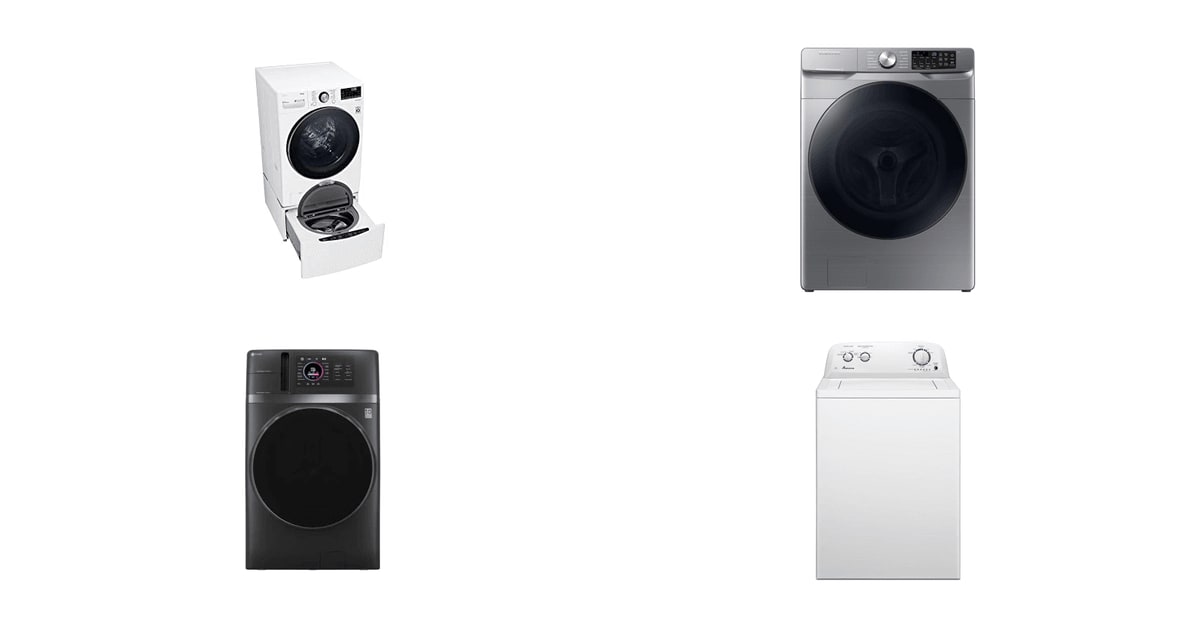
A washing machine is the appliance you notice least until it goes wrong. You load it, you walk away, and you want the clothes clean the first time, so you don't have to run them twice. What separates machines isn't the badge on the door. It's how much water they pull in, how fast they spin clothes dry, how loud they are through a bedroom wall, and how gently they treat a shirt you actually like. Capacity matters too, but less than most shoppers think.
Here's the honest part: no washer on this list does everything well. Front-loaders clean better and sip water, but you have to wipe the gasket and leave the door open or they'll smell musty. Agitator top-loaders are simple and easy to repair, and they're rougher on fabric and thirstier. Washer-dryer combos save a closet and take hours per load. And the more screens and sensors a machine has, the more there is to break. Pick the compromise you can live with, because there isn't a machine without one.
This guide is built from manufacturer spec sheets, published reviews and the patterns in owner feedback, not from a laundry room of our own. That shapes what we can tell you, and what we can't. We can compare drum size, spin behavior, cycle length and install footprint, and we can flag the complaints that keep repeating. We think that the LG 4.5 Cu. Ft. Front Load Washer is the best washing machine for most people, and that the Samsung 4.5 Cu. Ft. Front Load Washer is the one to buy if you need a full load done in under half an hour.
Everything we recommend

Strong everyday cleaning in a body that fits a tight wall

A full load in 28 minutes, if the install goes right

Small, simple, and easy to repair — but it arrives refurbished
At a glance
| Product | Capacity | Washer type | Price | |
|---|---|---|---|---|
| LG 4.5 Cu. Ft. Ultra Large CapacityTop pick | 4.5 cu. ft. | Front load | $929.12 |
| Samsung 4.5 Cu. Ft. High-Efficiency Stackable SmartRunner-up | 4.5 cu. ft. | Front load | $829.12 |
 | GE Profile PFQ97HSPVDS 28 Inch Smart FrontAlso consider | 4.8 cu. ft. | Washer/dryer combo | $2,199 |
| Amana NTW4516FW 3.5 Cu. Ft. White TopBudget pick | 3.5 cu. ft. | Top load | $629 |
How we picked
Cleaning and gentleness. We leaned on published review programs that score stain removal and fabric wear, plus the wash motions each maker documents. A machine had to be gentle enough that knits and synthetics survive a weekly rotation.
Water and energy use. We compared spec sheets against the ENERGY STAR program's estimates for certified washers and the federal efficiency minimums. Cold-water performance mattered more to us than a best-case rating, because cold is what you'll actually run.
Spin and cycle time. Higher extraction means less time in the dryer, which is where most laundry energy goes. We favored machines whose makers publish both a fast full-load cycle and a strong final spin.
Noise and footprint. We read dimension and vibration specs with second-floor and closet installs in mind. Width, depth and door swing ruled out more machines here than cleaning ever did.
Repairs and simplicity. Owner feedback and brand reliability surveys keep pointing the same direction: fewer boards and sensors mean fewer service calls. We weighed each smart feature against the parts it adds.
Top pick
Strong everyday cleaning in a body that fits a tight wall
LG 4.5 Cu. Ft. Ultra Large Capacity
This LG front-loader hits the sweet spot: a 4.5-cubic-foot stainless drum, TurboWash cycles for days you're in a hurry, and a shallow cabinet that fits a hallway closet. Wi-Fi is there if you want it, and the washer works fine if you never open the app.
$929.12fromAmazonFor most households, this is the washer to get. It's a full-size front-loader with a 4.5-cubic-foot drum, which handles a week of clothes for two to four people without cramming. Front-loaders tumble instead of thrashing, so published reviews and owner feedback both point the same way: better cleaning, less water, gentler treatment of knits. You pay more up front than you would for a basic top-loader, and you get that back in water bills and clothes that last.
LG builds this one around cold water. ColdWash uses extra drum motion and a longer soak instead of heat, which matters because most of a wash cycle's energy goes into warming water. ENERGY STAR estimates that certified washers use roughly a quarter less energy and about a third less water than standard models, and that gap turns up on your utility bill every month. Confirm the certification for the exact finish you order, since rebates hinge on it.
The shallow cabinet is the quiet reason to pick this LG. If your laundry sits in a hallway closet or a bathroom nook, depth is the dimension that kills a purchase — the door has to clear, and the hoses need room behind. LG designed this one to tuck into tighter spots than a standard front-loader. Measure anyway. The listing's dimension data is garbled, so pull the official spec sheet before you commit.
The smart stuff is a bonus, not a reason to buy. ThinQ will ping your phone when the cycle ends, which is genuinely useful if you're the household that forgets wet laundry in the drum overnight. But owner feedback across brands keeps circling the same point: the more electronics a washer carries, the more there is to go wrong. The basics here — a stainless tub that won't chip and snag your clothes, a tempered glass door — are what should still be fine years in.
Flaws but not dealbreakers
Front-loaders need a habit. Water pools in the rubber gasket at the bottom of the door, and if you shut the door on a damp drum every time, it will eventually smell like a wet basement. Wiping the seal and leaving the door ajar fixes it, but you have to actually do it. If nobody in your house will, a top-loader is the better buy.
Owner feedback on this listing is mixed rather than glowing, and any big appliance bought online carries a real risk of arriving dented. Inspect it before the delivery crew leaves. The listing here also doesn't spell out a warranty term, so confirm coverage with the seller before you order.
Runner-up
A full load in 28 minutes, if the install goes right
Samsung 4.5 Cu. Ft. High-Efficiency Stackable Smart
Samsung's Super Speed cycle washes a full load in 28 minutes, and steam handles set-in stains without pretreating. It's the same 4.5-cubic-foot capacity as our top pick, it stacks, and Vibration Reduction Technology+ keeps it civil on a second floor.
$829.12fromAmazonIf your laundry happens in the gaps between other things, buy this one. Samsung rates the Super Speed cycle at 28 minutes for a full load — not a half load, which is the usual catch. That's the difference between starting a wash before dinner and folding it after, versus pushing it to the weekend. You'll still want a longer cycle for towels and genuinely filthy work clothes, but the fast option is there most days.
Steam is the other reason to look here. It saturates the whole load from the drum, which loosens stains you'd otherwise have to rub at with a stick of pretreater. That's useful for kids' clothes, cycling gear, anything that comes home with grass on it. Steam cycles run long, so you're choosing between fast and thorough on any given day — you just get both options.
It's the better pick for an upstairs laundry room. A front-loader at full spin can shake a whole hallway, and Samsung builds Vibration Reduction Technology+ into this one specifically to damp that down. Quiet operation is one of the few things the spec sheet promises outright. If your washer sits above a bedroom or shares a wall with one, that's worth more to you day to day than an extra tenth of a cubic foot of drum.
It stacks, which quietly solves a floor-plan problem. At 27 inches wide it's a standard fit, and a matching dryer goes on top instead of beside it — that's a few feet of floor back in a small laundry room. The SmartThings app covers remote start, scheduling and end-of-cycle alerts, so you can time a load to finish when you're actually home to hang it.
Flaws but not dealbreakers
The arrival is the weak point. Owner feedback on this listing leans hard on shipping damage and botched installs — dented and scratched panels, and transit hardware left in place so the drum spins wildly on the first load. None of that is Samsung's engineering, but it's your weekend. Unbox it before the crew leaves, and make sure whoever installs it knows to pull the shipping bolts.
You also inherit front-loader upkeep: wipe the gasket, leave the door ajar, run a tub-clean cycle now and then. And the glossy platinum finish shows fingerprints and dust more than plain white does.
Budget pick
Small, simple, and easy to repair — but it arrives refurbished
Amana NTW4516FW 3.5 Cu. Ft. White Top
The Amana NTW4516FW is a plain 3.5-cubic-foot agitator top-loader, and this listing sells it refurbished. It's the one to buy if you do laundry for one or two people, you need a machine this week, and you'd rather pay for a repair someday than for features now.
$629fromAmazonAgitator top-loaders are the simplest washers still sold, and simple is an underrated feature. There's a motor, a transmission, a tub and a post in the middle that pushes clothes around. Fewer sensors and boards mean fewer things that strand you mid-cycle, and the parts that do fail are cheap and widely stocked — a replacement agitator is a fifteen-minute job for anyone who owns a socket set.
At 3.5 cubic feet, this is a one-or-two-person washer. A king comforter is a stretch. A week of clothes for a family of four won't fit either, and stuffing the tub is the fastest way to get clothes that come out still dirty. But if you're in a studio, a rental, or a house where it's just you and a dog's worth of blankets, the small drum costs you nothing and the machine takes up less wall.
Owner feedback on this one skews positive for what it is: clothes come out clean, delivery goes smoothly, and people who went in with low expectations came out happy. The recurring gripe is the water-level sensing, which decides for you how much water a load needs and doesn't always get it right. If you like to fill the tub yourself, look for a machine with a deep-fill option instead.
Flaws but not dealbreakers
It's refurbished. The listing says each unit is function-tested, cleaned, inspected and repacked, and that it may show up in a generic box. That's a fine deal if it works and a hassle if it doesn't, so check the return window and whatever coverage the seller attaches before you buy. Refurbished appliances are also the ones most likely to land with a cosmetic scuff.
The washing itself is the compromise. An agitator is rougher on fabric than a tumbling drum, it uses more water than a front-loader, and it spins clothes less dry, which means longer in the dryer. Over years, that shows up in both your utility bill and your sweaters.
Who this is for
Buy now if your current washer is leaking, walking across the floor, or old enough that a repair bill would approach the cost of replacing it. This guide covers full-size residential machines you can order online: two front-loaders, an agitator top-loader, and one all-in-one combo. If you're doing laundry for two to four people and you already have a dryer, the front-loaders here are the straightforward answer.
Hold off if you rent and can't plumb a machine, or if what you need is a stacked laundry center, a compact 24-inch unit, or a commercial-grade workhorse built to be rebuilt for decades. None of that is in this lineup. Large families should read the capacity notes closely, too. Nothing here is big enough to do a family of six's week in two loads, and overloading a drum hurts cleaning more than choosing a smaller machine ever will.
How we picked
Cleaning: we weighted published stain-removal and fabric-wear scoring over marketing copy. Efficiency: we compared spec sheets to ENERGY STAR's estimates for certified washers, and we cared about cold-water cycles rather than best-case numbers. Spin and speed: stronger extraction and a documented fast full-load cycle both buy back dryer time. Noise and fit: we read dimensions and vibration specs with closets and second floors in mind, since depth and door swing kill more purchases than performance does. Repairability: owner feedback and reliability surveys agree that simpler machines mean fewer service calls, so every smart feature had to earn the parts it adds.
Other washing machines worth considering
If you want a washer and dryer in one 28-inch slot: The GE Profile PFQ97HSPVDS 28 Inch Smart Front ($2,199) — The GE Profile UltraFast Combo washes and dries in a single 4.8-cubic-foot drum, with 12 wash cycles, 14 dryer cycles and a ventless heat pump — so there's no duct to cut through an exterior wall. For an apartment, a condo closet or a converted pantry, that's the whole pitch, and nothing else here comes close to matching it. The trade-offs are real. A heat pump dries gently but slowly, so a combined wash-and-dry run takes hours rather than the hour you'd spend shuffling loads between two machines. At 323 pounds it's by far the heaviest unit in this lineup, which matters on an old floor. And owner feedback is sharply split, with plenty of buyers reporting early trouble, so read the service plan closely before you commit.
The competition
This section is usually where the machines that lost end up. Here it's nearly empty for a different reason: our lineup is what the research surfaced as confirmed listings, not a map of the whole washer market. Several categories that come up constantly in published reviews and reliability surveys — commercial-grade top-loaders, premium European front-loaders, big-capacity domestic models with deep-fill controls — aren't represented. Treat this guide as a shortlist of what you can actually order today, and keep looking if longevity above all is your priority.
Care and maintenance
Front-loaders earn their efficiency and ask for a little maintenance in return. After the day's last load, wipe the rubber door gasket dry, pull out anything caught in the fold, and leave the door open an inch so the drum can air out. Run a tub-clean cycle monthly, leave the detergent drawer cracked, and use the small dose of HE detergent the machine calls for rather than the capful you're used to — excess soap feeds the film that smells. Top-loaders need less of this, though it still pays to leave the lid up between loads. For any washer, the install matters as much as the upkeep: level it on all four feet and confirm the shipping bolts came out, because a machine that walks across the floor is usually one that was never leveled.
Questions we get
Are front-load or top-load washers better?
Front-loaders generally clean better, use less water, and spin clothes drier, which cuts your dryer time. Top-loaders cost less, are simpler to repair, and don't need gasket upkeep. If you'll wipe a door seal and leave the door ajar, go front-load. If you know you won't, an agitator top-loader will make you happier.
What size washing machine do I need for a family of four?
Four people usually want something in the 4.5-cubic-foot range, which is what both of our front-load picks offer. That's roughly a full hamper plus towels in one go. Don't go smaller and compensate by cramming the drum — overloading hurts cleaning more than a smaller machine does. A 3.5-cubic-foot washer is really a one- or two-person machine.
How do I stop my front-load washer from smelling musty?
Dry the rubber gasket after the last load and leave the door and detergent drawer open so the drum airs out. Run the tub-clean cycle about once a month. Cut back on detergent, since excess soap feeds the film that smells. If it's already bad, a few back-to-back cleaning cycles usually reset it.
Are washer-dryer combos worth it for apartments?
They're worth it when you have one slot and no vent, which describes a lot of apartments and condos. The GE Profile combo here dries with a heat pump, so nothing has to duct outside. You pay for that in time: a full wash-and-dry run takes hours, and the machine becomes a single point of failure for both jobs.
How long do washing machines typically last?
Ten years is the usual expectation for a mainstream machine, and simpler builds tend to go further. Whether to repair one depends on the part. A pump, a belt or an agitator is worth fixing; a dead control board or a failed bearing on a decade-old washer usually isn't. Reliability surveys consistently favor the machines with fewer electronics.
Do smart features on a washer actually help?
Three of them do: an end-of-cycle alert so laundry doesn't sit wet, remote start so a load finishes when you're home, and an error code you can read before you call for service. The rest is novelty. Weigh them against the added electronics, since owner feedback and reliability data both suggest simpler machines see fewer repairs.
Why you should trust us
For this guide:
- We read manufacturer spec sheets and listing documentation for every machine here, and compared stated capacity, cycle times, dimensions and efficiency claims side by side.
- We reviewed the methodology published by review programs that score cleaning, water extraction, noise and vibration, along with brand reliability survey findings.
- We read owner feedback on each listing and tracked the complaints that repeated, including shipping damage, install errors and water-level sensing.
- We read owner reviews on every listing, weighted toward the critical ones, because that is where the recurring failures show up.
- We have a systematic way of automatically fetching the latest prices, so the numbers on this page stay current.
- This is a research-focused guide, so the team may not own every product listed — though we often do own the top winners, which gives us extra context for the recommendations.
- We don't accept free products, and the retailer commission never changes which product we recommend.
Sources
Best Washing Machines - Consumer Reports, Consumer Reports
Best Washing Machines - Wirecutter, Wirecutter
Washing Machine Reviews - RTINGS.com, RTINGS.com
ENERGY STAR Certified Residential Clothes Washers, ENERGY STAR / U.S. EPA
Clothes Washers - Appliance Standards, U.S. Department of Energy
Washing Machine Reviews - Good Housekeeping Institute, Good Housekeeping Institute
Washing Machine Reviews - Reviewed, Reviewed
Laundry Appliance Product Specifications, LG (manufacturer specs)
Amazon product listings and owner reviews for all 4 products
Manufacturer specification pages for each product
Some passages in this guide may be paraphrased with AI help. Prices are refreshed automatically.
More like this.
Continue exploring appliances reviews and recommendations.

The Best Portable Washing Machines for Apartments
Laundry day in an apartment without hookups is a logistics problem. You haul a bag down three flights, feed quarters into a machine someone else just left…

The Best Pressure Washer Surface Cleaners
A surface cleaner is the attachment that makes a pressure washer worth owning. Instead of one jet carving stripes into your driveway, two nozzles spin…

The Best Electric Pressure Washers for Driveways
A driveway is the hardest surface most homeowners will ever clean. It collects tire grit, engine drips, winter salt, and a slow green film of algae along…

The Best Waterless Car Wash Products
If you live in an apartment, park in a garage, or just don't want to drag out a hose, a waterless wash is how you keep a car looking clean. You spray a…

The Best Bread Machines
A bread machine turns baking into a chore you can ignore. You dump in flour, water, yeast, salt and a little oil, press a button, and walk away. Three…

The Best Espresso Machines for Home Baristas
Good espresso at home comes down to three things happening at once: water at the right temperature, pressure that holds steady through the shot, and…