The Best Electric Pressure Washers for Driveways
A driveway is the hardest surface most homeowners will ever clean. It collects tire grit, engine drips, winter salt, and a slow green film of algae along the shaded edges. A garden hose won't touch any of it. What actually matters isn't the pressure number printed on the box — it's pressure and water flow together, because pressure knocks grime loose and flow carries it to the street. A machine with big pressure and a thin trickle of water just moves dirt around.
Here's the honest part: no electric washer here cleans a driveway quickly with the wand alone. Working with a spray tip, you're covering maybe six inches at a time across several hundred square feet, and uneven passes leave the faint light-and-dark banding people call tiger stripes. Oil stains are worse. Pressure doesn't dissolve oil, so no amount of extra force substitutes for a degreaser and ten minutes of patience. Plan on a surface cleaner attachment and a pre-soak, whichever washer you buy.
We looked at how much water each machine moves, not just how hard it pushes it, and at whether the motor is built for a few sessions a year or many. We also weighed what comes in the box, since accessories add up fast. We think that the Greenworks Pro Brushless 2300 PSI is the best electric pressure washer for driveways for most people, and that the Kärcher K5 Premium bundle is the one to buy if you want a surface cleaner included from the start.
Everything we recommend

More water flow and a motor built to last, if you can pay for it

Stripe-free flat concrete straight out of the box

Enough machine for a driveway you clean once or twice a year

Cordless reach for driveways far from any outlet
At a glance
| Product | Max PSI | GPM Flow | Price | |
|---|---|---|---|---|
| Greenworks Pro Brushless 2300 PSITop pick | 2300 PSI | 2.3 GPM Max | $399.99On sale |
| Kärcher - K5 Premium - 2000 PSIRunner-up | 2000 PSI | 1.4 GPM | $398.91On sale |
 | Sun Joe SPX3000-XT1 XTREAM 2Also consider | 2200 PSI | 1.1 GPM | $199.99On sale |
 | RYOBI 12 in. 2300 PSI Electric PressureAlso in lineup | 2300 PSI | — | $155 |
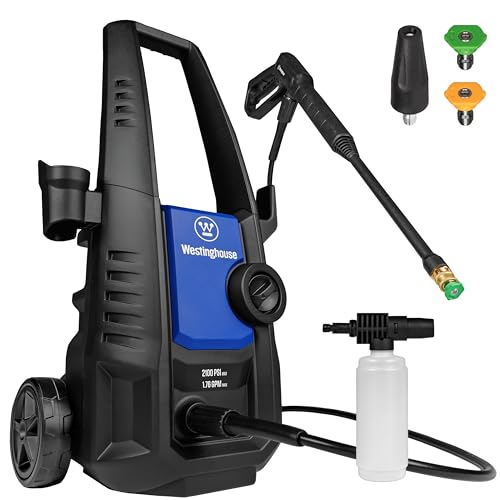 | Westinghouse ePX3050 Electric Pressure WasherAlso consider | 2100 Max PSI | 1.76 Max GPM | $109 |
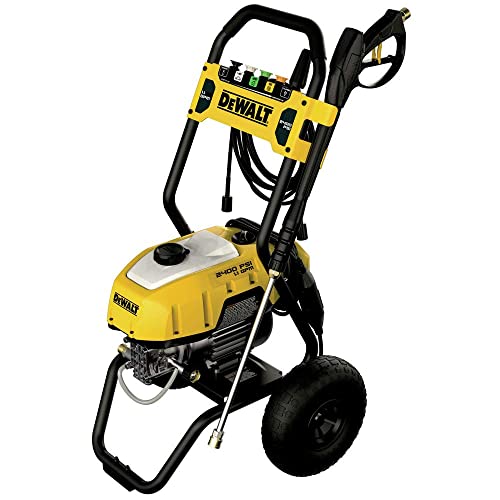 | Dewalt DWPW2400R 13 Amp 2400 PSI 1.1Also in lineup | 2400 PSI | 1.1 GPM | $349.99 |
| EGO Power+ Electric Pressure WasherAlso great | 3200 PSI | 1.2 GPM | $549 |
| Sun Joe Pressure WasherBudget pick | 2500 Max PSI | 1.2 GPM | $169 |
How we picked
Pressure and flow together. We compared each machine's rated pressure against its rated flow rather than trusting the max figure on the box. Anything that couldn't clear roughly 2,000 combined cleaning units at its rated numbers wasn't a serious driveway candidate.
Motor type. Brushless and induction motors last several times longer than the brushed universal motors in budget units, and published reviews and owner feedback both point to motor wear as the usual failure. We favored brushless or induction wherever the price gap was defensible.
Reach and handling. We looked for at least a 25-foot hose and a 35-foot GFCI cord, which together cover most two-car driveways from one outlet. Wheel size and weight decided how easily a machine crosses a gravel apron or an expansion joint.
What's in the box. Nozzle sets, detergent tanks, foam cannons, and surface cleaners are the difference between a complete kit and a shopping list. We gave credit to machines that arrive ready to clean concrete.
Owner-reported durability. We read through owner feedback for recurring complaints about pumps losing pressure, plastic fittings cracking, and motors quitting early. Patterns that showed up repeatedly shaped the flaws we call out.
Top pickOn sale
More water flow and a motor built to last, if you can pay for it
Greenworks Pro Brushless 2300 PSI
The Greenworks Pro moves more water than almost any other corded washer here, which is what clears loosened grit off concrete instead of pushing it around. Its brushless motor is rated for far longer service than the brushed motors in cheaper units, and the hose and cord reach a full two-car driveway.
$399.99fromAmazonList priceWater flow is what actually clears a driveway, and this one moves the most. Most corded washers top out around 1.1 or 1.2 gallons per minute. Greenworks rates this one at up to 2.3 GPM, and Jet Flow is their name for the wider path that comes with it. Multiply pressure by flow and it's the strongest combined number in this group. On concrete, you'll see it as fewer repeat passes over the same strip.
The brushless motor is the real reason to spend up. Cheaper washers use brushed universal motors, and the carbon brushes wear down after a couple hundred hours of running. A brushless motor has nothing rubbing itself away, so it runs cooler and holds pressure through a long session. Greenworks backs the motor with a ten-year warranty, which tells you how they expect it to age. If you wash twice a year for a decade, that matters.
You can reach the whole driveway without dragging the machine. The 25-foot hose resists kinking, and the 35-foot power cord has inline GFCI protection for outdoor outlets. That's 60 feet of working radius from a single spigot and plug. Most two-car driveways fall inside it. Ten-inch wheels roll over expansion joints and gravel edges without fighting you, and the handles fold flat when you're done.
The nozzle set and pump protection cover the jobs you'll actually do. You get 15-, 25-, and 40-degree tips plus soap and turbo, all on a metal quick-connect wand, so switching from detergent to rinse takes seconds. The onboard soap tank saves you juggling a bucket. Smart Flow senses incoming water pressure and eases off when your supply dips, which keeps the pump from running dry on a weak spigot.
Flaws but not dealbreakers
That 2.3 GPM figure depends on your house, not the washer. The rated flow is 1.2 GPM, and the higher number assumes strong incoming water pressure. Plenty of homes won't get there, especially on a long hose run or an older supply line. You'll still get solid results, just not the headline math. It's worth checking your spigot before you assume the top figure applies to you.
There's no surface cleaner in the box. For a machine at this price, that's a real omission, because the wand alone is what leaves banding on flat concrete. You'll want to add a compatible surface cleaner to get an even finish, and that's another purchase on top of an already expensive unit.
It's the heaviest corded washer here. At roughly 50 pounds with a steel frame, it's fine to roll but awkward to lift into a truck bed or onto a shelf. If your storage is a crowded garage corner or a basement down a flight of stairs, a lighter machine will annoy you less.
Greenworks covers the Pro Brushless 2300 PSI with a three-year limited tool warranty and a ten-year warranty on the brushless motor.
Runner-upOn sale
Stripe-free flat concrete straight out of the box
Kärcher - K5 Premium - 2000 PSI
This bundle pairs Kärcher's K5 Premium with the T5 surface cleaner, so you get even, band-free results on flat concrete without buying an attachment separately. The induction motor is built for long sessions, and the onboard hose reel makes cleanup less of a chore.
$398.91fromAmazonList priceThe included surface cleaner is the whole point. The T5 spins two nozzles under a shroud across an 11-inch path, so pressure lands evenly instead of in a moving stripe. That's what kills tiger striping on a driveway. It also covers ground far faster than sweeping a wand back and forth. Buying it separately would cost you real money, so getting it in the box changes the value of the whole package.
The water-cooled induction motor is built for the long haul. Induction motors have no brushes to wear out, and Kärcher cools this one with the incoming water, so it doesn't heat-soak partway through a driveway. The N-COR pump housing won't corrode the way metal pump parts can when a machine sits wet in a garage all winter. If you clean often, that's the durability story here.
The Vario Power wand saves you the nozzle shuffle. Instead of swapping tips with wet hands, you twist the lance to dial pressure up or down mid-job. Drop it low to lay down detergent, twist it up to rinse. There's a separate Dirt Blaster lance for the stubborn spots. For anyone who finds quick-connect tips fiddly, this alone is worth something.
Cleanup is genuinely less miserable. The 25-foot hose winds onto a pressurized onboard reel, so you're not coiling a stiff hose on the driveway in the dark. The detergent tank pops off for refilling, and a flow dial controls how much soap goes down. Small things, but they're the difference between putting the machine away properly and leaving it out.
Flaws but not dealbreakers
On paper it's less powerful than our top pick. At 2000 PSI and 1.4 GPM, the combined cleaning number lands below the Greenworks and below a couple of cheaper machines here. On badly soiled or heavily textured concrete, you may need a second pass where a stronger unit would need one. The surface cleaner makes up for a lot of that in practice, but the raw numbers are the raw numbers.
You're paying for the T5 whether you need it or not. If you already own a surface cleaner, the bundle is money spent twice. And because the T5 only fits Kärcher's K1 through K5 washers, that attachment won't carry over if you switch brands later.
It's bulky. Between the upright body, the hose reel, and the T5 itself, this takes up more floor space than the compact units here. In a tight garage or a shed that's already full, that's a daily annoyance.
Budget pick
Enough machine for a driveway you clean once or twice a year
Sun Joe Pressure Washer
The Sun Joe SPX3000 is the sensible choice if the driveway gets washed each spring and then forgotten. Its pressure rating is independently certified rather than a best-case lab number, and the five nozzle tips and soap applicator cover everything a seasonal cleaning needs.
$169fromAmazonIts pressure rating is one you can trust. Sun Joe lists 2030 PSI as PWMA-certified, meaning an outside body verified it. A lot of competitors advertise a max figure measured with no load on the pump, which you'll never see with a nozzle attached. So the honest 2030 here often does more real work than a bigger number elsewhere. That's plenty for concrete and asphalt with normal seasonal grime.
Everything you need for a driveway is already included. Five quick-connect tips cover 0, 15, 25, and 40 degrees plus soap, so you can pre-treat and rinse without a single extra purchase. Two onboard detergent tanks let you keep a degreaser in one and a general cleaner in the other and switch between them. For a once-a-season job, you won't find yourself shopping for parts.
The wand parts are better than the price suggests. You get a 34-inch stainless steel lance with brass fittings, and brass matters because plastic connectors are usually the first thing to crack and weep. The whole machine weighs about 24 pounds, so hauling it out and putting it back doesn't require planning. It's the kind of unit that's easy to actually use.
It's a low-commitment way to find out if you like doing this. Plenty of people buy a pressure washer, use it twice, and discover they'd rather hire someone. If that's a real possibility for you, spending up front on a brushless motor you'll never wear out is money you didn't need to spend.
Flaws but not dealbreakers
The 20-foot hose is short for a driveway. Most competitors give you 25 feet, and those extra five feet are often what keeps you from stopping to move the machine and re-run the cord. On a longer or wider driveway, expect to reposition partway through.
The universal motor isn't built for frequent use. Brushed motors wear as they run, and this one is fine for a handful of sessions a year. If you're the person who washes the driveway monthly, or you're planning to clean siding and fences and cars with it too, step up to a brushless or induction unit.
Flow is modest. At 1.2 GPM, it doesn't flush loosened dirt as fast as the higher-flow machines here, so you'll spend more time rinsing debris toward the street.
Sun Joe covers the SPX3000 with a two-year warranty.
Also great
Cordless reach for driveways far from any outlet
EGO Power+ Electric Pressure Washer
The EGO HPW3200 runs on two 56V batteries and hits peak pressure that rivals entry-level gas machines, with no cord to drag across wet concrete. It makes the most sense if you already own EGO tools, since batteries and a charger aren't included.
$549fromAmazonIt's the first cordless washer that doesn't feel like a compromise. EGO's Peak Power setup pairs two 56V ARC Lithium batteries to reach up to 3200 PSI. That's more pressure than any corded unit in this guide. If your driveway is long, sloped, or nowhere near an exterior outlet, this is the one that solves your actual problem.
Losing the cord changes how the job feels. No extension cord snaking through puddles, no walking back to reset a tripped GFCI, no untangling 35 feet of cable at the end. You just roll it where you want it. The telescoping handle pulls out for transport and collapses for storage, and quick-connect points mean setup takes a minute.
The controls are on the wand, where you need them. A display in the handle shows battery charge and lets you switch between ECO, High, and Turbo without walking back to the machine. Turbo for a stubborn oil shadow, ECO to stretch runtime on a general rinse. It's a small thing that saves a lot of back-and-forth across a big slab.
It comes with more accessories than most. In the box you get a flexible high-pressure hose, a siphon hose, a short quick-connect gun, a wand lance, a stainless wand, a foam cannon, and a filter. The foam cannon matters for driveways, since a soap pre-soak does more for stained concrete than extra pressure does.
Flaws but not dealbreakers
Batteries and a charger aren't included, and they aren't cheap. Buying two 6.0Ah packs and a charger roughly doubles what you're in for. If you don't already own EGO 56V tools, the total lands where high-end corded machines and entry-level gas units compete directly. It only really pays off when those batteries are shared across a mower, a blower, and a trimmer.
Runtime is tight for a big driveway. EGO quotes up to 60 minutes on two 6.0Ah batteries, and a thorough two-car driveway with a wand can eat most of that. On a longer slab, plan on a mid-job battery swap or a break to charge.
Flow doesn't match the pressure headline. It's rated at 1.2 GPM, up to 2.0 under the right conditions, so it doesn't flush debris as quickly as that big pressure number implies. Pressure without flow dislodges grime but leaves it sitting there.
Who this is for
This guide is for homeowners who want to clean a concrete or asphalt driveway themselves, a couple of times a year or more. If your driveway has algae along the shaded edge, salt haze from winter, or a dark patch where a car parks, an electric washer will handle it. Buy now if you're tired of renting, or if the machine you have won't hold pressure. If you're only chasing one small oil spot, a degreaser and a stiff brush will do the job for far less.
We stuck to cold-water electric machines, corded and cordless, sized for residential use. We didn't cover gas washers, which still win on sustained flow for commercial-scale work but bring oil changes, fuel, and fumes along with them. We also didn't cover hot-water units, which are commercial equipment. And don't run hot water through any washer here — anything much above 104°F attacks the seals and O-rings inside the pump.
How we picked
Pressure and flow: we judged machines on both numbers at their rated figures, not the best-case max on the box, since flow is what carries loosened grit off the slab. Motor type: brushless and induction motors outlast brushed universal motors by a wide margin, and they're worth paying for if you wash more than once a year. Reach and handling: a 25-foot hose and a 35-foot GFCI cord cover most two-car driveways from one outlet, and bigger wheels make the trip easier. What's in the box: nozzle sets, detergent tanks, foam cannons, and surface cleaners decide whether you're done shopping. Owner-reported durability: recurring complaints about lost pressure, cracked fittings, and early motor failure shaped what we flag as flaws.
Other electric pressure washers for driveways worth considering
If you want strong water flow from a small, light machine: The Westinghouse ePX3050 Electric Pressure Washer ($109) — The Westinghouse ePX3050 is rated at up to 1.76 GPM, which is unusually high for a compact washer and more than most units that cost considerably more. Combine that with 2100 max PSI and it clears debris off concrete quickly. It weighs about 17 pounds, sits low at 26 inches, and rolls on never-flat wheels, so storing it is easy. The foam cannon and turbo nozzle come included, and M22 fittings mean surface cleaners and undercarriage attachments bolt right on. What you give up is longevity — it uses a brushed motor — and there's no hose reel, so you'll be coiling by hand. Its rated figures, 1800 PSI and 1.2 GPM, are more modest than the headline numbers.
If you want a foam cannon built into the machine: The Sun Joe SPX3000-XT1 XTREAM 2 ($199.99) — The Sun Joe SPX3000-XT1 puts a 33.8-ounce quick-connect foam cannon onboard, and it shoots aerated detergent up to 15 feet. For driveways that's genuinely useful, because a soap pre-soak does more for stained concrete than a few hundred extra PSI ever will. You also get four nozzle tips, a Total Stop System that cuts the pump when you release the trigger, a 35-foot GFCI cord, and a three-year warranty. The catch is flow: certified at 1.1 GPM, it's the thinnest stream in this guide, so rinsing takes longer. The 20-foot hose is short, and the brushed motor limits how often you should lean on it. It's a good seasonal machine, not a weekly one.
The competition
This is what our research turned up, not a map of everything for sale. Pressure washer lineups change constantly, and plenty of capable machines never surfaced in the reviews and spec sheets we worked from. Here's the one that didn't make the cut, and why someone might still want it.
The Dewalt DWPW2400R 13 Amp 2400 PSI 1.1 ($349.99) — The DeWalt DWPW2400R is a renewed unit, and it's built the way you'd expect from a contractor brand: a 13-amp motor at 2400 max PSI, a 25-foot kink-resistant hose, a 35-foot cord, an integrated soap tank, and onboard storage for the nozzles, hose, and wand. It's also CETA certified. It lost on flow. At 1.1 GPM, its combined cleaning power lands below cheaper machines here despite the higher pressure, which means more time spent rinsing dirt toward the street. Renewed also means variable cosmetic condition and components that already have some hours on them, and the coverage on a refurbished unit isn't the same as DeWalt's standard new-tool warranty — check the terms before you buy. Still, if you want DeWalt build quality and concentrated pressure for spot-blasting oil shadows after a degreaser soak, it's a reasonable pick.
How to wash a driveway without wrecking it
Start with the pre-soak. Lay down a commercial degreaser or diluted dish soap on oil spots, give it 10 to 15 minutes to work, and only then reach for the trigger. Chemistry beats pressure on oil every time. Never put the 0-degree red tip on concrete — it concentrates everything on one point and can etch or scar the slab, and on pavers or tile it'll void the surface warranty. Use the 15- or 25-degree tip instead, hold the wand 12 to 18 inches off the surface, and overlap each pass by about half. Walk at a steady pace, because pausing leaves a bright spot. Work from the back of the driveway toward the street so debris flushes out. And keep the water cold; hot water damages the pump seals.
Questions we get
What PSI do I need to clean a concrete driveway?
Aim for at least 2000 PSI on plain concrete, and 2300 or more if the surface is textured, sealed, or badly stained. But pressure alone doesn't tell you much. A 2000 PSI machine pushing 1.5 gallons a minute does noticeably more work than a 2000 PSI machine pushing 1.1, because the extra water carries the loosened dirt away.
Do I need a surface cleaner attachment?
You don't need one, but it changes the results more than any pressure upgrade will. A surface cleaner spins jets under a shroud, so pressure lands evenly across a 10- to 12-inch path instead of in a moving stripe. That's what prevents tiger striping, and it cuts the time a driveway takes by roughly half. The Kärcher bundle includes one; for other machines, check that the fitting and pressure rating match.
Can a pressure washer remove oil stains from concrete?
Sometimes, but not on pressure alone. Apply a degreaser or diluted dish soap, let it sit 10 to 15 minutes, then rinse with the 15- or 25-degree tip. Fresh stains lift far better than ones that have cured into the slab for years. An old, deep stain may fade rather than disappear, and no amount of extra PSI fixes that.
How do I avoid leaving tiger stripes?
Stripes come from uneven pressure as the wand sweeps back and forth. The reliable fix is a surface cleaner, which applies pressure uniformly. Without one, use the 40-degree wide fan, overlap each pass by about half, and hold a consistent 12 to 18 inches at a steady walking pace. Working perpendicular to the way water runs off helps the debris leave instead of resettling.
Are electric pressure washers powerful enough, or should I get gas?
For a residential driveway, electric is the better choice for most people. The machines here run from 2000 to 3200 PSI, start instantly, need no oil changes or fuel, and don't fill your garage with exhaust. Gas still wins on sustained flow above 3 gallons a minute, which matters for commercial-scale surfaces and not for your driveway.
How often should I wash my driveway?
Once or twice a year covers most homes — a spring pass to clear road salt and winter grime, and a fall pass before the weather turns. Humid climates and heavy tree cover can push that to three or four times. If you're washing more than a few times a year, buy a brushless or induction motor; the brushed motors in budget machines aren't built for that pace.
Why you should trust us
For this guide:
- We compared manufacturer spec sheets for every machine here, matching rated pressure and flow against the max figures on the box.
- We read published reviews and buying guides for this category to see which features reviewers consistently call decisive on flat concrete.
- We reviewed owner feedback for recurring failure patterns — pumps losing pressure, cracked fittings, motors quitting early — and let those themes shape the flaws we list.
- We read owner reviews on every listing, weighted toward the critical ones, because that is where the recurring failures show up.
- We have a systematic way of automatically fetching the latest prices, so the numbers on this page stay current.
- This is a research-focused guide, so the team may not own every product listed — though we often do own the top winners, which gives us extra context for the recommendations.
- We don't accept free products, and the retailer commission never changes which product we recommend.
Sources
Best Pressure Washers — Wirecutter / The New York Times, Wirecutter
Electric Pressure Washer Ratings & Reviews — Consumer Reports, Consumer Reports
Best Pressure Washers for Driveways — This Old House, This Old House
Best Pressure Washers Tested in 2026 — Good Housekeeping Institute, Good Housekeeping
Best Electric Pressure Washers — Popular Mechanics, Popular Mechanics
Amazon product listings and owner reviews for all 8 products
Manufacturer specification pages for each product
Some passages in this guide may be paraphrased with AI help. Prices are refreshed automatically.
More like this.
Continue exploring lifestyle reviews and recommendations.

The Best Pressure Washer Surface Cleaners
A surface cleaner is the attachment that makes a pressure washer worth owning. Instead of one jet carving stripes into your driveway, two nozzles spin…

The Best Driveway Basketball Hoops
A driveway hoop gets used in five-minute bursts. Someone shoots free throws before dinner. Two kids play H-O-R-S-E until the streetlights come on. That's…

The Best Waterless Car Wash Products
If you live in an apartment, park in a garage, or just don't want to drag out a hose, a waterless wash is how you keep a car looking clean. You spray a…

The Best Portable Washing Machines for Apartments
Laundry day in an apartment without hookups is a logistics problem. You haul a bag down three flights, feed quarters into a machine someone else just left…

The Best Washing Machines
A washing machine is the appliance you notice least until it goes wrong. You load it, you walk away, and you want the clothes clean the first time, so you…

The Best Concrete Crack Repair Kits for Driveways
A crack in your driveway isn't just ugly. It's an open door for water, and water is what turns a hairline into a trench. Rain seeps in, freezes, expands,…