The Best Pressure Washer Surface Cleaners
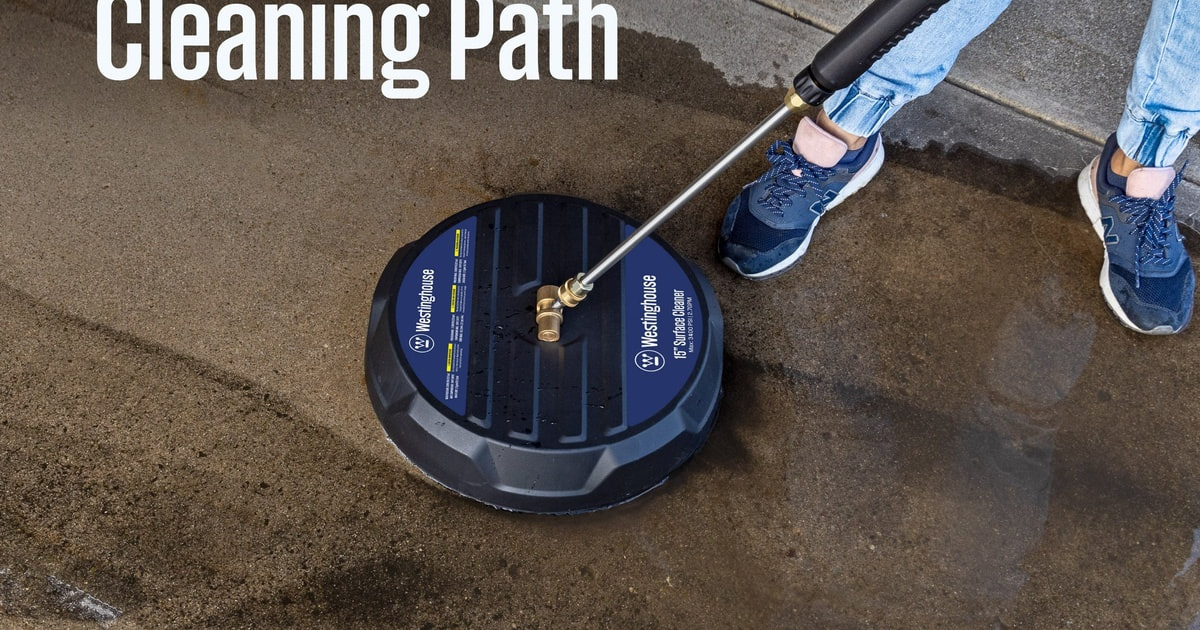
A surface cleaner is the attachment that makes a pressure washer worth owning. Instead of one jet carving stripes into your driveway, two nozzles spin under a sealed hood and spread the pressure evenly as you walk. You cover a 15-inch strip in one pass instead of a few inches. And you stay dry, because the shroud catches most of the spray that would otherwise soak your shoes. If you've ever spent an afternoon waving a wand at concrete and still ended up with zebra stripes, this is the fix.
Here's the catch nobody puts on the box: the spec that matters most isn't PSI, it's GPM. Water volume spins the bar. A 3000 PSI washer that only pushes 1.4 gallons a minute will stall a cleaner that needs 2.0, even though the pressure number looks fine. Go the other way and you get the opposite problem, where a plastic hood rated for electric machines cracks on a big gas unit. Nearly every one-star complaint in this category traces back to one of those two mismatches.
None of these attachments inject soap, either, so oil stains still need a pre-treatment step before you start. We think that the Sun Joe SPX-SC14 is the best pressure washer surface cleaner for most people, and that the Westinghouse Universal 15-inch is the one to buy if you own an electric washer and want the widest path you can get without spending much.
Everything we recommend

Fits almost any machine, from electric to light gas

A wider path for less, if you're on an electric washer

Stainless build and the widest path, at real weight

The one that won't leave arc marks on pavers
At a glance
| Product | Max Psi | Width | Price | |
|---|---|---|---|---|
| Sun Joe 13-Inch Universal Surface Cleaner PressureTop pick | 4000 PSI Max | 13 In | $69.97On sale |
 | GreenWorks 5210902 15" Extension Included Surface CleanerAlso consider | — | 15" | $59.89On sale |
 | RYOBI 15 in. 3400 PSI Gas PressureAlso in lineup | 3400 PSI | 15 in. | $89.99 |
| Kärcher - T 5 T-Racer 11" ElectricAlso great | 2600 PSI | 11" | $67.49 |
| Westinghouse Universal 15” Pressure Washer Surface CleanerBudget pick | 3400 Max PSI | 15" | $39.99 |
| Westinghouse Universal 16.5” Pressure Washer Surface CleanerUpgrade pick | 4400 Max PSI | 16.5" | $89.99 |
 | MTM Hydro PF22 Foam Cannon with WideAlso consider | 1,100-5,000 PSI | — | $94.49 |
How we picked
Machine compatibility. We compared each attachment's stated PSI ceiling and GPM range against the output of typical consumer electric and gas washers. Anything with a connection scheme that locks you into one brand had to earn its place with a real advantage.
Cleaning path width. Width determines how many passes a driveway takes, so we favored the 15-inch range for general residential use. Narrower models had to justify themselves with better pressure concentration or a specialty design.
Housing material. Published reviews and owner feedback point to cracked plastic hoods as the dominant failure mode on gas washers. We treated stainless and powder-coated steel as a requirement for anything recommended to high-output machines.
Weight and handling. Surface cleaners get pushed across hundreds of square feet, and owners of the heavier models regularly mention arm fatigue. We weighed listed weights against cleaning width rather than chasing the lightest option.
Warranty and support. Coverage in this category runs from six months to three years, which is a wide spread for similar hardware. We noted where a longer term offsets a weaker build.
Top pickOn sale
Fits almost any machine, from electric to light gas
Sun Joe 13-Inch Universal Surface Cleaner Pressure
The Sun Joe SPX-SC14 spans a wider machine range than anything else here, with a 4000 PSI ceiling and 4.0 GPM capacity on a plain 1/4-inch quick-connect. If you don't know exactly what your washer puts out, this is the safest thing to buy.
$69.97fromAmazonList priceThe compatibility range is the whole point. Most surface cleaners pick a lane: electric or gas. The SPX-SC14 covers both, with a 4000 PSI maximum and support for up to 4.0 GPM. That means it works on a modest 1700 PSI electric unit and still holds up on a 3000 PSI gas machine in the garage. If you own two washers, or you're buying before you've checked your manual, this removes the guesswork.
The connection is genuinely universal, and that matters more than it sounds. It uses a standard 1/4-inch quick-connect with no brand-specific adapter. Owners report clean snaps onto Ryobi, Greenworks, Westinghouse and Sun Joe machines without weeping at the collar. Adapters are where this category goes wrong — a wrong fitting means a return, a second order, and a weekend lost. You skip all of that.
The 13-inch path is narrower, but it hits harder. You'll make a few more passes on a two-car driveway than you would with a 15-inch model. In exchange, the same water and pressure concentrate over less area, which helps on the ground-in gray film that builds up along a garage apron. For walkways, steps and patios under a couple hundred square feet, the smaller footprint is easier to steer anyway.
It's rated for hot water up to 300°F. Almost nothing else at this level is. Most homeowners will never use hot water, but if you rent a hot-water machine for a grease-stained driveway or a restaurant pad, this attachment won't be the weak link. It's a spec that quietly signals better seals and materials than the price suggests.
Flaws but not dealbreakers
The plastic housing sets a practical limit well below the printed number. The 4000 PSI rating is what the part is certified for, not an invitation to run it eight hours a day on a contractor rig. If you clean driveways for a living, or your gas washer sits above 3000 PSI and you use it hard every week, buy steel instead. For a few weekends a year, the plastic is fine.
There's no detergent port. You can't run soap through it, so oil stains and heavy algae need a separate pre-treatment pass before you start. That's true of every surface cleaner in this guide, but it's still an extra step and an extra purchase.
Owners occasionally report the bar stalling on low-flow electric washers. The listed 4.0 GPM is a maximum, not a minimum, but a machine below roughly 1.5 GPM may not spin it reliably. Check your washer's flow rate before you order, not after.
Budget pick
A wider path for less, if you're on an electric washer
Westinghouse Universal 15” Pressure Washer Surface Cleaner
The Westinghouse Universal 15-inch gives you a full 15-inch cleaning path and a plug-and-go quick-connect for well under what most competitors ask. At about four pounds, it's the easiest one here to push around a long driveway.
$39.99fromAmazonYou get a wider path than several pricier attachments. Fifteen inches is the standard size for residential driveways, and this one costs a fraction of what some 13-inch models do. On a 500-square-foot slab, that width translates directly into fewer passes and a shorter afternoon. It's the most straightforward upgrade in this guide.
Four pounds is the number to pay attention to. Surface cleaners get dragged, not carried, and the heavier ones fight you at the end of a long session. This one is light enough that you can steer it one-handed while you manage the hose with the other. Owners with big driveways consistently mention the low weight as the reason they finished in one go.
The 3400 PSI ceiling covers every consumer electric washer. Most electric machines land between 1500 and 2500 PSI, so you've got real headroom. There's no adapter to buy and no compatibility chart to decode — it snaps onto a standard 1/4-inch quick-connect and starts working.
It's the low-risk way to find out whether you want one of these at all. If you've never used a surface cleaner, this is enough attachment to show you the difference without much commitment. Plenty of owners buy it as a trial and never feel the need to upgrade.
Flaws but not dealbreakers
Skip it if you own a serious gas washer. The 3400 PSI ceiling is a hard limit, and the housing isn't stainless. Sustained use on a machine above 3000 PSI is how plastic hoods crack, and that failure tends to happen mid-job rather than politely at the end of the season.
Very low-flow electric washers may not spin it. If your machine sits under about 1.2 GPM, the bar can turn sluggishly or not at all. This is the single most common complaint owners raise, and it's a machine mismatch rather than a defect.
The internals are built to the price. No stainless components, no ball-bearing swivel worth speaking of. Expect a few seasons of normal residential use rather than a decade.
Upgrade pick
Stainless build and the widest path, at real weight
Westinghouse Universal 16.5” Pressure Washer Surface Cleaner
The Westinghouse Universal 16.5-inch trades plastic for stainless steel and adds an inch and a half of width. If you clean more than a few times a year, or you run a gas washer, it's the one that will still be around in a decade.
$89.99fromAmazonStainless steel is the difference between a few seasons and many. Plastic hoods flex, then craze, then crack under repeated high-pressure use. Stainless doesn't. If you clean your driveway, patio and walkways three or four times a year, this is the build that stops you from rebuying every couple of seasons.
The 4400 PSI ceiling covers essentially every consumer gas washer. You can pair it with a 3500 PSI machine and not think about it again. That headroom also means the attachment isn't running at the edge of its rating, which is where seals and bearings wear fastest.
Sixteen and a half inches shaves real time off a two-car driveway. Compared with a 15-inch model, you're covering about ten percent more ground per pass. Over 500 or 600 square feet, that's several fewer laps and noticeably less hose wrangling.
It still uses the same universal 1/4-inch quick-connect. Upgrading the build doesn't mean giving up compatibility. It snaps onto gas and electric machines alike, so if you switch washers later, the attachment comes with you.
Flaws but not dealbreakers
Steel weighs more, and you'll feel it. On a large flat driveway the weight helps keep the hood down. On a sloped drive or a long session, it's more arm fatigue than the four-pound plastic models. Some owners keep the cheap one for quick jobs and save this for the big cleanups.
The warranty is shorter than you'd expect at this level. Westinghouse backs it for 180 days, which is well under what a couple of cheaper attachments here offer. The hardware should outlast the coverage by years, but it's a strange gap on the most durable product in the lineup.
No soap port, same as the rest. Pre-treating still has to happen separately.
The Westinghouse 16.5-inch is backed by a 180-day limited warranty.
Also great
The one that won't leave arc marks on pavers
Kärcher - T 5 T-Racer 11" Electric
The Kärcher T 5 T-Racer uses a T-shaped arm instead of a spinning disk, so it cleans in parallel strips rather than overlapping circles. On textured pavers and decorative stone, that's the difference between clean and blotchy.
$67.49fromAmazonThe T-shape solves a problem disk cleaners can't. Round cleaners sweep in arcs, and on irregular surfaces those arcs show up as faint crescent shadows. The T-Racer's arm lays down parallel strips at a fixed nozzle height instead. If you've got flagstone, decorative pavers or a stamped patio, this is the only attachment here designed for that job.
You can dial the pressure down for delicate surfaces. A variable pressure dial and adjustable nozzle height let you back off on softer stone, older mortar joints or composite decking. Most surface cleaners are all-or-nothing — you get whatever your washer puts out. Here you have a knob.
The shroud and splash skirt actually keep you dry. Kärcher designed the housing to trap overspray, and owners consistently say they finish a session without soaked pants. That sounds minor until you've cleaned a patio in the wrong shoes.
Pull the extension wands off and it cleans vertical surfaces. Grab the handles on the shroud and you can run it up a stucco wall or a fence panel. It's a genuinely different tool from the disk cleaners, which only work face-down on the ground.
Flaws but not dealbreakers
It only fits Kärcher K1 through K5 machines. That's not a soft recommendation, it's a hard wall. If you own anything else, this attachment is not an option, and no adapter changes that.
Eleven inches is the narrowest path here. On a big concrete driveway you'll be walking a lot more than you would with a 15-inch model. It's built for patios and pavers, not for covering ground fast.
The 2600 PSI rating rules out gas washers entirely. This is an electric-only attachment, and there's no version of the argument where you connect it to a gas machine.
Who this is for
Buy a surface cleaner if you own a pressure washer and any amount of flat concrete — a driveway, a patio, a walkway, a garage floor. It's the attachment that turns an all-afternoon chore into something you finish before lunch, and it stops the striping that makes wand-cleaned concrete look worse than before you started. If your only pressure washing is cars and lawn furniture, skip it. A surface cleaner is useless on anything that isn't flat and horizontal.
Before you buy anything here, find your washer's GPM. It's in the manual or on the label, sometimes as liters per minute — divide by 3.79 to convert. Match that against the attachment's requirement, and match your PSI against its ceiling. This guide covers residential and light-commercial attachments for cold-water machines. It doesn't cover hot-water commercial units, 20-inch-plus contractor cleaners, or any of the specialty tooling for parking decks and warehouse floors.
How we picked
We built this guide around the specs that actually predict whether an attachment works on your machine and lasts. Compatibility: we matched stated PSI ceilings and GPM ranges against the real output of consumer electric and gas washers, and treated brand-locked connections as a cost. Path width: 15 inches is the residential sweet spot, so narrower models needed a reason — either concentrated pressure or a design that solves a surface problem disks can't. Housing: cracked plastic under gas-washer pressure is the failure owners report most, so steel was non-negotiable for anything we recommend to high-output machines. Handling: we compared listed weight against cleaning width, since a heavy attachment costs you at the end of a long driveway. Warranty: terms here range from six months to three years, and we noted where longer coverage offsets a lighter build.
Other pressure washer surface cleaners worth considering
If you want the longest warranty on a plastic attachment: The GreenWorks 5210902 15" Extension Included Surface Cleaner ($59.89) — The GreenWorks 5210902 covers a full 15 inches, includes an extension wand so you're not stooping, and carries a three-year warranty — far longer than anything else in its price range. It uses the same universal 1/4-inch quick-connect as our picks, so it isn't limited to Greenworks machines despite the green plastic. What you give up is headroom: it's built for electric washers, and it's the wrong choice for any gas machine. If your washer is electric and you want coverage that outlasts the hardware, this is a reasonable swap for our budget pick.
If you're fighting oil stains and old grime: The MTM Hydro PF22 Foam Cannon with Wide ($94.49) — The MTM Hydro PF22 isn't a surface cleaner — it's the step before one. None of the attachments here inject soap, so on a driveway with years of engine drips you're asking clean water to do chemistry's job. The PF22 lays down thick foam from a 32-ounce wide-mouth bottle, you let it sit a few minutes, then you run your surface cleaner. Its 1,100 to 5,000 PSI and 1.4 to 5.3 GPM ranges cover essentially every machine. You'll need to buy detergent separately, and it's a companion purchase rather than a replacement for anything above.
The competition
This is what our research surfaced in the residential surface cleaner market, not a census of everything for sale. Plenty of contractor-grade tooling and house-brand attachments never made the shortlist. The product below is worth knowing about, but it lost to our picks on availability or on value at its asking price.
The RYOBI 15 in. 3400 PSI Gas Pressure ($89.99) — The RYOBI RY31SC15 is a 15-inch, 3400 PSI cleaner with caster wheels, and the wheels are a real idea — rolling a heavy attachment across a 600-square-foot driveway beats dragging it. If you already own Ryobi gas equipment and want the matching accessory, it makes sense. But it's sold as a used unit, listing information is thin, and availability is inconsistent, which is a lot to accept when the Westinghouse 16.5-inch stainless model costs less and is built to last longer. The casters also add bulk on a shelf. Worth a look if you find one in good condition at the right price, otherwise our picks cover the same ground more reliably.
Installation and upkeep notes
Leaks almost always come down to the O-ring in the quick-connect socket. Check that it's seated and undamaged, pull the collar back, push the fitting in until it clicks, then run the washer at low pressure for a second before you start. If it still weeps, replace the O-ring — they're sold at any hardware store. Nozzles are the part that wears out first on every model here. When your passes start leaving faint stripes, pull the tips, soak them in warm water and white vinegar for about twenty minutes, and clear the orifice with a nozzle needle. Rinse before reinstalling. And when you're cleaning, overlap each pass by an inch or two and keep a steady walking pace. Stopping mid-pass burns a mark into concrete that you can't wash out.
Questions we get
What PSI and GPM do I need for a surface cleaner to spin?
Most surface cleaners need somewhere between 1000 and 1500 PSI to turn the bar, but PSI is rarely the problem. Water volume is what spins it, and most residential models want at least 1.5 to 2.0 GPM. The Simpson Cleaning 80165 asks for 2.3 GPM minimum. Check both numbers on your washer before you order anything.
Why is my surface cleaner leaving stripes on the driveway?
Usually it's technique. Move at a steady walking pace, overlap each pass by an inch or two, and don't pause mid-strip. If the stripes persist, your nozzles are probably worn or partially clogged — pull them and soak them in vinegar. On pavers and textured stone, faint arcs are a limitation of disk-style cleaners themselves, which is why the Kärcher T-Racer uses a T-shaped arm instead.
Can I use a gas-rated surface cleaner on my electric washer?
Not effectively. Gas-rated cleaners typically need 2.0 to 2.5 GPM, which most electric machines can't supply, so the arm turns slowly or stalls entirely. The quick-connect may fit physically, which is what fools people. Pick based on your machine's PSI and GPM output, not on whether the fitting snaps together.
What size cleaner should I get?
Fifteen inches suits most residential driveways, patios and sidewalks. For small areas under about 200 square feet, a 12- or 13-inch model like the Sun Joe SPX-SC14 is easier to steer and concentrates pressure better on stains. If you regularly clean more than 600 square feet, the Westinghouse 16.5-inch cuts your total passes by roughly ten percent. Match the width to your square footage, not to your washer's power.
Can I use soap with a surface cleaner?
Not through the attachment — none of these have a detergent port. The workflow professionals use is to pre-treat first with a foam cannon like the MTM Hydro PF22, let the soap dwell for three to five minutes, then run your surface cleaner passes. On oil-stained or badly neglected concrete, that pre-treatment does more than any amount of extra pressure.
Can I use one on a wood deck?
Only carefully. Keep your washer at or below 1500 PSI and hold the cleaner well off the surface, because higher pressure drives water into the grain and can split soft pine or cedar. For composite decking, check the manufacturer's guidance first — most allow up to 1500 PSI with adequate standoff. When you're unsure, a fan tip at a shallow angle is safer than a surface cleaner, which concentrates more pressure than it looks like it does.
Why you should trust us
For this guide:
- We compared manufacturer spec sheets for every attachment in this guide, focusing on stated PSI ceilings, GPM ranges, housing materials and connection types.
- We read published reviews from outlets covering outdoor cleaning equipment alongside owner feedback themes, paying particular attention to reports of housing failure and bars that won't spin.
- We cross-checked each product's compatibility claims against the typical output ranges of consumer electric and gas pressure washers.
- We read owner reviews on every listing, weighted toward the critical ones, because that is where the recurring failures show up.
- We have a systematic way of automatically fetching the latest prices, so the numbers on this page stay current.
- This is a research-focused guide, so the team may not own every product listed — though we often do own the top winners, which gives us extra context for the recommendations.
- We don't accept free products, and the retailer commission never changes which product we recommend.
Sources
Best Pressure Washer Surface Cleaners — Tested and Reviewed, Bob Vila
Best Pressure Washer Attachments 2026 — Buyer's Guide, Popular Mechanics
Best Pressure Washer Surface Cleaners — Expert Picks, This Old House
Best Pressure Washer Surface Cleaners for Every Budget, Family Handyman
Best Pressure Washer Attachments — Cleaning Performance Guide, Good Housekeeping
Amazon product listings and owner reviews for all 7 products
Manufacturer specification pages for each product
Some passages in this guide may be paraphrased with AI help. Prices are refreshed automatically.
More like this.
Continue exploring home reviews and recommendations.

The Best Electric Pressure Washers for Driveways
A driveway is the hardest surface most homeowners will ever clean. It collects tire grit, engine drips, winter salt, and a slow green film of algae along…

The Best Portable Washing Machines for Apartments
Laundry day in an apartment without hookups is a logistics problem. You haul a bag down three flights, feed quarters into a machine someone else just left…

The Best Waterless Car Wash Products
If you live in an apartment, park in a garage, or just don't want to drag out a hose, a waterless wash is how you keep a car looking clean. You spray a…

The Best Washing Machines
A washing machine is the appliance you notice least until it goes wrong. You load it, you walk away, and you want the clothes clean the first time, so you…

The Best High-Pressure Shower Heads
A shower head is the fixture you touch every single morning, and a bad one sets the tone for the whole day. Weak pressure means standing under a lukewarm…

The Best Stains and Sealers for Pressure Treated Decks
A deck stain has one real job: keep water and sun out of the boards. Pressure treated pine takes the worst of both. Rain pools on the flat surfaces, the…