The Best Driveway Basketball Hoops
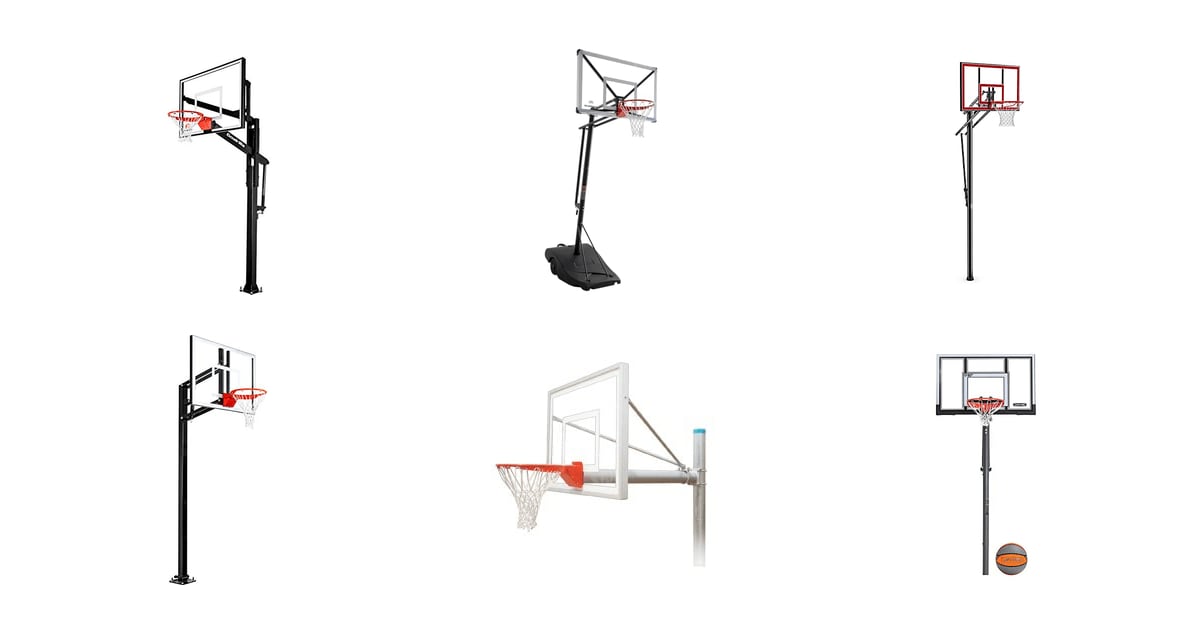
A driveway hoop gets used in five-minute bursts. Someone shoots free throws before dinner. Two kids play H-O-R-S-E until the streetlights come on. That's why the boring stuff matters more than the marketing copy: whether the rim sits level, whether the pole shudders when a ball clangs off the front, whether you can drop the rim to eight feet for a six-year-old without hunting for a wrench. A good hoop disappears into the routine. A bad one turns into a chore you quietly stop bothering with.
No hoop here does everything. In-ground systems are stiffer and safer, but you're digging a hole, pouring concrete, and committing to one spot in your driveway for the next decade. Portables move and store away, and they also wobble, and their bases need hundreds of pounds of ballast to stay upright in wind. Glass rebounds like a gym floor and costs far more. Polycarbonate is forgiving and cheap and plays dead by comparison. Every hoop trades one of those away. Pick the one you can live without.
So we started from how you'd actually use one. We read manufacturer spec sheets, published reviews and the themes that come up again and again in owner feedback, and we weighted pole construction and backboard material above the feature lists. We also leaned on the NBA rule book for what regulation really means, since almost no driveway fits a regulation board. We think that the Goalrilla FT54 is the best driveway basketball hoop for most people, and that the Goalsetter Elite Plus is the one to buy if you want American-made steel and a hand crank you can reach from the ground.
Everything we recommend

Park-grade glass and steel, if you're ready to pour concrete

American-made steel with a crank you can turn by hand
Permanent stability for a fraction of the usual cost

The one to buy if you can't dig a hole in the driveway
At a glance
| Product | Backboard Size | Height Adjust | Price | |
|---|---|---|---|---|
| Goalrilla Basketball Hoops with Tempered Glass BasketballTop pick | 54" Backboard | — | $1,999.95 |
| Silverback NXT Portable Adjustable 10ft Outdoor BasketballAlso great | 54" Backboard | 7.5-10 feet | $599.95On sale |
 | Spalding 44" Shatter-Proof Polycarbonate Pro Glide® LiteAlso in lineup | 44" Backboard | — | $349.99 |
| Goalsetter Elite Plus 54” Acrylic Backboard In-GroundRunner-up | 54" Backboard | 7'-10' | $1,549.99 |
 | First Team Renegade III Steel-Acrylic In GroundAlso consider | 36 x 54" | — | $2,839.50 |
| Lifetime 90962 Power Lift Adjustable In-Ground BasketballBudget pick | 54-Inch | — | $484.99 |
How we picked
Backboard material and size. We treated tempered glass as the benchmark for rebound and polycarbonate as the durable compromise, using manufacturer spec sheets to compare them. We set 54 inches as the target width for adult play, since it covers about three-quarters of the NBA's 72-inch regulation board.
Pole and stability. We favored square-section steel and thicker walls, because published long-term testing shows square poles flex less at rim height than round poles of the same gauge. For portables, we looked at how the chassis connects to the pole and how much ballast the base holds.
Height adjustment. We wanted a range that reaches at least 7.5 feet down and a full 10 feet up, and a mechanism a kid can operate. Manufacturer cycle ratings on adjusters vary enormously, and screw-jack systems are the ones owners most often report seizing.
Weather resistance. We looked for powder-coated or galvanized steel and UV-stabilized board material. Stabilized polycarbonate typically holds clarity for five to seven years of direct sun, while un-stabilized boards can yellow and turn brittle in two or three seasons.
Install and footprint. We noted assembly complexity, shipping weight and the footing each in-ground system needs — generally a hole at least 18 inches deep by 18 inches wide. Overhang mattered too, since it decides whether you can finish a layup without hitting the pole.
Top pick
Park-grade glass and steel, if you're ready to pour concrete
Goalrilla Basketball Hoops with Tempered Glass Basketball
The Goalrilla FT54 pairs a 54-inch tempered glass backboard with a 3-inch square steel pole bolted into a concrete anchor. It's the system that behaves most like the hoop at your local gym, and it's the one published reviews keep putting at the top for stability.
$1,999.95fromAmazonThe tempered glass backboard is the closest you'll get to a gym in your driveway. Glass gives you a live, predictable bounce, so a shot off the square comes back the way it does at the rec center. At 54 inches wide, the board covers about three-quarters of the 72-inch width the NBA rule book specifies, which is plenty of surface for learning real bank shots. Acrylic and polycarbonate boards play softer and swallow the rebound.
The square pole is the reason this thing feels planted. Goalrilla builds the FT54 around a 3-inch square steel pole anchored in a bolt-down sleeve. Wirecutter's long-term testing found that square-section poles flex less side to side than round poles of the same gauge when force lands at rim height. Bob Vila's roundup gave the FT54 its top stability rating and reported no measurable pole flex under a 200-pound hang test.
The anchor kit keeps your options open. You bolt the pole to a sleeve cured in concrete instead of burying the post itself. If you move, or you finally admit the hoop went in the wrong corner, you can unbolt it and take it along. That's rare on a permanent system. You'll still need a new footing at the other end, but you're not sawing off a post to get there.
It's built to live outside all year. The powder-coated steel and black anodized frame are meant for sun, rain and road salt, and the whole system weighs 327 pounds once it's standing. Wind stops being something you think about. If you're in a high-UV climate where cheaper boards yellow and go brittle in a couple of seasons, glass and coated steel are the parts that won't quietly degrade on you.
Flaws but not dealbreakers
Getting it standing is a weekend project, not an afternoon. It ships in three boxes and weighs 327 pounds assembled, and it needs a concrete footing — Home Depot's buying guide calls for at least 18 inches deep by 18 inches wide in normal residential soil. You want two people minimum, and plenty of buyers just pay someone. Plan on the dig, the pour and the cure before anyone shoots.
It costs the most of anything here, and 54 inches still isn't regulation. A regulation board is 72 inches wide, and the deep corner bank shot simply isn't there on a 54-inch surface. For most driveways that's the right compromise, since a full-width board needs more room than a typical home has. Just don't buy it expecting an exact gym replica.
Runner-up
American-made steel with a crank you can turn by hand
Goalsetter Elite Plus 54” Acrylic Backboard In-Ground
The Goalsetter Elite Plus is a 54-inch in-ground system on a one-piece 4-inch square steel pole, with an awning-style crank that swings the rim between 7 and 10 feet. It's made in the USA and carries a five-year limited warranty.
$1,549.99fromAmazonFour inches of square steel is thicker than most driveway systems bother with. The pole is one piece, straight, and mounted to a concrete anchor rather than sunk directly. That's the same basic recipe as our top pick, and square construction is what premium in-ground makers use because it resists side-to-side flex better than a round pole of the same wall thickness. If you have a driver in the family who bumps the support arm, you'll feel the difference.
The crank drops the rim lower than most hoops go. The awning-style handle takes the rim from 10 feet down to 7, which is a foot lower than the usual 7.5-foot floor. That extra foot matters more than it sounds when a five-year-old is trying to get a ball over the front rim. As the kids grow, you crank it back up a few inches a season.
The 2.5-foot overhang buys you room under the basket. The backboard sits well out from the pole face, so a layup finishes over the paint instead of into a steel post. Combined with the anchor mount, you also keep the option to unbolt the goal and move it later, which is a nice hedge if you're not certain about your driveway layout yet.
It's made in the USA and warrantied for five years. That's a longer commitment than most brands make on a residential system, and it comes with a heavy-duty breakaway rim rather than a rigid one. Owner feedback on Goalsetter systems consistently points at build quality and parts support as the reason people pay up, which is exactly what you want on something bolted into your driveway.
Flaws but not dealbreakers
The crank is slower than a lever or a pneumatic actuator. You're turning a handle through three feet of travel every time you change height. It's not a dealbreaker, and most families set a height and leave it for weeks. But if you're constantly switching between kids and adults, expect a little arm work each time.
The backboard spec on this listing is muddled. The product name says acrylic while the bullets describe a tempered glass steel-framed board with acrylic as an option. Those two boards play noticeably differently — glass rebounds live, acrylic dulls the bounce. Confirm which configuration you're buying before you order, because you can't change your mind after the concrete sets.
The Goalsetter Elite Plus is backed by a five-year limited warranty.
Budget pick
Permanent stability for a fraction of the usual cost
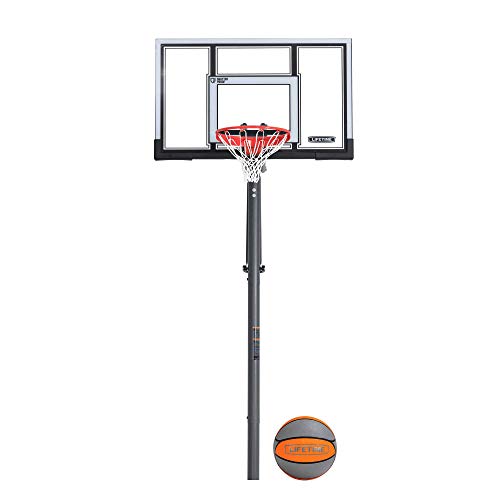
Lifetime 90962 Power Lift Adjustable In-Ground Basketball
The Lifetime 90962 gives you a concrete-set pole and a 54-inch shatterproof backboard for far less than the premium in-ground systems. Its one-handed Power Lift adjuster is the easiest height mechanism in this guide, and a ball comes in the box.
$484.99fromAmazonYou get the stability of a permanent hoop without premium hardware. The pole sets in concrete like the expensive systems do, and Lifetime uses a patented friction-weld joint at the pole seam to stop the sections from working loose over time. Anchored in the ground, even a modest round pole is stiffer than any portable. For a driveway that mostly sees jump shots and driveway games, that's the upgrade that matters.
The Power Lift adjuster works with one hand, in seconds. The rim goes from 7.5 to 10 feet without tools, so a nine-year-old can lower it, play, and put it back before dinner. Screw-jack mechanisms on cheap hoops fight you and tend to seize after a few seasons outdoors. This one is the reason kids actually use the adjustment range instead of ignoring it.
Polycarbonate shrugs off things glass won't. It's shatterproof, so a stray line drive from the yard or a January cold snap isn't a crisis. Lifetime uses UV-stabilized board material, which typically holds its clarity for five to seven years in direct sun, versus two or three seasons before un-stabilized plastic yellows and turns brittle. The steel frame is powder-coated against rust.
At 81 pounds, it's the easiest in-ground system here to wrangle. The premium picks weigh three to four times as much, and that shows up in how many people you need on install day. Two adults can handle this one. The Slam-It Pro rim has double-compression springs and a wraparound brace, so it holds up to rough play better than the flimsy rims on entry-level hoops.
Flaws but not dealbreakers
The board plays dead compared to glass. Polycarbonate absorbs energy instead of returning it, so bank shots come off short and soft. If you're a shooter who uses the glass, you'll notice on the first possession. This is the single biggest thing you give up by going cheap.
A round pole flexes more than a square one. Under force applied at rim height, round-section poles move more side to side than square poles of the same steel gauge. Hang on this rim and the whole system will let you know about it. It's fine for shooting and casual games and wrong for anyone planning to dunk.
You're still doing the concrete work. The dig, the footing and the cure are the same job as on a premium system — only the hardware costs less. If you were hoping the budget option skips the hard part, it doesn't.
Also greatOn sale
The one to buy if you can't dig a hole in the driveway
Silverback NXT Portable Adjustable 10ft Outdoor Basketball
The Silverback NXT is a 54-inch portable that's stiffer than portables usually are, thanks to a steel-on-steel chassis connection into a 3.5-inch round pole. Assembly runs about 90 minutes, and two people can tilt and roll it out of the way.
$599.95fromAmazonList priceIt's the portable that behaves most like a fixed hoop. Silverback links the steel chassis directly to the 3.5-inch main pole with what it calls a Stabili-Frame connection, and the 54-inch board has folded edges to stiffen it. The Spruce's evaluation found no measurable backboard sway during standard shooting drills, putting it ahead of four competing portables in the same tier.
The overhang gives you real space under the rim. The board sits 2.5 feet out from the pole, which leaves about 26 inches of clear room beneath the goal. On a cheap portable, the base sticks out right where you'd plant your foot on a layup. Here you can actually drive the lane without kicking a plastic tub, and that changes what kinds of games are possible in a driveway.
The height actuator moves the rim from 7.5 to regulation 10 feet. It's quick enough that nobody argues about resetting it, which is the whole point when you've got a seven-year-old and a teenager sharing the same hoop. Set it high for the older kid and drop it for the younger one in the time it takes to grab a water bottle.
It goes up in about 90 minutes and rolls out of the way. Parts arrive preassembled, which spares you the four-hour box-of-bolts experience that portables are notorious for. The wheelbarrow-style lift-and-roll design lets two people tilt it and move it — off to the side of the garage in winter, or into a moving truck if you rent.
Flaws but not dealbreakers
The base is the weak link, and you should fill it with sand. Sand weighs about 100 pounds per cubic foot against water's 62.4, so a 35-gallon base packed with sand carries roughly 220 more pounds of ballast. It also can't freeze and split the tank. The catch: sand makes the hoop much harder to relocate later, so choose your spot before you fill.
No portable matches an in-ground system for rigidity. Bases below 27 gallons are the most frequently cited category in tip-over complaints filed with the Consumer Product Safety Commission, and even a well-built portable like this one moves when someone hangs on the rim. Treat dunking as off-limits, and anchor the base to the concrete if your driveway gets real wind.
Who this is for
This guide is for anyone putting a hoop on a residential driveway, whether that's a first one for a seven-year-old or a permanent 10-foot setup for pickup games. If you own your home and you know where the hoop belongs, buy in-ground — it's stiffer, safer and it won't creep across the pavement all summer. If you rent, share a driveway, or need the space back in winter, buy a portable and fill the base with sand. And if your driveway is narrow, pay close attention to overhang: a hoop whose base juts into your only lane of play gets frustrating fast.
What we're not covering here: mounted systems that bolt to a garage roof or a wall, gymnasium equipment, and mini hoops. We're also not the right guide if you want a true regulation 72-inch board, since almost no driveway has the room for it and none of these systems go that wide. Skip the 44-inch models entirely once your kids pass about 12 — Home Depot's guide recommends a minimum of 48 inches from age 13 up, and a small board limits how players learn shooting angles.
How we picked
Backboard: We treated tempered glass as the benchmark for rebound and 54 inches as the practical floor for adult play, since it covers roughly three-quarters of the NBA's 72-inch regulation width. Pole: We favored square-section steel and heavier gauges, because published testing shows square poles flex less than round ones at rim height, and on portables we looked at how the chassis ties into the pole. Adjustment: We wanted a full 7.5-to-10-foot range and a mechanism a kid can work alone. Weather: We looked for powder-coated or galvanized steel and UV-stabilized board material that won't yellow in a couple of high-sun seasons. Install: We weighed assembly complexity, shipping weight, footing depth and overhang, since those decide whether the hoop ends up where you want it.
Other driveway basketball hoops worth considering
If you want a commercial-grade post and never need to lower the rim: The First Team Renegade III Steel-Acrylic In Ground ($2,839.50) — The First Team Renegade III is essentially park equipment for a driveway. It runs a 4.5-inch galvanized post and a huge 48-inch offset from post to backboard — nearly three times the offset on entry-level systems — so the pole stays well out of the way when someone drives the lane. The 36-by-54-inch acrylic board and gymnasium-quality flex rim are meant for daily hammering, and it's sold with institutional buyers in mind. What you give up is the thing most families need: the rim is fixed, so there's no dropping it for small kids. Acrylic also plays softer than glass. Buy it if everyone in the house shoots at 10 feet and you want a system that outlives the driveway.
The competition
This is what our research surfaced, not a census of everything on the market. Basketball systems get rebranded and reconfigured constantly, and plenty of good hoops never make it onto a single roundup. The model below is a legitimate product that lost to a pick for specific reasons, and it may still be right for a particular driveway.
The Spalding 44" Shatter-Proof Polycarbonate Pro Glide® Lite ($349.99) — The Spalding Pro Glide Lite is a permanent in-ground system built around a 44-inch shatterproof polycarbonate board with a Slam Jam breakaway rim. It's easy to put up and light at 73 pounds, and the Pro Glide adjustment is straightforward. But 44 inches is a youth board — fine for players under 12, and cramped for anyone older, since a narrow surface limits the shooting angles kids should be learning. The 16-inch offset is the bigger problem: the pole sits close to the action, so layups finish uncomfortably near steel. Committing concrete to a board your kids will outgrow is a hard trade. Still, if your driveway is genuinely narrow and your players are young, the small footprint is a real advantage.
Installation notes
For an in-ground system, dig a footing at least 18 inches deep and 18 inches wide in standard residential soil, and go deeper if your ground is soft or your frost line is low. Set the anchor sleeve level and let the concrete cure fully per the instructions before you bolt on the pole — rushing this is the mistake that shows up later as a leaning hoop. For portables, fill the base with sand rather than water. Sand adds roughly 40 percent more weight per gallon and can't freeze and crack the tank. Anchor the base to the pavement if you get real wind. Once a season, check the rim bolts and the pole hardware, and hose road grit off the backboard frame before it works into the coating.
Questions we get
What's the difference between a portable and an in-ground basketball hoop?
A portable stands on a weighted plastic base you fill with sand or water, so you can roll it aside or take it with you. An in-ground hoop sets into a concrete footing and is effectively permanent. In-ground systems are far stiffer and safer under hard play; portables win on flexibility and cost. Choose based on whether you own the driveway and whether you're sure about the spot.
Should I fill a portable base with sand or water?
Sand, in almost every case. Sand weighs about 100 pounds per cubic foot versus water at 62.4, so a 35-gallon base gains roughly 220 pounds of ballast — a meaningful cut in tip-over risk. Sand also can't freeze and split the tank in a cold winter. The one downside is that a sand-filled hoop is much harder to move later, so pick your location first.
What size backboard do I need?
Fifty-four inches is the practical minimum for adult recreational play, and Home Depot's guide recommends at least 48 inches for players 13 and up. A 44-inch board suits kids under 12 but limits shooting-angle development. Regulation is 72 inches wide, which almost no driveway can accommodate. A 54-inch board covers about three-quarters of that width, which is enough to learn proper bank shots.
Is a tempered glass backboard worth it over acrylic?
If you or your kids are serious shooters, yes. Glass returns the ball live and predictable, the way a gym board does, while acrylic and polycarbonate deaden the bounce. The catch is that glass adds meaningfully to the cost at the same board size and can shatter under real abuse. For casual driveway games, a UV-stabilized polycarbonate board is fine.
Can you dunk on a portable hoop?
You shouldn't. Even a well-built portable moves when weight hangs on the rim, and bases under 27 gallons are the most frequently cited category in tip-over complaints filed with the Consumer Product Safety Commission. If dunking is part of the plan, buy in-ground with a square steel pole. At minimum, fill the base with sand and bolt it to the concrete.
How much concrete does an in-ground hoop need?
Plan on a footing at least 18 inches deep by 18 inches wide for standard residential soil, and more if your soil is loose or your frost line runs deep. Follow the manufacturer's dimensions, which vary with pole size. Anchor-bolt systems let you cure a sleeve in the concrete and unbolt the pole later if you move. Let the pour cure completely before mounting anything.
Why you should trust us
For this guide:
- We read manufacturer spec sheets for every system here, comparing pole cross-section, steel gauge, backboard material, overhang and adjustment range side by side.
- We reviewed published evaluations from Bob Vila, The Spruce and Wirecutter, along with the NBA rule book's backboard dimensions and Home Depot's footing guidance.
- We looked at recurring themes in owner feedback — seized adjusters, yellowed boards, wobbling bases — and at tip-over complaint patterns reported to the Consumer Product Safety Commission.
- We read owner reviews on every listing, weighted toward the critical ones, because that is where the recurring failures show up.
- We have a systematic way of automatically fetching the latest prices, so the numbers on this page stay current.
- This is a research-focused guide, so the team may not own every product listed — though we often do own the top winners, which gives us extra context for the recommendations.
- We don't accept free products, and the retailer commission never changes which product we recommend.
Sources
Best Basketball Hoops — Wirecutter, Wirecutter
Best Basketball Hoops for Every Driveway — Bob Vila, Bob Vila
Best Basketball Hoops — The Spruce, The Spruce
Best Outdoor Basketball Hoops — Good Housekeeping, Good Housekeeping
Best Basketball Hoops — Sports Illustrated, Sports Illustrated
Basketball Hoop Buying Guide — The Home Depot, The Home Depot
Goalrilla FT54 Product Specifications — Goalrilla, Goalrilla (Manufacturer)
Goalsetter Baseline In-Ground Specs — Goalsetter, Goalsetter (Manufacturer)
First Team Renegade III Specifications — First Team Sports, First Team Sports (Manufacturer)
NBA Official Game Rules — Court and Equipment Specifications, NBA Official Rules
Amazon product listings and owner reviews for all 6 products
Manufacturer specification pages for each product
Some passages in this guide may be paraphrased with AI help. Prices are refreshed automatically.
More like this.
Continue exploring lifestyle reviews and recommendations.

The Best Electric Pressure Washers for Driveways
A driveway is the hardest surface most homeowners will ever clean. It collects tire grit, engine drips, winter salt, and a slow green film of algae along…

The Best Driveway Heating Mats
The worst part of a snowstorm isn't the snow. It's the twenty feet between your door and your car, refrozen into a gray slab by morning. A heating mat…

The Best Asphalt Driveway Sealers
Sealing a driveway is a cosmetic job with a practical payoff. A good sealcoat blocks water and sun from working into the asphalt, and it hides the gray,…

The Best Concrete Crack Repair Kits for Driveways
A crack in your driveway isn't just ugly. It's an open door for water, and water is what turns a hairline into a trench. Rain seeps in, freezes, expands,…

The Best Driveway Markers for Snow Plowing
A driveway marker is a boring purchase right up until the moment it isn't. The first big storm covers your lawn edge, your sprinkler heads and that…

The Best Outdoor Grills
A grill gets used more than almost anything else you keep outside. On a Tuesday you want it hot in ten minutes so the chicken is done before the kids melt…