The Best Asphalt Driveway Sealers
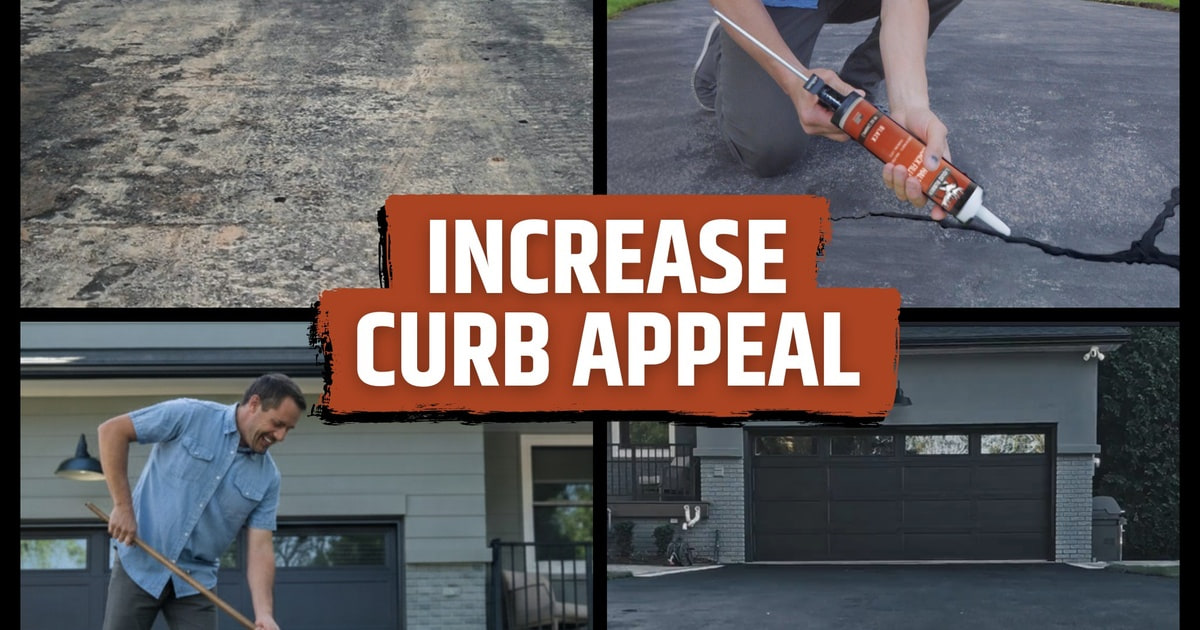
Sealing a driveway is a cosmetic job with a practical payoff. A good sealcoat blocks water and sun from working into the asphalt, and it hides the gray, pebbly look that a few hard winters leave behind. The work isn't hard, but it is a weekend. You'll sweep, scrub the oil spots, fill the cracks, then pull sealer across the surface with a squeegee and wait. Do it carefully and your driveway looks new again for a couple of seasons. Rush it and you'll see every streak from the sidewalk.
Here's what no sealer does: fix a driveway that's failing underneath. Sealer is a thin skin. It won't lift a sunken spot, bridge a crack wider than a pencil, or hold a pothole together, and spreading it over damage just gives you a smooth black lid on a bad surface. The products also vary less than the marketing suggests. Most consumer pails are asphalt emulsion with sand and latex mixed in, so prep, timing and two thin coats matter more than which pail you grab.
So we focused on what you can actually compare: formulation, how much ground a container covers, what the label claims to fill, and how it goes on. We also leaned toward coal-tar-free formulas, since a number of states and cities restrict coal-tar sealants over PAH runoff. We think that the Black Jack Drive-Maxx 1000 Premium Filler & Sealer is the best asphalt driveway sealer for most people, and that the Liquid Rubber Driveway Restore is the one to buy if you want a water-based, low-odor coating you can brush on.
Everything we recommend

Fills hairline cracks, dries fast, and it's easy to find

A water-based coating you brush on, if you buy enough of it

Contractor-grade emulsion, if you have a lot of pavement
At a glance
| Product | Container volume | Application | Price | |
|---|---|---|---|---|
 | Red Devil 0637 Asphalt Crack Filler SealantAlso consider | 10.1 fl oz, pack of 4 | Caulking gun | $17.26 |
| Black Jack Drive-Maxx 1000 Premium 10 YearTop pick | 5 gallons | — | $34.97On sale |
| Asphalt Emulsion Sealer for Driveways and ParkingUpgrade pick | Four 55-gallon drums | — | $2,389 |
| Liquid Rubber Driveway Restore - Asphalt SealerRunner-up | 4 gallons | — | $139.95 |
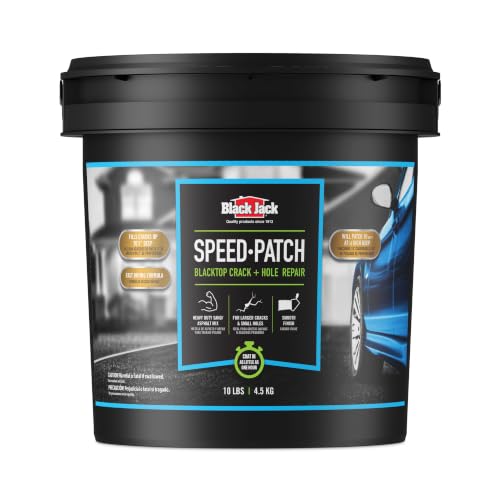 | Black Jack Speed-Patch Blacktop Crack & HoleAlso in lineup | 10 lbs. | — | $26.72 |
 | Asphalt Crack FillerAlso in lineup | 2 pcs, 2.2 lb | Caulking gun | $14.99On sale |
How we picked
Formulation and runoff. We stuck to asphalt-emulsion and water-based formulas, because coal-tar sealants are banned or restricted in several US states and cities over PAH concerns. Every product we recommend is coal-tar-free by the manufacturer's own description.
Crack-filling ability. We read each label for what it claims to close. Sand-loaded filler-sealers handle hairline cracks and open pores, but product guidance across brands puts anything wider than about a quarter inch in crack-filler territory.
Coverage math. Spec sheets put a 5-gallon consumer pail at roughly 250 to 400 square feet per coat, so we compared stated coverage against the 500 to 700 square feet of a typical two-car driveway. A container that covers less per gallon has to earn it.
Application and cure. We favored products you can apply with tools you already own, and we noted stated dry times plus the roughly 50-degree minimum most labels specify. Anything that needs a spray rig got flagged as pro-grade.
What owners report. We read owner feedback for recurring themes rather than tallies — streaking, tacky coats, coats spread too thin, repairs that reopened. Repeated complaints shaped our flaws sections.
Top pickOn sale
Fills hairline cracks, dries fast, and it's easy to find
Black Jack Drive-Maxx 1000 Premium 10 Year
Drive-Maxx 1000 is a thick, sand-loaded asphalt emulsion that seals a worn driveway and closes hairline cracks in the same pass. Black Jack says it takes foot traffic in about an hour, which makes two thin coats in one weekend realistic.
$34.97fromAmazonList priceThis is the pail to buy if you want one product to do most of the job. The formula carries sand, so it fills the hairline cracks and open pores that make old asphalt look gray, instead of bridging them with a thin film. There's latex polymer in it too, which is what Black Jack credits for standing up to repeated traffic from heavy vehicles. For a typical suburban driveway, that's the right amount of product.
Dry time is the underrated part here. Gardner-Gibson pairs a gel formula with what it calls Fast Dry Technology, and the label puts foot traffic at as little as an hour. That matters on a weekend, because the real constraint isn't effort, it's dry weather. You can coat in the morning, clean your tools while it sets, and get the second coat down before the light goes.
Coverage is where you should do arithmetic before you shop. A 5-gallon pail of consumer filler-sealer is generally rated for somewhere around 250 to 400 square feet per coat, and a two-car driveway usually runs 500 to 700. Two coats on 600 square feet is 1,200 square feet of coverage. So plan on three pails, maybe four if the surface is porous, and buy them together — you don't want a second batch drying a shade off.
Black Jack is the safe pick partly because you can get it. Gardner-Gibson has made driveway and roofing products for more than a century, and the Black Jack line sits on shelves at most big-box stores. If you run short late on a weekend afternoon, that's a real advantage over a specialty sealer you ordered online. Published reviews and owner feedback both land in roughly the same place on this one: unremarkable, which is what you want from sealer.
Flaws but not dealbreakers
It won't fix real damage, and the label is upfront about that. Anything wider than a hairline crack needs a crack sealant first, and potholes need a patching compound. If your driveway has spots where the surface has broken into loose pieces, sealer will only make them look tidy for a season.
Timing is the other catch. Like every water-based sealer, it's fragile until it cures, so a surprise shower the next day can streak or lift the coat and cost you the whole weekend. The listing also doesn't state a consumer warranty term, so the durability language on the pail is a claim rather than a guarantee.
Runner-up
A water-based coating you brush on, if you buy enough of it
Liquid Rubber Driveway Restore - Asphalt Sealer
Driveway Restore is a thick, flexible rubberized coating rather than a thin sealcoat, and it's water-based with no solvents and low VOCs. You can put it down with a brush, a roller or a foam squeegee, which helps if you've never sealed a driveway before.
$139.95fromAmazonStart with what Liquid Rubber is actually selling: a waterproofing membrane. The instructions call for two to three coats built to a final thickness of about a gallon per 50 square feet, which is far more material than a conventional sealcoat uses. You're not just tinting the surface black. You're building a flexible skin over it, and the product only works if you commit to that thickness.
If you're worried about what runs off into the yard, this is the easy answer. It's water-based, solvent-free and low-VOC, and Liquid Rubber describes it as non-toxic. That's the same direction regulators have pushed: coal-tar sealants are banned or restricted in a number of US states and cities, including Washington State, Minnesota and Washington, D.C., over PAH concerns. None of our picks are coal tar, but this one is the mildest to work around.
Application is the part first-timers will appreciate. A squeegee takes practice, and it'll leave tracks if you rush. A brush or roller is slower, but you can see where the coating is thin and go back over it, and you can cut a clean edge along a garage apron or a flower bed without flinging black spray onto the concrete.
It suits a short driveway, a parking pad or a walkway better than a long double-wide. At the recommended thickness, a 4-gallon pail covers roughly 200 square feet, so a 600-square-foot driveway needs several containers. If your paved area is small, that's fine. If it's big, the math gets heavy fast.
Flaws but not dealbreakers
Coverage is the real cost here, and you should run the numbers before you add it to the cart. Building a true membrane takes two to three coats at about a gallon per 50 square feet, which is several times what a conventional filler-sealer uses on the same driveway. Per square foot of pavement, it's the most material-hungry option in this guide.
Owner feedback is also more mixed than for the Black Jack pail, and the pattern you'd expect shows up: a coating that depends on build thickness is unforgiving when it goes on thin. Follow the stated thickness and give each coat time, and it behaves. Try to stretch one pail across a big driveway and you'll see through it by the end of the season.
Upgrade pick
Contractor-grade emulsion, if you have a lot of pavement
Asphalt Emulsion Sealer for Driveways and Parking
This is professional sealcoating material sold by the pallet: four 55-gallon drums of asphalt emulsion, meant for a spray rig or a squeegee crew. It's the right buy for a long rural driveway or several properties at once, and badly wrong for one suburban slab.
$2,389fromAmazonDo the arithmetic and the scale lands: 220 gallons. At the coverage rates consumer pails claim, that's enough emulsion for two coats on several thousand square feet of pavement. Think a long farm lane, a small church lot, or the shared driveway four neighbors keep arguing about. It is not a weekend at one house, and nobody should pretend otherwise.
The formulation is the reason to pay attention, not the drum count. Asphalt Kingdom describes this as a tough, low-VOC, non-flammable emulsion that's approved in all 50 states, which matters where coal tar has been pushed off the shelf. The company also contrasts it with coal tar on odor and burn risk. If you're hiring a contractor instead of doing this yourself, it's the kind of material worth asking about by name.
Application assumes equipment. Asphalt Kingdom points to an air-operated spray system for open areas, with a squeegee for edges, tight spots and windy days. A spray rig lays an even coat quickly, and it's how crews get that uniform black finish without tracks. Renting or buying one only makes sense when the area is large — which is the same reason a pallet makes sense.
Published information on this particular listing is thin, and there's little owner feedback to lean on. So treat it as a materials purchase rather than a reviewed consumer product. Freight is the other wrinkle: a pallet needs a drop-off spot, a way to move full drums, and somewhere protected to keep what you don't use.
Flaws but not dealbreakers
The quantity is the flaw. There's no small container in this listing, so sealing a two-car driveway means buying many times what you need and then finding room for the rest. You'll want a dry, protected spot for leftover drums, not a corner of the yard.
Be honest about the labor, too. Pulling sealer across a few thousand square feet with a squeegee is hard work, and spraying means equipment, masking and cleanup. If you're sealing one ordinary driveway, a few consumer pails cost less and waste less.
Who this is for
Seal your driveway if the surface has faded to gray and feels rough underfoot, if fine cracking is spreading like a web, or if it's been two or three years since the last coat. Hold off if the asphalt is new: manufacturer and paving guidance commonly puts the wait at six to 12 months so the oils can cure, and sealing early traps them. Hold off too if the driveway is cracked into loose chunks or sinking. That's a paving problem, and no pail fixes it.
This guide covers pour-and-spread sealers plus the crack and hole products you need for prep. It doesn't cover concrete or paver sealers, hot-pour crack machines, or what a contractor should charge. If your driveway is long, steeply sloped or badly broken up, a pro with a spray rig and proper material will do a better job than you'll manage with a squeegee — and this guide will at least tell you what to ask them to use.
How we picked
Formulation: we limited the lineup to coal-tar-free asphalt emulsions and water-based coatings, since coal tar is banned or restricted in a number of US states and cities. Crack filling: we checked what each label claims to close and treated anything wider than about a quarter inch as a job for a dedicated filler. Coverage: we compared stated square feet per container against the 500 to 700 square feet of a typical two-car driveway, doubled for two coats. Application: we preferred squeegee, brush and caulk-gun products over anything that needs a spray rig. Owner feedback: we looked for repeated complaints about streaking, tackiness and thin coats, and let those shape the flaws rather than the ranking.
Other asphalt driveway sealers worth considering
If you want to fill cracks before you seal: The Red Devil 0637 Asphalt Crack Filler Sealant ($17.26) — The Red Devil 0637 is a 10.1-ounce cartridge of black acrylic crack sealant that drops into any standard caulking gun, and it comes four to a pack. Red Devil colors and textures it to blend with asphalt, and says it adheres to damp surfaces — handy when you can't wait for a perfect dry spell. It stays flexible, which is what keeps a filled crack from reopening in the first hard freeze. What it isn't is a sealer. A cartridge fills cracks and joints, nothing more, and four of them go quickly on a driveway with a lot of fine cracking. Buy it as the step before your pails, not instead of them.
The competition
This is what our research surfaced across the asphalt sealing and repair aisle, not a census of everything sold. A couple of the products that came up are repair compounds rather than sealcoats, and they're worth knowing about for exactly that reason, because prep decides how your sealer turns out.
The Black Jack Speed-Patch Blacktop Crack & Hole ($26.72) — Black Jack Speed-Patch is a ready-to-use sand-and-asphalt patching compound in a 10-pound tub, fortified with latex and rated by Black Jack for cracks and holes up to three inches wide and three inches deep. That's the right tool for a pothole or a crumbling edge, and it dries black enough to disappear under a fresh sealcoat. It isn't a pick because it isn't a sealer at all, and because owner feedback is uneven: some people describe fast, clean repairs, while others report the patch cracking soon after it went down or the tub arriving as a mess in the box. Still, if you have a hole, fill it with something before you open a pail of sealer.
The Asphalt Crack Filler ($14.99) — The MuzeFansi crack filler is a two-pack of 2.2-pound caulk-gun cartridges with a self-leveling, cement-based formula, pitched for asphalt, concrete, brick and more. Self-leveling is genuinely useful: cut the tip, run a bead, and it settles flat without much tooling. But the quantity is small for driveway work, the multi-surface pitch makes it a generalist rather than an asphalt-first product, and owner feedback is choppier than it is for the Red Devil cartridges. If you have three or four cracks and nothing else to patch, it'll get you there.
Prep and application notes
Sealer rewards boring preparation. Sweep, pull the weeds out of the cracks, scrub oil and transmission drips with a degreaser, and rinse everything clean. Fill anything wider than about a quarter inch with crack filler, patch the holes, and let those repairs set before you coat over them. Then watch the weather: most labels want pavement and air above roughly 50 degrees, with no rain for at least 24 hours. Put down two thin coats instead of one thick one, because a heavy coat skins over, stays soft underneath and peels. Keep cars off for the full time the label states, not the minimum. Plan to reseal every two to three years, sooner on a sunbaked slope.
Questions we get
Is coal tar or asphalt-based driveway sealer better?
For most homeowners, asphalt emulsion. Coal-tar sealants are banned or restricted in a number of US states and cities, including Washington State, Minnesota and Washington, D.C., over PAH concerns, and USGS research has tied dust from coal-tar-sealed pavement to much higher PAH levels than unsealed or asphalt-sealed surfaces. Emulsion and acrylic sealers also smell less and clean up with water. If you'd rather not buy something that might be restricted where you live, skip coal tar.
How long should I wait to seal a new asphalt driveway?
Give it time to cure. Manufacturer and paving-industry guidance commonly puts the wait at six to 12 months, so the oils in fresh asphalt can work their way out. Seal too early and you trap them, which can leave a soft surface that scuffs and tracks. Ask whoever paved it, since the mix and your climate both change the answer.
How often should I reseal my asphalt driveway?
Every two to three years is the usual guidance for a driveway in normal use. Strong sun, heavy vehicles and winter salt shorten that; a shaded driveway with one car can stretch it. The surface will tell you — when the black has gone gray and the texture feels open and pebbly, it's time. Resealing too often just builds a thick film that's prone to peeling.
What temperature is too cold to seal a driveway?
Most consumer labels ask for about 50 degrees and rising, with no rain expected for roughly 24 hours. Below that, a water-based sealer can't cure properly and you'll end up with a weak, patchy film. Pavement temperature matters more than the air, so shaded asphalt on a cool morning is worse than your thermometer suggests. Pick a warm, dry stretch and start early enough that the coat sets before evening.
How much sealer do I need for a two-car driveway?
Measure it, then double the number for two coats. A typical two-car driveway runs about 500 to 700 square feet, and a 5-gallon pail of filler-sealer is generally rated for roughly 250 to 400 square feet per coat. So 600 square feet needs about 1,200 square feet of coverage, which is three to four pails. Buy them in one trip so the finish matches.
Can I seal a driveway with cracks, or do I fill them first?
Fill first. Product guidance from brands including Black Jack and Quikrete puts anything wider than about a quarter inch in crack-filler territory, because sealer will sag into a wide crack and it'll reopen. Hairline cracks and surface pores are different — a sand-loaded filler-sealer closes those as it goes down. Potholes and crumbling patches need a patching compound and time to set before you coat over them.
Why you should trust us
For this guide:
- We read manufacturer data sheets and label guidance for every product here, along with coal-tar restriction information from state environmental agencies and USGS research on PAH levels in pavement dust.
- We compared stated coverage rates, container sizes, crack-filling claims and application methods across the lineup, and checked them against the square footage of a typical two-car driveway.
- We read owner feedback for recurring themes, such as streaking, tacky coats and repairs that reopened, and used those patterns to write the flaws and cautions.
- We read owner reviews on every listing, weighted toward the critical ones, because that is where the recurring failures show up.
- We have a systematic way of automatically fetching the latest prices, so the numbers on this page stay current.
- This is a research-focused guide, so the team may not own every product listed — though we often do own the top winners, which gives us extra context for the recommendations.
- We don't accept free products, and the retailer commission never changes which product we recommend.
Sources
USGS: Coal-Tar-Based Pavement Sealcoat, PAHs, and Human Health, U.S. Geological Survey
Pavement Interactive / Asphalt Institute guidance on seal coating, Pavement Interactive
Gardner Black Gold product page and data sheet, Gardner-Gibson (manufacturer)
Black Jack Driveway Filler Sealer product page, Black Jack (manufacturer)
Latex-ite product page, Latex-ite (manufacturer)
SealMaster technical resources, SealMaster (manufacturer)
Washington State Department of Ecology: Coal Tar Sealants, WA Dept. of Ecology
Minnesota Pollution Control Agency: Coal tar sealcoat, MPCA
Consumer Reports / Family Handyman / This Old House driveway sealing guides, Family Handyman (editorial how-to)
Manufacturer safety data sheets (SDS) for each listed sealer, Manufacturers
Amazon product listings and owner reviews for all 6 products
Manufacturer specification pages for each product
Some passages in this guide may be paraphrased with AI help. Prices are refreshed automatically.
More like this.
Continue exploring home reviews and recommendations.

The Best Door Threshold Seals and Weatherstripping
You can feel a bad door seal before you can see it. Stand near the front door on a cold morning and there's a cool ribbon of air across your ankles. In…

The Best Stains and Sealers for Pressure Treated Decks
A deck stain has one real job: keep water and sun out of the boards. Pressure treated pine takes the worst of both. Rain pools on the flat surfaces, the…

The Best Concrete Crack Repair Kits for Driveways
A crack in your driveway isn't just ugly. It's an open door for water, and water is what turns a hairline into a trench. Rain seeps in, freezes, expands,…

The Best Driveway Heating Mats
The worst part of a snowstorm isn't the snow. It's the twenty feet between your door and your car, refrozen into a gray slab by morning. A heating mat…

The Best Driveway Markers for Snow Plowing
A driveway marker is a boring purchase right up until the moment it isn't. The first big storm covers your lawn edge, your sprinkler heads and that…

The Best Vacuum Sealers
A vacuum sealer earns its counter space in a fairly boring way: it stops you from throwing food out. Air is what turns a steak gray at the edges and what…