The Best Vacuum Sealers
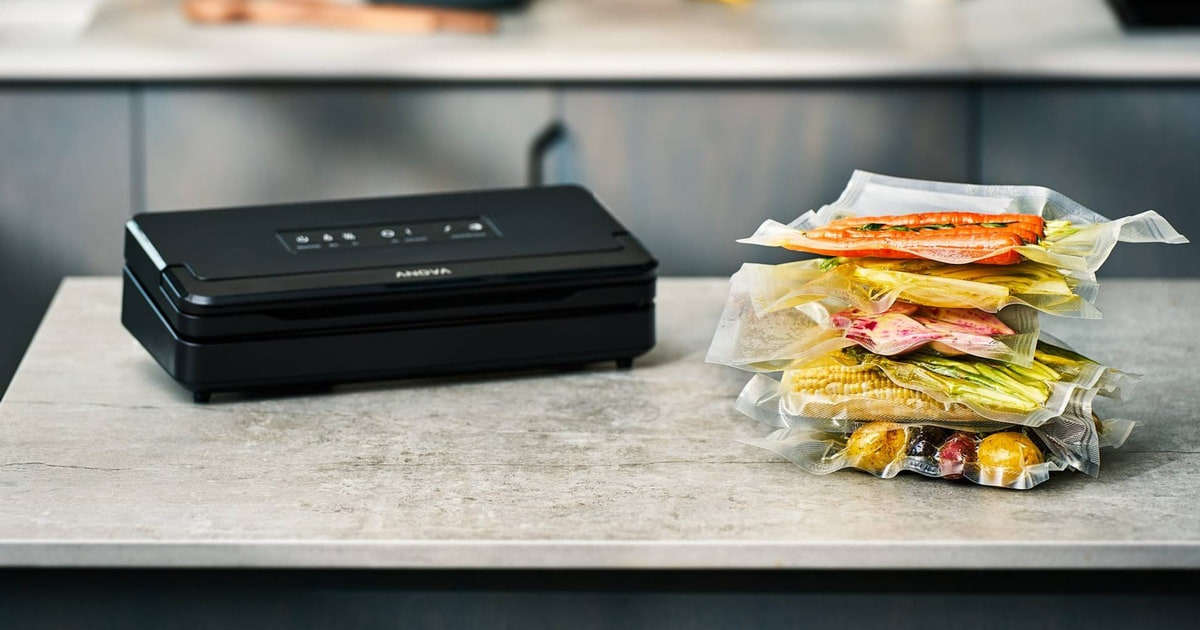
A vacuum sealer earns its counter space in a fairly boring way: it stops you from throwing food out. Air is what turns a steak gray at the edges and what makes shredded cheese taste like the inside of a freezer, so pulling that air out of the bag buys you months instead of weeks. If you buy meat on sale, portion out a weekend of batch cooking, or fill a chest freezer after a hunt, that's real money staying in your pocket.
Here's what none of these machines do well. Every one of them is an edge sealer, which means it pulls air out through the open end of the bag. Put free liquid in there and the pump drags broth straight toward the heat strip, and you get a bad seal and a wet mess on the counter. Freezing liquids solid first is the workaround, and you'll do it often. Bags are a permanent running cost too, and only the textured kind works. Smooth zipper bags won't evacuate.
So think about volume before you think about features. Sealing three bags of chicken a week is a different job than breaking down a whole deer in one afternoon, and these machines split along exactly that line. Wide bags, a pump rated for back-to-back cycles, and a second seal strip all matter more as your batches get bigger. We think that the FoodSaver FM5480 is the best vacuum sealer for most people, and that the Anova Precision Vacuum Sealer Pro is the one to buy if you cook sous vide or seal marinated meat most weeks.
Everything we recommend

Handles wet and dry food without much thought from you

Better with wet food, and it hides its own bag roll

Serious suction and double seals, minus the conveniences

A commercial pump and 15-inch bags for bulk processing
At a glance
| Product | Wattage | Weight | Price | |
|---|---|---|---|---|
| FoodSaver Vacuum Sealer MachineTop pick | — | 6.6 lbs | $99.99On sale |
| Nesco Deluxe Food VS-12 Vacuum SealerBudget pick | 130 Watts | 6 lbs | $108.19On sale |
| Anova Culinary Precision Vacuum Sealer ProRunner-up | — | 5 lbs | $100.99On sale |
| Weston Brands Vacuum Sealer Machine for FoodUpgrade pick | 1020 Watts | 22.6 lbs | $399.95On sale |
 | GERYON Vacuum Sealer MachineAlso in lineup | — | 2.6 lbs | Check price |
How we picked
Seal reliability. We treated a double heat seal strip as close to a requirement, because owner feedback across the category keeps tracing long-term freezer failures back to one weak seam. Single-strip machines had to earn their spot on other grounds.
Wet-food handling. We looked for a dedicated moist or wet mode in the specifications and then checked whether published reviews and owner reports backed it up. Marinated meat and fish are where edge sealers fail most often.
Bag width and cost. We noted the maximum bag width each machine accepts and whether it works with standard third-party textured bags. Machines that push you toward proprietary bags carry a cost you keep paying.
Noise and footprint. We compared listed dimensions and weight against how often you'd realistically use each machine, and we tracked how frequently owners mention noise. A sealer you have to wrestle out of a cabinet gets used less.
Everyday convenience. We gave credit for automatic bag detection, built-in roll storage, integrated cutters and accessory ports. These don't improve the seal, but they decide whether you keep sealing after the first month.
Top pickOn sale
Handles wet and dry food without much thought from you
FoodSaver Vacuum Sealer Machine
This is the machine that asks the least of you. Drop the open end of the bag into the channel and it starts the cycle on its own, and between the dual seal strips, the wet and dry modes, and the accessory port, it covers nearly everything a home kitchen throws at it.
$99.99fromAmazonList priceAutomatic bag detection is the feature you'll notice every single time. Set the open end of the bag in the channel and the machine takes it from there. No button, no holding the lid down with your elbow. That sounds like a small thing until you're on your eighth bag of portioned chicken thighs. FoodSaver has built this system into its machines for years, and published reviews keep putting the FM5480 near the top of the category for exactly this kind of low-effort consistency.
Two heat strips instead of one give the seal a backup. A single strip has to get every millimeter right. A wrinkle in the bag or a smear of marinade near the edge can leave a weak spot you won't find until the meat's freezer-burned. The FM5480 lays down two parallel seams at once, so one bad patch doesn't cost you the bag. Owners who freeze expensive cuts for a year or more consistently report fewer surprises with double-strip machines.
The accessory port covers everything that isn't a bag. The hose in the box connects to FoodSaver canisters, jar lid attachments and reusable zipper bags. That means you can pull the air out of ground coffee, a jar of nuts or a container of berries without cutting a length of roll. If you keep a pantry full of dry goods in jars, you're getting a second appliance out of the same purchase.
It's built for real batches, not just single portions. It takes bags up to about 11 inches wide, which covers chicken breasts, fish fillets, blocks of cheese and most roasts you'd buy at a grocery store. A built-in cutter lets you make custom bag lengths off the roll instead of wasting a pre-cut bag on a handful of green beans. The box includes a roll, quart and gallon bags, and the hose, so you're not shopping again on day one.
Flaws but not dealbreakers
Bags are the ongoing cost, and the branded ones aren't the frugal option. FoodSaver rolls run noticeably more per foot than third-party textured bags using the same embossed channel pattern. The good news is that the machine doesn't care. Generic textured bags seal fine. Just plan on buying them somewhere other than the shelf next to the sealer.
It eats counter space. At more than 16 inches long and over six pounds, this isn't something you'll cheerfully haul out of a low cabinet for one bag of leftovers. Most people end up leaving it out permanently. If your counter is already crowded with a toaster and a stand mixer, measure first.
FoodSaver backs the FM5480 with a five-year limited warranty.
Runner-upOn sale
Better with wet food, and it hides its own bag roll
Anova Culinary Precision Vacuum Sealer Pro
The Precision Vacuum Sealer Pro is built around the thing edge sealers usually botch, which is juicy food. Its wet mode drops the suction so marinade doesn't get dragged into the heat strip, and a full bag roll plus a sliding cutter live inside the machine itself.
$100.99fromAmazonList priceThe wet mode is why sous vide cooks buy this one. Switching to the wet function lowers the suction pressure and pairs it with the double seal, so a bag of chicken thighs sitting in soy and garlic doesn't spray its marinade at the strip halfway through. That's the failure mode owners complain about most with edge sealers. If you marinate before you seal, or you're bagging salmon fillets with butter and herbs, this is the practical difference.
The roll and the cutter live inside the machine. Hinge it open and there's a full roll of bags in there, plus a sliding cutter for custom lengths. Flip it over and the cord tucks away too. You're not hunting for a loose roll in a drawer or fighting a separate cutter every time you want a nine-inch bag. In a small kitchen, that's the feature you'll appreciate most.
It's designed to work with one hand, which matters more than it sounds. Clamping, vacuuming and sealing can all be done single-handed, so your other hand can stay on the raw chicken or the bag you're holding upright. It's also low and slim, a bit over four inches tall, so it slides into a drawer or a narrow cabinet when you're done instead of claiming permanent counter territory.
An accessory port and hose come along too. You can seal canning jar lids, vacuum-ready containers and even reseal a wine bottle, so it isn't strictly a bag machine. That puts it much closer to the FoodSaver's flexibility than its size would suggest, and it means you don't give up the pantry-jar workflow just because you wanted something smaller.
Flaws but not dealbreakers
It isn't built for marathon sessions. This is a five-pound consumer machine with a consumer pump. Published reviews and owner reports both point the same direction: it's happy doing a dozen bags, less happy doing forty back to back without a rest. If you're processing game or breaking down a half beef, skip to the Weston.
The internal roll compartment sets a ceiling on bag width. The bay holds rolls up to roughly 11 inches across, which is fine for steaks, fillets and meal-prep portions but too narrow for a whole bird or a big bone-in roast. You also can't stash a wider roll inside and feed it manually, so that limit is a real one.
It costs more than the Nesco for a similar bag-sealing job. What you're paying extra for is the wet mode, the storage and the smaller footprint, not fundamentally better seals. If none of those three matter to you, the money isn't doing much.
Anova lists a two-year warranty on the Precision Vacuum Sealer Pro.
Budget pickOn sale
Serious suction and double seals, minus the conveniences
Nesco Deluxe Food VS-12 Vacuum Sealer
The VS-12 spends its money on the parts that actually preserve food: a strong double pump and an optional double heat seal. What you give up is the accessory port, some quiet, and a little speed on each cycle.
$108.19fromAmazonList priceThe pump specification is the headline here. Nesco rates the VS-12's double pump at 130 watts and 25.1 inches of mercury, which is deeper than a lot of machines in its bracket manage. Deeper vacuum means less residual oxygen in the bag, and oxygen is what causes freezer burn. For long freezer stints with ground beef or salmon, that number does more for you than any convenience feature.
The double heat seal is optional, and that's genuinely useful. You get dry, moist and double settings, so you can spend the extra seconds on a bag of wet-brined pork and skip them on a bag of rice. There's also a gentle pressure setting for soft food, which keeps crackers and bread rolls from being crushed into gravel. Most machines at this level give you one seal and one speed.
It stores and cuts bags from any brand. There's a compartment in the unit for a roll and a built-in cutter for custom lengths, and Nesco doesn't care whose bags you feed it as long as they're the standard textured kind. Two rolls come in the box to get you going. That bag freedom is the single biggest thing keeping your running costs down.
The easy-lock handle makes it a one-handed machine. You press the handle down to lock the bag in place rather than pressing the whole lid with both palms. When one hand is holding a floppy bag of sliced cheese steady, that's the difference between a clean seal and doing it twice. Two-button operation means there's nothing to learn.
Flaws but not dealbreakers
There's no accessory port. No canisters, no mason jar lids, no reusable zipper bags. If part of your plan was vacuum-sealing flour and coffee in jars, this machine can't do it and there's no add-on that fixes it.
It's louder and slower than the FoodSaver. Owners consistently mention the vacuum cycle being noticeable, and each cycle takes meaningfully longer than the FM5480's. On one or two bags you'd never care. On twenty, in an apartment, at night, you will.
Calling it compact is generous. The listed dimensions are larger than the word suggests, and the viewing lid plastic doesn't feel like the pricier machines here. It works, but it doesn't feel like a lifetime purchase.
Upgrade pickOn sale
A commercial pump and 15-inch bags for bulk processing
Weston Brands Vacuum Sealer Machine for Food
The Pro-2300 isn't a nicer version of the other machines here, it's a different tool. A fan-cooled commercial motor, a 5mm seal bar wide enough for 15-inch bags, and a stainless body make it the one that survives a hunting season.
$399.95fromAmazonList priceThe 15-inch seal bar is the whole reason to buy it. Consumer machines top out around 11 inches, which is fine until you're holding a whole pheasant, a rolled bone-in leg of lamb, or a pork shoulder that doesn't want to fold. Those go in one bag on the Weston, without creasing the sealing zone to make them fit. Folded bags are where seals fail, so this isn't just about convenience.
The motor is fan-cooled for back-to-back work. Weston rates it at 1020 watts and builds it for continuous, repetitive use, meaning it doesn't need a cooling break every few bags. That's the specification that matters when you have fifty pounds of ground venison on the table and a clock running on food safety. Consumer machines will make you stop and wait.
It pulls a deeper vacuum than anything else here. The double-piston pump draws up to 28 inches of mercury, and the 5mm heat bar is wider than the strips on consumer models. More air out and a broader bond means a bigger margin of safety on food you're planning to eat two or three years from now. For fatty proteins that go rancid rather than merely dry out, that matters.
The build suits a messy, high-volume workflow. Stainless steel wipes down after a session of raw game. A tinted see-through lid lets you line the bag up before you commit, and LED indicators show you which stage the cycle is in. There's a manual mode too, so you can cut the vacuum short on something delicate instead of watching it get squashed.
Flaws but not dealbreakers
It's heavy and it's big. At more than 22 pounds and nearly 20 inches long, this machine lives wherever you first put it. Nobody is lifting it in and out of a cabinet for a bag of leftover chili. Plan on a garage bench, a basement, or a permanent stretch of counter.
It's the most expensive machine here, and most kitchens will never use what it offers. If you seal fewer than a dozen bags in a week, you're paying for headroom you won't touch. The FoodSaver will make seals that are just as airtight for the food you're actually putting in the freezer.
The commercial pump is loud. It's a bigger motor doing more work, and owners describe it accordingly. That's a fair trade in a garage during processing, and less fair in a small apartment with a sleeping toddler down the hall.
Who this is for
Buy a vacuum sealer if you regularly freeze protein and you're tired of finding gray, crystallized bricks in the back of the freezer. It pays off fastest if you buy meat in bulk, portion out weekly meals, cook sous vide, or bring home game or fish. Vacuum-sealed red meat keeps for years in a freezer at zero degrees, against roughly six to twelve months in an ordinary freezer bag, and that gap is what turns a sale price into actual savings.
You can skip it if you cook mostly fresh, shop a couple of times a week, or have a freezer the size of a shoebox. This guide covers edge sealers, the countertop kind that pulls air out through the open end of the bag. It doesn't cover chamber sealers, which enclose the whole bag and can handle free liquid directly, and it doesn't cover handheld units for reusable zipper bags. If soup and stock are what you want to seal, an edge sealer will frustrate you no matter which one you pick.
How we picked
Seal reliability: we treated double heat strips as near-mandatory, since owner reports tie most long-term freezer failures to one weak seam. Wet-food handling: we checked for a real moist or wet mode and whether published reviews backed it up, because marinated meat and fish are where these machines break down. Bag width and cost: we noted maximum bag width and whether third-party textured bags work, since proprietary bags are a bill you keep paying. Noise and footprint: we weighed listed size and weight against how often you'd actually use the thing, and tracked how often owners mention the racket. Everyday convenience: automatic bag detection, built-in roll storage, cutters and accessory ports don't improve a seal, but they decide whether you're still sealing in six months.
The competition
This is what our research surfaced, not everything on the market. Vacuum sealers turn over quickly, and there are dozens of near-identical machines sold under names you've never heard of. The one below came up often enough to be worth addressing, but it didn't make the picks.
The GERYON Vacuum Sealer Machine — The GERYON E2900-MS is the machine you buy when you're not sure you'll stick with vacuum sealing. It's slim and light enough to live in a drawer or an RV, it has an LED touch panel with dry and moist settings, the lid comes off for cleaning, and the kit includes heat-seal bags, a roll, reusable zipper bags and a hose. It lost on two counts. Research on this class points to a single heat seal strip and weaker suction than any of our picks, which narrows your margin for error on an uneven bag edge and makes it a poor bet for multi-year freezer storage. And GERYON's own listing recommends its compatible bags because third-party bags may affect suction, which is the opposite of the bag freedom the Nesco gives you. Still, if you seal a few bags a month, store dry goods in the pantry, and want something you can put away, it does the job.
Care and technique
Most failed seals are user error, and they're easy to avoid. Pre-freeze anything wet for half an hour to an hour first, so surface moisture is solid before it gets anywhere near the heat strip. Leave about three inches of headspace above the food, and wipe the inside of that sealing zone with a dry paper towel. Crumbs and grease are the usual culprits. Use textured bags only, since the embossed channels are what let air escape from the far end of the bag. Hit the pulse or gentle setting for chips, crackers, herbs and bread, unless you want a compressed puck. And give a consumer machine a minute to cool between long runs. Wipe the drip tray after wet jobs so nothing dries onto the strip.
Questions we get
Can vacuum sealers seal liquids like soups and marinades?
Not directly. An edge sealer pulls air out through the bag opening, so free liquid gets dragged toward the heat strip and stops it from bonding. The workaround is to freeze the liquid solid first, then vacuum-seal the frozen block. The Anova's wet mode is the best edge-sealer answer for marinated meat and fresh fish, but it still won't seal a bag of broth.
What's the difference between a chamber sealer and an edge sealer?
An edge sealer clamps the open end of the bag in a channel, sucks air out through that opening, and heat-seals it. A chamber sealer puts the entire filled bag inside an enclosure, removes the air from the whole chamber at once, then seals before the lid opens. Chamber machines handle soups and brines directly and use cheap smooth bags, but they're far more expensive and much bigger. For solid and semi-solid food at home, an edge sealer is plenty.
Is a vacuum sealer worth it if I already use freezer bags?
If you freeze meat regularly, yes. USDA guidance puts vacuum-sealed red meat at two to three years in the freezer against roughly six to twelve months in a standard freezer bag, and that gap comes almost entirely from removing residual oxygen. Even good zipper bags trap enough air to cause visible freezer burn past about three months. If you mostly freeze bread and leftovers you'll eat next week, it's a harder case.
How long does vacuum-sealed meat last in the freezer?
At a steady zero degrees, USDA figures put vacuum-sealed beef, pork and lamb at two to three years, and poultry and fish in a similar range against six to nine months unsealed. Ground meat runs one to two years sealed versus three to four months in a standard bag. Those numbers assume the seal stays intact and the freezer doesn't swing in temperature. Check the seal visually before you cook anything that's been in there a long while.
Can I use any bags with these machines?
Mostly. Every machine here except the GERYON works with standard textured vacuum bags from any brand, not just the manufacturer's own. The one hard requirement is texture: the embossed channel pattern is what lets air escape evenly toward the strip, so smooth zipper bags won't work at all. Certified BPA-free third-party bags perform comparably to name-brand ones, and they're where you'll save the most over time.
Which one should hunters and bulk processors buy?
The Weston Pro-2300, and it isn't close. Its 15-inch seal bar fits whole birds and big bone-in cuts that a standard 11-inch machine forces you to fold, and folded bags are where seals fail. The fan-cooled commercial motor also runs bag after bag without needing a cooling break, which matters when you're racing a food-safety clock with fifty pounds of meat on the table.
Why you should trust us
For this guide:
- We read the manufacturer specifications for all five machines, including pump ratings, seal bar width, wattage and maximum bag capacity, and compared them against published reviews of the category.
- We looked at owner feedback for patterns rather than one-off complaints, focusing on weak seams, motors that need a rest between bags, noise during the vacuum cycle, and bag compatibility restrictions.
- We cross-checked listing claims against each other where they conflicted, and where a machine's own marketing steered buyers toward proprietary bags, we treated that as a cost rather than a feature.
- We read owner reviews on every listing, weighted toward the critical ones, because that is where the recurring failures show up.
- We have a systematic way of automatically fetching the latest prices, so the numbers on this page stay current.
- This is a research-focused guide, so the team may not own every product listed — though we often do own the top winners, which gives us extra context for the recommendations.
- We don't accept free products, and the retailer commission never changes which product we recommend.
Sources
The Best Vacuum Sealers of 2026, Wirecutter / The New York Times
Best Vacuum Sealers Tested, Serious Eats
Vacuum Sealer Reviews & Ratings, Consumer Reports
Best Vacuum Sealers 2026, Good Housekeeping
Vacuum Sealer Reviews, America's Test Kitchen
Freezing and Food Safety, USDA Food Safety and Inspection Service
Vacuum Packaging of Foods, University of Minnesota Extension
Chamber vs. Edge Vacuum Sealers: Which Is Right for You?, Weston Brands
Amazon product listings and owner reviews for all 5 products
Manufacturer specification pages for each product
Some passages in this guide may be paraphrased with AI help. Prices are refreshed automatically.
More like this.
Continue exploring appliances reviews and recommendations.

The Best Stains and Sealers for Pressure Treated Decks
A deck stain has one real job: keep water and sun out of the boards. Pressure treated pine takes the worst of both. Rain pools on the flat surfaces, the…

The Best Asphalt Driveway Sealers
Sealing a driveway is a cosmetic job with a practical payoff. A good sealcoat blocks water and sun from working into the asphalt, and it hides the gray,…

The Best Door Threshold Seals and Weatherstripping
You can feel a bad door seal before you can see it. Stand near the front door on a cold morning and there's a cool ribbon of air across your ankles. In…

The Best Robot Vacuum Mop Combos
A robot vacuum mop combo earns its keep in the boring middle of the week. You're not deep-cleaning. You're dealing with cereal under the high chair, dog…

The Best Handheld Vacuums for Car and Pet Hair
Pet hair doesn't sit on car upholstery. It works its way into the weave, and a plain suction nozzle glides right over the top of it. That's the whole…

The Best Robot Vacuums for Pet Hair
If you live with a shedding dog or a long-haired cat, you already know the problem isn't dirt. It's hair. It drifts into corners, mats into the edge of…