The Best Kitchen Carts and Islands
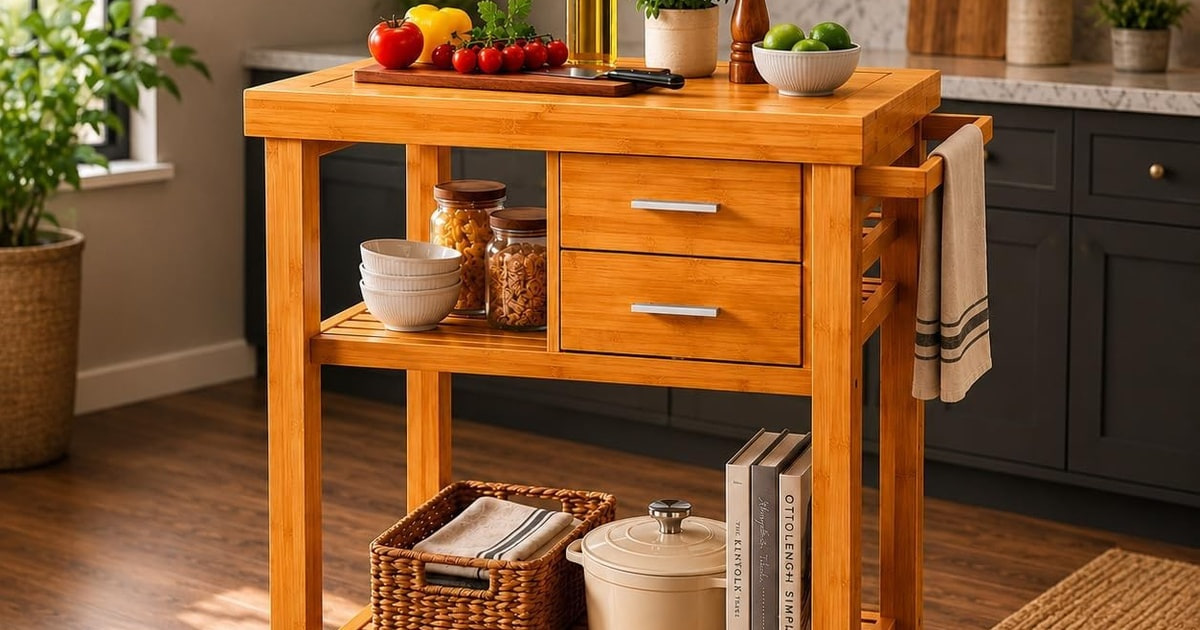
A kitchen cart solves a problem most of us live with daily: there's nowhere to put things down. You're rolling out pie dough next to the sink, or the stand mixer has permanently colonized the only clear stretch of counter. A cart or freestanding island gives you a second work surface plus storage underneath, and you don't need a contractor or a permit to get one. Houzz research found that adding or upgrading an island was the single most popular kitchen remodel two years running, and a rolling cart gets you most of that benefit for a fraction of the cost.
Here's the honest part: no cart does everything. The ones with real storage are heavy and awkward to move, even on casters. The ones you can wheel around one-handed have tops too small for serious prep. Butcher block looks great and takes a knife well, but you'll be rubbing mineral oil into it every month or two. Stainless steel wipes clean in seconds and shows every fingerprint. Flat-pack assembly can eat an afternoon, and pre-assembled options cost meaningfully more. You're picking which compromise you can live with.
We looked at rolling carts, drop-leaf islands and stainless prep tables, then weighed work surface, storage, stability and how much of your floor each one eats. We think that the Homestyles Dolly Madison is the best kitchen island for most people, and that the Home Aesthetics bamboo rolling cart is the one to buy if you're renting or working with a genuinely small kitchen.
Everything we recommend
The most useful mix of counter, storage and mobility
Lighter and narrower, if your kitchen has no room to spare
More cabinet storage, in a traditional look

Commercial-grade build for cooks who prep every day

A stainless prep surface on wheels, without the frills
Prices as of Oct 25, 6:48 AM PT · Details
At a glance
| Product | Top Material | Storage Features | Price | |
|---|---|---|---|---|
| Crosley Furniture Alexandria Rolling Kitchen IslandAlso great | Solid Wood | 3 Cabinets, 2 Drawers | $439.28 |
| John Boos Cucina Americana Classico Prep TableUpgrade pick | — | — | $1,551 |
 | Winsome Wood Suzanne KitchenAlso consider | — | 2 Drawers, Towel Holder | $158.99 |
| Homestyles Dolly Madison Black Mobile Kitchen IslandTop pick | Natural Wood Top | — | Check price |
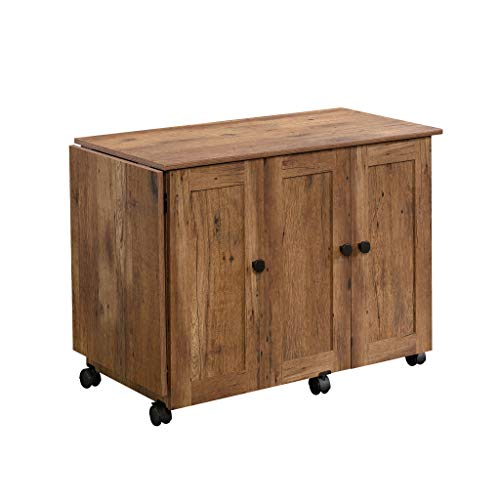 | Sauder Miscellaneous Storage Sewing/Craft Cart/ Pantry cabinetsAlso in lineup | Vintage Oak Finish | 2 Bins, Hidden Shelf | $234.99 |
| Home Aesthetics Rolling Kitchen Island Cart withRunner-up | Bamboo | Drawers & Shelves | $169.99 |
| Vevor Mophorn Stainless Steel Work Table 36x24Budget pick | Stainless Steel | Adjustable Undershelf | $87.90 |
Prices as of Oct 25, 6:48 AM PT · Details
How we picked
Work surface quality. We compared top materials and thicknesses across spec sheets, favoring solid wood and food-service stainless over engineered wood. Consumer Reports found engineered-wood tops warped measurably after 18 months in humid kitchens, while solid wood and stainless held their shape.
Stability and capacity. We read published weight ratings for tops, shelves and drawers, and looked for base bracing or leveling feet. A cart that racks under a stand mixer isn't a cart worth owning.
Storage that works. We looked for drawers on real glides, adjustable shelves and enclosed cabinets rather than a single open rack. Owner feedback about drawer fit and shelf sag mattered as much as the count.
Footprint and clearance. We weighed each piece against NKBA guidance calling for a 42-inch traffic lane around an island, and against the roughly 161-square-foot average American kitchen. Narrow options got real credit.
Assembly and mobility. We tracked owner reports of assembly time and hardware problems, and checked whether casters lock. Good Housekeeping's testing found locking casters held position under lateral load while non-locking ones drifted several inches.
Top pick
The most useful mix of counter, storage and mobility
Homestyles Dolly Madison Black Mobile Kitchen Island
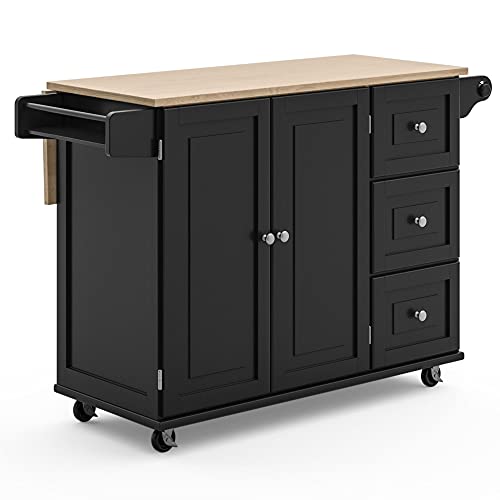
This mobile island gives you three drawers, two adjustable shelves and a wood top that folds out into a breakfast bar. It's solid and engineered wood rather than particleboard throughout, and it's the rare cart that works as both a prep station and a place to eat.
Check priceatAmazonPrices as of Oct 25, 6:48 AM PT · Details
The drop leaf is what makes this one worth the floor space. Folded down, the island is about 53 inches wide and tucks against a wall. Flip the leaf up and you've got a breakfast bar — enough room for two people to eat, or for a cooling rack and a rolling pin at the same time. Most carts force you to choose between a small footprint and a usable surface. This one lets you have both, depending on the hour.
Storage is where it pulls ahead of everything else here. Three drawers handle the flatware and gadget drawer overflow that clutters most kitchens, and two adjustable shelves behind the doors take mixing bowls, small appliances or pantry overflow. There's a spice rack and paper towel holder on the ends, so the counter surface stays clear for actual work. That's a lot of function in one piece.
Owners consistently describe it as heavier and better built than the price suggests, with solid wood construction rather than the MDF that shows up in a lot of carts at this level. The wood top is finished, so it handles a spill without swelling. Weight is a real thing here — it's roughly 117 pounds assembled — which is annoying on delivery day and reassuring every day after. It doesn't wobble when you lean on it.
It looks like furniture, not a utility cart. The black finish with a natural wood top and brushed nickel hardware reads as intentional in most kitchens, and a fair number of owners buy it as a coffee bar or a dining table replacement rather than a prep station. If your cart is going to live in the open, in view of the living room, that matters more than any spec on the box.
Flaws but not dealbreakers
Assembly takes real time. Owners commonly report two to three hours with one person and a screwdriver, and a few mention hinge alignment problems that took fiddling to sort out. If you hate flat-pack furniture, budget an afternoon and a podcast.
It's mobile in theory more than in practice. At around 117 pounds before you load it, this isn't something you casually roll out of the way to mop. It moves when you need it to move, but you'll plan the trip.
The wood top is finished, not a butcher block. It's a work surface, not a cutting board — use a board on top of it, or you'll cut through the finish and get water into the wood.
Runner-up
Lighter and narrower, if your kitchen has no room to spare
Home Aesthetics Rolling Kitchen Island Cart with
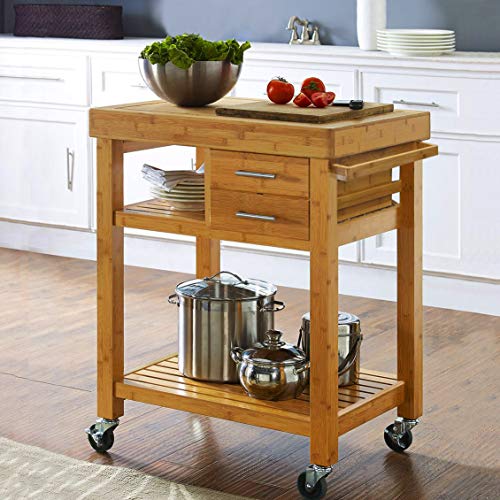
At 44 pounds and 29 inches long, this bamboo cart actually rolls when you want it to. You get two drawers, open shelving, a towel rack and locking casters, and it holds up to 110 pounds — enough for a stand mixer and a couple of cookbooks.
$169.99fromAmazonPrices as of Oct 25, 6:48 AM PT · Details
If you'll actually move your cart, weight is the spec that matters most. This one is 44 pounds. You can nudge it aside with one hand to sweep behind it, roll it next to the stove while you cook, then push it back into a corner. Heavier islands promise mobility on their casters and quietly become permanent. This one doesn't. Two of the four casters lock, so it stays put once you've parked it.
The footprint is the other reason to pick it. At 29 by 21.5 inches, it fits in a galley kitchen without blocking the walkway — and given that the average American kitchen is about 161 square feet, most of us are working with tighter clearances than we'd like. The NKBA recommends 42 inches of traffic lane around an island for a single cook. A narrow cart is how you keep that in a small room.
Bamboo is a smart material choice at this size. It's kiln-dried and varnished, so it's stable in a humid kitchen, and it's light without feeling cheap. Owners repeatedly describe it as sturdier and better finished than similarly sized carts, and several note it feels a step up in scale and quality from the budget metal utility carts people usually compare it against.
You get more organization than the size suggests. Two drawers hold the small stuff, the lower shelf takes a stockpot or a bread machine, and the side rack keeps a towel and an apron off the counter. That's the whole point of a cart in a small kitchen: get things off the counter and into a place they belong.
Flaws but not dealbreakers
The 110-pound capacity is real and it's a limit. A heavy stand mixer plus a cast iron Dutch oven plus a stack of plates will get you close. This isn't the cart for storing your whole cookware collection.
Drawer fit is inconsistent. Owners mention tight drawers that need the glides lubricated, small gaps around drawer fronts, and a few pilot holes drilled slightly off. None of it is fatal, and assembly is otherwise straightforward, but the finish work isn't perfect.
The top is a work surface, not a butcher block for chopping directly on. Use a cutting board and you'll keep the varnish intact.
Also great
More cabinet storage, in a traditional look
Crosley Furniture Alexandria Rolling Kitchen Island
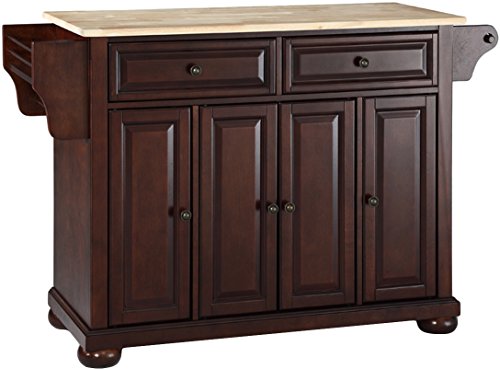
Three cabinets with magnetic closures, two drawers and a solid wood top make this the storage champion of the group. The mahogany finish and antique brass hardware suit a traditional or farmhouse kitchen better than anything else here.
$439.28fromAmazonPrices as of Oct 25, 6:48 AM PT · Details
Three cabinets is a genuinely different proposition from two shelves. Behind those raised panel doors you get adjustable shelving across three separate compartments, plus two drawers on metal glides. If your problem is that your kitchen has no pantry — a common situation in older homes and apartments — this is the cart that meaningfully fixes it. The finished back means you can float it in the middle of the room instead of shoving it against a wall.
The countertop is rated for 100 pounds, so a stand mixer and a full stockpot are no trouble. Shelves and drawers are rated at 15 pounds each, though, which is the number to actually pay attention to. Load the heavy things on top and in the base, keep the shelves for lighter cookware and dry goods, and you'll be fine.
It's also the most flexible on setup. Crosley includes both casters and bun feet, so you can decide whether this is a rolling cart or a stationary island. Adjustable levelers on the feet handle the uneven floors that come standard in old kitchens. At 106 pounds it's not something you reposition on a whim, but you get to choose its permanent character.
Small conveniences add up here. There's a built-in spice rack, a towel bar and a paper towel holder, which sounds like listing filler until you're cooking and everything you reach for is within arm's reach instead of across the room. Owners tend to buy this one as a microwave stand or coffee cart as much as a prep island.
Flaws but not dealbreakers
The 15-pound shelf and drawer limits are low for a cart this heavy. Serious cookware collections will outgrow them fast, and that's a design ceiling you can't work around.
The vintage mahogany finish with antique brass is a strong look. In a traditional kitchen it's handsome. In a modern one it's going to fight everything around it, so look at photos of your own cabinets before committing.
The top is finished solid wood, not butcher block, so it wants a cutting board and a coaster rather than direct knife work.
Upgrade pick
Commercial-grade build for cooks who prep every day
John Boos Cucina Americana Classico Prep Table
This John Boos prep table is built from food-service-grade 18/8 stainless with bullnose edges and center H bracing, in a 48-by-30-inch bar-height configuration. It's the piece to buy if you want something that will outlast your kitchen.
$1,551fromAmazonPrices as of Oct 25, 6:48 AM PT · Details
John Boos builds restaurant equipment, and this is restaurant equipment. The 18/8 food service stainless, the rounded bullnose corners and the center H bracing on the base are the details that separate a commercial table from a home furniture piece. Bracing is what keeps a table from racking sideways when you're kneading dough or leaning into a chicken with a cleaver. It's the least glamorous spec here and probably the most important.
The 48-by-30-inch surface is the largest continuous work area in this guide, and it's the reason to consider this over a cart with drawers. If you roll pastry, break down whole vegetables or do any kind of batch cooking, an uninterrupted stainless top you can scrape and sanitize beats a smaller wood surface you have to baby. Stainless is heat-resistant too, so a hot pan straight off the burner isn't a crisis.
This configuration is 40 inches tall, which is bar height rather than the 36-inch standard the NKBA cites for comfortable standing prep. That's deliberate — it works with bar stools and it's easier on tall cooks' backs — but it's taller than your counters. Check that against your own height and how you actually work before you order.
The casters aren't included in this configuration. It comes with legs and adjustable feet, which means this is a stationary island. That's a limitation if you wanted mobility and a feature if you wanted something that never budges.
Flaws but not dealbreakers
It's the most expensive piece here by a wide margin, and it gives you no drawers, no cabinets and no shelves — just a surface and a base. You're paying for build quality and workspace, not storage.
Stainless shows everything. Fingerprints, water spots, and eventually a few dents if you're rough with heavy pans. It cleans up in seconds, but it never looks pristine for long in a working kitchen.
No casters in this configuration and a bar-height top mean you should measure carefully. Once it's in place, it stays there, and 40 inches is a real commitment.
Budget pick
A stainless prep surface on wheels, without the frills
Vevor Mophorn Stainless Steel Work Table 36x24
This VEVOR stainless work table gives you a 36-by-24-inch top, an adjustable undershelf and four casters with brakes on two. It's a no-frills way to add a wipeable, heat-resistant prep surface that you can roll around.
$87.90fromAmazonPrices as of Oct 25, 6:48 AM PT · Details
For pure work surface per dollar, nothing else here comes close. You get a 36-by-24-inch stainless top rated for 176 pounds, plus an undershelf rated the same, on four polyurethane casters that roll quietly and don't mark floors. Two of them brake. If what you need is a place to put a stand mixer, a bread proofer or a canning setup, and you don't care what it looks like, this does the job.
The adjustable undershelf is genuinely useful. It sets at two heights with 15.7 to 22 inches of clearance, so you can size it to a case of water, a stack of sheet pans or a large appliance. Most carts fix their shelves and leave you working around them. Owners in garages, home studios and small commercial-style setups tend to like this one for exactly that flexibility.
Stainless earns its keep for food prep. You can scrub it, spray it, set a hot pan on it and not worry. Wood tops want oiling and gentle treatment; this one wants a sponge. If you butcher meat, work with wet doughs or do a lot of canning, that difference shows up every session.
Assembly is simple by the standards of this category — a wrench and set screws are included, and there's a triangular support rod underneath. That said, the instructions draw regular complaints, and the manufacturer explicitly tells you to wear gloves during assembly. Take that seriously.
Flaws but not dealbreakers
Quality control is the weak point, and it's the reason this is the budget pick rather than a higher award. Owners report dented shelves out of the box, sharp raw edges on the underside and inner cuts, and confusing instructions. Most people work through it. Some don't.
The top skin is thin. It's well braced and sturdy in use, but this isn't the same grade of steel as a commercial John Boos table, and it'll dent if you're careless with heavy pans.
There's no storage beyond the one shelf — no drawers, no doors, nothing hidden. It's a table with a shelf, and it looks like one.
Who this is for
Buy a cart or freestanding island if your kitchen runs out of counter space before you run out of things to do — you bake, you cook for a crowd, or your appliances have nowhere to live. It's also the practical move if you're renting and can't touch the cabinets, or if you're remodeling and want island workspace without built-in cabinetry costs. Freestanding islands run a small fraction of what custom built-ins cost, which is why they show up so often in budget remodels.
Skip it if your kitchen can't spare a 42-inch walkway on every side, or if what you actually need is more cabinet space rather than more counter. This guide covers freestanding carts, mobile islands and prep tables you can buy and assemble yourself. It doesn't cover built-in cabinetry, bar carts, or countertop material sold by the slab.
How we picked
We built the shortlist around a handful of things that decide whether a cart earns its floor space. Surface: solid wood and food-service stainless over engineered wood, since engineered tops have shown warping in humid kitchens while solid and steel tops haven't. Stability: published capacity ratings for the top, shelves and drawers, plus base bracing or leveling feet — a base that racks under a stand mixer is a failure. Storage: drawers on metal glides, adjustable shelves and enclosed cabinets, weighted by what owners say about fit and sag. Footprint: narrow enough to preserve the 42-inch traffic lane the NKBA recommends, which matters in a kitchen closer to the 161-square-foot national average than to a magazine spread. Assembly and mobility: honest reporting on how long the build takes, whether hardware lines up, and whether the casters actually lock.
Other kitchen carts and islands worth considering
If you want a cart that doubles as a dining table: The Winsome Wood Suzanne Kitchen — The Winsome Suzanne is a different animal — a space-saver set with a drop-leaf top, two drawers, casters, a paper towel holder and two matching stools. Closed, it's about 15 inches deep and disappears against a wall. Open, it seats two. If you live in a studio or one-bedroom and don't have room for both a table and a cart, this solves both problems at once. Owners consistently praise how easy it is to assemble and how solid the wood feels. What you give up is storage: two small drawers is all you get, and the work surface is narrow with the leaf down. It's a dining solution that moonlights as prep space, not the other way around.
The competition
This is what our research surfaced, not a census of every cart on the market. Kitchen carts turn over constantly and plenty of good ones never make a shortlist. Here's the one remaining piece we looked at and where it lands.
The Sauder Miscellaneous Storage Sewing/Craft Cart/ Pantry cabinets — The Sauder Select cart is a well-made piece of flat-pack furniture with a drop leaf, two adjustable shelves, a roll-open door and easy-roll casters — and owners who assemble a lot of flat-pack rate the instructions and materials highly. But it's built and sold as a sewing and craft cart, with interior bins and a hidden shelf sized for a sewing machine, and the engineered wood construction is the same category Consumer Reports found warping in humid kitchens after a year and a half. Buy it for a craft room, where it's genuinely good. For a kitchen, the top and the interior layout are working against you.
Care and maintenance
If you buy a butcher-block or solid wood top, oil it. The Wood Countertop Institute puts re-application at every 30 to 90 days depending on how hard you use it, and warns that under-oiled surfaces can crack within six to twelve months in dry air. Warm food-grade mineral oil, wipe it on with a cloth, let it soak in overnight, buff off what's left. Never soak wood or run it wet, and wipe spills as they happen rather than at the end of the night. Stainless is easier: soap, water, dry with a cloth in the direction of the grain to avoid streaks. For any cart, check the caster and leg bolts a couple of times a year — flat-pack hardware loosens with use, and a wobbly cart is almost always a loose bolt rather than a broken one.
Questions we get
What's the difference between a kitchen cart and a kitchen island?
A cart is smaller, lighter and built to move — usually under 36 inches wide, on casters, meant to be rolled out of the way. An island is larger and effectively stationary, even when it technically has wheels. In practice the line is about weight: anything over roughly 100 pounds is an island whatever the listing calls it.
How much clearance do I need around a kitchen island?
The NKBA recommends at least 42 inches of traffic lane on every side for a single-cook kitchen, and 48 inches if two people cook at once. Measure your open floor before you shop, not after the box arrives. In a kitchen under about 150 square feet, that usually means a cart under 30 inches wide.
Are butcher-block tops worth the maintenance?
If you prep food constantly, yes. Butcher block is the most repairable surface you can buy — scratches and knife marks sand out, which isn't true of laminate or stone. Hard maple in particular is very resistant to knife scarring. The trade-off is oiling it every one to three months, forever.
Is stainless steel better than wood for food prep?
Stainless is more hygienic and far easier to sanitize, and it shrugs off heat and moisture that would ruin a wood top. Wood is warmer to look at, kinder to your knife edges, and repairable. If you butcher meat or do a lot of wet work, go stainless. For general cooking in a kitchen you also live in, wood is usually the nicer thing to own.
What's the best option for a rental apartment?
Something light, narrow and on locking casters — you want to move it for cleaning and take it with you when you leave. Look for around 30 inches or less in width and a weight you can push alone. The Home Aesthetics bamboo cart is our pick here at 44 pounds.
Can I use a rolling cart as a permanent island?
Yes, and plenty of people do. Lock the casters, or swap to bun feet if the cart includes them, and use adjustable levelers to deal with an uneven floor. The main thing to watch is the top's weight rating — a permanent island tends to accumulate more load than a cart you move regularly.
Why you should trust us
For this guide:
- We read manufacturer spec sheets for every product here, comparing top materials, published weight capacities, dimensions and caster hardware.
- We reviewed published research and guidance from the NKBA, Consumer Reports, the Wood Countertop Institute, Houzz and the Good Housekeeping Institute on clearance, top materials and caster behavior.
- We read through owner feedback for recurring themes around assembly time, hardware fit, drawer quality and long-term sturdiness.
- We read owner reviews on every listing, weighted toward the critical ones, because that is where the recurring failures show up.
- We have a systematic way of automatically fetching the latest prices, so the numbers on this page stay current.
- This is a research-focused guide, so the team may not own every product listed — though we often do own the top winners, which gives us extra context for the recommendations.
- We don't accept free products, and the retailer commission never changes which product we recommend.
Sources
The Best Kitchen Islands of 2026 — The Spruce, The Spruce
Best Kitchen Islands and Carts — Good Housekeeping, Good Housekeeping
Best Kitchen Islands You Can Buy Right Now — Bob Vila, Bob Vila
Kitchen Island Buying Guide — Consumer Reports, Consumer Reports
John Boos Butcher Block Care & Maintenance Guide — John Boos & Co., John Boos & Co.
NKBA Kitchen Planning Guidelines 2025 — National Kitchen & Bath Association, NKBA
Best Kitchen Islands Tested by Our Editors — Architectural Digest, Architectural Digest
The Best Rolling Kitchen Carts We've Tested — Real Simple, Real Simple
Kitchen Island vs. Kitchen Cart: What's the Difference? — Better Homes & Gardens, Better Homes & Gardens
Wood Countertop Maintenance 101 — Wood Countertop Institute, Wood Countertop Institute
2025 Houzz Kitchen Trends Study — Houzz Research, Houzz Research
Best Kitchen Islands for Small Kitchens — Reviewed.com (USA Today), Reviewed / USA Today
Amazon product listings and owner reviews for all 7 products
Manufacturer specification pages for each product
Some passages in this guide may be paraphrased with AI help.
Product prices and availability are accurate as of the date/time indicated and are subject to change. Any price and availability information displayed on Amazon.com at the time of purchase will apply to the purchase of this product.
More like this.
Continue exploring appliances reviews and recommendations.

The Best Bar Carts for Home Entertaining
A bar cart earns its spot in a room by doing two jobs at once. It holds your bottles, glasses and cocktail tools where you can reach them, and it looks…

The Best Golf Push Carts
Walking a golf course means a few miles on foot with a heavy bag hanging off one shoulder. A push cart takes that weight off you, and most golfers notice…

The Best Ninja Kitchen Appliances
Ninja makes a lot of machines that all promise to be the only one you need. In practice, the question isn't which is best - it's which one fits your…

The Best Digital Kitchen Scales for Precision Baking
Baking by volume is the reason your cookies come out different every time. King Arthur Baking found that a cup of all-purpose flour can weigh anywhere…

The Best Kitchen Knife Sets of 2026
A sharp knife changes how cooking feels. You stop sawing at tomatoes, you stop crushing herbs into a bruised green paste, and dinner prep gets faster and…

The Best OXO Kitchen Tools
Most kitchen tools fail in the same boring way. The handle gets slick when your hands are wet, the joint between head and grip traps a week's worth of…