The Best Golf Push Carts
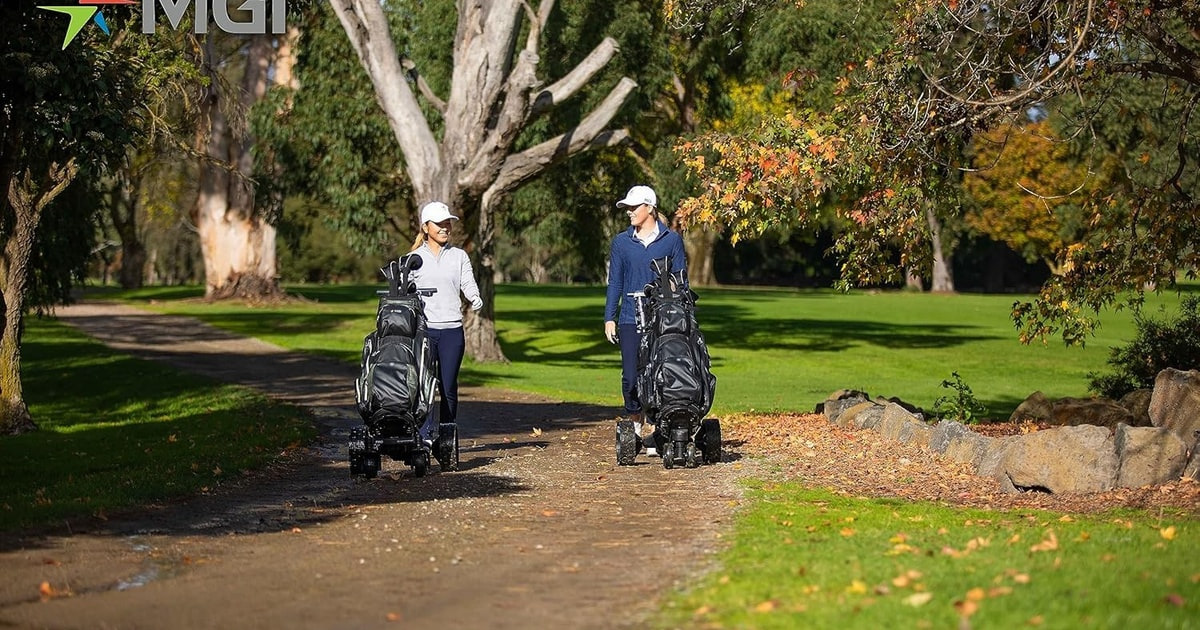
Walking a golf course means a few miles on foot with a heavy bag hanging off one shoulder. A push cart takes that weight off you, and most golfers notice the difference somewhere around the twelfth hole. You swing looser. You stop shifting the strap every few steps. The cart also gives you somewhere to put a drink, a rangefinder and a phone, so you're not digging through pockets between shots. If you walk more than a few times a month, it's one of the easier upgrades in golf.
No cart nails everything. The ones that fold smallest usually give up wheel size, and small wheels drag in wet rough. The ones that roll best over roots and hills take up more of your trunk. Brakes are the other honest weak spot. A handle brake is quick, but it rarely holds a steep slope as well as a foot brake, and both wear out eventually. And every cart is one more thing to load, unload and hose off after a muddy round.
So the right pick depends on your car, your course and your knees. If you play a flat public track and drive a sedan, almost anything here works. If your course climbs, you want a brake you trust and wheels that grip. If your back or your hips are the reason you stopped walking, a motor changes the math entirely. We think that the Sun Mountain Speed Cart X is the best golf push cart for most people, and that the Bag Boy Nitron is the one to buy if you want a faster setup and a lighter cart to lift.
Everything we recommend
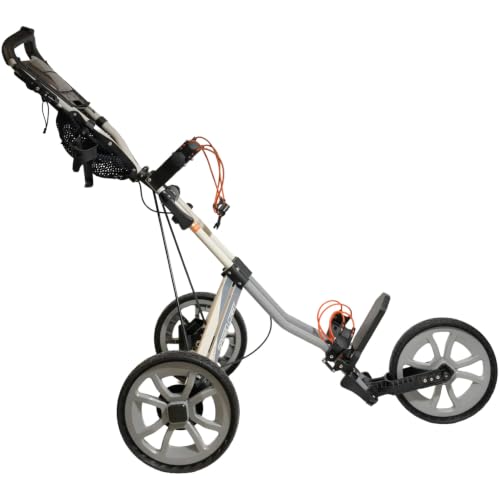
A light push and a hand brake that holds on hills

Auto-open setup in the lightest frame of the manual carts

Comes with nearly every accessory, and it shows in the weight

Let a motor carry the load when your back won't
Prices as of Oct 25, 6:48 AM PT · Details
At a glance
| Product | Weight | Wheels | Price | |
|---|---|---|---|---|
| Caddytek CaddyLite EZ V8 3 Wheel GolfBudget pick | 18.5 lb | 3, solid EVA | $208.95 |
| Bag Boy Nitron Golf Push CartRunner-up | 16.7 lb | 3, low-resistance | $319.95 |
 | Big Max Blade IP 2 FlatFold GolfAlso consider | 13.6 lb | Folding rear wheels | $399 |
| Sun Mountain Speed Cart XTop pick | 18.6 lb | 3, EZ GLYDE | $299 |
 | Motocaddy M1 DHC Electric Golf Push CartAlso in lineup | — | — | $1,099 |
| MGI Zip Navigator All Terrain Electric GolfUpgrade pick | 37.25 lb with battery | — | $1,654.16 |
Prices as of Oct 25, 6:48 AM PT · Details
How we picked
Push and stability. We compared wheel diameters, wheelbase figures and frame geometry from manufacturer spec sheets, since those are what determine whether a cart tracks straight or fights you. Carts with a wide stance and a front wheel of roughly 9.5 inches or more made the shortlist.
Fold and trunk fit. We looked up folded dimensions for every cart and favored designs that clear a sedan trunk without removing wheels. One-step folds counted for more than multi-step ones, because published reviews and owner feedback both flag the fold as the thing golfers get tired of.
Braking on slopes. Published reviews single out parking brakes as a real differentiator on hilly courses, so we noted whether each cart uses a foot brake, a handle brake or an electronic one. Any cart without a brake that holds on a bank was out.
Storage and accessories. We compared what each cart includes out of the box against what you'd have to buy, and whether the frame accepts universal add-ons like coolers and seats. A console you can reach without stopping mattered more than a long accessory list.
Reported durability. We read owner feedback for recurring themes rather than one-off complaints, watching for repeat mentions of wheel bearings, brake cables, folding latches and, on electric models, battery and controller failures.
Top pick
A light push and a hand brake that holds on hills
Sun Mountain Speed Cart X
A three-wheel aluminum cart that hangs your bag more upright, so the load sits over the wheels instead of dragging behind them. It folds two ways, stores upright in a garage, and comes with the console, basket and holders you'll actually use.
$299fromAmazonPrices as of Oct 25, 6:48 AM PT · Details
This cart is built around how a bag hangs, not how a spec sheet reads. Sun Mountain angles the bag more upright so the weight sits over the wheels instead of behind them. You feel that in your forearm halfway up a long uphill fairway. At about 18.6 pounds it isn't the lightest cart here. But it's the one that pushes like it weighs less, which is the number that matters after four hours.
The hand brake sits right where your thumb already is. Squeeze it on a sidehill lie and the cart stays put while you read the putt. Sun Mountain builds it into the handle instead of hanging a lever near the axle, so there's nothing extra to snag in thick rough. If your course has real elevation, that alone is worth stepping up from a bare-bones cart.
Storage is the boring feature you'll use on every hole. You get a mesh basket for a jacket, an accessory console, an umbrella holder, a drink holder and a tab for clipping on more. The console sits flat enough that a scorecard and a pencil don't slide off when you cross a cart path seam. It also takes universal accessories, so adding a cooler or a seat later is easy.
The fold is two steps, and it earns them. You can collapse it flat for a trunk or leave it standing upright in a garage, which matters if a car lives in there too. Folded, it's roughly 37 by 13 by 16 inches. That's not the smallest package in this guide. But it slides in next to a golf bag in most sedans without a wrestling match at the curb.
Flaws but not dealbreakers
Two steps isn't one step. A couple of carts here pop open in a single motion, and if you're always jogging to the first tee, you'll notice the extra beat at the car.
The hand brake is a preference, not an upgrade. Plenty of walkers want a foot brake they can stomp without letting go of the grip, and this cart doesn't give you one. It's also a newer design than most carts here, so owner feedback on how the wheels and brake cable hold up over the long haul is still thin.
Runner-up
Auto-open setup in the lightest frame of the manual carts
Bag Boy Nitron Golf Push Cart
Pull it out of the trunk and it mostly opens itself, then folds flat in one step. At under 17 pounds it's the easiest manual cart here to lift, and Bag Boy's Top-Lok system keeps a matching bag from sliding on slopes.
$319.95fromAmazonPrices as of Oct 25, 6:48 AM PT · Details
Pull the Nitron out of the trunk and it mostly opens itself. One motion and the frame snaps into shape. One step and it's flat again. That sounds minor until you've done it twice a week all season, in a parking lot, with a coffee in your other hand. There's nothing to line up and nothing to force.
At 16.7 pounds, this is the easiest manual cart here to lift over a trunk lip. That matters more than raw frame heft for a lot of golfers, especially if you drive an SUV with a high load floor or you're loading up sweaty and tired after 18. It trades a little bulk in the frame to get there, and for most walkers that's the right trade.
Top-Lok is Bag Boy's answer to bags creeping around on uneven ground. The bag clicks into the cart instead of relying on straps, so it doesn't shift sideways when you traverse a slope. The catch is that it only works with Top-Lok bags. With any other bag you're back to straps, which is fine, but then it isn't a reason to choose this cart.
Folded, it's about 19 by 13.5 by 22 inches, small enough for most sedan trunks with a bag alongside. You get an accessory bag, a cup holder, an umbrella holder and a phone holder in the box, plus a parking brake on the handle. The wheels measure 9.5 inches up front and 11 in back, and they're tuned for low rolling resistance on firm turf.
Flaws but not dealbreakers
The wheels are on the smaller side, and small wheels are what you feel in soft ground. On a course that's still soaked from overnight rain, expect to lean into it through the rough more than you would behind a bigger front wheel.
The parking brake is on the handle, so you have to let go of the grip to set it. On a steep tee box that's a slightly nervous half second. And Top-Lok only pays off if you're willing to buy into Bag Boy's bags too.
Budget pick
Comes with nearly every accessory, and it shows in the weight
Caddytek CaddyLite EZ V8 3 Wheel Golf
A three-wheel aluminum cart that arrives with the cooler, cup holder, umbrella holder, phone mount and rangefinder basket already included. Solid EVA wheels never go flat, and a foot brake holds it steady when you park across a slope.
$208.95fromAmazonPrices as of Oct 25, 6:48 AM PT · Details
Nothing else here shows up this loaded. The EZ V8 includes a rangefinder basket, a scorecard console, a phone mount, an insulated cooler, a cup holder, an umbrella holder, a magnetic ball marker and a mesh net. Buy those piecemeal for another cart and you'll have spent more than the cart itself. For a first push cart, when you don't yet know what you'll use, that's most of the argument.
The wheels are the other reason to look at it. The front is 10.5 inches, the rears are 11.5, and all three are solid EVA. Nothing to pump up, no flats after months sitting in a garage, no valve stems to worry about. The 31-inch wheelbase keeps it planted when you park it sideways on a bank above a green.
Folding is a press and a fold, down to about 16.3 by 14.4 by 28.2 inches. It's a genuine two-step rather than one touch, and the second step takes a round or two to learn. Once you have it, the cart goes into a sedan trunk without pulling wheels off. There's a foot brake as well, which is what we'd want on a hilly course.
It's also the most familiar design in this guide. Golfers have been buying this cart long enough that owner feedback has settled into consistent themes. The frame holds up, the wheels keep rolling, and the plastic accessories are the first things to feel cheap. That's a sane set of compromises when you're still figuring out how often you'll walk.
Flaws but not dealbreakers
At 18.5 pounds it's the heaviest manual cart here, and it folds bulkier than the Big Max. If your trunk already holds a stroller and a cooler, measure before you commit.
The included accessories are about what you'd expect from a budget option. The cooler is thin, the cup holder rattles over cart path seams, and the phone mount is fine right up until you clip a root. None of that is a dealbreaker. Just don't expect the console to feel as solid as the Sun Mountain's.
Upgrade pick
Let a motor carry the load when your back won't
MGI Zip Navigator All Terrain Electric Golf
A remote-controlled electric cart that drives itself down the fairway while you walk empty-handed. The battery is rated for up to 36 holes, and the rear wheels tuck in so the folded package is smaller than its weight suggests.
$1,654.16fromAmazonPrices as of Oct 25, 6:48 AM PT · Details
If walking hurts, this is the cart that fixes it. The Zip Navigator does the pushing. You steer with a 360-degree remote or take the handle in tight spots near a green. Speed runs across twenty settings, from a crawl to a brisk walk, so it matches your pace instead of towing you. On a course that climbs, your legs still have something left at 15.
The battery is rated for up to 36 holes on a charge. In practice that means you can play a full round, forget the charger overnight and still tee off the next morning. It clicks in and out, so the battery and the frame are two separate carries. There's a USB port on board too, which keeps a phone or a GPS watch alive through a long round.
The fold is better than the weight suggests. It's 37.25 pounds with the battery and 31.08 without, which is heavy next to any manual cart. But MGI's dual-action fold tucks the rear wheels inward, so the folded shape is narrower than the number implies. Pull the battery, load the frame, and you've made two manageable lifts instead of one bad one.
It costs several times what a good manual cart does, and that's the real decision. If you walk twice a week and your knees are fine, put the money into lessons or a better bag. If a cart is the difference between walking and riding, or you've had hip or back trouble, the math flips in a hurry.
Flaws but not dealbreakers
Electric carts have more that can break. There's a motor, a controller, a remote and a lithium battery, and owners of motorized carts consistently report that the electronics, not the frame, are what eventually need service. Feedback on this one runs more mixed than on the simple manual carts here.
You also have to plan around it. The battery wants charging, it doesn't love sitting in a freezing garage, and it's still 37 pounds of gear to move in and out of a car. On a flat course with a light bag, you may decide you didn't need any of it.
Who this is for
This guide is for golfers who walk, or who want to. If you're carrying a stand bag and finishing rounds sore, a push cart is the fix, and any of our picks will do the job. It's also for anyone who plays a course that doesn't include a riding cart in the green fee, since walking gear pays for itself quickly there. If you have a small trunk or you fly with your clubs, pay closest attention to folded dimensions rather than features.
It's not for you if you ride most rounds or if your course requires carts. And it doesn't cover riding carts, full remote-control caddies beyond the one we picked, or golf bags themselves. We stuck to carts you push or that push themselves alongside you, with a mix of manual and motorized so you can compare the two honestly. If you're mainly shopping for a caddie replacement that carries clubs autonomously, that's a different category.
How we picked
We built the shortlist around five things. Push and stability: wheel size, wheelbase and geometry from spec sheets, since a wide stance and a decent front wheel are what keep a cart tracking straight across a slope. Fold and trunk fit: folded dimensions for every model, with a preference for carts that go into a sedan without removing wheels. Braking: whether the parking brake is foot, handle or electronic, because published reviews repeatedly flag brakes as the difference-maker on hilly courses. Storage: what's included versus what you'd have to buy, and whether the frame takes universal accessories. Durability: recurring themes in owner feedback about bearings, cables, latches and, on electric carts, batteries and controllers.
Other golf push carts worth considering
If you want the flattest fold for a tight trunk: The Big Max Blade IP 2 FlatFold Golf — The Big Max Blade IP 2 folds nearly flat, with rear wheels that tuck themselves in as the frame collapses. At around 13.6 pounds it's the lightest cart in this guide, and the aluminum frame uses little plastic, so it doesn't feel flimsy for the weight. You also get a dual foot brake and an XL organizer panel with trays for balls, tees and a rangefinder. What you give up is track record. It's newer than the Sun Mountain and CaddyTek, so there's little long-term owner feedback on the fold mechanism, and it comes with no cooler.
The competition
Here's what our research turned up alongside our picks, not everything sold. Push carts are a crowded category with a lot of near-identical frames, and new models arrive constantly. We focused on carts with enough published coverage or owner feedback to say something useful about them.
The Motocaddy M1 DHC Electric Golf Push Cart — The Motocaddy M1 DHC is the other electric option here, and it's a genuinely good one. A 230-watt motor with automatic downhill control regulates speed on descents, which is the feature to want if your course drops sharply toward greens. It adds a 2.8-inch display with a round timer and distance tracking, a security PIN, a cable-free battery, a USB port and an electronic parking brake. It lost to the MGI on control: instead of a full remote, it sends the cart ahead up to 45 yards and you catch up, which is less useful on a crowded course. Choose it if downhill control and theft protection matter more to you than steering from a distance.
Care and storage
Push carts are simple, and most of what shortens their life is neglect. Rinse the wheels after a wet round so grass clippings and sand don't pack into the bearings, then let the frame dry before folding it away. Wipe grit off the folding joints every few rounds and hit the pivots with a little dry lubricant if they start to stick. Check the brake before a hilly round, since cables stretch and a brake that held last month may not hold this one. Store the cart folded but not jammed under anything heavy. For electric models, keep the battery charged and indoors rather than letting it sit dead in a cold garage, which is what kills lithium packs early.
Questions we get
Are golf push carts worth it compared with carrying your bag?
For most walkers, yes. Carrying puts the whole load on one shoulder for four hours, and that fatigue shows up in your swing on the closing holes. A cart moves the weight to the wheels and gives you a place for drinks, a rangefinder and a jacket. The trade is that you're loading and unloading a cart every round.
Three wheels or four?
Three-wheel carts turn tighter, which makes them easier to steer around bunkers and along narrow cart paths. Four-wheel carts tend to sit more stably at rest and on a slope. Most golfers are happier with three wheels, and every manual cart in this guide uses that layout. If you routinely park on steep banks, a foot brake matters more than the wheel count.
What's the best push cart for hilly courses?
Look at the brake first. A foot brake you can stomp without letting go of the handle is the safest setup on steep ground, which is why we like the CaddyTek and the Big Max there. The Sun Mountain's hand brake is quick and well placed if you'd rather brake with your thumb. On a course that really climbs, an electric cart like the MGI removes the problem entirely.
Can you use a push cart with a cart bag, or only a stand bag?
Both work on every cart here. The saddle and strap systems are designed to hold either style, and CaddyTek's elevated saddle specifically keeps a bag off the wheels. Cart bags are heavier, so check the strap arrangement holds them steady on a slope. Bag Boy's Top-Lok clicks a matching bag straight into the frame, which is the most secure option if you're buying the bag too.
How long does an electric push cart battery last on a charge?
The MGI Zip Navigator's lithium battery is rated for up to 36 holes, so a single charge covers a full round with margin. Real range drops on hilly courses, in cold weather and as the pack ages. Charge it after each round rather than storing it empty, and keep it indoors between rounds. Batteries are consumable, and you should expect to replace one eventually.
Why you should trust us
For this guide:
- We read published push cart reviews and buying guides from MyGolfSpy, Golf Digest, Golf Monthly, Today's Golfer, Golf.com and GolfWRX.
- We compared manufacturer specifications for folded dimensions, weight, wheel size, weight capacity and brake type across every cart in this guide.
- We read owner feedback looking for repeated themes about wheels, folding mechanisms, brakes and electric battery life rather than isolated complaints.
- We read owner reviews on every listing, weighted toward the critical ones, because that is where the recurring failures show up.
- We have a systematic way of automatically fetching the latest prices, so the numbers on this page stay current.
- This is a research-focused guide, so the team may not own every product listed — though we often do own the top winners, which gives us extra context for the recommendations.
- We don't accept free products, and the retailer commission never changes which product we recommend.
Sources
Best Golf Push Carts, Tested by Our Editors, Golf Digest
Golf Push Cart Reviews and Buying Guide, MyGolfSpy
Best Golf Push Carts of the Year, Golf.com
Best Golf Push Carts Tested and Reviewed, Golf Monthly
Clicgear Model 4.0 Push Cart — Product Specifications, Clicgear (Manufacturer)
Sun Mountain Speed Cart GX — Product Specifications, Sun Mountain (Manufacturer)
Sun Mountain Micro Cart GT — Product Specifications, Sun Mountain (Manufacturer)
Bag Boy Nitron Push Cart — Product Specifications, Bag Boy (Manufacturer)
Motocaddy M1 Push Trolley — Product Specifications, Motocaddy (Manufacturer)
Big Max Blade IP Push Cart — Product Specifications, Big Max (Manufacturer)
MGI Zip Navigator — Electric Push Cart Specifications, MGI Golf (Manufacturer)
Golf Push Cart vs. Pull Cart vs. Electric Trolley: Which Should You Buy?, GolfWRX
Amazon product listings and owner reviews for all 6 products
Manufacturer specification pages for each product
Some passages in this guide may be paraphrased with AI help.
Product prices and availability are accurate as of the date/time indicated and are subject to change. Any price and availability information displayed on Amazon.com at the time of purchase will apply to the purchase of this product.
More like this.
Continue exploring health reviews and recommendations.

The Best Kitchen Carts and Islands
A kitchen cart solves a problem most of us live with daily: there's nowhere to put things down. You're rolling out pie dough next to the sink, or the…

The Best Bar Carts for Home Entertaining
A bar cart earns its spot in a room by doing two jobs at once. It holds your bottles, glasses and cocktail tools where you can reach them, and it looks…

The Best Golf Drivers
Your driver is the club you hit when the tee shot matters most, and it's the one that decides whether the next shot comes from short grass or from…

The Best Golf Practice Nets
A practice net does one useful thing: it lets you hit real golf balls without leaving your driveway. That's a bigger deal than it sounds. Twenty swings…

The Best Golf Clubs for Beginners
Your first set of golf clubs has one job: get the ball in the air. That sounds simple. It isn't, and it's why beginner clubs look different from the ones…

The Best Golf Putters
You use your putter more than any other club in the bag. On a typical round you'll pull it out on all 18 greens, often two or three times each, and every…