The Best Espresso Machines for Home Baristas
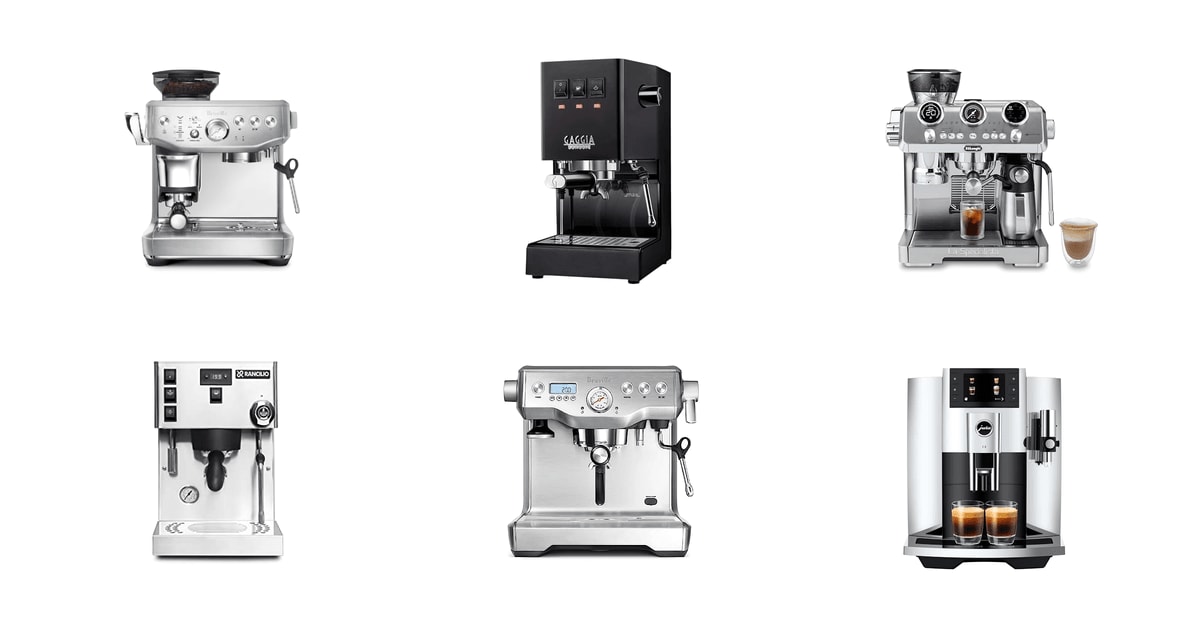
Good espresso at home comes down to three things happening at once: water at the right temperature, pressure that holds steady through the shot, and coffee ground fine enough to fight back. Miss any one of them and you get something sour, bitter, or watery. The machines that get this right aren't magic — they're just built with better temperature control and a portafilter that accepts real baskets. What you're buying is consistency, so the shot you pull on a rushed Tuesday tastes like the one you pulled on a lazy Sunday.
Here's the part nobody selling you a machine wants to lead with: the grinder matters as much as the machine, sometimes more. James Hoffmann has said repeatedly that stepping up to a better burr grinder does more for your cup than stepping up a machine tier at the same spend. So a machine with no grinder isn't a complete purchase. And every one of these has a learning curve — even the push-button ones want the right beans and regular cleaning. Nothing here makes espresso good coffee.
Most people want café drinks without a second appliance and a month of practice. Some want to chase light-roast sweetness with flow control. A few just want to hit a button before a 7 a.m. call. We think that the Breville Barista Express Impress is the best espresso machine for most people, and that the Gaggia Classic Evo Pro is the one to buy if you'd rather pair a serious commercial-standard brew group with a grinder you choose yourself.
Everything we recommend

Grinder, tamper and steam wand in one, with real control

A commercial brew group in a small steel box

Guided tamping and one-touch milk for the impatient

Two boilers, so you never wait between shot and steam

Push a button, walk away, drink something decent
At a glance
| Product | Price | |
|---|---|---|
| Breville BES876BSS Barista Express ImpressTop pick | $649.95On sale |
| Gaggia RI9380/49 Classic Evo Pro Espresso MachineRunner-up | $508.01 |
| De'Longhi La Specialista Maestro Espresso Machine withAlso great | $999.95On sale |
 | Rancilio Silvia Pro X Espresso MachineAlso consider | $2,195 |
| Breville BES920XL Dual Boiler Espresso MachineUpgrade pick | $1,599.95 |
| Jura E8 Chrome 15646Also great | $2,599On sale |
 | Flair 2GO: PortableAlso in lineup | $169 |
How we picked
Temperature stability. We favored machines with PID control or active temperature management, since brew water needs to sit in the 90–96°C window the SCA specifies. Machines that drift with the heating cycle got marked down.
Pressure at the puck. We looked for a factory pressure setup near the 9-bar SCA target rather than the inflated pump numbers on the box. Pre-infusion capability counted as a plus, since it evens out water flow and reduces channeling.
Portafilter standard. We weighted 58mm commercial portafilters heavily, because they open up the aftermarket ecosystem of precision baskets, distribution tools and tampers documented by CoffeeGeek. Proprietary sizes lock you in.
Milk and steam. We separated commercial single-hole wands, which can make real microfoam and latte art, from automatic frothers that trade control for convenience. Both earn a place, but for different buyers.
Living with it. Spec sheets and owner feedback themes both informed how we judged warm-up time, descaling routine, cleaning effort and parts availability. A machine that's annoying to maintain stops getting used.
Top pickOn sale
Grinder, tamper and steam wand in one, with real control
Breville BES876BSS Barista Express Impress
The Barista Express Impress puts a 25-setting conical burr grinder and an assisted tamper into one stainless machine, so you're not buying a grinder separately. It doses, tamps at a consistent 10 kg, and gives you a real steam wand for microfoam.
$649.95fromAmazonList priceThis is the machine that makes espresso a habit instead of a project. Grinding, dosing and tamping are where beginners lose shots, and the Impress handles all three in one motion. The dosing system measures your grounds and auto-corrects the next dose based on what it saw. Pull the lever and you get an even puck every time. That's the difference between drinking espresso most mornings and giving up in week three.
Tamping by hand sounds easy until you've done it badly a hundred times. Uneven pressure tilts the puck, water finds the thin side, and half your coffee never gets extracted. The assisted tamper applies about 10 kg with a 7-degree twist at the end, which is what a good barista does by feel. You get a polished, level surface without thinking about your wrist angle.
The 25 grind settings sound like marketing, but this is the adjustment you'll actually use. Beans get stale, roasts change, humidity shifts — and when your shot suddenly runs in 15 seconds, you step the grind finer and it's fixed. Machines with five or six settings leave you stranded between too fast and too slow. Here you can nudge things one click at a time.
The steam wand is manual, and we mean that as a compliment. You're the one moving the pitcher and finding the whirlpool, which is how you learn to make microfoam that pours into a heart instead of dish soap. It takes maybe a week of ruined milk to get there. After that your flat whites are genuinely better than most chain cafés serve.
Flaws but not dealbreakers
It's a single boiler, so brewing and steaming can't happen at the same time. You pull the shot, wait for the machine to climb to steam temperature, then froth. For one or two drinks that's fine. If you're making four lattes for houseguests, the pauses add up and you'll wish you had a dual boiler.
At 16.5 inches tall it won't slide under standard upper cabinets with the water tank in place, and it's not light. Measure your counter first. The grinder also lives inside the machine, so if you eventually want a better burr set, you're buying a standalone grinder and leaving this one idle.
Runner-up
A commercial brew group in a small steel box
Gaggia RI9380/49 Classic Evo Pro Espresso Machine
The Gaggia Classic Evo Pro is a steel-bodied Italian single boiler with a 58mm commercial portafilter and a factory 9-bar setup. It has no grinder, so you'll buy one — but it puts your money into the parts that matter most.
$508.01fromAmazonSkip the grinder and this is a lot of machine for the footprint. Solid steel housing, made in Italy, a 58mm commercial portafilter and a three-way solenoid valve that dumps pressure after the shot so your puck comes out dry instead of soupy. Those are commercial-machine parts, not consumer approximations. At 8 inches wide it takes less counter space than a stand mixer.
The 58mm portafilter is the real reason to buy this. That's the size Rancilio, Breville, ECM and most café machines use, which opens up hundreds of precision baskets, distribution tools and tampers. Buy a good tamper once and it fits every machine you'll ever own. Proprietary portafilters lock you into whatever the manufacturer still stocks.
Older Gaggia Classics shipped with the over-pressure valve running around 12 bar, and owners routinely opened them up to bring that down. The Pro version comes set near 9 bar from the factory, which is what the SCA standard calls for. That single change means you can pull a decent shot out of the box without a screwdriver and a forum thread.
This machine has one of the most active modding communities in home coffee. PID kits, OPV tuning, steam wand swaps — people keep these running and improving for a decade. If you like the idea of a machine that grows with you rather than one you replace, that ecosystem matters more than any single spec.
Flaws but not dealbreakers
There's no PID, so brew temperature drifts with the heating cycle. You'll learn to time your shot to the light, or you'll add a PID later. It's a real limitation compared with the Rancilio or the Breville Dual Boiler, and it's the main reason this is the runner-up.
The boiler is uncoated aluminum, which some owners dislike on principle and which makes regular descaling non-negotiable. And with no grinder in the box, your true cost is higher than the sticker suggests. Budget for a dedicated espresso grinder before you decide this is the affordable option.
Also greatOn sale
Guided tamping and one-touch milk for the impatient
De'Longhi La Specialista Maestro Espresso Machine with
The La Specialista Maestro grinds, tamps with a lever, and froths milk automatically with the LatteCrema system. Five temperature settings and eight drink presets mean you can hand it to anyone in the house and get a drinkable cappuccino.
$999.95fromAmazonList priceIf your household includes people who will never learn to steam milk, this is the machine to get. The LatteCrema Hot system froths automatically at one touch, and there's a commercial-style manual wand alongside it for when you want to practice. Most machines make you choose one or the other. Here you get both, which is genuinely useful in a house with mixed ambitions.
The Smart Tamping lever does the same job as Breville's assisted tamper — even pressure, no mess, no technique required. Combined with 15 grind settings and an automatic dose, you're removing most of the ways a beginner ruins a shot. The pump runs high pressure but steps down to roughly 9 bar during extraction, with a low-pressure pre-infusion phase first that helps water spread evenly through the puck.
Five selectable infusion temperatures is the feature experienced users will appreciate most. Light roasts extract better hotter; dark roasts turn bitter if you push them. On most machines at this level you take whatever temperature you're given. Active Temperature Control lets you match the water to the beans, and that's a meaningful lever once you start buying from actual roasters.
Flaws but not dealbreakers
It's the biggest machine here — 18.5 inches tall, over 35 pounds — so it eats a serious chunk of counter. Check your cabinet clearance before ordering.
The automatic milk system has more parts to clean than a bare steam wand. There's a one-touch clean cycle, but the carafe and tubes still need attention or milk residue builds up and your foam goes flat. If you skip cleaning, this is the machine that will punish you for it.
Upgrade pick
Two boilers, so you never wait between shot and steam
Breville BES920XL Dual Boiler Espresso Machine
The Breville Dual Boiler runs separate PID-controlled brew and steam boilers, so you can extract and texture milk at the same time. It comes with a full 58mm kit — razor dosing tool, baskets, tamper and milk jug — and holds brew temperature within about a degree.
$1,599.95fromAmazonTwo boilers change how the machine feels to use. One is dedicated to brewing and PID-controlled to roughly ±1°C; the other does nothing but make steam. You pull a shot and steam milk simultaneously, with no heat-up wait and no cooldown flush. If you make more than two milk drinks in a sitting, this alone justifies the step up from a single boiler.
Temperature stability is what separates a good shot from a lucky one. A single boiler swings as the element cycles, so your Tuesday shot and your Sunday shot come off different machines in practice. Independent PID control holds the brew boiler steady across back-to-back extractions. That's the closest thing to a guarantee that your dialing-in work stays valid tomorrow.
The box includes a 58mm stainless portafilter, single and double wall baskets, the razor dosing tool for trimming the puck level, an integrated tamper, a milk jug, cleaning kit and water filter. You're not ordering four accessories before your first shot. And that 58mm size means the aftermarket basket you eventually want will fit.
Italian dual boilers with this feature set cost considerably more. This one gives up some of their heft and their thermal mass, but it hits the same core capability: real pre-infusion, stable brew temperature, and steam on demand. For most people that's the whole point of a prosumer machine.
Flaws but not dealbreakers
Like every dual boiler, it wants a proper warm-up before the first shot — plan on the machine being ready well after you are. Auto-start timers help; impatience doesn't.
No grinder, so budget accordingly. And with two boilers, descaling matters more than on a simpler machine. Neglect it and you're dealing with two heating circuits full of scale instead of one.
The Breville Dual Boiler comes with a two-year limited product warranty.
Also greatOn sale
Push a button, walk away, drink something decent
Jura E8 Chrome 15646
The Jura E8 is a bean-to-cup super-automatic with up to 17 drink options, a 3.5-inch color display, and automatic milk system cleaning. It grinds, brews, froths and rinses itself, which is exactly right for a household that wants coffee without a hobby.
$2,599fromAmazonList priceSome mornings you don't want to be a barista. The E8 grinds fresh beans, brews, textures milk and cleans its own milk lines at a button press. Up to 17 drinks are programmed in, and the color display walks you through them with pictures rather than cryptic icons. Anyone in the house can use it, including guests, including before coffee.
The milk system cleaning is the feature that actually keeps these machines in service. Automatic frothers on cheaper super-automatics turn into science experiments because nobody wants to disassemble tubing daily. Jura runs a cleaning cycle at one touch, in under a minute, and the drip tray lifts out one-handed. Low friction maintenance is maintenance that happens.
Jura's CLARIS filter cartridges are rated to treat up to 50 liters each, and the machine's water system adjusts based on measured hardness. If you're on hard water, that's a real reduction in scale buildup — and scale is what kills these machines. The grinder also parks in a rest position between drinks rather than sitting loaded.
Flaws but not dealbreakers
Consumer Reports' lab work consistently finds super-automatics score well on ease of use but lower on espresso quality — crema, body, flavor complexity — than semi-automatics in the same bracket. That tracks with what the format gives up. You can't adjust dose, tamp, or shot time, so you can't chase a shot the way you can on the Breville or the Gaggia.
There's no manual steam wand, so latte art is off the table. And when something inside goes wrong, this isn't a machine you repair on a kitchen towel with a screwdriver — it's a service appointment.
Who this is for
Buy now if you're drinking espresso most days and paying café prices for it, or if you've hit the ceiling on a pod machine and want to actually control your coffee. Seattle Coffee Gear's cost comparisons put a home double shot far below café pricing, and most daily drinkers close the gap on a machine within roughly six to eighteen months. If you drink espresso twice a month, none of this pencils out — a moka pot or an AeroPress will serve you better.
This guide covers electric semi-automatic machines, one super-automatic, and one manual lever brewer, all aimed at people making real espresso with fresh beans. We don't cover pod or capsule systems, commercial machines, or drip coffee makers. We also don't cover grinders, though you'll need one for every machine here except the Barista Express Impress, La Specialista Maestro and Jura E8 — and a good burr grinder is the highest-leverage purchase most home baristas make.
How we picked
Temperature: we favored PID control or active temperature management, because the SCA window of 90–96°C is where espresso stops tasting sour or scorched. Pressure: we looked for a factory setup near 9 bar rather than the inflated pump numbers printed on boxes, and counted pre-infusion as a real advantage for evening out flow through the puck. Portafilter: 58mm commercial sizing earned extra credit, since it unlocks the aftermarket baskets and tampers that proprietary systems shut you out of. Milk: we separated commercial wands that make true microfoam from automatic frothers that trade control for speed, and kept examples of both. Upkeep: warm-up time, descaling routine and cleaning effort all counted, because the machine you resent cleaning is the machine you stop using.
Other espresso machines for home baristas worth considering
If you want an Italian dual boiler you can adjust to the degree: The Rancilio Silvia Pro X Espresso Machine ($2,195) — The Rancilio Silvia Pro X pairs a 1-liter steam boiler with a 300ml brew boiler, each on its own PID that you can set to the degree — Rancilio publishes brew stability within about ±0.5°C. Steam is optional, so the steam boiler only pressurizes when you ask for it, which saves energy on days you drink straight espresso. Adjustable low-pressure pre-infusion and a front-panel shot timer round it out, and a programmable wake-up timer means it's hot when you are. It costs more than the Breville Dual Boiler and comes with far fewer accessories in the box, so plan on buying a razor tool, better baskets and a milk jug separately. Choose it if you want Italian build and per-degree control more than you want a complete kit.
The competition
These are the machines our research surfaced alongside the picks, not a complete map of the category. The espresso market runs from lever brewers to five-figure Italian machines, and plenty of good options — particularly from smaller Italian and Australian makers — aren't represented here. What follows is what we compared and why it didn't land in the main lineup.
The Flair 2GO: Portable ($169) — The Flair 2GO is a collapsible manual lever brewer that generates 6–9 bar entirely by hand, with a pressure gauge so you can see exactly what you're doing. It weighs under four pounds, folds into a case smaller than a shoebox, and needs no electricity for the brewing itself. Aircraft-grade aluminum frame, stainless brew cylinder, bottomless 2-in-1 portafilter, one-year limited warranty on the frame and cylinder. It didn't make the picks because it's a different proposition: no steam wand, no milk drinks, one shot at a time, and you still need hot water and an espresso-capable grinder. But if you travel, camp, or want genuine pressure control without a pump, it's the most interesting thing here — and the only one that gives you a live pressure readout for every shot you pull.
Care and maintenance
Descaling is the thing that determines whether your machine lasts three years or fifteen. How often depends on your water — soft water might mean every three or four months, hard water every six weeks — and any machine with a water filter, like the Jura's CLARIS cartridges, buys you more time between cycles. Backflush machines that support it weekly with a blind basket and detergent, and wipe the steam wand immediately after every use, before milk dries into the tip. Milk proteins bake on fast and clog the holes, which is how good wands turn into sputtering ones. Empty and rinse the drip tray more often than feels necessary. And use filtered water from the start; it's cheaper than a new boiler.
Questions we get
What's the best espresso machine for a beginner?
The Breville Barista Express Impress, because it removes the two things beginners get wrong most often: inconsistent dosing and uneven tamping. It grinds, doses and tamps in one motion, and the manual steam wand still teaches you real milk technique. If you'd rather have a guided experience with automatic frothing, the De'Longhi La Specialista Maestro lowers the floor even further.
Do I really need a separate grinder?
For the Gaggia, the Rancilio and the Breville Dual Boiler, yes — none of them include one, and pre-ground coffee will not make espresso. James Hoffmann has argued in multiple videos that upgrading your grinder improves your cup more than upgrading your machine at the same spend. If you'd rather not buy two things, the Barista Express Impress, La Specialista Maestro and Jura E8 all grind for you.
What's the difference between a single boiler and a dual boiler?
A single boiler heats water to brew temperature or steam temperature, but not both at once, so you pull your shot and then wait while it climbs to steam. A dual boiler runs two independent vessels, letting you extract and texture milk at the same time. The Breville Dual Boiler and Rancilio Silvia Pro X are dual boilers; the Gaggia and Barista Express Impress are single boilers. If you make several milk drinks in a row, the difference is significant.
Is the Gaggia Classic Evo Pro still worth buying?
Yes, for the right buyer. Its 58mm commercial portafilter, three-way solenoid valve and factory 9-bar setup are legitimate commercial features in a small steel body, and the modding community keeps these machines relevant for years. What it lacks is PID temperature control, so you're managing brew temperature by timing. If that sounds like a fun problem rather than a chore, it's an excellent machine.
Are super-automatics worth it?
They're worth it if convenience is the point. Consumer Reports finds super-automatics beat semi-automatics decisively on ease of use, but score lower on espresso quality — crema, body and flavor complexity — in the same price bracket. The Jura E8 makes a good drink with zero technique and cleans its own milk system. You just can't dial in a shot the way you can on a semi-automatic.
What is pressure profiling, and do I need it?
Pressure profiling means varying pressure during the shot — a gentle low-pressure pre-infusion to wet the puck, then a ramp up and often a decline at the end. It reduces channeling and can pull sweeter shots from light roasts. Most people don't need it; several machines here offer pre-infusion, which delivers most of the benefit. Full manual control is an enthusiast feature, and the Flair 2GO is the one machine here that puts it entirely in your hands, with a live pressure gauge to follow.
Why you should trust us
For this guide:
- We read manufacturer specifications from Breville, Gaggia, De'Longhi, Rancilio, Jura and Flair alongside the SCA's published espresso standard for pressure and temperature.
- We compared published reviews and lab findings from Consumer Reports, CoffeeGeek, Home-Barista and Seattle Coffee Gear, plus expert commentary from James Hoffmann on grinder-versus-machine spending.
- We reviewed recurring themes in owner feedback about warm-up time, descaling, milk system cleaning and long-term parts availability.
- We read owner reviews on every listing, weighted toward the critical ones, because that is where the recurring failures show up.
- We have a systematic way of automatically fetching the latest prices, so the numbers on this page stay current.
- This is a research-focused guide, so the team may not own every product listed — though we often do own the top winners, which gives us extra context for the recommendations.
- We don't accept free products, and the retailer commission never changes which product we recommend.
Sources
Best Espresso Machines 2026 — Wirecutter (NYT), Wirecutter
Best Espresso Machines — Consumer Reports, Consumer Reports
Home-Barista.com — Espresso Machine Reviews & Community, Home-Barista.com
Whole Latte Love — Espresso Machine Expert Reviews, Whole Latte Love
Seattle Coffee Gear — Machine Comparisons & Buyer Guides, Seattle Coffee Gear
The Spruce Eats — Best Espresso Machines (Lab Tested), The Spruce Eats
Good Housekeeping Institute — Espresso Machines Tested, Good Housekeeping
CoffeeGeek — Prosumer Espresso Machine Reviews, CoffeeGeek
Specialty Coffee Association — Espresso Brewing Standards, Specialty Coffee Association (SCA)
James Hoffmann — Home Espresso & Grinder Guides (YouTube), James Hoffmann / YouTube
Lance Hedrick — Espresso Machine Deep Dives (YouTube), Lance Hedrick / YouTube
National Coffee Association — National Coffee Data Trends, National Coffee Association USA
Amazon product listings and owner reviews for all 7 products
Manufacturer specification pages for each product
Some passages in this guide may be paraphrased with AI help. Prices are refreshed automatically.
More like this.
Continue exploring appliances reviews and recommendations.

The Best Portable Espresso Makers for Travel
Bad hotel coffee is a small daily tax on travel. A portable espresso maker is the fix: a hand-pumped cylinder that takes fine grounds and hot water and…

The Best Home Barista Gear
Espresso at home lives or dies on two things: an even grind and a machine that holds a steady temperature. Everything else - the tamper, the scale, the…

The Best Portable Washing Machines for Apartments
Laundry day in an apartment without hookups is a logistics problem. You haul a bag down three flights, feed quarters into a machine someone else just left…

The Best Bread Machines
Fresh bread from a machine is really about mornings. You load flour, water, salt and yeast the night before, set the timer, and wake up to a warm loaf and…

The Best Bread Machines
A bread machine turns baking into a chore you can ignore. You dump in flour, water, yeast, salt and a little oil, press a button, and walk away. Three…

The Best Chocolate Tempering Machines
Tempered chocolate is the difference between a truffle that snaps when you bite it and one that smears on your fingers. That snap comes from getting cocoa…