The Best Panini Presses And Sandwich Makers
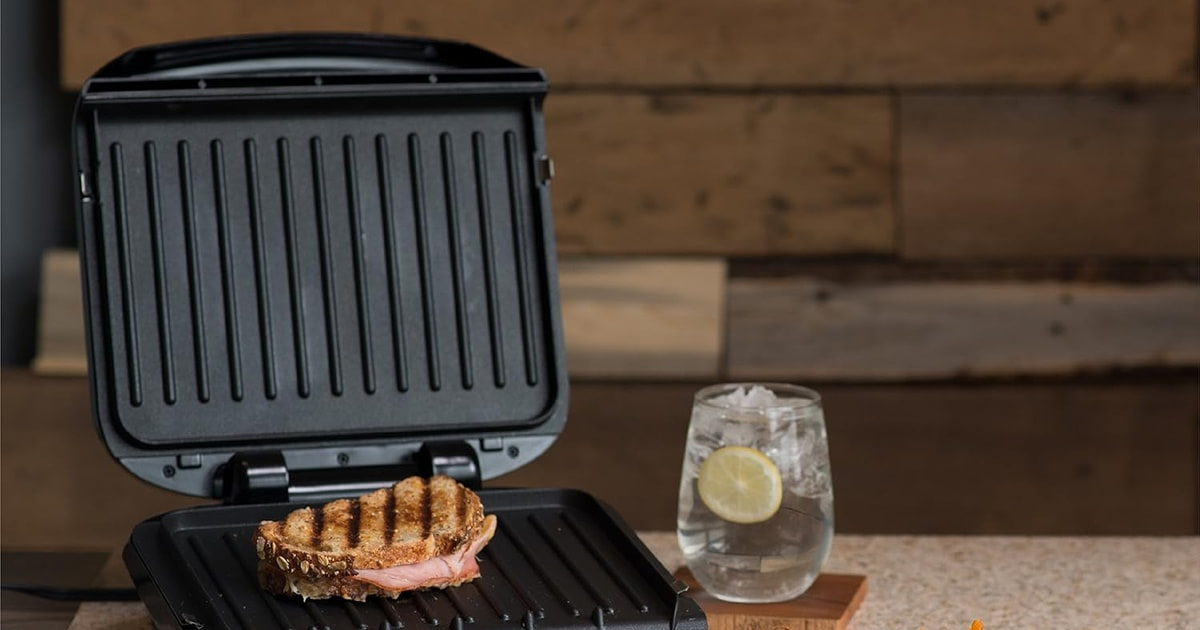
A good panini press turns leftover bread and a wedge of cheese into lunch in about four minutes. That's the whole appeal. You close the lid, you walk away, and you come back to crisp ridges and melted cheddar without babysitting a skillet or flipping anything. Most people use these far more than they expect to — grilled cheese on a Tuesday, a reheated slice of pizza, quesadillas for a kid who won't eat dinner. The good ones heat fast, press evenly, and wipe clean before the plates cool.
Here's the catch nobody mentions: no press in this category cleans itself, and the cheese always escapes. Melted cheddar oozes out the sides, hits a 400-degree plate, and welds itself there. Models with removable plates let you drop the mess in the dishwasher. Fixed-plate models mean scrubbing a hot ridged surface with a damp cloth while it's still warm enough to burn you. Also, every one of these takes up real counter space. If your counter's already full, that matters more than any spec.
We think that the Breville Panini Duo is the best panini press for most people, and that the Cuisinart Griddler GR-4NP1 is the one to buy if you want one appliance that also handles pancakes, burgers, and bacon.
Everything we recommend

The simplest press that gets sandwiches right every time

Five cooking modes and plates you can put in the dishwasher

A floating lid and a big plate, for far less money

Automatic doneness sensing on a big stainless grill
Angled plates that drain the grease off your food
At a glance
| Product | Wattage | Plate Size | Price | |
|---|---|---|---|---|
| Breville BSG520XL Panini Duo Sandwich MakerTop pick | 1500W | 2 Slice | $99.95 |
| Cuisinart Griddler Indoor GrillRunner-up | — | — | $99.95On sale |
| Hamilton Beach Panini PressBudget pick | — | 8" x 10" Grids | $49.95 |
 | De'Longhi TrueBrew Drip Coffee MakerAlso in lineup | — | — | $599.95On sale |
| George Foreman 4-Serving Indoor Grill with RemovableAlso great | — | 60 sq in | $41.99 |
 | Ninja IG651 Foodi Smart XL Pro 7-in-1Also consider | — | 12 in Griddle | $404.45 |
 | Cuisinart Panini Press and GrillAlso consider | 1500W | Medium | $79.95On sale |
| All-Clad Electric Indoor GrillUpgrade pick | 1800W | 5L XL | $299.95 |
How we picked
Hinge and clearance. We prioritized presses with a genuinely floating top plate. America's Test Kitchen's finding that a sandwich needs at least 1.75 inches of hinge clearance to press without tearing set our threshold.
Heating power. We read Consumer Reports' preheat comparisons, which showed 1500W-plus models hitting grilling temperature in about 90 seconds against over three minutes for sub-1000W units. We treated 1500W as the line between fast and merely adequate.
Cleanup design. Removable, dishwasher-safe plates weighed heavily. Food Network's side-by-side comparison found removable-plate models cleaned up roughly 40 percent faster, and owner feedback across every brand echoes it.
Plate material. Serious Eats found die-cast aluminum plates held heat about 25 percent longer than pressed steel, which shows up as even grill marks from edge to edge. We favored heavier cast plates over thin stamped ones.
Real versatility. We looked for presses that open flat or convert to a griddle, since one appliance doing breakfast and lunch matters most in a small kitchen. Manufacturer spec sheets and published mode-by-mode reviews informed this.
Top pick
The simplest press that gets sandwiches right every time
Breville BSG520XL Panini Duo Sandwich Maker
The Breville Panini Duo does one job and does it cleanly: 1500 watts, flat plates on the bottom, ridges on top, and a floating hinge that presses a two-inch ciabatta as evenly as a thin quesadilla. It stores upright and takes maybe a minute to wipe down.
$99.95fromAmazonThe floating hinge is the whole reason this one wins. America's Test Kitchen found you need at least 1.75 inches of hinge clearance to press a stacked sandwich without tearing the bread, and the Breville's adjustable top plate clears that easily. Pile on turkey, provolone, roasted peppers, and a thick slice of sourdough — the lid still meets the bread flat instead of crushing one end. Thin quesadillas work too, because you can set the plate lower.
The plate layout is unusual and it's a deliberate choice. Only the top plate has ridges; the bottom is flat. You get the grill marks people want on the presentation side, and the flat bottom means egg sandwiches and open-faced melts don't fall through gaps. Owners who've used ribbed-on-both-sides presses often say they prefer this after a week. It also means fewer crevices to clean.
At 1500 watts, it preheats fast. Consumer Reports found presses at that wattage reach grilling temperature in roughly 90 seconds, versus over three minutes for models under 1000 watts. That's the difference between deciding to make a sandwich and having one. If you're squeezing lunch into a break between meetings, the wait is short enough that you won't reach for takeout instead.
It's built to last, which is rarer here than it should be. Brushed stainless steel, real weight in the hand, and owners regularly report years of near-daily use without the coating flaking or the hinge loosening. That matters in a category where cheap presses get replaced every eighteen months. A storage clip locks the plates shut, the rear foot lets it stand upright, and the cord tucks into the base.
Flaws but not dealbreakers
The plates don't come out. You clean this one while it's still warm, with a damp cloth and a little patience, and burnt-on cheese takes some scrubbing. If dishwasher cleanup is your priority, get something else.
There's no temperature dial — it's on or off. For grilled cheese and panini that's fine, since the press runs at a sensible sandwich temperature. But if you want to gently warm brie or cook a chicken breast low and slow, you don't have that control.
The cooking surface is modest. You'll fit one large sandwich or two small ones. Feeding a family of four means running batches.
The Panini Duo comes with a one-year replacement warranty.
Runner-upOn sale
Five cooking modes and plates you can put in the dishwasher
Cuisinart Griddler Indoor Grill
The Cuisinart Griddler GR-4NP1 opens flat into a full griddle, folds shut as a contact grill or panini press, and does half-and-half if you want bacon next to pancakes. The nonstick plates pop out and go in the dishwasher.
$99.95fromAmazonList priceIf your kitchen is small, this is the appliance that earns its counter space. It's a contact grill, a panini press, a full grill, a full griddle, and a half-grill/half-griddle. That means Sunday pancakes and sausages on the same surface, then a pressed sandwich at lunch. Good Housekeeping's testers rated it their top versatility pick among a dozen models after running it through all five modes.
Removable plates change how often you'll actually use it. Food Network found removable-plate models cleaned up about 40 percent faster than fixed-plate ones. In practice that means you unclip both plates, put them in the dishwasher, and you're done — no standing over a hot press with a paper towel. A drip tray catches grease and a scraping tool comes in the box.
The dual temperature controls give you range the Breville doesn't have. In grill and panini mode you can dial from warm to sear; in griddle mode you get 200°F to 425°F. That's enough control to melt cheese slowly on a delicate sandwich or get a hard crust on a burger. If you want one machine that handles both, this is the one.
It's been on the market long enough that the accessory ecosystem is real. Waffle plates and flat plates are available separately, so the same base can make waffles Saturday morning. Owners often report keeping theirs a decade or more, which says something about the hinge and the heating elements.
Flaws but not dealbreakers
The hinge doesn't float as freely as the Breville's. On a very thick stacked sandwich, the lid can tilt and press the front harder than the back. Not a dealbreaker, but you'll notice it on a tall Reuben.
It's heavy and bulky — over eleven pounds, and it doesn't store as neatly as a dedicated press. Lifting it in and out of a low cabinet gets old.
Some owners find the temperature dials vague. The markings are approximate, so you're learning your machine rather than dialing in a number.
Cuisinart backs the Griddler with a limited three-year warranty.
Budget pick
A floating lid and a big plate, for far less money
Hamilton Beach Panini Press
The Hamilton Beach panini press has a genuinely floating top plate and 8-by-10-inch ribbed plates — enough for two quesadillas or one big sub. It costs a fraction of our top pick and handles thick sandwiches better than its price suggests.
$49.95fromAmazonThe floating top plate is the feature that usually disappears at this price, and it's here. That's what lets you press a piled-high Reuben without the lid mashing one side flat. The plates measure 8 by 10 inches, which is more surface than our top pick — two regular sandwiches, two quesadillas, or one oversized sub go on at once.
The lid locks in useful positions, not just open and shut. You can lock it hovering above open-faced melts so the cheese browns without the bread getting squashed. Lock it fully open and you've got a flat surface for reheating pizza or crisping bruschetta. For a press this inexpensive, that's a lot of ways to cook.
There's no temperature dial. Instead a green indicator light tells you when it's hot. The Spruce Eats found indicator lights meaningfully reduced undercooked-sandwich mistakes for first-time users, and that tracks — the main way people ruin a panini is starting before the plates are ready. Hamilton Beach recommends six minutes of preheat, which is longer than the premium models but it's not like you're standing there watching it.
Flaws but not dealbreakers
At 900 watts it's the slowest to heat here. Consumer Reports measured sub-1000-watt models taking over three minutes to reach grilling temperature, and that shows up in the sear — you get lighter marks than a 1500-watt press produces.
Fixed plates, again, so cleanup means wiping a hot ridged surface. The nonstick coating handles it well when it's new, but this is the one component most likely to wear out over a few years of daily use.
The build is lighter and more plasticky than the Breville. It works, but it won't feel like an heirloom.
Upgrade pick
Automatic doneness sensing on a big stainless grill
All-Clad Electric Indoor Grill
The All-Clad AutoSense grill is a full 1800-watt indoor grill that also presses sandwiches. It senses food thickness and adjusts cooking time, has nine automatic programs plus manual temperature control, and its removable plates go in the dishwasher.
$299.95fromAmazonThis one's for you if the press is really an indoor grill that occasionally makes panini. It's XL-sized — enough surface for meals for up to eight — with stainless construction and 1800 watts behind it. If you live somewhere where firing up the outdoor grill in July means standing in a furnace, an indoor grill this large actually replaces it for weeknight cooking.
The AutoSense system is the reason to pay more. It reads the thickness of what you put on the plates and adjusts the cook time, then walks you through five stages with an indicator so you're not lifting the lid every ninety seconds. Epicurious found the All-Clad held temperature within ±5°F of target over a twenty-minute session, while budget models drifted as much as ±40°F. For anything delicate — a brie-and-pear sandwich, thin fish — that stability is what keeps it from scorching.
Manual mode gives you four fixed temperatures when you'd rather drive it yourself, and nine automatic programs when you wouldn't. The plates come out for the dishwasher and there's a juice tray underneath. Cleanup is as easy as anything here.
It also runs genuinely smokeless, which matters more in an apartment than on paper. The plate temperature stays controlled enough that searing a steak doesn't set off the smoke alarm at 7 p.m.
Flaws but not dealbreakers
The automatic doneness readings aren't reliable for everyone. Several owners report the rare/medium/well indicator running off, and a few say it overcooks — dry burgers come up more than once. If you care about a precise medium-rare, use a thermometer and treat the indicator as a hint.
It's expensive and it's large — nearly eighteen inches wide. This is not a press you tuck in a cabinet between uses.
The lid is heavy. Some owners find it presses harder than they'd like on a soft sandwich.
Also great
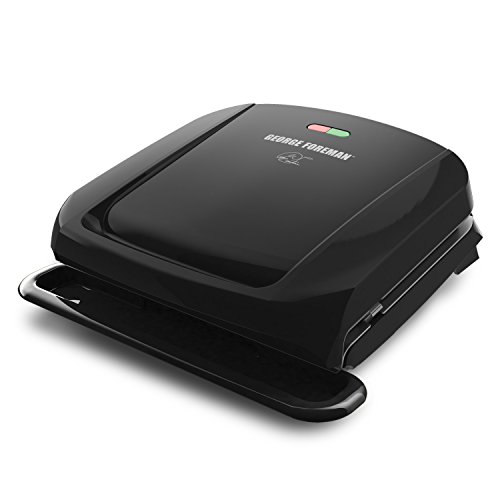
Angled plates that drain the grease off your food
George Foreman 4-Serving Indoor Grill with Removable
The George Foreman 4-Serving grill tilts so fat runs off into a tray instead of pooling under your food. CNET found it drained about 2.5 tablespoons of fat from a chicken breast versus flat-plate presses. Plates pop out for the dishwasher.
$41.99fromAmazonThe whole design is built around the slope. Everything sits at an angle, so rendered fat runs downhill into the drip tray rather than sitting under your burger. CNET measured roughly 2.5 tablespoons drained from a single four-ounce chicken breast compared to a flat-plate press. If you're cooking meat on this several nights a week, that adds up.
It's the easiest press here to clean. The plates unclip and go in the dishwasher, the coating is slick enough that most food releases without oil, and the grease tray rinses in seconds. Owners who've owned older Foreman models consistently point to the removable plates as the upgrade that made them use it again.
The heating elements preheat about 35 percent faster than the previous generation, and the 60-square-inch surface fits a main course for a small household. It's compact, it's simple, and there's nothing to learn — plug it in, wait a few minutes, cook.
But that same slope works against you for sandwiches. Cheese runs downhill along with the fat, and loose items like hot dogs can slide out when you lift the lid. For grilling chicken and burgers, that tilt is the point. For a cheese-heavy panini, it's a nuisance.
Flaws but not dealbreakers
There's no temperature control at all. It's one heat setting, and you manage doneness with time.
The four-serving claim is generous. Owners regularly say it fits two burger patties comfortably and call it a three-serving grill at best.
The hinge doesn't float much, so very thick sandwiches get compressed unevenly. This is a grill first and a sandwich press second.
Who this is for
Buy one of these if you eat lunch at home and want it hot in under five minutes. That covers a lot of people now — AHAM's survey found 63 percent of panini press owners use theirs at least twice a week, and NPD data shows the category grew 18 percent in a year as more people started eating lunch at their desks at home. Students, apartment dwellers without much stove space, and anyone tired of standing over a skillet flipping a grilled cheese will get real use out of one.
Skip it if your counter is already full and you own a decent skillet, since a cast-iron pan with a weight on top makes a fine panini. This guide covers countertop electric presses and contact grills that can press a sandwich. We didn't look at stovetop press pans, commercial-duty restaurant equipment, or sealed pocket-sandwich makers that crimp the crust shut, because those solve different problems.
How we picked
We built the shortlist around a handful of things that separate a press you'll use daily from one that ends up in a cabinet. Hinge: the top plate has to float and clear at least 1.75 inches, or thick bread tears instead of compressing. Power: 1500 watts or more preheats in roughly 90 seconds, while sub-1000W models take over three minutes and sear less convincingly. Cleanup: removable dishwasher-safe plates cut cleaning time by about 40 percent versus fixed plates you have to wipe while hot. Plates: die-cast aluminum holds heat around 25 percent longer than pressed steel, which is what gives you even marks corner to corner. Versatility: a press that opens flat into a griddle earns its counter space twice over. Feedback: an indicator light or clear readiness signal matters more than it sounds like, since starting cold is the most common way people ruin a sandwich.
Other panini presses and sandwich makers worth considering
If you want the Griddler's versatility in a newer package: The Cuisinart Panini Press and Grill ($79.95) — This is Cuisinart's current 1500W five-in-one Griddler, with the same contact grill, panini, full grill, full griddle, and half-and-half modes as our runner-up, the same 200°F to 425°F griddle range, and the same removable dishwasher-safe plates and scraping tool. Owners report a redesigned drip channel that keeps grease from running out the corners, which was a real complaint on older versions. What you give up is track record — the older GR-4NP1 has been in kitchens for over a decade with a long paper trail, and a handful of owners here mention uneven heating across the plate. If you want the newest revision and don't mind less history behind it, this is a fair swap.
If you want a grill that also presses sandwiches: The Ninja IG651 Foodi Smart XL Pro 7-in-1 ($404.45) — The Ninja Foodi Smart XL Pro is not really a panini press, and buying it as one is overkill. It's a 1760-watt indoor grill with a 500°F grate, a 12-inch BBQ griddle top, cyclonic air with the hood down, a smart thermometer, and seven functions including air fry and dehydrate. Tom's Guide's lab clocked a Ninja indoor grill hitting 500°F in eight minutes, the fastest in its roundup. It will absolutely make a pressed sandwich on the flat griddle, and it replaces an air fryer and a toaster oven besides. But it's enormous at over 27 pounds and nearly 17.5 inches wide, and cleaning the hood is the complaint owners raise most. Get it if you want an all-purpose cooking machine, not if you want a lunch appliance.
The competition
This is what our research surfaced, not a census of everything sold. Plenty of decent presses exist that we didn't have listing data for, and the category turns over quickly at the low end. Here's the one remaining model we looked at and where it landed.
The De'Longhi TrueBrew Drip Coffee Maker ($599.95) — The De'Longhi TrueBrew turned up in our search because De'Longhi makes a well-regarded panini maker, but this particular listing is a drip coffee maker with a built-in burr grinder — six brew sizes, five brew styles, no plates and no hinge. It won't press a sandwich. Owner feedback on it is also sharply split, with a meaningful share reporting failures within the first month or two. If you came here for De'Longhi's dual-zone panini maker, this isn't it.
Care and cleaning
Clean the plates before they cool completely — that's the single habit that keeps a press usable for years. On fixed-plate models like the Breville and the Hamilton Beach, unplug it, wait until the plates are warm rather than hot, then lay a damp paper towel across them for a minute. The steam loosens the welded cheese, and a soft cloth takes the rest. Never use metal utensils or abrasive pads on nonstick; a scraper made of nylon or wood is what the ridges want. On removable-plate models, unclip and run them through the dishwasher, but let them cool first — thermal shock is hard on coatings. Empty the drip tray every time rather than letting grease sit and harden. And wipe the outer hinge occasionally, since drips collect there and eventually gum it up.
Questions we get
What's the difference between a panini press and a sandwich maker?
A panini press has open, usually ribbed plates and a hinged lid that presses your sandwich flat while grilling both sides at once. A sandwich maker traditionally means a pocket-style unit that seals and crimps the crust into sealed triangles. Most products sold today blur the line, and everything in this guide is the open-plate press type.
What wattage should a panini press have?
Aim for 1500 watts or more if you can. Consumer Reports found that models at that level reach grilling temperature in roughly 90 seconds, while units under 1000 watts took over three minutes. Lower-wattage presses still make a fine grilled cheese, they just take longer and give you lighter grill marks.
Can you cook chicken or steak in a panini press?
Yes, and a contact grill does it faster than a pan because it cooks both sides at once. Angled models like the George Foreman are better for this since the fat drains away — CNET measured about 2.5 tablespoons drained from a single chicken breast. Use a thermometer rather than trusting time, especially with chicken, and pound thick cuts to an even thickness first.
Are removable plates worth it?
For most people, yes. Food Network found removable-plate models cleaned up about 40 percent faster than fixed-plate ones, and cleanup friction is the main reason a press ends up in a cabinet. The tradeoff is that removable-plate designs tend to cost more and can feel slightly less rigid at the hinge.
What's the best press for thick ciabatta?
Look for a floating hinge with real vertical clearance. America's Test Kitchen determined you need at least 1.75 inches for a multi-layer sandwich to press without tearing the bread. The Breville Panini Duo is our pick here because its top plate adjusts through a range of heights rather than sitting at a fixed angle.
Can you make quesadillas and breakfast sandwiches?
Both, easily — they're among the most common uses owners describe. Quesadillas work best with the lid set low so the tortilla stays in contact, and a flat bottom plate keeps egg from dripping into ridges. If breakfast sandwiches are your main plan, a press that opens flat into a griddle lets you cook the egg and toast the muffin on the same surface.
Why you should trust us
For this guide:
- We read published testing from Consumer Reports, Serious Eats, Good Housekeeping, Food Network, America's Test Kitchen, The Spruce Eats, Tom's Guide, CNET, Epicurious and Wirecutter on preheat times, plate materials, hinge clearance and cleanup speed.
- We compared manufacturer spec sheets for every model here on wattage, plate size and dimensions, and cross-checked warranty terms against each listing.
- We read owner feedback across all eight listings and looked for themes that repeat — coating wear, hinge behavior on thick sandwiches, and how much of a chore each one is to clean.
- We read owner reviews on every listing, weighted toward the critical ones, because that is where the recurring failures show up.
- We have a systematic way of automatically fetching the latest prices, so the numbers on this page stay current.
- This is a research-focused guide, so the team may not own every product listed — though we often do own the top winners, which gives us extra context for the recommendations.
- We don't accept free products, and the retailer commission never changes which product we recommend.
Sources
Best Panini Presses of 2026 — Wirecutter, Wirecutter
Best Panini Presses Tested by Food Network Kitchen, Food Network
Best Panini Presses — Good Housekeeping Institute 2025, Good Housekeeping
Panini Press Reviews & Ratings — Consumer Reports, Consumer Reports
Best Indoor Grills & Panini Presses — Serious Eats, Serious Eats
Best Panini Press 2025 — Tom's Guide, Tom's Guide
Panini Maker Buying Guide — America's Test Kitchen, America's Test Kitchen
Best Sandwich Makers of 2025 — CNET, CNET
Best Panini Presses 2025 — The Spruce Eats, The Spruce Eats
All-Clad EG706D51 Indoor Grill Review, Epicurious
Amazon product listings and owner reviews for all 8 products
Manufacturer specification pages for each product
Some passages in this guide may be paraphrased with AI help. Prices are refreshed automatically.
More like this.
Continue exploring appliances reviews and recommendations.

The Best Benchtop Drill Presses for Woodworking
A handheld drill wanders. Even with a steady hand you'll drift a couple of degrees, and that shows up later as a shelf that rocks or a dowel joint that…

The Best Soda Makers and Sparkling Water Machines
If you drink sparkling water every day, you already know the routine: hauling cases home, stacking cans in the garage, hauling the empties back out. A…

The Best Countertop Nugget Ice Makers
Nugget ice is the soft, chewy pellet ice you get at a drive-through soda counter, and once you've had it at home, regular cubes feel like a downgrade.…

The Best Coffee Makers
Your coffee maker is the appliance you use most and think about least. It runs every single morning, usually before you're awake enough to troubleshoot…

The Best Portable Espresso Makers for Travel
Bad hotel coffee is a small daily tax on travel. A portable espresso maker is the fix: a hand-pumped cylinder that takes fine grounds and hot water and…

The Best Portable Ice Makers
A countertop ice maker solves one specific problem: your freezer can't keep up. Maybe your fridge's built-in maker died, or it produces a trickle when you…