The Best Portable Ice Makers
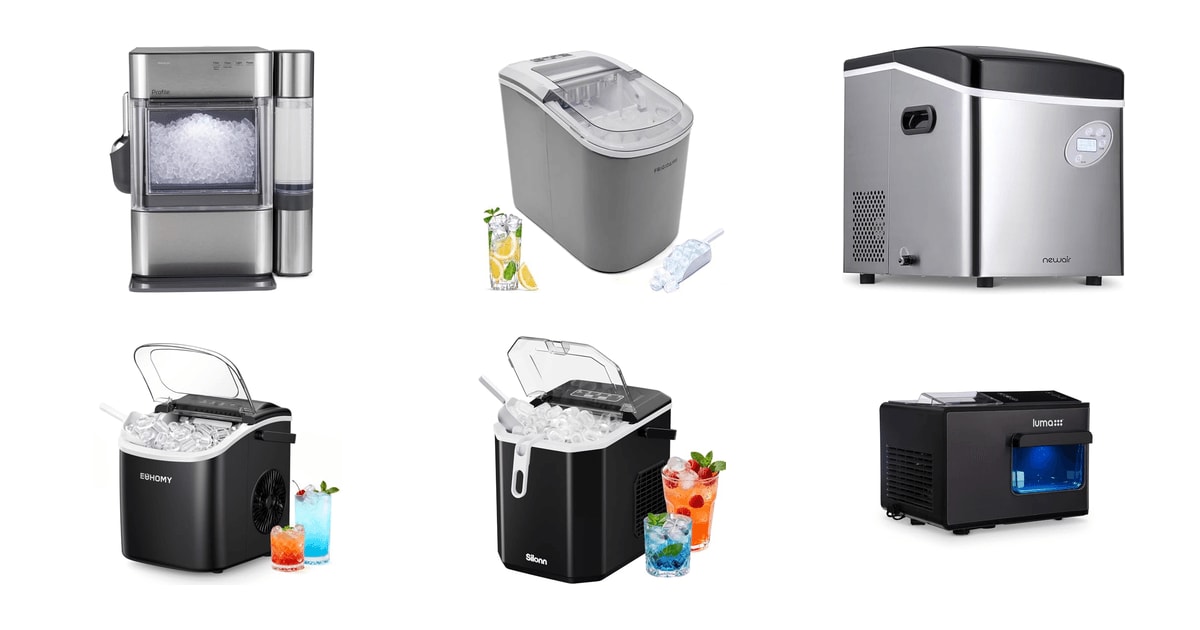
A countertop ice maker solves one specific problem: your freezer can't keep up. Maybe your fridge's built-in maker died, or it produces a trickle when you need a cooler's worth. These machines sit on a counter, take tap water from a pitcher, and drop a batch of cubes every six to twelve minutes. No plumbing, no installation. You plug one in, fill the reservoir, and in under ten minutes you've got ice. For parties, RVs, dorm rooms, and offices, that's genuinely useful.
Here's the thing nobody puts on the box: these machines make ice, but they don't keep it. There's no freezer inside. The storage basket is insulated, not chilled, so cubes slowly melt and drip back into the reservoir to be refrozen. If you want ice for later, you have to scoop it into your freezer as it's made. Reliability is the other honest caveat. Owner feedback across nearly every brand in this category describes compressors and control boards failing somewhere in the first year or two.
So the right machine is the one that matches how you'll actually use it: a big batch for a Saturday cookout, a steady daily supply for two people, or something small enough to ride in a camper. We think that the GE Profile Opal 2.0 Ultra is the best portable ice maker for most people who care about ice quality, and that the Frigidaire EFIC189 is the one to buy if you just want fast, reliable cubes without spending much.
Everything we recommend

The chewable nugget ice people actually crave, at a cost

Fast, simple cubes with the best track record here
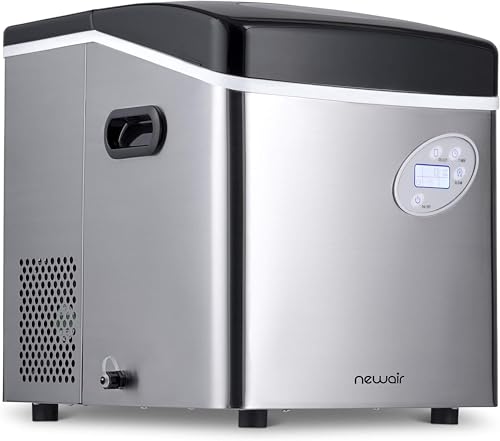
Twice the daily output when a party would drain the others

Small, light, and self-cleaning — the one for a camper
At a glance
| Product | Daily Capacity | Batch Time | Price | |
|---|---|---|---|---|
| GE Profile Opal 2.0 Ultra Nugget IceTop pick | 38 lbs/24hrs | 10 min | $473.10 |
| FRIGIDAIRE EFIC189-Silver Compact Ice MakerBudget pick | 26 lbs/day | <6 min | $93.99 |
| NewAir 50 lb. Countertop Ice MakerUpgrade pick | 50 lbs/day | 7 min | $345.76 |
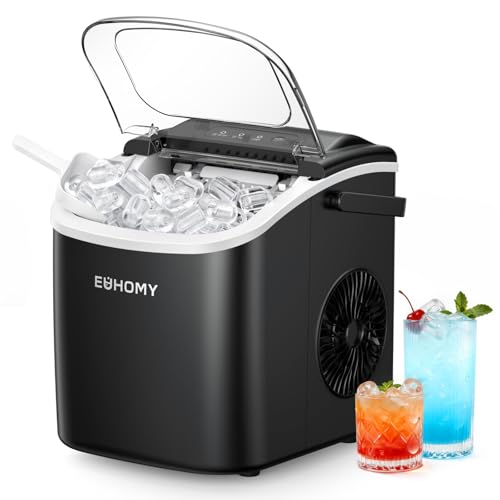 | EUHOMY Countertop Ice Maker Machine with HandleAlso consider | 26 lbs/24hrs | 6 min | $69.77On sale |
| Silonn Ice Maker CountertopAlso great | 26 lbs/day | 6 min | $67On sale |
 | Luma Nugget Countertop Ice MakerAlso in lineup | 44 lbs/24hrs | — | $419.99 |
 | Antarctic Star Portable Ice Maker CountertopAlso consider | 18 lbs/24h | 6-13 min | $59.99On sale |
How we picked
Ice type and quality. We separated nugget, bullet, and clear ice by what they're actually good for, drawing on Serious Eats and The Spruce Eats testing on melt rate and dilution. Nugget and clear ice justify a premium; bullet ice is the sensible default for coolers and everyday drinks.
Realistic daily output. Published capacity figures assume 24 hours of continuous running at moderate room temperature. CNET found performance drops by as much as 25% above 80°F, so we weighted machines whose real-world reports held up against the number on the box.
Cleaning and longevity. Scale buildup in the water lines is the leading cause of early failure. The Good Housekeeping Institute measured roughly 40% less buildup in self-cleaning models after six months, so we treated a true clean cycle as close to a requirement.
Noise and footprint. Tom's Guide measured premium nugget machines around 55 dB and budget bullet models at 58–62 dB, which is enough to notice in an open kitchen. We also checked dimensions against RV counters and standard cabinet clearance.
Owner-reported reliability. We read owner feedback for recurring failure patterns rather than one-off complaints — dead compressors, failed control boards, grinding noises — and treated repeated reports of failure within a year as disqualifying for a top spot.
Top pick
The chewable nugget ice people actually crave, at a cost
GE Profile Opal 2.0 Ultra Nugget Ice
The Opal 2.0 Ultra makes soft, pellet-style nugget ice — the kind you chew from a fast-food cup — at up to 38 pounds a day. It adds a side tank, WiFi, and a real descaling cycle, which matters more than it sounds.
$473.10fromAmazonNugget ice is the reason to buy this machine, and nothing else here comes close. It's soft, porous, and chewable, and it soaks up whatever you pour over it. The Spruce Eats found nugget ice keeps drinks colder longer than bullet ice in the same glass, because the pieces pack tightly and dilute slowly. If someone in your house chews ice, they will notice the difference immediately.
GE lists first ice in 10 minutes or less, and 1.6 pounds an hour — about 38 pounds over a full day at 70°F. That number drops to roughly 32 pounds if your kitchen runs hot, which GE states outright. The .75-gallon side tank is the practical upgrade over the older Opal. You refill less, and it'll run through an afternoon of guests without you hovering over it.
The cleaning system is the feature we'd argue most for. Wirecutter's durability work found that units with citric-acid self-clean cycles held ice quality far better than rinse-only models, and the Good Housekeeping Institute measured roughly 40% less scale buildup after six months in machines that self-clean. Mineral scale is what kills these things. The Opal has a scale-inhibiting filter and a one-touch clean cycle, and you should use both.
This is the loudest thing on your counter, and it's big. Tom's Guide measured the Opal 2.0 at around 55 dB while running — quiet-conversation territory, but constant. Owners describe it as roughly microwave-sized, which is not an exaggeration. If your counter space is tight or the kitchen opens onto a bedroom, measure first and think hard.
Flaws but not dealbreakers
Reliability is the real worry. Owner feedback on this unit skews sharply split — plenty of people love it for years, but a meaningful group reports the machine dying or developing a loud whine within weeks to months, often just past the return window. Several describe warranty support as slow going. If you buy one, register it and run the clean cycle religiously.
It's the most expensive machine in this guide by a wide margin, and it only makes one kind of ice. There's no cube option, no size selector. If you mostly want ice for a cooler rather than a glass, you're paying a premium for texture you won't use.
Setup trips people up. Owners report mislabeled hoses on the side tank connection, which can drain the reservoir onto your counter if you follow the diagram literally. Check where each line goes before you power it on.
Budget pick
Fast, simple cubes with the best track record here
FRIGIDAIRE EFIC189-Silver Compact Ice Maker
The Frigidaire EFIC189 makes up to 26 pounds of bullet ice a day and drops its first batch in under six to nine minutes. Two buttons, two cube sizes, a see-through window, and years of consistently positive owner feedback behind it.
$93.99fromAmazonIf you want ice and don't care what shape it is, start here. Frigidaire's specs put the first complete batch at as little as seven minutes with up to 26 pounds over 24 hours, and owners broadly confirm it hits those numbers. The control panel is two buttons and a couple of indicator lights — one tells you the basket is full, the other that it needs water. Your houseguests can run it without instructions.
The ownership record is what earns this the pick. Across thousands of owner reports, this model draws the steadiest praise in the category, and complaints cluster around jamming and noise rather than dead compressors. That's not nothing in a product class where early failure is the norm. Several owners mention buying a second one rather than switching brands.
The 2.2-pound basket is small, which sounds like a flaw until you understand how these machines work. Ice melts back into the reservoir and gets refrozen, so the winning strategy is to scoop batches into a freezer bag as they're made. On that pattern the Frigidaire will bank a cooler's worth over a morning, which is what most people actually want before a party.
Flaws but not dealbreakers
It's loud enough that owners who take it camping say they can't sleep in the same room while it runs. Fine for a kitchen or a garage. Not fine for a studio apartment overnight.
Some owners of the current version report the ejector jamming more than older units did — cubes stick, the machine stalls, and you have to clear it by hand. It doesn't happen to everyone, but it comes up often enough to mention.
There's no self-cleaning cycle. You'll be draining and rinsing manually, and running a vinegar or citric-acid solution through it every month or two depending on your water.
Upgrade pick
Twice the daily output when a party would drain the others
NewAir 50 lb. Countertop Ice Maker
The NewAir AI-215SS pushes up to 50 pounds of bullet ice a day — roughly double most countertop machines — in a stainless body with three cube sizes and a self-clean cycle. It's the one to get if you're hosting rather than sipping.
$345.76fromAmazonFifty pounds a day is the headline, and it's the highest figure in this lineup. NewAir lists 12 cubes in as little as seven minutes across three selectable sizes. If you're filling coolers for a tailgate or keeping a home bar stocked through a long evening, that throughput is the difference between staying ahead and constantly waiting on the next batch.
The self-cleaning function is the reason to pick this over a cheaper high-capacity unit. You add water and vinegar, press clean, and walk away. Given that scale buildup in the water lines is the leading cause of early failure in these machines, and that the Good Housekeeping Institute measured roughly 40% less buildup in self-cleaning models, this is the feature most likely to determine whether you still own a working machine in two years.
Small design choices add up. There's a sink-ready drain plug, so emptying it doesn't mean carrying a sloshing box across the kitchen. The interior is insulated, which slows melt in the basket. An 18-hour timer lets you start production before you get home. And the LCD tells you what it's doing rather than blinking cryptically at you.
Flaws but not dealbreakers
Owner feedback includes a recurring complaint about the control panel failing at around the one-year mark, sometimes just past warranty coverage. A few owners also report the panel physically loosening from the housing. This is the pattern to watch on this model.
It's the largest footprint here after the Opal and weighs about 32 pounds, so it isn't a machine you casually move between rooms. Some owners note it's sensitive to power flickers and to accidental taps on the touch panel.
A few report a plastic smell on the first several batches. It fades, but run a couple of cycles and dump the ice before you serve anything from it.
Also greatOn sale
Small, light, and self-cleaning — the one for a camper
Silonn Ice Maker Countertop
The Silonn is under nine inches tall with a carry handle, weighs about 14 pounds, and still makes 26 pounds of bullet ice a day. It has a real self-clean cycle, which most compact machines skip.
$67fromAmazonList priceAt 8.7 by 11.4 by 11.6 inches, this fits where the others won't — an RV galley counter, a dorm desk, an office break room shelf. The handle isn't decorative either. At under 14 pounds you can genuinely carry it out to a patio table or load it into a camper without a second person.
Getting a self-cleaning cycle in a compact machine is unusual, and it's the strongest argument for this one. You pull the basket, add water, hold the clean button for five seconds, and come back in half an hour. On a machine that's likely to live somewhere with hard water — a campground hookup, a rental — that automated descale matters more than it would in a filtered kitchen.
Nine cubes in six minutes and 26 pounds a day is the same production class as the Frigidaire, from a noticeably smaller box. Owner reports on longevity are encouraging by category standards, with multiple people describing more than a year of near-constant use. That's a good sign in a field where a year is often the whole story.
Flaws but not dealbreakers
The side-mounted fan blows warm air, so you can't tuck this against a wall or into a cabinet nook. Owners recommend leaving clear space on that side, which eats into the space savings.
The 1.3-pound basket is tiny and the 1.2-liter tank needs frequent refills. This is a machine for one or two people or a small office, not a party. Ice in the basket melts quickly in a hot camper, so scoop it into a cooler or freezer as it comes.
Like most machines here, it needs to sit upright for 24 hours before its first run, and it benefits from several clean cycles out of the box before you drink anything made with it.
Who this is for
Buy a countertop ice maker if your freezer can't keep up: your fridge's built-in maker is broken or slow, you host regularly, or you're outfitting an RV, boat, dorm, or office with no ice supply at all. A Reviewed.com survey found about two-thirds of owners use theirs mainly for entertaining, and roughly a fifth as a daily backstop for an underperforming refrigerator. Both are good reasons. If you cook and drink for one or two people and your freezer already makes enough, you probably don't need one.
This guide covers 120V countertop machines that make bullet, nugget, or crescent ice from a filled reservoir. It doesn't cover undercounter or plumbed-in ice machines, 12V DC units for vehicles, or countertop coolers. And it can't fix the category's biggest limitation: none of these machines store ice. If you need ice held frozen for hours, you need a freezer or a cooler alongside the machine, not instead of it.
How we picked
Ice type: we sorted nugget, clear, and bullet by what each is actually good for, leaning on Serious Eats and The Spruce Eats findings on melt rate and dilution. Output: published daily figures assume continuous running, and CNET found up to 25% degradation above 80°F, so we checked claims against owner reports. Cleaning: the Good Housekeeping Institute measured roughly 40% less scale buildup in self-cleaning models over six months, and scale is what kills these machines. Noise and size: Tom's Guide put premium nugget units near 55 dB and budget bullet models at 58–62 dB, and we compared listed dimensions against RV and small-kitchen counters. Reliability: we looked for repeated failure patterns in owner feedback, not isolated complaints.
Other portable ice makers worth considering
If you want the smallest sensible machine for one or two people: The EUHOMY Countertop Ice Maker Machine with Handle ($69.77) — The Euhomy IM-F is nearly identical in size and output to our Silonn pick — 26 pounds a day, nine cubes in six minutes, a 1.2-liter tank, self-cleaning, and a carry handle. It's a hair narrower and lighter, and owners describe it as quiet apart from the clatter when a batch drops. What you give up is nothing much against the Silonn; they're close enough that availability and color should decide it. Both share the same limits: a 1.3-pound basket that fills fast and ice that melts quickly if you leave it sitting. Euhomy backs it with a 12-month warranty.
If you want the narrowest machine that will fit almost anywhere: The Antarctic Star Portable Ice Maker Countertop ($59.99) — The Antarctic Star is just 6.69 inches wide — the slimmest unit here by a lot — and it makes about 18 pounds of ice a day with a first batch in six to thirteen minutes. That shape is genuinely useful in a boat cabin, a camper counter, or a crowded office kitchen where nothing else fits. It's also the lowest-output machine in the lineup, and owner feedback is mixed: some report a year of happy use, others describe whining noises or burning smells within weeks. Buy it for the footprint, not the longevity.
The competition
This is what our research surfaced, not a survey of everything on the market. Countertop ice makers turn over fast, and dozens of near-identical machines ship from the same handful of factories under different brand names. The units below are ones we looked at closely and passed on.
The Luma Nugget Countertop Ice Maker ($419.99) — The Luma Nugget makes 44 pounds of nugget ice a day in a low-profile black stainless body, with a 24-hour delay timer and a removable ice drawer that makes cleanup easy. On paper it's a cheaper route to nugget ice than the Opal. In practice, owner feedback is the worst in this lineup by a distance — a heavy concentration of reports describing loud metal-on-metal grinding, leaking, and complete failure within three to six months, plus frustration with warranty support. If you want nugget ice, we'd rather you save for the Opal or skip the format entirely.
Cleaning and maintenance
Descaling isn't optional. Wirecutter's long-term work found these machines need it every one to three months depending on how hard your water is, and mineral buildup in the water lines is the leading cause of early failure. If your machine has a self-clean cycle, run it on that schedule with a citric-acid tablet or a vinegar-and-water solution. If it doesn't, drain the reservoir, wipe the basket and interior, then run a vinegar solution through a full cycle and dump the resulting ice. Filtered water helps a lot — it slows scale and makes the ice taste better. Between uses, drain the reservoir completely and leave the lid open so the interior dries out, which keeps mildew and off-smells from setting in. And let any new machine sit upright for a full 24 hours before its first run so the compressor oil settles.
Questions we get
How long does a portable ice maker take to make ice?
Most machines here drop a first batch in six to ten minutes, then produce another every six to fifteen minutes after that. The Frigidaire and the compact units advertise about six minutes; GE lists ten minutes or less for the Opal. Room temperature matters — CNET found production slows by as much as 25% above 80°F.
Do portable ice makers keep ice frozen, or does it melt?
It melts. There's no freezer inside — the storage basket is insulated but not chilled, so cubes slowly melt and drain back into the reservoir to be refrozen. That's not a defect, it's how the category works. If you want to build up a supply, scoop each batch into a freezer bag as it's made.
What's the difference between nugget, bullet, and clear ice?
Bullet ice is the hollow cylindrical cube most countertop machines make — fast, cheap, and fine for a cooler. Nugget ice is the soft chewable pellet you get at a fast-food counter; The Spruce Eats found it keeps drinks colder longer because it packs tightly. Clear ice is made by directional freezing that pushes out air bubbles, and per Serious Eats it melts up to twice as slowly, which is why bartenders like it for spirits.
How much ice will one actually make in a day?
Less than the box says. Published figures like 26 or 50 pounds assume 24 hours of uninterrupted running at moderate temperature with someone emptying the basket. During a real party session, expect roughly 6 to 12 pounds depending on how hot the room is and how often you scoop. Plan on running the machine for a few hours beforehand and banking the ice in your freezer.
Which one should I get for an RV, camper, or boat?
Look for something under about 12 inches wide with a drain plug and a carry handle. Our Silonn pick fits that description, and the Antarctic Star is narrower still if space is tight. These are all 120V machines, so you'll need shore power, a generator, or an inverter — true 12V DC models exist but are rare and cost more.
Are they cheap to run, and can I leave one going all day?
They're modest power draws. Per Energy Star data, countertop machines typically pull 100 to 200 watts while actively making ice, versus 300 to 500 for an undercounter unit. Running one all day is fine as long as the reservoir stays filled and the basket gets emptied. Just don't put one in a bedroom — budget bullet models measured 58 to 62 dB in Tom's Guide testing, which is too much to sleep through.
Why you should trust us
For this guide:
- We read manufacturer specifications for every machine here, comparing published daily output, first-batch timing, tank and basket capacity, and stated dimensions against each other.
- We reviewed published findings from CNET, Tom's Guide, the Good Housekeeping Institute, Serious Eats, The Spruce Eats, Consumer Reports, and Wirecutter on ice quality, noise, and long-term scale buildup.
- We read through owner feedback for each model looking for repeated failure patterns — grinding compressors, failed control panels, leaks — rather than isolated complaints.
- We read owner reviews on every listing, weighted toward the critical ones, because that is where the recurring failures show up.
- We have a systematic way of automatically fetching the latest prices, so the numbers on this page stay current.
- This is a research-focused guide, so the team may not own every product listed — though we often do own the top winners, which gives us extra context for the recommendations.
- We don't accept free products, and the retailer commission never changes which product we recommend.
Sources
Best Portable Ice Makers — Wirecutter (NYT), Wirecutter
Best Ice Makers of 2026 — CNET, CNET
Best Portable Ice Makers, Tested by Kitchen Experts — Good Housekeeping, Good Housekeeping Institute
Best Ice Makers We've Tested — Tom's Guide, Tom's Guide
Ice Maker Ratings & Reviews — Consumer Reports, Consumer Reports
Best Portable Ice Makers — Popular Mechanics, Popular Mechanics
The Best Portable Ice Makers, Tested — The Spruce Eats, The Spruce Eats
The Best Ice for Cocktails (and the Machines That Make It) — Serious Eats, Serious Eats
Certified Residential Ice Maker Specifications — Energy Star, Energy Star / EPA
Nugget Ice vs. Bullet Ice: What's the Real Difference? — Reviewed (USA Today), Reviewed.com (USA Today)
Amazon product listings and owner reviews for all 7 products
Manufacturer specification pages for each product
Some passages in this guide may be paraphrased with AI help. Prices are refreshed automatically.
More like this.
Continue exploring appliances reviews and recommendations.

The Best Ice Cream Makers
Homemade ice cream is mostly a texture problem. The base is easy - cream, sugar, maybe egg yolks - but turning it into something scoopable instead of a…

The Best Countertop Ice Makers
Ice runs out at the worst times. You've got six people over, the fridge dispenser is coughing out three cubes a minute, and someone's drink is already…

The Best Countertop Nugget Ice Makers
Nugget ice is the soft, chewy pellet ice you get at a drive-through soda counter, and once you've had it at home, regular cubes feel like a downgrade.…

The Best Portable Espresso Makers for Travel
Bad hotel coffee is a small daily tax on travel. A portable espresso maker is the fix: a hand-pumped cylinder that takes fine grounds and hot water and…

The Best Pasta Makers
Fresh pasta takes about an hour, and most of that is the dough sitting still. The machine's job is narrow: turn a lump of dough into sheets or strands of…

The Best Coffee Makers
Your coffee maker is the appliance you use most and think about least. It runs every single morning, usually before you're awake enough to troubleshoot…