The Best Benchtop Drill Presses for Woodworking
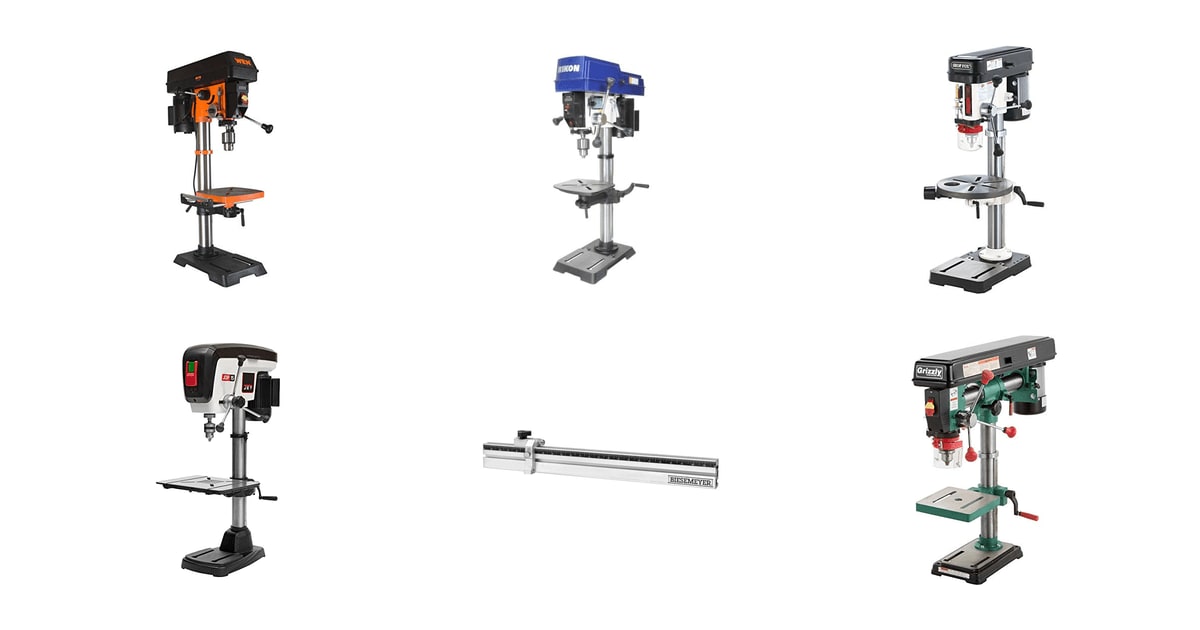
A handheld drill wanders. Even with a steady hand you'll drift a couple of degrees, and that shows up later as a shelf that rocks or a dowel joint that won't pull closed. A drill press fixes the bit perpendicular to the work and holds it there, hole after hole, at the same depth every time. For woodworking that means clean shelf pin rows, tight dowels, and flat-bottomed Forstner holes that don't scorch. If you build furniture or cabinets, it's probably the single biggest accuracy upgrade you can make to a small shop.
No benchtop press does everything, though. Swing decides how far from an edge you can reach, so a 12-inch machine stops about 6 inches into a panel and there's no trick around it. Quill travel in this class runs a bit over 3 inches, which is fine for through-drilling but tight for deep mortises. And the low end of the speed range is where budget machines quietly cut corners — plenty of presses simply won't slow down far enough for a wide Forstner bit in hard maple. You're trading something no matter which one you pick.
Most home shops don't need a professional machine. They need one that holds the bit straight, changes speed without a fight, and doesn't shake the bench apart. So that's what we weighted most heavily, along with table rigidity, depth stop repeatability, and whether the advertised low speed is actually low enough to be useful. We think that the WEN DP1263V is the best benchtop drill press for most people, and that the Rikon 12-inch Variable Speed Drill Press is the one to buy if you're drilling dense hardwood week after week.
Everything we recommend
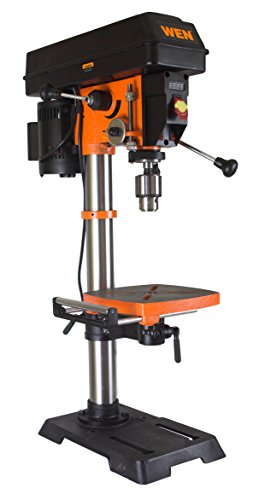
Variable speed and a digital readout, without the usual premium

More motor for hardwood, at a real step up in cost
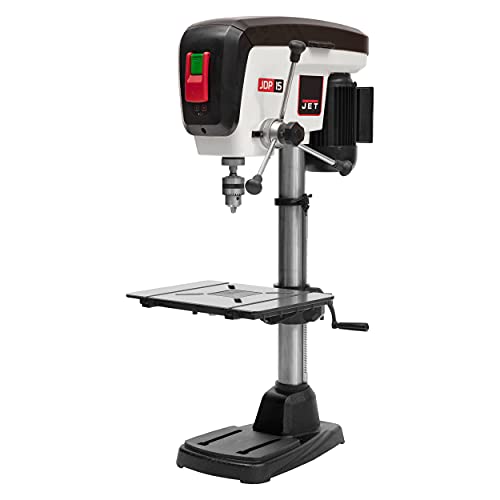
A bigger table and more reach, if you've outgrown 12 inches

Two machines in one footprint, and the lowest speed of the bunch
At a glance
| Product | Swing | Motor | Price | |
|---|---|---|---|---|
| WEN 12-Inch Benchtop Drill PressTop pick | 12-inch | 6.2-Amp | $313.99 |
| Rikon 12 inch Variable Speed Drill PressRunner-up | 12 inch | 3/4 HP | $649.99 |
| Shop Fox W1668 3/4-HP 13-Inch Bench-Top DrillAlso great | 13-1/4-inch | 3/4 HP | $615 |
| JET 15-Inch Benchtop Drill PressUpgrade pick | — | 3/4 HP | $1,428.99 |
 | Delta - Drill Press FenceAlso in lineup | — | — | $69.99 |
 | Grizzly Industrial G7945-34" Benchtop Radial Drill PressAlso in lineup | 34-Inch | 1/2 HP | $643.95 |
How we picked
Low-end speed. We treated the bottom of the speed range as the single most revealing spec, because wide Forstner bits need 250 to 500 RPM and anything faster burns wood. Manufacturer speed ranges let us sort the presses that can do that work from the ones that only claim to.
Spindle accuracy. Runout decides whether a dowel hole matches the dowel, and published woodworking reviews are the only practical source for it since listings never state it. We favored brands those reviews consistently credit with staying under about five thousandths of an inch.
Motor and rigidity. We looked for 3/4 horsepower or a strong induction motor for repeated hardwood drilling, and for cast iron heads and tables rather than stamped steel. Spec sheets and owner feedback both flag flex and vibration as the source of ragged, out-of-square holes.
Table and depth stop. T-slots, clamping slots, and a repeatable depth stop are what make production shelf pin drilling and doweling painless. We compared published table dimensions and depth stop designs, and we gave weight to presses that let you bolt a fence down instead of clamping one.
Swing and travel. Swing sets how far from an edge you can drill, and quill travel sets how deep you get in one plunge. We required at least 12 inches of swing and roughly 3 inches of travel, then treated anything beyond that as capacity for wider stock.
Top pick
Variable speed and a digital readout, without the usual premium
WEN 12-Inch Benchtop Drill Press
This is the press we'd put in most home shops: cast iron where it counts, a speed dial that runs from 580 to 3,100 RPM, and a display that tells you exactly where you are. The laser guide and work light come along for the ride.
$313.99fromAmazonChanging speed takes seconds, so you'll actually do it. The mechanical variable speed runs anywhere from 580 to 3,100 RPM off a dial, with no shutting the motor down and moving a belt. That matters more than it sounds. When a speed change costs five minutes, you skip it and run the wrong RPM. When it costs ten seconds, you run brad points fast and Forstners slow, the way you're supposed to.
The digital readout takes the guesswork out of speed. Most presses at this level label belt positions instead of numbers, so you're matching a diagram to a chart and hoping. Here you watch the display and dial in whatever RPM the bit maker calls for. If you're new to this, that's a real learning aid — you start to feel the difference between 800 and 2,400 RPM in the cut instead of memorizing positions.
Cast iron keeps the machine still, and still is the whole point. The head and table are cast iron rather than stamped steel, which is the difference between a press that flexes under clamping pressure and one that doesn't. Stamped tables move a little when you lean into the feed handle, and that shows up as an out-of-square through-hole. Cast iron also damps vibration, so plywood veneer and end grain come out with less tear-out.
The laser and light earn their keep on repetitive layouts. A crosshair laser sounds like a gimmick until you're drilling twenty shelf pin holes down a cabinet side. You line each mark up to the crosshair instead of squinting past the chuck. The overhead light does the same job for dark stock in a dim garage. Add the adjustable depth stop, the table roller extension, and a 5/8-inch keyed chuck, and it's ready to work out of the box.
Flaws but not dealbreakers
580 RPM is too fast for the biggest Forstner bits. A 2-inch or larger Forstner wants 250 to 500 RPM to cut cleanly. Above that you get scorched face grain, a bit that dulls in minutes, and a real risk of the work grabbing. In softwood and plywood a 2-inch bit at 580 is workable. In white oak or hard maple with a 2½- or 3-inch bit, it isn't. If that's your main job, look at the Shop Fox instead.
A 12-inch swing gets you 6 inches from the edge, and no further. That covers most joinery — rails, stiles, legs, small cabinet parts. It doesn't cover drilling into the middle of a wide panel or along the edge of a tabletop. There's no workaround short of a bigger machine, so measure your typical stock before you commit.
It's a recent listing, so long-term owner history is thin. WEN has a solid track record in this price class and the spec sheet is honest about what the machine does. But you won't find years of owner reports on how the variable-speed mechanism holds up, and that's the part most likely to wear. Buy from a seller with a return window if that bothers you.
The DP1263V comes with a two-year warranty.
Runner-up
More motor for hardwood, at a real step up in cost
Rikon 12 inch Variable Speed Drill Press
The Rikon pairs a 3/4-horsepower motor with true variable speed, which is the combination the machines around it only half manage. It's the one to get if you're boring wide holes in oak and maple often enough that a bogging motor would drive you crazy.
$649.99fromAmazonThe 3/4-horsepower motor is the reason to spend more. Smaller motors slow audibly when a wide bit hits dense grain, and that slowdown is where burning starts. This one holds its set speed through oak and maple under sustained load. If you're boring 1- and 1½-inch holes for chair rails and table legs all afternoon, that consistency shows up in the wall quality of every single hole.
You get variable speed without giving up the muscle. The dial covers the full range, so dropping from a small twist drill to a wide Forstner takes a few seconds rather than a belt change. With the digital display you can set a number and come back to it later. That's the trade the other picks each make in one direction or the other — one has the speed control, the other has the motor.
Rikon's reputation is built on tight spindles. Published woodworking reviews repeatedly single the brand out for lower runout than its price class would suggest, and runout is the metric that decides whether a dowel hole is the size you asked for. Under about five thousandths of an inch is excellent for wood. Above ten, holes come out oversized with ragged walls and your dowels rattle.
The X-Y laser guides and work light speed up layout. Two crossing lines mean you're aligning to a point rather than eyeballing the bit tip. On repetitive work — shelf pins, hinge cups, a row of dowels — that saves minutes per panel and keeps holes from creeping a sixteenth off the mark. It's small, but you'll use it every session.
Flaws but not dealbreakers
You're paying a lot more for the same 12-inch swing. Against the WEN this costs well over twice as much and reaches exactly as far from a board's edge. The money buys motor and manufacturing tolerances, not capacity. If you mostly drill pine, plywood, and MDF, you probably won't feel the difference across a year of weekend projects.
Rikon publishes very little about this press. The listing gives you horsepower, variable speed, and the laser system, and that's roughly it — no spindle travel, no table dimensions, no stated speed range. You're buying partly on the brand's name. Ask the seller for the manual first if a specific number matters to your work.
Upgrade pick
A bigger table and more reach, if you've outgrown 12 inches
JET 15-Inch Benchtop Drill Press
The JET JDP-15B gives you a 15-inch swing and the largest work table here, with twin T-slots for bolting down a fence or a mortising attachment. It's a semi-professional machine, and it's priced and built like one.
$1,428.99fromAmazonThe table is the real reason to buy this press. At 12½ by 17 inches with twin T-slot grooves and four table slots, it's the biggest work surface in this guide by a wide margin. You can bolt down a fence, a stop block, or a mortising attachment and leave it there between sessions. On the smaller presses that same setup usually means clamps and improvisation every time.
A 15-inch swing reaches 7½ inches from an edge. That's the difference between drilling a dining table apron and giving up on it. Wide rails, door stiles, tabletop edges, cabinet panels — the stock that stops a 12-inch machine fits under this one. If your furniture work keeps running into swing limits, this is the fix rather than a workaround.
The sealed TEFC motor is built for a dusty shop. Sawdust is what kills open-frame motors, and this one is closed off from it. It also runs cooler and quieter under sustained load, which matters if you're drilling a hundred holes in a sitting rather than five. Paired with the poly-V belt drive, it's the smoothest-running machine of the bunch.
The details add up on repetitive drilling. The quill travels a full 3⅛ inches in one turn of the handle, so through-drilling thick stock doesn't need a second grab at the wheel. The integrated depth stop repeats well for blind holes, which is exactly what shelf pins and dowels need. And the XACTA laser puts a mark on the work so you're not lining up by eye.
Flaws but not dealbreakers
Sixteen speeds still means opening the cover and moving a belt. The spacing is good and covers everything woodworking asks for, from slow Forstner passes to fast twist drilling. But you're changing belts, not turning a dial. One-handed tensioning helps. It's still a few minutes each time, and in practice you'll end up batching work by speed just to avoid the chore.
It's the most expensive machine here, and the heaviest. At around 154 pounds it needs a bench that won't flex or walk, plus a second set of hands to get it into place. For daily hardwood production it earns that over a long working life. For a handful of projects a year, it's more press than the work asks for.
Also great
Two machines in one footprint, and the lowest speed of the bunch
Shop Fox W1668 3/4-HP 13-Inch Bench-Top Drill
The Shop Fox W1668 slows to 250 RPM, which is the range wide Forstner bits actually need, and it doubles as an oscillating spindle sander. If your bench is crowded and your holes are big, this is the smart pick.
$615fromAmazonIt slows to 250 RPM, and that's the number that matters for wide bits. No other press here goes that low. A 2-inch or larger Forstner cuts cleanly between 250 and 500 RPM and scorches above it, so if flat-bottomed holes in oak or walnut are a regular job, this is your machine. The top end still reaches 3,050 RPM, so you're not giving up small twist drilling to get there.
The spindle sander isn't a gimmick. The same column drives an oscillating sanding drum, and the included kit brings a mandrel with 1-, 1½-, and 2-inch drums plus 80-grit paper. For curved cabinet doors, chair parts, and inside curves a belt sander can't reach, it's the right tool. When bench space is the constraint, getting two machines in one footprint is worth real money.
The drilling side isn't watered down to make room for the sanding. You get a 3/4-horsepower motor, a 13¼-inch swing, 3¼ inches of quill travel, and a 5/8-inch keyed chuck. That swing beats both 12-inch picks, the travel is the longest here, and a keyed chuck holds brad points, spades, and Forstners without slipping when the cut gets grabby.
The 5/8-inch chuck opens the door to mortising. Hollow-chisel attachments clamp to the quill and cut square-walled mortises in a single plunge, and they mount to any standard 5/8-inch chuck. With 3¼ inches of quill travel there's room for a typical furniture mortise depth. That makes one machine a drill press, a spindle sander, and a light-duty mortiser.
Flaws but not dealbreakers
Sanding sleeves are a running cost. The kit gets you started with 80-grit paper on three drums, but sleeves wear out and finer grits are extra. If you sand often, plan on a steady supply. It's a small ongoing expense rather than a dealbreaker — just don't count on the included kit lasting long.
Switching between modes costs you time. You're swapping the chuck for a sanding mandrel and resetting the table, so this isn't a machine you flip back and forth on ten times an hour. Batch your drilling, then batch your sanding. At about 63 pounds it's also the lightest press here, so bolt it down before you lean into a cut.
Who this is for
Buy one of these if you're building furniture, cabinets, or shop fixtures and you've started noticing that your handheld drill isn't square. Shelf pin rows, dowel joints, hinge cups, and Forstner work all get dramatically easier the day a drill press lands on your bench. The sweet spot is a shop where floor space is short but bench space isn't. If you're drilling occasional pilot holes in framing lumber, though, you don't need this — a cordless drill and a guide block will do the job for a fraction of the trouble.
This guide covers benchtop machines only, which means everything here bolts to a bench or a stand rather than standing on the floor. Floor presses give you more column rigidity, longer quill travel, and bigger tables, and if you have the 2 to 4 square feet to spare they're worth considering. We also stayed on the woodworking side of the category: these picks are chosen for wood bits, wood speeds, and wood tolerances, not for metalworking. And if you need to drill at an angle rather than straight down, skip to the competition — a column press is the wrong shape for that job.
How we picked
Low-end speed: we started with the bottom of the RPM range, since a 2-inch Forstner needs 250 to 500 RPM and nothing else will save you from a scorched hole. Spindle accuracy: runout is never in a listing, so we leaned on published woodworking reviews and favored brands they credit with staying under about five thousandths of an inch. Motor and rigidity: we wanted 3/4 horsepower or a strong induction motor plus cast iron rather than stamped steel, because flex and bog are what turn a clean hole ragged. Table and depth stop: T-slots and a repeatable stop are the difference between production shelf pin drilling and fighting clamps all afternoon. Swing and travel: at least 12 inches of reach and roughly 3 inches of plunge, with more counting as extra capacity rather than a requirement.
The competition
Here's what our research turned up in the benchtop class — not everything you can buy. The category is crowded with near-identical fixed-speed machines, and we focused on the ones with a clear reason to exist. This one didn't make the picks, but it solves a problem none of them can.
The Grizzly Industrial G7945-34" Benchtop Radial Drill Press ($643.95) — The Grizzly Industrial G7945 is a radial press, which means the head pivots and the swing extends out to 34 inches. That's a genuinely different machine: you can drill an angled leg mortise or a peg hole without unclamping and repositioning the work, and you can reach deep into a wide panel. Chair makers, timber framers, and anyone doing compound-angle joinery should look hard at it. It lost to the picks for ordinary work because the trade-offs are real — five stepped speeds instead of a dial, a 1/2-horsepower motor that will slow under a wide bit in dense hardwood, and a pivoting design that adds joints where alignment can drift. If all your holes are perpendicular to the face, you're paying in complexity for flexibility you'll never use. If they aren't, nothing else here comes close.
Setup and maintenance
Bolt it down. Every press here is heavy enough to walk if it's loose, and a machine that shifts under load drills crooked holes. Before the first cut, seat the chuck fully on its taper with a couple of firm taps, then check the table for square with a machinist's square held against the bit — factory settings drift in shipping. Keep the cast iron waxed with paste wax rather than oil, since oil migrates into your stock and blocks finish later. Blow sawdust out of the belt housing and off the quill after long sessions, especially on open-frame motors. And slow down for wide bits: most burned Forstner holes come from running whatever speed the last bit needed.
Questions we get
What RPM do I need for large Forstner bits?
Forstner bits 2 inches and up want 250 to 500 RPM. Run them faster and the bit generates enough heat to scorch the face grain, dull the cutting edge within minutes, and grab the workpiece. The Shop Fox W1668 bottoms out at 250 RPM, the lowest floor here, which makes it the safest choice for that work. The WEN's 580 RPM floor is borderline for a 2-inch bit in softwood and too fast for anything wider in maple or white oak.
Benchtop or floor-standing for a home shop?
A benchtop press mounts on a bench or stand and gives your floor back, which is usually the deciding factor at home. Floor models add column rigidity, longer quill travel, and bigger tables, but they claim 2 to 4 square feet permanently. For shelf pin holes, doweling, and Forstner work up to about 2 inches, a good benchtop machine drills just as accurately in far less room.
Is a 12-inch or a 15-inch press better for furniture making?
Fifteen inches of swing gets you 7½ inches in from an edge, versus 6 inches on a 12-inch machine. That covers wide rails, door stiles, tabletop edges, and cabinet panels — the stock that stops smaller presses cold. If you build dining tables, wide bookcases, or cabinet doors, the JET's extra reach is the whole reason to spend more. For side tables, chairs, and small casework, 12 inches is plenty.
Can I mortise with a hollow-chisel attachment?
Yes, on any of these presses with a 5/8-inch keyed chuck. The attachment clamps to the quill and drives a square chisel around a twist bit, cutting clean-walled mortises one plunge at a time. Prioritize quill travel — you want at least 3 inches for standard furniture mortise depths — and a depth stop that repeats. The JET is the strongest of these for mortising thanks to its T-slot table and larger work surface.
How much spindle runout is acceptable for woodworking?
Under five thousandths of an inch is excellent and gives you clean, correctly sized holes for dowels and shelf pins. Between five and ten thousandths is fine for most home woodworking. Past ten thousandths, holes come out measurably oversized with ragged walls, which shows up first in dowel joints that won't stay tight. Runout is almost never listed, so brand reputation in published reviews is the practical proxy.
What accessories should I buy with a new press?
A dedicated fence is the first one — it supports tall and thin stock and gives you a flip stop for repeatable hole spacing, which beats freehand clamping on both accuracy and safety. After that, a brad-point bit set for tear-out-free entry holes and a Forstner set in common furniture sizes. A drill press vise is worth having for small parts that aren't safe to hold by hand, and a hollow-chisel mortising attachment if you cut joinery.
Why you should trust us
For this guide:
- We compared manufacturer specifications across all six listings, focusing on speed range, swing, quill travel, chuck size, motor rating, and table construction.
- We read published woodworking reviews and buying advice on spindle runout and Forstner speed requirements to decide which specs actually change hole quality.
- We weighed owner feedback themes on motor bog, table flex, and depth stop repeatability rather than relying on listing bullets alone.
- We read owner reviews on every listing, weighted toward the critical ones, because that is where the recurring failures show up.
- We have a systematic way of automatically fetching the latest prices, so the numbers on this page stay current.
- This is a research-focused guide, so the team may not own every product listed — though we often do own the top winners, which gives us extra context for the recommendations.
- We don't accept free products, and the retailer commission never changes which product we recommend.
Sources
Best Drill Press of 2026 — comprehensive hands-on testing and buying guide, Popular Mechanics
Drill Press Tool Reviews — Fine Woodworking reader and editor evaluations including spindle runout data, Fine Woodworking
Best Drill Press Reviews and Buying Guide — This Old House editorial team workshop testing, This Old House
Best Drill Press Options Tested — hands-on shop evaluation across price tiers, Bob Vila
Drill Press Buyer's Guide and Reviews — Wood Magazine technical specification analysis, Wood Magazine
Amazon product listings and owner reviews for all 6 products
Manufacturer specification pages for each product
Some passages in this guide may be paraphrased with AI help. Prices are refreshed automatically.
More like this.
Continue exploring home reviews and recommendations.

The Best Miter Saws for Woodworking and Home Shops
A miter saw is the tool that decides whether your trim looks sharp or looks like it was cut with a butter knife. It crosscuts boards to length and slices…

The Best Random Orbital Sanders for Woodworking
Sanding is the part of woodworking nobody brags about. It's also the part that decides whether your finish looks like furniture or looks like a school…

The Best Rotary Hammer Drills
A rotary hammer isn't just a beefier hammer drill. It drives a pneumatic piston that hits the bit with measured force, so it bores into concrete instead…

The Best Cordless Drill Sets for Home Improvement
A cordless drill is the tool you'll reach for more than any other, and most of the time you're not doing anything heroic with it. You're hanging a curtain…

The Best Panini Presses And Sandwich Makers
A good panini press turns leftover bread and a wedge of cheese into lunch in about four minutes. That's the whole appeal. You close the lid, you walk…

The Best Nail Drill Kits
A nail drill isn't really about drilling. Most of what you'll do with one is gentle: knocking the shine off a gel top coat, smoothing a cuticle line,…