The Best Stainless Steel Colanders and Strainers
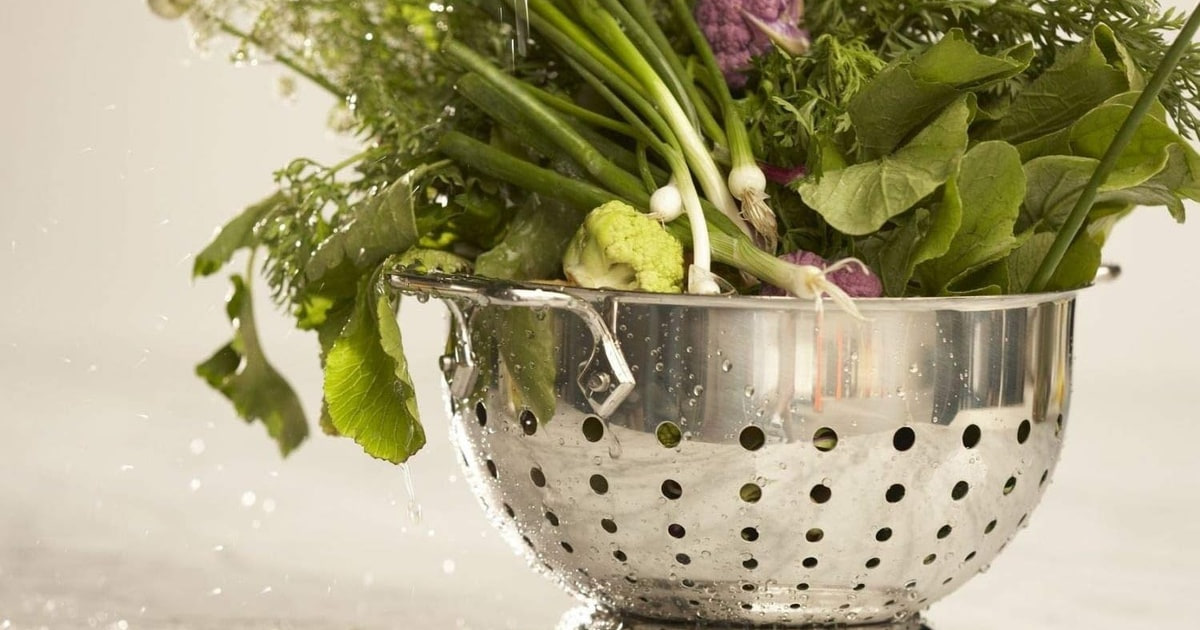
A colander sits in the cabinet until the moment you need it most: one hand on a hot pot, steam in your face, a pound of spaghetti sliding toward the drain. That's when the details matter. Hole size decides whether your orzo survives. The base decides whether the whole thing tips sideways in the sink. The handles decide whether you can hold on. Get those three right and you'll barely think about the thing again. Get them wrong and you'll notice every single time.
No colander does everything. Perforated bowls drain fast, but they can't strain a custard or sift cocoa, because the holes are simply too big. Fine mesh catches everything, then clogs with starchy pasta water and takes real scrubbing to clear. And every stainless colander will spot in the dishwasher eventually, whatever the box says. Most kitchens end up with two tools, not one. If you're hoping a single bowl covers pasta night and pastry work, it won't.
So think about what you actually cook. Pasta four nights a week points you toward tiny perforations and a stable footed base. Regular baking or stock-making points you toward mesh. Small kitchens should check the cabinet too, since a footed colander doesn't nest as flat as a set of strainers. We think that the OXO Good Grips 5-Qt. Stainless Steel Colander is the best stainless steel colander for most people, and that the Bellemain Micro-perforated Stainless Steel Colander is the one to buy if you cook a lot of orzo, rice and small grains.
Everything we recommend
Drains fast, sits steady, and holds on to the small stuff

Tiny holes that keep rice in the bowl, on plainer handles
Better steel and a lifetime warranty, in a smaller bowl

Fine mesh for sifting, sauces and stock, in three sizes
At a glance
| Product | Capacity | Hole Type | Price | |
|---|---|---|---|---|
| OXO Good Grips Stainless Steel ColanderTop pick | 5 Qt | All-Over Perforated | $31.95 |
| Bellemain Micro-perforated Stainless Steel Colander-Dishwasher SafeRunner-up | 3 & 5 Qt | Micro-Perforated | $35.99On sale |
| All-Clad Tools and Accessories Stainless Steel ColanderUpgrade pick | 3 Qt | Graduated Holes | $69.95 |
| OXO Good Grips 3-Piece Strainer SetAlso great | — | — | $25.95 |
 | RSVP International Endurance Kitchen Collection Colander StrainerAlso in lineup | 2 Pint | Precision Pierced | $17.78On sale |
How we picked
Hole size. We compared stated perforation patterns and what published reviews said about small shapes escaping. Anything that loses orzo or rice down the drain fails the test most home cooks care about.
Base stability. We looked for footed or pedestal bases in the specifications, since a flat bottom slides on a wet sink and a rocking bowl dumps its contents. Owner feedback about tipping counted heavily here.
Handles and grip. We favored coated, non-slip handles over bare steel, because a full colander is heavy and hot. Riveted bare handles still qualify, but they lose points for comfort and for the seams they leave.
Steel grade. We only considered 18/8 or 18/10 stainless, both of which resist rust well when dried. We skipped 18/0, which has no nickel and pits quickly in a damp cabinet.
Cleaning and storage. We checked dishwasher ratings and how each piece nests or hangs. Owners most often report spotting and dull finishes over time, so we noted where hand-washing makes a real difference.
Top pick
Drains fast, sits steady, and holds on to the small stuff
OXO Good Grips Stainless Steel Colander
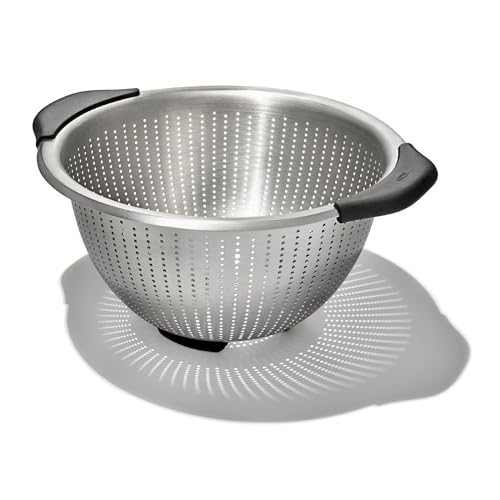
This is the colander we'd hand to almost anyone. The perforations run across the whole bowl for quick, even draining, three raised feet keep it upright in a wet sink, and the non-slip handles stay comfortable when you're wrestling with a full pot of boiling water.
$31.95fromAmazonThe handles are the reason this one wins. They're elevated and non-slip, so they give you something to hold with wet hands, and they stay put while you shake the last water out. Bare stainless handles get slippery and hot. These don't. If you've ever set a full colander down faster than you meant to, you know how much that matters. It's a small design choice you'll appreciate every pasta night.
The perforations cover the entire bowl, not just the bottom. Water leaves from the sides as well as the base, so you don't have to tilt and jostle a heavy load to get the last of it out. Published reviews of this OXO have singled out the fine hole pattern for keeping short shapes like orzo and ditalini in the bowl instead of down the drain.
Three raised feet keep it steady in the sink. A colander that rocks is a colander that dumps. The feet spread the weight and hold the bowl above whatever's pooling in the basin, which also keeps drained pasta out of the dirty water. Owners rarely raise stability as a complaint here, and that's the failure mode that ruins dinner.
Five quarts is the right size for a normal household. A pound of dried pasta lands around three to three and a half quarts cooked, so you get real headroom instead of a bowl you have to fill carefully. It nests inside mixing bowls for storage, and there's a 3-quart version if you mostly cook for one or two.
Flaws but not dealbreakers
It's not the lightest colander here, and the feet trap water. The ring of feet and the dense hole pattern add heft you'll feel when the bowl is full. Water also beads under the base, so if you stack it damp into a closed cabinet you'll find spots later. Rinse it, flip it, and let it dry in the open.
Dishwasher-safe doesn't mean dishwasher-proof. Run it through enough cycles and the finish dulls and spots, which is true of nearly every stainless colander. Nothing structural goes wrong, but it stops looking new sooner than hand-washing would allow. If the shine matters to you, wash it by hand.
Runner-upOn sale
Tiny holes that keep rice in the bowl, on plainer handles
Bellemain Micro-perforated Stainless Steel Colander-Dishwasher Safe
The Bellemain's holes are small and closely spaced, so jasmine rice, orzo and small lentils stay put instead of vanishing into the drain. You get both a 3-quart and a 5-quart bowl, though the riveted handles are bare steel with no cushioning.
$35.99fromAmazonList priceThe hole size is the whole point. Standard colanders use openings big enough for a grain of rice to slip through, which is fine for penne and infuriating for orzo. Bellemain's micro-perforations are tight enough to hold small pastas, most beans and grains, and rinsed berries. If you wash rice before dinner, this solves a daily annoyance.
It drains faster than a mesh strainer doing the same job. Mesh holds everything back, but it also clogs with starch and slows to a trickle. Packing many small holes across the bowl keeps the total open area high, so water leaves quickly without tilting. The stable draining ring base helps too, since it keeps your food out of the puddle underneath.
You get two sizes in one purchase. The 5-quart bowl takes a pound of dried pasta with room to spare. The 3-quart handles a side of green beans or a cup of quinoa without feeling cavernous. That's genuinely useful, because most of us reach for the smaller bowl more often than we expect. They nest together for storage, too.
The steel is 18/8 and rated dishwasher safe. That's the same grade most good consumer colanders use, and it resists rust well as long as you dry it. Bellemain builds it heavy, with riveted handles rather than thin spot welds. Owners generally describe it as sturdier than they expected from the pictures.
Flaws but not dealbreakers
The handles are bare metal, and you'll feel it. There's no rubber coating, so a full, hot bowl gets slippery and uncomfortable fast. A folded towel fixes it, but that's one more thing to manage over a steaming sink. Next to the OXO, this is the clearest downgrade.
Riveted handles create seams that trap food. The rivet passes through the bowl wall, leaving small gaps where starchy water and bits of food settle. A dishwasher cycle usually clears them. Still, it's a spot worth a scrub now and then, especially after you drain anything oily.
Upgrade pick
Better steel and a lifetime warranty, in a smaller bowl
All-Clad Tools and Accessories Stainless Steel Colander
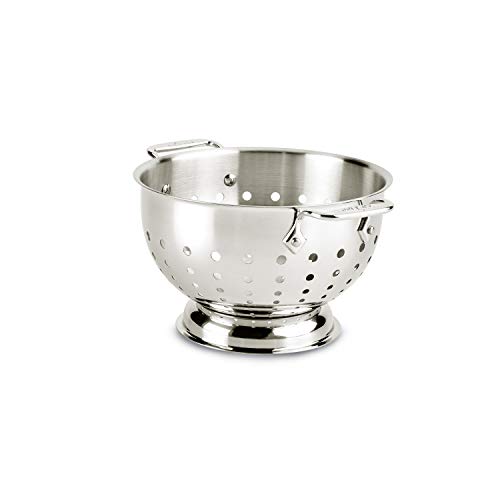
All-Clad uses 18/10 stainless, a polished exterior and a pedestal base, and backs the whole thing with a lifetime warranty. The catch is capacity. At 3 quarts it's tight for a full pound of pasta, so treat it as a produce-and-sauce colander you keep for decades.
$69.95fromAmazonThe 18/10 steel is a real upgrade, not just marketing. The second number is nickel content, and more nickel means better corrosion resistance and a brighter finish. In a kitchen, that shows up as fewer pits and less discoloration after years of tomato sauce, lemon juice and salted pasta water. If your last colander rusted out on you, this is the spec that fixes it.
The graduated holes drain quickly and let air move. Water leaves fast, and the pedestal base lifts the bowl so nothing sits in a pool. The holes are sized for standard pasta and vegetables rather than orzo, so don't buy this one for rice. For spaghetti, broccoli and washed greens, it's quick and it stays put.
It's built to be kept, and the warranty says so. The riveted handles are large and easy to grab with two hands, the exterior is polished, and the interior is brushed to hide the scuffs that come with real use. All-Clad covers it for a lifetime. Spread over that kind of horizon, the premium looks different than it does on the shelf.
Flaws but not dealbreakers
Three quarts is the problem. A pound of dried pasta comes out around three quarts cooked, so you're pouring right up to the rim and hoping. If you cook for four regularly, you'll want more room. For one or two people, or for rinsing produce and straining sauce, it's fine.
It costs far more than colanders that drain just as well. You're paying for the alloy, the finish and the warranty, not for faster draining. The holes are ordinary in size and the handles are ordinary in comfort. If you don't care about keeping one colander forever, the money saved elsewhere is hard to argue with.
All-Clad backs this colander with a lifetime warranty.
Also great
Fine mesh for sifting, sauces and stock, in three sizes
OXO Good Grips 3-Piece Strainer Set
These aren't colanders, and that's the point. Three fine-mesh strainers, at 3, 6 and 8 inches, handle the jobs a perforated bowl physically can't: sifting flour, straining custard, clarifying stock, dusting cocoa over a finished dessert.
$25.95fromAmazonFine mesh does things holes can't. Powdered sugar, cocoa, herb infusions, custard bases, cloudy stock — none of that separates in a perforated bowl. The woven wire here catches particles far too small for any colander to stop. If you bake or make sauces from scratch, this is the gap in your kitchen you've been working around.
Three sizes cover three different jobs. The 3-inch handles a squeeze of citrus juice or a dusting over one plate. The 6-inch is your everyday sauce strainer. The 8-inch takes a full batch of stock off a big pot. Buying them one at a time means guessing at sizes; this way you just grab the one that fits.
The wide rims let them sit on a bowl and work without you. You can pour, walk away and come back, which is useful for slow drips like clarified stock or thick fruit puree. The handles don't slip when they're wet, and each one has a hole for hanging. All three nest, so the set takes up about as much cabinet space as one.
Flaws but not dealbreakers
Mesh clogs, and clearing it is a chore. Starchy pasta water and thick purees pack into the weave, and rinsing alone won't shift them — you'll need a brush and some patience. Fats like butter or a rich stock leave a film that wants hot water and soap. That's the trade you make for fine filtration.
Don't use these to drain pasta. Flow through fine mesh is much slower than through a perforated bowl, and the 8-inch strainer isn't sized for a full pound anyway. This set complements a colander, it doesn't replace one. Plan on owning both.
Who this is for
This guide is for anyone replacing a flimsy plastic colander, or adding a proper strainer to a kitchen that never had one. If you cook pasta, wash produce or rinse rice, you want a perforated bowl with small holes and feet. If you bake, make stock, or strain sauces for texture, you want fine mesh. Most people reading this need one of each, and buying them together costs less frustration than discovering the gap mid-recipe.
You can skip all of this if the colander you own already works. A basic perforated bowl drains spaghetti fine, and nothing here will change that. We're covering stainless steel colanders and mesh strainers for home kitchens, so plastic models, over-the-sink adjustable strainers, salad spinners and full pasta pots with built-in inserts are out of scope. We also don't cover commercial-volume equipment sized for restaurant service.
How we picked
Hole size: we compared perforation patterns and what published reviews reported about orzo, rice and small lentils slipping through, since that's the difference between a colander that works and one that annoys you. Base stability: we wanted feet or a pedestal, because a flat bottom slides in a wet sink and a rocking bowl spills. Handles: coated non-slip grips beat bare steel with a hot, full load, though we accepted sturdy riveted handles on otherwise strong picks. Steel grade: 18/8 or 18/10 only, both of which shrug off rust when dried; 18/0 pits too easily. Cleaning and storage: we checked dishwasher ratings, seams that trap food, and whether the piece nests or hangs in a normal cabinet.
The competition
This is what our research surfaced in this category, not a census of everything on the market. The piece below is a real product that fills a narrow role well. It just didn't beat the picks at the job most people buy a colander to do.
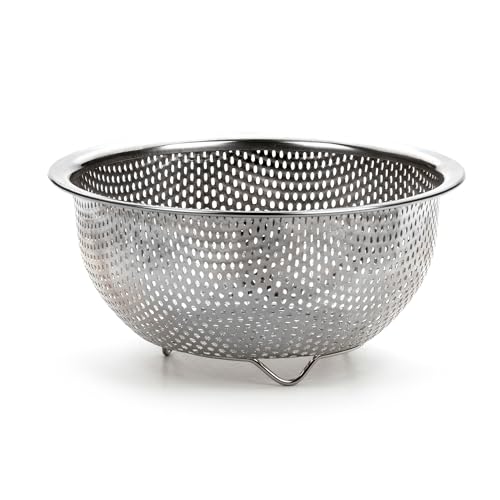
The RSVP International Endurance Kitchen Collection Colander Strainer ($17.78) — The RSVP International Endurance colander is a berry basket, not a pasta colander. It measures about six and a half inches across and holds roughly two pints, which is the right size for rinsing a clamshell of raspberries or a bunch of parsley and far too small for anything you'd pour out of a pot. The 18/8 steel, the pierced hole pattern and the footed base are the same ideas the bigger picks use, just scaled down, and it's dishwasher safe. If you want a dedicated rinser for delicate produce that barely takes up cabinet room, it's a sensible buy. It can't be your only colander.
Care and storage
The fastest way to ruin a good stainless colander is to put it away wet. Trapped moisture in a closed cabinet is what causes most of the rust spots people blame on cheap steel. So rinse it, shake it, and leave it upside down on a rack or hang it until it's fully dry. Rinse off salty pasta water and acidic residue like tomato sauce or vinaigrette promptly, since chlorides and acids are what break down the protective layer on the surface. Skip steel wool and harsh scouring pads, which scratch that layer open. If spots do appear, a paste of baking soda and warm water on a soft cloth lifts most of them without marking the finish. For mesh strainers, brush the weave from the outside in while it's still wet.
Questions we get
What size colander do I need for a pound of pasta?
Five quarts is the standard answer. A pound of dried pasta swells to roughly three to three and a half quarts cooked, so a 5-quart bowl gives you enough headroom to tip the pot without spilling over the rim. Go bigger, around eight quarts, if you regularly cook for more than four. A 3-quart colander is plenty for side dishes and small households.
What's the difference between a colander and a strainer?
A colander is a bowl with punched holes, usually a few millimeters wide, built to dump water off pasta and vegetables in a hurry. A strainer uses woven wire mesh with much finer gaps, so it filters particles out of liquids — think custard, stock or sifted flour. Colanders drain faster, strainers strain finer. Neither one substitutes for the other, which is why most well-stocked kitchens keep both.
Is 18/10 stainless steel better than 18/8?
Slightly, yes. The second number is nickel content, and 18/10 has a bit more of it, which means marginally better corrosion resistance and a brighter finish. For everyday home cooking, 18/8 holds up fine as long as you dry the colander after washing. The 18/10 upgrade matters most in salty or acidic cooking and on pieces you plan to keep for decades.
Why does my stainless colander rust?
Usually because it went into a closed cabinet damp. Salt from pasta water, contact with cast iron, and scrubbing with steel wool all damage the thin chromium layer that keeps stainless from rusting. Dry it thoroughly, store it somewhere with airflow, and rinse salty or acidic residue off promptly. Baking soda paste on a soft cloth removes most spots that do appear.
Do I need both a colander and a fine-mesh strainer?
It depends on what you cook. If you mostly drain pasta, rinse produce and wash grains, one good micro-perforated colander covers you. If you bake, make stock, or strain sauces for a smooth texture, you need mesh, because a perforated bowl physically can't do those jobs. The practical setup for most people is a 5-quart colander plus one medium fine-mesh strainer.
Can stainless colanders go in the dishwasher?
Nearly all of them are rated for it, including every pick here. Repeated cycles do leave water spots and dull the finish over time, since dishwasher detergents are aggressive toward the surface layer on stainless. For a premium piece like the All-Clad, hand-washing and drying keeps it looking new much longer. For everyday colanders, the dishwasher is fine and the cosmetic wear is just cosmetic.
Why you should trust us
For this guide:
- We read the manufacturer specifications and listing details for every colander and strainer here, comparing steel grade, capacity, base design and handle construction side by side.
- We reviewed published assessments from kitchen-equipment publications and looked for the points where they agreed, particularly on hole size and sink stability.
- We read through owner feedback for each product to find the complaints that repeat, such as bare handles getting slippery and spotting after dishwasher cycles.
- We read owner reviews on every listing, weighted toward the critical ones, because that is where the recurring failures show up.
- We have a systematic way of automatically fetching the latest prices, so the numbers on this page stay current.
- This is a research-focused guide, so the team may not own every product listed — though we often do own the top winners, which gives us extra context for the recommendations.
- We don't accept free products, and the retailer commission never changes which product we recommend.
Sources
The Best Colanders — Wirecutter, Wirecutter / The New York Times
The Best Colanders for Every Kitchen Task — Serious Eats, Serious Eats
The Best Colanders, Tested by Our Kitchen Experts — Good Housekeeping, Good Housekeeping
Equipment Review: Colanders — America's Test Kitchen, America's Test Kitchen
The Best Colanders of 2026, According to Our Tests — The Spruce Eats, The Spruce Eats
The Best Strainers and Colanders — Cook's Illustrated, Cook's Illustrated
Best Fine Mesh Strainers, Tested and Reviewed — Food52, Food52
NSF/ANSI 2: Food Equipment Certification Standard, NSF International
Amazon product listings and owner reviews for all 5 products
Manufacturer specification pages for each product
Some passages in this guide may be paraphrased with AI help. Prices are refreshed automatically.
More like this.
Continue exploring appliances reviews and recommendations.

The Best Countertop Stainless Steel Microwaves
A microwave is the appliance you touch every single day and think about almost never - until it dies. Then you discover how much of your routine runs…

The Best Insulated Stainless Steel Water Bottles
A good insulated bottle is the rare thing you use every single day and barely think about. You fill it with ice water in the morning, forget it in a hot…

The Best Stainless Steel Mixing Bowl Sets
A mixing bowl is the thing you grab before you've decided what you're making. You crack eggs in it, toss a salad in it, let dough rise in it, then wash it…

The Best Stainless Steel Chimney Caps
A chimney cap is a small piece of metal doing an unglamorous job. It keeps rain out of your flue, keeps squirrels and birds from nesting in it, and keeps…

The Best Stainless Steel Cat Water Fountains
Cats are terrible drinkers. They evolved in dry places, they get most of their water from prey, and a bowl of still tap water just doesn't register as…

The Best Carbon Steel Woks
A carbon steel wok is the rare pan that gets better the longer you own it. It's thin enough to heat fast, heavy enough to hold that heat when you dump in…