The Best Basement Dehumidifiers
Basement damp announces itself slowly. First there's a smell you notice halfway down the stairs. Then the cardboard boxes go soft, the rug feels clammy, and a tool you left on the workbench picks up a film of rust. A dehumidifier's whole job is to hold the room somewhere between 30 and 50 percent relative humidity, all day, without you thinking about it. Do that and the musty smell goes, your stored things survive, and mold never gets a foothold on the drywall paper.
Here's what none of these machines does well. They all struggle when the room gets cold — refrigerant coils frost over, airflow chokes, and the unit quietly shuts itself off at exactly the point in the year you stopped checking on it. They're all loud enough to hear through a floor. And they're all consumables: owners of nearly every brand here describe a unit that worked beautifully for a season, then iced up or stopped pulling water while the fan kept spinning. Plan for that.
The sizing math trips up most shoppers, so keep it simple. A 50-pint unit is the practical floor for a moderately damp basement under about 1,500 square feet, not the ceiling. Visible condensation or a space past 1,500 square feet pushes you to 70 pints, and a genuinely wet basement wants commercial capacity no matter the footprint. Oversizing is the safe error: a unit loafing at 60 percent load is quieter and lasts longer than a small one running flat out. We think that the Frigidaire 50-Pint Smart Dehumidifier is the best basement dehumidifier for most people, and that the GE Portable Dehumidifier with Built-in Pump is the one to buy if your only drain sits higher than the unit.
Everything we recommend

Remote humidity control for a room you'd rather not visit
Drains uphill, so your floor drain doesn't dictate placement

Quiet enough to run under a bedroom, basic everywhere else

Permanent whole-home drying, if you're done buying portables
Big capacity and the strongest efficiency rating in this group
At a glance
| Product | Capacity | Coverage Area | Price | |
|---|---|---|---|---|
| Frigidaire 50-Pint Smart Dehumidifier for BasementTop pick | 50 Pints | — | $345.96 |
| 4500 Sq.Ft Energy Star Most Efficient 2025Also great | 80 Pints | 4500 Sq.Ft | $224.97On sale |
 | Whirlpool 50-Pint Portable Dehumidifier for BasementAlso in lineup | 50 Pint | 4500 Sq. Ft | $289.99 |
 | Waykar 130 Pints Energy Star Most EfficientAlso consider | 130 Pints | 7500 Sq. Ft | $652.10 |
 | Friedrich 50 Pint Dehumidifier with 15' DrainAlso consider | 50 Pint | — | Check price |
 | AIRPLUS 4500 Sq. Ft Dehumidifier for BasementAlso in lineup | 70 Pints/Day | 4,500 Sq. Ft | $179.99 |
 | Santa Fe Advance Dry110 DehumidifierAlso in lineup | — | — | $2,475 |
| AprilAire E100 Pro Dehumidifier Bundle - 100Upgrade pick | 100 Pint | 5,500 Sq Ft | $1,817.99 |
| GE Portable DehumidifierRunner-up | 50 Pint | — | $293.97On sale |
 | ALORAIR Commercial Dehumidifier 113 PintAlso consider | 113 Pint | 1,200 Sq.Ft | $446.46On sale |
| Keystone 50-Pint Portable Dehumidifier for BasementBudget pick | 50 Pints/Day | 4,500 Sq.Ft | $189.10 |
How we picked
Capacity and sizing. We matched published pint-per-day ratings to the moisture severity guidance the manufacturers and EPA use, not just square footage. Anything under 50 pints was out for basement duty.
Cold-weather operation. Most compressor units frost their coils below 65 degrees and shut down. We favored models with a stated low-temperature specification or a sensor-driven defrost cycle rather than a simple thermal switch.
Drainage options. Bucket emptying isn't viable for a basement running around the clock, so we looked for a continuous drain port at minimum. Built-in pumps and included hoses earned a unit extra credit.
Efficiency. Energy Star certification was effectively a requirement, since these machines run for months at a time. We treated the Most Efficient tier as a meaningful step up rather than a marketing badge.
Noise and reliability. We compared published decibel ratings against the 55 to 65 range typical of this size, and read owner feedback for repeated failure patterns — icing, humidistat drift, and units that quit inside two seasons.
Top pick
Remote humidity control for a room you'd rather not visit
Frigidaire 50-Pint Smart Dehumidifier for Basement
A 50-pint Energy Star unit with Wi-Fi, app control, and Alexa or Google voice commands, so you can check basement humidity from the couch or from a hotel. It also runs an ionizer, locks out curious kids, and reaches a far-off outlet on a 78-inch cord.
$345.96fromAmazonThe smart features earn their keep in a room nobody visits. A basement dehumidifier fails silently. The bucket fills, the unit shuts off, and no one notices until the boxes smell again. With the Frigidaire app you can see the current humidity, change the setpoint, adjust fan speed, and get a push alert when the bucket's full or the filter needs a rinse. That's worth more here than it would be on a kitchen appliance you walk past daily.
Setup is a five-minute job. Connect it to your 2.4 GHz network, set a target around 45 percent, and walk away. From there the humidistat cycles the compressor to hold that number, so the machine isn't hammering along at full load all day. If you'd rather never open an app, the front panel does everything the phone does, and the unit keeps its settings.
Frigidaire has been building household appliances for over a century, and it shows in the unglamorous details. The washable filter slides out without tools, so the monthly rinse actually happens instead of getting postponed forever. The child lock keeps an eight-year-old from switching it to fan-only. And that long cord matters more than you'd think in an unfinished basement, where the outlets are wherever the electrician felt like putting them.
It's Energy Star certified, which counts for more in this category than in most. A basement unit runs close to around the clock for months at a stretch, so a 15 to 20 percent efficiency gap compounds into real money over one humid season. The built-in ionizer is a smaller bonus. It won't replace an air purifier, but it takes some edge off the dust that storage boxes and old carpet keep circulating.
Flaws but not dealbreakers
There's no built-in pump, and that's the real limitation. Gravity drainage only works when your drain sits at or below the unit, so a utility sink on a platform or a floor drain in the next room leaves you hauling the bucket by hand. In a damp stretch of summer that's every few hours, which defeats the point of a machine you're meant to ignore. If that describes your basement, buy the GE instead.
You're also paying a premium for the connectivity. Comparable 50-pint units without Wi-Fi cost noticeably less, and if you'd never open the app, that money buys you nothing. Availability on this model comes and goes more than we'd like, too.
Runner-upOn sale
Drains uphill, so your floor drain doesn't dictate placement
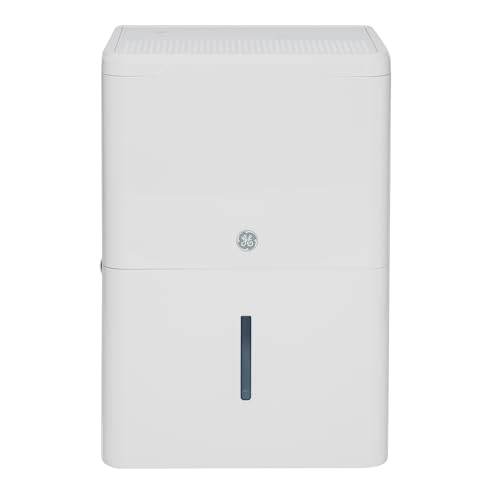
GE Portable Dehumidifier
A 50-pint unit with a built-in pump that pushes condensate up to 16 feet away, to a utility sink, a laundry standpipe, or a drain in the next room. Smart Dry adjusts fan speed on its own, so it eases off once the room settles at your setpoint.
$293.97fromAmazonList priceMost basement dehumidifier headaches are really drainage headaches. A gravity hose has to run downhill the entire way, and plenty of basements simply don't offer that — the drain is buried under the stairs, or there isn't one at all, just a laundry sink on a plinth. The GE's pump ignores the geometry. Run the included hose where you need it, and stop planning your basement around a drain.
Smart Dry is the rare automatic mode that does something you'd actually want. It reads the room and raises fan speed when humidity climbs, then backs off once conditions hold steady. So it's quieter on an ordinary day and more aggressive after a thunderstorm, with nobody standing there pressing buttons. It also cuts down on the constant full-tilt running that wears a compressor out early.
GE describes it as ultra quiet in its own specifications, and the layout is consistent with that: one compressor in a tall, narrow cabinet with the air going out the top. It isn't silent, and nothing with a compressor in it is. But if your basement sits under a bedroom, the difference between a well-damped unit and a rattly one decides whether you run it at night or shut it off.
The alerts are the part you'll appreciate six months in. A ten-second alarm sounds when the bucket is full or seated wrong, and a separate reminder tells you when the filter needs cleaning. Neither is exciting. Both prevent the classic failure, where a dehumidifier sits there doing nothing for three weeks while humidity climbs back to where it started and you assume everything's fine.
Flaws but not dealbreakers
There's no app and no voice control. If you want to know what the basement is doing, you're walking down the stairs to find out. Given that this unit's whole appeal is set-it-and-forget-it operation, the omission stings a bit more than it would elsewhere.
A pump is also one more thing that can fail. Across this whole category, owner feedback keeps landing on pumps and drain lines as the first parts to give trouble — a kinked hose, a clogged outlet, a pump that hums but won't lift. Keep the run as short and straight as you can, and check the far end occasionally.
Budget pick
Quiet enough to run under a bedroom, basic everywhere else
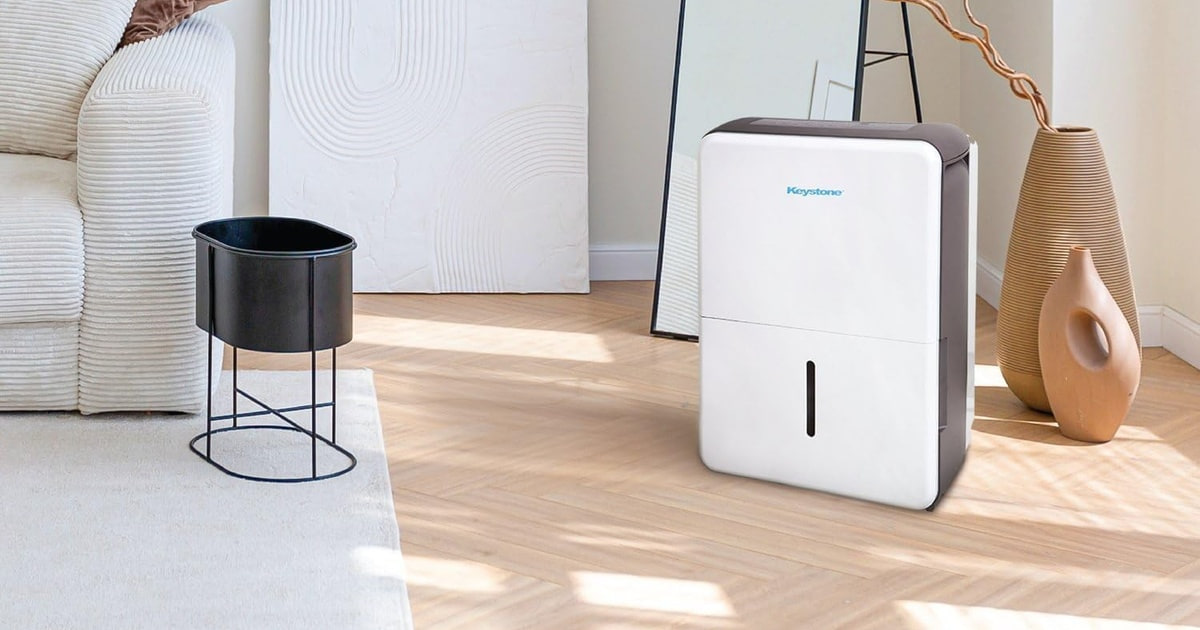
Keystone 50-Pint Portable Dehumidifier for Basement
A 50-pint unit rated at 51 decibels, which is quieter than most of what's sold in this size. You get auto-defrost, auto-restart, a turbo mode, and four casters, and you give up any smart features and a pump.
$189.10fromAmazonFifty-one decibels is roughly a quiet conversation, and it's the entire argument for this one. Most 50-pint units sit between 55 and 65 decibels, and that gap is very audible through a floor. If your basement is under a home office or a nursery, this is the one you can leave running through the workday instead of switching it off every time somebody takes a call.
Auto-restart reads like a footnote until the power blinks while you're away for a weekend. A unit without it stays dark until someone walks down and presses a button, and two humid days is plenty for mold to start on cardboard and drywall paper. The Keystone comes back on by itself, with your settings intact. For a basement you visit once a month, that's the feature that matters most.
Turbo mode covers the spikes. Open the door after a summer storm, find the room at 75 percent, and turbo runs the fan and compressor hard to drag it back to target faster than the normal cycle manages. Auto-defrost is included as well, which isn't a given at this end of the market. The four casters let you roll it toward the wet corner instead of running twenty feet of hose to it.
Flaws but not dealbreakers
Keystone isn't a name most people know, and it doesn't have the parts-and-service depth of Whirlpool or GE behind it. If something fails after the return window closes, expect a slower resolution than you'd get from a major appliance brand.
There's no pump and no app, so you're on gravity drainage or the bucket. And the auto-defrost here is the simple kind. It helps in a basement that dips into the low 60s, but it isn't what you want in a room that spends the winter near 50 degrees — that's the ALORAIR's job, and it costs a great deal more.
Upgrade pick
Permanent whole-home drying, if you're done buying portables
AprilAire E100 Pro Dehumidifier Bundle - 100
A 100-pint whole-house unit that ducts into a basement or crawl space and drains continuously — no bucket, no repositioning, no wheeling it toward the damp corner. It ships as a complete kit with hose, risers and two spare filters, and it's built for a decade of service rather than a few seasons.
$1,817.99fromAmazonThere's a point where portables stop making sense. If you've already replaced two of them, if your basement is finished living space, or if the humidity problem runs up to the floor above, a fixed unit finally solves what a portable keeps almost solving. The E100 Pro lives in a mechanical room or a quiet corner, ducted or free-standing, and treats the whole volume instead of the ten feet in front of it.
Aprilaire has been doing whole-home humidity control longer than most of its competitors have existed. Owner feedback here is unusually consistent: units that hold a setpoint quietly for years, and buyers coming back for a second one. That pattern is rare in this category, where the common story is a machine dying in its second summer. Corrosion-resistant aluminum coils are a large part of why it lasts.
The bundle matters more than it sounds. Whole-home units usually arrive as a bare box that still needs a drain hose, risers and a spare filter before it can do anything, and each of those is another order and another week of a damp basement. This one comes with all of it. Smart sensing starts the unit whenever humidity crosses your target, so there's no schedule to build and nothing to remember.
It carries the Energy Star Most Efficient certification, a tier above ordinary Energy Star, and that's the real case for spending here. A whole-home unit runs continuously through the humid season, so efficiency drives the cost of ownership far more than the sticker does. Owners replacing older contractor-installed dehumidifiers describe their electric bills moving in the right direction afterward.
Flaws but not dealbreakers
It's big and it's heavy. Owners describe needing a truck to get it home and a second pair of hands to move it, and a ducted installation genuinely wants a professional. Factor that quote into your decision, because it's a real part of the total.
It's also overkill for a lot of basements. If yours is a dry-ish utility space that smells musty for a few weeks a year, a 50-pint portable does the job for a fraction of the outlay and takes five minutes to set up.
The E100 Pro comes with a five-year warranty.
Also greatOn sale
Big capacity and the strongest efficiency rating in this group
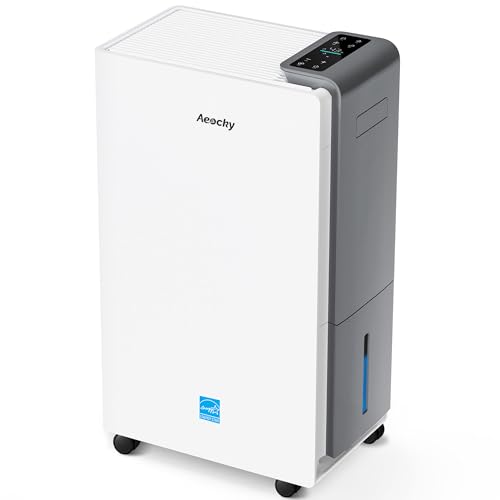
4500 Sq.Ft Energy Star Most Efficient 2025
An 80-pint unit carrying the Energy Star Most Efficient designation, which only a small slice of certified dehumidifiers earn. It ships with a drain hose, holds its setpoint with a modulating compressor, and keeps working below the 65-degree line where cheaper units frost up and quit.
$224.97fromAmazonList priceOrdinary Energy Star certification is everywhere. The Most Efficient designation isn't — it goes to a small fraction of certified models and rests on independent laboratory testing to EPA standards, not a manufacturer's own claim. For a machine that runs most of the year in a basement, that difference shows up on the power bill rather than in how the room feels day to day.
The capacity figures are worth reading closely, and AEOCKY's are unusually honest. It's rated at 80 pints a day at 95 degrees and 95 percent humidity, and 56 pints under the warm, damp basement conditions most buyers actually have. Plenty of brands quote only the saturation number and let you find out the difference yourself. Knowing the realistic figure makes sizing your basement much easier.
The compressor modulates rather than slamming on and off at full load, and owners notice it as steadier, quieter running with less draw. Several describe it as clearly quieter than whatever it replaced. It also holds up better than most in the low 60s, the temperature where a standard compressor frosts its coil, chokes its own airflow, and shuts down until someone notices.
Flaws but not dealbreakers
AEOCKY is a new brand and the reliability record is thin. Owner feedback includes units that stopped pulling water inside a year, sometimes with the fan still happily spinning, which is the classic sealed-system failure. Reports of the company shipping fast replacements are common enough to be reassuring, but a replacement still means weeks of a damp basement.
There's no pump and no app. The listing copy is also extremely loud — sweeping claims about savings and components stacked one on top of another. The certification behind it is real and verifiable; the surrounding marketing oversells it.
Who this is for
This guide is for anyone with a basement or crawl space that smells musty, sweats on the pipes, or leaves a chalky bloom on the foundation walls. If your relative humidity sits above 60 percent for more than a day or two at a time, you have a mold clock running and you should buy something now. If you already see dark spotting on framing or drywall, a dehumidifier alone won't fix it — you need remediation first, then a machine to keep the problem from coming back.
We've stuck to units meant to run continuously in a basement, from 50-pint portables up to fixed whole-home systems. We've skipped small desiccant units and closet dehumidifiers, which can't move enough moisture to matter down there, and we haven't tried to cover crawl-space encapsulation, sump pumps, or exterior drainage. Those fix the water coming in; a dehumidifier only handles what's already in the air. If your basement floods, solve the water first.
How we picked
We built the shortlist around five things. Capacity: 50 pints is the floor for a moderately damp basement, 70 for a visibly wet one, and commercial capacity for anything past that, regardless of footprint. Cold operation: a unit that ices up at 62 degrees is useless for half the year, so we favored real low-temperature specifications and sensor-driven defrost. Drainage: a continuous drain port was the minimum, and a built-in pump was a strong plus for basements without an accessible floor drain. Efficiency: Energy Star certification at a minimum, since these things run nearly nonstop. Noise and reliability: we compared published decibel ratings and read owner feedback for the failure patterns that repeat across a category.
Other basement dehumidifiers worth considering
If your basement spends the winter below 60 degrees: The ALORAIR Commercial Dehumidifier 113 Pint ($446.46) — The ALORAIR Sentinel HD55 is what water damage restoration crews carry, and it's built for the one condition that defeats most consumer units. Its defrost system monitors ambient temperature with built-in sensors and runs a cycle only when needed, keeping the fan going while the compressor pauses. It also has no internal tank at all, which removes a failure mode in a genuinely cold room, and the metal casing shrugs off a rough utility space. It's expensive, it looks industrial, and the headline 113-pint figure is a saturation number — the AHAM rating is 53 pints. But it comes with a five-year warranty and it keeps working when the cheap ones have iced solid.
If a 50-pint unit simply can't keep up: The Waykar 130 Pints Energy Star Most Efficient ($652.10) — The Waykar 130-Pint is a commercial machine in a portable body, rated for spaces up to 7,500 square feet and built around a stainless steel body rather than the usual plastic and aluminum. Its pump hose runs 16.4 feet, longer than the 10 to 13 feet most pumps offer, which matters in a split-level or a deep basement where the nearest drain is well overhead. The humidity range goes down to 10 percent, so you can actually set an aggressive target while drying a flooded room out. It's heavy, it's loud enough that you'll notice, and it's genuinely too much machine for an average basement. Five-year coverage comes with it.
If you want a pump plus commercial build quality: The Friedrich 50 Pint Dehumidifier with 15' Drain — The Friedrich 50-Pint applies the company's commercial HVAC standards to a household unit, and a few of its choices are smarter than anything else here. It runs down to 41 degrees, which is a real low-temperature specification rather than a vague claim. The pump senses condensate on its own and drains without a manual reset. And the non-louvered front panel is a genuinely basement-specific idea — traditional grilles turn into dust and pet-hair traps in a low-traffic utility room, slowly strangling airflow. It's Energy Star qualified, adjusts from 30 to 90 percent, and shows room temperature and humidity on a top-mounted display. Stock is thin, which is the main reason it isn't a pick.
The competition
This is what our research surfaced in the basement category, not a map of everything on the market. New models arrive constantly, and plenty of decent units never turn up in a search for basement dehumidifiers. These are the ones we looked at closely and set aside, with the reason each fell short.
The Whirlpool 50-Pint Portable Dehumidifier for Basement ($289.99) — The Whirlpool 50-Pint has the ingredients of a good mid-range choice: a familiar brand, Energy Star certification, a garden hose connector for continuous drainage, and a 14.8-pint bucket that's larger than the 10 to 12 pints typical at this size. But owner feedback is the most troubling in this lineup. The complaints cluster in ways that suggest a pattern rather than bad luck — coils icing solid despite an auto-defrost feature, a humidistat reading well above the actual room humidity, refrigerant leaks inside a year, and units arriving without their casters. Whirlpool's support gets decent marks for sorting problems out. We'd still rather you didn't need to call.
The AIRPLUS 4500 Sq. Ft Dehumidifier for Basement ($179.99) — The AIRPLUS 70-Pint is the raw-capacity play: 70 pints a day, a drain hose in the box, a drying mode for pulling a basement back after a sump failure, and a fan-only air supply mode, all from a direct-to-consumer brand with low overhead. Owners generally like it early on, and several mention how quiet it is for the size. The trouble shows up later. Freezing and failed defrost after roughly a year is the recurring theme, along with leaks and a small reservoir with no handle that's easy to spill. Two years of coverage helps. If capacity per dollar is your only criterion, it's still the one to look at.
The Santa Fe Advance Dry110 Dehumidifier ($2,475) — The Santa Fe Advance Dry110 is contractor-grade equipment, and on paper it's the most sophisticated unit here. Dual exhaust outlets let you duct dry air to several basement zones at once, so you don't get the dead corners a single portable always leaves. The dew point cut-out is smarter than reactive defrost — instead of waiting for frost and then melting it, the system watches dew point and avoids forming frost at all, which is easier on the compressor. Its patented coil optimization pulls more water per watt. The catches are cost and commitment: it's the most expensive unit in this guide by a wide margin, it needs professional installation, and there's almost no independent owner history to lean on. Get a quote before you fall in love with the spec sheet.
Installation and upkeep
Put the unit near the middle of the main basement area, with six to twelve inches of clearance on every side. Shoving it against a foundation wall makes it chew on the coldest, dampest air in the room while the rest of the space stays humid. Set your target around 45 to 50 percent in the humid months and 30 to 40 percent in winter, since air below 30 percent dries out framing and builds static. Rinse the washable filter monthly — a clogged filter starves airflow and quietly kills efficiency long before anything looks wrong. Run a hose to a drain rather than relying on the bucket. And keep a cheap digital hygrometer somewhere across the room, because a drifting humidistat is one of the most common complaints in this whole category, and it's invisible unless you check.
Questions we get
What size dehumidifier do I need for my basement?
For a moderately damp basement up to about 1,500 square feet, 50 pints is the practical minimum. Very damp spaces, or anything from 1,500 to 2,500 square feet, want 70 pints. Past that — or with standing water and active mold — you're into commercial capacity like the Waykar or the ALORAIR. When you're on the line between two sizes, go bigger: a unit at partial load is quieter, cheaper to run, and lasts longer than a small one pinned at maximum.
What humidity level should I hold in a basement?
The EPA recommends 30 to 50 percent relative humidity to keep mold from growing. In humid weather, aim for 45 to 50 percent, when outside air is pushing moisture in through every crack. In winter, drop to 30 to 40 percent — below 30 you'll get wood shrinkage and static, and above 50 you'll get condensation on cold surfaces. Set your target and verify it with a separate hygrometer, since built-in sensors drift.
Do dehumidifiers work in cold basements?
Most consumer units are rated for 65 degrees and up. Below that, frost builds on the coil, blocks airflow, and eventually trips a protective shutoff — so the machine quits right when you'd never think to check it. If your basement regularly drops under 60 degrees, you need a stated low-temperature specification and a real defrost system. The ALORAIR Sentinel HD55 is built for exactly that, and the Friedrich runs down to 41 degrees.
How do I drain one without emptying a bucket constantly?
There are three ways. Gravity drainage runs a hose from the unit to a floor drain or sump pit at or below the unit's level, which is simple and needs no pump. A built-in pump, like the one in the GE or the Friedrich, lifts condensate 15 to 16 feet to any drain you like. Or you can add a separate inline condensate pump to a gravity port and get the same result. For a basement you leave running, use one of these rather than the bucket.
Should I run it continuously or on a schedule?
Continuously, against a humidity setpoint, in almost every case. That doesn't mean the compressor runs nonstop — the humidistat cycles it to hold your target, so the unit idles most of the time once the room is dry. A fixed on/off schedule makes sense only for seasonal use in a climate with genuinely dry winters. Otherwise you're handing the room back its moisture during every scheduled-off stretch.
Is a whole-home dehumidifier worth it over a portable?
It's worth it if your basement is finished living space, if the humidity problem reaches the floor above, or if you've already worn out two portables. Fixed systems like the AprilAire E100 Pro and the Santa Fe move far more air, run quieter because they sit away from you, cost less to operate, and are designed for a decade or more rather than a handful of seasons. For a utility basement with a damp stretch each summer, a good 50-pint portable is plenty.
Why you should trust us
For this guide:
- We read manufacturer specification sheets for all eleven units, comparing rated capacity, stated operating temperature range, drainage design and published noise levels against the conditions a basement actually presents.
- We reviewed Energy Star and Energy Star Most Efficient certification status directly rather than relying on listing claims, since several brands here blur the two.
- We read owner feedback across the lineup for repeat failure patterns — coil icing, defrost that doesn't defrost, humidistat drift, and units that stop pulling water inside the first year.
- We read owner reviews on every listing, weighted toward the critical ones, because that is where the recurring failures show up.
- We have a systematic way of automatically fetching the latest prices, so the numbers on this page stay current.
- This is a research-focused guide, so the team may not own every product listed — though we often do own the top winners, which gives us extra context for the recommendations.
- We don't accept free products, and the retailer commission never changes which product we recommend.
Sources
Best Dehumidifiers of 2026 — Wirecutter, Wirecutter / NYT
Best Dehumidifiers — Consumer Reports, Consumer Reports
Dehumidifier Buying Guide — Energy Star, U.S. EPA Energy Star
How to Choose the Right Dehumidifier — This Old House, This Old House
Best Dehumidifiers for Basements — Bob Vila, Bob Vila
Amazon product listings and owner reviews for all 11 products
Manufacturer specification pages for each product
Some passages in this guide may be paraphrased with AI help. Prices are refreshed automatically.
More like this.
Continue exploring appliances reviews and recommendations.

The Best Basement Dehumidifiers
A damp basement announces itself before you see it. There's the smell first, then the boxes that feel slightly cool and soft, then the rust ring under the…

The Best Dehumidifiers for Home Use
Damp air is easy to ignore until it isn't. You smell it first - that flat, earthy basement smell that gets into stored boxes and winter coats. Then you…

The Best Gun Safe Dehumidifiers
A gun safe is a sealed steel box, and sealed steel boxes trap moisture. Open the door on a muggy afternoon and you've just loaded the interior with damp…

The Best Nonstick Cake Pans and Baking Sets
A cake pan does one job, and it's easy to take for granted until it fails you. The batter sticks to the bottom, the edges brown three shades darker than…

The Best Countertop Microwave Ovens
A countertop microwave is the appliance you touch most and think about least. You reheat last night's chili, soften butter, steam a bag of green beans,…

The Best Digital Kitchen Scales for Precision Baking
Baking by volume is the reason your cookies come out different every time. King Arthur Baking found that a cup of all-purpose flour can weigh anywhere…