The Best Basement Dehumidifiers
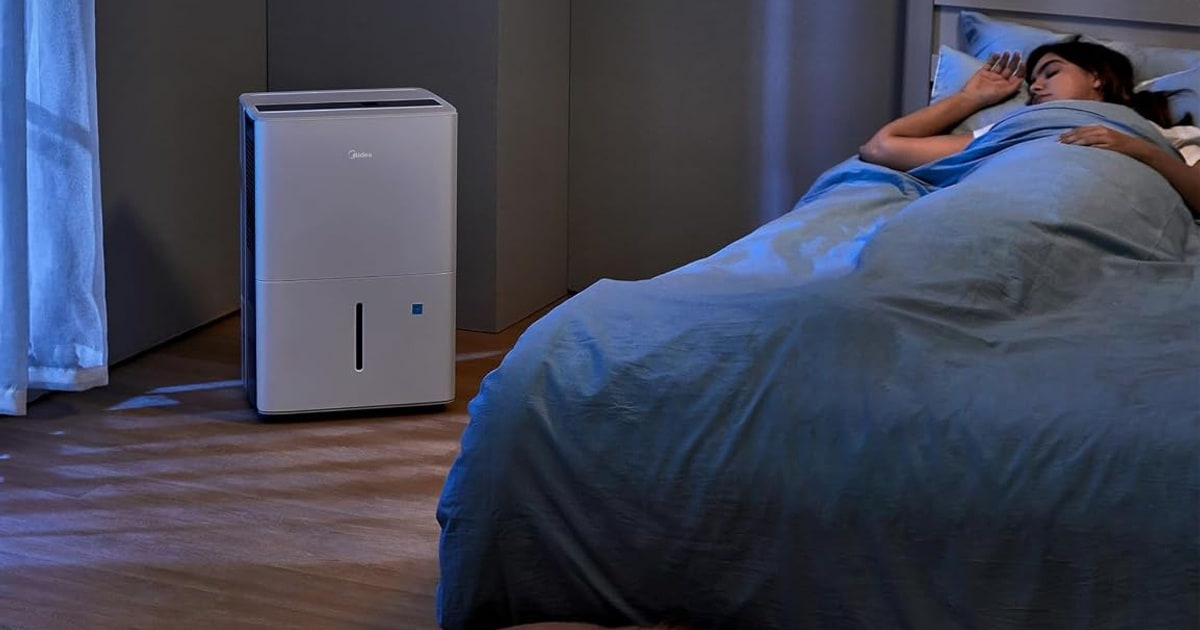
A damp basement announces itself before you see it. The air feels heavy on the stairs, cardboard boxes go soft at the corners, and everything down there picks up that faint mineral smell. A dehumidifier fixes the cause, not the symptom: pull the moisture out of the air and the mold, the mustiness and the dust mites lose the conditions they need. The EPA recommends keeping indoor relative humidity between 30% and 60%, and most people find a basement feels right under 50%. A 50-pint unit is the size that handles a typical damp basement without working itself to death.
Here's the frustrating part. Pint ratings changed, and nobody told shoppers. The Department of Energy's updated test procedure measures capacity at 65°F instead of 80°F, so the same machine now earns a smaller number than it used to. A 50-pint unit today removes roughly what a 70-pint unit did under the old test. Listings mix both standards freely, sometimes quoting a third figure measured at 95°F and 90% humidity. Compressor dehumidifiers also slow down as basements get cold, and no portable unit escapes that entirely.
So we read spec sheets, compared rated coverage and drainage options, and sorted through what owners say breaks and what holds up. We think that the Frigidaire 50 Pint Dehumidifier w/Wifi is the best 50-pint dehumidifier for basements for most people, and that the hOmeLabs Dehumidifier 4,500 Sq Ft is the one to buy if you want a proven workhorse with the longest owner track record of anything here.
Everything we recommend

Dependable moisture removal with app control, if you'll empty a bucket

The longest track record here, but louder than you'd like

Light, quiet and cold-tolerant, with a small tank

Install it once, forget it exists, five years of warranty

A real pump and an honest capacity number, in a hot package
Prices as of Oct 27, 8:28 AM PT · Details
At a glance
| Product | Drainage | Coverage | Price | |
|---|---|---|---|---|
| Frigidaire 50 Pint Dehumidifier w/WifiTop pick | Bucket, 50 pint | — | $305.72 |
| hOmeLabs Dehumidifier 4Runner-up | Tank + hose, 1 gal | 4,500 sq ft | $234.99 |
 | 2024 NEW! Honeywell 50-Pint ENERGY STAR DehumidifierAlso in lineup | Pump, 15 ft | 4,000 sq ft | $396.83 |
 | Midea Cube 50 Pint Dehumidifier with PumpAlso consider | Pump, 16 ft tube | 4,500 sq ft | Check price |
| Waykar 80 Pints 2025 Energy Star DehumidifierBudget pick | Tank + hose, 0.92 gal | 5,000 sq ft | $235.99 |
| AprilAire E070 Pro Dehumidifier Bundle - 70Upgrade pick | — | 2,800 sq ft | Check price |
 | ALORAIR Sentinel HDi65s Crawlspace Dehumidifier Bundle withAlso consider | Pump, 19.6 ft lift | 1,300 sq ft | Check price |
| Ivation 50 Pint Dehumidifier for Basement w/PumpAlso great | Pump, 2.25 gal tank | 4,500 sq ft | $299.99 |
Prices as of Oct 27, 8:28 AM PT · Details
How we picked
Honest capacity rating. We compared how each listing states its pint rating and at what temperature and humidity. Units that name the DOE 2019 test basis, or state the old-rating equivalent outright, earned more trust than those quoting a 95°F figure alone.
Cold-basement operation. Compressor dehumidifiers lose efficiency as rooms get cool, so we looked for a stated auto-defrost function and a low-temperature rating in the specs. A unit rated down to the low 40s is far more useful in an unfinished basement than one with no stated range.
Drainage that fits. We sorted every unit by whether it offers a bucket, a gravity hose, a built-in pump, or all three, and noted the tank size and hose length. A pump is the difference between a daily chore and a setup you forget about when your drain sits above the machine.
Noise and placement. We weighed listing claims about quiet operation against what owners consistently report, since the two often disagree. Dimensions and weight mattered too — a 24-inch-tall, 44-pound unit rules out some corners and some stairs.
Longevity signals. We looked at warranty length and at recurring themes in owner feedback about failures: compressor error codes, fan breakdowns, dead humidity sensors. Filter design mattered as well, since a washable filter is maintenance you'll actually keep up with.
Top pick
Dependable moisture removal with app control, if you'll empty a bucket
Frigidaire 50 Pint Dehumidifier w/Wifi
The Frigidaire pulls humidity down fast in a basement and lets you watch it happen from your phone. It leans on a washable filter and straightforward humidity control instead of a long feature list, and owners report units lasting many years.
$305.72fromAmazonPrices as of Oct 27, 8:28 AM PT · Details
This is the dehumidifier to buy if you want one that just works. Frigidaire has been making these for a long time, and that shows in the parts you touch. The humidity control is simple: pick a target, walk away. Owners describe dropping a basement from the low 60s into the 40s within a day, and several mention earlier Frigidaire units of this size running a decade in a basement before giving up.
The Wi-Fi is the genuinely useful kind. You set a target humidity from upstairs, check the current reading without walking down, and get told when something's wrong. If you've ever discovered a dead dehumidifier and a swampy basement in the same moment, you'll understand why that matters. Owners with smart-home setups report it integrates cleanly rather than requiring its own walled-off app experience.
The washable filter is a small thing that adds up. You rinse it instead of buying replacements, which means you'll actually do it. A clogged filter is the most common reason a working dehumidifier stops pulling much water, so the maintenance being free and easy is worth more than it sounds.
The bucket is the weak point, and you should plan around it. At 44.5 pounds this is the heaviest portable unit here, and a full reservoir adds real weight to carry. There's no built-in pump. If your basement has a floor drain or sump pit nearby, run a hose and forget about it. If it doesn't, one of our pump-equipped picks will save you a daily trip up the stairs.
Flaws but not dealbreakers
There's no built-in pump, which rules it out for basements where the only drain is above the unit. You're choosing between a gravity hose and hauling a heavy bucket, and the bucket's water level is hard to see at a glance, so you don't get much warning before it shuts off full.
Owner feedback splits more than we'd like. Most report years of good service, but a meaningful minority describe error codes and failed compressors inside the first year, with service calls needed to sort it out. It's noticeably loud on the high setting — closer to a window air conditioner than a fan — and the exhaust air runs warm, which you'll notice in a small finished room.
At 24 inches tall and over 44 pounds, it's bulky to move and store. The casters help on a flat concrete floor and not much anywhere else.
Runner-up
The longest track record here, but louder than you'd like
hOmeLabs Dehumidifier 4
This hOmeLabs unit is rated for spaces up to 4,500 square feet and has the deepest pool of owner feedback of anything in this guide. It drains through a hose, connects to Wi-Fi, and has a reputation for pulling water out of stubborn rooms.
$234.99fromAmazonPrices as of Oct 27, 8:28 AM PT · Details
If you want the dehumidifier that the most people have already lived with, this is it. Owners in Florida and along the Gulf Coast describe it clearing rooms that smaller units couldn't touch, including bathrooms with recurring black mold along the wall tops. That kind of repeated, specific feedback across years of ownership is worth more than any spec line.
The capacity numbers need translating. The listing quotes 32 pints per day at 80°F and 60% humidity, and 80 pints at 95°F and 90% — the same machine, measured two different ways. Neither is the DOE 2019 figure that modern 50-pint units advertise. In practice this sits in the same class as the others here, and the 4,500 square foot coverage rating lines up with our other picks.
The drainage setup is the plain version done right. A one-gallon tank with auto shut-off, plus a hose outlet and the hose in the box for continuous gravity drainage. No pump, so your drain needs to sit below the unit. If it does, you'll set this up once and not think about water again.
Wi-Fi control works with Alexa and Google Assistant, so you can check basement humidity from the couch. It also carries an Energy Star certification, and Energy Star units are certified to use less energy than standard models — which matters for a machine you'll run for months at a stretch.
Flaws but not dealbreakers
It's loud. Owners who like everything else about it still single out the noise, and the listing's quiet-operation claim doesn't match what people describe. In an unfinished basement behind a closed door, fine. In a finished basement office, you'll hear it through the wall.
The one-gallon tank is the smallest here, so if you're running on the bucket rather than a hose, you'll be emptying it often in a genuinely damp basement. The listed dimensions in the bullets don't match the dimensions in the specs, which is the kind of sloppiness that makes you double-check whether it'll fit where you want it.
There's no pump, and no low-temperature rating stated in the listing. If your basement runs below 60°F through the shoulder seasons, you're guessing about how well it'll keep up.
Budget pick
Light, quiet and cold-tolerant, with a small tank
Waykar 80 Pints 2025 Energy Star Dehumidifier
The Waykar is the lightest and smallest unit here at under 29 pounds, and it's rated to keep working down to 41°F. Owners consistently call it quieter than the dehumidifiers it replaced, and Waykar's customer support comes up again and again in a good way.
$235.99fromAmazonPrices as of Oct 27, 8:28 AM PT · Details
At 28.6 pounds this weighs roughly two-thirds of what our top pick does, and it's the shortest unit in the lineup. If you need to carry a dehumidifier up basement stairs, or tuck it into a corner where a 24-inch-tall machine won't fit, that difference is the whole decision. Owners who've owned several dehumidifiers over the years describe this as both the quietest and the lightest they've had.
The cold-basement features are the real argument here. Auto-defrost is rated down to 41°F, which covers the kind of unfinished basement that stays chilly into May. A self-drying cycle runs after shutdown to dry the internal components, which helps keep the inside of the machine from becoming its own mold problem. Most units at this size don't state a low-temperature rating at all.
The capacity claims are the usual mess, stated three ways. The listing quotes 80 pints at 95°F and 90% humidity, and 62 pints at 86°F and 80% — the warm-and-damp basement figure. Neither is the DOE 2019 number. Read it as a capable mid-size unit rather than double what our other picks do.
An auto air swing spreads the dry air around instead of blasting one wall, and the LCD panel with a 24-hour timer covers the basics. The washable filter rinses clean. Waykar states one year of coverage plus a second year if you follow the registration instructions in the manual.
Flaws but not dealbreakers
The 0.92-gallon tank is the smallest in this guide, and the included drain hose is only 3.3 feet — barely enough to reach a floor drain you're standing next to. There's no pump, so a basement without a low drain means frequent bucket trips.
Several owners report units that ran for days without collecting any water out of the box. Waykar's support consistently sorted it out, by those same accounts, but a replacement cycle is still a week of a damp basement.
Waykar isn't a name with decades behind it. The listing claims over ten years of dehumidifier experience, and the owner feedback is broadly positive, but you're taking on more brand risk than with Frigidaire or Honeywell.
Waykar states one year of coverage, plus an additional year if you follow the registration instructions in the manual.
Upgrade pick
Install it once, forget it exists, five years of warranty
AprilAire E070 Pro Dehumidifier Bundle - 70
The Aprilaire E070 Pro is a whole-house unit rated for up to 2,800 square feet, built to sit in one place and drain continuously. There's no bucket at all, and it carries a five-year warranty — by far the longest here.
Check priceatAmazonPrices as of Oct 27, 8:28 AM PT · Details
This isn't a portable dehumidifier, and that's the point. It's 33 inches wide, 56 pounds, and designed to live in one spot in a basement or crawl space with a hose running to a drain. There's no water tray to empty, ever. If your basement problem is chronic rather than seasonal, a unit built for permanent duty beats a portable one you'll replace every few years.
The five-year warranty tells you what Aprilaire expects from this machine. Everything else here carries a year, maybe two. Five years of coverage on a dehumidifier is a different class of commitment, and it changes the math if you're comparing against buying a portable unit twice.
Smart sensing starts dehumidification automatically when humidity rises above your target, so it cycles on its own rather than running flat out. It's Energy Star certified and rated to remove 70 pints per day. The bundle ships with a drain hose, two filters and a set of risers, so you're not ordering parts before you can use it.
Owner feedback is thin in volume but unusually consistent, and it skews toward people who installed this after a portable unit failed them. The 2,800 square foot coverage rating is lower than the 4,500 figures our portable picks quote, but those numbers come from different test assumptions — this is sized for whole-basement duty, not a single room.
Flaws but not dealbreakers
It costs the most here by a wide margin, and it asks more of you before it works. Setup means placing it on risers and routing a hose, and plenty of buyers will want a pro for the ducted installation this unit supports.
At 33 inches wide and 56 pounds, it isn't moving between rooms. If your damp problem is seasonal or confined to one corner, you're buying far more machine than the job needs.
There's no bucket, so a drain is mandatory. And the listing doesn't state whether the 70-pint rating uses the DOE 2019 test basis, which makes direct comparison against the portable units here imprecise.
The E070 Pro comes with a five-year warranty.
Also great
A real pump and an honest capacity number, in a hot package
Ivation 50 Pint Dehumidifier for Basement w/Pump
The Ivation is the clearest-labeled unit in this guide: 50 pints at 60°F and 60% humidity, which it states outright equals the old 70-pint rating. A 16-watt pump pushes water up and out, so a basement window works as a drain.
$299.99fromAmazonPrices as of Oct 27, 8:28 AM PT · Details
If your basement has no floor drain, start here. The built-in 16-watt pump lifts water up out of a window or into a utility sink, which is the single feature that turns a daily chore into a non-event. Owners describe running it to a sink for years without touching the 2.25-gallon reservoir — the largest tank in this guide, and your backup if the pump ever quits.
The spec labeling deserves credit. The listing states 50 pints per day at 60°F and 60% relative humidity and says plainly that this equals the old 70-pint 2019 DOE rating with the same moisture removal. After reading listings that quote three different capacity figures without naming a standard, that clarity is a reason to trust the rest of the specs.
The basement-specific features are all here. Auto-defrost protects the coils when the room gets cool, auto-restart brings it back after a power outage so a summer thunderstorm doesn't leave you damp for a week, and the LCD shows your humidistat setting, fan speed, timer and filter alerts. The filter rinses clean instead of needing replacements.
Owners in Texas and the Gulf states report it clearing 600 to 2,000 square foot spaces where a smaller 35-pint unit had given up. It rolls on casters between rooms, which matters more than you'd think when you're chasing a damp corner.
Flaws but not dealbreakers
It runs hot. Owners describe it doubling as a space heater, which is fine in a cool basement in April and genuinely unwelcome in a finished room in July. Every compressor dehumidifier warms the air it returns, but this one earns more complaints about it than most.
There's a persistent low hum — not harsh, but constant. And multiple owners report fan failures somewhere past the two-year mark, even on light duty. Pumps can also leave a small puddle if the hose shifts, so check the connection after you move it.
The pump adds a failure point that gravity drainage doesn't have. If it stops working you're back to a bucket, though at 2.25 gallons it's at least a large one.
Who this is for
Buy a 50-pint dehumidifier if your basement feels damp, smells musty, or shows condensation on cold surfaces, and it runs somewhere in the range of a few hundred to a few thousand square feet. This is also the right size if you're managing allergies or asthma and want humidity held under 50% to keep dust mites and mold in check. Undersizing is the most common mistake people make in a very damp basement — if you're between sizes, go up. A unit that cycles off occasionally lasts longer than one running flat out around the clock.
Skip this category if your problem is active water intrusion: a dehumidifier won't fix a cracked foundation or a failed sump pump, and running one on a wet floor is treating a symptom. If your basement stays below 40°F for much of the year, look at desiccant units instead of the compressor models here. This guide covers portable and whole-basement dehumidifiers in roughly the 50-pint class, not small tabletop units for closets and bathrooms, and not ducted whole-home systems installed into your HVAC.
How we picked
We built this guide from manufacturer spec sheets, published reviews and recurring themes in owner feedback, weighing five things. Honest capacity: does the listing name the DOE 2019 test basis, or just quote a flattering 95°F figure? Cold-basement operation: a stated auto-defrost function and a low-temperature rating, since compressors slow down in cool rooms. Drainage: bucket, gravity hose or built-in pump, plus tank size and hose length, because the right answer depends on where your drain sits. Noise and placement: what owners actually report, measured against dimensions and weight you have to live with. Longevity: warranty length, washable filters, and the specific failures that keep coming up in owner accounts.
Other basement dehumidifiers worth considering
If you want the smallest footprint and real smart controls: The Midea Cube 50 Pint Dehumidifier with Pump — The Midea Cube is the most interesting design here — it collapses into a 15-inch cube for storage and extends for full capacity, so it hides in a closet when your basement dries out. The pump drains vertically or horizontally with a 16-foot tube, the tank is three times the usual size, and Wi-Fi control works through the SmartHome app with Alexa and Google Assistant. It's rated for 4,500 square feet. What gives us pause is reliability: owner feedback skews notably more negative than our picks, with humidity sensor failures and units dead out of the box coming up repeatedly. Buy it for the form factor, and keep your receipt.
If your basement is more crawl space than finished room: The ALORAIR Sentinel HDi65s Crawlspace Dehumidifier Bundle with — The AlorAir Sentinel HDi65s is a commercial-grade machine in a metal case, rated to remove 120 pints at saturation across up to 1,300 square feet. It has a built-in condensate pump with a 19.6-foot lift, auto-defrost, low-temperature operation, a MERV-8 filter, and a wall-mounted controller on a 25-foot cord so you can set humidity from outside the crawl space. That's the right toolkit for a space you'd rather not enter. But it's cETL-listed commercial equipment, not a portable you roll between rooms, and the coverage rating is the smallest here. There's also almost no owner feedback to draw on yet.
The competition
This is what our research surfaced in the 50-pint basement class, not a census of everything for sale. One unit from our original shortlist didn't make the cut, and it's worth saying why.
The 2024 NEW! Honeywell 50-Pint ENERGY STAR Dehumidifier — The Honeywell TPFIT50PWK looks like it should win on paper. It's Energy Star certified in the most-efficient tier, rated for 4,000 square feet, and includes a 15-foot auto-drain pump that pushes water to a sink or out a window. Laundry and Auto-Comfort modes are genuinely useful, and Honeywell cites 11 safety checks including thermal overload protection. But owner feedback on this particular unit is the worst in this guide by a wide margin, with most of it clustered at the bottom. We can't recommend a machine that's meant to run unattended for months when that many buyers report it failing. If Honeywell sorts out whatever is going wrong, this spec sheet deserves another look.
Installation and upkeep
Set the unit on a level floor with a few inches of clearance around the intake and exhaust — crowding it against a wall chokes the airflow and drops how much water it pulls. Rinse the filter about once a month during the damp season; a clogged filter is the most common reason a running dehumidifier stops collecting water. If you're using a gravity hose, confirm the drain sits below the outlet and that the hose runs downhill the whole way, with no loops holding water. With a pump, check the connection after you move the unit, since a shifted hose is how you find a puddle. Set your target between 40% and 50% and let it cycle rather than running it flat out. And if it's suddenly collecting nothing, check the filter and the room temperature before you assume the compressor died.
Questions we get
Is a 50-pint dehumidifier enough for a damp basement?
For most basements, yes. A 50-pint unit under the current DOE test removes roughly what a 70-pint unit did under the old standard, which covers a typical damp basement of a few hundred to a couple thousand square feet. If your basement is very wet — standing moisture, visible mold, a persistent smell — size up rather than down. Undersizing is the most common mistake, and an undersized unit runs constantly and wears out faster.
Why did dehumidifier pint ratings change, and is 50 pints the same as the old 70?
The Department of Energy updated its test procedure to measure capacity at 65°F and 60% relative humidity instead of 80°F and 60%. Cooler air holds less moisture, so the same machine now earns a lower pint number. A 50-pint unit on the new standard removes about what a 70-pint unit did on the old one. Our Ivation pick states this equivalence outright in its listing, which makes it easier to compare against older models.
What should I look for if my basement stays under 60°F?
Look for a stated auto-defrost function and a low-temperature operating range in the specs. Compressor dehumidifiers lose efficiency as air gets cooler, and without defrost the coils can frost over and stop pulling water. Our Waykar pick is rated to work down to 41°F, and the AlorAir is built for low-temperature crawl space duty. If your basement sits below 40°F for much of the year, a desiccant dehumidifier suits that range better than anything here.
Do I need a built-in pump, or is a hose enough?
It depends entirely on where your drain is. If you have a floor drain or sump pit below the unit, gravity through a hose is simpler and has nothing to break. If your only option is a sink or a window above the machine, you need a pump. The Ivation, Midea Cube, Honeywell and AlorAir all have one built in; the Frigidaire, hOmeLabs and Waykar don't.
What humidity level should I keep my basement at, and should I run it around the clock?
The EPA recommends keeping indoor relative humidity between 30% and 60% to limit mold growth, and most people aim for 40% to 50% in a basement. Set that target and let the humidistat cycle the unit on and off rather than running it continuously on a fixed setting. It'll run nearly nonstop during humid stretches and barely at all in winter, which is exactly what you want. Continuous full-speed operation wastes power and shortens the compressor's life.
Why is my dehumidifier running but not collecting water?
Check the filter first — a clogged one is the usual culprit, and it takes a minute to rinse. Then check the room temperature, since a compressor unit without working auto-defrost does very little in a cold basement. Also confirm the tank is seated correctly and the drain hose isn't kinked or looped, because many units shut off collection if they think the bucket is full or misaligned. If the room is warm, the filter is clean and it still isn't pulling water after a few hours, the compressor or sensor has likely failed.
Why you should trust us
For this guide:
- We read manufacturer spec sheets for every unit here and compared how each one states its capacity rating, coverage area and operating temperature range.
- We cross-referenced those claims against EPA humidity guidance and the DOE's updated test procedure to sort out which pint numbers are comparable.
- We reviewed recurring themes in owner feedback — noise, heat output, pump reliability, compressor and fan failures — and weighted them against warranty length and filter design.
- We read owner reviews on every listing, weighted toward the critical ones, because that is where the recurring failures show up.
- We have a systematic way of automatically fetching the latest prices, so the numbers on this page stay current.
- This is a research-focused guide, so the team may not own every product listed — though we often do own the top winners, which gives us extra context for the recommendations.
- We don't accept free products, and the retailer commission never changes which product we recommend.
Sources
A Brief Guide to Mold, Moisture, and Your Home - U.S. EPA, U.S. EPA (cite: indoor relative humidity should be kept between 30% and 60%)
Dehumidifiers - ENERGY STAR, ENERGY STAR (cite: efficiency requirements and certified-model data) [VERIFY specific figures]
Dehumidifier Reviews - RTINGS.com, RTINGS (cite: tested noise and moisture-removal results per model) [VERIFY coverage]
Best Dehumidifiers - Wirecutter, Wirecutter (cite: tested picks and drainage/noise findings) [VERIFY]
Dehumidifier Buying Guide - Consumer Reports, Consumer Reports (cite: lab-tested performance ratings) [VERIFY]
Best Dehumidifiers - Good Housekeeping Institute, Good Housekeeping Institute (cite: lab test results) [VERIFY]
Dehumidifiers - Department of Energy, U.S. DOE (cite: capacity test-standard change and efficiency guidance) [VERIFY]
Basement moisture guidance - Building Science Corporation, Building Science Corporation (cite: basement moisture control research) [VERIFY article]
Amazon product listings and owner reviews for all 8 products
Manufacturer specification pages for each product
Some passages in this guide may be paraphrased with AI help.
Product prices and availability are accurate as of the date/time indicated and are subject to change. Any price and availability information displayed on Amazon.com at the time of purchase will apply to the purchase of this product.
More like this.
Continue exploring home reviews and recommendations.

The Best Basement Dehumidifiers
Basement damp announces itself slowly. First there's a smell you notice halfway down the stairs. Then the cardboard boxes go soft, the rug feels clammy,…

The Best Gun Safe Dehumidifiers
A gun safe is a sealed steel box, and sealed steel boxes trap moisture. Open the door on a muggy afternoon and you've just loaded the interior with damp…

The Best Dehumidifiers for Home Use in 2026
Damp air doesn't announce itself. You notice the musty smell in the basement stairwell, or the cardboard boxes that feel soft at the corners. A…

The Best Heavy-Duty Toilet Plungers
Nobody shops for a plunger on a good day. You're buying one because something went wrong, or because you finally looked at the sad rubber dome under the…

The Best Rotary Hammer Drills
A rotary hammer isn't just a beefier hammer drill. It drives a pneumatic piston that hits the bit with measured force, so it bores into concrete instead…

The Best Platform Bed Frames
A platform bed does one job, and it does it invisibly. It holds your mattress off the floor on a deck of slats, so you skip the box spring entirely.…