The Best Rotary Hammer Drills
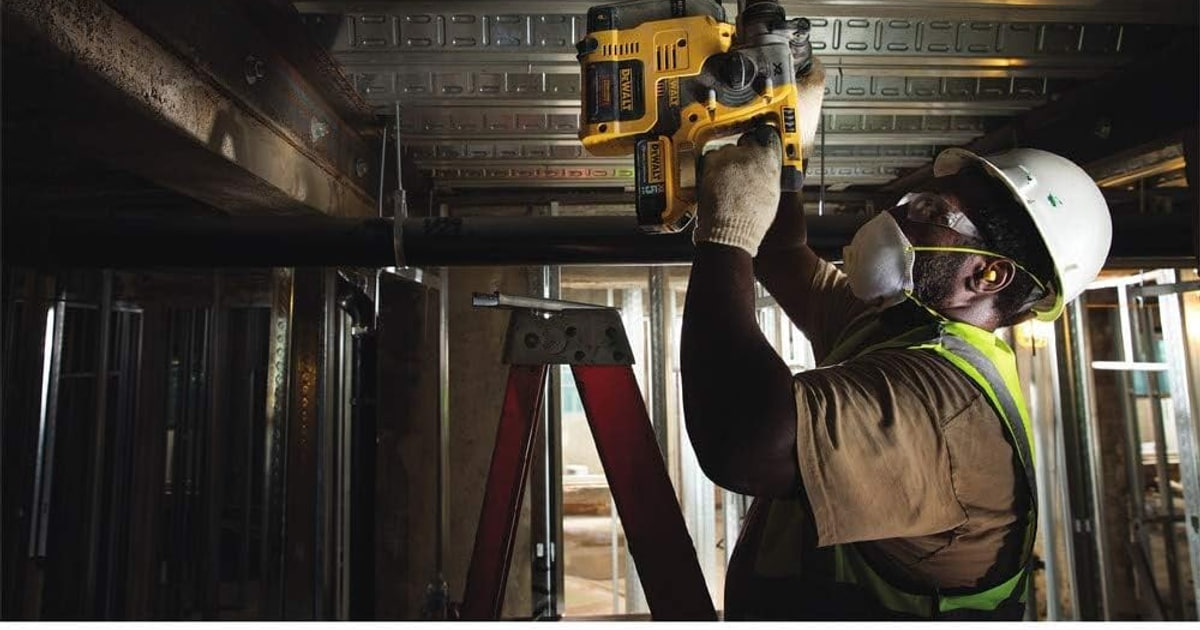
A rotary hammer isn't just a beefier hammer drill. It drives a pneumatic piston that hits the bit with measured force, so it bores into concrete instead of skating across it. If you're setting sleeve anchors in a foundation wall, hanging strut in a garage, or knocking loose old tile, that's the difference between a few seconds per hole and a few grinding minutes. Every tool here takes SDS-Plus bits, which twist in and lock without a chuck key. You'll notice that convenience by the tenth hole.
No rotary hammer is pleasant for long. Even the best anti-vibration systems only take the edge off, and after an hour of overhead drilling your forearms will know it. Concrete dust is the other constant, and none of these tools ships ready to control it — you'll need a shroud and a vacuum, which matters a lot on a commercial site and is still worth having at home. Most of the cordless models come as bare tools, so the battery and charger are a separate purchase.
Think about how often you'll actually use one. A homeowner setting a dozen anchors a year needs a very different tool than an electrician drilling all day into pre-cast. Impact energy is the spec that matters most, and everything else — voltage, amps, RPM — is secondary. We think that the Milwaukee 2912-20 M18 Fuel is the best rotary hammer drill for most people, and that the Bosch RH328VC is the one to buy if you work near an outlet and want the hardest hit available.
Everything we recommend
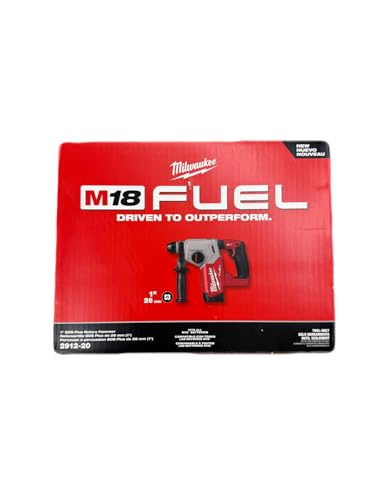
The cordless one to grab if you want speed and a safety net

The most impact energy here, if a cord isn't a problem
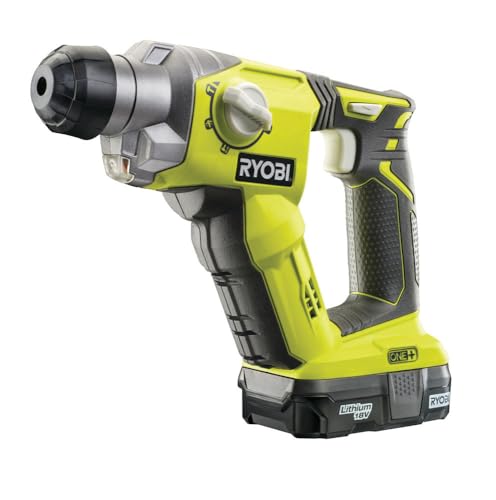
Enough hammer for a few anchors a year, not much more

For crews who drill all day, if the budget allows

Smoother in the hands during long overhead work
At a glance
| Product | Impact Energy | Weight | Price | |
|---|---|---|---|---|
| Milwaukee 2912-20 M18 Fuel 18V 1" SdsTop pick | — | 7.54 lbs | $279 |
 | Bosch GBH18V-22N 18V Brushless SDS-plus® Bulldog™ 3/4Also consider | 1.4 ft-lbs | 6.13 lbs | $139On sale |
| BOSCH RH328VC 1-1/8 Inch SDS-plus Rotary HammerRunner-up | 2.6 ft-lbs | 3.82 lbs | $338.85On sale |
| Makita HR2641 1" AVT Rotary HammerAlso great | 2.1 ft-lbs/2.9J | 11.5 lbs | $255 |
| Ryobi R18SDS-0 ONE+ SDS Plus Cordless RotaryBudget pick | — | 4.35 lbs | $145.86On sale |
| Hilti 3476293 TE 30-C 120-Volt SDS PlusUpgrade pick | — | 19 lbs | $1,299 |
How we picked
Impact energy. We treated rated impact energy, in ft-lbs or joules, as the single most important spec, and cross-checked each manufacturer's number against how published reviews described drilling speed. Anything under about 1.4 ft-lbs was too weak for real anchor work.
Vibration control. We looked for a named anti-vibration system and read how each brand describes the mechanism, since counterbalance-plus-damper designs consistently earn more praise in reviews than marketing-only claims. Anyone drilling more than half an hour a day should have one.
Modes and chucks. We required an SDS-Plus chuck across the board, and gave weight to tools with rotation-only and hammer-only modes so they can chisel tile or start a bit gently. Chisel-angle locking was a bonus.
Battery platform. For cordless models we considered how many tools each battery system supports, because most buyers are already invested in one and bare-tool pricing only makes sense within a platform you own.
Weight and balance. We compared published tool weights and the way reviewers describe overhead handling, since a pound or two decides whether ceiling drilling is tolerable. Anything advertised as compact had to back it up with a real spec.
Top pick
The cordless one to grab if you want speed and a safety net
Milwaukee 2912-20 M18 Fuel 18V 1" Sds
The Milwaukee 2912-20 is a brushless 18V rotary hammer that drills 1-inch holes in concrete and stops itself when the bit grabs. It's the cordless tool we'd hand to anyone who sets anchors regularly but doesn't want to drag a cord onto a ladder.
$279fromAmazonAUTOSTOP Control is the feature that sets this one apart. A bit that catches rebar mid-hole can spin the tool instead of the bit, and that's how people hurt their wrists. Most rotary hammers use a slip clutch, which gives way only after the tool has already started to turn. Milwaukee's sensor watches for the bind and shuts the motor down. If you drill overhead or on a ladder, that's worth real money.
It's fast for a cordless tool. Milwaukee rates it at 2.0 ft-lbs of impact energy, which puts it at the top of the battery-powered class and close to mid-range corded units. Published reviews consistently describe it keeping pace with plug-in hammers through block and standard concrete on half-inch anchor holes. For the fastener work most trades actually do, you won't feel like you gave anything up.
The batteries you already own do a lot of the work here. The 2912-20 runs on the M18 platform, which covers more than 200 tools. If there's already a Milwaukee drill or light in your van, this is a bare-tool purchase and nothing more. A larger-capacity pack will carry you through a morning of anchor work before you swap. That ecosystem math often beats a small spec advantage from another brand.
The brushless motor matters more in a hammer than in a drill. Rotary hammers run hot and pull hard, and brushed motors wear out under that kind of load. Brushless designs run cooler, waste less battery on heat, and last longer between service visits. Milwaukee builds the whole M18 Fuel line this way, and every serious tool in this guide follows suit.
Flaws but not dealbreakers
It ships as a bare tool. There's no battery and no charger in the box. If you're starting from nothing, add a pack and a charger before you compare this against a corded model, because that changes the total considerably.
It's not the lightest option for overhead work. At roughly seven and a half pounds without a battery, it's heavier in the hand than the smaller Bosch Bulldog, and a big pack makes that worse. Ceiling anchors an hour at a time will wear you down faster than they would with a compact tool.
All-day drilling still favors a cord. If you're running a production anchor job for eight hours, battery swaps and charging turn into real overhead. That's the case for the corded picks below, not against this tool.
Runner-upOn sale
The most impact energy here, if a cord isn't a problem
BOSCH RH328VC 1-1/8 Inch SDS-plus Rotary Hammer
The Bosch RH328VC pairs an 8-amp motor with 2.6 ft-lbs of impact energy, the hardest hit of any corded SDS-Plus tool in this guide. It weighs 7.7 pounds, runs all three modes, and never needs a battery swap.
$338.85fromAmazonList priceIt hits harder than anything else here in the SDS-Plus format. Bosch rates the RH328VC at 2.6 ft-lbs from an 8-amp motor, roughly 30 percent above the best cordless picks. That gap shows up when you move past half-inch holes into 5/8-inch and 1-inch sleeve anchors in hard concrete. Below that size you won't notice much. Above it, every extra ft-lb shortens the hole.
Active Vibration Control works in two places at once. Bosch damps the hammer mechanism and the grip area separately, and reviewers regularly single that out as the reason long sessions are tolerable. You'll still feel the tool. But the buzz that lingers in your hands after a long stretch of drilling is noticeably less than with a plain corded hammer.
Three modes plus Vario-Lock make it two tools. You get rotation only, rotary hammer, and hammer only. Vario-Lock drops the tool into neutral so you can set the chisel at any of twelve angles, which is what you want for scraping up tile or cleaning a surface. A single-mode hammer sends you shopping for a second tool the first time you need to chisel.
Unlimited runtime changes how you work. There's no pack to charge and nothing to rotate through the truck. Bosch also calls out the power-to-weight ratio, and at 7.7 pounds this is compact for what it does. On a slab, in a basement, or anywhere with a reliable outlet, that adds up to fewer interruptions across a shift.
Flaws but not dealbreakers
The cord is the whole catch. Scaffold work, exterior walls, and anything past the reach of an extension cord push you back toward cordless. Plan on a heavy-gauge cord if you're running any distance from the panel.
It's near the top of the corded range. Cheaper corded hammers exist and will drill your anchor holes. You're paying for the vibration control, the extra impact energy, and the chisel positioning, which only pay off if you use the tool often.
The RH328VC is backed by a one-year limited manufacturer's warranty.
Budget pickOn sale
Enough hammer for a few anchors a year, not much more
Ryobi R18SDS-0 ONE+ SDS Plus Cordless Rotary
The Ryobi R18SDS-0 is a body-only 18V rotary hammer for the homeowner who needs to mount a TV bracket on a brick wall or set a few anchors in the garage slab. It's the least capable tool here, and for occasional jobs that's fine.
$145.86fromAmazonList priceIt runs on batteries a lot of homes already have. Ryobi's ONE+ platform covers more than 300 tools, so if there's a Ryobi drill or string trimmer in your garage, the pack fits this. Buying the body alone is the whole cost. That's a much easier entry point than starting a professional battery system for a tool you'll use a handful of times.
Four modes cover more than you'd expect at this level. You get hammer drilling, rotation only, and a chisel setting, plus variable speed in the trigger. So it handles brick, block, and light tile removal without a second purchase. For a shelf bracket, a mailbox post, or a handrail anchor, that's the full job.
The shape helps in tight spots. The L-shaped body puts the chuck close to the work, which is what you want drilling next to a joist or into a corner. Ryobi's Gripzone+ texture on the handle keeps things steady with dusty hands. There's a built-in LED too, and in a dim crawlspace that's more useful than it sounds.
Flaws but not dealbreakers
It has the least impact energy in this guide. Soft brick and mortar are no problem. Hard, aggregate-heavy concrete is a slog, and you'll feel the tool working much harder than the professional models do on the same hole.
It's not built for daily use. Repeated anchor setting across a full workday goes past what this tool is designed for. If your list runs longer than an afternoon, step up to the Milwaukee or one of the corded picks instead of asking this one to keep up.
It's body only. No battery, no charger. If you're not already in ONE+, the real cost is higher than the listing suggests.
Upgrade pick
For crews who drill all day, if the budget allows
Hilti 3476293 TE 30-C 120-Volt SDS Plus
The Hilti TE 30-C is a corded SDS-Plus kit built for foundation, electrical, and steel crews who set hundreds of anchors a week. Its Active Vibration Reduction system is among the most effective in the trade, and the kit arrives ready to work.
$1,299fromAmazonHilti's AVR is the reason to spend this much. Vibration is what ends a shift early, and over six or eight hours of drilling the difference between a damped tool and a raw one is enormous. Hilti built AVR specifically to raise daily output, and it's the benchmark other manufacturers get compared against. If your crew drills all day, that's a productivity number, not a comfort feature.
It drills and chisels without a second tool. The TE 30-C handles both functions, so the same tool that bores anchor holes also breaks out a patch or cleans up a rough edge. On a commercial site where every extra tool is another thing to carry up eight floors, that consolidation is worth something.
It's built to survive a fleet. Hilti calls out high-grade materials and an extra-long service life, and the tool's reputation in commercial construction rests on exactly that. Hilti also runs fleet management and service programs, so a tool that goes down gets replaced rather than sidelining a crew. Bare-tool comparisons miss that entirely.
The kit format gets you working immediately. Accessories come in the case, which trims the separate purchases a new crew would otherwise be chasing on day one. For a company standardizing a tool across several trucks, that consistency is part of the point.
Flaws but not dealbreakers
It's far more tool than a homeowner needs. Setting a dozen anchors a year does not justify this. The Bosch RH328VC gets you most of the real-world capability for a fraction of the outlay, and the Milwaukee does it without a cord.
It's corded and it's heavy. No remote or scaffold flexibility, and it's the heaviest tool in this guide by a wide margin. It's also not always a stock item, so plan on a wait rather than a same-week delivery.
Also great
Smoother in the hands during long overhead work
Makita HR2641 1" AVT Rotary Hammer
The Makita HR2641 uses a counterbalance and a damper spring together to cut vibration, and it draws 2.1 ft-lbs from an 8-amp motor. It's the corded pick for anyone whose day is mostly repetitive overhead anchor drilling.
$255fromAmazonMakita's AVT works on two fronts. An internal counterweight moves opposite the drive piston, canceling much of the shake before it reaches you, and a damper spring soaks up what comes back through the bit. Reviewers describe the result as noticeably calmer than corded hammers without the system. Over a twenty-minute stretch of ceiling anchors, that's the difference between annoying and exhausting.
The power is right where most anchor work lives. At 2.1 ft-lbs, or 2.9 joules, the HR2641 matches the strongest cordless tools while never needing a charge. That's plenty for quarter-inch through 3/4-inch anchors in concrete and block. Only the largest SDS-Plus holes really want the extra push of the Bosch RH328VC.
The details are built for abuse. The mode selector is recessed below the gear housing, so it's less likely to get knocked or packed with grit. A torque-limiting clutch disengages the gears if the bit binds, which protects the gearbox. Three modes cover drilling, hammer drilling, and chipping only.
The D-handle suits overhead drilling. You can push straight up through the grip instead of wrestling a barrel body, which is why drywall and anchor crews keep buying this shape. If your work is mostly rod hanging and ceiling fasteners, it's more comfortable than it looks on paper.
Flaws but not dealbreakers
It's corded, so remote work is out. Outdoor slabs, scaffolds, and anywhere without a nearby outlet rule it out. That's the trade you make for endless runtime.
It gives up some punch to the Bosch RH328VC. In the same corded tier, the Bosch hits harder. If you regularly drill 1-inch holes, the Bosch finishes them faster — you're choosing smoother hands over raw speed here.
Who this is for
Buy a rotary hammer if concrete or hard masonry is in your future — sleeve anchors, strut, cable tray, handrail posts, or tile you want gone. A standard hammer drill will get through soft brick and mortar joints, and if that's genuinely all you do, save your money. But the moment you're setting half-inch anchors in a slab, the hammer drill turns a ten-second job into a five-minute one. Homeowners who need this once or twice a year should look hard at the budget pick, or at renting.
This guide covers SDS-Plus tools, which handle holes up to roughly an inch in concrete. That's the right system for nearly all residential and trade anchor work, and bits are everywhere. If you need larger cores or you're breaking up slabs and curbs, you want an SDS-Max demolition hammer or a dedicated core drill instead, and neither is covered here. We also don't cover the bits, shrouds, or vacuums you'll want alongside the tool.
How we picked
We started from spec sheets and published reviews for every SDS-Plus rotary hammer in this lineup, then weighed them on a handful of things that actually change your day. Impact energy: the rated ft-lbs or joules, since that's what decides how long each hole takes; roughly 1.4 to 2.1 covers quarter- to half-inch anchors, and 2.5 or more is what you want for the biggest SDS-Plus holes in hard concrete. Vibration control: a real, named damping system, because fatigue and hand-arm vibration exposure are the reason long drilling days go badly. Modes: rotation only and hammer only, so the tool can chisel tile and start bits cleanly instead of skating. Battery platform: how many tools each cordless system supports, since matching what you already own usually beats a small spec edge. Weight and balance: published weights and how reviewers describe overhead handling, because that's where an extra pound stops being theoretical.
Other rotary hammer drills worth considering
If you want the lightest cordless tool in your hand: The Bosch GBH18V-22N 18V Brushless SDS-plus® Bulldog™ 3/4 ($139) — The Bosch GBH18V-22N Bulldog weighs 5.1 pounds without a battery, which is a genuine relief when you're drilling ceilings all afternoon. It's rated at 1.4 ft-lbs of EPTA impact energy — plenty for 3/8-inch and 1/2-inch anchor holes, and honestly most of what an electrician or plumber drills in a week. KickBack Control cuts the motor when the bit binds, so you get a version of the safety net our top pick offers. What you give up is headroom: the chuck tops out at 3/4 inch, and it won't keep up with the Milwaukee on big sleeve anchors. If you're already on Bosch 18V batteries and your holes are small, this is the sensible buy.
The competition
Here's what our research turned up alongside the picks. This isn't the whole rotary hammer market — it's the set of SDS-Plus tools we compared closely, and one of them lost on terms that might not matter to you.
Bits, dust, and upkeep
Use SDS-Plus bits only — a standard twist bit won't lock into the chuck, and forcing an adapter on hammer mode will wreck both. A good carbide bit gives you somewhere between 150 and 500 holes depending on how hard the concrete is and how much rebar you hit. When holes start taking noticeably longer or the bit comes out hot, replace it. A tip that snaps off in a deep hole costs you far more in extraction time than a new bit. Wipe the bit shank and give it a dab of grease before it goes in, since dry shanks chew up the chuck. And take dust seriously: concrete dust carries respirable silica, so run a shroud and vacuum, or at minimum wear a rated respirator and work upwind.
Questions we get
What's the difference between a rotary hammer and a hammer drill?
A rotary hammer drives a pneumatic piston that delivers measured energy straight to the bit, which is why it cuts concrete quickly. A hammer drill uses a cam in the chuck to shake the bit back and forth, which works in soft brick but bogs down badly in concrete. If you're setting sleeve anchors or drilling half-inch and larger holes, get the rotary hammer. For an occasional hole in mortar, a hammer drill is fine.
SDS-Plus or SDS-Max — which do I need?
SDS-Plus, almost certainly. It uses a 10mm shank, handles holes up to roughly an inch in concrete, and covers essentially all residential and trade anchor work. SDS-Max runs an 18mm shank and exists for demolition hammers and large cores above about 1-1/4 inches. Every tool in this guide is SDS-Plus, and bits are easy to find.
How much impact energy do I actually need?
For quarter-inch to half-inch anchors, which is most of what people drill, anywhere from 1.4 to 2.1 ft-lbs does the job comfortably. For 5/8-inch to 1-inch sleeve anchors in hard concrete or reinforced block, aim for 2.5 ft-lbs or more. Above an inch in diameter, you're into SDS-Max or core drill territory and no tool here is the right answer.
Can I drill wood or metal with a rotary hammer?
Yes, with a caveat. Most of these tools have a rotation-only mode that shuts off the hammering, but the SDS-Plus chuck won't accept a normal twist or spade bit without an adapter chuck. Check whether that adapter is included or sold separately for your model. The Bosch RH328VC, Makita HR2641, and DeWalt DCH273BR all offer rotation-only.
Are cordless rotary hammers as strong as corded ones now?
For most trade work, close enough. The Milwaukee 2912-20 is rated at 2.0 ft-lbs against the corded Bosch RH328VC's 2.6, and on typical half-inch anchor holes that gap is a few seconds. It becomes real in two situations: all-day high-volume drilling, where battery swapping eats time, and the largest SDS-Plus holes, where the extra energy shortens each hole meaningfully.
Do I need dust extraction for a rotary hammer?
On commercial and multi-employer job sites, OSHA's respirable crystalline silica standard requires engineering controls like dust extraction for rotary hammer drilling in concrete, and the penalties for skipping them are steep. That usually means a compatible vacuum shroud paired with a vacuum rated at 25 cfm or more, so check that your tool has a shroud port before you commit to it for regulated work. At home the rules may not apply, but silica dust is bad for your lungs either way. Use extraction or a respirator.
Why you should trust us
For this guide:
- We read manufacturer spec sheets and published reviews for all seven of these SDS-Plus rotary hammers, then lined up their rated impact energy, weight, mode options, and anti-vibration systems side by side.
- We paid particular attention to how reviewers describe vibration and bind-up behavior, since those are the two things that decide whether a long drilling day is manageable.
- We also weighed battery-platform breadth for the cordless models, because for most buyers the pack you already own changes the math more than a small spec difference does.
- We read owner reviews on every listing, weighted toward the critical ones, because that is where the recurring failures show up.
- We have a systematic way of automatically fetching the latest prices, so the numbers on this page stay current.
- This is a research-focused guide, so the team may not own every product listed — though we often do own the top winners, which gives us extra context for the recommendations.
- We don't accept free products, and the retailer commission never changes which product we recommend.
Sources
Best Rotary Hammer Drills 2026 — Pro Tool Reviews, Pro Tool Reviews
Best Rotary Hammer Drills — This Old House, This Old House
Best Rotary Hammer Drills — Bob Vila, Bob Vila
Best Rotary Hammer Drills — Popular Mechanics, Popular Mechanics
Best Rotary Hammer Buying Guide — Family Handyman, Family Handyman
Amazon product listings and owner reviews for all 6 products
Manufacturer specification pages for each product
Some passages in this guide may be paraphrased with AI help. Prices are refreshed automatically.
More like this.
Continue exploring home reviews and recommendations.

The Best Cordless Drill Sets for Home Improvement
A cordless drill is the tool you'll reach for more than any other, and most of the time you're not doing anything heroic with it. You're hanging a curtain…

The Best Benchtop Drill Presses for Woodworking
A handheld drill wanders. Even with a steady hand you'll drift a couple of degrees, and that shows up later as a shelf that rocks or a dowel joint that…

The Best Nail Drill Kits
A nail drill isn't really about drilling. Most of what you'll do with one is gentle: knocking the shine off a gel top coat, smoothing a cuticle line,…

The Best Wireless Video Doorbell Cameras
A video doorbell earns its keep on ordinary days. A driver drops a box while you're at work. A neighbor stops by and you're in the shower. Someone knocks…

The Best High-Pressure Shower Heads
A shower head is the fixture you touch every single morning, and a bad one sets the tone for the whole day. Weak pressure means standing under a lukewarm…

The Best Steam Mops for Hardwood and Tile Floors
Mopping with a bucket mostly moves dirty water around. A steam mop skips that entirely: you fill the tank with plain water, wait half a minute, and push a…