The Best Cordless Drill Sets for Home Improvement
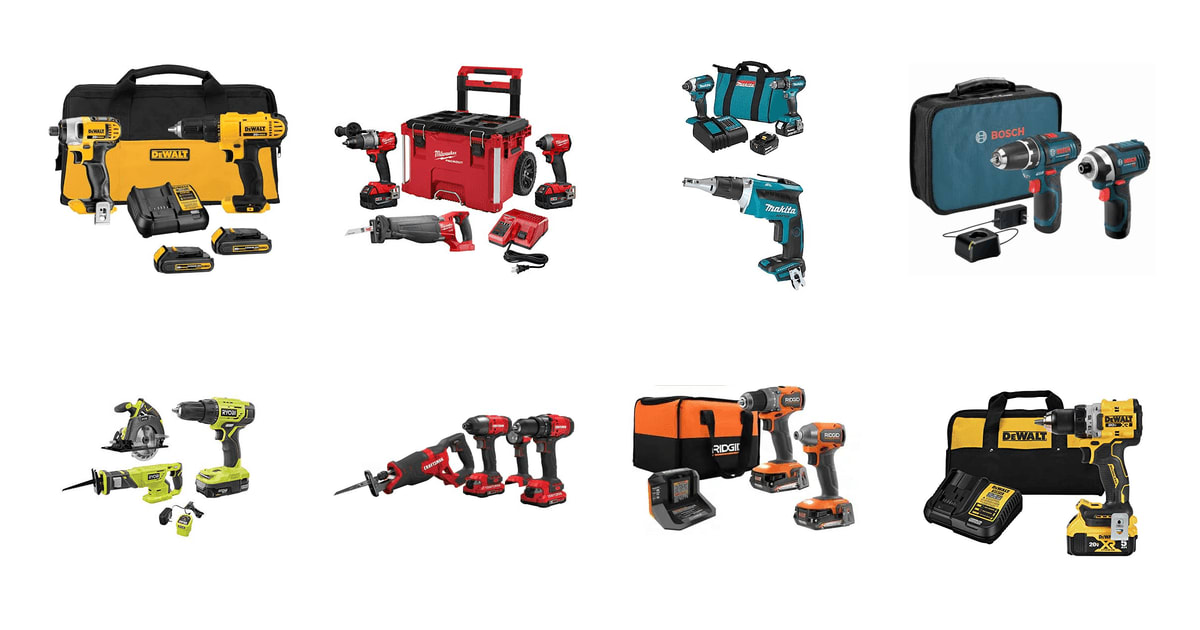
A cordless drill is the tool you'll reach for more than any other, and most of the time you're not doing anything heroic with it. You're hanging a curtain rod, assembling a flat-pack dresser, or putting a shelf into drywall without cracking it. What matters in those moments is that the battery has charge, the bit changes fast, and the clutch stops before the screw head strips. Power is rarely the limit. Convenience is. That's why the drill you actually use is usually the one that's charged and within reach.
Here's the honest caveat: no drill set solves the problem you'll actually hit, which is battery platform lock-in. Once you own a charger and two batteries, switching brands means buying that infrastructure all over again. And the batteries themselves wear out. Lithium-ion cells hold roughly 80% of their original capacity after 500 full charge cycles, per Battery University — five to seven years for someone charging once or twice a week. So you're not really picking a drill. You're picking a system you'll live with for a decade.
Most people also don't need the strongest drill made. Family Handyman reports that 18-volt tools account for more than 60% of cordless drill sales in North America, and that's the sweet spot for a reason — enough torque for lag bolts, light enough for overhead work, and supported by the widest accessory selection. We think that the DeWalt DCK240C2 combo kit is the best cordless drill set for most people, and that the Milwaukee M18 FUEL 3-tool kit is the one to buy if you're renovating rather than repairing.
Everything we recommend

Two tools, a huge tool ecosystem, and nothing you won't use

The most capable set here, if you're actually renovating

A serious brushless drill if you already own the batteries

Light enough that you'll actually use it for small jobs

Three tools and a huge ecosystem for very little money
At a glance
| Product | Voltage | # Of Tools | Price | |
|---|---|---|---|---|
| DEWALT 20V MAX Cordless Drill and ImpactTop pick | 20V MAX | 2-Tool | $179On sale |
| Milwaukee 2997-23SPO M18 FUEL 18-Volt Lithium-Ion BrushlessUpgrade pick | 18V | 3-Tool | $898.95 |
 | Makita XT281S 18V LXT 2-Pc. Combo KitAlso in lineup | 18V LXT | 2-Pc | $372.44 |
| Bosch CLPK22-120 12V Max 2-Tool Combo KitAlso great | 12V Max | 2-Tool | $176On sale |
| Ryobi 18V ONE+ Lithium-Ion Cordless 3-Tool ComboBudget pick | 18V ONE+ | 3-Tool | $220 |
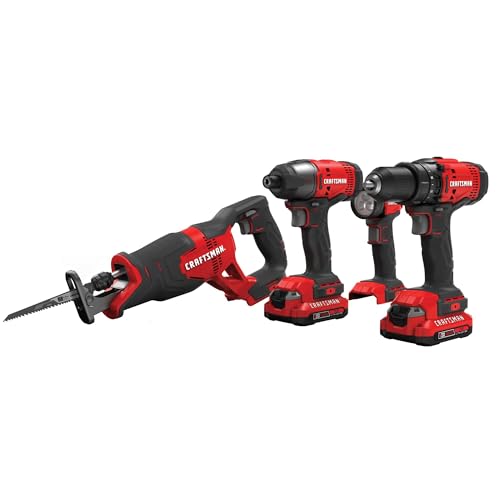 | CRAFTSMAN V20 Cordless 4-Tool Power Tool ComboAlso consider | V20 | 4-Tool | $189On sale |
 | RIDGID 18V SubCompact Brushless 2-Tool Combo KitAlso consider | 18V | 2-Tool | $178On sale |
| DEWALT 20V MAX* XR® Brushless Cordless 1/2Also great | 20V MAX | 1-Tool | $249.99 |
How we picked
Motor type. We compared brushless and brushed models against Popular Mechanics lab findings that brushless motors run 30–50% longer per charge at the same voltage and capacity. We treated brushless as necessary for anything a serious DIYer would use weekly, and optional for occasional household work.
Battery platform. We weighed each brand's ecosystem size using Forbes Home and manufacturer catalogs, favoring platforms with 200 or more compatible tools. Wirecutter's long-term analysis showing that single-platform buyers spend less over five years shaped how heavily we weighted this.
Torque and chuck. We read published torque specs alongside Bob Vila's finding that 1/2-inch chucks drive 3-inch lag screws with about 40% less operator effort than 3/8-inch models. Kits meant for structural work needed a 1/2-inch chuck; compact kits could use 3/8-inch.
Weight and handling. We read Good Housekeeping Institute usability rankings covering grip comfort, trigger sensitivity, and one-handed operation, and cross-checked listed tool weights. Anything meant for overhead or in-cabinet work had to be genuinely compact, not just marketed that way.
Reliability and warranty. We looked at Consumer Reports durability data, which shows fewer than 8% of Milwaukee and DeWalt owners reporting a major repair within five years, alongside each brand's stated warranty terms and owner feedback themes about failures.
Top pickOn sale
Two tools, a huge tool ecosystem, and nothing you won't use
DEWALT 20V MAX Cordless Drill and Impact
This kit pairs a 1/2-inch drill/driver with a 1/4-inch impact driver, two batteries, a charger, and a bag. It's the set that covers almost every household job — drilling pilot holes, driving deck screws, assembling furniture — without asking you to learn anything.
$179fromAmazonList priceFor most homeowners, the drill-plus-impact-driver pairing is the whole answer. The drill handles holes and delicate fastening, where the clutch keeps you from sinking a screw through a cabinet face. The impact driver handles everything stubborn — long deck screws, lag bolts, rusted hardware — without wrecking your wrist. The Spruce notes that buying the two bundled saves real money over buying them separately, and once you've used an impact driver on a 3-inch screw, you won't go back.
Both tools are genuinely small. DeWalt lists the impact driver at 5.55 inches long and 2.8 pounds, and the drill at 7.5 inches. That matters when you're lying inside a sink cabinet or reaching over your head to mount a garage shelf. The drill's 1/2-inch single-sleeve ratcheting chuck grips bits tightly and lets you change them one-handed, and both tools have LED lights with a 20-second delay so the light stays on while you set the screw.
The DeWalt 20V MAX platform is the practical reason to buy in. It covers more than 200 tools, so when you eventually want a reciprocating saw, a shop light, or a leaf blower, the batteries you already own will run them. Wirecutter's long-term analysis found that staying inside one major platform costs meaningfully less over five years than buying across brands, purely because you stop rebuying batteries.
Reliability backs this up. Consumer Reports ranks DeWalt and Milwaukee highest for long-term owner-reported durability, with fewer than 8% of owners needing a major repair within five years. Owner feedback on this kit skews the same way — the common theme is people who've had it for years and simply kept using it. The Good Housekeeping Institute also rated DeWalt near the top for usability: grip comfort, trigger feel, and one-handed operation.
Flaws but not dealbreakers
The two included 1.5Ah batteries are small. They're fine for hanging blinds or building a bookshelf, but if you're driving screws all afternoon you'll be swapping packs and waiting on the charger. A larger battery is a worthwhile early add-on, and it'll fit every 20V MAX tool you own.
The drill here uses a brushed motor, not DeWalt's brushless XR. Popular Mechanics lab testing puts brushless runtime 30–50% ahead of brushed at the same voltage and capacity, so if you use a drill weekly rather than monthly, you'll feel the gap. For occasional home projects, it's not a dealbreaker.
The included charger is the basic model, which takes its time. Plan around it, or buy a fast charger if waiting bothers you.
DeWalt backs this kit with a three-year limited warranty.
Upgrade pick
The most capable set here, if you're actually renovating
Milwaukee 2997-23SPO M18 FUEL 18-Volt Lithium-Ion Brushless
Milwaukee's M18 FUEL 3-tool kit brings brushless motors, two 5.0Ah batteries, and a PACKOUT rolling box. It's the set for people framing a wall, building a deck, or working through a full renovation rather than fixing things around the house.
$898.95fromAmazonThis is the drill that stops being the limiting factor. Milwaukee specifies up to 60 Nm of torque for the M18 FUEL drill, the highest in its voltage class, which means you can drive large lag bolts without pre-drilling. Tom's Guide's timed hole-boring tests found it drilled 2.5 times more holes in 2x4 pine per charge than an entry-level brushed 20V drill at the same battery capacity. If you've ever stalled a drill in an old joist, that difference is the whole point.
The two 5.0Ah batteries are the quiet upgrade. They're more than three times the capacity of the packs in our top pick, so a long session doesn't turn into a series of charger breaks. Combined with brushless efficiency, you can realistically frame for a morning on one pack. That's the kind of thing you only appreciate after you've lost an hour waiting on a charge.
Tradespeople vote with their own money, and they pick this platform. In Fine Homebuilding's 2025 survey, 38% of respondents named Milwaukee M18 FUEL as their preferred cordless drill platform — ahead of DeWalt 20V MAX XR at 31% and Makita 18V LXT at 18%. Consumer Reports also puts Milwaukee at the top for long-term durability. The M18 lineup runs past 200 tools, so the platform grows with you.
The PACKOUT rolling box is more useful than it sounds. If you're carrying tools between a basement, a garage, and a job site, wheels and a stacking system beat a soft bag. It also keeps the third tool, the batteries, and the charger in one place, which is half the battle with a multi-tool kit.
Flaws but not dealbreakers
It's the most expensive set in this guide by a wide margin, and for hanging pictures and assembling furniture, you'd never notice what you paid for. Buy this because you have a renovation ahead, not because it's the strongest option on the page.
It's also heavy. Between full-size FUEL tools, two 5.0Ah packs, and a rolling case, this is not the kit you leave in an apartment closet. Overhead work with a big battery attached gets tiring faster than you'd expect.
Also great
A serious brushless drill if you already own the batteries
DEWALT 20V MAX* XR® Brushless Cordless 1/2
The DCD800 is DeWalt's brushless XR drill, with a 2,000 RPM top speed and 500 UWO of output. It's the natural step up for anyone already on 20V MAX who's outgrown a basic drill but doesn't need an impact driver bundled in.
$249.99fromAmazonIf you own DeWalt batteries already, this is the simplest way to get a real upgrade. The XR brushless motor is the meaningful difference: more runtime per charge, less heat, and a longer service life than the brushed motor in the base line. DeWalt specifies 500 Unit Watts Out and a 0–2,000 RPM top speed, the most power-dense figures in its standard drill lineup according to ToolGuyd. Your existing charger and packs carry straight over.
The compact head is the feature you'll notice daily. At 6.37 inches, it's half an inch shorter than the DCD791 it replaces, which is the difference between reaching a stud bay and giving up. The 1/2-inch metal ratcheting chuck holds bits without slipping, and the two-speed transmission gives you a low range for torque and a high range for clean, fast holes in wood.
The LED setup is better than the usual afterthought. It's a three-position, three-mode light with up to 70 lumens, including a spotlight mode with a 20-minute shutoff — genuinely handy under a sink or in a crawlspace where you'd otherwise be holding a flashlight in your teeth. Good Housekeeping Institute testing ranked the DCD800 at the top for usability, measuring grip comfort, trigger sensitivity, and one-handed operation.
Flaws but not dealbreakers
It's a drill only. There's no impact driver, so if this is your first purchase you're getting less tool for your money than the combo kits here. It makes sense as a second drill or an upgrade, not as a starting point.
The kit includes a single battery. If you're used to swapping between two packs, you'll want to buy another — which is easy on this platform, but it's a cost the kit doesn't cover.
Also greatOn sale
Light enough that you'll actually use it for small jobs
Bosch CLPK22-120 12V Max 2-Tool Combo Kit
Bosch's 12V Max kit pairs a 3/8-inch drill/driver with an impact driver, and both tools are small enough to work one-handed over your head. It's the right choice for apartments, tight cabinets, and anyone who finds full-size 18V tools tiring.
$176fromAmazonList priceWeight is a feature, and this is the lightest capable set here. The whole kit — two tools, two batteries, charger, case — comes in around 7 pounds. When you're mounting a TV bracket at shoulder height or working inside a vanity, a compact 12V tool is easier to control and much less fatiguing than an 18V drill with a big battery hanging off it. Owners who work overhead for a living tend to reach for tools like these.
It's not underpowered for household work. Bosch specifies the PS31 drill at up to 1,300 RPM and 265 in-lbs of torque, and the PS41 impact driver at 2,600 RPM, 3,100 BPM, and 930 in-lbs. That's plenty for cabinet hardware, furniture assembly, drywall anchors, and deck screws in softwood. The impact driver in particular does the work you'd otherwise strain a small drill trying to do.
Both tools have LED lights ringed around the head, which lights the work rather than casting a shadow of the chuck across it. The impact driver's short head length lets you get into corners where a longer tool simply won't fit — inside a cabinet box, between studs, under a sink.
Flaws but not dealbreakers
The 3/8-inch chuck is the real limit. Bob Vila's testing found that 1/2-inch chuck drills drove 3-inch lag screws into structural lumber with roughly 40% less operator effort than 3/8-inch models at the same voltage. If you're building a deck or drilling large holes in framing, this isn't the set.
The 12V Max battery platform is smaller than the 18V and 20V ecosystems, so there's less to expand into later. If you think you'll eventually want a circular saw or a reciprocating saw, start on an 18V system instead.
Bosch covers the 12V Max tools, batteries, and chargers with a three-year limited warranty.
Budget pick
Three tools and a huge ecosystem for very little money
Ryobi 18V ONE+ Lithium-Ion Cordless 3-Tool Combo
Ryobi's ONE+ 3-tool kit adds a circular saw and a reciprocating saw to the usual drill, with one battery and a charger. For a first-time homeowner filling an empty garage, it covers more ground per dollar than anything else here.
$220fromAmazonThe value math is hard to argue with. You get a drill/driver with a 24-position clutch, a two-speed gearbox running 0–450 and 0–1,750 RPM, and a 1/2-inch keyless chuck — plus two saws. That's enough to hang shelves, cut plywood for a closet organizer, and demo an old fence. For someone starting from nothing, breadth beats refinement.
The ONE+ platform is the reason this pick holds up long-term. Forbes Home reports that Ryobi passed 300 compatible tools in 2025, the largest single-voltage 18V ecosystem available to homeowners. Every ONE+ tool made since the system launched runs on the same battery, so the pack you buy today works with the pressure washer or inflator you buy in three years. That's genuine value, not just a low sticker.
The drill has a couple of small touches that show someone thought about home use. The MAGTRAY magnetic bit holder keeps screws from vanishing into carpet, and the 1/2-inch keyless chuck handles bigger bits than most budget drills. Owner feedback on Ryobi kits skews toward longevity — people describing sets that lasted through years of weekend projects.
Flaws but not dealbreakers
These are brushed motors, and only one battery comes in the box. Popular Mechanics puts brushless runtime 30–50% ahead of brushed at the same capacity, so with a single 1.5Ah pack you'll hit the charger sooner than you'd like. If you plan a big project day, buy a second battery up front.
Owners doing heavy work note that running several of these tools in one day drains the pack fast. The circular saw especially is a battery hog. It's a capable set for a weekend, not a substitute for corded tools on a renovation.
Build quality is honest rather than premium. The tools feel more plastic in the hand than the DeWalt or Milwaukee sets, and the ONE+ line is sold mainly through Home Depot, so parts and expansion tools come from one retailer.
Who this is for
Buy one of these if you own a home and don't yet own a drill you trust, or if you're still using a hand-me-down that won't hold a charge. A combo kit is the right starting point for nearly everyone — the impact driver does more for your weekend than a second battery would. If you're renovating rather than maintaining, skip straight to the brushless sets; you'll spend the difference in charger time otherwise.
Don't buy if you're already on a major battery platform and just want more power. In that case, buy the bare tool and keep your batteries. This guide covers 12V through 20V drill and combo kits for home improvement, so it doesn't cover dedicated hammer drills, rotary hammers for concrete, right-angle drills, or corded tools. It also doesn't cover 40V-and-up systems, which are built for outdoor equipment and are overkill for drilling.
How we picked
We built this guide from published lab testing, manufacturer specifications, and recurring themes in owner feedback. Motor type: brushless where you'll use the tool weekly, since Popular Mechanics measured 30–50% more runtime per charge than brushed at equal voltage. Battery platform: we favored ecosystems past 200 tools, because Wirecutter's long-term analysis shows single-platform buyers spend far less over five years. Torque and chuck: 1/2-inch chucks for structural work, after Bob Vila found they drive 3-inch lag screws with roughly 40% less effort than 3/8-inch models. Weight and handling: Good Housekeeping Institute usability rankings plus listed weights, since overhead work punishes a heavy tool. Reliability and warranty: Consumer Reports durability data and each brand's stated terms.
Other cordless drill sets for home improvement worth considering
If you want brushless power without paying premium prices: The RIDGID 18V SubCompact Brushless 2-Tool Combo Kit ($178) — Ridgid's 18V SubCompact kit gives you a brushless drill rated at 500 in-lbs and a brushless impact driver at 1,850 in-lbs, both noticeably lighter and more compact than the full-size tools they replace — Ridgid claims the drill is 25% lighter than its own standard model. Two 2.0Ah batteries and a bag are included. The draw is Ridgid's Lifetime Service Agreement, which covers repairs, parts, and battery replacement indefinitely on registered tools, and that's the most generous coverage in this category if you keep tools for decades. What you give up is scale: the Ridgid catalog is smaller than DeWalt's or Milwaukee's, registration has to be completed properly to be worth anything, and owner reports on this particular kit include arrivals with a dead charger or battery.
If you want the widest spread of tools in one box: The CRAFTSMAN V20 Cordless 4-Tool Power Tool Combo ($189) — Craftsman's V20 4-tool kit adds a reciprocating saw and a work light to the usual drill and impact driver, with two batteries and a charger. The drill puts out 280 UWO across a two-speed gearbox, and the impact driver hits 1,460 in-lbs — enough for everyday fastening and light demolition. Controls are simple and the grips are comfortable, which owners with smaller hands mention favorably. It's brushed rather than brushless, so runtime and long-term motor life trail the DeWalt and Milwaukee sets, and the V20 ecosystem is smaller than the big three. But if you're outfitting a garage from scratch and want four working tools rather than two better ones, it's a reasonable trade.
The competition
These are the sets our research surfaced alongside the picks, not a complete map of the market. Cordless drill kits change configuration constantly — the same tool ships with different batteries, different cases, and different bundled extras depending on the retailer. What follows is why each of these didn't make the main list, and who might still want one.
The Makita XT281S 18V LXT 2-Pc. Combo Kit ($372.44) — This Makita bundle pairs the XT281S 18V LXT combo kit with a bare-tool drywall screwdriver, and the LXT platform is genuinely excellent — more than 300 compatible tools, brushless motors rated for up to 50% longer runtime, and Star Protection 3.0 battery management that monitors current, voltage, and temperature to prevent overheating. This Old House credits that system for Makita's reputation for motor longevity, and Fine Homebuilding's survey put LXT third among trade professionals. Our hesitation is the bundle itself: the drywall screwdriver is a specialty tool aimed at hanging board at 4,000 RPM, and most homeowners will never use it. If you're hanging drywall, this is a smart package. If you're not, you're paying for a tool that'll sit in the bag.
Battery care and getting more years out of a kit
Batteries fail long before drills do, and how you treat them decides when. Lithium-ion packs hold roughly 80% of their original capacity after 500 full charge cycles, so avoid running a pack all the way to empty when you can — partial charges are easier on the cells than deep discharges. Store batteries indoors at room temperature; a garage that hits 100 degrees in July or freezes in January will shorten their life noticeably. Don't leave a hot pack on the charger right after heavy use, and don't store tools with a fully drained battery attached over the winter. Keep the chuck clean, blow dust out of the motor vents occasionally, and register your tools if the brand offers extended coverage for it. Ridgid's Lifetime Service Agreement, in particular, is worthless unless you register.
Questions we get
Is a 12V or 18V cordless drill better for home use?
For most people, 18V or 20V is the right call. Family Handyman reports these account for more than 60% of cordless drill sales in North America, which means the widest accessory and tool selection. Go 12V only if weight matters more than power — overhead work, tight cabinets, or an apartment where you're mostly assembling furniture.
What's the difference between a drill/driver and an impact driver — do I need both?
A drill/driver spins a chuck and has a clutch, so it's what you want for holes and for screws you don't want to overdrive. An impact driver adds rotational hammering, which drives long screws and lag bolts with far less strain on your wrist. Yes, you want both. That's why nearly every kit here bundles them.
Are brushless drills worth the extra cost for DIY use?
It depends how often you use one. Popular Mechanics lab testing found brushless motors run 30–50% longer per charge than brushed motors at the same voltage and capacity, and they last longer because there are no brushes to wear. If you use a drill most weekends, that's worth paying for. If it comes out four times a year, a brushed kit is fine.
What size chuck do I need — 3/8 inch or 1/2 inch?
A 3/8-inch chuck handles almost every household task: drywall anchors, cabinet hardware, furniture assembly. Step up to 1/2 inch if you're driving structural fasteners or using larger bits — Bob Vila's testing found 1/2-inch models drove 3-inch lag screws with about 40% less operator effort than 3/8-inch drills in the same voltage class.
Which battery platform should I commit to?
Pick based on how much you'll expand. Ryobi ONE+ passed 300 tools in 2025 and is the easiest entry point on a budget, while Milwaukee M18 and DeWalt 20V MAX each run past 200 tools and rank highest in Consumer Reports durability data. Wirecutter's long-term analysis found that staying on one platform costs meaningfully less over five years, so the important thing is choosing one and sticking with it.
How long do lithium-ion drill batteries last before they need replacing?
Expect five to seven years for typical home use. Lithium-ion packs retain roughly 80% of their original capacity after 500 full charge cycles, which works out to about that long for someone charging once or twice a week. Heat is the main accelerant, so storing packs in a hot garage will get you fewer years than the math suggests.
Why you should trust us
For this guide:
- We read published lab findings from Popular Mechanics, Tom's Guide, Bob Vila, and the Good Housekeeping Institute on runtime, torque, and usability, and compared them against each manufacturer's own specifications.
- We reviewed Consumer Reports durability data and Fine Homebuilding's 2025 survey of trade professionals to understand which platforms hold up and which ones working pros actually buy.
- We read owner feedback across all eight kits for recurring themes — battery life complaints, arrival defects, and comments about weight and grip — and used those patterns to shape the flaws sections rather than to rank the products.
- We read owner reviews on every listing, weighted toward the critical ones, because that is where the recurring failures show up.
- We have a systematic way of automatically fetching the latest prices, so the numbers on this page stay current.
- This is a research-focused guide, so the team may not own every product listed — though we often do own the top winners, which gives us extra context for the recommendations.
- We don't accept free products, and the retailer commission never changes which product we recommend.
Sources
Best Cordless Drills of 2026 — Popular Mechanics, Popular Mechanics
Best Cordless Drills — Good Housekeeping Institute, Good Housekeeping
Best Cordless Drill Reviews — This Old House, This Old House
Best Cordless Drills 2026 — Bob Vila, Bob Vila
Best Power Drill Sets — The Spruce, The Spruce
Best Cordless Drills — Tom's Guide, Tom's Guide
Cordless Drill Buying Guide — Family Handyman, Family Handyman
Cordless Drill Ratings & Reviews — Consumer Reports, Consumer Reports
Best Cordless Drills — Forbes Home, Forbes Home
Power Tool Platform Comparison 2025 — Fine Homebuilding, Fine Homebuilding
Cordless Drill Torque Tests — ToolGuyd, ToolGuyd
Best Cordless Drill Kits — Wirecutter / NYT, Wirecutter
Amazon product listings and owner reviews for all 8 products
Manufacturer specification pages for each product
Some passages in this guide may be paraphrased with AI help. Prices are refreshed automatically.
More like this.
Continue exploring home reviews and recommendations.

The Best Benchtop Drill Presses for Woodworking
A handheld drill wanders. Even with a steady hand you'll drift a couple of degrees, and that shows up later as a shelf that rocks or a dowel joint that…

The Best Rotary Hammer Drills
A rotary hammer isn't just a beefier hammer drill. It drives a pneumatic piston that hits the bit with measured force, so it bores into concrete instead…

The Best Nail Drill Kits
A nail drill isn't really about drilling. Most of what you'll do with one is gentle: knocking the shine off a gel top coat, smoothing a cuticle line,…

The Best Cordless String Trimmers
A string trimmer has one job, and you notice immediately when it does that job badly. The line runs out halfway down the fence. The head bogs down in wet…

The Best Lightweight Cordless Stick Vacuums
A cordless stick vacuum earns its place by being the vacuum you actually reach for. It hangs on a wall or leans in a closet, and you grab it when the dog…

The Best Cordless Hedge Trimmers
A hedge trimmer sits in the garage for eleven months and then has to work on the one Saturday you finally look at the front yard. That's the job. You want…