The Best Gun Safe Dehumidifiers
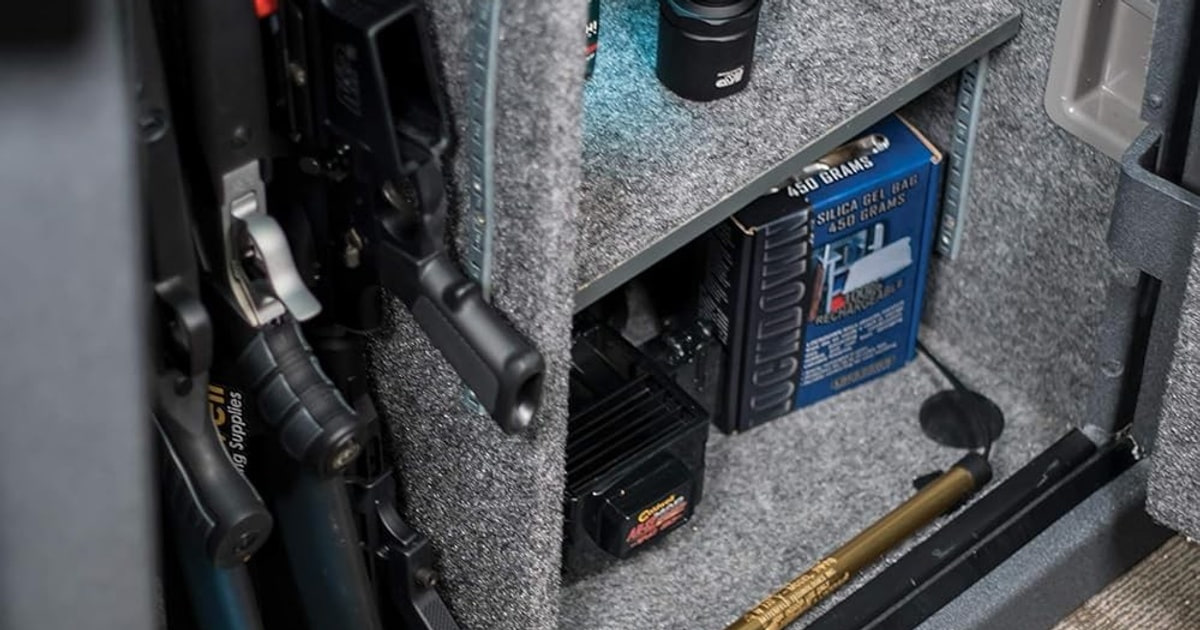
A gun safe is a sealed steel box, and sealed steel boxes trap moisture. Open the door on a muggy afternoon and you've just loaded the interior with damp air that has nowhere to go. Give it a season and you get pitting on a blued barrel, a gritty trigger group, or a rust bloom on a receiver you can't polish out. The fix costs less than a box of ammo. It's either a low-watt heating rod that keeps the interior a few degrees warmer than the room, or a tub of silica gel that soaks up water and gets dried out again.
Here's the honest part: none of these things tell you whether they're working. A rod warms up and stays warm whether your safe sits at 35% or 65% relative humidity. A desiccant unit changes color when it's saturated, which tells you it's full, not whether it kept up. Nothing in this category measures anything. You need a separate hygrometer inside the safe, and you need to actually look at it. Target 40–50% relative humidity — above 60% rusts bare steel, and below 40% dries out wood stocks until they crack.
The choice really comes down to one question: does your safe have a knockout hole and an outlet nearby? If yes, buy an electric rod and stop thinking about it. If no, buy a renewable desiccant and accept a recharge cycle every few weeks. We think that the 24" Original GoldenRod is the best gun safe dehumidifier for most people, and that the Eva-Dry E-333 is the one to buy if your safe has no cord path or you're renting and can't drill one.
Everything we recommend

Plug it in once and never think about it again

The cord-free answer when drilling isn't an option

Same heat, same certification, much less money
The right size for a pistol box or nightstand safe
At a glance
| Product | Coverage Area | Rod/Unit Length | Price | |
|---|---|---|---|---|
| 24" Original GoldenRod DehumidifierTop pick | — | 24 in | $56.60On sale |
| Eva-Dry Wireless Mini DehumidifierAlso great | 333 cu ft | 4.75x1.25x6.25 in | $14.97On sale |
 | Lockdown Golden Rod DehumidifierAlso consider | 200 cu ft | 18 in | $44.99 |
 | Eva-Dry E-500 Renewable Dehumidifier 2-PackAlso consider | 6–8 oz Capacity | 6x8x2.5 in | $56.46 |
| MAXSafes Gun Safe Dehumidifier RodAlso great | — | 12 in | $16.99On sale |
 | Hornady 95902 Dehumidifier CanisterAlso consider | — | 4.25x5.1x6 in | $29.95 |
 | wisedry 2 x 500 Gram [2.2 lbs]Also in lineup | 150g(max 180g) Absorb | 500 Gram | $20.74On sale |
| MAXSafes Gun Safe Dehumidifier RodBudget pick | — | 24 in | $28.99 |
How we picked
Right technology. We sorted the category into electric rods and renewable desiccants, since the two solve the same problem for different installations. A product had to be clearly the better answer for one scenario, not a vague compromise for both.
Coverage honesty. We compared manufacturer coverage ratings against real safe volumes: under 100 cubic feet for handgun boxes, 100–200 for full-size long gun safes, more for vault rooms. Products that overstate their reach get owners into trouble.
Safety certification. For anything that stays plugged in permanently inside a steel box holding ammunition, we treated an ETL or UL listing as a requirement, not a bonus. Uncertified imports didn't make the shortlist.
Maintenance burden. We weighed how often a desiccant needs recharging, how long the recharge takes, and whether the unit tells you when it's saturated. Owner feedback consistently points to forgotten recharge cycles as the common failure.
Track record. Published reviews and long-running owner reports carried weight here, because this is a product you install once and leave running for years. Decades of field use is evidence a spec sheet can't provide.
Top pickOn sale
Plug it in once and never think about it again
24" Original GoldenRod Dehumidifier
A 24-inch resistive heating rod that warms your safe's interior a few degrees above room temperature, which is enough to keep condensation off steel. There's nothing to recharge, refill or replace, and the design hasn't meaningfully changed since 1958.
$56.60fromAmazonList priceThe whole appeal is that you stop paying attention. Desiccant units need a recharge every few weeks, and if you forget one cycle during a wet stretch, your firearms sit in humid air. A rod doesn't have that failure mode. It draws about 25 watts around the clock — less than a night light — and keeps the interior a few degrees above ambient indefinitely. Owners who switch from silica gel packs to a rod describe the same thing: they never think about safe humidity again.
The physics is simple enough that it doesn't break. Warm air holds more moisture than cool air, so nudging the interior 3–5°F above the room drops relative humidity below the point where water condenses on cold metal. No fans, no filters, no chemicals, no moving parts. That's why gunsmiths report rods still running after twenty and thirty years. When one does fail, it's an electrical fault, not wear.
It covers a full-size safe, not just a pistol box. The 24-inch length is rated for 200-plus cubic feet, which handles most long gun safes and tall cabinets. Sizing matters more than people expect. An undersized rod in a big safe runs flat out and still leaves warm, damp pockets near the top — exactly where barrels sit. If you're between sizes, go longer. An oversized rod in a small safe costs you a few extra watts and nothing else.
Installation is a ten-minute job with no tools. You thread the cord through the safe's knockout hole, snap the rod into its brackets along the interior floor, plug it in, and walk away. The rod gets warm to the touch within minutes — noticeably warm, not hot enough to hurt you if you brush it. That warmth is the only feedback you get that it's working, which is why we'd pair it with a hygrometer.
Flaws but not dealbreakers
No outlet, no GoldenRod. This is the one hard limit. If your safe lives in a garage with no receptacle within reach, or in a bedroom closet where running a cord looks ridiculous, this product simply can't help you. You'd need an extension cord or a desiccant unit instead.
You're paying a real premium for the name. The MAXSafes 24-inch rod works on the same principle, carries the same ETL safety listing, and costs roughly half as much. What you get for the difference is a track record — decades of these things running in real safes without incident. For an heirloom collection that's worth something. For a first safe, it's a reasonable thing to skip.
It won't dry out an already-dry safe, but it also won't stop you from over-drying one. If you live in Arizona or Nevada and your house sits below 40% relative humidity most of the year, adding heat to the safe can push wood stocks toward cracking. Measure before you install, not after.
Also greatOn sale
The cord-free answer when drilling isn't an option
Eva-Dry Wireless Mini Dehumidifier
A cordless silica gel unit that sits or hangs inside the safe and pulls moisture out of the air with no power at all. Colored beads turn pink when it's saturated, and you plug the whole unit into a wall for eight to ten hours to reset it.
$14.97fromAmazonList priceIf you rent, or your safe has no knockout hole, this is the one that works. No drilling, no cord routing, no outlet near the safe. You put it inside and close the door. That covers a lot of people — apartment dwellers, anyone with a safe bolted into a closet, anyone who bought a cabinet that never had a knockout to begin with.
The color indicator takes the guesswork out. The silica gel beads start blue and turn pink as they saturate. You're not tracking dates on a calendar or weighing anything. You glance at the window, and if it's pink, it's time to recharge. That's a genuinely better maintenance experience than desiccants that give you no signal at all.
Coverage and cycle length are realistic for a small to mid-size safe. Eva-Dry rates it for spaces up to 333 cubic feet with an absorbing capacity around six ounces, and 20–30 days per cycle in moderate conditions. In coastal Florida or along the Gulf in summer, plan on closer to 10–14 days. Watch the beads rather than the calendar and you'll be fine.
It's non-toxic and there's nothing to spill. No liquid reservoir to knock over onto a shelf of ammo, no chemicals to worry about with kids or pets in the house. The unit is sealed and self-contained, and Eva-Dry backs it with a long service life claim — up to a decade of recharge cycles.
Flaws but not dealbreakers
Recharging means the safe goes unprotected for most of a day. Eight to ten hours plugged into a wall outlet, and during that window nothing is managing moisture inside the safe. It's not a crisis, but if you're in a genuinely wet climate, consider a second unit so one is always in the safe.
One unit isn't enough for a big rifle safe. Above 333 cubic feet it saturates too fast to hold a steady humidity level, and you'll be chasing pink beads every week or two. Owners of 24-gun safes should look at the E-500 two-pack instead.
Eva-Dry backs the E-333 with a five-year warranty.
Budget pick
Same heat, same certification, much less money
MAXSafes Gun Safe Dehumidifier Rod
A 24-inch electric rod that does exactly what the GoldenRod does — resistive heat, a few degrees above ambient — for roughly half the outlay. It's ETL-certified, mounts vertically or horizontally, and the plug tip pops off for easier cord routing.
$28.99fromAmazonYou're buying the same physics for less. Resistive heating is resistive heating. This rod warms the safe interior slightly above room temperature to keep relative humidity below the condensation point, which is precisely what the GoldenRod does. Cover a full-size rifle safe with it and you get the same maintenance-free, no-consumables arrangement.
ETL certification is the thing that separates this from a random import. ETL is an independent North American safety listing recognized as equivalent to UL. In a product you'll leave plugged in permanently inside a metal box full of ammunition, that matters more than almost any other spec. Plenty of cheap rods on the market carry no listing at all. Skip those.
The mounting hardware is more flexible than you'd expect at this price. Snap-on brackets let you run it vertically along a side wall or horizontally across the floor, so you can work around bolted-down shelving and floor safes. The removable plug tip is the detail that saves you swearing — pull the plug off, feed the bare cord through a tight knockout hole, snap the plug back on.
For a first safe, this is the sensible starting point. If you just bought a rifle safe and you're trying to protect what's in it now rather than optimize for the next thirty years, buy this and put the difference toward a decent hygrometer. It's the aluminum-bodied, lightweight, plug-and-forget version of the category.
Flaws but not dealbreakers
There's no long field record behind the brand. MAXSafes is new relative to the GoldenRod, and ETL approval verifies electrical safety, not that a rod will still be warming your safe in 2050. If you're protecting firearms with real sentimental or collector value, the older name is worth the premium.
Like any rod, it's useless without an outlet. Same limitation as every electric option here. No knockout hole and no receptacle means you're shopping for desiccant instead, no matter how good the rod is.
MAXSafes covers the rod with a one-year unconditional warranty.
Also greatOn sale
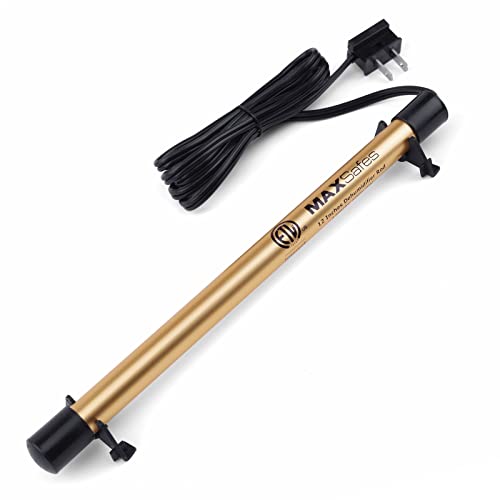
The right size for a pistol box or nightstand safe
MAXSafes Gun Safe Dehumidifier Rod
A 12-inch version of the same ETL-certified electric rod, sized for safes under 100 cubic feet. It fits handgun cabinets and quick-access boxes where a full-length rod physically won't go, and it draws even less power.
$16.99fromAmazonList priceSmall safes need a small rod, not a scaled-down big one. Quick-access handgun safes, pistol cabinets and nightstand biometric boxes rarely have room for a 24-inch rod along the floor. This one is a foot long and an inch tall, so it tucks in along an edge without eating the space where your firearm actually sits.
It's maintenance-free in the same way the bigger rods are. Plug it in, leave it. No beads to watch, no oven cycle, no weighing anything. For a safe you open every day — which is what most small safes are — that constant, uninterrupted operation matters more than it does for a rifle safe you visit twice a month.
The ETL listing carries over. Same independent electrical safety certification as the 24-inch model, same aluminum construction, same snap-on brackets and removable plug tip for threading the cord. In a category full of uncertified no-name rods, that's the line worth holding.
The power draw is close to nothing. A 12-inch rod runs at lower wattage than the 24-inch versions, so the monthly cost of leaving it on permanently is negligible. There's no argument for unplugging it seasonally, and unplugging it is how people end up with rust.
Flaws but not dealbreakers
Coverage tops out under 100 cubic feet. Put this in a full-size long gun safe and it runs continuously without ever getting ahead of the moisture, leaving humid pockets near the top of the cabinet where barrels are most exposed. Match the rod to the safe volume before anything else.
Newer brand, no decades-long record. The same caveat as the 24-inch model applies. The safety certification is real; the longevity data isn't there yet.
MAXSafes covers the rod with a one-year unconditional warranty.
Who this is for
Buy one of these if you keep firearms in a sealed safe or cabinet and your home's relative humidity regularly runs above 50% — which covers most of the Southeast, the Gulf Coast, the Pacific Northwest and a lot of basements everywhere else. It also applies if your safe lives in a garage, since garages swing hard with the weather. The cost of any product here is trivial next to refinishing a pitted barrel or replacing a corroded trigger group.
You may not need one if you live somewhere genuinely dry, like Arizona, Nevada or the high desert, and your interior humidity sits below 40% year-round. In that case a dehumidifier can dry wood stocks and grips until they crack. Measure with a hygrometer for a few weeks before you buy anything. This guide covers in-safe dehumidifiers only — rods and desiccants that live inside the enclosure. Room and basement dehumidifiers are a useful complement but never a substitute, since every door opening reloads the safe with room air. And no product here measures humidity; you still need a separate hygrometer.
How we picked
Right technology: We split the field into electric rods and renewable desiccants and judged each on the installation it's actually meant for, rather than pretending one type suits everyone. Coverage honesty: We matched manufacturer cubic-foot ratings against real safe sizes, because an undersized rod in a big safe leaves damp pockets right where barrels sit. Safety certification: Anything meant to stay plugged in permanently had to carry an ETL or UL listing — no exceptions for uncertified imports. Maintenance burden: For desiccants we looked at recharge frequency, recharge time and whether the unit signals saturation, since owners report forgotten cycles as the usual point of failure. Track record: Published reviews and long-running owner reports counted heavily for a product you install once and leave alone for years.
Other gun safe dehumidifiers worth considering
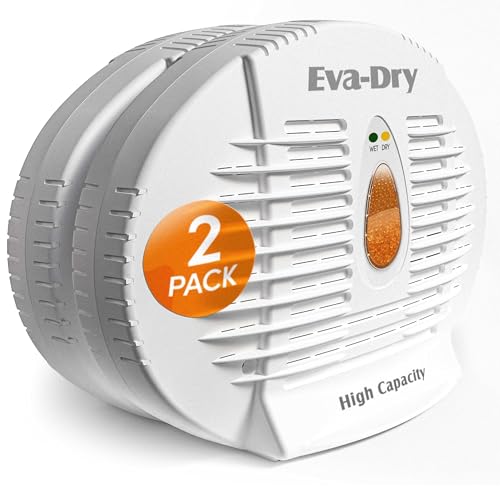
If you want cord-free coverage for a large rifle safe: The Eva-Dry E-500 Renewable Dehumidifier 2-Pack ($56.46) — One silica gel unit saturates too fast in a 24-gun safe or a converted vault room, and you end up recharging constantly. This two-pack gives you a pair of renewable units — each rated in the six-to-eight-ounce capacity range — working in tandem, and Eva-Dry claims up to ten years of service per unit with proper recharging. The units are silent, need no power while working, and require no drilling. What you give up is convenience: both units come out of the safe when it's time to recharge, which means the safe sits unprotected during that window unless you stagger them. If you have an outlet, a rod does this job better with less fuss.
If you want a rod from a gun-storage brand with thoughtful installation details: The Lockdown Golden Rod Dehumidifier ($44.99) — The Lockdown Golden Rod comes from Battenfeld Technologies, which builds nothing but gun storage and range gear, and it shows in the small stuff. The 18-inch version covers up to 200 cubic feet, runs on standard 110–120V, and ships with a six-foot cord — long enough to reach an outlet in most room layouts without an extension. The quick-plug attachment pops off so you can thread the bare cord through a tight knockout hole, and snap-on legs let it stand freely or mount to brackets. It's a good rod. It just costs close to the GoldenRod without the decades of field history, which is why it sits here rather than among the picks.
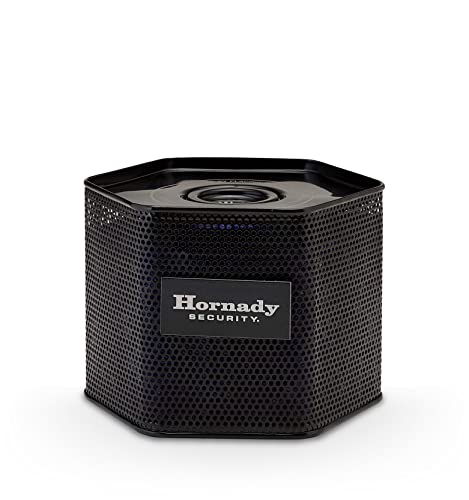
If your safe has awkward shelving and no room for a rod: The Hornady 95902 Dehumidifier Canister ($29.95) — Horizontal pistol boxes and heavily shelved safes often have no clear floor run for a rod. This Hornady canister just sits on a shelf — no brackets, no cord, no mounting hardware — and the desiccant crystals change color when they're saturated, so you know when to act. Hornady's reputation in firearm accessories is a fair reason to trust that the formulation suits gun storage rather than generic closet duty. The catch is the recharge: a 300°F oven for up to four hours until the granules turn blue. That's a far bigger commitment than plugging a unit into a wall, and it ties up your oven. Capacity is also modest next to bulk silica gel bags.
The competition
This is what our research surfaced across both technologies, not a census of everything sold. The remaining product below is a legitimate option that lost out to a pick for specific reasons, and it may still be the right call depending on your climate and how you like to handle maintenance.
The wisedry 2 x 500 Gram [2.2 lbs] ($20.74) — The wisedry two-pack gives you a full kilogram of rechargeable silica gel in two 500-gram bags, and each bag pulls in up to 150 grams of moisture before it needs reactivating. That's more raw absorption capacity than any canister here, and the recharge is the fastest in the category — 10 to 16 minutes in a microwave, versus four hours in an oven for the Hornady or eight to ten hours on a wall outlet for the Eva-Dry units. Reactivate carefully and the bags go more than ten cycles. It lost to the picks on feedback: there's no color indicator, so the only way to know a bag is saturated is to weigh it against a dry baseline, and wisedry specifically warns against recharging below 650 grams. That's a routine most owners won't keep up. If you live somewhere brutally humid, cycle desiccant often, and don't mind a kitchen scale, the speed and capacity are genuinely useful.
Installation and upkeep
Most modern safes have a knockout hole near the base — a small plugged opening meant for exactly this. Pop the plug, feed the cord through, then reseat the plug around the cord to limit airflow. Pull the removable plug tip first if the hole is tight. Mount the rod low, along the floor, since warm air rises and you want it circulating past everything above it. Check it after an hour: it should feel warm, not hot. For desiccants, watch the indicator rather than the calendar — cycles run 20 to 30 days in moderate conditions and half that on a humid coast. And put a hygrometer inside no matter which type you buy. Aim for 40–50% relative humidity, and check it monthly for the first season so you learn how your safe actually behaves.
Questions we get
What size dehumidifier rod do I need for my gun safe?
Match the rod length to your safe's interior volume. A 12-inch rod suits safes under 100 cubic feet, meaning most handgun and pistol cabinets, while an 18- to 24-inch rod handles 100–200 cubic feet, which covers most full-size long gun safes. Above 200 cubic feet, use multiple units. When you're between sizes, go bigger — an oversized rod in a small safe costs a few extra watts, but an undersized rod leaves humid pockets where rust forms unnoticed.
How does a dehumidifier rod actually work?
It raises the air temperature inside the safe about 3–5°F above the room. Warm air holds more moisture than cool air, so that small difference keeps relative humidity from reaching the dew point where water condenses onto cold metal. There are no chemicals, fans or consumables involved — it's resistive electrical heating, the same principle as a baseboard heater at a tiny fraction of the wattage.
Electric rod or silica gel — which should I get?
If you have a knockout hole and an outlet nearby, get a rod. It needs no maintenance, no recharge cycles, and runs indefinitely once plugged in. Desiccant units are the right answer only when you can't route a cord, whether because you rent, your safe has no knockout, or the outlet is too far. The trade for going cord-free is a recharge every 20–30 days in moderate climates and more often in humid ones.
What humidity level should I target inside a gun safe?
Aim for 40–50% relative humidity. Below 40%, wooden stocks, grips and furniture dry out and eventually crack. Above 60%, bare steel — barrels, receivers, magazine springs, trigger groups — can develop surface rust within a single humid season. The midpoint around 50% is the safest place to sit, and any properly sized rod or desiccant can hold it.
Do I still need one if my safe has a rubber door seal?
Yes. A seal slows moisture entry but can't stop it, and it does nothing about the air you let in yourself. Every time you open the door, a fresh charge of room air enters — in a humid climate that can lift interior humidity by 5 to 10 points in one opening. A dehumidifier counteracts that daily loading; a passive seal just delays it.
Can I use a room dehumidifier instead?
Not as a replacement. A room or basement unit controls the air around the safe, not the sealed microclimate inside it, and every door opening reloads the interior regardless of how dry you keep the room. Only something placed inside the safe manages the specific air volume touching your firearms. A room dehumidifier is a genuinely useful complement, since it lowers the humidity of the air that gets in — but it can't do the job alone.
Why you should trust us
For this guide:
- We read manufacturer specifications for every product here, comparing stated coverage ratings, absorption capacity, recharge times and safety certifications side by side.
- We reviewed published firearm-press coverage of safe humidity control, including guidance on the 40–50% relative humidity target for firearm storage.
- We looked across owner feedback themes for each unit to identify the failure modes buyers actually run into, particularly around recharge intervals and coverage mismatches.
- We read owner reviews on every listing, weighted toward the critical ones, because that is where the recurring failures show up.
- We have a systematic way of automatically fetching the latest prices, so the numbers on this page stay current.
- This is a research-focused guide, so the team may not own every product listed — though we often do own the top winners, which gives us extra context for the recommendations.
- We don't accept free products, and the retailer commission never changes which product we recommend.
Sources
How to Keep Guns from Rusting in a Safe — Recommends 50% RH target and electric rods as most reliable long-term solution, American Rifleman (NRA Publications)
Safe Firearm Storage — Authoritative humidity guidelines (40–50% RH) and climate control recommendations for firearm storage, National Shooting Sports Foundation (NSSF)
GoldenRod Original Dehumidifier Rod Official Specifications — 25W draw for 24-inch rod; coverage ratings; manufactured since 1958, Goldenrod / Barrow Industries
Best Gun Safe Dehumidifiers — Editor-tested roundup with humidity readings before and after rod installation across multiple safe sizes, Guns and Ammo
Amazon product listings and owner reviews for all 8 products
Manufacturer specification pages for each product
Some passages in this guide may be paraphrased with AI help. Prices are refreshed automatically.
More like this.
Continue exploring home reviews and recommendations.

The Best Caulking Guns
Caulking is one of those jobs where the tool does more of the work than you'd think. A cheap gun with a ratchet rod stutters, oozes after you let go, and…

The Best Basement Dehumidifiers
A damp basement announces itself before you see it. The air feels heavy on the stairs, cardboard boxes go soft at the corners, and everything down there…

The Best Dehumidifiers for Home Use
Damp air doesn't announce itself. You notice the musty smell in the basement stairwell, or the cardboard boxes that feel soft at the corners. A…

The Best Massage Guns
A massage gun is a small motor that punches a rubber ball into your muscles a couple thousand times a minute. That sounds silly until you've had a calf…

The Best Basement Dehumidifiers
Basement damp announces itself slowly. First there's a smell you notice halfway down the stairs. Then the cardboard boxes go soft, the rug feels clammy,…

The Best HVLP Spray Guns for Automotive Painting
Spraying a car isn't like painting a wall. The gun you hold decides how much of that expensive basecoat lands on the panel instead of drifting into the…