The Best Dehumidifiers for Home Use
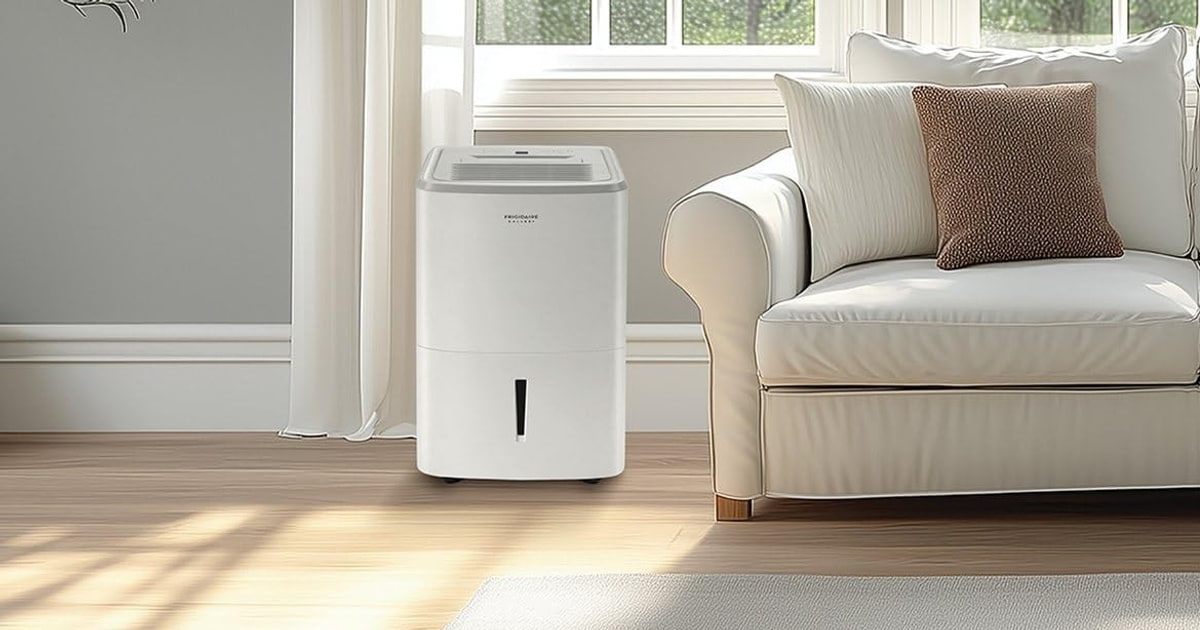
Damp air is easy to ignore until it isn't. You smell it first — that flat, earthy basement smell that gets into stored boxes and winter coats. Then you notice the sweating windows, the soft bottom of a cardboard box, the towels on the laundry room rack that never quite dry. Keeping indoor humidity somewhere between 30 and 50 percent solves most of that. A dehumidifier does it by pulling moisture out of the air and sending it to a bucket or a hose, hour after hour.
No dehumidifier is a silent appliance. Every one here runs a compressor and a fan, so you'll hear a hum through the floor if the unit sits under a bedroom. They all give off heat too, which makes a closed basement a few degrees warmer than it was. And none of them fix water coming in through a wall or a bad grade outside. If you get standing water after every storm, you need drainage work first. A dehumidifier only manages what's left.
So think about your space before you think about features. Square footage matters, but how wet the room is matters more. A musty spare bedroom and a basement with white mineral crust on the block walls are different problems. Drainage matters just as much, because a hose beats emptying a bucket twice a day. We think that the Frigidaire 50 Pint Dehumidifier w/Wifi is the best dehumidifier for home use for most people, and that the Midea Cube 50 Pint Dehumidifier is the one to buy if you want to empty a bucket far less often.
Everything we recommend

Enough muscle for most basements, with app control that works

A huge tank and a shape that folds down when you're done
More capacity and lower running costs, if the space is soaked

Quiet, light and right-sized for one damp room
At a glance
| Product | Capacity | Coverage Area | Price | |
|---|---|---|---|---|
| Frigidaire 50 Pint Dehumidifier w/WifiTop pick | 50 Pint | — | $301.40On sale |
| Midea 50 Pint Dehumidifier for BasementRunner-up | 50 Pint | 4,500 Sq Ft | $219.99 |
| 4500 Sq.Ft Energy Star Most Efficient 2025Upgrade pick | 80 Pint/Day | 4500 Sq Ft | $224.97On sale |
 | Frigidaire 50-Pint Portable Dehumidifier with Wi-Fi andAlso in lineup | 50 Pint | — | $299 |
| Waykar 2000 Sq. Ft. Energy Star 2025Budget pick | 30 Pints | 2000 Sq Ft | Check price |
How we picked
Capacity vs. dampness. We matched each unit's rated pints per day to the kind of space it's honestly meant for, using manufacturer coverage ratings under wet rather than merely damp conditions. Anything claiming whole-basement coverage had to be rated at 50 pints or more.
Drainage that works. We looked for a continuous drain port and a tank big enough to be tolerable when a hose isn't an option. Owner feedback made clear that bucket-emptying is the single most common reason a dehumidifier gets unplugged and abandoned.
Cold-weather operation. Basements and crawl spaces sit below 65 degrees for much of the year, so we favored units with auto-defrost or a documented low-temperature range. Specs claiming operation down to about 41 degrees carried real weight here.
Energy use. Every pick carries Energy Star certification, and we noted which ones reach the program's Most Efficient tier. These machines run long hours in humid months, so efficiency shows up on the bill rather than in a spec sheet footnote.
Noise and placement. We compared published decibel figures and physical dimensions, since a unit that's too loud for a bedroom or too wide for the gap beside the furnace is a unit you won't use. Under 50 decibels was our bar for living spaces.
Top pickOn sale
Enough muscle for most basements, with app control that works
Frigidaire 50 Pint Dehumidifier w/Wifi
A 50-pint unit that handles a damp basement, a laundry room or a whole floor without drama. It runs on a schedule, drains through a hose if you want it to, and lets you check the humidity from your phone instead of walking downstairs.
$301.40fromAmazonList priceIt's sized for the room most people are actually trying to dry out. Fifty pints a day is the sweet spot for a basement that smells musty and shows condensation on the walls. You set a target between 35 and 85 percent, and the digital humidistat cycles the compressor to hold it there. Published reviews and manufacturer specs put this class of unit at roughly four hours to pull a mid-size basement from swampy down to about 45 percent.
The drain port is the feature you'll appreciate most. The bucket holds about a gallon and a third, which fills fast in a genuinely wet basement. Snap a standard garden hose onto the continuous drain port instead and you never think about it again. That matters most in the first week, when a wet space runs the unit almost non-stop before it finally settles into a normal cycle.
It keeps working when the basement gets cold. Auto-defrost clears frost off the coil, so the unit stays useful down to about 41 degrees. Most basements and crawl spaces drift into that range in spring and fall, exactly when a lot of cheaper compressor units simply ice up and stop pulling water. If you live anywhere with a real winter, that's the difference between a seasonal appliance and a year-round one.
The smart features are the useful kind. Wi-Fi lets you see the current humidity and change the target from upstairs, from work, or from a hotel. Auto-restart brings your settings back after a power blip, which is the whole ballgame for a unit you leave running in an empty house. And the filter is washable, so upkeep is rinsing a mesh screen in the sink once a month.
Flaws but not dealbreakers
Getting it onto your Wi-Fi can be annoying. Like most connected appliances, it only joins a 2.4GHz network. If your router hides that band or merges both into one name, you may have to split them temporarily to finish setup. Owners report this as the main frustration with the unit, and it's a one-time hassle rather than a daily one.
It's a little louder than the quietest models here. On high fan speed you're looking at roughly 51 decibels — fine for a basement or utility room, noticeable in a bedroom. Drop it to low overnight and it recedes into background noise, but you'll still know it's on if it's in the room with you.
Runner-up
A huge tank and a shape that folds down when you're done
Midea 50 Pint Dehumidifier for Basement
The Cube pulls the same 50 pints a day as our top pick but holds more than three times as much water before it needs attention. It also collapses into a smaller block for storage, which is handy if you only need it three months a year.
$219.99fromAmazonThe tank is the reason to buy it. At 4.2 gallons, the bucket runs roughly three times as long as a conventional dehumidifier's before it fills and shuts off. If you can't run a hose — a finished room, a rental, a spot with no drain nearby — that's the difference between emptying water every morning and doing it every few days. You'll still empty it, just far less often.
It covers as much ground as our top pick. Midea rates it for 4,500 square feet at 50 pints a day, with humidity targets adjustable from 35 to 85 percent in small steps. That's enough for a full basement in moderately damp conditions, or a bathroom and bedroom on the same floor with the doors open. A drain hose is included if you'd rather skip the bucket entirely.
The lift-and-twist design is genuinely clever. The unit nests down into a compact cube for storage and extends to full height when you need the capacity. If you fight humidity from May through September and want the thing out of the way the rest of the year, it takes up noticeably less closet space than a tower that never changes shape.
The smart side is more open than most. It connects over Wi-Fi through Midea's app, and it takes voice commands through Alexa or Google Assistant, so you can ask for the current humidity without hunting for your phone. Auto-restart returns your settings after an outage, and auto-defrost keeps ice off the coil in a cold basement.
Flaws but not dealbreakers
The cube shape is wide, not narrow. It's roughly 14.5 inches on every side, which is fine in an open basement and a problem in a slim gap beside a water heater or under a staircase. Tall, skinny towers slot into places this simply won't go. Measure before you order.
There's no pump, so drainage has to run downhill. To use the hose you need a floor drain, or you need to set the unit up on a platform above a sink or basin. In a basement where the only drain is higher than the floor, you're back to emptying the tank — a big tank, but a tank.
Filter access takes some fishing. Owners describe the filter and bucket as less obvious to get at than on a standard upright, mostly because of the collapsing body. It's a five-minute learning curve, not a dealbreaker.
Upgrade pickOn sale
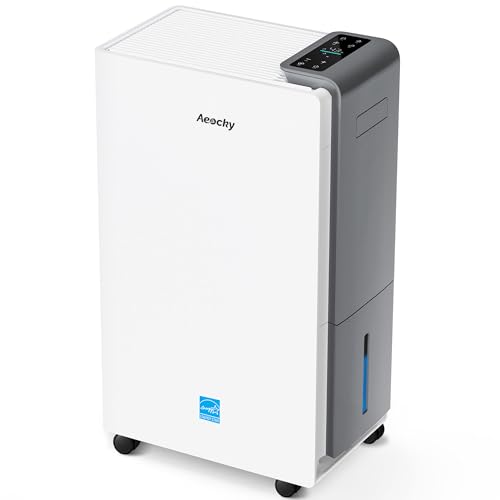
More capacity and lower running costs, if the space is soaked
4500 Sq.Ft Energy Star Most Efficient 2025
An 80-pint machine for basements that a 50-pint unit never quite gets ahead of. It carries Energy Star's top efficiency tier, so the bigger compressor doesn't have to mean a bigger power bill over a long, humid summer.
$224.97fromAmazonList priceIt's built for genuinely wet spaces, not just damp ones. If your basement shows standing water after heavy rain, white mineral bloom on block walls, or humidity that sits above 75 percent no matter what, a 50-pint unit will run around the clock and still lose. This one is rated at 80 pints a day in peak summer conditions and about 56 pints in a warm, damp basement — a real step up in pull-down speed.
The efficiency rating is the part that pays you back. It holds Energy Star's Most Efficient designation, a tier only a small slice of certified dehumidifiers reach. That matters because a big unit in a wet basement runs long hours. Manufacturer figures put the efficiency gain over non-certified machines at up to 50 percent, and the practical effect is a shorter run to target and less time drawing power.
It doesn't quit when the coil gets cold. Plenty of compressor dehumidifiers frost over and stall below about 65 degrees, which is a normal basement temperature for much of the year. This one is specified to keep running through that range, so you're not stuck watching it defrost more than it dehumidifies in spring and fall.
The footprint is narrower than you'd expect. At under nine inches wide and about two feet tall, it takes up less floor than the 80-pint capacity suggests. That's useful in a mechanical room where the open floor is a walkway. A drain hose is included, and the humidistat holds a setpoint without much wandering.
Flaws but not dealbreakers
Gravity drain only. There's no built-in pump, so you need a floor drain or a low outlet the hose can run down to. In a basement where water has to go up to a laundry sink, this unit can't do it without a separate pump.
The brand doesn't have much history behind it. AEOCKY isn't an established name in U.S. appliances the way Frigidaire and Midea are, and its listing leans hard on efficiency marketing. If long-term parts availability and service matter to you more than raw capacity, that's a real consideration.
There's no app and no remote control of any kind. You set it at the panel and leave it. For a unit that's likely going in a basement you don't visit daily, losing remote humidity checks stings a little more than it would upstairs.
Budget pick
Quiet, light and right-sized for one damp room
Waykar 2000 Sq. Ft. Energy Star 2025
A 30-pint unit for an apartment, a bedroom or a small basement where a 50-pint machine would be overkill. It's quiet enough to sleep next to and light enough to carry upstairs with one hand.
Check priceatAmazonNot every damp room needs a big machine. This one is rated for 30 pints a day across up to 2,000 square feet, which covers a bedroom, a laundry area, a storage room or a modest basement. Running an oversized unit at partial load in a small space wastes power and short-cycles the compressor. Matching the machine to the room is the simplest efficiency upgrade there is.
It's quiet in a way the bigger units aren't. Waykar specifies 35 decibels, which is closer to a refrigerator hum than an appliance. That's the number that makes this usable in a bedroom or a home office, where a 50-pint tower would have you turning up the TV. Owners who bought it specifically for sleeping spaces tend to be happy on that count.
It dries harder than its size suggests. Continuous mode goes down to 15 percent relative humidity, well below the 30 percent floor most units stop at. You won't want that for daily living, but it's useful for drying out a closet after a leak or protecting instruments and stored paper in a humid house.
It's easy to move and easy to live with. At about 22 pounds with wheels and a handle, you can carry it between floors without planning the trip. A 3.3-foot hose comes in the box for hands-free draining, and a short self-drying cycle runs after shutdown to keep the coils from staying wet in storage.
Flaws but not dealbreakers
It's the wrong tool for a wet basement. Thirty pints a day won't keep up with a large space that has real water intrusion. Put it in a 2,000-square-foot basement that stays above 70 percent humidity and it'll run constantly and still lose ground. Buy up if that's your situation.
The tank is small. Less capacity means more trips to the sink in a humid stretch, unless you set up the hose. And with no pump, the hose still has to run downhill to somewhere the water can go.
No smart control of any kind. There's no app, no scheduling from your phone, no voice control. You get a panel and a set of modes, which is fine for a room you're in every day and less fine for a crawl space you visit twice a year.
Who this is for
Buy one of these if your home has a room that stays clammy — a basement that smells musty, a bathroom where the mirror takes forever to clear, a laundry area with condensation on the pipes. You'll get the most out of it if you can leave it running for days at a stretch rather than switching it on when things feel bad. Renters and apartment dwellers are well served here too; the smaller pick is light enough to move with you.
Skip it, at least for now, if water is actively getting in. A dehumidifier can't outrun a cracked foundation, a failed sump pump or a downspout dumping against the wall, and running one against active intrusion just raises your power bill. Fix the water first. This guide covers portable, plug-in room dehumidifiers for homes and basements. It doesn't cover whole-house units that tie into ductwork, ducted crawl space systems, or the small desiccant boxes meant for closets and gun safes.
How we picked
We weighed five things. Capacity: rated pints per day had to match the room size and the honest wetness of the space, judged against manufacturer coverage figures for wet conditions rather than merely damp ones. Drainage: a continuous drain port is close to mandatory for basement use, and where there's no pump, we said so plainly. Cold performance: auto-defrost or a documented low-temperature range, since most basements spend months below 65 degrees. Efficiency: Energy Star certification as a floor, with the Most Efficient tier noted where a unit earns it. Noise and footprint: published decibel figures under 50 for anywhere you sleep, and dimensions that fit the tight spot these things actually get shoved into.
The competition
Here's what our research turned up alongside the picks. It isn't every dehumidifier on the market — it's the group we compared closely, drawn from published reviews, manufacturer specs and owner feedback. A unit landing here isn't necessarily bad. It just lost to a pick on the things that matter most in a damp basement: capacity, drainage and how much you'll actually enjoy living with it.
The Frigidaire 50-Pint Portable Dehumidifier with Wi-Fi and ($299) — This is our top pick's sibling — the same 50-pint rating, the same Frigidaire app, the same Alexa and Google support, the same low-temperature operation down to about 41 degrees. What's different is the shape. This one is squat and square, roughly 19 inches on two sides and only 10 deep, which suits a shallow closet or a spot against a wall better than a tall tower. It also adds a filter-cleaning alert, which is a small nicety. But it typically costs more than our top pick without giving you more water removal, and owners report the same 2.4GHz-only Wi-Fi quirk during setup. Choose it if the wider, shorter footprint solves a placement problem in your house; otherwise the top pick does the same job.
Placement and drainage
Put the unit near the middle of the room, not tucked against a wall behind boxes. Most manufacturers want 6 to 12 inches of clearance on every side, and that's a requirement, not a suggestion — choke the intake and you can lose a third of the moisture removal. In a basement with several connected rooms, park it near a doorway or central hallway where air moves. Run a hose to a floor drain if you have one, and check that the whole length slopes downhill, since a single sag will back water up into the tank. Rinse the mesh filter in warm water about once a month. And keep a cheap standalone hygrometer across the room, because built-in sensors drift a few points over time; if the readings disagree, trust the hygrometer and adjust your setpoint to match.
Questions we get
What size dehumidifier do I need for a 1,000-square-foot basement?
It depends on how wet the space is, not just how big it is. A basement that's a bit musty with occasional condensation is fine with a 30-pint unit. One with visible wall moisture, water stains or puddles after a storm wants 40 to 50 pints a day. When you're between sizes, go bigger — an oversized unit just cycles more, while an undersized one runs forever and never hits your target.
Should I run it all day or just a few hours?
Run it continuously at first. A newly treated space usually takes three to seven days of steady operation to reach its target humidity the first time. After that, the built-in humidistat cycles the compressor on and off on its own to hold the setpoint. In a humid climate, expect 10 to 14 hours of actual run time a day through the summer.
Do dehumidifiers really prevent mold?
Holding indoor humidity below 50 percent is one of the most effective things you can do to stop mold and mildew from taking hold, and it's the core of EPA guidance on moisture control. But it won't remove mold that's already growing. Clean up existing colonies first, then use the dehumidifier to keep them from coming back.
What humidity level should I set?
Aim for 45 to 50 percent in most homes. That's low enough to suppress mold and dust mites, high enough to avoid dry skin, static shocks and cracking woodwork. For basements specifically, 50 percent is the standard target in most of North America. If you live somewhere arid, your indoor air may already sit below 30 percent in winter, in which case you want a humidifier instead.
Do I still need one if I have central air conditioning?
Usually yes, if the problem is in a basement. Central AC removes some moisture as a side effect of cooling, but it isn't designed for humidity control and it doesn't work well at basement temperatures. Plenty of basements sit above 60 percent humidity all summer in homes with perfectly good central air, partly because they often aren't served by supply registers at all.
What works best in a crawl space?
Look for auto-defrost, because crawl spaces run cold in spring and fall, and for continuous drainage, because you don't want to crawl in twice a week to empty a bucket. The Midea Cube suits larger crawl spaces; the Waykar handles smaller or drier ones. Encapsulating the crawl space with a sealed vapor barrier first makes a bigger difference than any unit you choose.
Why you should trust us
For this guide:
- We read published reviews and buying guides from independent consumer testing outlets alongside each manufacturer's own specification sheets and Energy Star listings.
- We compared rated capacity, coverage area, drainage options, low-temperature operation and published noise figures across every unit in this lineup.
- We read through owner feedback for recurring themes — Wi-Fi setup trouble, bucket-emptying frequency, filter access and cold-basement behavior — and let those patterns shape the flaws we call out.
- We read owner reviews on every listing, weighted toward the critical ones, because that is where the recurring failures show up.
- We have a systematic way of automatically fetching the latest prices, so the numbers on this page stay current.
- This is a research-focused guide, so the team may not own every product listed — though we often do own the top winners, which gives us extra context for the recommendations.
- We don't accept free products, and the retailer commission never changes which product we recommend.
Sources
Best Dehumidifiers — Wirecutter / The New York Times, Wirecutter / The New York Times
Dehumidifier Ratings & Reliability Surveys — Consumer Reports, Consumer Reports
A Brief Guide to Mold, Moisture, and Your Home — U.S. EPA, U.S. Environmental Protection Agency
Energy Star Certified Dehumidifiers — Energy Star, Energy Star / U.S. EPA
Dehumidifiers — U.S. Department of Energy Energy Saver, U.S. Department of Energy
Best Dehumidifiers Tested by the Good Housekeeping Institute, Good Housekeeping Institute
Best Dehumidifiers — Tom's Guide, Tom's Guide
Best Dehumidifiers — Bob Vila, Bob Vila
Amazon product listings and owner reviews for all 5 products
Manufacturer specification pages for each product
Some passages in this guide may be paraphrased with AI help. Prices are refreshed automatically.
More like this.
Continue exploring appliances reviews and recommendations.

The Best Basement Dehumidifiers
Basement damp announces itself slowly. First there's a smell you notice halfway down the stairs. Then the cardboard boxes go soft, the rug feels clammy,…

The Best Basement Dehumidifiers
A damp basement announces itself before you see it. There's the smell first, then the boxes that feel slightly cool and soft, then the rust ring under the…

The Best Gun Safe Dehumidifiers
A gun safe is a sealed steel box, and sealed steel boxes trap moisture. Open the door on a muggy afternoon and you've just loaded the interior with damp…

The Best Pizza Ovens for Home Use
A home oven tops out around 500°F. That's the whole problem. At that heat the dough dries out before the top browns, and you get a cracker with toppings…

The Best Rice Cookers for Home Use
Rice is the one thing you cook that nobody thanks you for until it goes wrong. Undercooked grains crunch, overcooked ones turn to paste, and the pot boils…

The Best Professional Hair Dryers for Home Use
A hair dryer is one of the few tools you might hold in your hand for 20 minutes a day, several days a week, for years. That changes what matters. Weight…