The Best Pizza Ovens for Home Use
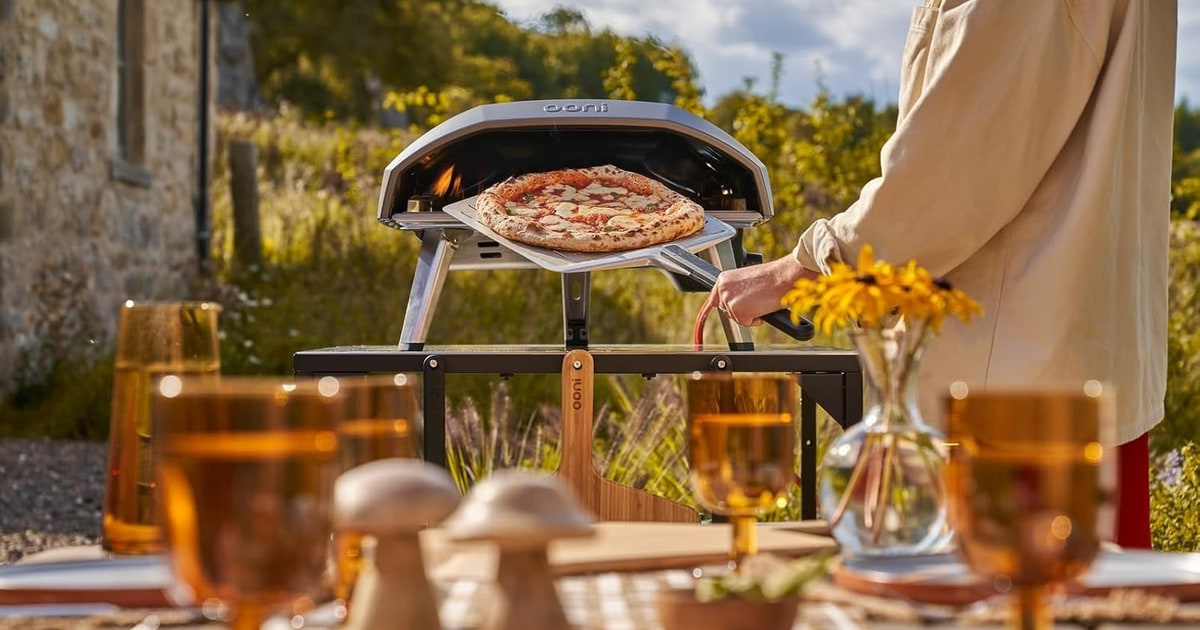
A home oven tops out around 500°F. That's the whole problem. At that heat the dough dries out before the top browns, and you get a cracker with toppings instead of a pizza. A dedicated pizza oven runs two to three times hotter, so the rim puffs, the bottom chars in spots, and the whole thing finishes in a minute or two. You also cook standing outside with a peel in your hand, which turns dinner into something people gather around. That's most of the appeal.
None of these ovens make good pizza on the first night. The stone floor needs longer to heat than the gauge suggests, and Consumer Reports recommends another 15 to 20 minutes past the point the oven reads ready. You'll burn a pie or two learning to turn them. Small ovens also make small pizzas, and the big ones are heavy enough that portable really means two hands and a clear path. Expect a learning curve, not a magic box.
So the real choice is fuel and floor size. Gas is the forgiving option, since you set a dial and the flame holds steady. Wood and charcoal add smoke and a lot of fussing. Electric is the only realistic option if you rent or your building bans open flame. We think that the Ooni Koda 16 is the best pizza oven for most people, and that the Gozney Roccbox is the one to buy if you want to carry your oven to other people's backyards.
Everything we recommend

Gas heat, a big stone, and almost nothing to learn

Holds its heat longer, in a shape built to travel

A dual-fuel starter oven that throws in the accessories

Real pizza heat indoors, with no flame and no tank
Prices as of Oct 25, 6:48 AM PT · Details
At a glance
| Product | Fuel | Max temperature | Price | |
|---|---|---|---|---|
| Ooni Koda 16 Propane Gas Pizza OvenTop pick | Propane | 950°F | Check price |
| PIZZELLO 16" Outdoor Pizza OvenBudget pick | — | 752°F | $259.47 |
 | Solo Stove Pi Prime Propane Pizza OvenAlso consider | Propane | 900°F | $359.99On sale |
| Gozney Roccbox Outdoor Pizza OvenRunner-up | — | 950°F | $399 |
| Ooni Volt 2 Electric Indoor Pizza OvenAlso great | Electric | 850°F | Check price |
 | Breville BPZ820BSS Smart Oven PizzaioloAlso in lineup | — | 750°F | $999.95 |
Prices as of Oct 25, 6:48 AM PT · Details
How we picked
Peak temperature. We leaned on manufacturer specs plus America's Test Kitchen's finding that crust chars properly above 700°F. Anything that couldn't clear that comfortably didn't make the picks.
Fuel and control. We compared gas, wood, multi-fuel and electric designs across published reviews. What mattered most was how hard the oven is to hold at temperature when you've never used one.
Heat retention. Published testing on stone floor temperature told us which ovens keep baking through a stack of pizzas and which fade after the second or third.
Size and portability. We read listed dimensions, weights and stone sizes to sort out who fits a 16-inch pizza, who fits in a car, and who needs a permanent spot.
Reported durability. We looked for recurring themes in owner feedback about stones, doors, igniters and finish, since those are the parts that tend to fail first.
Top pick
Gas heat, a big stone, and almost nothing to learn
Ooni Koda 16 Propane Gas Pizza Oven
The Koda 16 is a propane oven with a 16-inch stone that Ooni says reaches 950°F in about 20 minutes and bakes a pizza in 60 seconds. You connect a tank, turn a dial, and skip the fire-tending that trips up first-timers.
Check priceatAmazonPrices as of Oct 25, 6:48 AM PT · Details
Gas is the shortcut to a 950°F backyard oven. Ooni says the Koda 16 gets there in about 20 minutes and bakes a stone-fired pizza in roughly 60 seconds. There's no kindling, no ash, no chasing hot spots between pies. You turn one dial. Wirecutter's testers found that gas models like this one gave first-time users more consistent results than wood-fired ovens, and owner feedback lines up with that.
The 16-inch stone matters more than the temperature on the box. A 12-inch oven means 12-inch pizzas, and once you've stretched dough for four people you'll notice. Here you can go big, or slide a second small pie in behind the first while everyone keeps eating. The extra floor also gives you somewhere cooler to park a pizza that's browning faster than you expected.
Nothing about the setup is fiddly. The legs fold out, the stone drops in, the regulator and hose come attached, and the ignition is instant. That's the whole assembly. Ooni's powder-coated carbon steel shell holds heat well enough that the flame doesn't have to work hard between pizzas, which keeps one propane tank going through a long stretch of weekend cooking.
It's not only a pizza oven, either. Owners use the Koda for roasting vegetables, searing steak in a cast-iron pan and blistering peppers, and the open front makes it easy to reach in and shuffle things around. If you already grill, think of it as a very hot, very fast second burner. That's a lot of use out of something you probably bought for Friday nights.
Flaws but not dealbreakers
Propane only. The Koda 16 ships with a 28 mBar regulator and won't run on natural gas, so a plumbed patio line is out unless you keep a tank around. There's no wood or charcoal option at all. If you want smoke in the crust, this isn't the oven.
At about 40 pounds it's portable in the sense that two people can move it, not in the sense that you'll toss it in a trunk on a whim. The open front also loses heat quickly in wind. Owners in breezy or cold yards report longer preheats and less even bakes, so a sheltered corner helps more than you'd think.
Ooni covers the Koda 16 for one year as standard, and extends that to five years if you register the oven within 60 days of buying it.
Runner-up
Holds its heat longer, in a shape built to travel
Gozney Roccbox Outdoor Pizza Oven
The Roccbox is a heavily insulated portable oven that Gozney rates at 950°F and 60-second pizzas. Serious Eats found its stone floor stayed above 800°F through more than 20 minutes of continuous cooking, which is why it keeps up when you're feeding a crowd.
$399fromAmazonPrices as of Oct 25, 6:48 AM PT · Details
Heat retention is the whole point of the Roccbox. Thick insulation and a dense stone floor mean the oven doesn't sag after the third pizza, which is exactly when smaller ovens start turning out pale, floppy bottoms. Serious Eats measured its floor above 800°F past the 20-minute mark of back-to-back cooking, ahead of several competitors. If you're cooking for a party rather than a couple, that's the number that matters.
This is the oven to buy if it has to leave your yard. Gozney built the Roccbox low and compact, and it's a favorite among people who cook pizza at markets and parties. The body runs about 24.8 inches long and under 15 inches tall, so it rides in a footwell instead of taking the whole trunk. It's still 48 pounds, though, so lift it with your knees.
It runs on gas or wood, which gives you a choice most portable ovens don't. Gas for a weeknight when you want dinner in 20 minutes. Wood when you've got the evening free and want smoke in the crust. Gozney aims this oven at professionals, and the specification reflects that — the shell, burner and handle are built more like commercial equipment than seasonal patio gear.
Durability is the quiet reason it stays on our list. Owner feedback skews strongly positive over long ownership, and the complaints that recur cluster around fuel handling rather than the oven coming apart. For something that lives outside and gets heated to 950°F over and over, that's a meaningful signal.
Flaws but not dealbreakers
It's smaller than the 16-inch ovens here. The Roccbox is roughly 16.5 inches wide overall, so you're making personal-to-medium pizzas, not the big ones you'd slice for a table. Feeding six people means more rounds and more dough balls.
That heat retention comes from mass, and mass weighs about 48 pounds. There's no folding it flat, and nothing about it stores small. The low, tucked-in mouth that keeps heat inside also makes turning a pizza more awkward than it is in a wide-open oven, which takes some practice.
Budget pick
A dual-fuel starter oven that throws in the accessories
PIZZELLO 16" Outdoor Pizza Oven
The Pizzello is a 16-inch dual-fuel oven that runs on propane or wood, and it arrives with a peel, stone, cutter, pellet scoop and carry bag. It's a budget way to try both fuels without buying a separate burner attachment later.
$259.47fromAmazonPrices as of Oct 25, 6:48 AM PT · Details
You get both burners in the box, and that's unusual. Most multi-fuel ovens sell the second burner separately, so you end up shopping twice before you've cooked anything. Pizzello includes the propane burner and the wood burner, plus a stainless peel, a 16-inch stone, a cutter, a pellet scoop and a carry bag. For a first oven, that's one decision instead of four.
The 16-inch floor is the same headline size as our top pick, so you're not stuck with personal pizzas. Pizzello builds the body from double-walled stainless with insulation between the layers, which helps heat spread across the stone instead of pooling under the flame. Fold-up legs and a detachable chimney mean it packs down for a campsite or a friend's driveway.
Wood cooking is where this oven earns its keep. Feeding pellets by hand is more work than turning a dial, and you'll spend the first few pizzas learning how fast a small fire drops off. But it's real smoke and real char, and that's the flavor people buy these ovens chasing. Switching back to propane on a Tuesday takes a burner swap, not a new appliance.
Owner feedback runs warmer on what's included than on the fit and finish. The themes that come up repeatedly involve doors and chimney joints that need some persuasion, and the occasional stone that arrives chipped. Nobody's mistaking this for the Gozney. But most first-time buyers seem to get roughly what they hoped for.
Flaws but not dealbreakers
It's the coolest-running oven here. Pizzello rates it at 752°F after 25 to 30 minutes, well under the 850°F to 950°F the other gas ovens claim. America's Test Kitchen found that ovens above 700°F produce properly leopard-spotted crust, so this clears the bar — but with less margin, and a cold stone or a windy evening eats that margin fast.
It's also the heaviest oven in this guide at nearly 55 pounds, and the 25-to-30-minute preheat is roughly double what the Solo Stove needs. Start it before you start stretching dough.
Also great
Real pizza heat indoors, with no flame and no tank
Ooni Volt 2 Electric Indoor Pizza Oven
The Volt 2 is a countertop electric oven that runs from 70°F all the way to 850°F and bakes 12-inch pizzas. If you rent, live in a condo, or just don't want to cook outside in the cold, it's the one that actually works.
Check priceatAmazonPrices as of Oct 25, 6:48 AM PT · Details
Most people who want a pizza oven can't have one. Balconies ban open flame, condo boards ban propane tanks, and a wood-fired oven needs a yard you might not have. The Volt 2 gets around all of that by plugging in. It sits on a counter, it doesn't vent smoke, and Ooni builds it for indoor cooking, which isn't something you can say about anything else here.
850°F is the number that makes this an actual pizza oven. Plenty of countertop appliances claim pizza duty and stall out around 500°F, which is where crusts go dry and pale. America's Test Kitchen found the char and leopard spotting people want start showing up past 700°F. The Volt 2 goes well beyond that, so you get pizzeria-style crust instead of a nicer version of what your range already does.
The controls handle the fiddly part for you. Ooni's adaptive control system adjusts temperature in real time as the oven loses heat to a cold pizza, and the one-touch presets cover the common styles. You set it and load it. For anyone who has spent an evening chasing a wood fire, that's a genuinely different experience — closer to using a toaster than tending a hearth.
It's more versatile than the outdoor ovens, not less. The range starts at 70°F, so the same appliance proofs dough, bakes cookies and roasts a tray of vegetables. Outdoor pizza ovens are one-note by design: very hot, or off. If your counter space is tight, that flexibility is what justifies giving up nearly two feet of it.
Flaws but not dealbreakers
Twelve inches is the ceiling. That's a fine dinner pizza for two, but it's noticeably smaller than the 16-inch pies the Koda or the Pizzello turn out, and there's no working around it. It weighs about 39 pounds too, which is a lot to shuffle along a small kitchen counter.
Electric heat is clean heat, and part of that is the point — but you'll never get smoke flavor out of it. Anyone chasing true wood-fired character will notice immediately. An oven this hot also pulls a lot of current, so give it its own outlet rather than sharing with a kettle.
Ooni covers the Volt 2 for one year as standard, and extends that to three years if you register the oven within 60 days of purchase.
Who this is for
Buy one of these if you already make dough and your home oven is the thing holding you back. At 500°F you get bread with toppings. At 850°F you get pizza. If you make pizza three times a year, or you're happy enough with a stone in your regular oven, skip it — these are big, hot, single-purpose objects that need somewhere to live. And if you rent or your building bans open flame, only the electric ovens here are really on the table for you.
This guide covers freestanding outdoor ovens and countertop electric ovens you can buy and use the same week. We're not covering built-in masonry ovens, inserts that convert an existing kettle grill, or baking steels. Those solve related problems, but they're different purchases with different tradeoffs. We also stuck to models whose listing details we could confirm, which means a few well-regarded ovens sold mainly direct from the manufacturer aren't in here.
How we picked
Peak temperature: we treated America's Test Kitchen's 700°F threshold for leopard-spotted crust as the floor, and preferred ovens claiming 850°F or more. Fuel and control: gas is the forgiving choice, wood adds smoke and work, and electric is the only indoor option, so we wanted at least one strong version of each. Heat retention: published testing on stone floor temperature showed which ovens keep baking through a stack of pizzas. Size: we compared stone and body dimensions to separate the 16-inch ovens from the personal-pizza ones. Durability: we read owner feedback for repeat complaints about stones, doors and igniters.
Other pizza ovens for home use worth considering
If you want the fastest preheat: The Solo Stove Pi Prime Propane Pizza Oven — Solo Stove says the Pi Prime hits 900°F in 15 minutes and bakes in about 90 seconds, and CNET's editors clocked its preheat at under 20 minutes, among the quickest gas ovens they compared. The demi-dome shape and wide panoramic opening make it easy to watch a pizza and turn it without pulling it out, and the 304 stainless body should hold up outdoors. What you give up is size and flexibility. It's propane only, with no wood option, and it won't take a 16-inch pizza the way our top pick does. If your pizza nights are spontaneous and you're cooking for two or three, that trade is an easy one.
The competition
This is what our research surfaced, not a census of every pizza oven you can buy. Several well-known ovens sell mainly direct from their manufacturers, and we couldn't confirm listing details for others. What follows is the oven from our lineup that came close but didn't take a spot.
The Breville BPZ820BSS Smart Oven Pizzaiolo — The Breville Smart Oven Pizzaiolo is the other serious indoor option, and it's a clever machine. Its Element IQ system adjusts the top and bottom elements independently, and the presets cover wood-fired, New York, pan, thin-and-crispy and frozen. Breville rates it at 750°F and a two-minute pizza, which clears the 700°F threshold America's Test Kitchen found for real char. It lost to the Ooni Volt 2 on headroom: 750°F versus 850°F is the difference between good crust and fast crust, and the Volt 2's range also drops low enough to proof dough and roast vegetables. Still, if you'd rather press a button marked New York than think about temperature at all, the Pizzaiolo is the oven that works that way.
Preheating and cleanup
The most common mistake is trusting the gauge. Consumer Reports notes that a stone or steel floor usually needs another 15 to 20 minutes after the oven reads hot, and a cool floor is exactly why a pizza comes out soggy underneath. Give it the extra time. To clean, run the oven hot for a few minutes after your last pizza, which burns off most of what stuck to the stone, then brush it once it's cool. Don't wash a stone with soap — it's porous and it'll hold the taste. Cover the oven or store it inside. The shells here are painted steel or stainless, and standing water is what eventually kills them.
Questions we get
What's the best pizza oven for beginners?
A gas oven, almost always. You set a dial and the flame holds steady, so your attention goes to the dough instead of the fire. Wirecutter's testers found that first-time users got more consistent results from gas models than from wood-fired ones. The Ooni Koda 16 is our pick for exactly that reason.
Can you use a pizza oven indoors?
Only an electric one. Gas, wood and charcoal ovens produce carbon monoxide and need open air, so they belong outside with clearance from walls and anything that burns. The Ooni Volt 2 and the Breville Pizzaiolo are built as indoor countertop appliances. Everything else in this guide is outdoor-only.
How hot does a pizza oven need to be for Neapolitan-style pizza?
Roughly 850°F to 950°F at the stone. That's what cooks a pie in 60 to 90 seconds and gives you the puffed, blistered rim. America's Test Kitchen found that ovens above 700°F produce properly charred, leopard-spotted crust, while ovens under 600°F can't fake it. Your kitchen range stops around 500°F, which is the whole reason these ovens exist.
What's the difference between gas and wood-fired pizza ovens?
Gas is a dial. Wood is a fire you manage. Gas holds a steady temperature and lights instantly, which makes cooking ten pizzas in a row far easier. Wood and charcoal add smoke flavor and some theater, but the heat swings and you'll be feeding the fire between pies.
Can pizza ovens cook anything besides pizza?
Yes, and it's underrated. With a cast-iron pan, these ovens sear steak, roast vegetables and blister peppers faster than a grill will. The Ooni Volt 2 goes further because its range drops to 70°F, so it proofs dough and bakes too. Outdoor gas and wood ovens don't do low heat well, so treat them as searing tools.
What accessories do you actually need?
A peel and an infrared thermometer will get you started. The peel gets pizzas in and out, and a turning peel helps once you're cooking quickly, though you can manage without one at first. An infrared thermometer tells you the stone's real temperature, which the built-in gauge often doesn't. A cover matters if the oven lives outdoors.
Why you should trust us
For this guide:
- We read manufacturer specifications for every oven here, including stated peak temperatures, preheat times, stone sizes, weights and fuel requirements.
- We compared published testing and reporting from Wirecutter, Serious Eats, CNET, America's Test Kitchen and Consumer Reports on how these ovens hold heat and how forgiving they are for a first-time cook.
- We read owner feedback for recurring themes about durability, assembly and real-world preheat times.
- We read owner reviews on every listing, weighted toward the critical ones, because that is where the recurring failures show up.
- We have a systematic way of automatically fetching the latest prices, so the numbers on this page stay current.
- This is a research-focused guide, so the team may not own every product listed — though we often do own the top winners, which gives us extra context for the recommendations.
- We don't accept free products, and the retailer commission never changes which product we recommend.
Sources
The Best Pizza Ovens We've Tested - Wirecutter, Wirecutter (NYT)
We Tested 10 Pizza Ovens and These Are the Best, Serious Eats
Best Pizza Ovens for 2026, Tested by Our Editors, CNET
Ooni Koda 16 Review, Ooni (manufacturer specs)
Gozney Dome Review: A Wood-Fired Oven Worth the Investment, Food & Wine
Best Pizza Ovens, According to Chefs and Testers, Good Housekeeping
How We Tested Backyard Pizza Ovens, America's Test Kitchen
Breville Pizzaiolo Review, Breville (manufacturer specs)
The Best Portable Pizza Ovens for Camping and Tailgating, The Spruce Eats
Pizza Oven Buying Guide: What to Know Before You Buy, Consumer Reports
Solo Stove Pi Prime First Look and Test, Epicurious
Smart Pizza Ovens: App Connectivity Compared, PCMag
Amazon product listings and owner reviews for all 6 products
Manufacturer specification pages for each product
Some passages in this guide may be paraphrased with AI help.
Product prices and availability are accurate as of the date/time indicated and are subject to change. Any price and availability information displayed on Amazon.com at the time of purchase will apply to the purchase of this product.
More like this.
Continue exploring appliances reviews and recommendations.

The Best Pizza Ovens
A pizza oven solves one problem, and it solves it completely. Your kitchen oven tops out around 550°F, and at that temperature a pizza takes eight or ten…

The Best Pizza Stones and Baking Steels
Home ovens are lousy pizza ovens. They top out around 500 or 550°F, and a bare oven rack does nothing to crisp the bottom of a crust. A slab of steel or…

The Best Dehumidifiers for Home Use in 2026
Damp air doesn't announce itself. You notice the musty smell in the basement stairwell, or the cardboard boxes that feel soft at the corners. A…

The Best Silicone Oven Mitts
An oven mitt is the one kitchen tool you grab without thinking, usually while holding something heavy and very hot. Silicone changed what you can ask of…

The Best Dutch Ovens for Slow Cooking
A Dutch oven earns its shelf space by doing one thing better than anything else in your kitchen: it turns cheap, tough cuts into something worth serving.…

The Best Toaster Oven Air Fryers
A toaster oven air fryer earns its counter space by replacing three things at once: the toaster, the little baking oven, and the basket fryer you'd…