The Best Pizza Ovens
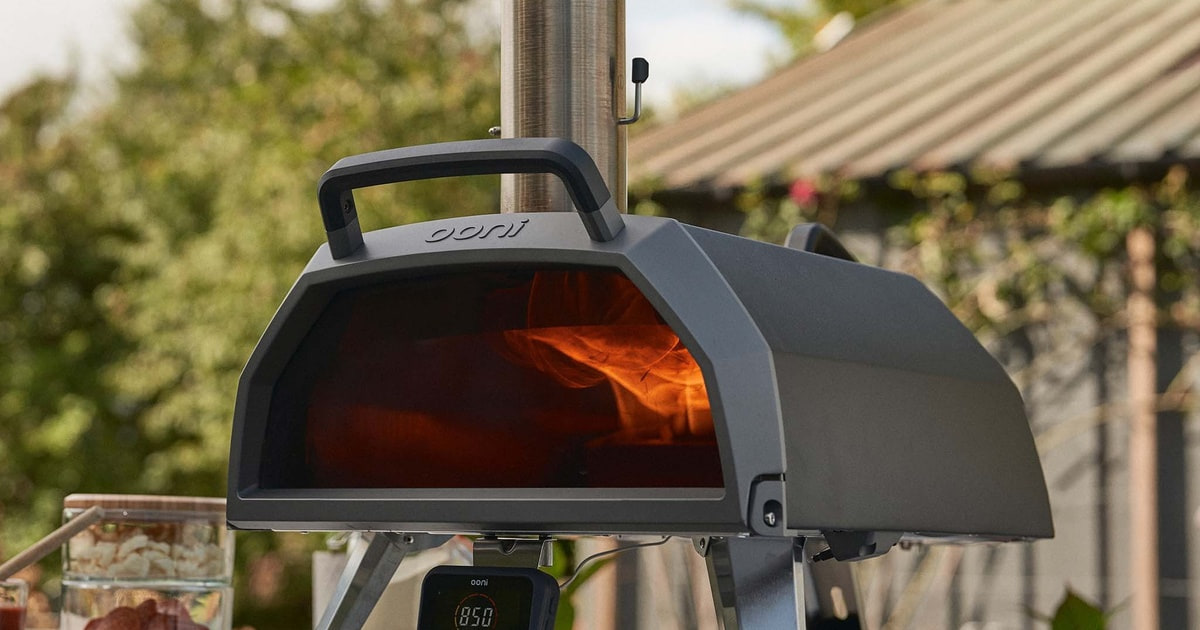
A pizza oven solves one problem, and it solves it completely. Your kitchen oven tops out around 550°F, and at that temperature a pizza takes eight or ten minutes to bake. The cheese dries out. The crust turns into a cracker. A dedicated pizza oven runs hot enough to cook a pie in about a minute, which is why the crust puffs, the edges spot with char, and the mozzarella stays molten. The Associazione Verace Pizza Napoletana, which certifies the real thing, calls for 905°F and no more than 90 seconds.
Here's the part nobody puts on the box: none of these ovens make you good at pizza. They cook fast, which means your mistakes cook fast too. A pie that's stuck to the peel is a ruined pie in about four seconds. Your first several attempts will probably be misshapen, and you'll need a decent dough recipe and a turning peel before things click. Owners who love these ovens almost always mention a learning curve first. Budget a few weekends of practice.
Fuel is the other real decision. Wood gives you flavor and smoke but demands constant feeding and attention. Gas gives you a dial and consistency, which is why most people who own both reach for gas on a weeknight. Electric is the only option that's safe indoors, and it's gotten genuinely good. We think that the Ooni Karu 2 Pro is the best pizza oven for most people, and that the Ooni Koda 16 is the one to buy if you'd rather turn a dial than tend a fire.
Everything we recommend

Wood flavor when you want it, gas when you don't

Turn a dial, get pizza — no fire tending required

The same 950°F in a 20-pound package you can carry

Real pizzeria crust from a countertop, no patio needed
At a glance
| Product | Max Temp | Fuel Type | Price | |
|---|---|---|---|---|
| Ooni Karu 2 Pro Multi-Fuel Pizza OvenTop pick | 950°F | Multi-Fuel | $849 |
 | Gozney Dome Gen 2 Series Pizza OvenAlso in lineup | — | — | $499.99 |
| Ooni Koda 16 Propane Gas Pizza OvenRunner-up | 950°F | Propane Gas | $498On sale |
 | Ooni Volt 2 Electric Indoor Pizza OvenAlso consider | 850°F | Electric | $698.95 |
| Breville BPZ820BSS Smart Oven PizzaioloAlso great | 750°F | — | $999.95 |
| Ooni Koda 12 Gas Pizza OvenBudget pick | 950°F | Propane | $298.95 |
How we picked
Real Neapolitan heat. We treated 900°F as the bar, since the AVPN standard calls for 905°F and no more than 90 seconds. Ovens that top out lower can still make excellent pizza, but we said so plainly rather than pretending otherwise.
Stone, not steel. We favored cordierite decks after America's Test Kitchen blind tastings found them producing crispier, better-textured bottom crusts than stainless floors in four out of five rounds. Every pick here bakes on stone.
Fuel that fits your life. We read published reviews and owner feedback across wood, gas and electric, and weighted how often an oven actually gets used over how impressive it is on paper. Gas wins weeknights; wood wins weekends.
Size and portability. We treated 16 inches as the sweet spot for households and kept one genuinely portable 12-inch option. Weight specs came from manufacturer sheets — the Koda 12's 20-pound figure was the lightest full-heat gas oven Tom's Guide weighed.
Owner-reported durability. We looked for repeated complaints in owner feedback rather than one-off failures. Cracked stones, dented shells and inconsistent temperatures pushed several units out of pick contention.
Top pick
Wood flavor when you want it, gas when you don't
Ooni Karu 2 Pro Multi-Fuel Pizza Oven
The Karu 2 Pro burns wood or charcoal out of the box and takes a gas burner if you'd rather not tend a fire. It hits 950°F in 15 minutes, fits a 16-inch pie, and has a glass door and digital thermometer so you can actually see what's happening.
$849fromAmazonMulti-fuel is the feature that keeps an oven in use instead of in the garage. Wood-fired pizza is genuinely better looking. Serious Eats found that wood produces measurably more char and leopard-spotting than gas at the same stone temperature. But feeding a fire on a Tuesday night gets old fast. With the Karu 2 Pro you light wood when you've got the time and swap to the gas burner when you don't. Ooni sells the burner separately, which is annoying but worth planning for.
The glass door is the upgrade that matters most day to day. Most outdoor pizza ovens are a dark hole you peer into while your pie either burns or doesn't. Here you watch the cook through the door, and the door itself holds heat between launches — which is what keeps pizza number four as good as pizza number one. The mounted digital thermometer reads the actual internal temperature in F or C.
Sixteen inches is the right size for a household. Twelve-inch ovens are fine if you're cooking for two, but a 16-inch surface means family-sized pies and, just as important, room to move a pizza around while it cooks. Owners upgrading from a 12-inch Ooni consistently say the extra space made launching easier, not just the pizzas bigger. It also gives you room for a cast iron pan when you're roasting.
At 950°F, this clears the Neapolitan bar with margin. Some owners report pushing past 1,000°F with a full load of hardwood. That's more heat than you need, and it means the oven recovers quickly between pies instead of sagging after the second one. The fully insulated body is doing the work there. A Wirecutter infrared reading of the previous Karu 16 confirmed 932°F stone temperature within 15 minutes of lighting.
Flaws but not dealbreakers
The flame sits close to the pizza, and that's a real complaint. If you launch a thick or heavily topped pie, the top can char before the middle sets. This is a technique problem more than a defect — thinner dough, less sauce, and constant turning fix it — but it means the oven punishes you for a mistake that a slower oven would forgive. Beginners should expect a few doughy centers.
The glass door stains. Owners report visible discoloration after the first few cooks, and it doesn't scrub off easily. It doesn't affect how the oven works, but if you're the kind of person who keeps gear looking new, you'll be irritated. The gas burner also costs extra, so budget for it if you want the dual-fuel flexibility that's the whole point.
Ooni covers this with a one-year manufacturer's warranty, extended to five years if you register the oven within 60 days of purchase.
Runner-upOn sale
Turn a dial, get pizza — no fire tending required
Ooni Koda 16 Propane Gas Pizza Oven
The Koda 16 runs on propane only, hits 950°F in about 20 minutes, and cooks a 16-inch pie in 60 seconds. There's no fuel to load and nothing to relight. You unfold the legs, drop in the stone, connect a tank, and hit the igniter.
$498fromAmazonList priceIf you want pizza to be a weeknight thing rather than a project, buy this one. There's no ash, no kindling, no watching a fire die halfway through your third pie. You turn a dial. Owners who make pizza every weekend for months tend to be Koda owners — the low friction is why the oven stays on the patio instead of getting covered up.
The L-shaped burner is the reason results here are more consistent than on wood. It wraps heat along the back and one side instead of blasting from a single point, so the far edge of a 16-inch pie doesn't lag behind the near edge. You still turn the pizza, but you're correcting less. That's a meaningful difference when you're cooking eight pies for a party and the fifth one needs to be as good as the first.
The powder-coated carbon steel shell holds heat well, and the whole thing is genuinely simple. There's very little to break: no glass, no fuel tray, no ash to clean. Between pizzas you close the gas and the oven cools down on its own. Owners who've moved up from smaller ovens keep saying the same thing — the 16-inch surface is what made the pizza-launching part stop being stressful.
It roasts too. Drop in a cast iron pan and you can sear steak, blister peppers, or finish a piece of fish in a couple of minutes. It's not a smoker and it won't do a low slow cook, but for anything that benefits from ferocious direct heat, it's better than your grill.
Flaws but not dealbreakers
No wood, no smoke, no wood flavor — and no upgrade path to it. This is propane only and can't run natural gas either, so if you have a natural gas line on your patio, you'll still be swapping tanks. If wood flavor is part of what you want from a pizza oven, buy the Karu 2 Pro instead and accept the extra work.
It's open-fronted with no door, so it loses heat between launches and it's more affected by wind and cold than an insulated oven. A handful of owners report struggling to reach the advertised 950°F, and stone temperature readings often disagree with what the oven is actually doing. Give it the full 20 minutes and then some, and check the stone with an infrared thermometer rather than trusting the clock.
Ooni covers this with a one-year manufacturer's warranty, extended to five years if you register the oven within 60 days of purchase.
Budget pick
The same 950°F in a 20-pound package you can carry
Ooni Koda 12 Gas Pizza Oven
The Koda 12 is the small propane sibling: 12-inch pies, 950°F in 15 minutes, and just over 20 pounds. It's a budget way into real Neapolitan heat, and the only oven here you'd actually throw in a car for a camping trip.
$298.95fromAmazonThis is the oven that proves you don't need to spend a lot to break 900°F. The Koda 12 gets as hot as ovens that cost several times more. What you give up is size, not temperature. A 12-inch pie feeds one hungry person or two people splitting, so a pizza night for four means four separate bakes. At 60 seconds each that's fine — it's the dough-stretching between rounds that slows you down.
Twenty pounds changes what the oven is for. You can carry it one-handed to a campsite, a tailgate, or a friend's backyard. Nothing else in this guide is remotely portable; the next lightest option here weighs more than 30 pounds and is meant to sit in one place. If you live in an apartment with a small balcony or you move a lot, the footprint matters as much as the price.
Owners who've never made pizza before report getting good results within a few tries, which isn't true of every oven in this category. The controls are one dial. The setup is unfold the legs, insert the stone, connect the tank. There's nothing to learn about the machine itself, so all your attention goes to the dough — which is where it should be.
Flaws but not dealbreakers
Twelve inches is tight. A pizza that's slightly off-center is a pizza touching the wall, and you have almost no room to spin it with a turning peel. Owners consistently recommend buying a small turning peel and plenty of cornmeal or semolina, because the margin for a bad launch is thin.
Like the Koda 16, it's propane-only and open-fronted, so cold weather and wind will fight you. And a few owners report never getting it to behave despite a lot of experimentation. High heat and a small chamber mean small errors show up as burnt spots.
Ooni covers this with a one-year manufacturer's warranty, extended to five years if you register the oven within 60 days of purchase.
Also great
Real pizzeria crust from a countertop, no patio needed
Breville BPZ820BSS Smart Oven Pizzaiolo
The Pizzaiolo is a countertop oven that reaches 750°F on a cordierite stone and cooks a 12-inch pizza in about two minutes. It has presets for wood-fired, New York, pan, thin-and-crispy, and frozen, so you're not guessing at settings.
$999.95fromAmazonIf you don't have outdoor space, this is the pick. Apartments, condos, rentals with no balcony — a gas or wood oven simply isn't an option, and this plugs into a kitchen counter. Good Housekeeping's lab found it cooked a fully cooked 12-inch pizza in under two minutes at its maximum setting. Wired measured its stone at 750°F, roughly 200°F above a standard oven's top broil.
Seven hundred and fifty degrees is below the AVPN standard, and it still produces leopard spotting. Breville gets there with separate conductive and radiant elements — the stone chars the base while intense top heat spots the cornicione. America's Test Kitchen's blind tastings found cordierite decks beat stainless floors on bottom crust in four of five rounds, and this uses cordierite. Owners who bake professionally describe the crust as the real thing.
The presets do more than they sound like they do. Wood-fired runs hot and fast; New York backs the temperature down so a larger, thinner pie cooks through without scorching; pan runs lower and longer. Element IQ shifts power between the elements as the bake goes. In practice you don't rotate the pizza at all, which is the single biggest difference from cooking outdoors.
Flaws but not dealbreakers
The interior is smaller and oddly shaped compared to what the 12-inch spec suggests. A standard 12-inch pizza pan won't fit, which surprises a lot of owners. If you plan to use pans rather than launching directly onto the stone, measure carefully before you buy.
It's the most expensive way to get a 12-inch pizza in this guide, and it can't touch a wood fire on flavor or a 950°F oven on speed. You're paying for the ability to do this indoors, in February, without hauling a propane tank. That's a legitimate thing to pay for — just know that's the trade.
Who this is for
Buy one of these if you already make pizza and you've hit the ceiling of what a kitchen oven can do — if you've tried baking steels and stones and your crust still isn't right, the problem is temperature, and only a dedicated oven fixes it. It's also worth it if you host, because cooking pizza in front of people is genuinely fun in a way that most cooking isn't. If you make pizza three times a year, skip it. If you want an oven that also grills burgers and smokes brisket, skip it too; these do one thing extremely well and a few things adequately.
This guide covers freestanding outdoor ovens and countertop electric ovens sized for home pizza. We don't cover built-in masonry ovens, conveyor ovens, or grill inserts that turn an existing kettle into a pizza cooker. We also don't cover accessories — peels, covers, stands and doors matter, but they're a separate purchase and a separate decision. If your building or lease prohibits open flame, only the electric options apply, and you should check the rules before you buy anything with a propane fitting.
How we picked
Temperature: we treated 900°F as the line for authentic Neapolitan results, since the AVPN standard calls for 905°F and a 90-second bake, and we flagged the ovens that fall short. Cooking surface: we favored cordierite stone over metal floors after America's Test Kitchen's blind tastings found stone produced better bottom crust in four of five rounds, and we treated a 16-inch deck as the right size for a household. Fuel: we compared wood, gas and electric on how often each actually gets used rather than how good it looks, which is why a gas dial beats a fire on a Tuesday. Portability: we kept one oven light enough to carry, using manufacturer weight specs rather than marketing claims. Owner-reported durability: we weighted repeated themes in owner feedback — cracked stones, shipping damage, temperatures that never reach spec — over isolated complaints.
Other pizza ovens worth considering
If you want indoor pizza that reaches true Neapolitan heat: The Ooni Volt 2 Electric Indoor Pizza Oven ($698.95) — The Ooni Volt 2 is the only oven here that plugs in and still hits 850°F, which is a genuinely impressive thing for a countertop appliance. Its adaptive control system adjusts temperature during the bake, and the wide range — down to 70°F — makes it usable for roasting vegetables and baking cookies, not just pizza. The Spruce Eats clocked the previous generation reaching 850°F in about 20 minutes, well ahead of first-generation electric rivals. We stopped short of making it a pick because owner feedback on this generation is mixed in a way the Breville's isn't: reports of stones cracking on first use, dents and broken parts arriving out of the box, and heat that fades after two or three pies. Several owners of the older Volt 12 consider this one a step backward. It's the hottest indoor option and the better one for high-volume nights if you get a good unit — but that's more of an if than we'd like.
The competition
This is what our research turned up in this category, not a survey of everything sold. A few well-regarded ovens — Gozney's Dome among them — didn't have a listing we could point you to, and the rest of what follows is either an accessory rather than an oven or a product that lost to a pick for a specific reason.
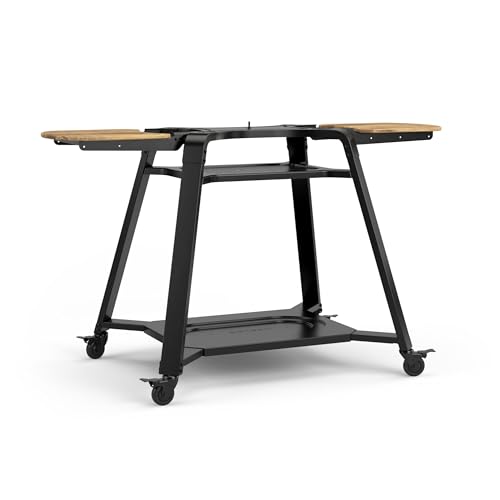
The Gozney Dome Gen 2 Series Pizza Oven ($499.99) — The Gozney Dome Gen 2 stand is a rolling cart, not an oven. It's built for the Dome and Dome XL, with locking castors, a shelf for the propane tank and fold-out bamboo wings for your dough and toppings. If you own a Dome and it's currently sitting on a patio table, this is the right accessory — but it won't cook anything on its own, and it fits no other oven in this guide.
Care and maintenance
The good news is that pizza ovens mostly clean themselves. Anything that drips onto the stone burns off at 900°F, so run the oven hot for a few minutes after a session and brush the deck once it's cool. Don't wash the stone with soap or water — cordierite is porous, it'll soak up both, and trapped moisture can crack the stone the next time you fire it. Flip the stone over now and then to burn off the underside. Let the oven cool fully before you move or cover it, and keep it covered or indoors between uses; the shells here are powder-coated carbon steel, and standing water is what starts rust. In cold weather, expect longer preheats and give the stone extra time to catch up with the air temperature.
Questions we get
How hot does a pizza oven need to be for Neapolitan pizza?
The AVPN standard for a true pizza napoletana is 905°F with a bake of no more than 90 seconds. Practically, you want stone temperature above 800°F and ideally closer to 900°F. Below that you'll still make very good pizza, but the crust sets more slowly and you lose the puff and leopard spotting that define the style.
Can you use a pizza oven indoors?
Only the electric ones. Anything that burns wood, charcoal or propane produces carbon monoxide and needs open air — never in a garage, never on a covered porch with poor airflow. The Breville Pizzaiolo and the Ooni Volt 2 are designed for kitchen counters and are the only options here for an apartment without outdoor space.
What's the difference between a wood-fired and a gas pizza oven?
Flavor versus consistency. Serious Eats found wood produced measurably more char and leopard-spotting than gas at the same stone temperature, and there's a faint smokiness gas can't replicate. Gas gives you a dial, holds temperature without attention, and lights in seconds. Most people who own a multi-fuel oven use gas on weeknights and wood when they have time to enjoy the process.
How long does it take to preheat a pizza oven?
Fifteen to 20 minutes for the gas and multi-fuel ovens here, and about 20 minutes for the electric ones. That's the manufacturer figure for air temperature, though — the stone lags behind. If your first pizza comes out pale on the bottom, give the oven another five or ten minutes and check the deck with an infrared thermometer rather than trusting the clock.
What size pizza oven do I need for a family of four?
Sixteen inches. A 16-inch deck lets you make family-sized pies, and it gives you room to turn a pizza without hitting the walls, which matters more than the size itself. A 12-inch oven works for four people, but you'll bake four separate pizzas back to back, and the launching is fussier.
Can you cook things other than pizza in a pizza oven?
Yes, as long as it likes intense direct heat. With a cast iron pan you can sear steak, roast vegetables, blister peppers or finish fish in a couple of minutes. Flatbreads and naan work beautifully. What these ovens don't do well is anything low and slow — they're built to run hot, not to hold 300°F for hours. The Volt 2 is the exception, since its range starts at 70°F.
What's the best beginner pizza oven if I've never made pizza before?
A gas oven, because it removes one variable. With the Koda 12 or Koda 16 you turn a dial and the temperature stays put, so every failure is a dough or launch problem you can actually diagnose. Buy a turning peel and keep semolina or cornmeal on the peel — sticking is the single most common beginner disaster, and it happens in about four seconds.
Why you should trust us
For this guide:
- We compared manufacturer spec sheets across every oven here, focusing on stated maximum temperature, preheat time, deck material and weight.
- We read published findings from Wirecutter, Serious Eats, America's Test Kitchen, Good Housekeeping Institute, Wired, Tom's Guide and The Spruce Eats, along with the AVPN's own standard for Neapolitan pizza.
- We read owner feedback for recurring themes — cracked stones, shipping damage, stained glass and ovens that never reach their advertised temperature — and weighted repeated complaints over isolated ones.
- We read owner reviews on every listing, weighted toward the critical ones, because that is where the recurring failures show up.
- We have a systematic way of automatically fetching the latest prices, so the numbers on this page stay current.
- This is a research-focused guide, so the team may not own every product listed — though we often do own the top winners, which gives us extra context for the recommendations.
- We don't accept free products, and the retailer commission never changes which product we recommend.
Sources
Best Pizza Ovens of 2026 — Wirecutter, Wirecutter
Best Pizza Ovens Tested — Serious Eats, Serious Eats
Pizza Oven Reviews & Ratings — Good Housekeeping, Good Housekeeping Institute
Best Pizza Ovens 2026 — Tom's Guide, Tom's Guide
Ooni Karu 16 Review — CNET, CNET
Best Outdoor Pizza Ovens — Food & Wine, Food & Wine
Pizza Oven Guide — America's Test Kitchen, America's Test Kitchen
Gozney Dome Review — Bon Appétit, Bon Appétit
Best Electric Pizza Ovens — The Spruce Eats, The Spruce Eats
Breville Pizzaiolo Hands-On Review — Wired, Wired
Amazon product listings and owner reviews for all 6 products
Manufacturer specification pages for each product
Some passages in this guide may be paraphrased with AI help. Prices are refreshed automatically.
More like this.
Continue exploring appliances reviews and recommendations.

The Best Pizza Ovens for Home Use
A home oven tops out around 500°F. That's the whole problem. At that heat the dough dries out before the top browns, and you get a cracker with toppings…

The Best Pizza Stones and Baking Steels
Home ovens are lousy pizza ovens. They top out around 500 or 550°F, and a bare oven rack does nothing to crisp the bottom of a crust. A slab of steel or…

The Best Toaster Oven Air Fryers
A toaster oven air fryer earns its counter space by replacing three things at once: the toaster, the little baking oven, and the basket fryer you'd…

The Best Countertop Toaster Ovens
Most of the time, a toaster oven isn't cooking dinner. It's reheating two slices of pizza, browning a tray of frozen nuggets, or making toast while the…

The Best Silicone Oven Mitts
An oven mitt is the one kitchen tool you grab without thinking, usually while holding something heavy and very hot. Silicone changed what you can ask of…

The Best Dutch Ovens for Slow Cooking
A Dutch oven earns its shelf space by doing one thing better than anything else in your kitchen: it turns cheap, tough cuts into something worth serving.…