The Best Home Theater Receivers for 7.1 Surround Sound
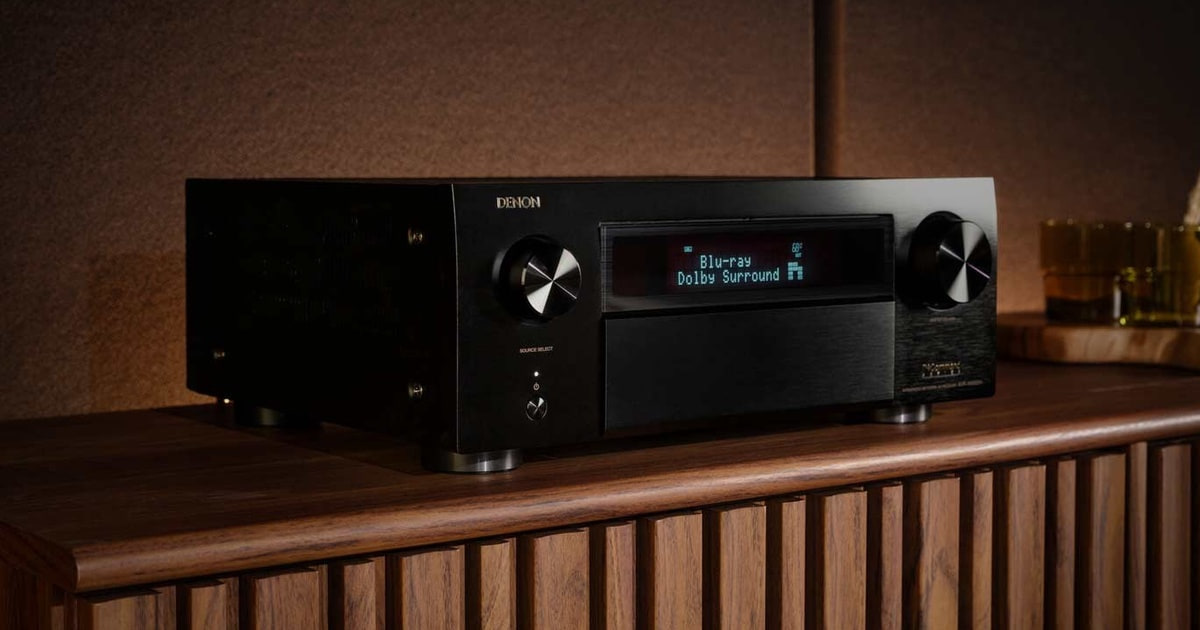
A receiver is the box everything else plugs into. Your TV, your console, your streaming stick, your speakers — all of it runs through this one chassis, and it decides how your movies sound and whether your games look right. The parts that matter day to day are dull ones. How many inputs can handle a modern console. Whether the room correction actually fixes the boomy corner behind your couch. Whether the thing switches inputs without a black screen. Get those right and you stop thinking about it, which is the point.
Here's the honest part: wattage numbers in this category are close to useless for comparison. Denon and Marantz publish FTC all-channels-driven figures. Yamaha and Sony publish single-channel numbers that look 30 to 50 percent bigger for the same real output. So a receiver rated 165W can be quieter than one rated 95W. And every brand here has owners reporting HDMI handshake quirks — brief black screens on input changes, apps that lose track of the unit. No receiver in this group is immune.
We read through specs, published reviews and a lot of owner feedback to sort out which of these actually earn a spot in your cabinet. Room correction tier, real HDMI 2.1 input count and honest power ratings did most of the sorting. We think that the Denon AVR-X2800H is the best home theater receiver for 7.1 surround sound for most people, and that the Denon AVR-S770H is the one to buy if you want the same connectivity in a smaller room for less.
Everything we recommend

Honest power and real HDMI 2.1 on every input you'll use

Same input count, less power, meaningfully less money

Nine channels and better room correction, for a real theater

Every port is 8K, and it's the one for music nights
At a glance
| Product | Channels | Power Per Channel | Price | |
|---|---|---|---|---|
| Denon AVR-S770H 7.2 Ch Home Theater ReceiverBudget pick | 7.2 Ch | 75W x 7 | $749 |
 | YAMAHA RX-V6A 7.2-Channel AV Receiver with MusicCastAlso in lineup | 7.2 Ch | — | $799.95 |
 | Marantz Cinema 70S 7.2-Ch ReceiverAlso consider | 7.2 Ch | 50W x 7 | $1,300 |
| Denon AVR-X2800H 7.2 Ch Stereo Receiver -Top pick | 7.2 Ch | 95W x 7 | $949.05On sale |
 | Sony STR-AN1000 7.2 CH Surround Sound HomeAlso consider | 7.2 Ch | 165W | $1,148 |
| Denon AVR-X3800H 9.4-Ch 8K UHD AVR HomeUpgrade pick | 9.4 Ch | 105W x 9 | $1,799 |
| Yamaha RX-A4A AVENTAGE 7.2-Channel AV ReceiverAlso great | 7.2 Ch | — | $1,199.99 |
How we picked
Honest power ratings. We compared how each brand states its wattage and only credited FTC all-channels-driven figures as real. Single-channel ratings inflate the number by 30 to 50 percent, so we treated them as marketing rather than measurement.
Real HDMI 2.1 count. We checked spec sheets for how many inputs carry full bandwidth rather than how many ports exist. Anything under three 8K-capable inputs was a mark against a receiver in a multi-console household.
Room correction tier. Spec sheets show how the calibration systems differ in filter resolution and measurement approach, and that carried a lot of weight because bass performance in a real room depends more on correction than on speakers. Audyssey XT32 sits at the top, basic MultEQ and standard YPAO at the bottom.
Owner-reported reliability. We read through owner feedback looking for repeated failure modes rather than one-off complaints. HDMI handshake quirks, app instability and setup friction came up often enough to shape our flaws sections.
Room and cabinet fit. We looked at chassis height, weight and ventilation needs against the furniture most people actually own. A receiver that won't fit your console isn't a candidate no matter how it sounds.
Top pickOn sale
Honest power and real HDMI 2.1 on every input you'll use
Denon AVR-X2800H 7.2 Ch Stereo Receiver -
The AVR-X2800H is a 7.2-channel receiver rated at 95 watts per channel with all seven channels driven — a measurement most competitors avoid. It pairs that with six HDMI inputs that handle 4K/120Hz and 8K/60Hz, plus Audyssey room correction that meaningfully tames bad bass.
$949.05fromAmazonList priceThe power rating is the real one. Denon publishes 95W per channel with all seven channels driven, 8 ohms, across the full audio band. That's the hard version of the test. Most brands quote a single channel at one frequency, which flatters the number badly. So when you're comparing this against a receiver advertising 165W, you're often comparing similar actual output. Owners running full 7.1 setups in big rooms consistently say it has headroom to spare.
Six HDMI inputs, and three of them take 8K. Plug in a PS5, an Xbox and a streaming box and you're not swapping cables or hunting for which port does 4K/120Hz. The receiver passes VRR, ALLM and QFT for gaming, plus Dolby Vision, HDR10+ and Dynamic HDR for movies. There are two HDMI outputs too, which matters if you run both a TV and a projector.
Audyssey MultEQ XT fixes rooms, not just speakers. You plug in the included mic, take measurements from eight positions, and it builds a correction curve. In a room with parallel walls and a hard floor, that's the difference between bass that thumps evenly and bass that disappears in one seat and booms in another. It's a ten-minute job and owners who've come from older receivers usually name it as the biggest single upgrade.
It plays nicely with a 5.1 setup today. You don't need seven speakers to justify it. Run five and a sub now, leave the rear surround terminals empty, and add speakers later without buying anything else. Dolby Height Virtualization and DTS Virtual:X simulate overhead effects from floor-level speakers, so you get some of the Atmos feel before you ever drill into a ceiling.
HEOS handles the music side. Built-in streaming covers AirPlay 2, Spotify Connect, Tidal and Pandora, plus Bluetooth and a phono input for a turntable. You can push audio to other HEOS devices around the house. It's not the slickest app in this group, but it works, and it means the receiver isn't idle when nobody's watching a movie.
Flaws but not dealbreakers
MultEQ XT isn't the top-tier Audyssey. It uses 256 correction filter bands per channel; XT32, on the step-up AVR-X3800H, uses 512. The gap shows up below about 100Hz, where a denser filter grid can target a standing wave instead of just smoothing over it. If your room has bare walls, a concrete floor and a nasty bass null, you'll want XT32. Most carpeted living rooms won't notice.
Some owners report HDMI handshake annoyances. A brief black screen when switching to an input running a different frame rate is the most common complaint, particularly with gaming consoles and variable refresh rate enabled. It's a settle-and-sync behavior, not a defect, but it's irritating. A minority of owners report more serious intermittent bugs over long ownership.
No Auro-3D or IMAX Enhanced at this tier. If you're chasing every immersive format, this isn't the receiver. It decodes Dolby Atmos and DTS:X, which covers essentially all the content you'll actually watch, but the exotic formats are reserved for pricier models.
Budget pick
Same input count, less power, meaningfully less money
Denon AVR-S770H 7.2 Ch Home Theater Receiver
The AVR-S770H gives you six HDMI inputs with 8K and 4K/120Hz passthrough and Audyssey room correction, at 75 watts per channel measured all-channels-driven. It's the sensible choice for a normal-sized living room where you don't need reference-level volume.
$749fromAmazonThe connectivity barely steps down from our top pick. You still get 8K/60Hz and 4K/120Hz passthrough, VRR, ALLM and QFT for gaming, and support for Dolby Vision, HDR10+ and HLG. Budget receivers usually cut corners here, giving you one good port and throttling the rest. If you've got a PS5, a Switch and a cable box, this handles all three without you thinking about which cable goes where.
75 watts all-channels-driven is enough for most living rooms. That's an honest FTC-measured figure, not a single-channel headline. In a room under roughly 2,000 cubic feet with normal speakers, you'll hit loud movie peaks without strain. Owners running 5.1 and 7.1 setups in ordinary rooms rarely complain about volume. If your space is cavernous or your speakers are inefficient, step up.
Audyssey room correction is unusual at this level. Basic MultEQ is a smaller filter set than XT, but it's still real measurement-based correction with the mic included. Owners repeatedly call out the calibration as the feature that made the biggest difference, especially people coming from a soundbar. Getting it at all in a budget receiver is the reason this beats most of its price class.
Setup goes faster than you'd expect. There's no printed manual — Denon points you at a PDF, which annoys some people — but the on-screen setup walks you through speaker assignment and input naming clearly. Owners describe getting a full system connected and calibrated in well under an hour. Bluetooth pairing and Wi-Fi setup are straightforward, and voice control works with Alexa and other major assistants.
Flaws but not dealbreakers
Power is the real limit. In a large open-plan space or with 4-ohm speakers, 75W runs out sooner than you'd like. You'll hear it as compression on loud scenes rather than obvious distortion, but it's there. Anyone with a big room should spend up.
Basic MultEQ leaves bass problems partly unsolved. It smooths broad response issues but doesn't have the filter resolution to chase down room modes. If your bass sounds wrong in one seat and fine in another, this won't fully fix it.
The same input-switching quirks show up here. Owners report brief black screens on frame-rate changes and occasional handshake weirdness with certain TV and console combinations. A small number report more persistent bugs after a year or two of ownership. It's the most common theme in the negative feedback.
Upgrade pick
Nine channels and better room correction, for a real theater
Denon AVR-X3800H 9.4-Ch 8K UHD AVR Home
The AVR-X3800H runs nine channels at 105 watts each, all-channels-driven, and adds Audyssey MultEQ XT32 with four subwoofer outputs. It's the one to buy if you're installing ceiling speakers or fighting a genuinely difficult room.
$1,799fromAmazonXT32 is the reason to spend up. It applies 512 correction filter bands per channel versus 256 on MultEQ XT. That density matters below 200Hz, where room modes from parallel walls create nulls and peaks that ruin bass evenness. If your theater has hard surfaces and a stubborn resonance, XT32 targets it with precision that the lower tier can only approximate. In a carpeted room with soft furniture, you'll notice much less.
Nine channels means you can grow into Atmos. Run 7.1 today, then add two ceiling speakers for a 7.1.2 layout without replacing the receiver. The pre-out section supports up to a 9.4 configuration with external amplification, and there are four subwoofer outputs including XLR. If you're building a dedicated room in stages, this is the receiver that doesn't become the bottleneck.
It decodes the formats the others skip. IMAX Enhanced, Auro-3D and DTS:X Pro sit alongside Dolby Atmos and DTS:X. DTS:X Pro scales to very large speaker counts. Most people won't use these, but if you own IMAX-mastered discs or you're the kind of person who reads format specs for fun, this is the only Denon here that has them.
105 watts all-channels-driven is the highest honest rating in this group. That's a real number under the hard test. Combined with six HDMI 2.1 inputs at full bandwidth and three outputs, it covers a large room with a projector and multiple sources without compromise.
Flaws but not dealbreakers
Nine channels doesn't mean nine channels of amplification for everyone. Some owners with demanding speakers report needing an outboard amp for the front pair to get the volume they wanted. If you're running low-sensitivity towers in a big room, budget for external amplification rather than assuming the receiver covers it.
Calibration doesn't always land on the first try. A handful of owners report the automatic setup producing a system that's oddly quiet or misjudges speaker levels, requiring manual correction afterward. Audyssey is generally excellent, but be ready to check the results and adjust rather than trusting them blindly.
It's big and heavy. At roughly 28 pounds and ten inches tall, it needs real shelf depth and ventilation clearance. This is not a receiver you tuck into a slim media console.
Running it in plain 7.1 wastes the premium. If you have no plan to install height speakers and your room isn't acoustically difficult, you're paying for capability you won't touch. Buy it for what it enables, not for how it sounds out of the box.
Also great
Every port is 8K, and it's the one for music nights
Yamaha RX-A4A AVENTAGE 7.2-Channel AV Receiver
The RX-A4A AVENTAGE is Yamaha's premium chassis, with all seven HDMI inputs supporting 8K/60Hz and 4K/120Hz. Its YPAO-R.S.C. calibration and anti-resonance build make it the pick if you listen to as much music as you watch movies.
$1,199.99fromAmazonEvery single HDMI input takes 8K and 4K/120. No other receiver here does that. Most give you three high-bandwidth ports and throttle the rest, so you have to plan which device goes where. With this one you plug things in wherever and it works. If you're the household with a console, a PC, a projector source and a disc player, that flexibility is worth real money.
YPAO-R.S.C. measures reflections, not just response. Yamaha's top calibration tier analyzes early reflections off walls and ceilings, then corrects for them alongside standard multipoint EQ. The result tends to preserve instrument timbre more naturally than Audyssey's more aggressive bass-focused curve. If you split time between action movies and listening to records, that difference is the whole argument.
The AVENTAGE chassis is built to kill vibration. Anti-resonance feet and a reinforced central beam decouple the audio circuitry from the transformer's mechanical noise. Reviewers who look at low-level detail consistently flag it. At 41 pounds it's the heaviest receiver here, and that mass is doing something.
Surround:AI and Auro-3D round it out. Surround:AI reads what's happening on screen and shifts DSP behavior in real time — owners generally leave it on and stop fiddling. Auro-3D decoding is a format you won't find on Denon at this level. There's also a Zone 2 output and MusicCast, which is the most reliable multi-room platform in this group.
Flaws but not dealbreakers
The power rating is single-channel-driven, so discount it. Yamaha measures one channel at one frequency. Under the all-channels-driven conditions Denon uses, real output lands substantially lower than the headline. Don't compare its number to the Denons' numbers directly — you'll reach the wrong conclusion.
It sits in an awkward spot on price. For someone not already invested in Yamaha, it lands between two Denons that each make a clearer case: one for value, one for capability. Buy this because you want MusicCast, YPAO-R.S.C. and Auro-3D specifically, not because it's the middle option.
MusicCast and HEOS don't talk to each other. Whichever ecosystem you pick, you're picking it for the whole house. If you already own HEOS speakers, adding this receiver means running two apps.
Who this is for
This guide is for anyone building or upgrading a wired 7.1 surround system in a normal home — a living room, a bonus room, a basement. If you're coming from a soundbar and want to hear a helicopter cross the room properly, or you've had 5.1 for years and want to add rear speakers, these are the receivers to look at. All of them decode Dolby Atmos and DTS:X, all handle current gaming consoles, and all will still be relevant in a decade because HDMI 2.1 isn't going anywhere soon.
It's not for you if you want wireless surround or a plug-and-play setup. Every receiver here means running speaker wire, and calibration takes a real evening. We're also not covering soundbars, separates (a standalone processor plus power amps), or anything above the enthusiast tier where you'd be shopping for pre-pros instead. If you have 4-ohm speakers, check impedance ratings carefully — several of these are specified for 6 to 8 ohms and owners of demanding speakers report wanting outboard amplification.
How we picked
We weighed five things when sorting this lineup. Power measurement: we only counted FTC all-channels-driven ratings as real, because single-channel numbers overstate output by 30 to 50 percent and can't be compared across brands. HDMI bandwidth: we counted inputs that actually pass 8K/60Hz and 4K/120Hz with VRR and ALLM, not total ports, since a throttled input is a bottleneck the moment you add a second console. Room correction: calibration tier drives bass quality more than anything else, so Audyssey XT32 outranked XT, which outranked basic MultEQ and standard YPAO. Reliability: we looked for patterns in owner feedback — repeat complaints about handshake behavior, app stability and calibration results — rather than isolated bad experiences. Fit: height, depth, weight and ventilation clearance, because a receiver that doesn't fit your cabinet is not a receiver you can buy.
Other home theater receivers for 7.1 surround sound worth considering
If you own a Sony BRAVIA XR TV and a PS5: The Sony STR-AN1000 7.2 CH Surround Sound Home ($1,148) — The STR-AN1000 makes the most sense inside Sony's own ecosystem. Its 360 Spatial Sound Mapping uses DCAC IX microphone measurements of your exact speaker positions to generate phantom overhead channels from a floor-level 7.1 layout, and it's the most convincing height virtualization here. With a BRAVIA XR set, low-latency mode and VRR negotiate automatically over one HDMI cable, which removes the manual fiddling that plagues mixed-brand setups. It also works with Sonos, unusual in this group. What you give up: the 165W rating is single-channel at 1kHz, so real output is far lower than the number implies, and owners with 4-ohm speakers report it struggling. DCAC IX room correction is less precise than Audyssey for severe bass problems, and owner feedback includes a persistent thread about startup input-switching quirks. Outside a Sony living room, the AVR-X2800H is the better buy.
If your cabinet won't fit a full-height receiver: The Marantz Cinema 70S 7.2-Ch Receiver ($1,300) — The Marantz Cinema 70S exists for one reason and does it well. It's a low-profile chassis that slides into media consoles where a standard receiver simply won't go, and it doesn't cut the features you'd expect to lose — you still get Audyssey MultEQ XT, 8K/60Hz and 4K/120Hz passthrough on three of its six inputs, HEOS streaming and a phono input. Marantz's HDAM output circuitry uses discrete transistor arrays instead of standard op-amps, and reviewers consistently describe the midrange as more involving than the power rating suggests. Owners upgrading from older Marantz units say the same. The catch is 50 watts per channel, which is the lowest sustained rating here, and a compact chassis dissipates heat poorly — leave real clearance above it. Also worth knowing: some owners report warranty trouble when buying through third-party sellers rather than authorized dealers.
The competition
These are the receivers our research surfaced alongside the picks, not a complete map of the market. Brands refresh this category regularly, and a model we didn't cover may suit your room better. What follows is what we learned about the remaining unit and who might still reasonably choose it.
The YAMAHA RX-V6A 7.2-Channel AV Receiver with MusicCast ($799.95) — The Yamaha RX-V6A is a capable receiver held back by one specific compromise: only three of its seven HDMI inputs carry 8K-capable bandwidth. The other four are fine for a cable box or a Blu-ray player, but if you own two current consoles and a gaming PC, you'll be planning around which port does what. It also publishes a single-channel power rating, so the headline number overstates what you get with all channels working. YPAO calibration is less aggressive than Audyssey at flattening bad bass. What it does have going for it is MusicCast, which is genuinely better than HEOS for whole-home audio, and a wide 4-to-16-ohm impedance tolerance that makes it safe with demanding speakers — owners running 4-ohm towers specifically praise it after returning other brands. Owner feedback also flags a fussy manual setup process and no printed manual. If you already own MusicCast gear or you have low-impedance speakers, it's a reasonable buy; otherwise the AVR-S770H gives you more usable inputs.
Setup and installation notes
Run the automatic calibration, but don't trust it blindly. Put the mic at ear height in your main seat, not on the couch cushion, and take measurements from every seat you actually use. Then listen to something familiar and check the speaker levels manually — owners across every brand here report calibration occasionally landing on results that sound too quiet or oddly balanced. Give the receiver breathing room: at least a couple of inches above and behind, more for slim models, since these run warm and thermal protection will cut your volume mid-movie if it gets hot. Label your HDMI cables before you plug them in, and put your consoles on the full-bandwidth 8K inputs specifically. Finally, none of these ship with a printed manual. Bookmark the PDF before you start.
Questions we get
What's the difference between 7.1 and 7.2 surround sound — do I need two subwoofers?
The second number is subwoofer outputs, not speakers you must own. A 7.2 receiver just gives you two sub preouts, and leaving one unused is completely normal. Adding a second sub does even out bass across different seats, which helps in bigger rooms. In a small room with one main listening spot, one well-placed sub is plenty.
Can I upgrade a 7.1 receiver to Dolby Atmos later without replacing it?
Every receiver here decodes Dolby Atmos already. What you'd add is height: either ceiling speakers, which need a nine-channel receiver like the AVR-X3800H, or upward-firing Atmos modules on top of your front speakers, which work with any of these. All of them also offer Dolby Height Virtualization, which simulates overhead sound from your existing floor-level speakers with no hardware changes at all.
Is HDMI 2.1 actually necessary, or is HDMI 2.0 still fine?
If you game on a PS5, an Xbox Series X or a gaming PC, you want HDMI 2.1. The older standard can't pass 4K/120Hz with HDR and VRR active at the same time. For a household that only streams movies at 4K/60Hz, HDMI 2.0 still works. But receivers last eight to fifteen years, so buying into the older standard now means living with the limit for a long time.
What's the difference between Audyssey MultEQ XT and XT32?
XT32 uses 512 correction filter bands per channel; XT uses 256. The extra resolution matters below about 200Hz, where it can target a specific room resonance instead of smoothing across a broad range. In a room with parallel bare walls and a hard floor, that's an audible difference in how tight the bass sounds. In a carpeted room with soft furniture, you likely won't hear it.
How many watts do I need for a big room?
For a large room with typical speakers, roughly 80 to 100 watts per channel measured all-channels-driven will get you convincing movie peaks without strain. The AVR-X2800H and AVR-X3800H both clear that bar honestly. Just don't compare those figures to single-channel ratings from other brands — treat a single-channel number as roughly two-thirds of its face value when you're shopping across brands.
How do I connect a 7.1 receiver to my existing 5.1 speakers?
Wire your five speakers to front left, center, front right, surround left and surround right, and run the sub to either preout. Leave the rear surround terminals empty and set the receiver to a 5.1 configuration during setup. It'll redirect rear surround information into your side surrounds. You get exactly the same sound a 5.1 receiver would give you, plus two spare terminals for when you expand.
Why you should trust us
For this guide:
- We compared manufacturer specification sheets across all seven receivers, paying particular attention to how each brand states power output and how many HDMI inputs carry full bandwidth.
- We read published reviews from audio publications covering these models, along with owner feedback, to identify which strengths and problems come up repeatedly rather than once.
- We did not use, install or measure any of these receivers ourselves.
- We read owner reviews on every listing, weighted toward the critical ones, because that is where the recurring failures show up.
- We have a systematic way of automatically fetching the latest prices, so the numbers on this page stay current.
- This is a research-focused guide, so the team may not own every product listed — though we often do own the top winners, which gives us extra context for the recommendations.
- We don't accept free products, and the retailer commission never changes which product we recommend.
Sources
Best AV Receivers 2026 — Tested and Ranked, What Hi-Fi
Denon AVR-X3800H AV Receiver Full Review, Sound & Vision
Best AV Receivers 2026 — Buyer's Guide and Rankings, CNET
Marantz Cinema 70s Review — Slim Receiver Tested, TechRadar
Denon AVR-S770H Review — Budget HDMI 2.1 Receiver, RTINGS.com
Dolby Atmos Technology Overview — Object-Based Audio Explained, Dolby Laboratories
HDMI 2.1 Specification — 48Gbps Bandwidth and Feature Set, HDMI Forum
Audyssey MultEQ XT32 Room Correction — Technical Overview, Audyssey
Amazon product listings and owner reviews for all 7 products
Manufacturer specification pages for each product
Some passages in this guide may be paraphrased with AI help. Prices are refreshed automatically.
More like this.
Continue exploring electronics reviews and recommendations.

The Best Home Theater Systems
Your TV's built-in speakers are thin, and you already know it. Dialogue disappears under the score, explosions sound like a phone buzzing on a table, and…

The Best Extendable Snow Brushes and Ice Scrapers
Clearing a car after a storm is a small chore that turns miserable fast. The wrong tool means you're leaning across a cold hood, stretching for the middle…

The Best Wireless Backup Camera Kits
Backing up is where most parking-lot damage happens, and mirrors alone won't show you the toddler's scooter lying behind your bumper. A wireless backup…

The Best Phone Tripods and Ring Lights
Good video comes down to two boring things: your phone has to hold still, and your face has to be lit. That's it. Everything else - the camera in your…

The Best Tire Tread Depth Gauges
Tread depth is the one safety check on your car that costs almost nothing to make and almost nothing to fix - if you catch it early. Worn tread doesn't…

The Best Backup Cameras for Car Safety
Backing out of a driveway is one of the few things you do in a car with almost no information. Mirrors miss the ground directly behind your bumper, and…