The Best Garment Steamers
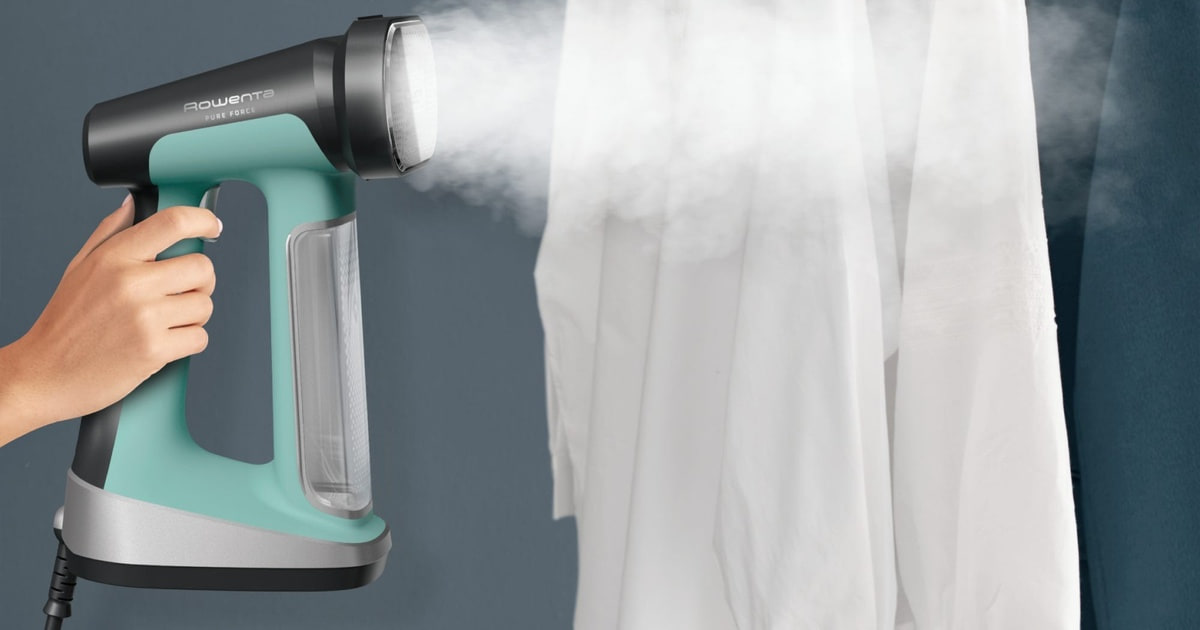
A steamer earns its spot on your shelf by saving you the ironing board. You hang the shirt, wait half a minute, and pull the wrinkles out while it's still on the hanger. That's the whole appeal. Steam relaxes fibers from every side at once, so it works on the stuff an iron fights you over — a blazer with shoulder padding, a pleated skirt, a silk blouse that would shine under a hot plate. It's also handy between washes, since hot steam knocks down odors and freshens fabric without a trip to the dry cleaner.
Here's the honest part. No handheld steamer gives you the knife-sharp collar crease an iron does, because creases come from pressure, not vapor. Tanks are small, so you'll refill mid-session if you're doing a whole wardrobe. Almost every one of these spits a little water at some point, especially before it's fully hot or if you filled past the max line. And underpowered models don't so much remove wrinkles as negotiate with them — you'll make four or five passes where a stronger unit makes one.
So the specs that matter are boring ones: wattage, tank size, and how the steam actually leaves the head. We think that the Rowenta XCEL Steam Force DR2020 is the best garment steamer for most people, and that the Conair Turbo ExtremeSteam is the one to buy if you steam a full wardrobe in one go and don't want to stop for refills.
Everything we recommend

Fast, strong, and safe on everything you'd hang up

Twice the runtime and real attachments, but it's heavy

Steam and true dry ironing from one handheld unit

The safest one for silk, and it folds into a carry-on

A floor-standing workhorse for people who steam daily
At a glance
| Product | Wattage | Tank Capacity | Price | |
|---|---|---|---|---|
| Rowenta XCEL Steam Force Handheld Steamer 25-SecTop pick | 1875W | — | $49.99 |
| Conair Handheld Garment Steamer for ClothesRunner-up | 1875W | 7.3 oz | $67.99On sale |
| Philips 3000 Series Handheld Steamer - 1000WBudget pick | 1000W | 100ml | $64.15 |
 | OGHom Steamer for ClothesAlso in lineup | 700W | 240ml | $24.99On sale |
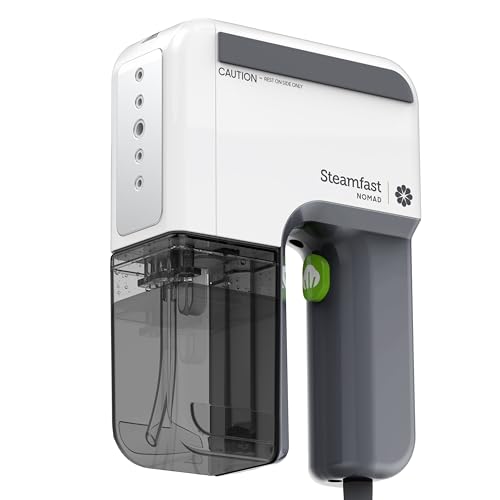 | Steamfast NOMAD Portable Travel Steamer for ClothesAlso consider | 800W | 5 oz | $32.99On sale |
| BEAUTURAL Steamer for ClothesAlso great | 1200W | 200ml | $49.97 |
| Jiffy Steamer J-2000 Jiffy Garment Steamer withUpgrade pick | 1300W | 2.84L | $231.84 |
How we picked
Steam power. We compared listed wattage across every model, since published reviews and owner feedback consistently tie low wattage to repeated passes on the same wrinkle. We treated 1000W as the floor for home use and 1200W and up as the range worth paying for if you own suits or heavy linen.
Tank and runtime. We read the manufacturer-stated tank volume and continuous-steam minutes for each unit, then matched them to how many garments a fill realistically covers. Anything under about 10 minutes we treated as a travel or touch-up tool rather than a wardrobe tool.
Fabric safety. We looked for specific design features that reduce spitting and water-spotting — protective steam plates, anti-drip systems, and explicit manufacturer statements about silk and velvet. Vague fabric claims without a stated mechanism carried less weight.
Handling and weight. We compared listed weights and dimensions, because owners of heavier models routinely mention arm fatigue during long vertical sessions. Cord length factored in too, since a short cord turns a simple job into an outlet hunt.
Travel readiness. We checked voltage specifications carefully, since 120V-only units fail or underperform abroad regardless of how well they steam at home. Foldability and detachable tanks separated genuine travel picks from small home steamers.
Top pick
Fast, strong, and safe on everything you'd hang up
Rowenta XCEL Steam Force Handheld Steamer 25-Sec
This is the steamer to grab when you've got five minutes before you walk out the door. It's ready in 25 seconds, it's powerful enough for a wool blazer, and the listing rates it safe on every fabric type including silk.
$49.99fromAmazonIt's hot and ready faster than you can find a hanger. Rowenta lists a 25-second heat-up, which is the quickest in this group. That sounds like a small thing until you're steaming a shirt at 7 a.m. with wet hair. You fill it, plug it in, and by the time the garment's hanging straight, you're steaming. Slower units make you stand there waiting, and that's how a steamer ends up in a closet unused.
At 1875W, it doesn't make you work. Wattage is the single best predictor of how many passes a wrinkle takes, and this one is tied for the highest here. A creased cotton shirt or a linen jacket gives up in one slow pass instead of four. If you've used a weak travel steamer and concluded steamers don't really work, this is the wattage tier that changes your mind.
Rowenta rates it safe on every fabric type, including silk. That matters because the usual steamer anxiety is water-spotting a nice blouse. There's no separate delicate mode to fiddle with — you use the same setting on a polyester dress and a wool coat. Keep the head moving and hold it an inch or so off delicate weaves, and you can steam your whole closet without sorting anything first.
The cord gives you room to actually work. It's just shy of 10 feet, which is enough to reach a closet rod, a door hook, or a rack on the far side of the room without hunting for an outlet or dragging over an extension cord. Short cords are one of those flaws you don't notice on a spec sheet and resent every single time you use the thing.
It also works as a refresh tool, not just a wrinkle remover. Rowenta markets it for refreshing and sanitizing fabric, so it earns its keep on curtains, a couch cushion the dog claimed, or a jacket that's been to a restaurant. Steam is chemical-free, which is the appeal for anything you can't throw in a machine.
Flaws but not dealbreakers
Ten minutes of steam per fill isn't much. That's three or four shirts, maybe a jacket and trousers. If you steam a week's worth of clothes on Sunday, you're refilling at least once, and refilling means waiting for the reheat. The Conair runs twice as long.
It's North America only. There's no dual-voltage support, so it stays home when you fly abroad. Plugging it into 220V with a cheap adapter is how steamers die.
The current listing doesn't spell out separate delicate and turbo settings. Earlier Rowenta models advertised a dedicated switch, and no attachments are called out here either. If you want a fabric brush or a delicate spacer, you'll be buying them separately or picking a different steamer.
The DR2020 comes with a one-year limited warranty.
Runner-upOn sale
Twice the runtime and real attachments, but it's heavy
Conair Handheld Garment Steamer for Clothes
The Conair runs for about 20 minutes on one fill, which is enough for most of a closet. It also comes with three attachments that cover heavy fabrics, delicate trim, and pulling cloth taut — accessories you'd otherwise buy separately.
$67.99fromAmazonList priceA 20-minute tank means you finish the job in one sitting. The 7.3-ounce reservoir is the largest of the handhelds here, and Conair rates it for up to 20 minutes of continuous steam. That's roughly five to seven dress shirts. If you batch your garment care into one Sunday session, this is the difference between steaming and steaming plus two refill breaks.
It matches the Rowenta's 1875W, so heavy fabrics don't stand a chance. Denim, tweed, a structured jacket lapel — the fabrics that make a 1000W travel steamer look silly — flatten in a single slow pass. This is the pick if your wardrobe leans formal or your closet is full of thick weaves.
The 3-in-1 attachment set genuinely expands what it does. The silicone band pulls fabric taut so you get something closer to a pressed finish. The delicate spacer holds the plate off embellishments and fine trim. The bristle brush drives steam down into corduroy and tweed instead of skimming the surface. No other steamer here ships with all three.
The quilted aluminum plate and built-in creaser let it act like an iron. You can lay a cuff flat and press it, which pure nozzle-style steamers can't do at all. It's not a substitute for a real iron on a dress shirt placket, but it gets you most of the way there without setting up a board.
Flaws but not dealbreakers
It's the heaviest handheld in this group at about 2.3 pounds. That plate adds real bulk, and your arm knows it ten minutes into steaming a hanging coat. If you have wrist or shoulder trouble, the lighter Rowenta is the friendlier choice.
The 40-second heat-up is slower than the Rowenta's. Fifteen extra seconds is nothing when you're settling in for a long session, and mildly annoying when you just want to fix one collar before a meeting.
It's big for storage and useless for travel. The body runs over 13 inches tall, so it's a shelf item, not a suitcase item.
Also great
Steam and true dry ironing from one handheld unit
BEAUTURAL Steamer for Clothes
The BEAUTURAL is the only pick here that does both jobs — steam for hanging clothes and a 310°F ceramic plate for real dry ironing. If you own one appliance for garment care and you want sharp cuffs too, this is it.
$49.97fromAmazonIt's a steamer and an iron, and the iron half is real. The 310°F thermostatic ceramic plate runs in dry mode, so you can press a collar point or a cuff against a flat surface and get an actual crease. Steam alone can't do that. For a small apartment where an ironing board is a fantasy, this covers both jobs from one drawer.
1200W and a 30-second heat-up put it in the serious tier. That's well above the travel-class steamers and enough for linen, cotton, and most suiting in a pass or two. The burst steam button fires a stronger shot for deep-set wrinkles — the kind a shirt gets from three weeks folded in a drawer.
A 200ml removable tank hits a sensible middle ground. It pops off for filling under a tap, and the capacity sits between the travel models and the Conair. Combine that with an 8-foot cord and you can work a full closet rod without unplugging.
Anti-drip and auto-shutoff take the anxiety out of it. Anti-drip is what keeps a steamer from flicking scalding droplets onto silk when you tilt it, and this one is rated for both vertical and horizontal use. Auto-shutoff matters if you're the person who leaves the room mid-task.
BEAUTURAL lists it as safe across the whole fabric range. Silk, velvet, plush, wool, linen, polyester, blends. That's a broad claim, and it means you're not sorting your laundry pile by fabric before you start.
Flaws but not dealbreakers
It's 120V only, so it doesn't travel abroad. Same story as the OGHom — a plug adapter won't save it on foreign power.
The ceramic plate makes it chunky. At a bit over two pounds and sized as a large handheld, it's not what you slide into a carry-on. Packers should look at the Steamfast or the Philips.
Two appliances in one means neither is the best version of itself. It won't out-press a full-size iron on a dress shirt, and it won't out-steam the 1875W units on a heavy coat. It's the practical compromise, not the specialist.
Budget pick
The safest one for silk, and it folds into a carry-on
Philips 3000 Series Handheld Steamer - 1000W
The Philips uses a SmartFlow plate you can press right against fabric without burning it, which makes it the least nerve-racking option for silk and velvet. It's compact, foldable, and the tank pops off to fill in a hotel bathroom.
$64.15fromAmazonThe SmartFlow plate removes the guesswork on delicates. Philips says the plate can be pressed safely against any ironable fabric with no risk of burning. Bare metal nozzles are the ones that spit hot droplets onto a silk blouse. If most of what you steam is fine, drapey, or expensive, that design difference is worth more than raw wattage.
It folds down and the tank detaches, which is the whole travel story. The body is under nine inches and collapses for packing. The 100ml tank comes off and fills under any bathroom faucet, so you're not carrying the whole unit to the sink. Philips rates one fill for about one outfit, which is what a hotel touch-up actually needs.
Philips documents 99.9% germ elimination at steam temperature. That's a tested manufacturer claim, and it's genuinely useful on the road, where you're re-wearing a shirt or a jacket you can't wash. It also helps between dry-cleaning runs for anything wool.
Horizontal steaming handles cuffs and collars. You can lay a cuff flat and steam it rather than chasing it on a hanger. It's not an iron, but it's better than most nozzle steamers at the fiddly bits.
Flaws but not dealbreakers
At 1000W and 20 g/min, it's slow on heavy stuff. Denim, thick linen, or a structured coat will take several passes. This is a shirt-and-trousers tool, not a winter-coat tool.
The 100ml tank empties fast. Figure five to seven minutes of steam. That covers an outfit, and then you're back at the sink.
The plate is plastic, not metal. It's part of what makes it burn-safe, but it also means it won't press with any authority the way a weighted plate does.
Upgrade pick
A floor-standing workhorse for people who steam daily
Jiffy Steamer J-2000 Jiffy Garment Steamer with
The Jiffy J-2000 is what bridal shops and costume departments use, and it isn't a handheld at all. A 2.84-liter tank runs an hour and a half per fill, and the brass heating element is built to be repaired rather than replaced.
$231.84fromAmazonIt runs for an hour and a half on one fill. The tank holds three-quarters of a gallon. If you're steaming a rack of gowns, a store's worth of inventory, or a costume department before a show, refilling every ten minutes isn't a minor annoyance — it's the whole bottleneck. This removes it.
The 1300W solid brass element is built to last decades, not seasons. Brass conducts steadily and resists the pitting that kills cheaper elements. Jiffy designs these around replaceable parts, which is why the brand is standard in retail, bridal, and theatrical wardrobe work. You service it instead of throwing it away.
The 6-inch steam head covers far more fabric per pass. On a floor-length gown, drapes, or a full-length coat, a wide head cuts your total passes dramatically compared to a handheld nozzle. Big garments are exactly where handhelds feel endless.
It's meant to be switched on and left on. Two minutes to heat, then continuous operation for as long as you need it. That's the opposite of a touch-up tool, and it's why professionals reach for it — the machine keeps up with a full day.
Flaws but not dealbreakers
It's 17 pounds and stands on the floor. This is furniture, not an appliance you tuck away. If you live somewhere with a closet-sized storage situation, that's a real problem.
The two-minute heat-up is the slowest here. For one shirt before work, that's absurd. This is built for sessions, not errands.
It's the most expensive thing in this guide by a wide margin, and 120V only. For a home wardrobe with a few blazers, you're paying for professional endurance you'll never use.
Who this is for
Buy a garment steamer if you own clothes an iron makes you nervous — suits, blazers, silk, velvet, pleated things — or if you simply won't set up an ironing board and have made peace with that. It's also the right tool for curtains you can't take down, upholstery that needs freshening, and clothes you want to wear twice between washes. If your entire wardrobe is cotton T-shirts and jeans that go straight from dryer to body, you can skip this whole category.
This guide covers handheld steamers for home and travel, plus one floor-standing professional unit for people who steam for a living. It doesn't cover full-size upright home steamers, steam irons with boilers, or handheld steam cleaners for grout and tile — those run hotter and at higher pressure and will shrink or scorch fabric. And no steamer here replaces an iron entirely. If you need a razor-sharp crease in a dress trouser, you still need an iron or a hybrid that presses.
How we picked
Steam power: We treated wattage as the main predictor of how hard you'll have to work, using 1000W as a floor and 1200W and up as the tier worth paying for. Tank and runtime: We compared stated tank volume and continuous-steam minutes against how many garments a single fill covers, since refilling means waiting for a reheat. Fabric safety: We favored models with a named mechanism — a protective plate, anti-drip, an explicit silk rating — over generic all-fabrics claims. Handling and weight: We weighed listed weights, dimensions, and cord length, because owners of the bulkier units consistently mention tired arms and outlet-hunting. Travel readiness: We checked voltage, foldability, and whether the tank detaches, since a 120V-only steamer is a home appliance no matter how small it is.
Other garment steamers worth considering
If you want the flattest thing that fits in a carry-on: The Steamfast NOMAD Portable Travel Steamer for Clothes ($32.99) — The Steamfast NOMAD is shaped like a paperback — two inches thick — so it lies flat against the side of a suitcase instead of eating a corner. It heats in 30 seconds, runs about 11 minutes on its 5-ounce tank, and a green light tells you when it's ready. At 800W it'll handle a dress shirt, a blouse, or polyester travel clothes without a fuss, and Steamfast backs it for two years. What you give up is muscle: a structured blazer or heavy linen will take several passes, and it's 120V, so check before you fly overseas. Get it if you pack light and steam one or two things at a time.
The competition
This is what our research turned up across a set of widely sold garment steamers, not a census of the whole market. New models appear constantly, and plenty of decent steamers didn't make it into this lineup. The one below is a real product that works for a specific kind of buyer — it just lost out to the picks for most people.
The OGHom Steamer for Clothes ($24.99) — The OGHom is the least expensive steamer here, and it has one genuinely good trick: a 240ml tank that runs about 15 minutes, longer than the Philips or the Steamfast and longer than our top pick. The 304 stainless heating panel resists rust better than the aluminum panels typical at this level. But it's 700W, the weakest in this guide, and that shows up immediately on anything heavier than a thin cotton shirt — owners describe going over the same crease again and again, and steam output tends to fade as the tank empties. It's also bare-bones: no attachments, no heat settings, no crease guide, and 120V only. If you steam a light shirt once a week and want to spend as little as possible, it does the job. Anyone with blazers or more than a couple of garments per session should step up to the BEAUTURAL instead, which nearly doubles the power.
Care and maintenance
Use distilled or filtered water. Tap water leaves calcium and magnesium scale on the heating element, and that scale slowly chokes your steam output until the thing barely hisses. If you've been using tap water, descale monthly: fill the tank with equal parts white vinegar and distilled water, heat it up, steam the mixture through into a sink or an old towel, then let it cool, drain it, and flush with clean water. On filtered water, every three to six months is plenty. Two more habits worth building — never fill past the max line, since an overfilled tank spits scalding droplets that spot silk and satin, and always let the unit finish heating before you pull the trigger. Most spitting complaints trace back to one of those three things.
Questions we get
Can a garment steamer replace an iron?
For blazers, suits, and anything structured, a steamer is actually better — steam works through all the layers without a hot plate touching the surface. For a razor-sharp collar or a trouser crease, an iron still wins, because that's pressure doing the work, not heat. The BEAUTURAL 2-in-1 splits the difference with a 310°F ceramic plate for dry ironing plus a normal steam mode.
Which steamer is safest for silk and chiffon?
The Philips 3000 Series. Its SmartFlow plate is rated to press directly against any ironable fabric without burning, so you're not hovering and hoping. The Rowenta DR2020 is also rated safe on all fabrics including silk, and it's the better choice if you want that safety with a lot more power. Whatever you use, keep the head moving and don't hold it still on a delicate weave.
How long do these take to heat up?
The handhelds are all fast. Rowenta lists 25 seconds, the BEAUTURAL and Steamfast list 30, and the Conair lists 40. The Jiffy J-2000 takes two minutes, which sounds bad until you remember it's built to be switched on once and run for hours.
Do steamers actually sanitize clothes?
To a real degree, yes. Steam at 212°F kills most surface bacteria and dust mites, and Philips specifically documents 99.9% germ elimination for the 3000 Series at operating temperature. It's a chemical-free way to freshen a jacket between dry cleanings or a shirt on the road. It's not a substitute for washing something that's actually dirty.
How many garments can I steam per fill?
Roughly: the Conair's 20 minutes covers five to seven dress shirts, the Rowenta's 10 minutes covers three or four, the OGHom runs 15 minutes on light fabrics, the Steamfast lasts 11, and the Philips gives you about one outfit. A full suit — jacket and trousers — usually eats 8 to 12 minutes of steam.
Why is my steamer spitting water?
Three usual culprits. You filled past the max line, you started steaming before it finished heating, or scale has built up inside from tap water. Drain to the correct level, wait out the full heat-up, and descale with a vinegar-and-water mix if you've been skipping distilled water.
Why you should trust us
For this guide:
- We compared manufacturer specifications for all seven steamers, including wattage, tank volume, stated steam time, heat-up time, cord length, weight, and voltage.
- We read published reviews and owner feedback for each model, paying particular attention to recurring complaints about spitting, fading steam output, and arm fatigue during long sessions.
- We read owner reviews on every listing, weighted toward the critical ones, because that is where the recurring failures show up.
- We have a systematic way of automatically fetching the latest prices, so the numbers on this page stay current.
- This is a research-focused guide, so the team may not own every product listed — though we often do own the top winners, which gives us extra context for the recommendations.
- We don't accept free products, and the retailer commission never changes which product we recommend.
Sources
Best Garment Steamers — Good Housekeeping Institute Testing, Good Housekeeping
Best Clothes Steamers — Wirecutter / New York Times, Wirecutter
Best Garment Steamers of 2026 — Reviewed.com (USA Today), Reviewed.com
Best Clothes Steamers — CNET, CNET
Garment Steamer Buying Guide — Consumer Reports, Consumer Reports
Amazon product listings and owner reviews for all 7 products
Manufacturer specification pages for each product
Some passages in this guide may be paraphrased with AI help. Prices are refreshed automatically.
More like this.
Continue exploring appliances reviews and recommendations.

The Best Clothes Steamers
Most wrinkles don't need an ironing board. You need a shirt that looks fine by the time you leave the house, and a steamer gets you there in a few…

The Best Steam Cleaners
Steam cleaners do one trick, and they do it without a bottle of anything. Water goes in, hot vapor comes out, and grime that normally needs a chemical…

The Best Facial Steamers
A facial steamer does one thing. It heats water and floats warm mist at your face for five or ten minutes. That softens the sebum and dead skin sitting in…

The Best Steam Mops for Hardwood and Tile Floors
Mopping with a bucket mostly moves dirty water around. A steam mop skips that entirely: you fill the tank with plain water, wait half a minute, and push a…

The Best Robot Vacuums for Pet Hair
If you live with a shedding dog or a long-haired cat, you already know the problem isn't dirt. It's hair. It drifts into corners, mats into the edge of…

The Best Wine Coolers and Beverage Refrigerators
A wine cooler does one job: it holds a steady, cellar-ish temperature so your bottles don't cook on a kitchen counter or freeze in the back of the fridge.…