The Best Kitchen Storage Containers
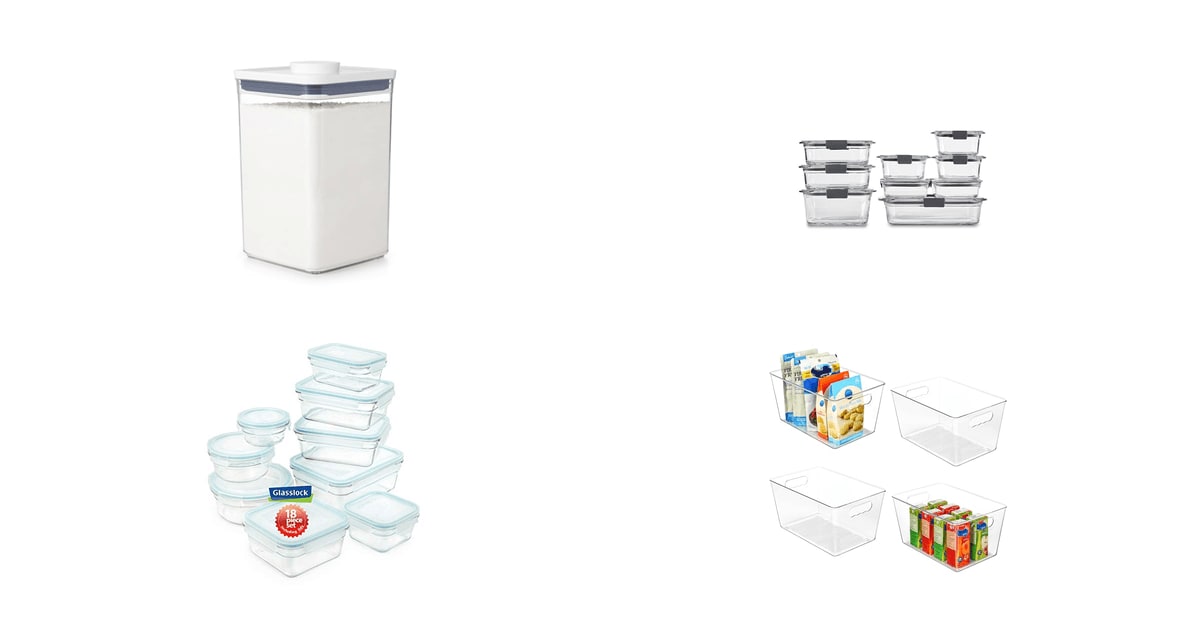
Kitchen storage is one of those things you don't think about until it fails. A bag of flour spills across a shelf. Last night's chili leaks into a tote bag on the way to work. You buy a third jar of cumin because you couldn't see the two you already had. Good containers fix all of that quietly. They seal tight, they stack without wobbling, and they let you see what's inside so you stop wasting food. The right set changes how your kitchen works day to day.
Here's the honest part: no single container does everything well. Glass reheats safely and never stains, but it's heavy and it breaks. Plastic is light and cheap, but it discolors after enough tomato sauce and it can warp in a dishwasher. Airtight canisters keep flour fresh for months, and they're useless for corralling packaged snacks. Open bins do the opposite. Most kitchens end up with two or three systems, not one, and that's fine.
So think about what you actually store before you buy. If you decant dry goods and want a pantry that stays organized as it grows, start with a modular canister. If your storage problem is Sunday meal prep and Tuesday leftovers, start with something leakproof and microwave-safe. We think that the OXO Good Grips POP Container is the best kitchen storage container for most people, and that the Rubbermaid Brilliance Glass set is the one to buy if you mostly store leftovers and reheat them.
Everything we recommend

The pantry canister that grows with you, one size at a time

Leakproof glass for people who reheat everything

Five containers that collapse into the space of one

Not airtight, but it fixes a messy shelf in an afternoon
At a glance
| Product | Container Count | Airtight Seal | Price | |
|---|---|---|---|---|
| OXO Good Grips POP Container - 4.4Top pick | 1 Container | — | $21.90 |
| Rubbermaid Brilliance Glass Food Storage ContainersRunner-up | 9 Containers | — | $59.99On sale |
 | Snaplock Lid Tempered Glasslock Storage Container AirtightAlso consider | 18pc Set | — | $38.99 |
| Vtopmart Clear Plastic Pantry Organizer BinsBudget pick | 4 PCS | — | $22.99 |
| Joseph Joseph Nest Lock Plastic BPA FreeAlso great | 10-Piece | — | $28.32On sale |
How we picked
Seal that holds. We compared manufacturer seal claims against what owners report after months of use, looking for gaskets and latches that stay tight rather than going soft. Sets where a meaningful share of owners describe leaks or lids that never fit didn't make the picks.
Reheating and cleanup. We checked each listing's microwave, dishwasher, freezer, and oven ratings component by component, since lids and bases are often rated differently. A set that's only safe in pieces creates daily friction.
Shelf and cabinet fit. We favored square, rectangular, and nesting shapes that use space efficiently over round canisters that waste corners. Published dimensions and owner comments about actual shelf fit both fed into this.
Lid management. We gave weight to lines with interchangeable lids across sizes, because the mismatched-lid drawer is the most universal complaint in this category. Cross-size compatibility is worth more than a slightly better latch.
Staining and odor. Owner feedback on tomato sauce, curry, and garlic told us more than any spec sheet. Glass and Tritan came out clean; standard plastics didn't always.
Top pick
The pantry canister that grows with you, one size at a time
OXO Good Grips POP Container - 4.4
A square, airtight canister with a push-button lid you can open one-handed. It's the anchor of a pantry system you can expand piece by piece, and the lids work across the whole POP line so you never end up with orphans.
$21.90fromAmazonThe push button is the whole argument. Press it and a silicone gasket clamps down; press it again and the lid pops free. You don't line up tabs or fight four latches with one hand while holding a measuring cup in the other. The button doubles as a handle for pulling the container off a high shelf. If your hands are tired, wet, or not as strong as they used to be, this matters more than any spec on the box.
Square containers beat round ones on a shelf, and it isn't close. Round canisters leave crescents of dead space at every corner. A row of POP containers sits edge to edge with nothing wasted, which is the difference between fitting six canisters on a shelf and fitting eight. On a standard pantry shelf, that's a full extra category of dry goods you can store without buying more furniture.
Lid interchangeability sounds like a small thing until you've lost a lid. Every POP lid fits every POP container of the same footprint, so a replacement covers several sizes at once. That's why organizers standardize on one line instead of mixing brands. You can start with a few sizes for flour, sugar, and coffee, then add a tall one for pasta next year, and everything still works together.
Owners who decant bulk goods report the seal holds up over months, not weeks. Flour and rice stay dry, and pests stay out. Several mention using the containers for things well outside the pantry — pet food, office snacks, coffee grounds — and note the plastic doesn't hold static, which keeps ground coffee from clinging to the walls when you pour.
Flaws but not dealbreakers
These cost more per container than nearly anything else here, and there's no way around it. Buying a full pantry's worth at once is a real expense. Start with the sizes you use weekly and add from there.
The containers aren't rated for full-power microwave use, so this isn't your leftovers set. And the gasket needs occasional attention — pull it out, wash it, let it dry — or crumbs work into the channel and the seal gets soft. A small minority of owners report a lid that never sealed properly from the start, which is worth checking in the first week.
The clear plastic picks up fine scratches after a few years of dishwasher cycles. It's cosmetic, not functional, but a set that's been in daily use won't look showroom-new forever.
OXO backs its products with a satisfaction guarantee.
Runner-upOn sale
Leakproof glass for people who reheat everything
Rubbermaid Brilliance Glass Food Storage Containers
Nine glass containers with latching lids that seal tight enough to hold soup upside down. The bases go in the oven up to 450°F, the lids are universal across the Brilliance line, and nothing stains.
$59.99fromAmazonList priceIf leftovers are your real storage problem, buy this instead of the OXO. Glass bases mean you reheat in the same vessel you stored in, no transferring to a plate. Owners who switched from plastic consistently say the same two things: nothing warps, and nothing smells. Curry, chili, garlic — the glass comes out of the dishwasher neutral every time.
The seal is the reason to pick this over cheaper glass sets. Latches on all four sides pull the lid down evenly around the rim, which is what keeps a container of soup from weeping into your bag. Multiple owners describe filling containers with water and turning them over as a test. That even clamping force is also what single-tab lids fail to do once containers get stacked and squeezed in a full fridge.
The universal lid system is quietly the best feature. One lid size fits across Brilliance containers regardless of whether the base is glass or plastic, so if you already own the plastic Brilliance set, your lids carry over. That's rare. It also means the cabinet drawer full of mismatched lids stops growing.
Modular rectangles stack cleanly, and the bases are oven-safe to 450°F, so a container of baked pasta goes from freezer to fridge to oven to table. For the microwave, unlatch the lid first and let it vent — that's how the set is rated, and it keeps splatter down without building pressure.
Flaws but not dealbreakers
Glass is heavy. The full set weighs close to fifteen pounds, and a loaded large container is a real load to carry to work. If you commute with lunch every day, that weight adds up in a way plastic never does.
The lids are plastic even though the bases aren't, and pushing too hard when latching can stress them. A few owners find the seal tight enough that opening takes some effort, especially when the containers are new. That loosens with use, but it's a fair warning if hand strength is a concern.
Glass breaks. Drop one on a tile floor and it's done, where a plastic container would have bounced. Households with kids doing their own fridge raids should factor that in.
Also greatOn sale
Five containers that collapse into the space of one
Joseph Joseph Nest Lock Plastic BPA Free
A color-coded ten-piece set where every container nests inside the next and the lids snap together into a single block. If your cabinet is the constraint, this solves it more completely than any stacking design.
$28.32fromAmazonList priceOpen most plastic-storage cabinets and something falls out. That's the problem this set was built for. Tapered walls let all five containers nest down into roughly the footprint of the largest one, and the lids clip into their own tidy stack. Owners describe going from an avalanche every time they opened the door to a single block they can lift out with one hand.
Small kitchens get the most out of this, and they get a lot. Studio apartments, RVs, boat galleys, dorm kitchens — anywhere the cabinet is the binding constraint rather than the budget. One owner keeps two sets in a sailboat icebox where everything gets tossed around, and reports the lids stay locked through it all. That's a harsher test than most home kitchens will ever apply.
The quarter-turn locking lids are quick. No alignment pins, no corner tabs to miss when you're moving fast with a hot pan in the other hand. All five sizes are leakproof, which puts them ahead of most nesting sets, where the space-saving design usually comes at the cost of the seal. Everything is microwave-safe and freezer-safe, so the set covers the full leftover cycle.
Color coding sounds gimmicky and turns out to be practical. Each size has its own color, matched between lid and base, so you grab the right lid without trying three. Sizes run from one cup up to about twelve and a half, which covers a single serving of soup through a family portion of stew.
Flaws but not dealbreakers
Nesting is all-or-nothing. Once you pull the middle container out, the stack stops being a stack, and you can't reach one size without unpacking the ones above it. If you batch-cook six identical portions on Sunday, this set fights you — you'd want several of the same size, which defeats the design.
Individual capacities run smaller than non-nesting sets, since the taper costs volume. The largest is about twelve cups, fine for a family portion of chili but not for storing a whole roast.
It's plastic, so no oven, and some owners report the finish looking slightly altered after dishwasher cycles even on the top rack. Cosmetic, but noticeable on the colored pieces.
Budget pick
Not airtight, but it fixes a messy shelf in an afternoon
Vtopmart Clear Plastic Pantry Organizer Bins
Four clear bins with built-in handles that corral boxes, cans, and snack bags into categories. They cost a fraction of a canister set and do more for a chaotic pantry shelf in the first hour than anything else here.
$22.99fromAmazonSealing food and organizing food are different jobs, and this handles the second one. Cereal boxes, snack bars, cans of tomatoes, packets of taco seasoning — none of that needs an airtight canister. It needs a boundary so it stops sliding to the back of a deep shelf. Group like with like into four bins and you can see your whole inventory at a glance, which is the single fastest way to stop buying duplicates.
The handles are what make deep shelves usable. Reach in, pull the whole bin forward, take what you want, slide it back. No excavating items in front to reach items behind. On a shelf deeper than about fourteen inches, that's the difference between food you use and food you find expired two years later. Most competing bins skip the handle entirely.
Clear polyethylene means you read the contents from any side without lifting a lid, because there is no lid. Owners consistently call these sturdier than they expected for the price, and several report them keeping ants out of a snack shelf simply by containing crumbs. Plenty of people end up buying more for the fridge, the bathroom, or a craft room.
At this price you can organize an entire pantry for less than a couple of premium canisters. That's why we'd point a first-time organizer here before anywhere else. Buy bins for the packaged goods, buy two or three airtight canisters for flour and sugar, and you've covered a whole kitchen without a big outlay.
Flaws but not dealbreakers
These aren't airtight and don't pretend to be. Loose flour, sugar, rice, or anything that attracts pantry moths belongs in a sealed canister, full stop. Use these only for things that came in their own packaging.
They're hand-wash only. Warm water and mild soap, no dishwasher — put them in and the plastic can distort. The surface also scuffs where metal can rims rub against it.
Size is the most common complaint. At about 11 by 7.5 by 6 inches, the large bin is smaller than a lot of people picture from the listing photos. Measure your shelf depth and the boxes you plan to store before ordering.
Who this is for
This guide is for anyone setting up kitchen storage from scratch or replacing a drawer full of mismatched lids. It covers three jobs that get lumped together: sealing dry goods in the pantry, storing and reheating leftovers, and corralling packaged items on a shelf. Most kitchens need two of the three, and you'll do better buying one good set for each job than one set that tries to do everything.
If you already own containers that seal well and stack cleanly, you probably don't need any of this. Buy replacement gaskets instead. We also don't cover vacuum-seal systems, silicone bags, canning jars, or bulk-bin scoops — those are different products with different tradeoffs. And if your storage problem is really a shelf problem, a set of bins and an afternoon will do more than any container upgrade.
How we picked
We weighed five things when comparing these sets. Seal: whether the gasket or latch still holds after months of daily opening, judged from owner reports rather than marketing claims. Reheating and cleanup: microwave, dishwasher, freezer and oven ratings checked separately for lids and bases, since they often differ. Shelf fit: square, rectangular and nesting shapes that use corners instead of wasting them, with published dimensions checked against what owners say actually fits. Lid management: interchangeable lids across sizes, because orphaned lids are the most common long-term complaint in this category. Staining and odor: how each material handles tomato sauce, curry and garlic over time, where glass and Tritan clearly lead standard plastics.
Other kitchen storage containers worth considering
If you want the widest range of glass sizes in one box: The Snaplock Lid Tempered Glasslock Storage Container Airtight ($38.99) — This eighteen-piece Glasslock set spans rectangular, round, and square shapes from about two-thirds of a cup up to six and a third, which covers more scenarios than the Rubbermaid set out of the box. The glass is thick, the bases handle the oven up to 450°F, and owners who've had a set for years say the containers hold up in the dishwasher and keep produce fresh noticeably longer. What you give up is confidence in the fit: some owners report lids that don't lock properly on their matching bases, and the snap-lock design needs correct alignment on all four tabs before it seals. On far fewer owner reports than the Rubbermaid set, that's harder to write off as a one-off. If you want the size range and you're willing to check each piece when it arrives, it's a lot of glass for the money.
The competition
This is what our research surfaced in this category, not a census of everything sold. Kitchen storage is a crowded shelf, and plenty of capable sets from Pyrex, Anchor Hocking, Prep Naturals, and others aren't represented here. Every product in this lineup earned a spot as a pick or an also-consider, which is unusual — it happens when the products cover genuinely different jobs rather than competing head to head.
Care and maintenance
Pull the silicone gasket out of any airtight lid every month or two, wash it, and let it dry fully before pressing it back in. Dried food in the gasket channel is the most common reason a seal goes soft, and it's fully preventable. Lids belong on the top rack of the dishwasher — the bottom rack sits closest to the heating element, and that's where plastic lids warp and glass-set lids crack. Wash the Vtopmart bins by hand only. If a plastic container picks up a tomato stain, a paste of baking soda and water left on for an hour lifts most of it; sunlight on a windowsill helps with the rest. Store canisters with lids on but unlatched if you're putting them away empty, so the gaskets aren't compressed for months at a time.
Questions we get
Is glass or plastic better for food storage?
Use glass for anything you reheat regularly. It doesn't absorb odors, doesn't stain from curry or tomato sauce, and there's no question of anything migrating out of the material when it gets hot. For pantry dry goods, cold storage, and carrying lunch around, BPA-free plastic is fine and much lighter. Most people are best served by owning both.
What should I use for flour and sugar?
An airtight canister with a silicone gasket, in the 4- to 6-quart range for a standard five-pound bag. The OXO POP container is our pick here — the wide mouth takes a measuring cup without spilling, and the square shape doesn't waste shelf corners. Keep it away from the stove and out of direct sun, and flour will stay good for months longer than it would in the paper bag.
Which of these are safe in the microwave and dishwasher?
The Rubbermaid Brilliance glass set, the Glasslock set, and the Joseph Joseph Nest Lock set are all rated microwave-safe and dishwasher-safe including lids. Put lids on the top rack in every case, and unlatch or vent them before microwaving. The OXO POP containers are top-rack dishwasher-safe but aren't rated for full-power microwaving, and the Vtopmart bins are hand-wash only.
Are OXO POP containers worth paying more for?
For pantry dry goods, yes. The one-handed push button and the lids that swap across every size in the line are things cheaper canisters don't match, and the value compounds as you add sizes over the years. For leftovers you microwave, no — put that money toward the Rubbermaid glass set instead. The two are solving different problems.
How much longer do airtight containers keep pantry staples fresh?
Roughly double, in most cases. All-purpose flour that lasts three or four months in an opened paper bag typically holds six to eight in a properly sealed container. Nuts and dried fruit see the biggest jump, since they go rancid or leathery fast once air gets to them. The seal quality is what drives this — a container with a small gap performs much closer to the original packaging than the numbers suggest.
How many containers do I need to start?
Eight to twelve covers a household of two to four. Aim for three or four small containers for coffee, nuts, and seeds, three or four medium for flour, sugar, and rice, and two or three large for pasta, oats, and legumes. Buy that core first and see what gaps show up before adding specialty sizes. A twenty-piece set bought on day one usually leaves you with containers you never fill.
Why you should trust us
For this guide:
- We read manufacturer spec sheets for every set here, comparing microwave, dishwasher, freezer and oven ratings component by component rather than trusting a single headline claim.
- We reviewed published coverage from established kitchen and consumer testing outlets alongside the patterns in owner feedback, paying particular attention to complaints that recur across many buyers rather than isolated ones.
- We compared listed dimensions and set contents directly, since shelf fit and size coverage are where these products differ most and where marketing photos mislead most often.
- We read owner reviews on every listing, weighted toward the critical ones, because that is where the recurring failures show up.
- We have a systematic way of automatically fetching the latest prices, so the numbers on this page stay current.
- This is a research-focused guide, so the team may not own every product listed — though we often do own the top winners, which gives us extra context for the recommendations.
- We don't accept free products, and the retailer commission never changes which product we recommend.
Sources
The Best Food Storage Containers — Wirecutter (NYT), Wirecutter / The New York Times
Best Food Storage Containers Tested by the Good Housekeeping Institute, Good Housekeeping
Best Food Storage Containers — Serious Eats, Serious Eats
Best Pantry Organization Products and Storage Containers — Real Simple, Real Simple
Food Storage Containers Ratings and Reviews — Consumer Reports, Consumer Reports
The Best Pantry Storage Containers We've Tested — The Kitchn, The Kitchn
Best Food Storage Containers for Every Kitchen — Food52, Food52
How to Organize Your Pantry with Containers — Martha Stewart, Martha Stewart
Amazon product listings and owner reviews for all 5 products
Manufacturer specification pages for each product
Some passages in this guide may be paraphrased with AI help. Prices are refreshed automatically.
More like this.
Continue exploring appliances reviews and recommendations.

The Best Airtight Pantry Storage Containers
A bag of flour rolled shut with a chip clip isn't sealed. Air gets in, and so does everything else. Cereal goes soft, brown sugar turns into a brick, and…

The Best Under-Bed Storage Containers
The space under your bed is the biggest empty room in your apartment, and it costs nothing to use. A few flat boxes there can absorb the winter coats, the…

The Best Meal Prep Containers
Meal prep containers get judged on Sunday afternoon and again on Wednesday morning. On Sunday they need to hold five portions of chicken and rice without…

The Best Meal Prep Containers
You spend a Sunday afternoon cooking, and then a set of plastic boxes decides whether that work survives until Thursday. Good containers seal tight enough…

The Best Truck Toolboxes And Bed Storage
A truck bed is a terrible place to keep tools. Everything slides to the tailgate on the first hard stop, rain finds whatever you left uncovered, and…

The Best Garage Ceiling Storage Racks
Garage floors fill up in a way that sneaks up on you. A cooler here, a bin of holiday lights there, and one day the second car doesn't fit. Ceiling…