The Best Meal Prep Containers
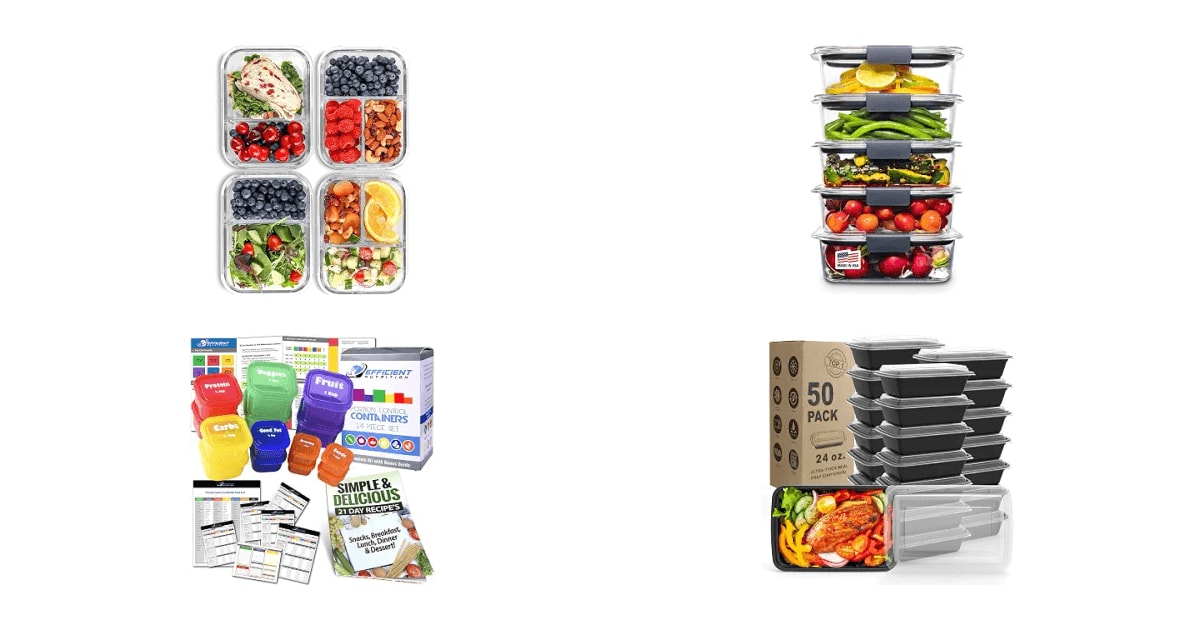
You spend a Sunday afternoon cooking, and then a set of plastic boxes decides whether that work survives until Thursday. Good containers seal tight enough that a vinaigrette doesn't end up in your laptop bag. They stack in a crowded fridge without sliding. They go from freezer to microwave without warping into a wobbly mess. And they don't hold onto the smell of last week's garlic chicken. That's a short list, but most sets fail at least one item on it.
Here's the honest part: no container does everything. Glass reheats beautifully and never stains, but it's heavy, and one bad drop on a tile floor ends it. Plastic is light and cheap to replace, though the seals loosen and the lids eventually stop latching. Divided compartments keep your greens crisp, but almost none of them seal between sections — tilt one in a tote bag and the sauce migrates. You're picking which compromise you can live with, not escaping it.
So we sorted these by how people actually eat lunch. If you reheat most of your meals and want them to taste like food instead of plastic, glass is worth the weight. If you carry soup on a bike or need something you can toss in a bag without thinking, a good plastic set with real latches wins. We think that the PrepNaturals glass containers are the best meal prep containers for most people, and that the Rubbermaid Brilliance set is the one to buy if you want something light and genuinely leakproof.
Everything we recommend

Glass that reheats well and outlasts everything else here
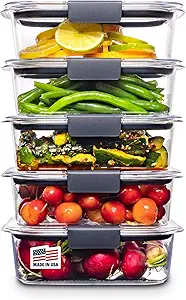
Light, leakproof, and easier to carry every day

Fifty containers for bulk cooking and food you send home

Bigger glass with more compartments, if you eat larger meals
At a glance
| Product | Material | Capacity | Price | |
|---|---|---|---|---|
| FIT Strong & Healthy Glass Meal PrepUpgrade pick | Glass | 32 oz | $27.99 |
| Rubbermaid Brilliance Tritan Plastic Food Storage ContainersRunner-up | Tritan Plastic | 3.2 Cups | $32.48 |
 | Portion Control Containers DELUXE KitAlso consider | Plastic | 1 Cup | $11.50 |
| WGCC Meal Prep ContainersBudget pick | Plastic | 24 oz | $24.99 |
| PrepNaturals 5 Pack 30 Oz Glass MealTop pick | Borosilicate Glass | 30 oz | $29.99 |
How we picked
Seal and leak resistance. We compared manufacturer claims about gaskets and latches against what owners report after months of carrying food. A lid that keeps liquid in the box under real handling mattered more than any leakproof label on the packaging.
Reheating behavior. We looked for microwave and oven ratings in the specifications and for owner reports of warping, clouding or lingering odor after repeated heating. Anything that degrades in the first few months of use lost ground.
Everyday durability. Published reviews and long-term owner feedback told us which lids stop latching, which bases crack and which sets still work after years. We weighted repeated, unprompted reports of the same failure heavily.
Fit and portioning. We checked stated volumes and dimensions against what owners say about real portions, since a container advertised for a full meal is often sized for a modest one. Stacking and nesting behavior also counted.
Cleaning and odor. We favored materials and lid designs that survive a dishwasher and don't hold onto smells. Removable gaskets and stain-resistant materials came out ahead of sealed lids and thin plastic.
Top pick
Glass that reheats well and outlasts everything else here
PrepNaturals 5 Pack 30 Oz Glass Meal
A five-pack of 30-ounce borosilicate glass containers with divided compartments and snap-lock lids. They go in the oven, the microwave, the freezer and the dishwasher, and after years of use they still look and smell like new glass.
$29.99fromAmazonGlass solves the problem that ruins most meal prep: reheated food that tastes like the container. Plastic absorbs oils, and a few rounds of curry or tomato sauce leaves a permanent haze and a faint smell. Borosilicate doesn't do that. You wash it, and it's clean. Owners who've kept these in rotation for years consistently say they still look new, which is the whole argument for buying glass once instead of plastic three times.
The compartments matter more than they sound. A divided container means your roasted broccoli isn't sitting in rice steam all morning, and your salad greens aren't wilting against a warm chicken thigh. Owners packing lunches for work call this the difference between food that's edible at noon and food that's just fuel. The 30-ounce capacity lands in a useful spot — enough for a real meal, small enough that it fits a normal lunch bag.
These are rated to high oven temperatures, so you can roast in the container and then store what you don't eat. That sounds like a minor convenience until you've done it. One dish, one wash, no transferring hot food into something else. The snap-lock lids with a silicone ring hold well enough that owners report carrying soup without incident, which is not something we'd say about most divided containers.
Durability is where the owner feedback gets unusually consistent. People describe dropping them, running them through years of dishwasher cycles, and using them in the oven repeatedly without a crack. Thick glass has a real weight to it, and you can feel that these aren't the thin, chip-prone kind. That's the trade you're making, and for most people who eat lunch at a desk or a table, it's the right one.
Flaws but not dealbreakers
They're heavy. A five-pack weighs around seven pounds, and a single filled container is noticeably more to carry than plastic. If you commute by bike or walk a long way with a shoulder bag, you'll feel it every day.
The dividers don't reach the top of the container, so the compartments aren't sealed from each other. Pack a soupy stew next to rice, lay the container flat in a bag, and things will mingle. The lid keeps liquid inside the box; it doesn't keep it in its lane.
The size is right for one adult portion, not a generous one. Several owners describe them as smaller than expected. If you eat big lunches or you're prepping for someone with a large appetite, you'll want to plan around that or buy a second set.
Runner-up
Light, leakproof, and easier to carry every day
Rubbermaid Brilliance Tritan Plastic Food Storage Containers
Rubbermaid's Brilliance set uses clear Tritan plastic with latching lids and a built-in vent for microwaving. It's the container to grab when weight matters more than the advantages of glass, and the seal genuinely holds.
$32.48fromAmazonThe latching lids are the reason to buy this set. Four clips press a gasket down against the rim, and the seal actually works — owners report carrying soup and dressing without leaks, which is rare enough in this category to be the headline. If you've ever opened a bag to find salad dressing on your notebook, you understand why this is worth paying attention to.
Tritan is the plastic that gets closest to glass without the weight. It stays clear instead of clouding, and it resists the staining that turns ordinary containers orange after a few tomato-based meals. It's not immune to odors from garlic or curry, but it holds up far better than the thin plastic in bulk sets. And a filled container weighs almost nothing compared to the glass options here.
The vent in the lid is a small feature you'll use constantly. Flip it open, microwave with the lid latched, and you don't get sauce sprayed across the inside of the machine. No balancing a paper towel on top. For anyone reheating lunch in a shared office microwave, that's worth something beyond just convenience.
These nest when empty and stack when full, which sounds like marketing until you have a fridge shelf with five containers on it. The 3.2-cup size is a sensible single-meal portion. It's a single compartment, so you're not getting the separation the divided picks offer — but for stews, pasta, grain bowls and anything you'd eat mixed together, that's fine.
Flaws but not dealbreakers
The latch tabs are the weak point. Owners report the small plastic hinges can snap if you pop the lid off with one hand instead of releasing the clips evenly. It's a design that rewards a bit of patience.
Dishwasher heat can craze the lids. Some owners see fine stress marks radiating out from the center after repeated top-rack cycles — not cracks that leak, but a sign the lids will age faster than the bases. Hand washing the lids extends their life.
It's still plastic, so strongly spiced food will leave a faint smell that a wash doesn't fully clear. Less than cheap plastic, more than glass.
Budget pick
Fifty containers for bulk cooking and food you send home
WGCC Meal Prep Containers
A 50-pack of 24-ounce single-compartment containers, thicker than takeout boxes but not premium. Buy these when you're cooking in volume, freezing portions, or sending leftovers home with people who won't return the dish.
$24.99fromAmazonFifty containers changes what meal prep can be. Instead of cooking one week at a time, you can make four big batches on a weekend, portion everything, and fill a freezer shelf. Owners who freeze single servings of chili or stew describe this as the whole point — a month of dinners handled at once, at a cost per container that makes it easy to not care if one goes missing.
These are better than the takeout containers they resemble, but not by a huge margin. The walls are thicker, the lids snap on securely, and they hold up to microwaving and freezing. Owners who use them for stacking in the fridge report they don't buckle under load. But they're a working tool, not a keepsake set, and that framing keeps expectations honest.
The 24-ounce size fits one adult entrée well. Several owners note they're a bit smaller than restaurant to-go boxes, which is useful if you're portioning deliberately rather than just filling a container to the top. They're also genuinely handy for sharing food after a gathering — nobody has to remember to return anything.
Flaws but not dealbreakers
Consistency is the real issue. Owners report that containers arrive slightly different from batch to batch, so lids from one order don't always fit bases from another. Within a single set, that's manageable; if you reorder later, expect a mismatch.
The lids can be stiff to remove, and they don't always survive repeated dishwasher cycles. Some warp enough that the seal stops being reliable. Treat these as semi-disposable — you'll retire a few over time, which is fine at this quantity.
Upgrade pick
Bigger glass with more compartments, if you eat larger meals
FIT Strong & Healthy Glass Meal Prep
A four-pack of 32-ounce borosilicate glass boxes, split between two-compartment and three-compartment layouts. It's the option for people who found the standard glass containers too small or want more separation in a single meal.
$27.99fromAmazonThe mixed set is the smart part. You get two of each layout, so a three-compartment box handles a protein, a starch and a vegetable, while the two-compartment version works for a main and one side. Most sets commit you to one configuration for everything you eat. This one lets Monday and Wednesday look different without buying two products.
At 32 ounces, these hold noticeably more than the standard glass option here. If you've bought divided glass containers before and found the portions stingy — a common complaint with the smaller sets — this is the fix. Owners describe them as sturdy, thick-walled and well made, with lids that fit securely enough for daily carrying.
The snap-locking lid is a step above a basic press-on top. It has corner reinforcement and a removable silicone ring, which means you can pull the gasket out to clean underneath it. That matters more than it sounds. Trapped gunk in a permanent gasket is how a good container starts smelling bad, and there's no fixing it once it happens.
Like the other borosilicate option, these move from freezer to oven to microwave with the lid off, and go through the dishwasher without clouding. Blue lids instead of clear ones is a cosmetic difference, though it does make it easier to spot yours in a shared office fridge.
Flaws but not dealbreakers
The dividers stop short of the rim here too, so liquid crosses between sections when the container is tilted or jostled. The manufacturer says as much. Pack anything saucy in the largest compartment and accept some mixing.
This is the heaviest arrangement of the glass options relative to what it holds, and larger containers make that more noticeable in a bag. The four-pack is also fewer containers than the five-pack alternative, so a full workweek needs a second purchase or a mid-week wash.
Who this is for
This guide is for anyone cooking a few meals ahead and carrying them to work, school or the gym. If you make lunch fresh every day, or you eat mostly at home straight from the pot, you don't need a matched set of anything — a few mismatched containers will do. But if you're spending a weekend afternoon cooking so weekdays are easier, the container is the part of the system that decides whether the food is still good when you get to it.
We're covering rigid, reusable containers with lids: glass and plastic boxes meant for a single serving of a full meal. We're not covering insulated jars, bags, wraps, or vacuum-sealing systems, and we're not covering large batch-storage tubs meant to live in the fridge. If you need something that keeps soup hot without a microwave, or you're storing gallons of stock, this isn't the guide for that.
How we picked
We started with the failures people actually complain about and worked backwards. Seal: the lid has to keep dressing and broth inside a bag that's being carried, not just sitting level on a shelf. Reheating: microwave and oven ratings matter, but so does whether the container warps, clouds or smells after a few dozen cycles. Durability: we looked for repeated owner reports of latches snapping, lids crazing and bases cracking, since those show up long before a set is worn out. Portioning: stated volume is only useful if it matches a meal you'd actually eat, so we checked dimensions against what owners say about real portions. Cleaning: removable gaskets, dishwasher tolerance and resistance to staining separated the sets you keep from the ones you replace.
Other meal prep containers worth considering
If you want portions measured for you: The Portion Control Containers DELUXE Kit ($11.50) — This 14-piece color-coded kit isn't really meal prep storage — it's a portion-measuring system, closer to a set of shaped measuring cups than a lunch container. Each color corresponds to a food group and a fixed volume, so you fill the green one with vegetables and the red one with protein and stop thinking about it. Owners on structured eating plans find that the color and shape cues work when plain measuring cups didn't. It comes with downloadable planning materials, which some buyers expected to arrive printed in the box and were disappointed to find aren't. The printed portion labels on the containers also fade with washing. As storage for a full packed lunch, it's the wrong tool — the containers are small and single-purpose. As a training aid for learning what a serving looks like, it does something none of our picks do.
The competition
This is what our research surfaced in this category, not a survey of everything sold. The meal prep container market is enormous and mostly undifferentiated, with dozens of nearly identical plastic sets. We focused on the products that came up repeatedly and represented genuinely different approaches — glass versus plastic, divided versus single, small sets versus bulk packs — rather than trying to rank interchangeable options against each other.
Care and packing tips
Wash lids by hand when you can, even on sets rated dishwasher-safe. The heat on the top rack is what crazes plastic lids and hardens gaskets, and a cracked latch is usually what ends a container's life before the base gives out. Pull removable silicone rings out every few weeks and wash underneath — that hidden channel is where odors start. For salads, layer dressing at the bottom, hard vegetables next, then protein, then greens on top, and shake it together at the table. Let hot food cool before sealing and refrigerating; trapped steam turns into condensation and makes everything soggy by Wednesday. And carry divided containers flat, since the dividers on nearly every set stop short of the lid.
Questions we get
Glass or plastic — which should I buy?
Get glass if you reheat most of your meals and eat them at a desk or table. It doesn't stain, doesn't hold odors, and lasts for years. Get plastic if you're carrying food a long way, moving around a lot, or you'd rather not worry about breaking something. Plenty of people end up owning both and choosing based on the day.
How many containers do I actually need?
Ten to fifteen covers most people — five lunches, a few dinners, and some spares for snacks or a backup meal. A five-pack handles one week if you wash as you go, which gets old fast. If you'd rather cook once a month and freeze, a bulk pack makes more sense than buying two or three premium sets.
How long does prepped food stay good?
Cooked meals generally hold four to five days in the fridge in a properly sealed container. Past that, freeze it — most cooked dishes keep two to three months frozen without much loss in quality. Cool food before sealing it, since trapping steam shortens the fridge window considerably.
Can I prep salads without them getting soggy?
Yes, if you layer them. Dressing on the bottom, then hard vegetables like carrots and cucumbers, then protein or cheese, with greens on top and not touching the liquid. Shake it up right before you eat. A divided container makes this easier, but layering in a single container works nearly as well.
What size container works for a full meal?
Somewhere between 24 and 32 ounces suits most single adult meals. Under 24 ounces tends to feel light unless you're deliberately eating smaller portions. Keep in mind that divided containers hold less usable food than their stated volume suggests, since the compartments waste some space.
Do the compartments in divided containers actually keep liquid separate?
Almost never. On nearly every divided container we looked at, including the glass ones here, the dividers stop below the rim so the lid can seal against a flat edge. That means liquid crosses between sections when the container tips. Compartments keep textures apart — greens away from warm rice — but they aren't separate sealed cups.
Why you should trust us
For this guide:
- We read manufacturer specifications for every set, comparing stated volumes, dimensions, materials and temperature ratings rather than relying on marketing language.
- We reviewed published coverage of meal prep storage alongside owner feedback across each listing, looking for failure modes that came up repeatedly rather than one-off complaints.
- We compared what each brand claims about seals and durability against what long-term owners describe after months or years of daily use.
- We read owner reviews on every listing, weighted toward the critical ones, because that is where the recurring failures show up.
- We have a systematic way of automatically fetching the latest prices, so the numbers on this page stay current.
- This is a research-focused guide, so the team may not own every product listed — though we often do own the top winners, which gives us extra context for the recommendations.
- We don't accept free products, and the retailer commission never changes which product we recommend.
Sources
Amazon product listings and owner reviews for all 5 products
Manufacturer specification pages for each product
Some passages in this guide may be paraphrased with AI help. Prices are refreshed automatically.
More like this.
Continue exploring health reviews and recommendations.

The Best Meal Prep Containers
Meal prep containers get judged on Sunday afternoon and again on Wednesday morning. On Sunday they need to hold five portions of chicken and rice without…

The Best Gifts for Meal Preppers
Meal prepping is a Sunday-afternoon habit, and the gear either makes that afternoon shorter or it doesn't. The person on your list is probably cooking six…

The Best Hurricane Prep Gear
The power goes out first. Then your phone dies, the fridge warms up, and the tap water may or may not be safe to drink. A hurricane kit isn't about…

The Best Kitchen Storage Containers
Kitchen storage is one of those things you don't think about until it fails. A bag of flour spills across a shelf. Last night's chili leaks into a tote…

The Best Airtight Pantry Storage Containers
A bag of flour rolled shut with a chip clip isn't sealed. Air gets in, and so does everything else. Cereal goes soft, brown sugar turns into a brick, and…

The Best Under-Bed Storage Containers
The space under your bed is the biggest empty room in your apartment, and it costs nothing to use. A few flat boxes there can absorb the winter coats, the…