The Best Hurricane Prep Gear
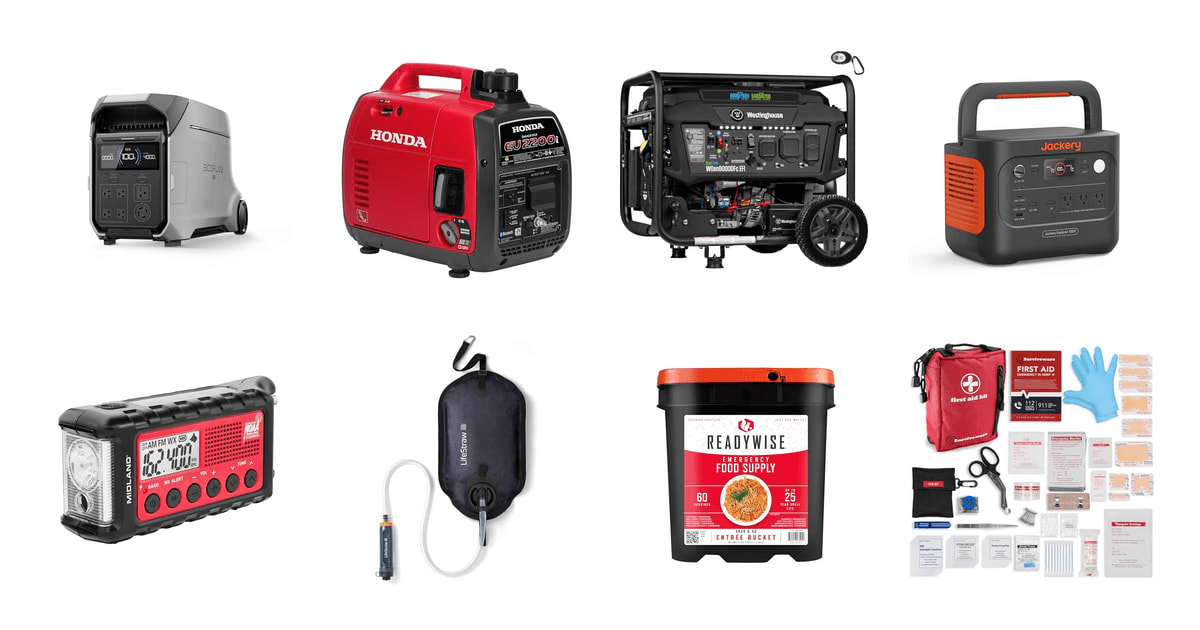
The power goes out first. Then your phone dies, the fridge warms up, and the tap water may or may not be safe to drink. A hurricane kit isn't about surviving the wind — it's about the week or two afterward, when the grid is down and the roads are a mess. Major storms routinely knock out power for two to three million customers, and in hard-hit areas the lights can stay off for weeks. FEMA tells everyone to keep 72 hours of supplies. If you live on the coast, it says to plan for two weeks.
Here's the honest part: no single product solves this. A power station that runs your fridge for two days won't purify creek water, and the water filter won't keep your insulin cold. The gear is also expensive, heavy, and mostly sits in a closet doing nothing. Gas generators put out serious power but can kill you — the CPSC ranks portable generators as the top product category for carbon monoxide deaths at home, and those deaths spike in the weeks after landfall. Battery units are safe indoors but cost more per watt-hour and eventually run flat.
So think in layers. Start with water, food, light and information — the cheap stuff that covers the first 72 hours. Then add backup power sized to what you actually need to run, whether that's a fridge full of medication or a CPAP machine. We think that the EcoFlow DELTA Pro 3 is the best hurricane backup power source for most people who can afford it, and that the Jackery Explorer 1000 v2 is the one to buy if you want indoor-safe power without spending as much.
Everything we recommend

Days of indoor-safe power, if you can handle the weight

Enough power for the essentials, light enough to evacuate with

The gas generator to buy if you want one that starts

Real household wattage, with the fuel hassle that comes with it

County-level storm alerts that keep working when nothing else does
At a glance
| Product | Category | Runtime or Capacity | Price | |
|---|---|---|---|---|
| EF ECOFLOW DELTA Pro 3 Portable PowerTop pick | Power | 4096Wh | $3,699 |
| Honda EU2200i 2200 Watt Inverter GeneratorAlso great | Power | 2200W | $1,099 |
| Westinghouse 7500 Peak Watt EFI Dual FuelUpgrade pick | Power | 7,500 Peak Watts | $1,049 |
| Jackery Explorer 1000 v2 Portable Power StationRunner-up | Power | 1,070Wh | $559 |
| Midland - ER310Budget pick | — | — | $79.99 |
 | LifeStraw - Ultrafilter Membrane Water PurifierAlso consider | Water | 18,000 Liters | $189.95 |
 | READYWISE Emergency Food Survival Supply Entrée BucketAlso consider | Food | 60 Servings | $102 |
 | Surviveware Comprehensive Premium Survival First Aid KitAlso consider | — | 98 Pieces | $35.99 |
How we picked
Power for real loads. We compared manufacturer wattage and watt-hour specs against the appliances people actually need during an outage — a fridge, a CPAP, a well pump. Anything that couldn't run a refrigerator for a meaningful stretch didn't make the power section.
Carbon monoxide safety. The CPSC identifies portable generators as the top product category for home CO deaths, with fatalities spiking after hurricane landfalls. We required a CO shutoff sensor on any gas unit and gave preference to battery stations that carry no CO risk at all.
Water and food. We looked for filters rated for viruses as well as bacteria and parasites, with gravity flow so they work without electricity. For food, we wanted long shelf life, simple preparation and enough servings to matter.
Portable in a hurry. Inland flooding causes roughly 27% of U.S. hurricane deaths, so evacuation is part of the plan. We noted weight and handles on everything, and flagged the pieces that realistically stay home.
Owner track record. We read through published reviews and owner feedback for recurring failure patterns — units that won't start after storage, warranty support that stalls, capacity claims that don't survive contact with a compressor.
Top pick
Days of indoor-safe power, if you can handle the weight
EF ECOFLOW DELTA Pro 3 Portable Power
The DELTA Pro 3 stores 4,096Wh in a battery you can run inside your house with no exhaust and no fuel runs. It'll keep a fridge, a few lights and a CPAP going for two to four days, and you can add batteries if you want more.
$3,699fromAmazonThis is the closest thing to a whole-home backup that you can plug in yourself. It puts out 4,000W and handles both 120V and 240V, so it isn't limited to lamps and phone chargers. EcoFlow rates it for a 3-ton central AC or a 1 HP well pump. If you're on a well, that second one matters more than you'd think — no power means no water, and hand-hauling from a neighbor's pool gets old fast.
The capacity is what separates it from everything else here. 4,096Wh is roughly four times what the Jackery holds, and EcoFlow says it stretches to 48kWh with extra batteries. Owners who bought it specifically to keep a fridge running report getting a day and a half or more out of a single charge with just that one appliance plugged in. For refrigerated medication during a multi-day outage, that's the whole ballgame.
It charges from almost anything — wall outlet, solar panels, your car, even a gas generator if you have one. That flexibility is the point during a long outage. When the grid comes back for six hours and then drops again, you can top it off fast. When it stays down for a week, panels on the roof or the driveway keep it alive. And the switchover is fast enough that a desktop or a router won't blink.
It's also quiet enough to sleep next to. EcoFlow rates it as low as 30 dB, which means you can run it in a bedroom to power a CPAP without the drone of an engine outside your window. That's a genuine advantage over any gas unit, and it's why we'd steer anyone with medical equipment toward a battery first.
Flaws but not dealbreakers
It weighs 115 pounds. There are handles and wheels, but this is a two-person lift into a truck bed, and it's not something you throw in the car during a rushed evacuation. If your plan involves leaving, buy something lighter.
It's the most expensive thing in this guide by a wide margin, and the per-watt-hour math only makes sense if you'll actually use the capacity. Some owners also note you can't always dial in the charging rate you want, which is annoying when you're feeding it from a limited source. A few have run into serious system faults and describe warranty support as slow going — worth knowing before you commit this much money to one box.
It won't run your whole house indefinitely. Two to four days of essentials is the realistic window, and that assumes you're disciplined about what you plug in. Air conditioning will drain it in hours.
The DELTA Pro 3 comes with a five-year warranty.
Runner-up
Enough power for the essentials, light enough to evacuate with
Jackery Explorer 1000 v2 Portable Power Station
The Jackery Explorer 1000 v2 holds 1,070Wh and weighs under 24 pounds, so one person can carry it to the car. It'll run a CPAP for a couple of nights or keep phones, lights and a small fridge going through a shorter outage.
$559fromAmazonWeight is the reason to pick this over the EcoFlow. At 23.8 pounds with a folding handle, you can move it from the closet to the kitchen to the trunk without help. NOAA data shows inland flooding causes about 27% of U.S. hurricane deaths — more than any other cause — so a real prep plan has to include leaving. Gear you can't carry doesn't help you when the order comes.
The capacity is right for the jobs most households actually need done. 1,500W of output with a 3,000W surge covers a fridge, a fan, a laptop and a phone pile. Owners who depend on a CPAP consistently report it carrying them through outages, which is the use case we'd buy it for. Just don't expect it to run an AC unit for more than a short stretch.
It recharges fast — Jackery claims zero to full in an hour with emergency charging turned on in the app, or 1.7 hours on the default setting that's easier on the battery. During a storm, that gap between outages is your window, and an hour is short enough to use it. The LFP cells are rated to hold over 70% of capacity after 4,000 cycles, so it should still be useful many hurricane seasons from now.
You get three AC outlets, two USB-C, a USB-A and a car port, plus a built-in light. That's enough to keep a family's devices alive without a tangle of adapters. Solar panels aren't included, though, and you'll want them if you're planning for an outage longer than a couple of days.
Flaws but not dealbreakers
1,070Wh goes quicker than the spec sheet suggests once you plug in anything with a compressor or a heating element. Plan on it as an essentials-only unit, not a house backup.
The solar panel is a separate purchase, which pushes the real cost up if you want the grid-down recharging story. Buy the panel at the same time or you'll be shopping for one when it's already sold out.
Also great
The gas generator to buy if you want one that starts
Honda EU2200i 2200 Watt Inverter Generator
The Honda EU2200i is quiet, sips fuel, and produces power clean enough for a laptop. It's the inverter generator that owners keep for a decade, and it has a CO shutoff sensor built in — but like every gas unit, it has to run outdoors.
$1,099fromAmazonHonda's reputation here is earned, and it shows up in how these things start. Owners routinely describe first- or second-pull starts after months in a shed, which is exactly the property you want in gear you only touch during emergencies. Consumer Reports has ranked it among the top performers in its generator testing. If you've ever fought a carburetor at 6 a.m. after a storm, that reliability is worth paying for.
It's genuinely quiet. Honda rates it at 48 to 57 dB — about the level of a normal conversation — which is unusual for a gas unit and makes it tolerable to run in a driveway overnight. The 0.95-gallon tank runs 3.2 to 8.1 hours depending on load, and the Eco Throttle system throttles the engine down when you're not pulling much. That's fewer gas-can trips during a week when the stations have lines.
The inverter design produces clean sine-wave power, so you can plug in a laptop or a router without worrying. It handles a fridge, a microwave, some lights and a small window AC — not all at once, but in rotation. At 51 pounds it's also the only gas unit here one person can reasonably load into a car.
Honda includes CO-MINDER, which monitors carbon monoxide and shuts the engine down before levels get dangerous. That's a real safety feature and we wouldn't buy a gas generator without one. It is not, however, permission to run this in a garage.
Flaws but not dealbreakers
2,200 watts is modest. It won't run central air, a well pump or an electric range, and if you were hoping for whole-house backup this isn't it.
It's expensive for the wattage — you're paying for quiet, efficiency and the odds it starts. Some owners caution against relying on the 12V charging port unattended.
It burns gasoline, which means storing fuel and treating it, and it means running the unit well away from the house with the exhaust pointed outward. Carbon monoxide poisoning can kill in minutes at high concentrations. There's no version of this where an attached garage is fine.
Honda covers the EU2200i with a three-year residential warranty.
Upgrade pick
Real household wattage, with the fuel hassle that comes with it
Westinghouse 7500 Peak Watt EFI Dual Fuel
The Westinghouse WGen7500 EFI puts out 6,000 running watts on gasoline and runs on propane too, so you're not stuck if the pumps are dry. It's transfer-switch ready, which is how you power a house rather than run extension cords.
$1,049fromAmazonIf you want to actually back up a house, this is the wattage tier where that starts. 7,500 peak and 6,000 running watts on gasoline covers a fridge, a freezer, a well pump, lights and a window unit at the same time. The L14-30R twist-lock outlet is transfer-switch ready, so an electrician can wire it into your panel and you skip the extension cord spaghetti through a cracked window.
Dual fuel is the underrated feature. Gas stations run dry for days after a landfall, but propane tanks are the thing half your neighbors already have for the grill. You get up to 14 hours on the 4.75-gallon gas tank or 9.5 hours on a 20-pound propane tank, and propane stores for years without going stale — no stabilizer, no rotating cans every season.
The electronic fuel injection matters more than it sounds. There's no choke and no carburetor to gum up, which is the single most common reason a stored generator won't start. Owners report it firing up on the first try out of the box, and there's a key fob for remote start plus a CO sensor and low-oil shutdown.
It costs meaningfully less than the Honda per watt, which is the trade you're making: more power for the money, less refinement. For most people building out a shelter-in-place plan on a coastal property, that's the right trade.
Flaws but not dealbreakers
At 139 pounds it's the heaviest thing here and it isn't going anywhere in an evacuation. It lives in your shed, and that's the whole plan.
Owners have found that it won't start a 3-ton AC unit even with a soft starter installed, despite what you might assume from the peak wattage number. If central air is your goal, you need a bigger unit.
It's louder than the Honda, and Westinghouse's customer service draws complaints — including from owners who found documented accessories missing from the box. Check the contents the day it arrives, not the day the storm forms.
Westinghouse backs the WGen7500 with a three-year limited warranty.
Budget pick
County-level storm alerts that keep working when nothing else does
Midland - ER310
The Midland ER310 pulls NOAA weather alerts, runs on solar, hand crank, AC or AA batteries, and has a flashlight and SOS beacon built in. It's the simplest item here and arguably the first thing you should buy.
$79.99fromAmazonWhen the cell towers go down, this is how you find out what's happening. The ER310 receives NOAA weather broadcasts with SAME alerts, meaning you can program it for your specific county and it won't wake you for a warning three counties over. Wirecutter names it their top emergency radio pick, citing that SAME programming, the four power sources and the SOS beacon as what sets it apart.
Four ways to charge is the reason to spend a little more than the bare-bones models. Wall outlet, USB, the built-in solar panel, hand crank, or six AA batteries as a fallback. Owners report the solar panel keeping it topped off well enough to listen while it charges. Battery life on the internal cell isn't spectacular, but the AA option means it never goes dead.
It doubles as a flashlight and a power bank for a phone, which is more useful than it sounds in a dark house on night three. There's also an ultrasonic dog whistle meant to help rescue teams — a strange feature until you think about who's using it.
Cost is the point. This is the one item on the list nearly everyone should own, and it's a fraction of what the power stations run. If you're building a kit from scratch and can only buy a few things this month, buy this, the water filter and the food.
Flaws but not dealbreakers
Programming the SAME county codes takes some patience and the manual. If you travel a lot, a plain alert radio without SAME may be easier — you won't always know the local codes.
The hand crank produces a modest amount of charge for the effort. Treat it as a last resort, not your primary plan.
The internal battery drains faster than owners expect. Keep a set of AAs in the bag with it.
Who this is for
This guide is for anyone living somewhere the Atlantic season actually reaches — Florida, Texas, Louisiana, the Carolinas, Georgia — and especially for people who just moved there and haven't been through one yet. If someone in your house depends on a CPAP, an oxygen concentrator or refrigerated medication, treat the power section as the non-negotiable part. Everyone else can start smaller: water, food, a radio and light will carry most households through the first 72 hours, and that's most outages.
It's not for people who need a permanent standby generator wired to a natural gas line — that's an installed system and a different purchase. We also don't cover plywood, storm shutters, sandbags, pet crates or document safes, all of which belong in a complete plan. And if you're renting a second-floor apartment inland, you probably need less than this list suggests. Buy the radio and the filter, skip the 115-pound battery.
How we picked
Power: We matched watt-hour and running-watt specs to the loads people actually care about — a fridge that stays cold, a CPAP that runs all night, a well pump that gives you water. Safety: Gas units had to include a CO shutoff sensor, and we weighted battery stations favorably because they carry no carbon monoxide risk indoors at all. Water and food: We wanted gravity-fed filtration that works with zero electricity and rated protection against viruses, bacteria and parasites, plus food with a long shelf life and simple preparation. Portability: Because evacuation is a real possibility and inland flooding kills more people than surge, we noted what one person can carry and what stays in the shed. Track record: We read published reviews and owner feedback looking for repeat failure patterns, especially units that won't start after months of storage.
Other hurricane prep gear worth considering
If you want safe drinking water without electricity: The LifeStraw - Ultrafilter Membrane Water Purifier ($189.95) — The LifeStraw gravity filter is the piece of this kit we'd argue hardest for. It uses an ultrafilter membrane rated to remove 99.99% of viruses, 99.999999% of bacteria and 99.999% of parasites, plus microplastics and sediment — and it runs on gravity alone at about 30 liters an hour. No pumping, no power, no batteries. The membrane is rated for 18,000 liters, which LifeStraw pegs at roughly five years for a family of five. The CDC says to store a gallon per person per day, two in hot weather, and a family of four hitting the two-week mark needs something like 56 gallons. Nobody has that in the garage. A filter closes the gap. The 8-liter bag is heavy and awkward to hang when full, and it doesn't include a clean bag for the output, so buy a container for the filtered side.
If you want two weeks of food you don't have to rotate: The READYWISE Emergency Food Survival Supply Entrée Bucket ($102) — The ReadyWise entrée bucket gives you 60 servings of freeze-dried meals — cheesy macaroni, lasagna, teriyaki rice, chicken-flavored noodle soup — with a shelf life up to 25 years if you keep it cool and sealed. That's the appeal: buy it once, stack it in a closet, forget it. The split lid doubles as a tray, and the bucket is stackable and light enough to grab on the way out. Two caveats. Servings are marketing servings, not meals, so budget more of them per person per day than the label implies. And despite the just-add-water framing, several of these need actual boiling for ten minutes or more, which means you also need a camp stove and fuel. Don't buy the food without buying the way to heat it.
If you want one first aid kit that works at home and in the car: The Surviveware Comprehensive Premium Survival First Aid Kit ($35.99) — The Surviveware kit packs 98 items into a labeled, compartmentalized 600D polyester bag with MOLLE straps and D-rings, so it clips into a go-bag or mounts in a truck. The labeled compartments are the real feature — you're not dumping the contents on a wet floor looking for gauze. Everything's sealed in laminate pouches, and there's a removable CPR pouch and a first aid guide. It's built for cuts, scrapes, burns and sprains, which covers the overwhelming majority of post-storm injuries: stepping on debris, cutting a hand on a branch. It is not a trauma kit, though. There's no tourniquet and no chest seal, so if you want serious bleeding control you'll add those yourself. Also add your own prescriptions — no off-the-shelf kit includes them, and FEMA specifically tells hurricane-zone households to stock two weeks of medication.
The competition
One note on scope. This is what the research surfaced for hurricane prep on Amazon, not a survey of everything on the market. Every product in this lineup made it into the picks or the also-consider section, because each one covers a different job — power, water, food, information, injuries — and a hurricane kit needs all of them rather than a winner in each. If you're comparing against something not listed here, the criteria above still apply: check the CO sensor, check the watt-hours against your actual appliances, and check whether you could carry it out the door.
Prep timing and storage
Buy before the season opens. Hurricane season runs roughly half the year, peaks in late summer and early fall, and shelves empty the moment a storm gets a name. Charge every battery to full before the season starts and top them off monthly — a power station at 40% when the lights go out is a wasted purchase. Rotate stored gasoline every few months with stabilizer, or skip the problem by keeping propane instead, which sits for years without degrading. Store the food bucket somewhere below 75°F; a hot garage cuts that 25-year shelf life considerably. Keep the radio's AA batteries in a sealed bag beside it, not installed, so they can't corrode the contacts. Once a year, open the first aid kit and replace what's expired or missing.
Questions we get
How much water should I store for a family of four?
The CDC recommends at least one gallon per person per day for drinking and sanitation, and two gallons in hot climates or for anyone pregnant, sick or nursing. For a family of four over FEMA's recommended two weeks in a hurricane zone, that's 56 gallons minimum — and realistically more in a Gulf Coast August. Almost nobody stores that much, which is why a gravity filter like the LifeStraw is worth having alongside bottled water.
Are portable power stations better than gas generators for hurricanes?
They're safer, quieter and lower maintenance, but they hold less energy and cost more per watt-hour. A battery station produces no carbon monoxide, so you can run it in a bedroom next to a CPAP — a gas generator can never come indoors. The tradeoff is that a battery eventually runs flat and needs sun or grid power to refill, while a generator keeps going as long as you keep feeding it fuel. If your outages run a day or two, go battery; if you're planning for a week with a well pump, a gas unit or both makes more sense.
Can I run a generator in my garage with the door open?
No. The CPSC identifies portable generators as the leading product category for carbon monoxide deaths in the home, and those deaths spike in the weeks after hurricane landfalls. CO can reach lethal concentrations in minutes, and an open garage door doesn't clear it — the gas seeps into the house through the connecting door. Run it outside, well away from windows and vents, with the exhaust pointed away from the building.
How many days of food should I stockpile?
FEMA says 72 hours minimum for every household, and two full weeks of food, water and medication if you live somewhere hurricanes hit. Freeze-dried buckets are the easy way to hit two weeks because they last decades and don't need rotating. Just count servings honestly — labeled servings are smaller than a meal, so plan on more per person per day than the box suggests, and make sure you own a stove and fuel to boil water.
What's the best emergency radio for hurricane alerts?
Look for NOAA reception with SAME programming, which lets you enter your county code so you only get alerts that apply to you. The Midland ER310 is Wirecutter's pick for exactly that, plus four ways to power it — solar, hand crank, AC and USB — and a built-in flashlight and SOS beacon. It's the simplest item in this guide and the one we'd buy first.
When should I start preparing each season?
Start before the season opens, not after it does. Peak activity clusters in late summer and early fall, but supplies vanish as soon as a storm is forecast. Buying early means you're choosing gear on the merits instead of grabbing whatever's left on a picked-over shelf.
Why you should trust us
For this guide:
- We read manufacturer specifications for every product here, along with published reviews and guidance from FEMA, the CDC, NOAA and the CPSC.
- We compared watt-hour and running-watt claims against the household loads people report needing during outages, and we read owner feedback across each listing for recurring complaints about starting reliability, capacity and warranty support.
- We read owner reviews on every listing, weighted toward the critical ones, because that is where the recurring failures show up.
- We have a systematic way of automatically fetching the latest prices, so the numbers on this page stay current.
- This is a research-focused guide, so the team may not own every product listed — though we often do own the top winners, which gives us extra context for the recommendations.
- We don't accept free products, and the retailer commission never changes which product we recommend.
Sources
Build a Kit – Ready.gov (FEMA), FEMA
Hurricane Preparedness – NOAA National Hurricane Center, NOAA National Hurricane Center
Hurricane Preparedness Checklist – American Red Cross, American Red Cross
Creating and Storing an Emergency Water Supply – CDC, U.S. Centers for Disease Control and Prevention
Generator Safety – Carbon Monoxide Information Center (CPSC), U.S. Consumer Product Safety Commission
Best Portable Generators – Wirecutter / NYT, Wirecutter
Best Portable Power Stations – Wirecutter / NYT, Wirecutter
Best Weather Radios – Wirecutter / NYT, Wirecutter
Best Portable Generators – Consumer Reports, Consumer Reports
2025 Atlantic Hurricane Season Outlook – NOAA, NOAA
EcoFlow DELTA Pro Specifications, EcoFlow
LifeStraw Mission Product Page, LifeStraw
Amazon product listings and owner reviews for all 8 products
Manufacturer specification pages for each product
Some passages in this guide may be paraphrased with AI help. Prices are refreshed automatically.
More like this.
Continue exploring home reviews and recommendations.

The Best Hurricane Preparedness Kits
A hurricane doesn't take everything at once. The power goes first, then water pressure, then the roads. What's left is you, your house, and whatever you…

The Best Meal Prep Containers
Meal prep containers get judged on Sunday afternoon and again on Wednesday morning. On Sunday they need to hold five portions of chicken and rice without…

The Best Meal Prep Containers
You spend a Sunday afternoon cooking, and then a set of plastic boxes decides whether that work survives until Thursday. Good containers seal tight enough…

The Best Stump Removal Gear
A stump doesn't just sit there looking bad. It sprouts suckers, it hides in the grass and eats mower blades, and the roots keep feeding fungus into your…

The Best Home Barista Gear
Espresso at home lives or dies on two things: an even grind and a machine that holds a steady temperature. Everything else - the tamper, the scale, the…

The Best Ice Fishing Tip-Ups and Hard-Water Gear
Tip-up fishing is a waiting game you play with your feet up. You set a baited line under the ice, walk away, and watch for a flag. When one pops across…