The Best Hurricane Preparedness Kits
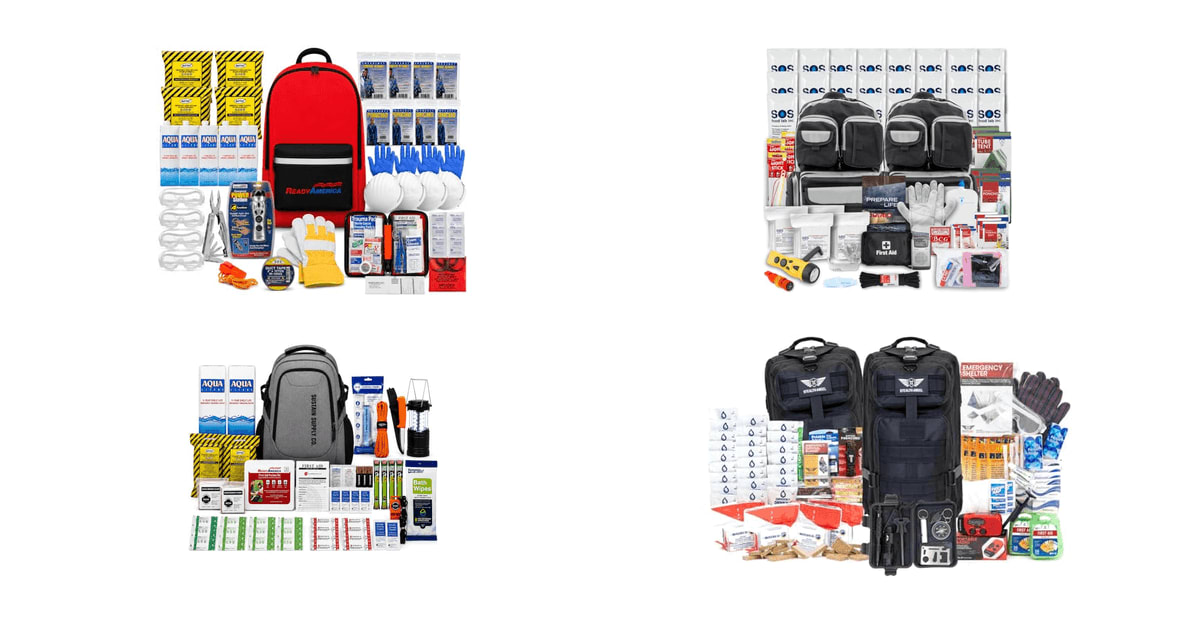
A hurricane doesn't take everything at once. The power goes first, then water pressure, then the roads. What's left is you, your house, and whatever you thought to buy before the season started. A pre-made kit's real job is to remove decisions on the worst day of your year — food you don't have to cook, water you don't have to go find, a radio that still works when the cell towers don't. If you've never assembled one yourself, a kit is the fastest way to go from nothing to something.
Here's the honest part: no pre-made kit sold here carries enough water. FEMA's minimum is a gallon per person per day, so a family of four sheltering for three days needs at least 12 gallons. These kits include pouches and cartons totaling a couple of gallons at best. Calories are thin too — Consumer Reports found budget kits average 1,100 to 1,400 calories per person per day, well under the 2,000 an adult needs under stress. And every kit here covers three days, while FEMA now points people toward two weeks.
So treat any of these as a foundation, not a finish line. What a good kit does well is cover the fiddly items you'd forget — purification tablets, a hand-crank radio, a tube tent, work gloves, a whistle — and put them in one bag you can carry to the car. Then you add water, medications and copies of your documents. We think that the Emergency Zone Urban Survival Bug Out Bag is the best hurricane preparedness kit for most people, and that the Stealth Angel 4 Person 72 Hour Emergency Kit is the one to buy if you want shelter gear portioned out per person.
Everything we recommend

The most complete grab-and-go bag for a family of four

Per-person shelter and gear, if you'd rather not share
The plainest kit that still covers the basics for four

Better organization and a proper NOAA radio, for two
At a glance
| Product | People Served | Duration | Price | |
|---|---|---|---|---|
| Ready America 72 Hour Deluxe Emergency KitBudget pick | 4-Person | 3-Day | $139.99On sale |
| Emergency Zone Urban Survival Bug Out BagTop pick | 4 Person | 3 Days | $239.99 |
 | Ready America 70490 2Person 3Day Premium SustainAlso in lineup | 2-Person | 3-Day | $75.90On sale |
| Stealth Angel 4 Person Black 72 HourRunner-up | 4 Person | 72 Hours | Check price |
| Complete Earthquake Bag - Emergency Kit forUpgrade pick | 2 Person | 3-Day Period | $187On sale |
How we picked
Water and purification. We compared stated water volume against FEMA's one-gallon-per-person-per-day minimum, and we gave real weight to kits that include tablets, a filter or a collapsible container. Pouches alone leave you stuck once they're gone.
Calories and shelf life. We looked for kits that state calorie counts per person per day rather than vague serving numbers. Published reviews consistently find budget kits land near 1,100 to 1,400 calories, so transparency is what lets you fill the gap.
NOAA radio and power. Any kit that skips a hand-crank or solar weather radio was out. When the grid and the cell network fail together, a crank radio with a phone-charging port is the only communication you control.
First aid depth. We read the itemized first aid contents rather than trusting the piece count, since a hundred adhesive bandages inflates a number without adding capability. Kits with gloves, goggles and biohazard bags scored higher for post-storm cleanup.
Form and storage. We favored backpacks over bins, because a bag works for both evacuation and sheltering in place while a bin only does one. Pack dimensions mattered for apartment dwellers with a single closet shelf.
Top pick
The most complete grab-and-go bag for a family of four
Emergency Zone Urban Survival Bug Out Bag
This backpack covers four people for three days with food bars, water pouches, a 121-piece first aid kit, sleeping bags and a tube tent. It's the only kit here that gives you three separate ways to handle water, which matters when the pouches run out on day two.
$239.99fromAmazonWater is where most kits quit, and this one keeps going. You get pouches, a collapsible container and Chlo-Floc purification treatment. That combination is the difference between three days of drinking and three days of rationing. If the storm passes and your tap runs but the boil notice stays up, you can fill the container and treat it. Pouch-only kits leave you with nothing once the last one's gone.
The first aid kit runs 121 pieces, which is on the generous end for a pre-made bag. That's still bandage-and-blister territory rather than trauma care — you won't find a chest seal or a tourniquet in here. For the injuries people actually get after a hurricane, though, it's reasonable: cuts from cleanup debris, scrapes, headaches, blisters from walking around in wet shoes.
Shelter is the quiet strength. Sleeping bags, a tube tent, ponchos and hand warmers mean you're covered whether you end up in a shelter cot, a relative's living room floor or your own dark house with the windows taped. Emergency Zone also packs the hygiene items nobody puts on a list and everybody wants by hour thirty — toothbrushes, soap, toilet paper.
The food bars are stated in calories, not vague servings, and that's worth something. SOS-brand 3,600-calorie bars over three days works out to roughly 1,200 calories per person per day. That's low. But it's low and honest, and it lets you calculate exactly how much rice, peanut butter and canned soup you need to add. Kits that only say "emergency food" make that math impossible.
Flaws but not dealbreakers
It's heavy — about 25 pounds packed — and it's one bag for four people. If you're evacuating on foot or you have kids to carry, that's an awkward load for one adult. Splitting the contents across two smaller packs before the season starts is worth an afternoon.
The calorie count won't sustain a working adult. Twelve hundred calories a day is enough to sit still and stay calm, not enough to spend a day clearing branches or waiting in line for ice. Plan on doubling the food, and remember the water pouches and bars carry a five-year shelf life, so this kit needs to go on your calendar.
Runner-up
Per-person shelter and gear, if you'd rather not share
Stealth Angel 4 Person Black 72 Hour
Stealth Angel's four-person bag portions out the comfort items — a poncho, a blanket, a body warmer for each person — instead of pooling them. It has the hand-crank radio and purification tablets we look for, in a flatter pack that slides under a bed.
Check priceatAmazonKits usually skimp by giving a family of four two ponchos and calling it covered. This one doesn't. Everyone gets their own rain protection, blanket and body warmer, plus a tube tent for the group. If you've ever tried to share a mylar blanket with a nine-year-old in a parking lot, you understand why that's not a trivial detail.
The essentials are all present, and none of them are afterthoughts. Water pouches for 72 hours, food bars, purification tablets, flashlights, a hand-crank radio and a whistle. Stealth Angel says the contents follow federal and nonprofit preparedness guidance, and the list lines up with what Ready.gov asks for. Nothing exotic — just the boxes checked.
The pack shape is genuinely useful. At roughly 20 by 16 by 8 inches, it lies flat rather than standing tall, so it fits under a bed or on a closet shelf instead of taking up floor space in a hallway. Apartment dwellers and anyone storing a kit in a second-floor bedroom will notice the difference.
Flaws but not dealbreakers
The listing never states calorie counts or shelf life for the food, and that's a real gap. You can't tell whether you're getting 1,200 calories a day per person or 2,400, and you can't put a rotation date on a calendar without opening the bag and reading the wrappers. Do that when it arrives.
Water is the usual shortfall. A 72-hour supply of pouches for four people is a fraction of FEMA's 12-gallon minimum, so the purification tablets aren't a bonus — they're the plan. Store a case of bottled water alongside it.
Budget pickOn sale
The plainest kit that still covers the basics for four
Ready America 72 Hour Deluxe Emergency Kit
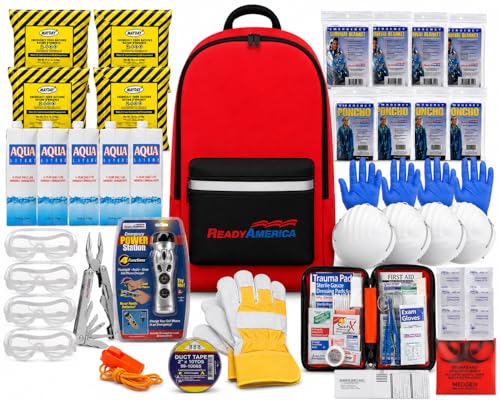
Ready America's deluxe backpack hits the core requirements — food, water, a 107-piece first aid kit, a hand-crank power station with a phone charger — without extras. Popular Mechanics called it the most cost-efficient FEMA-compliant pre-made kit at major retailers.
$139.99fromAmazonList priceThe hand-crank power station is the piece that earns its keep. It's a flashlight, an AM/FM radio and a phone charger in one body, so when the grid goes down and the towers come back up before your power does, you can charge enough battery to send a message. NOAA broadcasts and local AM stations become your only real source of information once your phone dies.
Ready America is unusually specific about what's in the bag, which makes gap-filling easy. Four 2,400-calorie food bars. Four 1-liter Aqua Literz cartons. A 107-piece first aid kit. Safety goggles, nitrile gloves, leather work gloves, biohazard bags. Those last four matter more than people expect — post-storm cleanup means broken glass, contaminated floodwater and debris, and bare hands are how you end up needing stitches you can't get.
It's also the easiest kit here to hand to someone who has nothing. If you're buying for an aging parent in a coastal county, or stashing something at the office, this covers the fundamentals in one red backpack that anyone can identify in a dark hallway. The weight is manageable at around 21 pounds.
Flaws but not dealbreakers
The food is the thinnest of any kit here. Four 2,400-calorie bars split across three days is about 800 calories per person per day — that's survival math, not eating. You'll want to add substantially more food, and the water is worse: four liters total, when four people need 12 gallons for three days.
There's no water purification in the bag. No tablets, no filter straw, no collapsible container. Once the cartons are gone you have no way to make questionable water drinkable, which is a significant omission in a flood scenario. Add tablets and a container yourself; both are cheap and light.
Upgrade pickOn sale
Better organization and a proper NOAA radio, for two
Complete Earthquake Bag - Emergency Kit for
Redfora's Complete Earthquake Bag sorts everything into color-coded, resealable waterproof packs, so you're not dumping a backpack on a wet floor to find gauze. Its hand-crank NOAA radio doubles as a flashlight and phone charger.
$187fromAmazonList priceOrganization sounds like a soft feature until you're doing it by flashlight. Redfora groups supplies into color-coded, resealable waterproof packs — first aid here, hygiene there, tools in a third. You learn the system once, in daylight, and then you can find what you need at 2 a.m. without unpacking the whole bag. It also means the contents stay dry if the bag sits in an inch of water.
The radio is the real one. A hand-crank NOAA receiver picks up weather-service broadcasts directly, which is what you want when the power's out and local stations are running on generators. It's also a flashlight and a phone charger. Redfora includes a video guide walking through each category of supplies, which is genuinely useful if this is your first kit.
Food and water are better specified than most: 3,600-calorie bars with a five-year shelf life, 24 water pouches and 20 purification tablets, plus a hygiene kit and a two-person tube tent. Redfora says the contents were assembled with emergency-management input, and the first aid provisions are the strongest of the pre-made kits here.
It's called an earthquake bag, but the contents map almost exactly onto hurricane needs. Both scenarios mean no power, no safe tap water, possible evacuation and days of waiting. The only earthquake-specific thinking is the sturdy waterproof packaging — which, in a flood state, is a feature rather than a mismatch.
Flaws but not dealbreakers
It's built for two people, so a family of four needs two bags, and that adds up fast. The per-person cost is the highest of any kit here even before you double it.
The bag is bulky at 24 by 18 by 10 inches and 16 pounds. For sheltering in place that's irrelevant. For a mandatory evacuation where you're carrying a kit, a pet and a child, it's a lot of bag for two people's worth of supplies.
Who this is for
Buy one of these if you own or rent in a hurricane state and currently have nothing organized — a junk drawer with a flashlight doesn't count. These kits are also a good call if you're helping an older relative prepare, or if you want something at the office or in a second vehicle. Inland readers shouldn't skip this either: freshwater flooding accounts for roughly 27% of Atlantic hurricane fatalities per the National Hurricane Center, and plenty of those deaths happen more than 100 miles from the coast.
Skip these if you already keep a stocked pantry, a working generator and a rotation habit — you'll get more calories and more water per dollar building your own, by a wide margin according to Wirecutter's comparison. This guide covers pre-assembled multi-person kits for three-day scenarios. It doesn't cover generators, chainsaws, long-term food storage buckets, or medical kits for people with specific chronic conditions. If you take daily prescriptions, the CDC recommends keeping a seven-day supply set aside, and no store-bought kit handles that for you.
How we picked
We started from published buying guides, manufacturer contents lists and recurring themes in owner feedback, then judged each kit on five things. Water: stated volume measured against FEMA's gallon-per-person-per-day minimum, with credit for tablets, filters or a collapsible container. Food: calories per person per day stated plainly, plus shelf life, since a five-year bar means a rotation date you have to keep. Communication: a hand-crank or solar NOAA radio, ideally with a phone-charging port, was non-negotiable. First aid: itemized contents rather than piece counts, with gloves, goggles and biohazard bags weighted for cleanup injuries. Form factor: backpacks over bins, and pack dimensions that fit a closet shelf rather than a hallway floor.
The competition
This is what our research surfaced among widely available pre-made kits, not a census of everything sold. Plenty of good options exist from smaller preparedness brands and regional retailers, and a kit you assemble yourself will almost always beat any of these on calories and water. The list below is the one product we looked at closely that didn't make the cut.
The Ready America 70490 2Person 3Day Premium Sustain ($75.90) — Ready America's 70490 Premium Sustain Supply backpack covers two people for three days in a compact 10-pound package, which is appealing if you live alone or as a couple in an apartment. The problem is that the listing describes the contents in generalities — "long shelf-life food," "purified drinking water," "essential emergency supplies" — without calorie counts, water volume or an itemized first aid list. You can't plan around a kit you can't inventory. Redfora's two-person bag covers the same household with specific numbers on the label, and that's worth more than the weight savings. If you find this one and the details check out, it's a reasonable compact option for a small space.
Storage and rotation
Store your kit somewhere cool, dark and reachable in the dark — a bedroom closet beats a garage, where July heat shortens shelf life on everything. Write the earliest expiration date on the outside of the bag in marker, then check it at the start of each hurricane season. Water pouches and compressed food bars typically last five years; batteries do not, so pull any loose ones out of devices to prevent corrosion. Open the kit once when it arrives and again yearly so you actually know what's in it. That's also when you refresh medications, swap in current copies of your ID, insurance policy and prescription list in a sealed bag, and add the water these kits don't include.
Questions we get
How many days of supplies should a hurricane kit contain?
More than any of these ship with. FEMA has expanded its core guidance from a 72-hour supply to two weeks for major disaster scenarios, and the American Red Cross recommends seven days for hurricanes specifically. Power restoration after a major strike commonly takes five to ten days, and longer in severely hit areas. Treat a three-day kit as your evacuation bag and build a separate two-week pantry for sheltering in place.
How much water do I actually need?
One gallon per person per day, per FEMA — that covers drinking plus minimal hygiene. A family of four needs 12 gallons for three days and 56 gallons for two weeks. No pre-made kit here comes close; most include a couple of gallons total. Buy cases of bottled water separately and pick a kit with purification tablets or a filter so you have a backup once those run out.
Are pre-made kits worth it, or should I build my own?
Both, honestly. Wirecutter found a self-assembled kit delivers 40 to 60% more calories and two to three times more water per dollar. But pre-made kits are faster and less likely to have gaps — most people who plan to DIY never finish, and the small items like purification tablets and a crank radio are exactly what gets forgotten. Buying a kit and adding water and food is the practical middle.
What's the most overlooked item?
Document copies. ID, insurance policies, medical records and a current prescription list are consistently the biggest gap in both DIY and store-bought kits, and they're what you need to file a claim or get a refill at an unfamiliar pharmacy. Put copies in a sealed waterproof bag inside the kit, and keep a photo of each on your phone.
Do I need a different setup for evacuation versus sheltering in place?
The needs overlap, but the form factor doesn't. For a mandatory evacuation you want a backpack you can carry with one hand free — that's why every pick here is a bag. For sheltering in place you want volume: cases of water, a cooler, more food, and a way to charge devices for a week. Start with the backpack, since it works for both, then build the shelter-in-place supply around it.
What should I add to any of these kits?
Water first — several gallons per person. Then food, since these kits run 800 to 1,200 calories per person per day and adults under stress need around 2,000. Add a seven-day supply of prescriptions, document copies, cash in small bills, a phone battery bank, and anything specific to your household: infant formula, pet food, diapers, or allergy-safe items the kit's generic food bars won't cover.
Why you should trust us
For this guide:
- We read the full itemized contents list for each kit and compared stated water volume, calorie counts and shelf life against FEMA's Ready.gov minimums and American Red Cross hurricane guidance.
- We reviewed published buying guides from Consumer Reports, Popular Mechanics and Wirecutter alongside NOAA and CDC preparedness recommendations.
- We looked at recurring themes in owner feedback — particularly complaints about food quantity, water shortfalls and pack bulk — to shape the flaws sections.
- We read owner reviews on every listing, weighted toward the critical ones, because that is where the recurring failures show up.
- We have a systematic way of automatically fetching the latest prices, so the numbers on this page stay current.
- This is a research-focused guide, so the team may not own every product listed — though we often do own the top winners, which gives us extra context for the recommendations.
- We don't accept free products, and the retailer commission never changes which product we recommend.
Sources
Build A Kit — Ready.gov (FEMA), FEMA / Ready.gov
Hurricane Preparedness — American Red Cross, American Red Cross
2025 Atlantic Hurricane Season Outlook — NOAA, NOAA
FEMA National Household Survey on Preparedness, FEMA
Best Emergency Preparedness Kits — Wirecutter (NYT), Wirecutter
Best Emergency Kits — Good Housekeeping Institute, Good Housekeeping
Facts & Statistics: Hurricanes — Insurance Information Institute, Insurance Information Institute
Emergency Food Storage Shelf Life — Utah State University Extension, Utah State University Extension
Hurricane Preparation for People with Disabilities and Special Needs — CDC, CDC
Emergency Kit Consumer Guide — Consumer Reports, Consumer Reports
Inland Flooding Fatality Statistics — NOAA National Hurricane Center, NOAA National Hurricane Center
Best Hurricane Preparedness Kits — Popular Mechanics, Popular Mechanics
Amazon product listings and owner reviews for all 5 products
Manufacturer specification pages for each product
Some passages in this guide may be paraphrased with AI help. Prices are refreshed automatically.
More like this.
Continue exploring home reviews and recommendations.

The Best Hurricane Prep Gear
The power goes out first. Then your phone dies, the fridge warms up, and the tap water may or may not be safe to drink. A hurricane kit isn't about…

The Best Window Insulation Kits and Draft Stoppers
A drafty house doesn't announce itself. You just notice that the room with the big window stays cold no matter how high you set the thermostat, or that…

The Best Toilet Flapper Replacement Kits
A running toilet is easy to ignore. It's a hiss behind a closed door, a refill that kicks on at 2 a.m., a water bill that creeps up without explanation.…

The Best Concrete Crack Repair Kits for Driveways
A crack in your driveway isn't just ugly. It's an open door for water, and water is what turns a hairline into a trench. Rain seeps in, freezes, expands,…

The Best Aluminum Cable Deck Railing Kits
Cable railing sells itself on one thing: you stop noticing the railing and start noticing the yard. Thin horizontal cables block a fraction of the view…

The Best Cocktail Smoker Kits
Smoked cocktails are a parlor trick that happens to taste good. You set a few wood chips on fire, trap the smoke over a glass of bourbon, and the drink…