The Best Bird Cages for Parakeets and Cockatiels
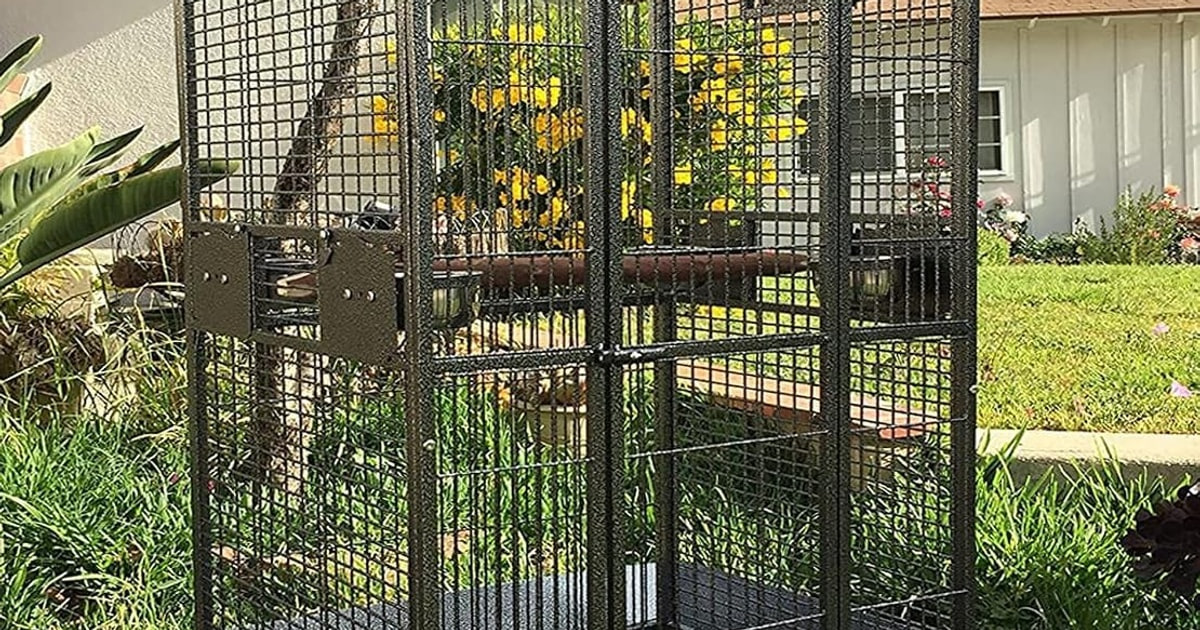
A cage isn't furniture. It's the room your bird lives in, sleeps in, and eats in, and for most parakeets and cockatiels it's where they spend the majority of the day. That makes a few unglamorous details matter more than looks: how far apart the bars sit, how wide the floor is, and how quickly you can pull the tray out on a Tuesday morning. Get those right and daily care takes ten minutes. Get them wrong and you'll fight the cage for years.
Here's the honest part. No cage on the market gives a parakeet or a cockatiel enough room to really fly, and the marketing rarely admits it. Even a five-foot flight cage is a hallway compared to what these birds do outdoors, so out-of-cage time isn't optional no matter what you buy. Cage listings are also loose with their numbers. Bar spacing, interior height and stand height get mixed together, so you should measure the bars yourself when the box arrives.
We looked at bar spacing, usable width, cleaning design and what owners say breaks first, then sorted the lineup by who each cage actually suits. Some are built for one bird in a bedroom. Others are closer to an indoor aviary and need a corner of the living room. We think that the Prevue Hendryx Wrought Iron Flight Cage is the best bird cage for parakeets and cockatiels for most people, and that the Yaheetech 69-inch Rolling Cage is the one to buy if you want the most interior space you can fit.
Everything we recommend

Room to actually fly, on wheels, and easy to clean

More cage and a rooftop playground, if you have the room

A small, well-made first cage with a lid that opens up

The tidiest option, if seed hulls are your main gripe
Prices as of Oct 22, 7:36 AM PT · Details
At a glance
| Product | Cage Size | Bar Spacing | Price | |
|---|---|---|---|---|
| Prevue Hendryx Pet Products Wrought Iron FlightTop pick | 37x23x60 in | 1/2 in | $299.99 |
| Prevue Pet Products Top Opening Bird CageBudget pick | 18x18x24 in | 1/2 in | $89.99 |
| Vision M02 Wire Bird CageAlso great | 24.6x15.6x34.3 in | — | Check price |
| Yaheetech 69-inch Wrought Iron Rolling Large ParrotRunner-up | 32x30.5x68.5 in | — | $193.99 |
 | Large Elegant Wrought Iron Open/Close Dome PlayAlso in lineup | 24x22x63 in | 5/8 in | $159.95 |
 | Kings Cages Round Stainless Steel Bowls CageAlso in lineup | — | — | $20.99 |
Prices as of Oct 22, 7:36 AM PT · Details
How we picked
Bar spacing. We compared published spacing figures against the thresholds avian care guides use: about 3/8 inch for budgies and no more than 1/2 inch for cockatiels. Anything wider gets flagged, because a head that slips between bars is the failure mode that actually kills birds.
Usable width. We prioritized floor width and depth over total height, since birds travel laterally rather than vertically. A tall, narrow cage with impressive cubic inches loses to a shorter, wider one.
Cleaning design. We looked for a pull-out tray, a removable bottom grate and some form of seed containment. Owner feedback across this category is consistent: the cleaning layout determines whether the cage stays clean.
Material safety. We checked what the manufacturer says about the finish, favoring stainless components and non-toxic powder coat over anything galvanized. Owner reports of early chipping counted against a cage.
Assembly and support. We read owner feedback on build time, hardware quality and missing parts. Cages that regularly arrive with bent bars or unclear instructions dropped in the ranking.
Top pick
Room to actually fly, on wheels, and easy to clean
Prevue Hendryx Pet Products Wrought Iron Flight
This is a proper flight cage: 37 inches wide, five feet tall on a rolling stand, with eight doors and a pull-out tray. It gives a pair of cockatiels or a small flock of budgies room to move sideways, which is the direction birds actually travel.
$299.99fromAmazonPrices as of Oct 22, 7:36 AM PT · Details
Width is the spec that matters, and this cage has it. Birds fly on a horizontal line, branch to branch, not straight up like a helicopter. At 37 inches long and 23 inches deep, this cage gives a budgie enough runway to take two or three real wingbeats between perches. A tall, narrow column with the same cubic inches doesn't. That difference shows up in how much your bird moves during the day.
Eight doors sounds excessive until you own one. There are two large front doors plus six smaller side doors. You can swap seed and water, drop in a new toy, or coax a bird onto your hand without opening the whole front and turning feeding time into a recapture mission. If your bird is nervous around hands, the side feeder doors let you do the daily chores while barely disturbing him.
Cleaning is a two-minute job, not a project. The bottom grille lifts out and the tray slides out from the front, so you can pull the mess without lifting the cage or reaching past a startled bird. That matters more than it sounds. The cages people actually keep clean are the ones where cleaning is easy, and a tray you dread is a tray you'll put off.
The rolling stand is the sleeper feature. Locking casters mean you can push all 42 pounds of it toward the window in the morning and away from the drafty wall at night, or move it out of the way when guests come over. Without wheels, a cage this size lives wherever you first put it, forever. There's also a bottom shelf for the seed bag and cleaning supplies.
Flaws but not dealbreakers
The bar spacing is fine for cockatiels but wide for a small budgie. The listing specifies half-inch wire spacing. That's within the usual recommendation for cockatiels, but avian care guides generally want 3/8 inch for budgerigars, and a small or young budgie can push a head through a gap that size. Measure the bars yourself when it arrives, and if you have a petite bird, look at the smaller cages here instead.
It's heavy and it's a chore to move between floors. Forty-two pounds plus a wide footprint means the casters are great on one level and useless on stairs. Plan on two people for the initial placement. Assembly is also a sit-on-the-floor-with-the-instructions kind of afternoon.
Powder coat chips, and chips matter on a bird cage. Any painted steel cage will lose finish where a beak works the same spot day after day. Check the bars every few months, especially around doors and food cup mounts, since bare metal underneath is exactly what you're trying to avoid.
Runner-up
More cage and a rooftop playground, if you have the room
Yaheetech 69-inch Wrought Iron Rolling Large Parrot
The Yaheetech stands about 69 inches tall with a play top, a ladder and a rope perch built in. It's the pick if you want an indoor aviary feel for a cockatiel pair, and you're willing to give up a real corner of a room to get it.
$193.99fromAmazonPrices as of Oct 22, 7:36 AM PT · Details
You get a play gym without buying a play gym. The rooftop area comes with a ladder, a wooden dowel and two feeders, so your bird has somewhere to go when the door is open. For a cockatiel who wants to be near you but not on you, that's a genuinely useful piece of real estate, and it saves the floor space a separate stand would eat.
Every door locks, which cockatiel owners will appreciate. These birds are clever, and a determined one will work a simple latch open over a few weeks. Locking doors take that hobby away. Three feeder doors let you handle food and water from outside the cage, so a skittish bird doesn't get a hand in his face twice a day.
The four-sided seed guard does real work. Budgies and cockatiels fling hulls with startling range. A guard that runs all the way around the base plus a slide-out tray keeps most of it inside the cage instead of under your couch. There's a bottom grate too, so your bird isn't walking through droppings between cleanings.
It arrives with the accessories you'd otherwise buy separately. Five stainless steel feeders, two wooden perches and a rope boing come in the box. Stainless cups are the ones you want for food and water, since they don't scratch up and hold bacteria the way plastic does, and they're the first upgrade most owners make anyway.
Flaws but not dealbreakers
Assembly is the common complaint, and it's a fair one. Owners regularly describe an hour or more of sorting hardware, and instructions for cages in this class are famously thin. Set aside an evening, keep the parts sorted, and don't tighten everything until the frame is square.
Finish quality varies from unit to unit. Powder coating on cages at this size isn't perfectly consistent, and some arrive with rough spots or chips from shipping. Inspect the bars before you introduce a bird, and let the cage air out somewhere ventilated if it has a chemical smell.
Check the bar spacing before you commit to a budgie. This is a cage designed with larger birds in the target list, so confirm the gap suits a small parakeet rather than assuming it does. It's the right size for cockatiels and a bit generous for the smallest budgies.
Budget pick
A small, well-made first cage with a lid that opens up
Prevue Pet Products Top Opening Bird Cage
At 18 by 18 by 24 inches, this is the smallest cage we'd recommend for one bird, and it costs far less than the flight cages here. The roof opens into a perch, so your cockatiel gets a supervised spot to sit outside the bars.
$89.99fromAmazonPrices as of Oct 22, 7:36 AM PT · Details
The top-opening roof is a small feature that changes the routine. Flip it up and the cage becomes a perch stand. Your bird can climb out on his own schedule while you're on the couch nearby, which is exactly the kind of low-effort out-of-cage time that busy owners actually keep up with. It also makes reaching in for feeding simple.
It fits where a flight cage won't. An 18-inch square footprint slides into a bedroom corner, a small apartment or a home office. If you're deciding between this cage in a room where you spend time and a bigger cage stuck in a spare room, take this one. Birds do better near their people than alone in more square inches.
The cleaning setup is the same one the bigger Prevue cages use. Removable bottom grille, pull-out tray, powder-coated steel mesh over a plastic base. Nothing clever, just the layout that makes daily cleanup quick. Wood perches and cups come included, so you're not shopping for parts the night it arrives.
Half-inch spacing suits a cockatiel well. That's the standard recommendation for the species, and the horizontal mesh gives them something to climb, which cockatiels do constantly. For a single bird who gets out of the cage daily, this is an appropriate home rather than a compromise.
Flaws but not dealbreakers
It's genuinely small, and that's the whole trade. One bird, not two. There's no room for the horizontal flight a bigger cage allows, so daily out-of-cage time isn't a nice-to-have here — it's the deal you're making. If your bird will be alone for long stretches, buy more cage.
The stand doesn't roll, and side access is limited. Repositioning means lifting the cage rather than pushing it. There are also fewer side doors than on the larger models, so more of your daily handling happens through the front or the top.
Also great
The tidiest option, if seed hulls are your main gripe
Vision M02 Wire Bird Cage
The Vision M02 is built around a deep, enclosed base that catches hulls, dander and droppings below the grate instead of on your floor. It's light, it comes apart completely for washing, and it's aimed squarely at small birds like budgies and canaries.
Check priceatAmazonPrices as of Oct 22, 7:36 AM PT · Details
The debris guard is the reason to buy this cage. Waste drops through the floor grate into a sealed lower chamber instead of skittering across the room. If you live in an apartment, have carpet, or just resent sweeping the same square of floor every night, this design solves your specific problem better than anything else here.
It comes apart, which makes deep cleaning practical. The cage body detaches from the base, so you can take the whole thing to a tub a few times a year instead of scrubbing around fixed panels. At roughly 12 pounds, one person can carry it. That's a real advantage over the 40- and 80-pound cages in this guide.
Feeding happens from outside the bars. The seed and water cups are accessible from the exterior, so a nervous bird never sees a hand enter his space during the daily routine. For a newly homed budgie who's still deciding whether you're a threat, that's worth a lot in the first few weeks.
The proportions are made for small birds. This is sized for budgies, canaries, finches, parrotlets and linnies rather than being a shrunken parrot cage, so the perch diameters and door sizes are right. It stands about 34 inches tall on a 24-by-15-inch footprint, which is a sensible shape for a single small bird.
Flaws but not dealbreakers
Verify the bar gap if your budgie is on the small side. The cage targets small birds, but owners of very small or juvenile budgies should measure before use rather than trust the category name. A head that fits through a gap is the one emergency a cage should never cause.
The plastic base is the weak point. It's what makes the mess control work, and it's also what cracks if you drop the assembly or torque it during cleaning. Handle the base with two hands and it'll be fine; treat it like sheet metal and it won't.
A cockatiel needs more cage than this. It's tall for its class, but the footprint and species targeting make it a budgie-and-finch cage. Cockatiel owners should look at the Prevue or Yaheetech instead.
Who this is for
This guide is for anyone housing a parakeet, a budgie or a cockatiel indoors, whether it's a first bird or a replacement for a cage that's gotten too small. If you're bringing a bird home this month, buy the largest cage that fits the room where you spend your evenings, not the largest cage you can technically afford. Placement matters as much as size. A big cage in an empty spare room is worse for a social bird than a modest one next to the couch.
We're covering indoor cages for small hookbills and similar small birds. We aren't covering outdoor aviaries, breeding setups, travel carriers, or cages sized for macaws, cockatoos and other large parrots, which need different bar gauges entirely. If you already have a cage you like and you're only after safer food cups or a better perch, this isn't the guide for that. And if you're deciding between two cages in the same range, take the wider one every time.
How we picked
Bar spacing: we checked published spacing against the roughly 3/8-inch ceiling for budgies and 1/2-inch for cockatiels, and flagged anything wider. Usable width: we favored floor width and depth over height, because birds fly on a horizontal line and a tall column wastes most of its volume. Cleaning design: a pull-out tray, a removable bottom grate and some seed containment separate the cages people keep clean from the ones they dread. Material safety: stainless components and verified non-toxic powder coat only, with owner reports of early chipping counting against a cage. Assembly and support: we read owner feedback on build time, hardware quality and missing parts, and marked down cages that regularly arrive bent or incomplete.
The competition
This is what our research surfaced, not a survey of every cage sold. The bird cage market is full of near-identical listings from brands that appear and vanish, and a cage we didn't look at isn't automatically a bad one. The cage below is a capable product that lost to a pick for a specific reason.
The Large Elegant Wrought Iron Open/Close Dome Play — The Mcage wrought iron dome play top is a striking cage, and the hardware is serious: four stainless cups on swivel feeder doors, a metal seed guard, a slide-out grate and tray, and a large swing-out front door with a safety lock. Two things keep it off the picks list for these species. The bar spacing is 5/8 inch, which is wider than the recommendation for cockatiels and well past what a budgie should be housed in, so it's really a cage for a larger parrot. And the rounded dome eliminates the corner positions small birds retreat to when they want to feel secure — rectangular cages give them that for free. It also weighs about 80 pounds. If you're housing a conure or something bigger and you want the look, it makes more sense.
Setup and safety notes
Measure the bar gap yourself before your bird goes in, since listings round and photos lie. Set the cage against a wall rather than in the middle of a room, at roughly chest height, out of direct sun and away from the kitchen — nonstick cookware fumes are quickly fatal to birds. Let a new cage air out somewhere ventilated for a day or two if it smells like coating. Then run a simple rhythm: change paper and wash cups daily, wipe the grate weekly, and take the whole cage apart for a proper scrub every month or two. Every few months, look over the bars for chipped finish, especially around doors and cup mounts, and swap plastic cups for stainless if yours came with plastic.
Questions we get
What size cage does a single parakeet need?
Think of 18 by 18 by 18 inches as the floor, not the target. Aim for at least 20 inches of interior width so your bird can spread both wings and make a short flight between perches. Width and depth do more for a budgie than extra height does.
What size cage does a cockatiel need?
Cockatiels want a minimum of about 20 by 20 by 24 inches with bar spacing of 1/2 inch or less. They're active birds with long tails, and cramped housing shows up as feather plucking and screaming. Buy the largest cage your room can take.
Can a parakeet and a cockatiel share a cage?
Avian vets generally advise against it. A cockatiel can injure a much smaller budgie during ordinary play or a squabble over a perch, and the bar spacing that's safe for a cockatiel is often too wide for a budgie. You'd be creating an injury risk and an escape risk in the same enclosure.
What bar spacing is safe for a parakeet?
Stay at or under 3/8 inch, roughly 10 millimeters, for standard parakeets and budgies. Wider bars let a bird push his head through and get stuck, which is a common avian emergency and completely preventable. Measure with a ruler rather than trusting the product description.
Are round cages bad for birds?
Yes, and it's not a matter of taste. Parakeets and cockatiels back into a corner when they want to feel safe, and a round or dome-topped cage has no corners to back into. Behavior guides consistently recommend rectangular shapes for small pet birds.
Is galvanized wire dangerous?
It is. Galvanized coatings contain zinc, and birds ingest it while chewing bars and cup hardware during normal foraging. Zinc poisoning is one of the more common preventable illnesses in pet parakeets and cockatiels. Stainless steel is the safest material, and powder coat is fine when the manufacturer confirms it's lead- and zinc-free.
Why you should trust us
For this guide:
- We compared manufacturer spec sheets across the lineup, focusing on bar spacing, interior width and depth, and what each cage says about its finish.
- We read published guidance from avian care and veterinary references on minimum cage dimensions, safe bar gaps and heavy metal risk, and used those thresholds to sort the lineup.
- We reviewed owner feedback themes for each cage — assembly problems, coating durability and how well the mess containment actually works — and let recurring complaints shape the flaws we describe.
- We read owner reviews on every listing, weighted toward the critical ones, because that is where the recurring failures show up.
- We have a systematic way of automatically fetching the latest prices, so the numbers on this page stay current.
- This is a research-focused guide, so the team may not own every product listed — though we often do own the top winners, which gives us extra context for the recommendations.
- We don't accept free products, and the retailer commission never changes which product we recommend.
Sources
Best Bird Cages — The Spruce Pets, The Spruce Pets
Choosing the Right Bird Cage — PetMD, PetMD
Housing of Pet Birds — Merck Veterinary Manual, Merck Veterinary Manual
Zinc Toxicosis in Pet Birds — Veterinary Information Network (VIN), Veterinary Information Network
Cockatiel Care: Housing — National Cockatiel Society, National Cockatiel Society
APPA National Pet Owners Survey 2023–2024, American Pet Products Association
Budgerigar Species Profile — BirdLife International, BirdLife International
Parakeet (Budgerigar) Housing Guide — American Budgerigar Society, American Budgerigar Society
Amazon product listings and owner reviews for all 6 products
Manufacturer specification pages for each product
Some passages in this guide may be paraphrased with AI help.
Product prices and availability are accurate as of the date/time indicated and are subject to change. Any price and availability information displayed on Amazon.com at the time of purchase will apply to the purchase of this product.
More like this.
Continue exploring pet reviews and recommendations.

The Best Large Hamster Cages
A hamster spends almost its whole life inside one box, so the box matters more than anything else you'll buy. What it needs is floor - one long, unbroken…

The Best Heated Bird Baths
Winter birds can find seeds almost anywhere. Water is the harder problem. Once puddles, creeks and standing water lock up in ice, a chickadee burns real…

The Best Squirrel-Proof Bird Feeders
Squirrels aren't casual about this. A gray squirrel can jump roughly ten feet sideways, walk down a metal pole head first, and empty a tube feeder in an…

The Best Backyard Batting Cages
A backyard cage changes how often your kid swings. Instead of waiting for the next team practice, they take 60 cuts before dinner. That's the whole point.…

The Best Smart Bird Feeders With Cameras
A smart bird feeder turns a window chore into something you actually look forward to. Instead of catching a blur of wings while you refill the coffee, you…

The Best Bird Feeders for Beginners
A bird feeder is one of the few purchases that pays you back within days. Hang one near a shrub in a suburban yard and you'll often see your first…