The Best Heated Bird Baths
Winter birds can find seeds almost anywhere. Water is the harder problem. Once puddles, creeks and standing water lock up in ice, a chickadee burns real energy hunting for a drink, and the Cornell Lab of Ornithology notes that an ice-free water source helps birds conserve the energy they'd otherwise spend searching. Water isn't just for drinking, either. The National Audubon Society points out that birds bathe year-round to keep feathers clean, and matted feathers insulate poorly. A heated bath is one of the few backyard additions that changes a bird's day in January.
Here's the honest part. No heated bird bath keeps water warm, and none of them should. They keep water liquid, which means the basin sits at just above freezing on a cold night and looks unremarkable. They also need electricity outdoors all winter, so you're running a cord to a spot in your yard and hoping the weather doesn't find a way in. And ice-free standing water grows algae in a way frozen water never does. The Spruce recommends scrubbing the basin weekly through winter, which is more upkeep than most people expect.
Wattage varies more than you'd think, from a 50-watt de-icer you drop into a basin you already own to a 500-watt element built for a stock tank. Thermostats matter as much as watts, since a thermostatic heater only draws power when the temperature falls near freezing. We think that the K&H Pet Products Thermo-Birdbath is the best heated bird bath for most people, and that the Allied Precision Industries 650 is the one to buy if you want to clamp a large basin onto a deck railing.
Everything we recommend

Removable heater, safety-certified, and easy to live with

More heat and a railing clamp, if you have a deck
Turns the bath you already own into a winter one
A cedar pedestal bath, if you want it to look like furniture
Prices as of Oct 25, 6:48 AM PT · Details
At a glance
| Product | Heater wattage | Basin size | Price | |
|---|---|---|---|---|
| K&H Pet Products Thermo-Birdbath for Outdoors HeatedTop pick | 80 W, removable | 17" x 23.5", 1 gal | $103.96 |
 | Farm Innovators Fs-1 25.8" X 18.5" XAlso consider | — | 25.8" x 18.5" x 3.5" | Check price |
| Allied Precision IndustriesRunner-up | 150 W | 20" diameter | $129.99 |
 | API W500 500 Watt Metal/Plastic Auto WatererAlso in lineup | 500 W | Up to 70 gallons | $231.99 |
| Songbird Essentials Heated BirdbathUpgrade pick | 60 W | 14" pan, 1" deep | $170 |
 | Wild Bird Lover's Heated Bird Bath w/DeckAlso consider | 150 W | 20" bowl, 2" deep | $105.99 |
| K&H Pet Products Ice Eliminator Original BirdbathBudget pick | 50 W | 6.5" x 2.75" de-icer | Check price |
Prices as of Oct 25, 6:48 AM PT · Details
How we picked
Thermostatic control. We only considered heaters that manufacturers describe as thermostatically controlled, since always-on elements run up a winter power bill for no benefit. Published specs put typical trigger points around 20 to 32°F.
Cold-weather rating. We compared the manufacturer's stated minimum temperature for each unit and weighed it against what owners in cold regions report. A bath that opens water at 20°F is useless in a place that hits -10°F.
Basin depth and grip. We favored basins in the 1-to-2-inch depth range the National Wildlife Federation recommends for songbirds, and gave credit for textured surfaces that give wet birds footing.
Electrical safety. We looked for third-party certification, cord length and outdoor weatherproofing on every listing. Manufacturers uniformly recommend UL-listed heaters on GFCI-protected outlets for anything left outside through winter.
Cleaning access. Ice-free water grows algae, and The Spruce recommends weekly cleaning through winter. We gave weight to removable pans, tilt-out brackets and non-stick finishes that make that chore fast.
Top pick
Removable heater, safety-certified, and easy to live with
K&H Pet Products Thermo-Birdbath for Outdoors Heated
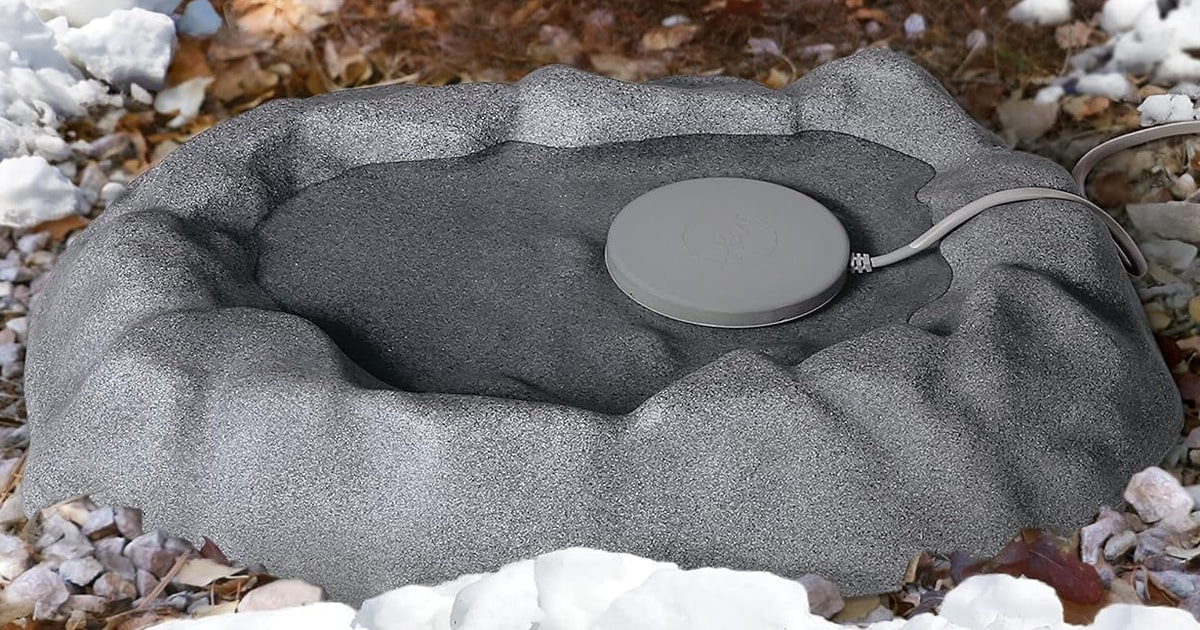
This gray ground bath holds a gallon in a 17-by-23.5-inch basin just 4 inches deep. The 80-watt heater lifts out entirely for summer, so you get one bath for the whole year instead of a winter-only appliance sitting in the garage half the time.
$103.96fromAmazonPrices as of Oct 25, 6:48 AM PT · Details
The removable heater is the feature that matters most here. Most all-in-one heated baths bond the element into the basin, so the cord dangles across your yard in July for no reason. K&H lets you pull the 80-watt heater out and store it. What's left is a normal shallow bath you can rinse and refill like any other. If you only want to own one bird bath, this is the design that earns the spot.
The basin is shallow on purpose. At 4 inches tall overall, the water sits in the range the National Wildlife Federation recommends for songbirds, which is roughly 1 to 2 inches. Deeper isn't better. Sparrows, juncos and finches wade rather than swim, and a shallow pool is easier to keep clean because you're dumping and refilling a single gallon rather than hauling out five.
K&H makes an unusually specific safety claim, and it's worth understanding. The company says the whole product, not just the parts inside it, is tested and certified by MET Labs to exceed United States and Canadian electrical safety standards. That's a stronger statement than assembling a device from listed components. For something that sits outside in wet snow all winter and plugs into household current, that distinction is the one we'd pay for.
The stone-textured surface gives birds grip. That sounds like marketing until you watch a wet bird try to stand on smooth plastic. The UV-resistant resin also resists the chalky fading that turns cheap outdoor plastic brittle after a couple of seasons, which is the usual failure point when a basin cracks through freeze-thaw cycles.
Set this one on the ground or on a flat surface and you're done. There's no bracket to fit, no post to sink, no assembly. If you're buying your first heated bath and don't want to think about mounting hardware, that simplicity is worth something.
Flaws but not dealbreakers
The cord is only 5.5 feet, which is short for a bath meant to sit out in the open. You'll almost certainly need an outdoor-rated extension cord and a GFCI-protected outlet, which manufacturers recommend anyway for anything electric left outside through winter. Plan the cord run before you pick the spot.
It's a plain gray tray. There's no pedestal, no decorative shape, nothing that reads as a garden feature. If you want the bath to look like part of the landscaping, this isn't it. And at 4.45 pounds empty, a strong wind can shove it around before you fill it.
Owner feedback on this model is more mixed than on the larger deck-mount baths, with the usual complaints about heaters that stop working after a season or two. It's a reasonable risk given the safety certification, but don't assume it's a decade-long purchase.
Runner-up
More heat and a railing clamp, if you have a deck
Allied Precision Industries
A 20-inch light-stone basin that clamps to a deck rail with a hinged bracket. The 150-watt element is nearly twice the top pick's, and the hinge lets you tip the whole basin over to dump dirty water without unmounting anything.
$129.99fromAmazonPrices as of Oct 25, 6:48 AM PT · Details
If you have a deck railing, this is the one to get. The clamp-on bracket puts the water at eye level from inside the house, which is most of the point of a winter bath. You watch birds from the kitchen window instead of squinting at the lawn. Ground baths work fine, but they disappear under six inches of snow and you stop noticing them by February.
The hinge is a small piece of design that solves the biggest chore. Weekly cleaning is not optional with an ice-free basin, and the usual routine means unclipping a heavy bowl of cold scummy water and carrying it somewhere. Here the bracket lets you tilt the basin over in place and dump it. Then scrub, refill, tilt back. That's a two-minute job instead of a ten-minute one, which matters because the job that's easy is the job you actually do.
At 150 watts, this heater has more headroom than a 50 or 60-watt element in genuinely brutal cold. Owners in cold-winter regions consistently report open water in single-digit temperatures, and several describe units still running after six or seven winters outside. Longevity reports like that are rare in this category and they're the reason this model has the deepest pool of owner feedback of anything here.
Power costs scale with wattage, though, and 150 watts is roughly double the top pick. A thermostatically controlled heater only draws power below its trigger temperature, so the real bill depends on your climate more than the label. In a mild winter you'll barely notice. In a long Minnesota one, this will cost more to run than the K&H.
The cord stores underneath the basin when you don't need heat, so this works as a plain bath in summer. It's not as clean as pulling the heater out entirely, but it means you're not looking at a dangling cord in June.
Flaws but not dealbreakers
You need a horizontal railing, or a post you're willing to build a mount for. Without a deck, the bracket is dead weight and you're improvising, which several owners describe doing with a 4x4 post and scrap lumber. That's fine if you're handy and annoying if you're not.
Owner feedback includes small design gripes that add up, mostly about ice forming around the rim in extreme cold even while the center stays open. The heater sits below center, so the edges are the coldest part of the basin. It's not a dealbreaker, but expect a ring of ice on the worst nights.
Budget pick
Turns the bath you already own into a winter one
K&H Pet Products Ice Eliminator Original Birdbath
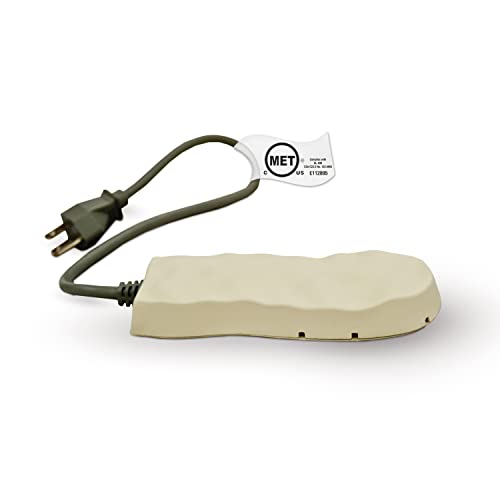
A 50-watt submersible de-icer with a rock-like enamel finish that drops into a basin you already have. It's thermostatically controlled, MET Labs certified like the K&H bath, and costs a fraction of any all-in-one heated bath here.
Check priceatAmazonPrices as of Oct 25, 6:48 AM PT · Details
If you already own a bird bath, buy this instead of a new bath. That's the single most useful thing to know about this category. A concrete or ceramic basin you like doesn't need replacing. It needs a heat source. This drops in, plugs in, and does the job for a fraction of what a whole new heated unit costs. Wild Birds Unlimited notes that winter water is often harder for birds to find than food, so the simplest path to providing it is genuinely the best one for a lot of people.
K&H disguised it as a rock, and you can spray paint it to match your basin. That sounds silly. It isn't. A bare metal heating element sitting in a stone bath looks like a mistake, and the enamel shell lets it disappear. The finish also cleans easily, which matters because mineral scale builds up on anything submerged in hard water.
At 50 watts, this is the lowest-draw device in the lineup, and the thermostat means it cycles rather than running constantly. K&H says it maintains open water even in sub-zero temperatures. That claim depends heavily on your basin, since a wide shallow bowl loses heat faster than a deep narrow one, but for a typical songbird bath it's the right amount of heat.
It carries a three-year limited warranty, the longest term stated for anything in this lineup, and the same whole-product MET Labs certification as the K&H bath. Both matter for a device that lives submerged in water outdoors.
Flaws but not dealbreakers
A de-icer can't fix a bath that cracks. Concrete and ceramic basins split when water freezes and expands, and if your existing bath is one of those, keeping the water liquid is exactly what protects it. But if the bath is already cracked or thin, adding a heater won't save it.
There's a cord lying in your bath now. Some birds ignore it, some don't love it, and it's one more thing to route out of the basin and down to an outlet. It also gives algae a surface to grow on, which means one more thing to scrub weekly.
Upgrade pick
A cedar pedestal bath, if you want it to look like furniture
Songbird Essentials Heated Birdbath
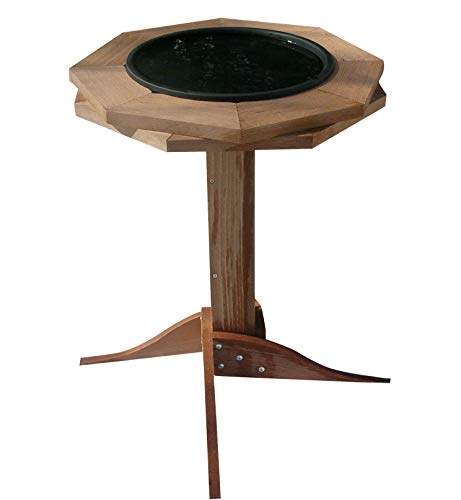
A western red cedar post and frame with a removable 14-inch green pan, rated by the maker for open water down to -10°F. The cord hides inside the hollow post, so what you see in the yard is wood and water, not an appliance.
$170fromAmazonPrices as of Oct 25, 6:48 AM PT · Details
Most heated baths look like what they are, which is a plastic tray with a cord. This one doesn't. The western red cedar frame and post read as a garden object, and cedar weathers to gray outdoors without rotting the way pine does. If the bath is going somewhere you look at every day, that's worth paying for.
Hiding the cord inside the hollow post is the detail that makes it work. A pedestal bath with a wire running down the outside undoes the whole effect. Songbird Essentials routed the 12-inch cord through the post instead. You still need an extension cord to reach an outlet, but the visible run starts at ground level rather than at the basin.
The pan is genuinely shallow at 1 inch deep and holds half a gallon, which is right in the range the National Wildlife Federation recommends for songbirds. It also lifts out for cleaning, so the weekly scrub doesn't involve wrestling the whole structure. The 60-watt element is sealed inside the pan and thermostatically controlled, and the maker rates it for open water down to -10°F.
Two hold-down stakes come in the box to anchor the feet. That's not a small thing for a 13-pound structure holding half a gallon of water. A pedestal bath that tips in a February windstorm is a broken pedestal bath.
Flaws but not dealbreakers
Assembly is required, and half a gallon is a small amount of water in a 14-inch pan. On a windy sub-zero night, a shallow half-gallon has less thermal mass to work with than the top pick's full gallon, so expect the heater to cycle more often.
The -10°F rating is lower than the top pick's category and lower than what owners report from the 150-watt Allied Precision basin. If you live somewhere that regularly drops below that, this isn't the right choice no matter how good it looks.
Who this is for
Buy a heated bird bath if you live somewhere water freezes for weeks at a stretch and you already feed birds. It's the highest-impact thing you can add to an existing feeding station, because seed is easy to find in winter and open water isn't. It's also worth it if you want to watch birds up close, since a bath draws species that never touch a seed feeder, including robins and bluebirds. Skip it if freezing nights are occasional where you live. A regular bath you refill on cold mornings does the job.
This guide covers powered bird baths and de-icers for backyard use. We're not covering unheated baths, solar fountains or livestock tank heaters, though one unit here straddles that line. If you rent or have a small yard, look at the low-wattage de-icers and the ground basins rather than the pedestal models, since they need less power and no permanent placement. And if you can't safely run a cord to a GFCI-protected outdoor outlet, none of these are a good idea. Every one of them needs household current outside all winter.
How we picked
We built the shortlist around six things. Thermostatic control: the heater should cycle on near freezing rather than run constantly, which is what keeps the winter power bill reasonable. Cold rating: we compared each maker's stated minimum temperature against owner reports from genuinely cold regions. Depth: the National Wildlife Federation recommends 1 to 2 inches for songbirds, so shallow basins beat deep ones. Safety: third-party certification, outdoor-rated cords and a GFCI outlet are non-negotiable for a device that sits in water outside all winter. Cleaning: ice-free water grows algae, so removable pans and tilt-out brackets earn real credit. Durability: heavy resin and thick molded plastic survive repeated freeze-thaw cycles that crack thin basins.
Other heated bird baths worth considering
If you want a bigger deck-rail basin with a warranty: The Wild Bird Lover's Heated Bird Bath w/Deck — This 20-inch bowl mounts to a horizontal deck rail like the Allied Precision runner-up, with the same 150-watt element and a similar tilt-up design for draining. The differences are small but real: a 2-inch water depth, a quarter-inch rim that gives birds a proper perch, and a stated one-year warranty, which most competitors here don't publish at all. The textured slate finish looks a little more deliberate than plain light stone. What you give up is track record. The Allied Precision basin has years of owner reports behind it, including people on their seventh winter with the same unit, and this one doesn't have that history yet.
If you want a large ground basin and nothing else: The Farm Innovators Fs-1 25.8" X 18.5" X — Farm Innovators makes a sand-coated four-seasons ground bath at 25.8 by 18.5 inches, which is the largest ground-level footprint here. It sits on a lawn or in a garden bed with no bracket, no post and no assembly, and the built-in thermostat runs the heater only when it's needed. The sand coating gives birds grip. But the listing doesn't state a wattage or a minimum temperature, which makes it hard to know what you're getting in deep cold, and owner feedback is thin and less enthusiastic than for the picks. It's a reasonable choice if you want maximum surface area on the ground and you don't live somewhere brutal.
The competition
These are the products our research surfaced in this category, not everything sold. We compared manufacturer specifications, published guidance from bird and wildlife organizations, and recurring themes in owner feedback. A product landing here usually isn't bad. It just lost to a pick on cold-weather rating, cleaning access, safety documentation or fit for a typical backyard.
The API W500 500 Watt Metal/Plastic Auto Waterer — API's W500 is a 500-watt sinking de-icer built for automatic waterers and livestock tanks up to 70 gallons, sold here as a four-pack. It's a serious piece of equipment, with a finned low-profile design that runs cooler than conventional de-icers, a non-stick aluminum base that resists mineral buildup, a 6-foot cord and cULus listing. The listing does mention bird baths. But 500 watts is roughly ten times what a songbird basin needs, and a four-pack is a farm purchase, not a backyard one. If you're heating stock tanks and want to drop a spare unit in a large bath, this makes sense. For a 1-gallon basin, buy the 50-watt K&H de-icer instead.
Care and setup
Put the bath somewhere sheltered from wind. Birds & Blooms recommends a wind-protected spot because wind chill pulls heat out of the water and makes the heater cycle more often, which costs you money. Plug into a GFCI-protected outdoor outlet, use an outdoor-rated extension cord, and keep the connection off the ground and out of standing snow. Then clean it weekly. The Spruce recommends that pace through winter because ice-free standing water grows algae and bacteria in a way water that freezes solid between fill-ups doesn't. Dump the basin, scrub it with a stiff brush, rinse well and refill. Skip soap or use very little, and rinse until you'd drink it. Keep water 1 to 2 inches deep. Deeper doesn't help songbirds and gives the heater more work to do.
Questions we get
Are heated bird baths worth the electricity cost in winter?
For most people, yes. Thermostatically controlled heaters only draw power when the temperature falls near freezing, commonly around 20 to 32°F, so they're not running around the clock. A 50 or 60-watt element cycling through a cold month adds a modest amount to a typical household bill at average United States residential rates. A 150 or 500-watt unit costs proportionally more.
Can I add a heater to a bird bath I already own?
Yes, and it's usually the cheaper path. A submersible de-icer like the K&H 50-watt unit drops into an existing basin and keeps it open all winter. Just make sure your bath can handle it. Thin concrete or ceramic basins can crack from freeze-thaw stress, though keeping water liquid actually reduces that risk rather than adding to it.
Do heated bird baths need to run all winter or only during freezing weather?
Leave them plugged in through the season and let the thermostat do the work. Every unit we recommend switches on automatically as the temperature drops and shuts off when it doesn't need to run. Unplugging on mild days saves almost nothing and risks forgetting to plug it back in before a hard freeze.
How deep should a heated bird bath be for songbirds?
About 1 to 2 inches, which is what the National Wildlife Federation recommends. Backyard songbirds wade rather than swim, and shallow water is both safer and more attractive to them. Shallow basins are also easier to dump and scrub, which matters given the weekly cleaning these need.
Are heated bird baths safe to leave outside in rain and snow?
They're designed for it, but the electrical setup is on you. Use a UL-listed or otherwise third-party-certified heater, plug into a GFCI-protected outdoor outlet, and use an outdoor-rated extension cord if you need one. Keep the plug connection elevated and out of pooling water or snowmelt.
Do heated bird baths actually attract more birds in winter?
They tend to, because open water is scarce when natural sources freeze. Wild Birds Unlimited notes that water is often harder for backyard birds to find than food in winter. You'll also see species that skip seed feeders entirely, since birds need water for drinking and for feather maintenance that keeps their insulation working.
Why you should trust us
For this guide:
- We read manufacturer specifications and listing details for every unit here, comparing stated wattage, thermostat behavior, minimum temperature ratings, basin dimensions and cord length.
- We reviewed published guidance from the Cornell Lab of Ornithology, the National Audubon Society, the National Wildlife Federation, Wild Birds Unlimited, The Spruce and Birds & Blooms on winter water, basin depth, placement and cleaning.
- We looked at recurring themes in owner feedback, particularly reports about ice forming at basin rims in extreme cold and about how long heating elements last across multiple winters.
- We read owner reviews on every listing, weighted toward the critical ones, because that is where the recurring failures show up.
- We have a systematic way of automatically fetching the latest prices, so the numbers on this page stay current.
- This is a research-focused guide, so the team may not own every product listed — though we often do own the top winners, which gives us extra context for the recommendations.
- We don't accept free products, and the retailer commission never changes which product we recommend.
Sources
All About Birds — Cornell Lab of Ornithology, Cornell Lab of Ornithology
National Audubon Society — winter bird care guidance, National Audubon Society
Birds & Blooms — backyard bird bath advice, Birds & Blooms
The Spruce — bird bath maintenance and buying advice, The Spruce
Wild Birds Unlimited — winter feeding and watering station guidance, Wild Birds Unlimited
National Wildlife Federation — supporting backyard wildlife in winter, National Wildlife Federation
K&H Manufacturing — Thermo-Bird Bath and de-icer product specifications, K&H Manufacturing
Farm Innovators — heated bird bath product specifications, Farm Innovators
API (Aquarium Pharmaceuticals) — Pond & Birdbath De-Icer specifications, API
Allied Precision Industries — heated bird bath product line, Allied Precision
Amazon product listings and owner reviews for all 7 products
Manufacturer specification pages for each product
Some passages in this guide may be paraphrased with AI help.
Product prices and availability are accurate as of the date/time indicated and are subject to change. Any price and availability information displayed on Amazon.com at the time of purchase will apply to the purchase of this product.
More like this.
Continue exploring pet reviews and recommendations.

The Best Bath Towels
A bath towel is one of the few things you touch every single day, usually while you're cold and wet and in no mood for disappointment. The good ones dry…

The Best Bird Cages for Parakeets and Cockatiels
A cage isn't furniture. It's the room your bird lives in, sleeps in, and eats in, and for most parakeets and cockatiels it's where they spend the majority…

The Best Squirrel-Proof Bird Feeders
Squirrels aren't casual about this. A gray squirrel can jump roughly ten feet sideways, walk down a metal pole head first, and empty a tube feeder in an…

The Best Bird Feeders for Beginners
A bird feeder is one of the few purchases that pays you back within days. Hang one near a shrub in a suburban yard and you'll often see your first…

The Best Smart Bird Feeders With Cameras
A smart bird feeder turns a window chore into something you actually look forward to. Instead of catching a blur of wings while you refill the coffee, you…

The Best Heated Pet Beds
Pets lose heat faster than we do, and the ones who feel it most usually can't tell you. Senior dogs with stiff hips. Short-haired cats who spend all…