The Best Bath Towels
A bath towel is one of the few things you touch every single day, usually while you're cold and wet and in no mood for disappointment. The good ones dry you in one pass and hang dry by morning. The bad ones push water around, stay damp until dinner, and start smelling sour by Wednesday. What separates them isn't branding — it's fiber length, weight, and weave. Long-staple cotton makes stronger, finer loops that grab water and resist pilling. Weight, measured in GSM, decides how plush a towel feels and how long it takes to dry.
Here's the honest catch: no towel is both maximally plush and fast-drying. Those two things fight each other. A heavy, hotel-style towel feels wonderful and can stay damp for a full day in a small windowless bathroom. A light, quick-drying towel is ready for tomorrow but won't wrap you like a robe. Cheap towels can feel great for a month, then flatten. And almost every towel arrives with a mill finish that blocks absorbency until you wash it — so your first impression is usually wrong.
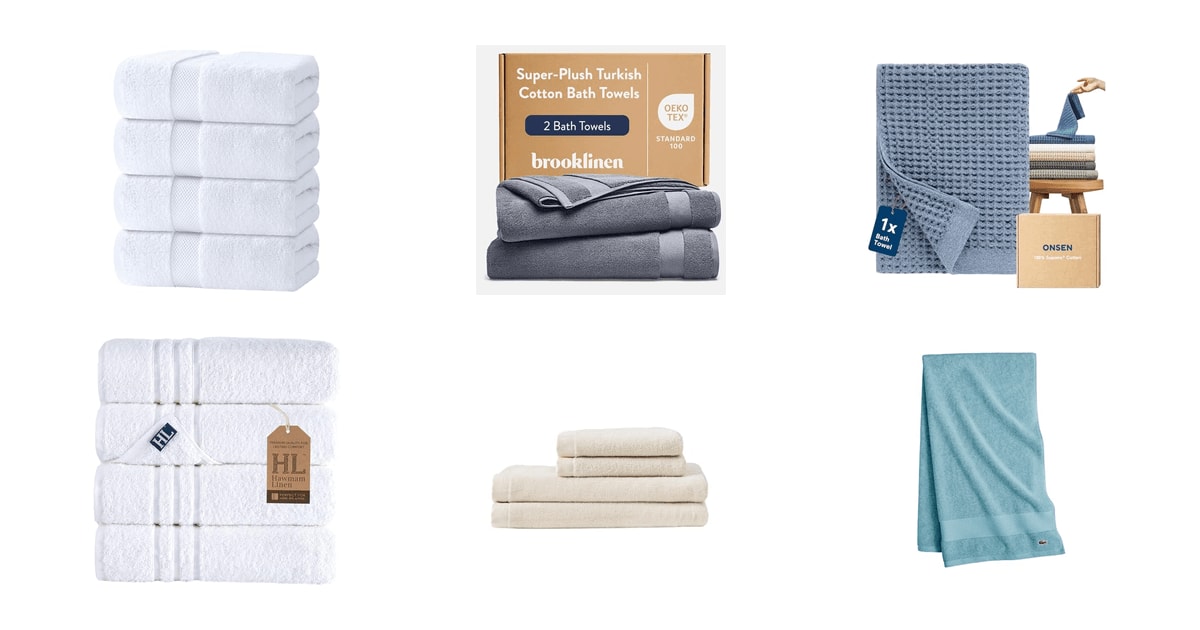
We looked at plush terry, lightweight Turkish cotton, waffle weave, and budget staples, and we weighed what published lab testing and long-term owner feedback say about how each holds up past the first year. We think that the White Classic Luxury Bath Towels are the best bath towels for most people, and that the Hawmam Linen Turkish Cotton Bath Towels are the ones to buy if you want a lighter towel that dries fast and costs less per towel.
Everything we recommend

Hotel plushness that still dries overnight

Lighter, faster-drying, and cheaper per towel
Vivid colors that survive the laundry

A fine towel for the guest bath or the gym bag
At a glance
| Product | Material | Weight (GSM) | Price | |
|---|---|---|---|---|
| White Classic Luxury Bath Towels Set ofTop pick | Turkish Cotton | 700 GSM | $44.99 |
 | ONSEN Supima® Waffle Bath TowelAlso consider | Supima Cotton | — | $59 |
| Hawmam Linen White Bath Towels 4 PackBudget pick | Turkish Cotton | 600 GSM | $39.99 |
 | Coyuchi Classic Organic Cotton Terry Bath TowelsAlso in lineup | Organic Cotton | — | $118 |
| Lacoste Heritage 100% Supima Cotton Bath TowelAlso great | Supima Cotton | — | $36On sale |
| Amazon Basics 2-Piece Quick-Dry Oversize Bath TowelAlso great | Cotton | — | $19 |
How we picked
Weight and drying time. GSM was our primary filter, anchored to Good Housekeeping Institute lab findings that 600–700 GSM absorbs the most water while still air-drying within 24 hours. Towels far above or below that range had to justify themselves on a specific use case.
Fiber and staple length. We favored long-staple and extra-long-staple cottons — Turkish, Supima, Pima — because published textile analysis shows their longer fibers make loops that resist pilling and hold tensile strength through more wash cycles. Standard short-staple cotton had to be priced accordingly.
How it ages. We weighted owner feedback from people reporting after a year or more over first-impression reviews, looking specifically for pilling, shedding, stiffening, and hem fraying. A towel that's wonderful for a month and flat by spring didn't make the picks.
Construction details. We looked for double-stitched or reinforced hems in the specifications, since frayed edges retire more towels than worn-out loops do. We also treated persistent lint complaints as a signal that loops weren't well anchored.
Certification and set logic. We noted OEKO-TEX Standard 100 and GOTS certification, which test for more than 100 harmful substances and restrict toxic dyes and finishes respectively. We also considered whether a product ships as a set or a single, since that changes what it takes to outfit a bathroom.
Top pick
Hotel plushness that still dries overnight
White Classic Luxury Bath Towels Set of
A 700 GSM combed-cotton towel that feels like a good hotel's without the drying time of a true ultra-plush. It's thick, absorbent, and sold in four-packs, so you can outfit a whole bathroom at once.
$44.99fromAmazonThis lands right in the sweet spot most people actually want. Good Housekeeping Institute lab testing found towels in the 600–700 GSM range absorbed the most water in standardized pour tests while still air-drying fully within 24 hours in a ventilated bathroom. At 700 GSM, this one sits at the top of that window. You get the thickness you're paying for, and you're not hanging a damp towel back up the next morning.
The cotton is long-staple and combed, which matters more than the marketing suggests. Combing pulls out the short, weak fibers before spinning, so the loops that end up in your towel are more uniform and less likely to work loose. Owners who've had these through a few years of laundry describe them staying fluffy and holding their white without going gray or stiff. That's the failure mode that kills most mid-priced towels.
At 27 by 54 inches, this is a standard bath towel, not a bath sheet. If you're used to wrapping a towel twice around, you'll notice. But the size is the reason it dries as fast as it does, and it's the size that fits a normal towel bar without bunching. The edges are double-stitched, which is the single most useful construction detail on any towel — frayed hems are usually what sends a towel to the rag pile.
Buying in fours changes the math. One nice towel is a treat; a matched set is a bathroom. Because these come four to a pack, you can retire a whole tired set in one order and have enough rotation that no towel goes back on the bar still wet. That rotation is what actually prevents the musty smell, more than any fabric treatment.
Flaws but not dealbreakers
A handful of owners expected a true ultra-plush hotel sheet and found this thinner than advertised. That's fair — 700 GSM is plush, but it's not the 800-plus category. If you want the towel that feels like a down comforter, this isn't it.
There's some lint in the first few washes. It settles down, but wash these separately the first two times unless you want white fuzz on everything dark. Color choice is also limited compared to a department-store line, and the white shows makeup and self-tanner the way all white towels do.
Budget pick
Lighter, faster-drying, and cheaper per towel
Hawmam Linen White Bath Towels 4 Pack
A 600 GSM Turkish cotton towel that skips the bulk and dries quickly between showers. It costs a fraction of the boutique brands and comes four to a pack, which makes it the practical choice for guest baths and rentals.
$39.99fromAmazonTurkish cotton isn't just a label here — the staple length does real work. Turkish cotton fibers average 38 to 45mm, against 25 to 32mm for standard upland cotton, according to Better Homes & Gardens. Longer fibers spin into finer, stronger loops that absorb more and pill less. That's why these feel thinner than a heavy terry but still dry you properly.
If your bathroom has no window, buy these. At 600 GSM they're noticeably lighter than the plush picks, and they give up moisture faster on the bar. Owners consistently mention that they wash and dry quickly and come out soft rather than stiff. For a small apartment bathroom where the towel from last night is still clammy at noon, that's the whole ballgame.
These have become a default for short-term rental hosts, and it makes sense. They're sold in four-packs, they launder hard without falling apart, and they come in a broad color range. Owners running them through rental turnover report they hold up better than the department-store towels that shed loose threads within a few months.
You do trade away the enveloping feel. These are a towel, not an experience — soft and absorbent, but you won't stand around wrapped in one. Some people prefer that. A lighter towel folds smaller, hangs neater, and doesn't dominate a linen closet.
Flaws but not dealbreakers
Color accuracy is the recurring complaint. Several owners ordering the colored versions found the shade duller or different from the listing photos, and that matching hand towels and washcloths ordered at the same time didn't quite match each other. White is the safe order.
A few people who wanted plush found these too thin and not soft enough for the money. If your preference runs toward thick and fluffy, you'll be happier with a heavier towel. There's also light lint in the first few launderings, which fades.
Also greatOn sale
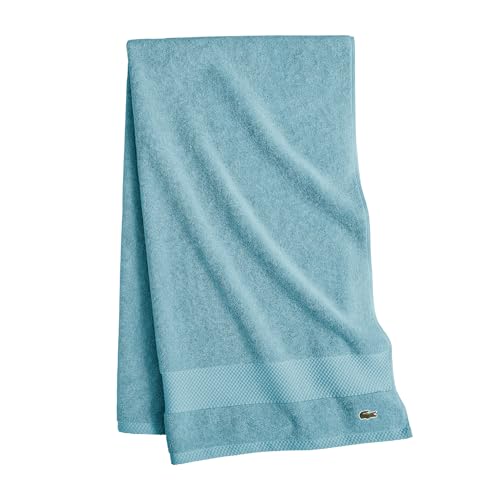
Vivid colors that survive the laundry
Lacoste Heritage 100% Supima Cotton Bath Towel
A Supima cotton towel sold as singles in a rotating color range, so you can match a bathroom exactly instead of settling. Owners describe it as thick, lint-free, and unusually good at holding color through repeated washing.
$36fromAmazonList priceColor retention is the reason to pick this one. Most towels fade toward chalky after a year of hot washes. Supima's extra-long staple fibers take dye more evenly and hold it, and owners repeatedly note the colors stay vibrant wash after wash. If you've picked a paint color and want towels that still match it next year, this is the practical answer.
Supima is American-grown extra-long-staple cotton — the same fiber family that makes Pima towels last, and textile experts say extra-long-staple cotton withstands substantially more wash cycles than short-staple before losing tensile strength. In practice, owners describe these as thick, generously sized at 30 by 54 inches, and producing essentially zero lint after the first wash. Low lint is a good proxy for loops that are actually anchored.
Because they're sold one at a time, you can build a set at your own pace or replace a single casualty without buying four. That's genuinely useful if you're mixing sizes, or if one towel gets destroyed by hair dye and the rest are fine.
There's a crocodile logo on it. If you love it, great. If you don't, know that it's there and it's the most visible design element on an otherwise plain towel.
Flaws but not dealbreakers
Quality control isn't perfectly consistent. Some owners have received towels with loose yarns or small holes, and one specific color — the light blue Celestial — draws repeated complaints about heavy dryer shedding that the chalk and green colors don't get. Inspect what arrives.
Buying singly means the per-towel cost adds up faster than a multipack when you're outfitting a full bathroom.
Also great
A fine towel for the guest bath or the gym bag
Amazon Basics 2-Piece Quick-Dry Oversize Bath Towel
A plain oversized cotton towel that absorbs well, dries fast, and costs little. It won't last a decade, but for a spare bathroom or a gym bag you'll replace anyway, it does the job without fuss.
$19fromAmazonNot every towel needs to be an heirloom. This is the one you keep for guests, for the beach, for the roommate who leaves towels on the floor. It's 100% cotton, oversized at 30 by 54 inches, and light enough that it dries fast — which is exactly what you want in a bag that gets zipped shut.
Its weakness is time, not performance. Owners who've used these for years describe the same pattern: fluffy at first, some shedding over the first several washes, then gradually thinner and rougher after a couple of years of heavy use. Forbes Home's analysis makes the same point more broadly — budget towels can match pricier ones on initial absorbency but degrade fast enough that cost per year of use tells a different story than the sticker.
So buy these for the jobs where a short life is fine. A rental you're leaving in a year, a kid who will use a towel as a cape, a guest bath used twice a month. In those roles the calculus flips, and paying more for durability you'll never reach is just waste.
The simple band border looks fine folded on a shelf. Nobody will compliment it. Nobody will notice it's cheap either.
Flaws but not dealbreakers
These shed. Multiple owners report loose fibers through the first few washes and beyond, and a few describe the towels as thin enough that they still feel damp after drying off. Wash them separately at first.
Some arrive with a waxy feel and an off smell out of the package that takes a hot wash or two to clear. That's the mill finish, and it's more noticeable here than on the pricier picks.
Who this is for
Buy now if your current towels have gone thin, stiff, or sour-smelling — that's degraded fiber structure, and no amount of vinegar or hot water brings it back. Textile hygiene guidance points toward replacing bath towels every one to two years, though Apartment Therapy's reader survey found most people stretch it to two or three. If yours still dry you in one pass and don't smell by midweek, you can wait. Buying a full set is also the right move if you're short on rotation: two towels per person is the minimum that lets each one dry fully between uses, and rotation solves more odor problems than any product does.
This guide covers standard bath towels and bath sheets for home use, in terry and waffle weaves. We're not covering hand towels, washcloths, beach towels, hair wraps, or bath mats, and we're not covering microfiber, which is a different material with different tradeoffs. If you have eczema or sensitive skin, prioritize the certified options and skip fabric softener entirely — the residue matters more for you than for anyone else.
How we picked
We started from the research and worked down. Weight: GSM in the 600–700 range, where lab testing shows towels absorb the most while still drying overnight in a ventilated room. Fiber: long-staple and extra-long-staple cottons first, since longer fibers make stronger loops that pill less and last more wash cycles. Aging: owner reports from a year or more out, weighted over first-week impressions, with pilling, shedding, and stiffening as the disqualifiers. Construction: double-stitched hems and low lint after break-in, both signals that a towel is built rather than assembled. Certification: OEKO-TEX Standard 100 or GOTS, which test for over 100 harmful substances and restrict toxic dyes and finishes. Practicality: whether it ships as a set or a single, and whether the sizes and colors let you actually outfit a bathroom.
Other bath towels worth considering
If your bathroom never dries out: The ONSEN Supima® Waffle Bath Towel ($59) — The Onsen Supima waffle towel is built around one idea — get rid of the bulk. Waffle weave has far less loop surface area than terry, so it releases trapped moisture much faster; Real Simple's testing found waffle towels dried in roughly half the time of comparable terry under the same conditions. It's OEKO-TEX certified USA-grown Supima. The catch is the feel. Owners split hard on it: many describe an initial disappointment that turns into loyalty after a few washes, while others find it gauzy, less absorbent than plush terry, and prone to catching on jewelry. Buy it for the drying speed, not the hug.
The competition
This is what our research surfaced among towels currently confirmed on Amazon, not a survey of everything on the market. Several well-regarded lines — including the Parachute Classic Turkish and the L.L.Bean Pima towels that come up repeatedly in published reviews — weren't part of the lineup we could evaluate here.
The Coyuchi Classic Organic Cotton Terry Bath Towels ($118) — The Coyuchi Classic Organic Terry set is the most credentialed towel here on the sustainability front: 100% GOTS certified, which requires at least 95% certified organic fiber and prohibits toxic dyestuffs, formaldehyde finishing agents, and chlorine bleach at every production stage. The undyed version is a genuinely good call for babies, eczema, and anyone reacting to dyed textiles, and the four-piece set pairs bath and hand towels. It didn't make the picks because owner feedback is thin and unusually split for the price — several buyers describe it as lighter and smaller than expected, with heavy lint on the first wash and, in a few cases, a rough texture after a single laundering. If the certification is the point of the purchase, it's still the one to get.
Care and washing
Wash new towels twice before you use them. Consumer Reports recommends this to strip the sizing finish applied at the mill, which can cut first-use absorbency by up to a quarter — it's why a brand-new towel often seems to repel water. Then never use fabric softener. It leaves a thin water-repellent film on cotton's hydrophilic surface, and The Spruce reports towels washed regularly with it can lose a significant share of their absorbency within 10 to 15 cycles. Use half the detergent you think you need, since buildup causes the same stiffness people blame on hard water. Wash warm, tumble dry low, and pull them out before they're bone dry. A cup of white vinegar in the rinse once every couple of months resets towels that have gone stiff. And hang them spread out, not folded over — a bunched towel stays wet in the middle.
Questions we get
What GSM is best for bath towels?
For most households, 600 to 700 GSM. Good Housekeeping Institute lab testing found towels in that range absorbed the most water while still air-drying fully within a day in a ventilated bathroom. Below about 400 GSM you're into thin, fast-drying territory that some people prefer for travel and humid rooms. Above 800 you get real hotel plushness and real drying time.
What's the difference between Turkish and Egyptian cotton towels?
Both are long-staple cottons, and both make better towels than standard upland cotton, whose fibers run 25 to 32mm. Turkish cotton averages 38 to 45mm, which produces strong, fine loops that absorb well and stay relatively light. Egyptian cotton fibers are typically longer still, which is why Egyptian towels tend to be plusher and heavier. If drying time matters to you, Turkish is usually the better bet.
How many bath towels should one person own?
Two in rotation per person, minimum, plus a spare set for guests. The reason is drying, not laundry frequency — a towel that goes back on the bar still damp from yesterday is what starts the musty smell. With two, each gets a full cycle to dry out. Four per person means you can wash weekly without ever reaching for a wet one.
Why do towels get stiff and scratchy?
Usually residue, not wear. Fabric softener leaves a water-repellent film, and too much detergent leaves its own buildup that hardens the loops. Skip softener entirely, cut your detergent dose, and run an occasional wash with white vinegar in the rinse cycle to strip what's already there. If that doesn't help, the fibers themselves are broken down and it's time to replace them.
Are waffle-weave towels as absorbent as terry?
Not per square inch, no — waffle has considerably less loop surface area than terry. That's exactly why it dries so much faster; Real Simple's testing found waffle towels dried in roughly half the time of comparable terry. Whether that trade works depends on your bathroom. In a humid, windowless room, a waffle towel that's dry tomorrow beats a plush one that isn't.
How long should good bath towels last?
Textile hygiene guidance points to replacing bath towels every one to two years, on the grounds that degraded fiber structure holds bacteria even after washing. Apartment Therapy's reader survey found most people go two to three years. Well-made long-staple cotton towels can stay usable considerably longer than budget ones — Forbes Home's cost-per-year analysis found premium Turkish towels lasting five to seven years often work out cheaper annually than budget towels that degrade within about 18 months.
Why you should trust us
For this guide:
- We compared manufacturer specifications for every towel in this guide against published lab findings from the Good Housekeeping Institute, Real Simple, and Consumer Reports on absorbency, GSM, and drying time.
- We read owner feedback across each listing with an emphasis on reports from a year or more of use, looking for recurring patterns in pilling, shedding, color fade, and hem fraying.
- We reviewed the OEKO-TEX Standard 100 and GOTS certification requirements directly rather than relying on how brands describe them.
- We read owner reviews on every listing, weighted toward the critical ones, because that is where the recurring failures show up.
- We have a systematic way of automatically fetching the latest prices, so the numbers on this page stay current.
- This is a research-focused guide, so the team may not own every product listed — though we often do own the top winners, which gives us extra context for the recommendations.
- We don't accept free products, and the retailer commission never changes which product we recommend.
Sources
The Best Bath Towels — Wirecutter, The New York Times, Wirecutter
Best Bath Towels, Tested by the Good Housekeeping Institute, Good Housekeeping
Bath Towels Buying Guide — Consumer Reports, Consumer Reports
Best Bath Towels of 2026 — Real Simple, Real Simple
The Best Bath Towels We've Tested — Apartment Therapy, Apartment Therapy
Best Bath Towels 2026 — The Spruce, The Spruce
Best Bath Towels — Forbes Home, Forbes Home
Best Bath Towels for Every Bathroom — Better Homes & Gardens, Better Homes & Gardens
OEKO-TEX Standard 100 Certification Overview, OEKO-TEX
GOTS (Global Organic Textile Standard) — What It Means, Global Organic Textile Standard
Amazon product listings and owner reviews for all 6 products
Manufacturer specification pages for each product
Some passages in this guide may be paraphrased with AI help. Prices are refreshed automatically.
More like this.
Continue exploring home reviews and recommendations.

The Best Heated Bird Baths
Winter birds can find seeds almost anywhere. Water is the harder problem. Once puddles, creeks and standing water lock up in ice, a chickadee burns real…

The Best Wet/Dry Shop Vacuums
A shop vacuum is the tool you drag out when a regular vacuum would die trying. Broken tile, wet sawdust, a burst supply line under the sink, the gravel…

The Best Double-Tier Countertop Dish Drying Racks
If you don't have a dishwasher - or you have one and still hand-wash the cast iron, the good knives and the wine glasses - the dish rack is the…

The Best Security Floodlights
A good security floodlight does two jobs at once. It makes your driveway usable when you're carrying groceries in at night, and it makes your house a less…

The Best Spice Racks And Organizers
Spice storage fails in a boring way. You reach for the cumin, knock over the paprika, and find two jars of oregano hiding behind it. McCormick's consumer…

The Best Christmas Tree Watering Systems
A fresh-cut tree drinks more than most people expect. University of Illinois Extension recommends a quart of water per inch of trunk diameter on day one,…