The Best Wet/Dry Shop Vacuums
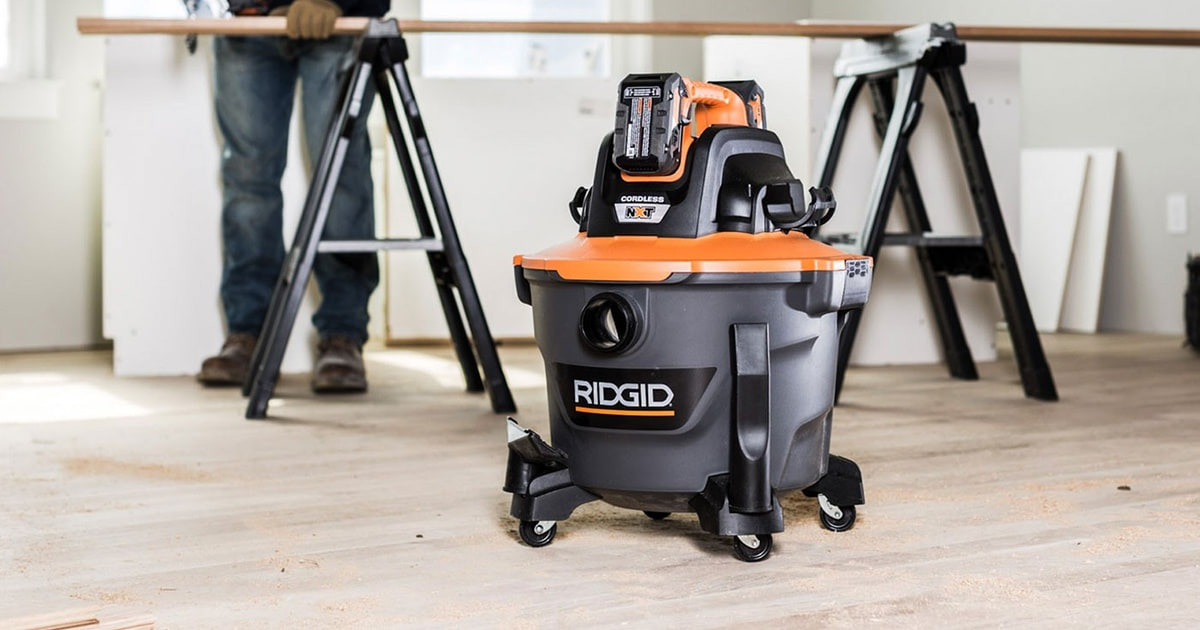
A shop vacuum is the tool you drag out when a regular vacuum would die trying. Broken tile, wet sawdust, a burst supply line under the sink, the gravel your kids tracked into the trunk — it all goes in the same drum. What separates a good one from a frustrating one usually isn't the horsepower number on the box. It's whether the hose stays attached when you tug it around a corner, whether the drum drains without a wrestling match, and whether the casters roll over an extension cord instead of tipping the whole thing over.
Here's the honest part: none of these are pleasant to use. Shop vacs are loud, and the quieter ones are only relatively quieter. The filters clog, and suction fades within a single dusty session unless you stop and knock the dust off. Big drums save you trips but get genuinely heavy when they're full of water. And peak horsepower, the spec every brand shouts about, tells you almost nothing about how fast a vac picks debris off a floor. Airflow and water lift do, and most listings bury them or skip them entirely.
So we sorted these by the job instead of the spec sheet. Bulk cleanup and wet pickup are one problem; fine silica dust from concrete, tile or drywall is a completely different one that needs certified filtration, not a bigger motor. We think that the RIDGID 62703 RT1200 NXT is the best wet/dry shop vacuum for most people, and that the CRAFTSMAN CMXEVBE17595 is the one to buy if you want the biggest drum you can get without stepping up in price.
Everything we recommend
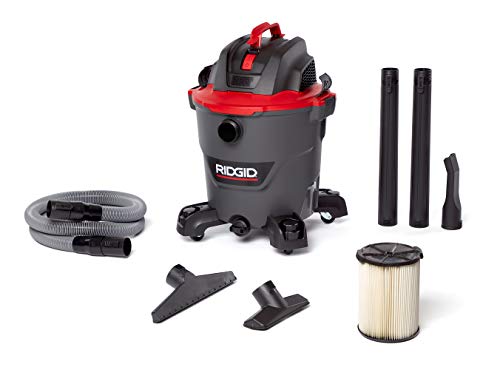
Strong suction, a locking hose, and a warranty that outlasts it

The biggest drum here, plus a blower port for yard cleanup

Surprising suction in a drum you can carry with one hand

Certified fine-dust control, if your lungs are the priority
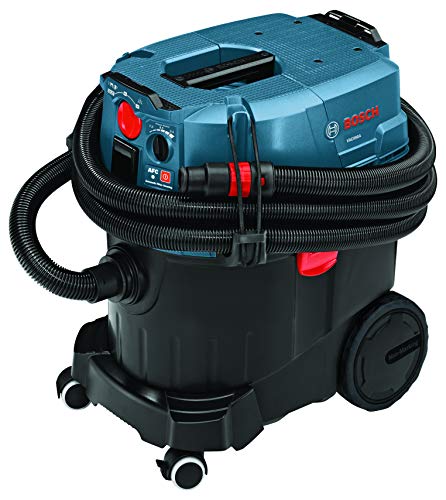
Self-cleaning filter that keeps suction steady on drywall work
At a glance
| Product | Capacity | Peak HP | Price | |
|---|---|---|---|---|
| RIDGID 62703 RT1200 NXT 12-Gal. Wet DryTop pick | 12 Gallon | 5.0 Peak HP | $128.17On sale |
 | Milwaukee 0920-20 M18 Fuel 9 Gallon DualBatteryAlso consider | 9 Gallon | — | $314.13 |
 | DEWALT 12 Gallon Poly Wet/Dry VacAlso in lineup | 12 gallon | 5.5 HP | $139 |
| CRAFTSMAN CMXEVBE17595 16 Gallon 6.5 Peak HPRunner-up | 16 Gallon | 6.5 Peak HP | $149.99On sale |
| Festool 577871 Dust Extractor CLEANTEC CT 26Upgrade pick | — | — | $899 |
| Vacmaster Professional Beast Series VFB511H 0201 5-GallonBudget pick | 5 Gallons | 5.5 Peak HP | $92.75On sale |
| BOSCH VAC090AH Portable 9 Gallon Dust ExtractorAlso great | 9 Gallon | — | $632.87 |
 | RIDGID 50313 Model 4000RV 4-Gallon Portable WetAlso consider | 4 gallon | 5.0 Peak HP | $147.60 |
How we picked
Suction that lasts. We looked past peak horsepower to airflow in CFM and sealed suction in inches of water lift wherever manufacturers published them. We also weighted whether a vac holds suction as its filter loads, since that's what owners complain about most.
Capacity that fits the job. We matched drum size to realistic tasks rather than maximum specs, covering compact 4- to 5-gallon units for vehicles and 12- to 16-gallon drums for renovation cleanup. Anything larger gets too heavy to empty when full of liquid.
Filtration and safety. For silica-generating work we required certified HEPA filtration, not a standard cartridge, based on OSHA Silica Table 1 requirements. For general debris we checked what filter actually ships in the box rather than what's available as an upgrade.
Hoses and casters. Published reviews and owner feedback both point to hoses pulling loose and casters failing on rough concrete as the most common frustrations. We favored locking hose connections and reinforced wheels.
Warranty and support. We compared warranty terms across brands, where RIDGID's lifetime motor coverage stands apart from the three-year terms typical elsewhere. We also read owner accounts of how each brand handles a failure.
Top pickOn sale
Strong suction, a locking hose, and a warranty that outlasts it
RIDGID 62703 RT1200 NXT 12-Gal. Wet Dry
The RIDGID RT1200 NXT pairs a 12-gallon drum with a 5.0 peak-HP motor and a hose that locks on instead of friction-fitting. RIDGID's Lifetime Service Agreement covers the motor, which no other brand here matches, and the drum design is built to cut operating noise.
$128.17fromAmazonList priceThe locking hose fixes the single most annoying thing about shop vacs. Most hoses friction-fit into the drum, which means they pull loose the moment you tug the vac around a workbench leg. The RT1200's 1-7/8-inch by 8-foot hose locks in place. The interior is smooth too, so drywall chunks and wood scraps slide through instead of wedging at a seam. It's a small thing you'll notice every single session.
Twelve gallons is the size most people actually need. It's enough that you're not emptying mid-project during a garage cleanout or a bathroom demo, but it still fits in a corner and rolls through a normal doorway. Owners who moved up from smaller vacs consistently say the capacity is the difference — fewer trips to the trash can, fewer interruptions. The large drain port means you can dump water without hoisting the whole drum.
RIDGID's Scroll Noise Reduction is real, though don't expect quiet. The drum is shaped to manage airflow turbulence, which takes the edge off the shriek most shop vacs make at full draw. You'll still want hearing protection for a long session. But if your shop shares a wall with a bedroom or you're working in a garage with the door open, the difference matters more than you'd guess from a spec sheet.
The Lifetime Service Agreement on the motor is the reason to buy this one over a cheaper vac. Every other vac here carries a term warranty, usually three years. Motors are what fail on shop vacs after years of wet pickup and fine dust, so covering that part indefinitely changes the math on a tool you plan to keep. The Qwik Lock filter system also swaps filters without tools, which you'll appreciate when you're switching between wet and dry work.
It blows as well as it sucks. The RT1200 reverses to clear leaves off a walkway or blow sawdust out of a corner your hose can't reach. That's not on every vac at this size, and it saves you dragging out a separate leaf blower for a five-minute job. Accessories store on the caddy, so nozzles don't migrate to the bottom of a toolbox between projects.
Flaws but not dealbreakers
Some owners report the hose port seal failing early. A handful describe the hose-to-drum connection detaching within the first few uses, in one case on a replacement unit too. It's not the common experience — most owners report years of hard use without trouble — but it's the specific failure to watch for. Check the seal when you unbox it, and don't let the return window lapse before you've run it a few times.
There's no power tool port. If you want the vac to switch on automatically when your sander or router starts, this isn't the one. You'll be reaching for the switch every time. For sanding and routing workflows where dust collection should be automatic, a dust extractor like the Bosch or Festool is the right tool.
Twelve gallons is bulky if your space is tight. Owners call it substantial, and they're right — this is not the vac you keep in a hall closet or lift into a truck bed one-handed. If you're mostly detailing cars or working out of a small shop, the smaller RIDGID 4000RV is a better fit.
The RT1200 NXT is covered by RIDGID's Lifetime Service Agreement on the motor.
Runner-upOn sale
The biggest drum here, plus a blower port for yard cleanup
CRAFTSMAN CMXEVBE17595 16 Gallon 6.5 Peak HP
The CRAFTSMAN CMXEVBE17595 gives you 16 gallons and a 6.5 peak-HP motor, the largest and highest-rated combination in this guide. It also has a rear blower port and an oversized drain, and the box includes the filter, dust bag, hose and a full set of nozzles.
$149.99fromAmazonList priceSixteen gallons means you stop far less often. On a drywall tear-out or a full garage cleanout, that's the difference between four dump runs and one. Owners who bought this after struggling with a compact vac describe the capacity as the thing that changed the job. If your typical mess fills more than a couple of gallons, the extra drum pays for itself in time you don't spend walking to the trash.
The blower port turns it into a second tool. Flip the hose to the rear port and it clears leaves and grass clippings off a garage floor or a deck in a fraction of the time a broom takes. Neither the DEWALT nor the Milwaukee here does that. If your fall routine already involves moving a pile of leaves, this saves you a separate machine.
The 2-1/2-inch hose swallows debris that clogs narrower ones. Broken tile, chunks of mortar, wood offcuts — they go straight through instead of jamming at the wand. The Dual-Flex ends pivot 180 degrees at both connections, so the hose resists kinking when you drag the vac behind you. Owners doing bathroom and tile demolition consistently report it handling that kind of mess without stopping.
Everything you need comes in the box. Filter, dust collection bag, seven-foot locking hose, two extension wands, and utility, car and wet nozzles. A lot of vacs at this size make you buy the bag separately and discover it mid-project. Assembly is tool-light too — the wheels snap on, and owners who describe themselves as bad at assembly report getting it together quickly.
Flaws but not dealbreakers
A full 16-gallon drum of water is genuinely heavy. Sixteen gallons of liquid is well over a hundred pounds. The oversized drain helps, but you need somewhere to drain it — a floor drain, a slope, a driveway. If you're carrying water up basement stairs, fill it partway and make two trips.
The warranty is three years, not lifetime. Over a decade of regular shop use, that gap versus RIDGID matters more than the small difference in what you pay today. If this is a buy-it-once tool, the RT1200 earns its premium.
Long-term build quality trails the pricier picks. Nothing here suggests it falls apart, and owner feedback is broadly positive across a very large number of buyers. But the housing and fittings feel a step below RIDGID and Milwaukee, and that shows up over years rather than months.
The CMXEVBE17595 comes with a three-year limited warranty.
Budget pickOn sale
Surprising suction in a drum you can carry with one hand
Vacmaster Professional Beast Series VFB511H 0201 5-Gallon
The Vacmaster Beast VFB511H packs a 5.5 peak-HP motor and 320 air watts into a 5-gallon body that weighs about 15 pounds. The cartridge filter catches particles down to 1 micron, and the hose and cord together give you about 25 feet of reach.
$92.75fromAmazonList priceIt punches well above its size. Owners repeatedly report more suction from this 5-gallon unit than from larger vacs they already owned, including bigger-drum competitors. The motor is rated at 320 air watts and 20 kPa, and unlike peak horsepower, air watts actually correlate with how fast debris comes off a floor. For renovation work — broken tile, mortar, joint compound — that matters more than drum size.
The included filter is better than what usually ships at this price. Most budget vacs come with a foam sleeve that passes fine dust straight through the exhaust and back into the room you're standing in. This one includes a high-efficiency cartridge filter and a dust bag rated to catch down to 1 micron. That's not HEPA, and it's not enough for silica, but it's a real step up for sawdust and general grit.
Twenty-five feet of reach covers a two-car garage without moving the vac. The hose is kink-resistant, which sounds like marketing until you've fought a cheap hose that folds over on itself every time you round a corner. Nine accessories come in the box, including car, utility and crevice tools, and they all store on board along with the hose and cord.
It's small enough to actually keep out. At roughly 16 inches tall and 15 pounds, it slides under a workbench or onto a shelf. Owners who wanted to replace an aging full-size vac with something they could move easily consistently land on this one. Several also note it's quieter than the big drums, which makes sense given the smaller motor housing.
Flaws but not dealbreakers
Five gallons fills fast. On anything bigger than a car interior or a spot cleanup, you'll be emptying it repeatedly, and each break adds real time to the job. If you're doing a full room demo, the CRAFTSMAN's 16 gallons is worth the step up.
No blower port and no auto filter cleaning. You can't reverse it for leaves, and when the filter loads up with fine dust you stop and knock it out by hand. Both are expected omissions at this size, but worth knowing before you buy.
Customer service comes up as a sore spot. A minority of owners describe frustrating experiences getting problems resolved with the brand after a unit failed. Most buyers never need support. But if something does go wrong, plan on it being more work than a warranty claim with RIDGID.
Upgrade pick
Certified fine-dust control, if your lungs are the priority
Festool 577871 Dust Extractor CLEANTEC CT 26
The Festool CLEANTEC CT 26 EI HEPA is a dust extractor, not a shop vac. It starts automatically when your corded tool does, offers five suction levels, and uses HEPA filtration built for silica, MDF and drywall dust in a closed workshop.
$899fromAmazonThis is the answer when the dust is the hazard, not the mess. Concrete, tile, masonry and drywall all throw crystalline silica, which passes through a standard cartridge filter and back into the air you're breathing. Silicosis is irreversible. HEPA-certified extraction is the only appropriate tool for that work, and this is the one professional woodworkers and finish carpenters reach for.
Tool-triggered start means it's always running when it should be. Plug your sander, router or track saw into the extractor and both start together. Bluetooth integration extends that to cordless tools with compatible battery packs or an optional remote. The practical effect is that you stop deciding whether this cut is worth switching the vac on — the dust gets captured every time.
Five suction levels let you match airflow to the tool. Crank it up for a track saw, dial it back for a random-orbit sander where too much suction pulls the pad down and drags on the workpiece. Owners using it with sanders and routers consistently report almost nothing escaping into the air, even working indoors. Push-button controls make it easy to change mid-session.
It's designed to be part of a system. The T-LOC function lets Systainer cases lock directly onto the top, so the extractor doubles as a rolling cart for your tools. If you're already in the Festool ecosystem this is the obvious hub. Owners moving up from smaller Festool units call the suction a clear step above.
Flaws but not dealbreakers
It costs a great deal more than anything else here. Even owners who love it say so plainly and unprompted. If certified fine-dust control isn't a requirement of your work, you're paying for capability you won't use.
It's not a general-purpose shop vac. It won't help you empty a flooded basement or clean gravel out of a truck bed, and its effective capacity is smaller than most vacs in this guide. Buy it for dust management, and keep something else around for bulk and wet cleanup.
It's the heaviest unit here at nearly 38 pounds. That's fine rolling around a shop. It's less fine loading in and out of a vehicle every day.
Also great
Self-cleaning filter that keeps suction steady on drywall work
BOSCH VAC090AH Portable 9 Gallon Dust Extractor
The Bosch VAC090AH pulses its filter clean every 15 seconds, so suction doesn't fade during a long sanding or drywall session. It uses a HEPA filter rated to capture 99.97 percent of particles at 0.3 microns, in a 9-gallon body built for job-site transport.
$632.87fromAmazonAutomatic filter cleaning solves the problem everyone else lives with. On a standard vac, fine drywall dust blinds the filter within minutes and suction collapses. Then you stop, pull the filter and knock it out. The Bosch fires a cleaning pulse every 15 seconds instead, so airflow stays consistent through a whole session. On sanding and finishing work, that's the difference between a tool you use and one you stop bothering with.
It's rated for OSHA Silica Table 1 work. The PRO+GUARD system and HEPA filtration are aimed squarely at regulated job sites where dust control is inspected, not optional. The included fleece bag protects the filter and contains the dust when you empty it, which is the moment most people re-release everything they just collected.
The specs that actually matter are published. Bosch lists 150 CFM of airflow and 97 inches of static water lift, which tells you far more than a peak-horsepower number. High CFM is what pulls dust off a surface fast; high water lift is what holds suction through a long hose and a loaded bag. Few vacs in this category publish both.
Owners consistently call it quiet. Multiple buyers came to it specifically because their old shop vac was unbearable, and describe this one as dramatically calmer — the loudest moment is the filter-cleaning pulse itself. Power tool activation works with a wide range of tools, including some Festool accessories, and the Power Broker dial matches suction to the job.
Flaws but not dealbreakers
The cleaning pulse makes a loud thump every 15 seconds. Owners describe it plainly: it's a hard knock, and it defaults back on every time you restart the vac even if you switched it off. You get used to it, but it's the first thing you'll notice.
The bags are a recurring cost. Genuine fleece bags aren't cheap, and you'll go through them on dusty work. Factor that into what owning this actually costs over a year.
Nine gallons and a self-cleaning mechanism add complexity. That's one more system that can fail down the road compared with a plain drum and a cartridge filter. Nothing in owner feedback suggests it's fragile, but it's more machine than a basic shop vac.
Who this is for
Buy a wet/dry shop vac if you own a garage, do your own home repairs, or work anywhere that generates debris a household vacuum would choke on. That includes sawdust, broken tile, gravel, and standing water from a leaking water heater or a flooded basement. If your messes are limited to carpet and pet hair, you don't need one of these — a regular vacuum handles that better and quieter. If you're working with concrete, masonry, tile or drywall, skip straight to the dust extractors here; a general-purpose vac with a cartridge filter isn't a safe substitute for that work.
This guide covers corded and cordless wet/dry vacs from about 4 to 16 gallons, plus two certified dust extractors for fine-particle work. We don't cover stationary cyclone dust collection systems for permanent shop installs, central vacuum systems, or the small handheld car vacs that can't handle liquid. We also assume you'll be emptying the thing yourself, which is why drum weight when full carries real weight in our picks.
How we picked
Suction that lasts: We prioritized published airflow and water lift figures over peak horsepower, and weighted whether suction survives a loaded filter. Capacity: We matched drum size to the job — small for vehicles and spot cleanup, 12 to 16 gallons for renovation work — and penalized drums that get unmanageable when full of water. Filtration: Certified HEPA for silica, MDF and drywall dust; a decent cartridge filter in the box for everything else. Hoses and casters: Locking hose connections and reinforced wheels, because those are what owners report failing first. Warranty and support: Lifetime motor coverage is the category benchmark, and we read owner accounts of how each brand actually handles a claim.
Other wet/dry shop vacuums worth considering
If you already own M18 batteries: The Milwaukee 0920-20 M18 Fuel 9 Gallon DualBattery ($314.13) — The Milwaukee 0920-20 is the cordless option worth taking seriously. Milwaukee says its brushless motor outcleans corded 3.5 peak-HP vacs, and the dual-battery setup keeps it running through a real job. The details are what sell it: reinforced casters rated for eight times normal wheel life, and a crush-and-twist-resistant hose rated for double. Both address exactly what breaks on job-site vacs. It ships bare, so batteries cost extra, and a rare but documented dead-on-arrival issue means you should run it before your return window closes. If you're not already on M18, a corded vac is the cheaper, more practical call.
If you need it small enough for a truck cab: The RIDGID 50313 Model 4000RV 4-Gallon Portable Wet ($147.60) — The RIDGID 4000RV puts a 5.0 peak-HP motor in a 4-gallon body that's 15 inches tall and about 14 pounds. For detailing cars, plumbing calls, or a small shop with no floor space to spare, nothing else here comes close on footprint. Everything stores on board — locking hose, car nozzle, muffler, diffuser, fine dust filter — plus a 20-foot cord that wraps around the handle. A plumber running a five-truck fleet reports keeping one in every vehicle. The catch is that 4 gallons fills fast, and it costs more than larger vacs here. It's also worth noting that some long-time owners find it less solid than the RIDGID compacts of a decade ago.
The competition
These are the vacs our research surfaced alongside the picks, not a complete map of the category. Shop vacuums are a crowded field, and plenty of capable models from Shop-Vac, Stanley and the store brands aren't represented here. What follows is what didn't make the cut and why — in some cases the gap is small enough that a specific need could still tip you toward one.
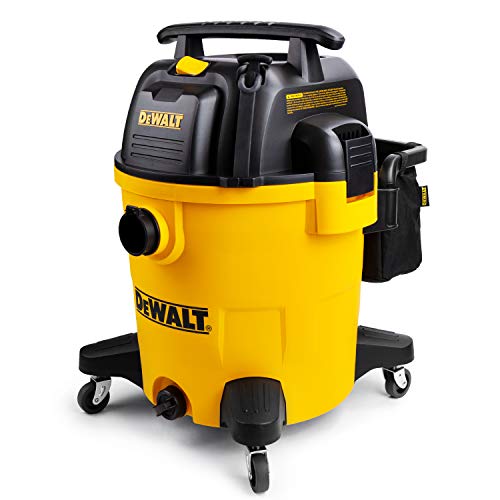
The DEWALT 12 Gallon Poly Wet/Dry Vac ($139) — The DEWALT DXV12P is a legitimate workhorse and the closest thing to a tie with our top pick. It carries the highest corded motor rating in this guide at 5.5 peak HP, in a 12-gallon poly drum that resists the dents and cracks stainless develops in cold weather. The rubberized swiveling casters roll well over rough garage floors, and it's a very widely bought vac with consistently strong owner feedback. It lost on features and coverage rather than power: no blower port, no auto filter cleaning, and a term warranty against RIDGID's lifetime motor agreement. If you want a poly drum and the highest peak HP you can get with a cord, it's a fair swap for the RT1200 — just check availability before you commit, since shipping windows on this one have run long.
Care and maintenance
Clean the cartridge filter after every dusty session, not when suction drops — by then you've already been working with a clogged filter. Tap it against the inside of the drum, or blow it out with compressed air outdoors while wearing a mask. Plan on replacing cartridge filters every six to twelve months with regular use, or sooner if suction stays weak after cleaning. Before wet pickup, pull the dry filter out or swap in a foam sleeve rated for liquids; running a paper cartridge through water ruins it. Make sure the float shut-off valve moves freely, since that's what stops water from reaching the motor when the drum fills. And empty wet debris the same day. Leave it sitting and you'll open the drum to mildew and a smell that never quite leaves.
Questions we get
What size shop vac do I need for a home workshop?
For a shop with a table saw, router or sander, 12 to 16 gallons covers most cleanups without constant emptying. The CRAFTSMAN 16-gallon and the RIDGID RT1200 NXT both land in that range. If space is tight, a 4- or 5-gallon unit like the RIDGID 4000RV works fine for spot collection, but you'll be emptying it often.
What's the difference between a shop vac and a dust extractor?
A shop vac handles general wet and dry debris — chunks, spills, coarse sawdust. A dust extractor like the Festool CT 26 or Bosch VAC090AH is built for fine particles, with certified HEPA filtration, OSHA compliance capability and automatic filter cleaning. Extractors cost considerably more, but they're the only appropriate choice for silica-generating materials. Don't substitute a standard shop vac in a regulated or health-sensitive environment.
Can a shop vac pick up water from a flooded basement?
Yes, that's what the wet in wet/dry means. A float shut-off valve stops the motor from ingesting water once the drum fills. Remove the dry cartridge filter first or fit a foam sleeve rated for liquids. Pick the largest capacity you can drain conveniently — but remember that 16 gallons of water weighs well over a hundred pounds, so partial fills are smarter if you're carrying it up stairs.
Do I need a HEPA filter for my shop vacuum?
You do if you're working with silica dust from concrete, tile or masonry, or with MDF and drywall. Standard cartridge filters pass those fine particles through the exhaust and back into the air you're breathing, and silica exposure causes irreversible lung disease. HEPA filters capture 99.97 percent of particles at 0.3 microns. For solid-wood sawdust, general debris and wet pickup, a standard filter is fine.
What CFM rating do I need?
For light garage and workshop use, roughly 55 to 80 CFM handles most dry debris. For construction cleanup and large areas, 100 CFM and up moves noticeably more per pass. CFM measures airflow volume and is the main driver of how fast a vac picks debris off a surface, while sealed suction in inches of water lift matters more for pulling liquid. Peak horsepower predicts neither reliably.
Can I hook a shop vac up to my table saw or sander?
Yes. Most vacs use standard 1-7/8-inch or 2-1/2-inch fittings that connect to the dust ports on saws, routers and sanders. For automatic collection, you need a model with a power tool port that switches the vac on with the tool — the Festool and Bosch here do that, our top pick doesn't. For fine-dust tools like random-orbit sanders, the Festool's adjustable suction levels are purpose-built for the job.
Can a shop vac work as a leaf blower?
Only if it has a blower port. The CRAFTSMAN CMXEVBE17595 and the RIDGID RT1200 NXT both reverse airflow to clear leaves and clippings off a garage floor or walkway. Plenty of vacs skip that feature, including the Milwaukee and the DEWALT here. If you want it, confirm the specific model before buying.
Why you should trust us
For this guide:
- We compared manufacturer specifications across all eight models, prioritizing published airflow and water lift figures over peak horsepower ratings.
- We read published reviews and owner feedback for each vac, looking for repeated failure patterns — hose seals, casters, clogged filters — rather than one-off complaints.
- We reviewed OSHA Silica Table 1 requirements to determine which models are appropriate for concrete, tile and drywall work and which are not.
- We read owner reviews on every listing, weighted toward the critical ones, because that is where the recurring failures show up.
- We have a systematic way of automatically fetching the latest prices, so the numbers on this page stay current.
- This is a research-focused guide, so the team may not own every product listed — though we often do own the top winners, which gives us extra context for the recommendations.
- We don't accept free products, and the retailer commission never changes which product we recommend.
Sources
Best Shop Vacuums of 2026 — Popular Mechanics, Popular Mechanics
Best Shop Vac Reviews — This Old House, This Old House
The Best Wet/Dry Vacuums — Wirecutter (New York Times), Wirecutter
Best Shop Vac Picks Tested — Bob Vila, Bob Vila
Best Shop Vacuums — The Family Handyman, Family Handyman
Amazon product listings and owner reviews for all 8 products
Manufacturer specification pages for each product
Some passages in this guide may be paraphrased with AI help. Prices are refreshed automatically.
More like this.
Continue exploring home reviews and recommendations.

The Best Miter Saws for Woodworking and Home Shops
A miter saw is the tool that decides whether your trim looks sharp or looks like it was cut with a butter knife. It crosscuts boards to length and slices…

The Best Wet Tile Saws
Cutting tile is the part of a tile job that decides how the finished wall looks. Every outlet, every doorway, every corner needs a cut piece, and a…

The Best Drying Racks for Laundry
A drying rack is one of those objects you don't think about until you need one. Then it's the only thing standing between a wet load of sweaters and a…

The Best Boot Dryers and Glove Dryers
Wet boots don't dry on their own, not really. Leave a soaked pair by the door and you'll get 12 to 24 hours of damp foam, a smell that settles into the…

The Best Dryer Vent Cleaning Kits
Your dryer vent is easy to forget. It sits behind the machine, out of sight, and it fills with lint a little more every time you dry a load. Then one day…

The Best Double-Tier Countertop Dish Drying Racks
If you don't have a dishwasher - or you have one and still hand-wash the cast iron, the good knives and the wine glasses - the dish rack is the…