The Best Security Floodlights
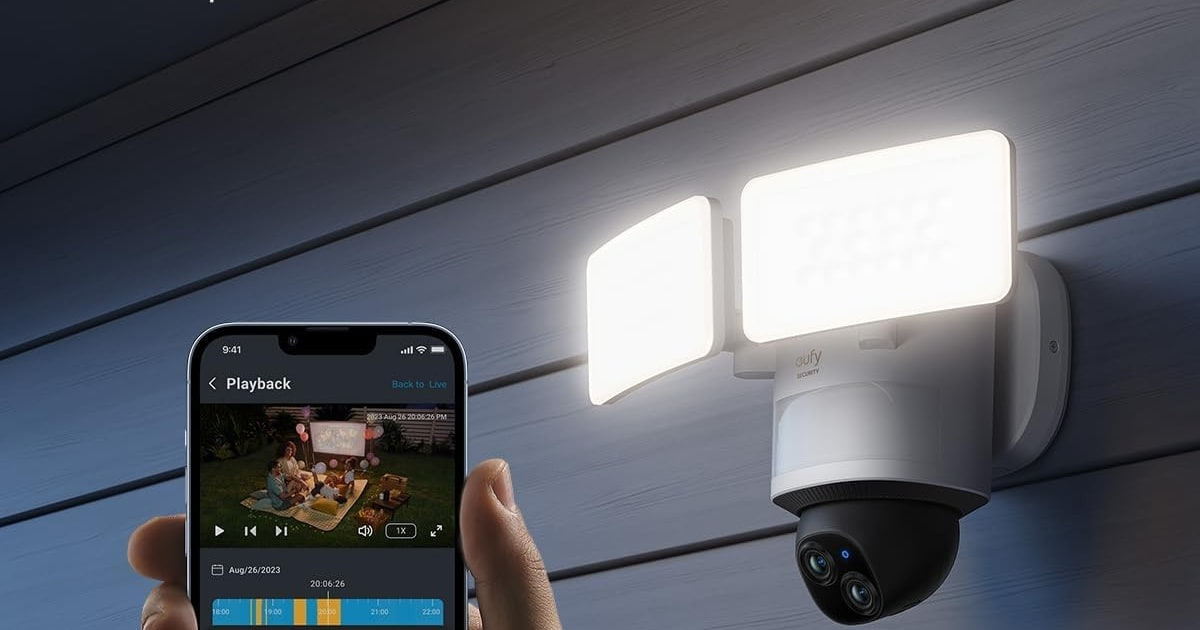
A good security floodlight does two jobs at once. It makes your driveway usable when you're carrying groceries in at night, and it makes your house a less appealing target. Security.org surveyed convicted burglars, and a majority said visible cameras and motion lighting would push them toward a different house. That's the whole pitch. You don't need a monitoring contract or a fortress. You need light that comes on when someone walks up, and ideally a camera that tells you who it was.
Here's the catch nobody puts on the box. Every one of these floodlights will wake you up over a cat, a swaying branch, or headlights sweeping across your fence. Person detection helps, and color night vision helps more, but no camera here gets it right every time. Cloud storage is the other sore spot. Some models lock the useful features behind a monthly fee, and the ones that don't ask you to buy a memory card and manage it yourself. Pick your annoyance.
Installation is the last hurdle. Most wired floodlight cameras replace an existing fixture, which is a weekend job if you already have a junction box and are comfortable killing a breaker. If you don't, budget for an electrician. We think that the Ring Floodlight Cam Wired Plus is the best security floodlight for most people, and that the eufy Security Floodlight Camera E340 is the one to buy if you refuse to pay a monthly subscription.
Everything we recommend

Fast alerts and the easiest setup, if you'll pay the fee

Sharper video and no monthly fee, with more setup work

Loads of light and nothing to sign up for

The sharpest picture and the widest view, for more money
Prices as of Oct 25, 6:48 AM PT · Details
At a glance
| Product | Light output | Camera | Price | |
|---|---|---|---|---|
 | Arlo Pro 5S - Wireless Security CameraAlso in lineup | Integrated spotlight | 2K HDR | $89.95 |
 | Google Nest Cam with Floodlight - OutdoorAlso consider | — | 1080p HDR | $299 |
| Ring Floodlight Cam Wired PlusTop pick | 2000 lumens | 1080p HD | $179.99 |
 | Swann Floodlight Security Camera w/Dimmable Motion LightingAlso in lineup | 2500 lumens | 1080p HD | $164.99 |
| eufy Security Floodlight Camera E340Also great | 2,000 lumens | Dual 3K/2K | $219 |
| REOLINK Elite Floodlight WiFi 4K 8MP 180°Upgrade pick | 3000 lumens | 4K 8MP dual-lens | Check price |
| LEPOWER LED Security Light Motion Sensor OutdoorBudget pick | 7000 lumens | — | $39.99 |
 | Heath Zenith HZ-5833-WH Led Motion Activated SecurityAlso consider | 3000 lumen | — | $19.99 |
Prices as of Oct 25, 6:48 AM PT · Details
How we picked
Usable brightness. We looked for lumen figures in the 2,000 to 3,000 range for camera models, the level Consumer Reports and category coverage identify as practical for a residential yard. Non-camera floodlights can go brighter because there's no image to wash out.
Detection that discriminates. Published reviews from Tom's Guide and CNET consistently tie false-alert fatigue to cameras that can't separate a person from a raccoon. We favored models whose spec sheets claim person, vehicle, and animal classification, and color night vision where available.
Storage without a leash. We checked each manufacturer's storage terms and gave weight to models that record locally to a card, hub, or network drive. A camera that's useless without a monthly payment is a different kind of purchase, and we say so where it applies.
Weather and uptime. We compared IP ratings across spec sheets and preferred hardwired designs, since The Spruce and other outlets flag battery recharging as the maintenance chore people abandon. IP65 was our floor for anything mounted outdoors.
Install and ecosystem. We read installation documentation for junction-box fit and voltage range, and confirmed which assistants each model supports. A floodlight you can't mount or can't reach from your existing app isn't a real option.
Top pick
Fast alerts and the easiest setup, if you'll pay the fee
Ring Floodlight Cam Wired Plus
The Ring Floodlight Cam Wired Plus puts 2,000 lumens and a 1080p camera on your garage wall with the least fuss of anything here. Alerts land on your phone quickly, the app is genuinely easy, and the 105-decibel siren is loud enough to matter.
$179.99fromAmazonPrices as of Oct 25, 6:48 AM PT · Details
Ring's biggest advantage is that everything just works. The app is the one people's neighbors and in-laws already use, which matters more than it sounds. Motion zones are simple to draw. Alerts arrive fast — PCMag's lab timing clocked motion-to-phone notification at under three seconds on average. When someone's at your side gate, three seconds versus fifteen is the difference between watching it happen and reviewing it later.
The 2,000-lumen output lands right in the sweet spot for a house. That's enough to light a two-car driveway and the walk up to your door without turning your yard into a stadium. Brighter isn't automatically better here. Push past roughly 3,000 lumens and you start getting glare that washes out camera detail and irritates the people next door. Ring's spec puts motion detection across a 105-degree field at up to 30 feet.
It hardwires, and that's the right call for a fixture you'll forget about. There's no battery to pull down and recharge every few months. The Spruce makes this point about wired models generally, and it holds: uptime you don't have to think about is worth more than the flexibility of going wire-free. If you have an existing floodlight box, swapping this in is a normal Saturday project.
The siren is the underrated part. You can trigger the 105-decibel alarm from your phone, from anywhere. Most people will never use it. But if you're on vacation and watching someone try your shed door, having a button that makes a very loud noise is more useful than another notification. It also ties into Alexa, so you can pull the feed up on an Echo Show.
Flaws but not dealbreakers
The camera is 1080p, and that's the real compromise. CNET found that 2K HDR sensors pull noticeably sharper detail past 25 feet than comparable 1080p floodlight cameras. Close to the house you'll recognize a face fine. At the end of a long driveway, you're getting a shape and a jacket color, not a license plate.
Night vision is infrared, so recordings come back in black and white. Tom's Guide found color night vision cuts down on false alerts because the camera distinguishes people from animals more accurately. And Ring gates video recording and review behind a subscription. Without it, you get live view and alerts, which is less than you probably expect.
Also great
Sharper video and no monthly fee, with more setup work
eufy Security Floodlight Camera E340
The eufy Floodlight Camera E340 records to a microSD card you own, so there's no subscription. Two lenses and a pan-tilt head give you 360-degree coverage with auto-tracking, and the telephoto camera picks out detail up to 50 feet away.
$219fromAmazonPrices as of Oct 25, 6:48 AM PT · Details
No subscription, and eufy means it. Drop in a microSD card up to 128GB and the camera records continuously — not just clips, and not just for a few days. If you already own a eufy HomeBase S380, it'll store there instead. Over the years you'll own this fixture, skipping a monthly fee adds up to real money that Ring and Nest owners keep paying.
The dual-lens setup is what separates this from most floodlight cameras. A 3K ultra-wide lens covers the scene while a 2K telephoto handles close-ups at distance, and the pan-tilt head swings the whole thing around for a full 360-degree view. Built-in AI tracks people and vehicles as they cross the frame. If your driveway runs long or wraps around the side of the house, one E340 covers what would take two fixed cameras.
Auto-tracking sounds gimmicky until you watch it work in a recording. Someone walks from your gate to your porch, and the camera follows instead of losing them at the edge of frame. Combined with 8x hybrid zoom, you get a usable look at a face rather than a distant shape. That's the difference between a clip you can hand to police and one you can't.
It runs on dual-band Wi-Fi 6, which matters more than the spec sheet suggests. Outdoor cameras sit at the edge of your network, often through a wall, and a congested 2.4GHz band is where floodlight cameras go to die. Support for 5GHz and Wi-Fi 6 gives you a stable fallback if your neighborhood airwaves are crowded.
Flaws but not dealbreakers
The light is 2,000 lumens, which is fine for a porch but modest for a big yard, and it's the weakest part of an otherwise capable fixture. If deterrent lighting is your priority over video, a plain 3,000-lumen dual-head floodlight throws more usable light for far less money.
Local storage means you're the backup plan. If someone rips the camera off the wall, your footage goes with it unless you've paired a HomeBase. And the microSD card isn't included, so factor that in. Setup also takes longer than Ring's — more menus, more decisions, more time in the app before it's doing what you want.
Budget pick
Loads of light and nothing to sign up for
LEPOWER LED Security Light Motion Sensor Outdoor
The LEPOWER LED Security Light is three adjustable heads, a motion sensor, and no app at all. It puts out 7,000 lumens across a 180-degree detection arc that reaches 72 feet, and it costs a fraction of any camera here.
$39.99fromAmazonPrices as of Oct 25, 6:48 AM PT · Details
Sometimes you don't want a camera. You want the back corner of your yard to stop being a black hole, and you want it to happen when you take the trash out at 11 p.m. This does exactly that and nothing else. There's no account, no app, no firmware update, no monthly anything. You wire it to a junction box, aim the heads, and forget it exists.
The light output here is in a different league from the camera models. At 7,000 lumens from 58 watts, it dwarfs every floodlight camera on this list. Consumer Reports pegs a 3,500-lumen dual-head fixture as enough for roughly 3,000 to 4,000 square feet, so this covers a large yard, a long driveway, or a work area with room to spare. All three heads pivot, and so does the sensor.
That reach is the practical selling point. The sensor triggers on people, cars, and animals out to 72 feet across a 180-degree arc — considerably farther than the roughly 30-foot detection range Ring specs for its camera. If your driveway is long, this catches motion at the street while a camera fixture is still waiting for someone to reach the garage.
The aluminum housing carries an IP65 rating, the same weatherproofing standard the major camera brands use, meaning it handles heavy rain and dust. Digital Trends notes that homeowners generally prefer daylight-toned floodlights over amber ones for visibility, which is the color temperature LEPOWER uses. It's also the pick that pairs well with a camera elsewhere — light one zone brightly, film another.
Flaws but not dealbreakers
No camera, no recording, no alerts. If someone trips it while you're at work, you'll never know. This deters, it doesn't document, and you should be clear-eyed about which of those you actually need.
Seven thousand lumens is a lot of light in a residential setting. Aim it carelessly and you'll be lighting your neighbor's bedroom window. Take the time to angle the heads down and inward. It also needs hardwiring to a junction box, so there's no plug-in shortcut.
Upgrade pick
The sharpest picture and the widest view, for more money
REOLINK Elite Floodlight WiFi 4K 8MP 180°
The Reolink Elite Floodlight WiFi stitches two lenses into a 180-degree panorama at 4K, then lights it with 3,000 dimmable lumens. It stores footage locally on a card, an NVR, or a network drive, with no subscription required.
Check priceatAmazonPrices as of Oct 25, 6:48 AM PT · Details
This is the most capable camera in the lineup, full stop. Two lenses stitched into a true 180-degree panorama at 4K and 8 megapixels means you're covering the front of your house with one fixture and still able to zoom into a face. Where the Ring gives you a shape at 30 feet, this gives you detail. If you've been frustrated by grainy footage that couldn't identify anyone, this is the fix.
The lighting is more thoughtful than most. It's 3,000 dimmable lumens reaching about 40 feet, and you can switch between 3000K warm light for a porch that doesn't feel like a parking lot and 6500K cool light when you want maximum clarity on video. Dimming matters if the fixture faces a bedroom window. Most floodlight cameras give you on or off.
Storage is refreshingly open. It takes microSD cards up to 512GB, works with a Reolink NVR or Home Hub, and speaks FTP, NAS, RTSP, and ONVIF. If you already run a home surveillance setup or a NAS, this drops right into it. That's unusual — most consumer floodlight cameras are walled gardens that only talk to their own app.
Smart detection separates people, vehicles, and animals, and you can draw virtual fences and intrusion zones instead of one crude rectangle. Set a linger zone on your porch and you'll hear about someone loitering, not about every car that passes. Wi-Fi 6 on both bands keeps the connection steady, and the IP65 housing fits standard junction boxes at 100 to 240 volts.
Flaws but not dealbreakers
Setup asks more of you than Ring or Nest does. You need a 5V/2A adapter that isn't included for the initial setup over USB-C, and only afterward do you connect it to AC power. The detection-zone tools are powerful but fiddly, and getting them tuned takes some patience.
This is a heavy fixture at roughly five pounds, so make sure your existing box and mounting surface can carry it. Reolink's app and ecosystem are also less polished than what the big names ship, which shows up in small ways rather than one big failing.
Who this is for
Buy one of these if you own the wall you're mounting it on and there's a spot outside your house that goes dark at night. That's driveways, side gates, back patios, detached garages, and anywhere a delivery gets left. If you rent, talk to your landlord first, because every fixture here needs hardwiring to a junction box. None of them plug into an outlet.
This guide covers wall-mounted floodlights, with and without cameras. We're not covering doorbell cameras, standalone security cameras without lights, solar path lighting, or monitored alarm systems. If your main worry is packages at the front door, a video doorbell is a better first purchase. And if you already have a monitored system, check whether your provider's cameras integrate before adding a second app to your phone.
How we picked
We built this guide from manufacturer spec sheets, published reviews, and recurring themes in owner feedback. Brightness: we wanted 2,000 to 3,000 lumens on camera models, since more light past that starts washing out the image and annoying your neighbors. Detection: person, vehicle, and animal classification matters more than raw sensitivity, because the alert you ignore is worse than no alert. Storage: we favored local recording to a card, hub, or NAS over subscription-gated cloud clips. Weather: IP65 was the floor, and we preferred hardwired power over batteries you have to remember to recharge. Installation: standard junction-box fit and a clear voltage range keep this a weekend job instead of an electrician's invoice.
Other security floodlights worth considering
If you want a bigger screen on a budget: The Google Nest Cam with Floodlight - Outdoor — The Google Nest Cam with Floodlight is the one to get if your house already runs on Google. It tells people, animals, and vehicles apart without a subscription, which is genuinely rare, and it keeps three hours of free event history. When your power or Wi-Fi drops it holds up to an hour of events locally so you don't lose the window that matters. Google Nest also lets any compatible Nest or Google Home sensor trigger the floodlight, so it can fold into a routine rather than acting alone. The video is 1080p HDR, a step behind Reolink and eufy, and familiar-face detection needs Nest Aware. But if you ask Google Assistant to turn on the lights already, this fits with no new app to learn.
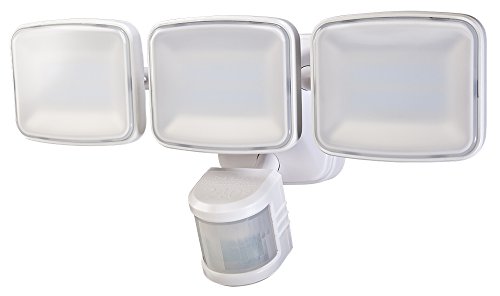
If you want the widest motion coverage without a camera: The Heath Zenith HZ-5833-WH Led Motion Activated Security — The Heath Zenith HZ-5833-WH watches a 240-degree arc out to about 70 feet, a wider sweep than the LEPOWER's 180 degrees. Three LED heads put out 3,000 lumens total, and both the sensor head and the lamp heads adjust without tools, which is a small kindness when you're up a ladder. That makes it the better choice for a corner mount where you need to see down two sides of the house at once. You give up the LEPOWER's much higher output and its metal-heavy build. There's no camera, no app, and no recording — this is pure deterrence and practical light.
The competition
These are the floodlights our research surfaced, not everything sold. The category turns over quickly, and a model that looks strong on paper can stumble on the thing that matters most to you — app reliability, night video, or whether the fixture fits your box. Here's what didn't make the cut and why.
The Arlo Pro 5S - Wireless Security Camera — The Arlo Pro 5S is a strong camera that isn't really a floodlight. It's a wire-free 2K HDR camera with an integrated spotlight, color night vision, a 160-degree field of view, and 12x zoom, and it swaps batteries so you can keep one charged on the shelf. The image quality is excellent and the privacy stance is better than most. But the spotlight is a spotlight, not the dual-head floodlight this guide is about, and swappable batteries still mean a recharging chore. Choose it if you need a camera somewhere you can't run wire and the lighting is secondary.
The Swann Floodlight Security Camera w/Dimmable Motion Lighting — The Swann Floodlight Security Camera has the specs to compete: 2,500 dimmable lumens, 1080p with color night vision, two-way talk, heat-sensing motion detection, and both Alexa and Google support. SafeWise's field work found its motion-triggered recording held up in sub-freezing conditions, which is a genuine advantage in a cold climate. Free local storage for seven days plus two days of cloud is a fair baseline too. What keeps it out of the picks is owner feedback, which skews sharply negative and clusters around reliability and app frustration rather than the hardware itself. If cold-weather sensor performance is your top concern and you're comfortable with that risk, it's worth a look.
Installation notes
Every floodlight here wires into a junction box, so start at your breaker panel and confirm the power is off with a tester, not just the switch. Most fixtures replace an existing light and reuse the same box, which is the easy case. If you're adding a new location, that's an electrician's job. Mount cameras about nine feet up — high enough that nobody reaches them, low enough to catch faces rather than the tops of heads. Angle floodlight heads down and toward your own property to avoid lighting a neighbor's window. Once it's live, walk your yard and watch the alerts, then tighten the motion zones. Skipping that step is why people end up muting notifications entirely.
Questions we get
Are floodlights with cameras better than plain motion-sensor lights?
They're better at telling you what happened, not at deterring it. Security.org's survey of convicted burglars found that both visible cameras and motion lighting push intruders toward another house, so a plain floodlight already does the deterrent job. The camera earns its keep afterward, when you want to see who was at your gate. If you just want the dark corner lit, a non-camera floodlight costs far less and needs no app.
Do floodlight cameras require a monthly subscription?
It depends on the brand, and it's the single biggest cost difference between these models. Ring gates video recording and review behind a plan. eufy and Reolink record locally to a microSD card, a hub, or a network drive with no fee at all. Google Nest sits in the middle: person, animal, and vehicle alerts plus three hours of event history work without a subscription, but longer history and familiar-face detection need Nest Aware.
How many lumens do I need for a security floodlight?
For a camera model, 2,000 to 3,000 lumens covers a typical driveway and entry. Going brighter causes glare that washes out the image and spills onto your neighbor's property. Non-camera floodlights can run hotter since there's no picture to protect — Consumer Reports figures a 3,500-lumen dual-head fixture lights roughly 3,000 to 4,000 square feet, and the LEPOWER pushes well past that.
What's the difference between color and infrared night vision?
Infrared gives you a black-and-white image using invisible light, so you see shapes and movement but not clothing color or fine detail. Color night vision uses a more sensitive sensor plus a spotlight or floodlight to keep the picture in color. Tom's Guide found color models generate fewer false alerts because the camera separates people from animals more reliably. That's the practical difference — fewer 2 a.m. buzzes about a possum.
Can I install a floodlight camera myself, or do I need an electrician?
If you're replacing an existing outdoor fixture and you're comfortable shutting off a breaker and testing that the wires are dead, this is a DIY job. Most of these mount to a standard junction box. Call an electrician if you're running new wire, adding a box, or dealing with old or unfamiliar wiring. Reolink's model needs a 5V/2A adapter for initial setup before it goes on AC power, which trips people up.
What's the best floodlight for a large, dark backyard?
For pure light coverage, the LEPOWER at 7,000 lumens with a 72-foot sensing range reaches farther than any camera model here. If you want video across a wide area, the Reolink Elite covers a 180-degree panorama at 4K with 3,000 lumens reaching about 40 feet. A common approach is both — a bright non-camera fixture for the far corner, a camera at the approach to the house.
Why you should trust us
For this guide:
- We read manufacturer spec sheets from Ring, Arlo, Google Nest, eufy, Reolink, Swann, LEPOWER, and Heath Zenith, and compared their stated lumen output, detection range, storage terms, and weatherproof ratings side by side.
- We reviewed published coverage from CNET, PCMag, Tom's Guide, SafeWise, Consumer Reports, Digital Trends, and The Spruce on image quality, alert speed, cold-weather performance, and wired versus battery reliability.
- We looked at recurring themes in owner feedback for each model, weighing complaints that showed up repeatedly rather than isolated reports.
- We read owner reviews on every listing, weighted toward the critical ones, because that is where the recurring failures show up.
- We have a systematic way of automatically fetching the latest prices, so the numbers on this page stay current.
- This is a research-focused guide, so the team may not own every product listed — though we often do own the top winners, which gives us extra context for the recommendations.
- We don't accept free products, and the retailer commission never changes which product we recommend.
Sources
Best Outdoor Security Cameras of 2026, CNET
The Best Floodlight Cameras for 2026, PCMag
Best Home Security Cameras 2026, Tom's Guide
The 8 Best Outdoor Security Cameras of 2026, The Spruce
Best Outdoor Security Cameras of 2026, SafeWise
What Burglars Say: A Survey on Home Security, Security.org
Outdoor Lighting Buying Guide, Consumer Reports
Reolink Elite Floodlight WiFi Product Specifications, Reolink
Arlo Pro 5S Floodlight Camera Specifications, Arlo
Eufy Floodlight Cam E340 Product Details, Eufy (Anker)
Ring Floodlight Cam Plus Specifications, Ring
Google Nest Cam (Floodlight) Support & Specs, Google Nest
Amazon product listings and owner reviews for all 8 products
Manufacturer specification pages for each product
Some passages in this guide may be paraphrased with AI help.
Product prices and availability are accurate as of the date/time indicated and are subject to change. Any price and availability information displayed on Amazon.com at the time of purchase will apply to the purchase of this product.
More like this.
Continue exploring home reviews and recommendations.

The Best DIY Smart Home Security Systems
A home security system earns its keep on the days nothing happens. You leave for a long weekend, glance at your phone in an airport line, and see every…

The Best Mailbox Security Lock Boxes
A mailbox used to be a tin flag holder. Now it's where your checkbook, your tax forms and half your online orders sit unattended for hours. Mail theft…

The Best Outdoor Smart Home Security Cameras
An outdoor camera earns its keep in small moments. A package shows up while you're at work. Something knocks over the recycling bin at 2 a.m. A contractor…

The Best Home Security Systems of 2026
A home security system spends almost all of its life doing nothing at all. That's the point. What you actually notice day to day is smaller stuff: whether…

The Best Blink Security Cameras
Most home security cameras want a monthly fee before they'll do much of anything. Blink's pitch is different: buy the camera, skip the contract, and get…

The Best Car Alarm and Security Systems
Your car spends most of its life parked and unattended. On a street, in a work lot, in a driveway you can't see from the kitchen sink. A security system's…