The Best Motorcycle GPS Navigation Devices
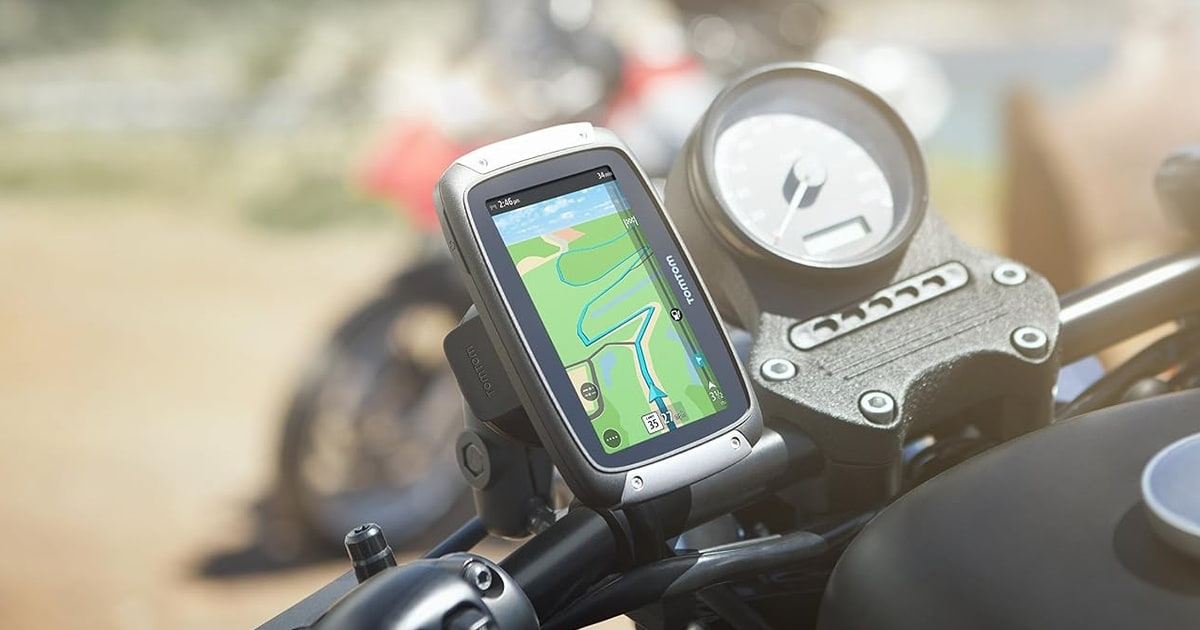
A phone in a handlebar clamp works right up until it doesn't. Then you're squinting at a washed-out screen in afternoon sun, or watching the map freeze because you've lost a bar of signal in the hills, or peeling off a glove at a stoplight to pinch-zoom. A motorcycle GPS solves all three. It stores maps on the device, it's built for rain and vibration, and you can poke at it with a winter gauntlet. If you ride more than a few hours a week, that's a real quality-of-life upgrade.
Here's the honest part: none of these are cheap, and none of them have a screen that beats your phone for sharpness or an interface that feels as fast. Dedicated units run older, chunkier software. Setup takes an afternoon, and you'll want to hardwire the thing to your bike's 12V system rather than trust an internal battery that gives you a few hours at best. Mount hardware is often an extra purchase and a fussy one. You're buying durability and offline reliability, not polish.
We think that the Garmin Zumo XT2 is the best motorcycle GPS for most people, and that the Garmin Zumo 396 LMT-S is the one to buy if you ride a naked or sport bike where a six-inch screen simply won't fit.
Everything we recommend

The big, bright screen that survives whatever you ride through

Nearly the same brain in a body that fits a small bike

For riders who go where the pavement and the cell towers stop

Your phone's maps on a big screen, plus a dash cam
At a glance
| Product | Weight | Display Size | Price | |
|---|---|---|---|---|
| Garmin Zumo XT2 All-Terrain Motorcycle GPS NavigatorTop pick | 2.97 Pounds | 6 Inch | $614.95 |
 | TomTom Rider 400 Portable Motorcyle GPS -Also consider | 0.62 Pounds | — | $395 |
| Garmin zumo 396 LMT-SRunner-up | 1.75928885076 Pounds | 4.3-inch | $259.99 |
| WonVon Motorcycle CarPlay Screen with Android AutoAlso great | 3.45905289078 Pounds | 7 Inch | $168.99 |
| Garmin Tread® 2 - Overland EditionUpgrade pick | 1.38125 Pounds | 8-inch | $999.99 |
How we picked
Weather sealing. We treated IPX7 as the floor and IP67 as the target, since a motorcycle GPS lives outside in whatever falls on it. Splash-only ratings were noted as a limitation, not an automatic disqualification.
Screen and legibility. We compared panel sizes and manufacturer claims about sunlight readability against how riders describe glancing at a map at speed. Glove-compatible touch was a requirement, and physical buttons a bonus.
Offline capability. We looked for maps stored on the device so navigation keeps working with no cell signal. Units that depend entirely on a paired phone were held to a different standard.
Motorcycle routing. Spec sheets and published reviews told us which units route for curves, elevation and highway avoidance rather than reusing car navigation. That's the reason most riders leave their phone behind.
Mounting and power. We weighed physical dimensions against real cockpit space, since a large unit on a small bike is a problem. Hardwire support mattered because internal batteries run down mid-ride.
Top pick
The big, bright screen that survives whatever you ride through
Garmin Zumo XT2 All-Terrain Motorcycle GPS Navigator
The Zumo XT2 pairs a 6-inch sunlight-readable display with an IP67 rating, so it handles direct sun and a soaking equally well. It routes for motorcycles rather than cars, and it talks to helmet intercoms, tire sensors and inReach satellite communicators.
$614.95fromAmazonThe 6-inch screen is the whole argument. At highway speed you get about half a second to look down. A bigger map means you catch the exit number without staring. Garmin builds this panel for direct sun, and it works in landscape or portrait depending on how your cockpit is laid out. Riders coming from smaller units describe the difference as the thing they notice first, and it's hard to go back.
IP67 means you can stop worrying about weather. That rating covers full submersion, not just a splash — dust-tight, and fine under a meter of water for half an hour. Practically, that means a three-hour rain stage on the interstate or a puddle deeper than you expected. The touchscreen is tuned for gloves, so thick winter gauntlets still register, and physical buttons on the body give you a backup when your hands are numb.
It routes like a motorcycle, not a minivan. Garmin's Adventurous Routing hunts for curves and elevation and pushes you off the interstate. Switch it off and you get a direct route for the Tuesday commute. You can plan on the device or in the Tread app, toggle between road maps, topo and satellite imagery, and pull in routes other riders have already ridden and bookmarked.
The connectivity is the part you'll use every day. It pairs with Sena and Cardo intercoms for turn-by-turn in your helmet, streams music from your phone, and supports multiple devices at once. Group Ride Radio shares live position with other Garmin-equipped riders without anyone touching a phone. TPMS support puts tire pressure warnings on the same screen. Pair it with an inReach and you get satellite messaging and SOS where cell coverage ends.
Flaws but not dealbreakers
It's the most expensive way to solve this problem short of the Tread 2. For someone who rides to work and back on familiar roads, that's a lot of money for a nicer version of what your phone already does. The value shows up on multi-day trips and in bad weather, not on a ten-mile commute.
Six inches is a lot of hardware to bolt to a small bike. On a faired tourer it disappears into the cockpit. On a naked bike or a sport bike it looks like a tablet strapped to your bars, and it catches wind. Measure your handlebar space before you commit — the 396 exists for exactly this reason.
No dash cam, and the desktop planning tools lag TomTom's. If you want recorded footage of your ride you'll need a separate camera. And if you're the kind of rider who plans routes at a computer for an hour before a trip, TomTom's software is the more pleasant place to do it.
Runner-up
Nearly the same brain in a body that fits a small bike
Garmin zumo 396 LMT-S
The Zumo 396 LMT-S gives you Garmin's motorcycle routing, Group Ride messaging and free live traffic in a compact 4.3-inch package. It's the sensible first dedicated GPS for a commuter or weekend canyon rider who doesn't need the XT2's screen.
$259.99fromAmazonThe small screen is a feature, not a compromise. On a naked bike or a sport bike, a 4.3-inch unit sits in the cockpit without blocking your view of the gauges or catching air. It's sunlight-readable and glove-friendly, and the housing resists fuel vapors and UV — the two things that quietly destroy consumer electronics mounted on a bike.
You get Garmin's routing without paying flagship money. Adventurous Routing is here, so the 396 will find the curvy, hilly line and limit time on major highways. That's the single feature most riders actually buy a motorcycle GPS for, and it works the same way it does on the XT2.
Group Ride messaging is the standout at this tier. Riders with compatible Garmin units share live position and send preset messages to each other, no phone required. If you ride with a club or a regular group of three or four, that's genuinely useful — no more pulling over at every junction to count bikes.
Live traffic and weather are free through the phone app. Pair a smartphone and you get hands-free calling, smart notifications, and live traffic and weather at no ongoing cost. You can also share GPX files for group rides, which matters if someone in your group plans the route and everyone else just wants to follow it.
Flaws but not dealbreakers
The interface shows its age next to the XT2. Menus feel a generation behind, and the advanced rider alerts for sharp curves and steep grades are reserved for the higher-tier unit. Nothing here is broken, but it doesn't feel new.
Sustained highway navigation on 4.3 inches is tiring. On a long straight stretch you'll find yourself looking down more often than you would with a bigger panel. It's fine for a two-hour ride and less fine on day three of a tour.
No TPMS, no topographic mapping. If tire pressure alerts or unpaved-road navigation matter to you, this isn't the unit. It's built for pavement, and it's honest about that.
Upgrade pick
For riders who go where the pavement and the cell towers stop
Garmin Tread® 2 - Overland Edition
The Tread 2 Overland Edition has an 8-inch IP67 screen, preloaded topographic maps of North and South America, downloadable satellite imagery and trail navigation for unpaved roads. It's the one to get if gravel and fire roads are the point of the ride.
$999.99fromAmazonThe map content is what you're actually paying for. Preloaded topo maps of North and South America come with elevation data, public and private land boundaries, campgrounds and snow trails. Turn-by-turn trail navigation pulls from OpenStreetMap, U.S. Forest Service Motor Vehicle Use Maps and Garmin's Adventure Roads and Trails content. That's the difference between guessing at a forest road and knowing where it goes.
Satellite imagery makes route scouting real. You can download high-resolution overhead views straight to the device over Wi-Fi with no subscription. Before you commit to a line, you can see whether that track is a graded gravel road or two ruts through scrub. For anyone planning a multi-day route through unfamiliar backcountry, that's worth the trouble.
Eight inches of glove-friendly screen, built for abuse. The panel is ultrabright and rated IP67 for dust and water, and Garmin builds it for extreme temperatures. On an adventure bike with a proper bracket, a screen that size lets you read terrain contours at a glance instead of stopping to zoom.
It doubles as a campground and trip planner. A preloaded directory covers more than 46,000 camping locations across the U.S., and Outdoor Maps+ adds premium content like burn zones on a subscription if you want it. If your riding involves figuring out where you're sleeping tonight, that's a real convenience.
Flaws but not dealbreakers
It's overkill for anyone who stays on pavement. If your gravel mileage is a few miles of driveway each year, you're buying capability you'll never touch. The XT2 does road navigation just as well for less.
An 8-inch screen needs a bike that can carry it. Realistically that means an adventure bike with a substantial fairing or a custom bracket. On most bikes there's simply nowhere to put it, and it's a large object to have between you and the road.
The full feature set takes real time to learn. Multi-vehicle profiles, layered map types, land ownership overlays — it's a lot. Budget an evening or two with the manual before your first trip rather than figuring it out at a trailhead.
Also great
Your phone's maps on a big screen, plus a dash cam
WonVon Motorcycle CarPlay Screen with Android Auto
The WonVon puts wireless CarPlay and Android Auto on a 7-inch weatherproof handlebar display, so you ride with Google Maps or Waze instead of learning new software. Dual cameras, blind spot detection and tire pressure monitoring come along for the ride.
$168.99fromAmazonYou already know how to use it. If Google Maps or Waze is how you navigate now, there's nothing to relearn. Connect wirelessly, and your phone's interface shows up on a 7-inch screen. Siri and Google Assistant handle destinations, calls and music by voice, so you're not tapping at a screen at 60 mph.
It gets your phone off the handlebars. Mounting a phone in a clamp cooks it in summer sun, shakes the camera module apart, and lets water into the charging port. This screen takes the weather instead, and your phone stays in your pocket. That alone justifies it for a lot of commuters.
The extras are unusual at this level. Dual cameras record front and rear, and there's blind spot detection and tire pressure monitoring built in. No dedicated GPS in this guide records video at all. If you want footage for an insurance claim, this is the only unit here that gives you it.
The screen handles day and night riding. Auto-brightness adjusts as light changes, and the touchscreen works with gloves. Seven inches is more map than the XT2 gives you, which counts for something when you're reading a complicated interchange.
Flaws but not dealbreakers
Without your phone, it doesn't navigate. There are no offline maps on the device. Lose signal in the mountains or cross a border without data roaming, and the map stops updating. For touring or backcountry riding, that's disqualifying — and it's the single reason this isn't a higher pick.
Weather protection is a step below the Garmins. It handles rain and road spray, but it isn't rated for submersion the way an IP67 unit is. Fair-weather and commuter riding, fine. Standing water and week-long monsoon tours, less so.
Long-term support is the open question. Garmin and TomTom have decades of firmware updates behind them. A smaller brand doesn't, and CarPlay responsiveness varies with your phone and the connection. Owners of screens in this category most often report pairing that drops or takes a few tries, so plan for some fiddling.
Who this is for
Buy one of these if you ride enough that a frozen phone screen or a drained battery has already ruined part of a trip. That's most touring riders, most people who commute year-round, and anyone who rides where cell coverage is spotty. If you ride an hour on Sundays on roads you know by heart, you don't need this — a decent phone mount and a rain cover will do. Riders who take passengers on long trips or ride in groups get the most out of the connected features here.
This guide covers handlebar-mounted navigation units for motorcycles: dedicated GPS devices with maps stored on board, and screens that mirror your phone's CarPlay or Android Auto. We're not covering phone mounts, helmet heads-up displays, or car navigation adapted for bike use. We also stick to units you can buy and install yourself, rather than the factory navigation built into some touring bikes.
How we picked
Weather sealing: we treated IPX7 as the minimum and IP67 as the target, because a handlebar-mounted screen has nowhere to hide from rain. Screen and legibility: we compared panel size and brightness claims against how riders describe reading a map at speed, and required glove-friendly touch. Offline capability: maps stored on the device matter, since coverage disappears exactly where you most need directions. Motorcycle routing: spec sheets and published reviews showed us which units actively look for curves and elevation instead of recycling car routing. Mounting and power: we checked dimensions against real cockpit space and preferred units you can hardwire to the bike's 12V system, because internal batteries don't last a touring day.
Other motorcycle gps navigation devices worth considering
If you want world maps and the best route-planning software: The TomTom Rider 400 Portable Motorcyle GPS - ($395) — The TomTom Rider 400 is the long-standing alternative to Garmin, and it's still the pick for riders crossing borders. World maps ship on the device, which saves you buying regional map packs before a European or intercontinental trip. TomTom's MyDrive app is the most pleasant place to plan a route, import a GPX track from a riding forum and push it to the device over Wi-Fi. The screen coating rejects false touches from rain droplets while still reading gloved fingers. What you give up is the Garmin ecosystem: no Group Ride position sharing, no TPMS, and intercom pairing that owners describe as fussier than Garmin's. At barely over half a pound it's the lightest unit here, which helps on a small bike.
The competition
This is what our research surfaced, not a census of every motorcycle GPS you can buy. The category is small and dominated by two brands, with a growing crowd of CarPlay screens from newer manufacturers. Every product in this guide already appears above as a pick or an alternative, so there's nothing here that we looked at and set aside.
Installation notes
Hardwire it. Every unit here ships with power options, and the 12V hardwire kit is the one to install — an internal battery gives you a few hours at best, and a cigarette-lighter adapter works loose over rough pavement. Run the lead to a switched circuit so the GPS powers down with the ignition and doesn't drain your battery over a week in the garage. Route the cable along the existing harness, secure it with zip ties, and leave enough slack at the bars for full steering lock in both directions. Check that slack after installation by turning the bars fully each way with the engine off. For the mount, verify your handlebar diameter first, and use a threadlocker on the bracket bolts — vibration works them loose over a season. Snug is enough; overtightening cracks plastic housings.
Questions we get
Can I just use Google Maps on my phone instead?
For city and suburban riding, yes, it works fine. But Google routes motorcycles exactly like cars, so you get the efficient highway line instead of the fun one, and it needs a data connection that disappears in the hills. There's no glove-friendly interface and no weather sealing on your phone. A CarPlay screen like the WonVon is a reasonable middle ground for commuting; for touring, you want offline maps.
What's the difference between IP67 and IPX5?
IP67 means dust-tight and safe under a meter of water for 30 minutes — that's the Zumo XT2 and the Tread 2. IPX5 means protected against water jets from any angle but not submersion, and that's where the CarPlay screens sit. For riding through standing water or a long rain stage, you want IP67 or IPX7. IPX5 is fine for fair-weather commuting.
Do these work without a phone connected?
The dedicated Garmin and TomTom units do. They store maps on internal memory, calculate routes on the device, and speak turn-by-turn directions through their own speaker or a paired intercom with no cell service involved. Live traffic and weather usually need a phone connection, but core navigation doesn't. The WonVon is the exception — it has no standalone navigation and needs a paired phone for everything.
How do I get directions in my helmet?
Pair the GPS with a Sena or Cardo intercom over standard Bluetooth. On a Garmin Zumo, go to Settings, then Bluetooth, then Pair Device, and put the intercom in pairing mode at the same time per its manual. Turn-by-turn announcements and rider alerts then play through your helmet speakers at whatever volume you set. The XT2 handles multiple connections, so you can run the intercom and your phone at once.
Which unit should I get for a naked or sport bike?
The Zumo 396 LMT-S. Its 4.3-inch body fits a cramped cockpit without blocking your gauges or catching wind, and you still get Garmin's motorcycle routing and Group Ride messaging. The XT2's 6-inch screen is genuinely better to read, but it needs a fairing or a wide bar to look and behave sensibly.
Is a dedicated GPS worth it if I mostly commute?
Honestly, probably not — unless you commute year-round in real weather. The case for a dedicated unit is offline maps, curve-seeking routing and a screen that survives rain, and none of those matter much on a familiar 20-minute ride. If what you want is a bigger, weatherproof screen for the phone apps you already use, a CarPlay screen makes more sense than a Garmin.
Why you should trust us
For this guide:
- We read manufacturer specifications and listing details for every unit here, focusing on ingress protection ratings, screen size and what map content ships on the device.
- We compared published reviews of these units against recurring themes in owner feedback, particularly around glove response, intercom pairing and how each holds up to vibration.
- We did not ride with any of these devices; every claim here comes from specifications, published reviews or what owners consistently report.
- We read owner reviews on every listing, weighted toward the critical ones, because that is where the recurring failures show up.
- We have a systematic way of automatically fetching the latest prices, so the numbers on this page stay current.
- This is a research-focused guide, so the team may not own every product listed — though we often do own the top winners, which gives us extra context for the recommendations.
- We don't accept free products, and the retailer commission never changes which product we recommend.
Sources
Best Motorcycle GPS 2026 — Cycle World Buyers Guide, Cycle World
Garmin Zumo XT2 Full Review — RevZilla Common Tread, RevZilla
Best Motorcycle GPS Units Tested — Motorcyclist Magazine, Motorcyclist Magazine
TomTom Rider 550 Review — MCN Motor Cycle News, Motor Cycle News
Garmin Zumo XT2 vs XT Detailed Comparison — GPS Tracklog, GPS Tracklog
Best Motorcycle GPS and Navigation Apps 2026 — Rider Magazine, Rider Magazine
Beeline Moto II Full Review — Visordown, Visordown
Motorcycle GPS Buying Guide — Adventure Rider Forum, Adventure Rider
Amazon product listings and owner reviews for all 5 products
Manufacturer specification pages for each product
Some passages in this guide may be paraphrased with AI help. Prices are refreshed automatically.
More like this.
Continue exploring electronics reviews and recommendations.

The Best GPS Navigation Systems for Cars
A dedicated car GPS does one job, and it does it without asking anything of your phone. It already has the map onboard, so it keeps calling out turns…

The Best Hiking GPS Devices
A hiking GPS earns its place in your pack on the days your phone can't help. Cold drains a phone battery fast. Rain turns a touchscreen into a smudge. And…

The Best Boat Navigation Lights
Navigation lights are the simplest safety gear on your boat and the easiest to ignore until it's dark. They tell every other skipper out there which way…

The Best Motorcycle Helmets
A helmet is the one piece of gear you wear on every ride, and it's the only one that matters in the half-second you can't control. NHTSA's crash analysis…

The Best Heated Motorcycle Grips
Cold hands ruin a ride faster than anything else. Your fingers go numb, your grip gets sloppy, and you start planning stops around gas-station hand…

The Best Smart Home Devices
A smart home is really just a pile of small conveniences that add up. The lights come on before you walk in the door. The thermostat stops heating an…